Monday, December 22, 2025
Home Blog Page 2341

Russia reports record-high daily COVID deaths

The number of fatalities related to the coronavirus increased by 1,002 in Russia in the past 24 hours compared to 999 on the previous day, bringing the total number of coronavirus deaths in the country to 222,315. 

This is a fresh high since the beginning of the pandemic, the anti-coronavirus crisis center reported on Saturday.

The provisional lethality of the disease (the final one can be determined only after the end of the pandemic) remained at the level of 2.79%, according to the crisis center.

The number of confirmed coronavirus cases in Russia grew by 33,208 in the past 24 hours, bringing the total number of infected to 7,958,384. That brings the number of daily cases in the country to a fresh all-time high for the third time in a row. The increase in new cases totaled 0.42% in relative terms.

The number of the so-called active cases currently stands at 754,162 in Russia, the crisis center noted.

As many as 21,883 coronavirus patients recovered in Russia over the past day, while the total number of recoveries has reached 6,981,907. The number of recoveries has decreased to 87.7% of the total number of infected, according to the crisis center.

Brazil president facing ‘criminal charges’ over COVID response

Renan Calheiros said in a radio interview the probe will recommend charges such as genocide against the country’s indigenous population, malfeasance, irregular use of public funds, violation of sanitary measures, incitement to crime and forgery of private documents.

Experts say Bolsonaro is unlikely to face the charges as they must be approved by the lower house, which most likely won’t happen.

Along with Bolsonaro, Bolsonaro’s sons and his former Health Minister Eduardo Pazuello will likely be charged, according to Calheiros.

The report will be released to the Senate Tuesday with members voting on it Thursday.

Brazil is the second country in the world to reach 600,000 coronavirus deaths during the pandemic, with the country passing the milestone in October.

Bolsonaro has refused to get vaccinated and continues to push unproven ways to cure the virus. 

When asked about the country’s death toll, Bolsonaro stated he did not want to be “bored” with questions about it. 

Bolsonaro was previously infected with the virus and had to recently quarantine after his son tested positive for the virus.

Drone group cmdr.: Iran’s Army has shifted away from defensive to offensive

Brigadier General Shahram Hassannejad said Iran is fully independent in producing UAVs. 

He said what’s happening in the Army and all armed forces is the result of a deep thought and a valuable experience from the eight-year sacred defense of Iran during the imposed Iraqi war. 

Hassannejad noted that Iran has developed drones under sanctions and threats, adding that the UAVs are the result of creativity on the part of the youth in Iran and the Iranian Army. 

Hassannejad said the strategy of the Islamic Republic of Iran’s Army has now shifted away from defensive to offensive. 

According to the Iranian army commander, Iran is now capable of flying its drones round the clock on reconnaissance and even combat missions. 

He also referred to a US Army commander’s comments who recently admitted that Iran has aerial edge over the US in the West Asia region.

Some Iranian EB patients have died because of U.S. sanctions

“After the EB foundation followed up the issue, a shipment of 5.8 tons was donated by Germany via UNICEF to solve some of the problems of the EB patients, but unfortunately after the dressings reached the ministry of health, a large part of it was not transferred to the EB foundation, and ministry officials were never transparent,” Seyed Hamid Reza Hashemi Golpayegani said in an interview with Entekhab news.

He explained that the ministry of health has delivered only 5.2 of the 8.8 tones of the dressings to the Epidermolysis Bullosa Foundation, and the fate of more than 3 tons of these donated bandages is currently unknown.

An important part of EB patients’ lives is dressing their wounds; an issue that, if not taken care of, will cost them their lives. This dressing has a special silicone layer and silver material is used in it, Hashemi Golpayegani noted. 

Western sanctions, especially those imposed against Iran in recent years have caused a long list of problems for many Iranian patients trying to access medical equipment and medication.

Epidermolysis bullosa also called the butterfly skin disease is a rare genetic medical condition in which the skin can tear and mucous membranes blister at even the slightest touch.

It is estimated that there are 500,000 patients with EB worldwide.

Vaccination Not Enough to Contain 6th Covid Surge: Iranian Official

“Predictions suggest that a sixth wave of the disease may strike,” said Mohammadmehdi Gooya, the head of the Contagious Diseases Management Center of the Ministry of Health and Medical Treatment.

With the cold season closing in, he said, and students beginning to attend classes, there could be another coronavirus peak ahead.

Nevertheless, he explained, several factors, including inoculation, could set back the upcoming wave to some extent.

“But if we think that only vaccination can control this disease, we are mistaken,” he noted.

“Vaccination alone cannot control this disease; rather, observing health protocols, especially wearing masks, washing hands, not attending unnecessary gathers plus other factors can be effective,” said Gooya.

He also stressed the need for proper ventilation in crowded, indoor spaces.

Elsewhere in his remarks, he said citizens who have already received two doses of the Sinopharm coronavirus vaccine may be given a third jab depending on the results of the studies underway.

According to the news website, www.iribnews.ir, upwards of 47.7 million citizens have received the first dose of the COVID-19 vaccine and over 22.8 million have got their second-dose jabs. That means at least 50 million Iranians need to receive the second-dose vaccination in order for the nation to reach a point of collective security.

Myanmar’s military chief not invited to ASEAN summit

The decision was made at the meeting of the ASEAN foreign ministers on Friday in which the ministers discussed Myanmar’s junta failure to live up to the commitments under a peace roadmap.  

A Southeast Asia summit this month will invite a non-political representative from Myanmar, Brunei said on Saturday, sidelining the leader of the military junta in an unprecedented move for the group.

The decision by foreign ministers from the ASEAN, at an emergency meeting on Friday night, marks a shift for the bloc, which has traditionally favoured a policy of engagement and non-interference.

The meeting was called to address the failure of Myanmar’s junta, which seized power in February, to adhere to a peace roadmap it had agreed to with ASEAN in April, aimed at tackling the fallout from the coup led by Min Aung Hlaing.

International pressure has been building on ASEAN to take a tougher position on Myanmar’s failure to take the agreed steps to end the violence, allow humanitarian access and start dialogue with its opponents.

More than 1,000 civilians have been killed by Myanmar security forces and thousands arrested, according to the United Nations, amid a crackdown on strikes and protests which has derailed the country’s tentative democracy and prompted international condemnation.

In a statement, ASEAN’s current chair Brunei announced a non-political figure from Myanmar would be invited to the Oct. 26-28 summit, after no consensus was reached for a political representative to attend.

“As there had been insufficient progress… as well as concerns over Myanmar’s commitment, in particular on establishing constructive dialogue among all concerned parties, some ASEAN Member States recommended that ASEAN give space to Myanmar to restore its internal affairs and return to normalcy,” Brunei added.

The statement did not mention Min Aung Hlaing or name the non-political figure to be invited in his stead.

Brunei stated some member states had received requests from Myanmar’s National Unity Government, formed by opponents of the junta, to attend the summit.

Foreign ministers in Friday’s meeting emphasised the importance of giving ASEAN’s envoy to Myanmar, Erywan Yusof, access to all parties concerned, Brunei said.

A long-planned visit by the envoy to Myanmar has been delayed in recent weeks, with Erywan insisting on meeting all parties, including deposed leader Aung San Suu Kyi, who has been detained on various charges since the coup.

Junta spokesman Zaw Min Tun noted this week  that Erywan would be welcome in the country but would not be allowed to meet Suu Kyi because she is charged with crimes.

US offers ‘condolence payments’ for families of Afghans killed in drone strike

The US military is offering “condolence payments” to a family in Afghanistan after a badly planned drone strike killed 10 civilians, including seven children, in the country’s capital in August, though did not provide any numbers.

Pentagon spokesman John Kirby revealed the offer on Friday, stating that Defense Secretary Lloyd Austin made a “commitment” to the Akhmadi family for compensation following the August 29 drone strike, “including offering ex gratia condolence payments” and State Department assistance in relocating family members to the United States.

The offer was raised during a virtual meeting between Under Secretary of Defense for Policy Colin Kahl and Dr. Steven Kwon, who employed one of the Akhmadis killed in the strike at his US-based aid organization, Nutrition & Education International, long active in Afghanistan.

“Kahl noted that the strike was a tragic mistake and that Mr. Zemari Akhmadi and others who were killed were innocent victims who bore no blame and were not affiliated with Daesh or threats to US forces,” Kirby added.

The Pentagon initially deemed the strike a success, claiming to have killed an Islamic State militant planning attacks on American troops in Kabul, with Chairman of the Joint Chiefs of Staff Mark Milley even calling it “righteous”. However, thanks in large part to a New York Times investigation that raised serious questions about the military’s narrative about the drone strike, officials were soon forced to admit the operation failed to take a single terrorist off the battlefield and instead massacred an innocent family. 

The misidentified main target of the attack, Zemari Akhmadi, was employed as an aid worker with Nutrition & Education International for years, the Times investigation revealed. He was killed as he pulled into his driveway outside his home, with the Pentagon originally claiming he was seen loading explosives into the vehicle earlier in the day. The Times, however, obtained security footage showing Akhmadi loading jugs of water into his vehicle, suggesting the military may have mistaken them for bombs.

Among the youngest of the victims were Malika Akhmadi and Sumaya Yousoufi, both two years old, who were reportedly gathered with family at the Kabul home for a celebration. 

“They say Daesh lived in this house. In this house, were these children members of Islamic State?” Sumaya’s father, Jamshid Yousoufi, said in an interview with RT last month.

Malika’s dad, Emal, also recalled his last time seeing his daughter in another sit-down with RT. 

“On the morning of the bombing, she came and kissed me, and said: ‘Good morning, Father.’ It was our last meeting. I will never see her again,” he said, adding that no amount of money could possibly make up for his family’s loss. 

“No one can compensate us. If you give us all the money in the world, it will not be enough. It’s not possible. They can’t compensate for the murder of a child, and there is no remedy for this loss,” he stated.

While the Pentagon was more or less compelled to admit the August 29 operation was a failure – the last officially acknowledged strike in the longest war in American history – it follows countless similar incidents throughout the conflict. Though the Pentagon had long been opaque with its casualty reporting, last year it issued a first-of-its-kind report to Congress outlining other condolence payments made in 2019. During that year, 65 payments were made in Afghanistan, six in Iraq and none anywhere else.

The military did not disclose the amounts it would pay out to the Akhmadi family. However, previous condolence payments have been criticized as paltry in the past, with relatives of victims in one strike in Kunduz in 2015 receiving just $6,000. Civilians wounded in the same operation were paid $3,000.

“The money is obviously not enough compared to the life of my daughter,” noted Abdul Ghadir, who was compensated $6,000 after his 12-year-old girl was killed in the Kunduz strike.

“I had no other choice but to accept what they gave me,” he continued.

Persepolis officially protests unfair seat allocation, delays in S Arabia

The Iranian club lodged the protest after it arrived 15 minutes behind schedule at Prince Faisal bin Fahd Stadium for training on Friday morning.

Perspolis Football Director Afshin Peyrovani and other representatives of the team urged local officials, as well the Asian Football Confederation to not allow these problems to happen again because this has disrupted their training and recovery schedule.

Peyrovani also protested against the injustice in the allocation of seats for the match.

The Iranian club has sent an official protest letter to the AFC.

Also on Wednesday, players and coaches of Persepolis had to head back home from Tehran Mehrabad Airport after their flight to Saudi Arabia was canceled because the kingdom failed to issue a permit for their flight. The team flew to Saudi Arabia on Thursday evening instead.

Persepolis will face Al Hilal at Prince Faisal bin Fahd Stadium in Riyadh on Saturday evening.

Bolton on Trump’s COVID negligence, Afghanistan exit, Iran regime change

Speaking with RT’s Afshin Rattansi, Bolton remained true to his hawkish foreign policy views, addressing the recent US pullout from Kabul, the rise of Islamic State Khorasan (ISIS-K), sanctions against Iran, Cuba and Venezuela, the 2018 bombing of Syria, and more.

Bolton served as Trump’s national security advisor from April 2018 to September 2019, and frequently clashed with the 45th president on how aggressive the US policy should be. He was fired after Trump called for US withdrawal from Afghanistan – something he still considers a mistake. 

Calling Trump’s peace deal with the Taliban “flawed in many respects,” Bolton said it was essentially adopted by President Joe Biden, who disregarded warnings from the Pentagon, State Department and the White House to plow ahead. 

“This is a retreat by the US from the international stage, something Biden believed in since at least 2009, ironically Trump believed in it too. I think it’s a mistake for the US, I think it’s a mistake for global stability, certainly it’s a mistake for the people of Afghanistan,” Bolton told Rattansi, arguing that the Taliban takeover will lead to the country once again serving as a base for terrorists.

Bolton also doubled down on overthrowing the government in Tehran – something the US has been trying to do for decades – calling it deeply unpopular among the Iranian people.

“It’s only through regime change in Iran that you’re gonna get a strategic decision there not to pursue nuclear weapons,” he said.

He brushed away Rattansi’s question about the 1953 US-UK coup that overthrew the democratic government of Mohammad Mossadegh, arguing it was the right thing to do and not connected with the 1979 revolution that established the Islamic Republic.

Asked if the US sanctions against Iran were worth the deaths of civilians – a question once memorably asked of his predecessor as the US envoy to the UN, Madeleine Albright – Bolton dodged. The deaths weren’t caused by the sanctions themselves, but the “mishandling” of the Iranian economy and “corruption” by the government, he stated.

He also insisted sanctions against Cuba were absolutely working, pointing to “very large demonstrations” in July, though they seem to have petered out after a couple of weeks.

Bolton has nursed a vendetta against Trump ever since his dismissal, blaming him for many things in a memoir published in 2020. Speaking with RT, he also blamed the 45th president for the US response to the coronavirus pandemic.

Answering the frequent accusation that he dismantled the pandemic preparedness unit at the National Security Council, Bolton noted he didn’t abolish it, but “did something really bureaucratically quite responsible: I merged it with the biological weapons unit of the NSC.”

That unit did its job, he insisted, raising red flags in January, but “Trump’s unwillingness to take Covid seriously in the beginning” because of the election was the problem, Bolton told Rattansi.

Daesh claims responsibility for Kandahar mosque blast

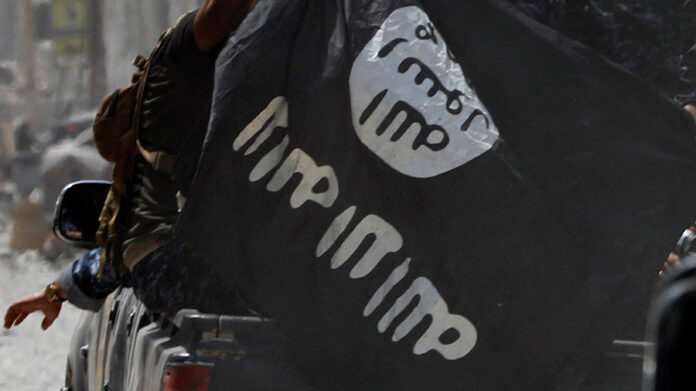
The Daesh terror group claimed responsibility late Friday for a deadly mosque attack in Afghanistan that killed at least 47 people and wounded dozens in the southern province of Kandahar. 

The attack on the Fatimiya mosque was carried out by two suicide bombers, according to a statement circulated by the terror group on social media.

It came one week after a bombing, claimed by the local Daesh affiliate, killed 46 at a Shia mosque in the northern Afghanistan province of Kunduz.