Tuesday, December 23, 2025
Home Blog Page 233

Iranian Navy helicopter issues stern warning to US destroyer in Gulf of Oman

Iranian Navy

At approximately 10 a.m. local time, the US Navy destroyer identified as USS Fitzgerald attempted to approach waters under the surveillance of the Islamic Republic of Iran in the Gulf of Oman.

In response, a rapid-reaction team from the Iranian Navy swiftly deployed a helicopter to fly over the foreign vessel and issued a firm warning demanding its departure from the area. According to Iranian military sources, the US destroyer responded by threatening to target the Iranian helicopter, urging it to leave the vicinity.

The Iranian pilot, however, held his ground and renewed the demand for the destroyer to retreat from Iranian-monitored waters.

As tensions escalated, Iran’s air defense units issued a strong message declaring that the Navy helicopter was under full protection and that the US vessel was required to alter its course southward.

Faced with the Iranian Navy’s persistence and the backing of Iran’s defense systems, the heavily-armed US destroyer ultimately changed course and withdrew from the area under Iran’s maritime watch.

Veteran Iranian political figure Ahmad Tavakoli dies at 74

Tavakoli, who had suffered from Parkinson’s disease in recent years, was hospitalized earlier this month, following a heart attack and was placed in intensive care before passing away.

Born in 1951 in Behshahr, northern Iran, Tavakoli was a key political figure in post-revolution Iran. He served multiple terms in parliament, including as head of the Research Center of Parliament.

A former Minister of Labor under prime minister Mir-Hossein Mousavi, he also ran twice for president, placing second to both Akbar Hashemi Rafsanjani and Mohammad Khatami.

Tavakoli held a PhD in economics from the University of Nottingham and was an associate professor at Shahid Beheshti University until his retirement in 2013.

He was known for founding the Alef news website and the Transparency and Justice Watch NGO.

A vocal advocate of anti-corruption efforts, he maintained a visible presence in political and academic discourse for decades.

Tavakoli is survived by his wife and seven children.

Finance minister says Israel has US ‘greenlight’ to turn Gaza into ‘resort town’

Gaza War

“We will occupy Gaza and make it an inseparable part of Israel,” Smotrich told a conference held in the Knesset (parliament) under the title “The Gaza Riviera – from vision to reality.”

“We have the greenlight from the president of the United States (Donald Trump) to turn Gaza into a prosperous strip, a resort town with employment. That’s how you make peace,” he said.

The head of the far-right Religious Zionism Party added that “a proposed plan to relocate Gazans to other countries will serve as a means of facilitating the settlement of the strip.”

“We can start with the northern border and establish three communities there. We are already talking about it,” the extremist minister stated.

There was no immediate US comment on Smotrich’s statements. The idea of turning Gaza into the “Riviera of the Middle East” was floated by President Donald Trump earlier this year.

While Smotrich did not provide further details about this plan, he reiterated his call at a separate conference in West Jerusalem for Prime Minister Benjamin Netanyahu to move forward with the full occupation of the Gaza Strip.

“I call on the prime minister to set a deadline for negotiations with Hamas, and to give it a final 24-hour ultimatum to accept the terms,” he said, adding, “If it doesn’t, declare the end of any possibility for a partial deal and order the army to implement the plan for full control of the Strip and humanitarian separation, leading to either Hamas’ complete surrender or total destruction.”

Indirect negotiations are currently underway in Doha between Israel and Hamas, mediated by Qatar and Egypt with US support, to reach a deal on prisoner exchange and a ceasefire in Gaza. Two partial agreements were reached in November 2023 and this January.

Hamas has repeatedly affirmed its willingness to release all Israeli captives in one batch, in exchange for ending Israel’s war and the complete withdrawal of Israeli forces from Gaza.

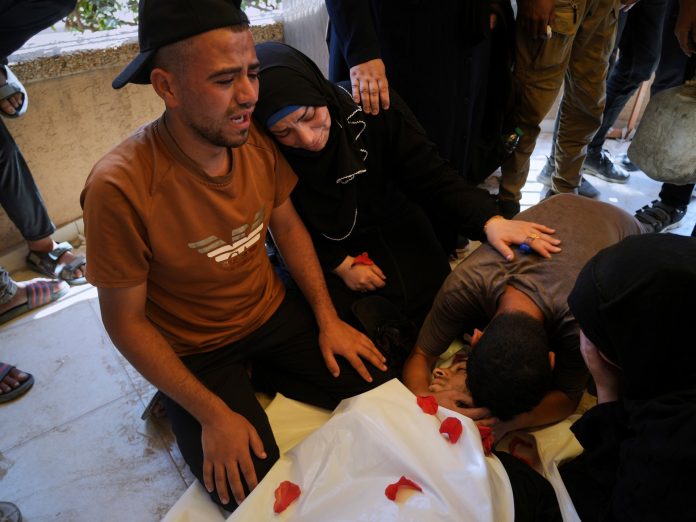
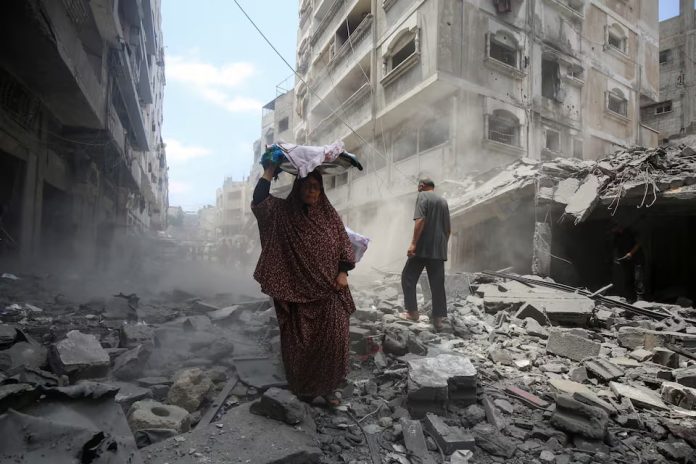
Israel has killed more than 59,100 Palestinians, most of them women and children, in the Gaza Strip since October 2023. The military campaign has devastated the enclave, collapsed the health system, and led to severe food shortages.

Last November, the International Criminal Court issued arrest warrants for Netanyahu and his former Defense Minister Yoav Gallant for war crimes and crimes against humanity in Gaza.

Israel also faces a genocide case at the International Court of Justice for its war on the enclave.

Iran’s Deputy FM slams false claims, points to UN reports of nuclear non-diversion

Kazem Gharibabadi

Kazem Gharibabadi made the statement in a meeting with UN Under-Secretary-General for Political and Peacebuilding Affairs, Rosemary DiCarlo, in New York on Tuesday as they conferred about the Israeli-US aggression on Iranian soil last month and UN Security Council Resolution 2231, which endorsed the 2015 nuclear deal between Tehran and world powers, officially known as the Joint Comprehensive Plan of Action (JCPAO).

Pointing to regularly-issued reports by the IAEA on the Islamic Republic’s compliance with the JCPOA obligations, Gharibabadi said, “Not a single word about the diversion of Iran’s nuclear program has been mentioned in any of these reports.”

Rejecting as baseless and repetitive the Israeli regime’s claims over the past three decades regarding Iran’s attempt to acquire nuclear weapons, Gharibabadi said, “The Islamic Republic of Iran, based on religious principles and decrees, has never sought weapons of mass destruction. These claims are leveled while the Zionist regime is not a member of any disarmament treaties for weapons of mass destruction and is equipped with all types of such weapons.”

The Iranian diplomat also rebuked the double standards of international institutions, including the United Nations, demanding that the world body play a more effective and impartial role in addressing the acts of aggression committed by the US and Israel against the Islamic Republic.

“Nations expect the secretary-general of the United Nations to take a clear and explicit stance against such crimes and condemn them, rather than merely expressing concern and calling for restraint,” he added.

Gharibabadi voiced optimism that these facts and concerns will be seriously reflected in future reports and positions of the UN Secretariat, as well as in upcoming meetings.

DiCarlo, for his part, expressed hope for further talks between Iran and other JCPOA parties, emphasizing the United Nations’ support for the continuation of the diplomatic process.

“Despite existing challenges, the United Nations still considers diplomacy the only possible solution for overcoming crises,” she stated.

The Israeli regime launched an aggression on Iran’s military and civilian infrastructure on June 13 that killed nearly 1,100 people, including women and children, as well as a dozen top military brass.

The US, which had been in talks with Tehran about its nuclear program since April, joined the war on June 22 by targeting several key nuclear sites.

In response to the strikes, the Iranian Armed Forces launched a retaliatory campaign against the Israeli regime by targeting key military, intelligence, industrial, energy facilities across the occupied territories. The Iranian Armed Forces also targeted the largest US military base in the West Asian region in Qatar with a barrage of missiles.

Following Iran’s retaliatory attacks, the Israeli regime was forced on June 24 to declare a unilateral halt to its aggression, which was announced on its behalf by US President Donald Trump.

Iran’s president: Talk of ending nuclear program ‘illusion’

“We categorically reject nuclear weapons. This is our political, religious, human, and strategic stance,” Pezeshkian said, adding that uranium enrichment will continue on Iranian soil in line with global regulations.

The president also warned that Iran is fully prepared for any Israeli military action.

“Our forces are ready to strike deep inside Israel again,” he declared, slamming Israel for launching attacks on Iranian territory last month while concealing the resulting damage.

President Pezeshkian reiterated Iran’s commitment to diplomacy and regional cooperation, saying Iran supports collective security with Arab neighbors and rejects foreign-imposed conditions.

He stressed, “We accept no threats or dictates.”

Referring to a June 23 retaliatory missile strike on Al Udeid Air Base in Doha, President Pezeshkian clarified the Islamic Republic targeted a US base involved in bombing Iran, not Qatar, calling the Persian Gulf state a “brother nation.”

He noted a recent phone call with Qatar’s Emir to reaffirm friendly ties.

Two border police officers killed in militant attack near western Iranian border

Iran Border Guard

According to a statement, the incident occurred during a confrontation between Iranian border forces and members of an anti-Iranian militant group.

The attackers targeted the Siranband border station, leading to a firefight that resulted in the deaths of two border guards and left one other injured.

Security forces are reportedly investigating the incident, and no group has immediately claimed responsibility for the attack.

The region has witnessed periodic clashes between Iranian security forces and various armed groups operating along the western borders, particularly in the Kurdish-populated areas near the Iraqi border.

Columbia University suspends, expels dozens of students over Gaza protests

The student activist group Columbia University Apartheid Divest (CUAD), which has called for the school to cut all financial ties with Israel, said in a statement that nearly 80 students have now been either expelled or suspended for up to three years over their involvement in antiwar protests.

On Tuesday, Columbia said in a statement that its latest punishment of students relates to “disruption of Butler Library in May 2025 and the encampment during Alumni Weekend in spring 2024″.

“Disruptions to academic activities are in violation of University policies and rules, and such violations will necessarily generate consequences,” the university wrote.

The CUAD group said the university’s sanctions on students “hugely exceed precedent for teach-ins or non-Palestine-related building occupations”.

“We will not be deterred. We are committed to the struggle for Palestinian liberation,” the group added.

The pro-Palestinian student encampments at Columbia University in 2024 helped ignite a global movement against Israel’s unrelenting war on Palestinians in the Gaza Strip. The protest sites were eventually broken up when Columbia University allowed hundreds of New York City police officers on campus, leading to dozens of arrests.

Despite the university’s harsh crackdowns, student protesters occupied the Butler Library during final exams in May this year, demanding divestment from companies linked to the Israeli military and expressing solidarity with Palestinians in Gaza.

Columbia University’s Judicial Board confirmed it issued expulsions, suspensions and degree revocations after what it called a disruption during “reading period”. It did not say how many students were expelled but said that this was “the final set of findings from that period”.

The Ivy League university is in negotiations with US President Donald Trump’s administration to restore some $400m in federal funding. The Trump administration cut funds to the New York City-based institution over what it claimed were failures to “meaningfully protect Jewish students against severe and pervasive harassment”.

Columbia’s acting president, Claire Shipman, a former trustee, was booed by students during a May graduation ceremony for her role in cracking down on pro-Palestinian protests.

Fellow Ivy League institution Harvard University, which has also been targeted with billions in funding cuts by the government, has pushed back against pressure to change its policies by taking the Trump administration to court.

The latest disciplinary measures announced by Columbia against students came on Tuesday as Israel’s siege on the Gaza Strip continued to cause widespread starvation, with at least 15 people, including a six-week-old baby, dying from hunger and malnutrition within a 24-hour period, according to health officials.

Mahmoud Khalil, the Columbia University protest leader targeted for deportation by the Trump administration, met with lawmakers in Washington, DC, on Tuesday, more than a month after he was released from immigration custody in Louisiana, where he was being held amid a pledge by the US president to deport pro-Palestinian activists.

Over 100 aid groups warn ‘mass starvation’ spreading across Gaza

Gaza War

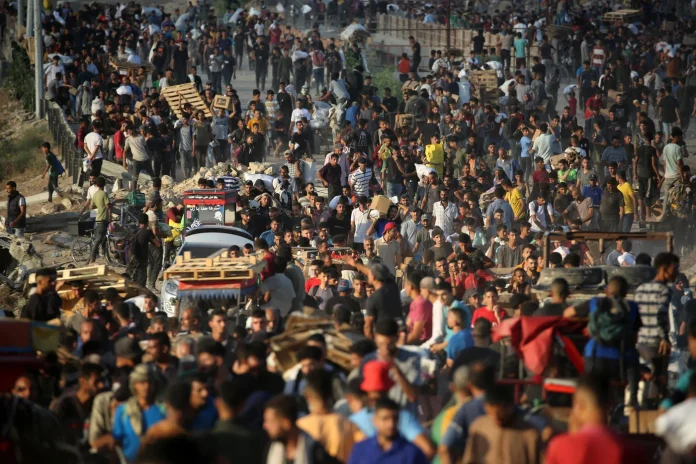
Israel is facing mounting international pressure over the catastrophic humanitarian situation in the Palestinian territory, where more than two million people have endured 21 months of devastating conflict.

Even after Israel began easing a more than two-month aid blockade in late May, Gaza’s population is still suffering extreme scarcities of food and other essentials, with residents frequently killed as they try to collect aid at a handful of distribution points.

In a statement, the 111 signatories — including Doctors Without Borders (MSF), Save the Children and Oxfam — warned that “our colleagues and those we serve are wasting away”.

“As the Israeli government’s siege starves the people of Gaza, aid workers are now joining the same food lines, risking being shot just to feed their families,” the statement read.

The groups called for an immediate negotiated ceasefire, the opening of all land crossings and the free flow of aid through UN-led mechanisms.

It came a day after the United States said its envoy Steve Witkoff will head to Europe this week for talks on Gaza and may then visit the Middle East.

Witkoff comes with “a strong hope that we will come forward with another ceasefire as well as a humanitarian corridor for aid to flow, that both sides have in fact agreed to,” State Department spokeswoman Tammy Bruce told reporters.

The UN on Tuesday said Israeli forces had killed more than 1,000 Palestinians trying to get food aid since the US- and Israel-backed Gaza Humanitarian Foundation started operations in late May — effectively sidelining the existing UN-led system.

In their statement, the humanitarian organisations said that warehouses with tonnes of supplies were sitting untouched just outside the territory, and even inside, as they were blocked from accessing or delivering the goods.

“Palestinians are trapped in a cycle of hope and heartbreak, waiting for assistance and ceasefires, only to wake up to worsening conditions,” the signatories added.

“It is not just physical torment, but psychological. Survival is dangled like a mirage,” they stated.

“The humanitarian system cannot run on false promises. Humanitarians cannot operate on shifting timelines or wait for political commitments that fail to deliver access.”

UN Secretary-General Antonio Guterres said Tuesday that the “horror” facing Palestinians in Gaza under Israeli military attack is unprecedented in recent years.

More than two dozen Western countries recently urged an immediate end to the war, saying suffering in Gaza had “reached new depths”.

The aid organisations urged decisive action from governments, saying that “piecemeal arrangements and symbolic gestures… serve as a smokescreen for inaction”.

Israel’s military campaign in Gaza has killed 59,106 Palestinians, mostly civilians, according to the health ministry in the Hamas-run territory.

Iran expresses deep concern over Gaza humanitarian catastrophe

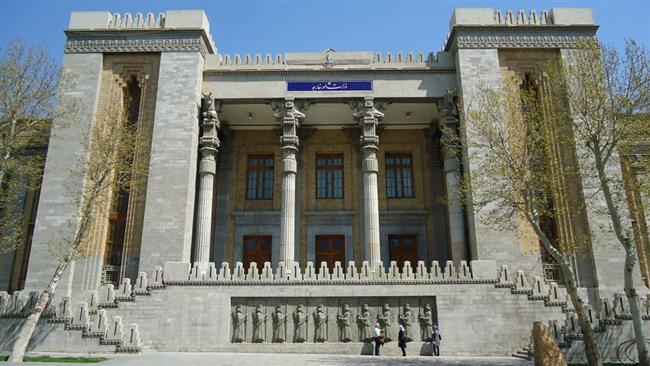
Iranian Foreign Ministry

In a statement, the Ministry called for immediate, effective, and decisive action by the international community and regional countries to halt the genocide and alleviate the suffering of the oppressed Palestinian people.

The statement says the ongoing inhumane blockade of Gaza, the brutal bombardment of refugee shelters, and the transformation of humanitarian aid distribution points into traps for mass killings of hungry and thirsty civilians all attest to the extreme cruelty and heartlessness of the apartheid Israeli regime and its supporters.

Pointing to the killing of over a thousand innocent people while waiting for food and the death of more than 600 due to starvation, it added these mark the height of the Zionist regime’s savagery and constitute clear examples of war crimes and genocide.

According to the statement, the UN Security Council’s failure to fulfill its legal responsibilities in the face of the occupying regime’s aggression and crimes, due to the US’s persistent obstruction, has emboldened the regime and normalized its brutality.

The Foreign Ministry warned that the comprehensive military, economic, and political support provided by the US and certain European countries, particularly Germany, has not only granted the regime near-total impunity but has also paved the way for even more severe crimes aimed at implementing a plan of ethnic cleansing and the forced displacement of Palestinians.

It called on the Islamic countries to use all their capacities, particularly through the Organization of Islamic Cooperation (OIC) and the United Nations, to compel the supporters of the Zionist regime, especially the US, to halt these crimes and facilitate the urgent delivery of essential aid, especially water, food, and medicine, to the Palestinian people and take action to prosecute and punish the Zionist criminals.

Number of Gaza aid seekers killed by Israel tops 1,000: UN

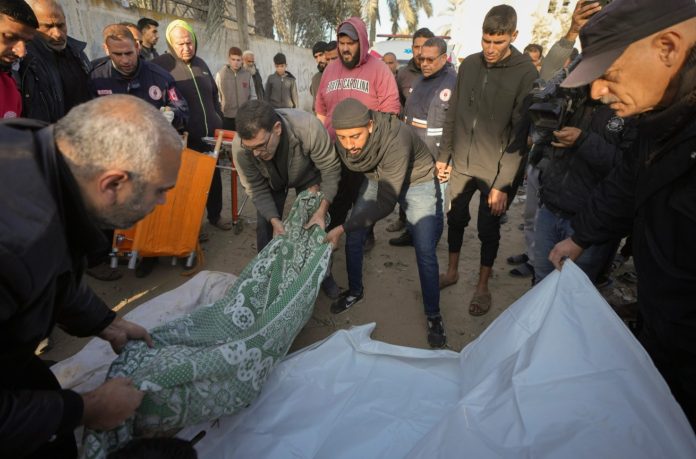
“As of July 21, we have recorded 1,054 people killed in Gaza while trying to get food; 766 of them were killed in the vicinity of GHF sites and 288 near UN and other humanitarian organisations’ aid convoys,” UN human rights office spokesman Thameen Al-Kheetan told the AFP news agency on Tuesday, stating the victims had been “killed by the Israeli military”.

In Gaza, the GHF has become infamous for the near-daily shootings of people seeking food who have queued to receive meals since the group started operating in early May. Palestinians seeking food have to navigate a complicated set of instructions and stick to specific routes, as well as walk long distances to access the food sites. Even then there is no guarantee they will be safe.

Leading humanitarian and human rights groups have demanded the immediate closure of the GHF, which they accused of “forcing two million people into overcrowded, militarized zones where they face daily gunfire and mass casualties”.

More than 58,000 people have been killed during Israel’s 21 months of military operations in the besieged enclave.