Tuesday, December 23, 2025
Home Blog Page 232

Hamas says submitted response to Gaza ceasefire proposal to mediators

Gaza War

“A short while ago, Hamas delivered to the mediators its response and the response of the Palestinian factions to the ceasefire proposal,” the group said in a statement.

Further details regarding the response were not immediately available.

Israeli Prime Minister Benjamin Netanyahu’s office said the negotiation team received the Hamas response from mediators and was reviewing it.

Israel’s public broadcaster KAN, citing sources familiar with the matter, said that the latest response is “more positive” than the previous ones.

Indirect negotiations between Israel and Hamas over the Gaza ceasefire and prisoner release deal continue in Doha, Qatar.

Hamas has repeatedly affirmed its willingness to release all Israeli captives in one batch in exchange for ending Israel’s war and the complete withdrawal of Israeli forces from Gaza.

Israel has killed more than 59,000 Palestinians, most of them women and children, in the Gaza Strip since October 2023. The military campaign has devastated the enclave, collapsed the health system, and led to severe food shortages.

Last November, the International Criminal Court issued arrest warrants for Netanyahu and his former Defense Minister Yoav Gallant for war crimes and crimes against humanity in Gaza.

Israel also faces a genocide case at the International Court of Justice for its war on the enclave.

Iran slams US, Israel’s role in ‘collapse’ of intl. legal order, ‘erosion’ of UN Charter

Kazem Gharib Abadi

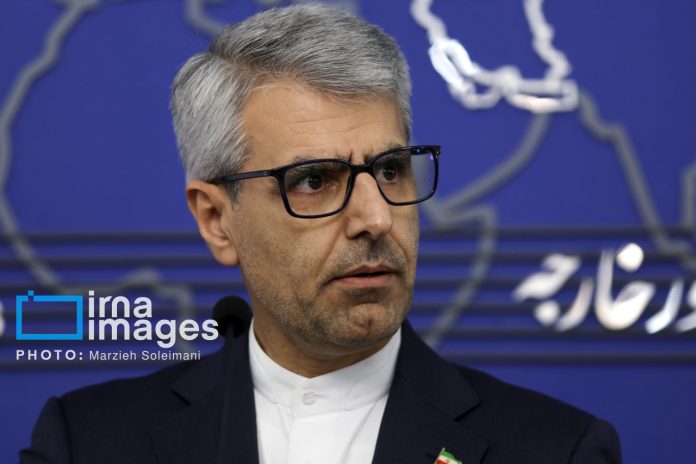
Deputy Foreign Minister for Legal and International Affairs, Kazem Gharibabadi made the remarks in New York on Wednesday, addressing a UN Security Council meeting on the situation in the region, including the issue of Palestine.

He described the US and the Israeli regime as the “main source of instability” in the West Asia region, citing their individual or joint atrocities against regional countries.

Washington and Tel Aviv, he added, posed “a major threat to international peace and security” as a result of their acts of deadly regional military adventurism.

The official cited the regime’s US-enabled war of genocide on the Gaza Strip, the occupied West Bank, Syria, and Yemen as well as its unprovoked 12-day war on the Islamic Republic last month.

Referencing the war on Gaza, he said the October 2023-present campaign of unbridled aggression had featured killing or maiming tens of thousands, bombing hospitals and schools, and murdering UN staff and humanitarian workers.

Millions had also been displaced, and starvation “weaponized against an entire population,” Gharibabadi added, pointing to Tel Aviv’s near-total siege of the Palestinian territory.

He described the situation as worsening, saying the regime now employed a “systematic method of killing” by “deliberately targeting starving civilians” awaiting aid.

The diplomat called the method that had seen Israeli forces kill more than 1,000 civilians swarming around Israeli- and American-sponsored so-called aid distribution points, “premeditated mass murder.”

The overall war, Gharibabadi said, amounted to “organized and systematic annihilation of a besieged civilian population by an occupying regime, supported and shielded by the United States.”

He was pointing to Washington’s providing the warfare with ceaseless political, military, and intelligence support.

Amid the situation, the Security Council was expected to take action towards ensuring an immediate and permanent ceasefire, provision of unimpeded humanitarian access for Gazans, and release of arbitrarily detained Palestinians.

The body was also required to reject the regime’s forced displacement plans, enable full UN membership for Palestine, and ensure accountability on the part of Tel Aviv.

Turning to the June 13-25 war on Iran that took place amid unprecedented American support, Gharibabadi said the assault was one of an “unprovoked and unlawful” nature.

He noted how the aggression targeted the Islamic Republic’s civilian and nuclear infrastructures, including nuclear sites under the International Atomic Energy Agency (IAEA)’s safeguards.

Iran, the official stated, demanded urgent Security Council action concerning such atrocities.

He, meanwhile, denounced Dorothy Shea, Washington’s UN envoy, for accusing the Islamic Republic earlier during the meeting of being behind ongoing instances of regional instability instead of taking up responsibility on the part of her country for the underway situation.

“The US representative is in no moral, political, or legal position to lecture or blame Iran,” Gharibabadi concluded.

Severe water shortage expected in Tehran within 40 days, lawmaker warns

Water Crisis

Following a recent visit by Tehran’s parliamentary delegation to the provincial water and wastewater authority, Gheisari said the outlook is dire.

She cited a sharp drop in water inflow to the capital’s five main dams amid a prolonged drought now in its fifth consecutive year.

She noted that per capita water consumption in Tehran exceeds national standards, with most usage concentrated in drinking and hygiene.

Authorities are considering pressure reductions to ensure supply across all districts.

Plans to activate the second phase of the Taleghan Dam project, western Tehran, are also underway.

Gheisari criticized the continued use of high-consumption taps and the operation of pools and car washes in current conditions, urging restrictions and greater public awareness.

As temperatures in Iran soar, 23 provinces, including Tehran, shut down government offices and schools or shift to remote work on Wednesday.

Officials, including President Massoud Pezeshkian, admit the water crisis threatens Tehran’s sustainability as the capital, calling for urgent action and reverse migration policies.

12 arrested for illegal weapons possession in southern Iran

Iran Police

According to Colonel Mehdi Basharati, head of intelligence for the provincial police command, the operation was carried out over a 72-hour period and focused on crime-prone areas.

It resulted in the seizure of 43 illegal firearms, including 20 military-grade weapons and 23 unauthorized hunting rifles, along with a quantity of ammunition.

The arrests were made in separate raids, coordinated with judicial authorities.

Police searched homes and hideouts belonging to the suspects, leading to the confiscation of the weapons and related materials.

Colonel Basharati emphasized that all detainees have been referred to judicial authorities for legal proceedings.

He added that such operations will continue across the province, in order to maintain public peace and safety.

The disarmament campaign is part of broader efforts by Iranian law enforcement to maintain security after the 12-day conflict with the US and Israel in June.

Iran reformists call for national reconciliation, political freedoms in meeting with president

Masoud Pezeshkian

According to Jamaran news website, key demands included lifting the house arrest of opposition leaders Mir Hossein Mousavi and Zahra Rahnavard, releasing political prisoners, and granting a general amnesty to Iranians prosecuted for expressing dissent.

Prominent reformist figures, including Seyed Hassan Rasouli and Ezzatollah Taghvaian, emphasized the urgent need to revise state policies on governance, civil liberties, and foreign relations.

They called for an end to restrictive vetting by the Guardian Council and a shift toward inclusive political participation, Jamaran added.

Other proposals included improving dialogue with Generation Z, lifting internet restrictions, and promoting transparent communication between state officials and the public.

Mohammad Salari warned that without structural reforms, the unity shown during Iran’s recent 12-day conflict with Israel might not endure.

The meeting also included appeals for re-evaluating national security strategies and enhancing Iran’s global engagement, including potential dialogue with the U.S.

According to Jamaran, reformist leaders urged Pezeshkian to use his mandate and the Leader’s support to initiate meaningful change and restore public trust.

Editorial: Iran must rethink overreliance on China amid shifting geopolitics

Pezeshkian Xi

The editorial argues that while the 25-year Iran-China cooperation agreement promises significant benefits in trade, infrastructure, and technology, China’s real priorities lie in regional stability and safeguarding its expansive economic interests, not strategic alignment.

Beijing’s call for “restraint” during the conflict and its refusal to supply arms to nations engaged in war highlight its reluctance to side with Tehran in moments of crisis, it adds

Ettelaat emphasizes that China seeks balanced relations with Arab states, Israel, and even the US, to protect its energy imports and Belt and Road investments. As such, Iran’s expectations for deeper political or military backing are unrealistic.

The editorial concludes that Iran must pursue a more diversified foreign policy, reduce its dependency on any single power, and better integrate itself into China’s economic value chains. Only then can Tehran turn symbolic partnership into meaningful strategic leverage amid an increasingly multipolar and pragmatic global order.

Iran ready for war with Israel, will not stop nuclear programme: President Pezeshkian

Pezeshkian made the comments in an exclusive interview with Al Jazeera aired on Wednesday, one of his first since the end of the 12-day conflict with Israel last month, in which the United States intervened on Israel’s behalf, launching strikes on Iran’s nuclear facilities.

The comments come as Western nations say they are seeking a solution to Iran’s ongoing nuclear ambitions in the wake of the conflict, amid reports that strikes on its nuclear facilities were less damaging than claimed by Washington.

“We are fully prepared for any new Israeli military move, and our armed forces are ready to strike deep inside Israel again,” Pezeshkian told Al Jazeera.

Iran was not relying on the ceasefire that ended the 12-day war to hold, he said.

“We are not very optimistic about it,” added Pezeshkian.

“That is why we have prepared ourselves for any possible scenario and any potential response. Israel has harmed us, and we have also harmed it. It has dealt us powerful blows, and we have struck it hard in its depths, but it is concealing its losses.”

He added that Israel’s strikes, which assassinated leading military figures and nuclear scientists, and damaged nuclear facilities, had sought to “eliminate” Iran’s hierarchy, “but it has completely failed to do so”.

More than 1,000 people were killed in Iran, large numbers of them civilians, and at least 28 people were killed in Israel before a ceasefire took hold on June 24.

Pezeshkian said Iran would continue its uranium enrichment programme despite international opposition, saying the development of its nuclear abilities would be carried out “within the framework of international laws”.

“[US President Donald] Trump says that Iran should not have a nuclear weapon and we accept this because we reject nuclear weapons and this is our political, religious, humanitarian and strategic position,” he stated.

“We believe in diplomacy, so any future negotiations must be according to a win-win logic, and we will not accept threats and dictates.”

He said the claim from Trump “that our nuclear programme is over is just an illusion”.

“Our nuclear capabilities are in the minds of our scientists and not in the facilities,” he added.

Pezeshkian’s comments echoed earlier remarks by Iranian Foreign Minister Seyyed Abbas Araghchi, who said in an interview with US broadcaster Fox News aired Monday that Tehran would never abandon its uranium enrichment programme, but was open to a negotiated solution to its nuclear ambitions, in which it would guarantee that the programme was for peaceful purposes in response for the lifting of sanctions.

Pezeshkian also addressed an attempt by Israel to assassinate him at a meeting of the Supreme National Security Council in Tehran on June 15, which was reported to have left him with minor injuries.

Asked about the assassination attempt, he stressed it had been part of a plan by Israeli commanders to target Iran’s political leadership in the wake of its assassination of senior military figures, in a bid “to put the country into chaos in order to overthrow it completely”.

But the plan had failed, he added.

He also stressed that Tehran’s strikes on Qatar’s Al Udeid base in the wake of US attacks on Iranian nuclear facilities had not been an attack on Qatar and its people.

“We do not even have a thought or imagination that there should be hostility or rivalry between us and the state of Qatar,” he said, adding that he had called Qatar’s Emir Sheikh Tamim bin Hamad Al Thani on the day of the strikes to explain his position.

“I say clearly and honestly that we did not attack the State of Qatar, but we attacked a base for America that bombed our country while all our intentions towards Qatar and its people are good and positive.”

Araghchi said on Monday that Iran’s Atomic Energy Organization is still evaluating how the attacks last month had affected Iran’s enriched material, saying Tehran would soon inform the International Atomic Energy Agency (IAEA) of its findings.

He noted Iran had not stopped cooperation with the IAEA, adding that any request for the IAEA to send inspectors back to Iran would be “carefully considered”.

IAEA inspectors left Iran earlier this month after Pezeshkian signed a law suspending cooperation with the agency.

Meanwhile, talks are set to take place between Iran, France, Germany and the UK in Turkiye on Friday.

The three European parties to the former Joint Comprehensive Plan of Action, which Tehran signed with several world powers in 2015 before the US pulled out in 2018, have said Tehran’s failure to resume negotiations would lead to international sanctions being reimposed on it.

Israel’s parliament approves ‘symbolic motion’ on West Bank annexation

West Bank

Knesset lawmakers voted 71-13 in favour of the motion on Wednesday, a non-binding vote which calls for “applying Israeli sovereignty to Judea, Samaria and the Jordan Valley” – the Israeli terms for the area.

It said that annexing the West Bank “will strengthen the state of Israel, its security and prevent any questioning of the fundamental right of the Jewish people to peace and security in their homeland”.

The motion, advanced by Prime Minister Benjamin Netanyahu’s coalition is declarative and has no direct legal implications, though it could place the issue of annexation on the agenda of future debates in the parliament.

The idea was initially brought forward last year by Israel’s far-right finance minister, Bezalel Smotrich, who himself lives in an illegal Israeli settlement and holds a position within Israel’s Ministry of Defence, where he oversees the administration of the West Bank and its settlements.

The West Bank, along with the Gaza Strip and East Jerusalem, has been under Israeli occupation since 1967. Since then, Israeli settlements have expanded, despite being illegal under international law and, in the case of settlement outposts, Israeli law.

Palestinian leaders want all three territories for a future state. Some 3 million Palestinians and more than 500,000 Israeli settlers currently reside in the West Bank.

Annexation of the West Bank could make it impossible to create a viable Palestinian state, which is seen internationally as the most realistic way to resolve the Israeli-Palestinian conflict.

Last year, the Israeli parliament approved a similar symbolic motion declaring opposition to the establishment of a Palestinian state.

Hussein al-Sheikh, deputy to Palestinian Authority President Mahmoud Abbas, stressed that the motion was “a direct assault on the rights of the Palestinian people”, which “undermines the prospects for peace, stability and the two-state solution”.

“These unilateral Israeli actions blatantly violate international law and the ongoing international consensus regarding the status of the Palestinian territories, including the West Bank,” he wrote in a post on X.

The Palestinian Ministry of Foreign Affairs and Expatriates announced in a statement that it strongly rejects any motion for annexation.

The ministry stressed that the “colonial measures” reinforce a system of apartheid in the West Bank and reflect a “blatant disregard” for many United Nations resolutions and the advisory opinion of the International Court of Justice (ICJ), which was issued in July 2024.

The statement, carried by the official Palestinian Wafa news agency, also warned that such actions deliberately undermine the prospects of implementing a two-state solution.

The ministry added that while settlement expansion continues, de facto annexation is already occurring on a daily basis.

Following Israel’s deadly war on Gaza, Israeli forces have intensified attacks on Palestinian towns and villages in the occupied West Bank, displacing thousands of Palestinians and killing hundreds. Settlers, often backed by Israeli soldiers, have also escalated assaults on Palestinians, their land, and property.

Deputy FM: IAEA technical team to visit Iran

IAEA Team

Speaking to US media, Gharibabadi stressed that the Atomic Energy Organization of Iran is currently assessing damage to its nuclear facilities caused by recent attacks of the Zionist regime and the US.

Referring to an upcoming meeting with European powers, Gharibabadi described Friday’s planned talks in Istanbul with the E3 (UK, France, and Germany) as “very important”.

He refused to rule out a return to negotiations with the US, underlining the need for preliminary groundwork, including a halt to attacks during talks and mutual understanding that any agreement should benefit both sides.

Regarding the snapback mechanism under the JCPOA, Gharibabadi rejected the legitimacy of its application. He said the deal has not been implemented for over seven years, particularly after the US withdrawal in 2018.

“Europeans ceased their obligations after the US withdrawal…so what do they want Iran to comply with?” he said.

Iran, the deputy foreign minister noted, has not decided to withdraw from the Non-Proliferation Treaty (NPT), but believes a fresh dialogue with the IAEA is needed to redefine commitments under current conditions.

He added that a law passed by Iran’s parliament mandates the suspension of IAEA cooperation unless the safety of nuclear facilities and personnel is ensured.

Ukraine, Russia hold third round of peace negotiations in Istanbul, agree to another major prisoner exchange

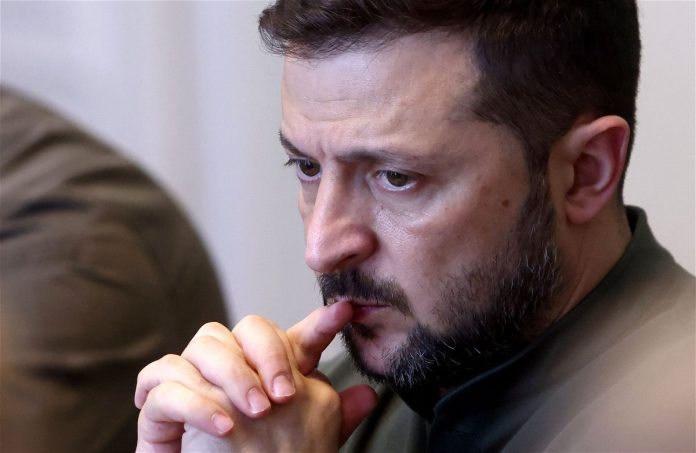
During the talks, Ukraine proposed holding a summit between President Volodymyr Zelensky and Russian President Vladimir Putin before the end of August, according to National Security and Defense Council Secretary Rustem Umerov, who led the Ukrainian delegation.

The delegation also included Presidential Office head Andriy Yermak, First Deputy Foreign Minister Sergiy Kyslytsya, and deputy military intelligence chief Vadym Skybytskyi.

“We are working on priority issues. Our priority is always people, ceasefire and meeting of leaders,” Umerov said after the talks, adding that Ukraine and Russia agreed to conduct a humanitarian exchange involving more than 1,200 people.

Ukraine has clearly outlined its priorities, including a ceasefire, a full stop to strikes on civilian infrastructure, and “silence” along the entire front line, according to Yermak. “This is where the path to a genuine peace must begin,” he added in his post on X.

Zelensky also previously identified the return of abducted Ukrainian children and an immediate ceasefire as key priorities in the talks.

Vladimir Medinsky, Putin’s aide and head of the Russian delegation, said Moscow proposed forming three working groups to meet online and address political, military, and humanitarian issues. Commenting on a possible leaders’ meeting, Medinsky said it was crucial to first determine the topics for discussion.

The Russian delegation said it suggested brief 24–48-hour ceasefires to retrieve the wounded and the bodies of fallen soldiers.

Moscow also offered to hand over the remains of 3,000 Ukrainian soldiers via the Red Cross “once Kyiv is ready.” Medinsky’s delegation also claimed around 30 civilians from Russia’s Kursk region, allegedly taken into Ukraine, have not been returned and called on Kyiv to clarify their status.

Russia has completed work on the list of Ukrainian children submitted during the previous round of negotiations, Medinsky said. He claimed that Ukrainian children in Russia are “under state supervision, well provided for, and safe in appropriate childcare institutions.”

Commenting on the third round of peace talks, Yermak said that “…It is clear that Russia is still not ready to end the war — but there is still time to reconsider and put an end to this madness.”

Ahead of the delegations’ meeting, Umerov’s team held talks with Turkish President Recep Tayyip Erdogan in Ankara.

The July 23 meeting followed earlier rounds of negotiations on May 16 and June 2, after more than three years without formal talks. Despite limited progress, both sides have managed to negotiate several prisoner exchanges since restarting discussions.

While Zelensky has expressed readiness for face-to-face talks, Putin has repeatedly declined to participate in person, sending lower-level officials instead.

The peace talks, characterized by great distance between the two sides’ demands, have been given new energy after U.S. President Donald Trump’s warning on July 14 that he would impose “severe” tariffs on Russia unless it agrees to end the war within 50 days.

Kremlin spokesperson Dmitry Peskov has reiterated that Moscow’s war goals remain unchanged, reflecting Russia’s reluctance to concede from its maximalist demands.

Ukraine has proposed a 30-day unconditional ceasefire in both rounds of talks — a position supported by the U.S. — but Russia has so far rejected the proposal.

On July 7, Kyslytsya told the Kyiv Independent that Russia’s approach at the Istanbul meetings amounts to ultimatums rather than genuine negotiations.