Saturday, December 27, 2025
Home Blog Page 2318

Turkey extends military missions in Syria and Iraq

Turkey’s parliament on Tuesday ratified a motion extending authorization to launch cross-border anti-terrorist operations in northern Iraq and Syria for two more years, as well as continued participation in a Lebanon peacekeeping mission.

The Justice and Development (AK) Party, Nationalist Movement Party (MHP), and the opposition Good (IYI) Party backed the Iraq and Syria motion. The main opposition Republican People’s Party (CHP) and the Peoples’ Democratic Party (HDP), however, voted against the motion.

The motion, referred to parliament by the government of President Recep Tayyip Erdogan, allows the Turkish military to carry out cross-border operations in northern Iraq and Syria for two more years, from Oct. 30, 2021 until Oct. 30, 2023.

The motion stated that the risks and threats posed by ongoing conflicts near Turkey’s southern land borders “continue to rise.”

Stressing that Turkey places great importance on protecting Iraq’s territorial integrity, national unity, and stability, the motion said: “However, the presence of the (terrorist groups) PKK and Daesh in Iraq poses a direct threat to regional peace, stability, and the security of our country.”

The motion also decried the violent attacks of the terrorist PKK/YPG in Syria, adding that Turkey has taken necessary measures in line with its “legitimate national security interests” to preserve the “peace and stability established in Turkey’s operation areas.”

It also pointed to the situation in Syria’s Idlib province, the country’s last remaining opposition stronghold, saying that the peace and stability established via the Astana process continues to be under threat.

Idlib falls within a de-escalation zone forged under an agreement between Turkey and Russia.

In its more than 30-year terror campaign against Turkey, the PKK – listed as a terrorist organization by Turkey, the US, and EU – has been responsible for the deaths of some 40,000 people, including women, children, and infants. The YPG is its Syrian branch.

PKK terrorists often use northern Iraq, just across the Turkish border, to plot attacks in Turkey. Ankara says it uses its rights under international law to pursue these terrorists at their hideouts.

Daesh terrorists have carried out multiple attacks against Turkey, including at least 10 suicide bombings, seven bombings, and four armed attacks, which killed 315 people and injured hundreds of others.

In response, Turkey launched military and police operations at home and abroad to prevent further attacks.

Since 2016, several Turkish cross-border operations in northwestern Syria have liberated the region from YPG/PKK and Daesh terrorists, making it possible for Syrians who fled the violence to return home.

Turkish lawmakers also ratified a separate motion to extend for another year the deployment of troops in Lebanon as part of a UN peacekeeping force.

The AK Party, CHP, MHP, and IYI Party backed the motion, leaving the HDP as the sole party opposing it.

Under the motion, the term of Turkish soldiers in the UN Interim Force in Lebanon, also known as UNIFIL, is extended until Oct. 30, 2022.

The motion has been extended 14 times since it was first approved by parliament in 2006.

UNIFIL was established in 1978, when Israel withdrew from Lebanon. The peacekeeping force is intended to provide security and help the Lebanese government rebuild its authority.

Over 10,000 troops from 46 countries are part of the UNIFIL mission.

Tehran meeting of Afghanistan’s neighbors gets underway

Top diplomats from Pakistan, Iran, Tajikistan, Uzbekistan and Turkmenistan are attending the meeting in Tehran while Russian and Chinese foreign ministers have joined the session online.

The meeting will continue discussions that the neighboring countries had during a virtual meeting in September about the situation in Afghanistan and developments related to the country.

Iranian Foreign Minister Hossein Amirabdollahian addressing Tehran meeting on Afghanistan, renewed calls for an inclusive government in Afghanistan/

“We hope to be able to send a common message with a unified voice to the international community and regional countries, and inside Afghanistan,” the Iranian top diplomat said.

Amirabdollahian emphasized that the responsibility for the security of Afghan citizens and borders with neighboring countries lies primarily with the caretaker governing body in Kabul and that the international community must help Afghanistan to get out of its current situation.

“If today a strong message is sent from the Tehran meeting calling for the formation an inclusive government in Afghanistan, it is because of the history and the role of the Afghan people in confronting the occupation and the challenges of recent decades,” the top Iranian diplomat added.

The Iranian foreign minister said overcoming the recent crisis in Afghanistan requires internal cohesion and utilization of all Afghan capacities and talents. 

He said Iran believes that all neighbors, and at the same time the international community, should pay special attention to the political and humanitarian situation, the spread of terrorism, drug trafficking, and respect for human and women’s rights in Afghanistan.

Amiabdollahian also stressed that many of Afghanistan’s current problems are rooted in foreign intervention, and that the United States must loudly acknowledge its responsibility for the atrocities it committed in Afghanistan over the past two decades, and take serious steps, in line with international efforts, to help the Afghan nation overcome its woes. 

“The Americans and the U.S. military left Afghanistan as a result of the struggle of the great people of Afghanistan.” he added.

UN blasts Israel’s labeling of Palestinian rights groups as “terrorist”

Israel’s designation of six Palestinian civil society organizations as “terrorist organizations” is an attack on human rights defenders, freedom of association, and the right to public participation, and should be immediately revoked, the UN human rights chief said Tuesday.

Bachelet added the organizations are some of the “most reputable human rights and humanitarian groups in the occupied Palestinian territory” that have worked closely with the UN for decades.

“Claiming rights before a UN or other international body is not an act of terrorism, advocating for the rights of women in the occupied Palestinian territory is not terrorism, and providing legal aid to detained Palestinians is not terrorism,” Bachelet stated in a statement.

She asserted that the designation decisions under the Israeli Counter-Terrorism Law of 2016 are vague or unsubstantiated.

They included peaceful and legitimate human rights activities, such as providing legal aid to Palestinians in detention, organizing activities for women in the West Bank, and “promoting steps against Israel in the international arena.”

The rights chief reiterated that counter-terrorism legislation must not be applied to legitimate human rights and humanitarian work.

The banning of organizations must not be used to suppress or deny the right to freedom of association, quash political dissent, silence unpopular views, or limit the peaceful activities of civil society.

The national authorities responsible for proscribing organizations must comply fully with international human rights obligations, said the rights office.

These include respecting the principles of legal certainty, proportionality, equality, and non-discrimination.

“Restricting the space for legitimate activities under international law is not only wrong but counter-productive, as it risks limiting the space for peaceful dialogue,” Bachelet continued.

She noted that the organizations include some of the critical partners of the UN Human Rights Office and they face far-reaching consequences due to “this arbitrary decision,” as do those who fund them and work with them.

Bachelet stated, “And the crucial work they perform for thousands of Palestinians risks being halted or severely restricted.”

The published designation decisions by the Israeli Minister of Defense state that the organizations have become the “arm” of the Popular Front for the Liberation of Palestine (PFLP).

It says that they obtained financial resources, which in practice reached the “(PFLP) terror activity” or supported their activities.

The rights office announced there is no evidence presented to support these accusations, no information on the type of alleged “PFLP terror activity,” nor has any public process been conducted to establish the allegations.

The designations against the six organizations on Oct. 19 are the latest in a long-running series of actions to undermine and restrict human rights defenders and civil society organizations working for the human rights of Palestinians.

These include using military regulations to declare groups unlawful, added the rights office.

The organizations are Addameer Prisoner Support and Human Rights Association; Al Haq; Defense for Children International – Palestine; Union of Agricultural Work Committees; Bisan Center for Research and Development; and the Union of Palestinian Women’s Committees.

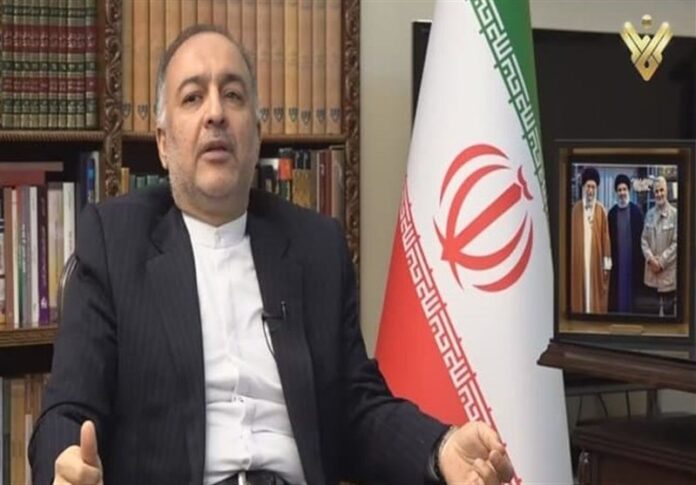
Envoy says Iran hosting Afghan refugees amid US sanctions

Takht Ravanchi has urged the international community to assist Afghan people to stand with honor and dignity.

“The international community has a moral responsibility to assist the Afghan people to stand on their own feet with honor and dignity,” he stated in his op-ed published by local media.

The full text of the Iranian envoy’s op-ed is as follows:

This Wednesday, the foreign ministers of Afghanistan’s immediate neighbors plus Russia gather in Tehran to assess the current calamitous situation in that country. They meet to discuss the possible ways and means of assisting the people of Afghanistan in overcoming the difficult and horrific challenges facing them.

Following the hasty US withdrawal and the sudden collapse of former President Ashraf Ghani’s government last August — and the takeover of the entire country by the Taliban — rapid developments have taken place which has brought about serious political, economic, social and security ramifications for the entire region.

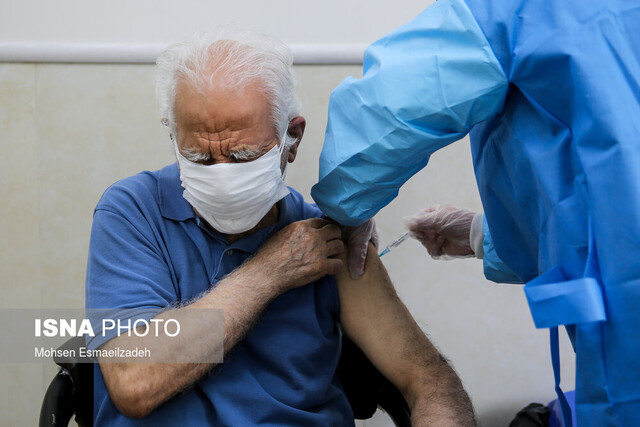
As a neighboring country that enjoys historical, cultural, linguistic, and religious bonds with Afghanistan, the Islamic Republic of Iran cannot remain indifferent to the plight of the Afghan people. During the last 42 years, Iran has used its good offices to bring Afghan factions — many with different ethnic and religious backgrounds — together to resolve their differences peacefully. For years, we have also been providing humanitarian assistance to more than three million Afghan refugees with practically little international support. The recent developments in Afghanistan have now meant that another few hundred thousand refugees have crossed the border into Iran. And again, we are hosting our Afghan brothers and sisters with almost no new resources from the international community. Besides food, shelter, medicine and education, we are now also providing the refugees with COVID-19 vaccines — all while we are under draconian and illegal US sanctions.

The current situation in Afghanistan requires a concerted international effort, and its neighboring countries can play a big role in this regard. We believe a regional approach — with the support of the UN — can help the Afghan people overcome the current crisis. We have supported a 6+2 format (neighboring countries plus Russia and the US) under the UN umbrella, and we are now hosting a meeting of Afghanistan’s neighbors.

With these efforts, there are a number of issues that require urgent attention:

1) The absolute necessity of the establishment of an inclusive government in Afghanistan. The domination of one ethnic or religious group over the entire country is doomed to fail. Afghanistan is a multi-ethnic country and a government representing all Afghans must be formed in order to gain the trust of the people of Afghanistan as well as the respect of the international community.

2) Current efforts to provide humanitarian assistance to the Afghan people should be redoubled. Winter is approaching and the humanitarian needs of the people are becoming dire. As such, the provision of assistance should not be contingent on other issues. For our part, we have intensified our efforts in this regard and will continue to do so.

3) An international response to the flow of refugees into neighboring countries—including Iran—needs to be intensified. It is incumbent upon the international community, and particularly the Western countries, to pay their fair share in providing assistance for the refugees.

4) During recent years, the Afghan people, including women who represent half of the population, have made great progress in the advancement of their country. These achievements should not be allowed to be rolled back. Based on Islamic teachings, the human rights of all Afghans, women, men, and children alike, from different religious and ethnic backgrounds, must be respected.

5) Terrorism must be confronted with full vigor. Terrorist groups, including Daesh, should not be allowed to take advantage of the present situation in Afghanistan to cause havoc and terrorize the population. The recent terrorist attacks in Kunduz and Kandahar are alarming and should serve to remind us of the continuous threats terrorists pose to Afghanistan and its neighborhood.

The US invasion and occupation of Afghanistan — lasting 20 years — in which many Afghans were killed by US forces, and the subsequent irresponsible withdrawal of US and NATO forces has created a dangerous situation in a turbulent region. The international community has a moral responsibility to assist the Afghan people to stand on their own feet with honor and dignity.

Equally important, the people have a historical responsibility to put aside their differences and establish an inclusive and broad-based government with the participation of all ethnic and religious groups. This can only be achieved through intra-Afghan dialogue and absent foreign interference.

It is high time for the international community to join forces to expeditiously help the Afghan people. We in Iran are doing our part. The alternative — not just for Afghans but for all of us — can only be a disaster.

High-profile cyberattacks since 2020

Tasnim News Agency:  Here are some news stories about cyberattacks: 


-Some speculations say sabotage at the Natanz nuclear facility was not merely an ordinary blackout and that a large number of centrifuges were destroyed by magnetic shocks. 

Yahoo News: The Stuxnet virus attack on the Natanz nuclear facility was carried out at the behest of the CIA and the Mossad with the participation of the Netherlands, Britain and France. 

-Cyberattacks hit 200 US companies.

-The White House declared a state of emergency in 17 states following a cyberattack on America’s largest fuel pipeline. 

-Colonial Pipeline, which accounts for 45% of the East Coast’s fuel, said it has shut down its operations due to a cyberattack. The pipeline is 8,850 kilometers long and takes 2.5 million barrels of fuel per day to different areas especially New York. 

-Haaretz newspaper: China has hacked dozens of Israeli public and private sector groups. The international cybersecurity company FireEye said the attacks began in 2019 and they appear to be part of a long-term spying strategy in the area of technology and business competition and advancement.

-Jerusalem Post: The secret information Israel’s former cabinet member Gonen Segev gave to Iran can be used for missile or cyberattacks on Israel’s energy infrastructure. 

-A cyberattack on Israel’s electricity facilities caused a massive blackout in Tel Aviv, Haifa occupied al-Quds and some other cities.

-Jerusalem Post: Iranian hackers targeted 80 Israeli companies in a massive cyberattack.

-Israel’s cyber security company Portnox was hacked. Portnox has hundreds of clients including Elbit Systems. Days before the cyberattack, Israel’s aerospace industries were hacked and more than one terabyte of information like documents, projects and encoded files were stolen. 

-Israel newspaper Calcalist: The servers of dozens of Israeli companies importing military hardware came under a cyberattack. The hackers stole information that could have strategic value.

-Israel’s Minister of Water and Energy: Israel’s Water Organization is not prepared for possible cyberattacks by Iran and a complicated attack could disrupt water distribution infrastructure of the regime and poison water. 

-Head of Israel’s cyber defense sector: We are now facing unrelenting attacks from a network of obscure enemies from Iran and many others parts of the world. The scary scenario can coat 2 billion dollars in economic losses. During the Gaza war, hackers sneaked into 200 Israeli servers. 

-German newspaper Deutsche Zeitung: Iran is capable of launching destructive cyberattacks. Cyber security experts say Stuxnet virus attack under the Obama administration served as a catalyst to develop Iran’s cyber capability. 

-Iran is now capable of carrying out complicated cyberattacks. Trump had authorized another silent attack. The recent US cyberattacks mark the beginning of a new chapter of a new digital warfare that secretly started between Iran and the US. The war began in 2009 after the US and Israel sneaked into the Natanz nuclear facility using the Stuxnet malware. In 2012, Iran showed how it had improved its prowess to launch cyberattacks. The US accused Iran of developing the virus known as Shamon that contaminated thousands of computers at Saudi Arabia’s Aramco oil company. The hackers first attacked a number of targets in the Middle East. They have now expanded their operations to the US including denial-of-service attacks on American banks. A destructive cyberattack by Iran is likely.

US says opposes Israel’s settlement expansion in West Bank

The Biden administration has voiced opposition to settlement expansion plans by Israel in the West Bank, saying that they damage “the prospects for a two-state solution” in a rare criticism of its Israeli allies.

Price on Tuesday unambiguously rejected Israel’s recent push to build more settlements in the West Bank. He also criticised efforts to retroactively legalise irregular settlement outposts in the Palestinian territory.

“We are deeply concerned about the Israeli government’s plan to advance thousands of settlement units tomorrow, Wednesday, many of them deep in the West Bank,” Price added.

“In addition, we’re concerned about the publication of tenders on Sunday for 1,300 settlement units in a number of West Bank settlements. We strongly oppose the expansion of settlements, which is completely inconsistent with efforts to lower tensions and to ensure calm,” he continued.

But asked whether Israel will face repercussions from the US administration over the plan, Price was non-committal.

“These are concerns that we have discussed at very senior levels, at the most senior levels, with our Israeli partners,” he said, adding, “Our Israeli partners know where we stand, and we’ll continue to engage with them in our diplomacy on this.”

On Monday, the United Nations also expressed concern about the Israeli announcement, saying that “all settlements are illegal under international law”.

Israel captured the West Bank, including East Jerusalem, in the 1967 war. Since then, it has occupied the land and been building settlements exclusive to Israeli citizens in the territory in what critics call a clear violation of the Geneva Convention.

In a report to the UN Human Rights Council in July, UN expert Michael Lynk concluded that the Israeli settlements amount to a war crime. In 2016, the UN Security Council condemned the settlements in a resolution that said they have “no legal validity”.

Since coming into office in January, Biden and his top aides have been reluctant to criticise Israel in public, other than issuing general warnings against steps that they say harm the two state-solution.

Biden has also rejected some US progressives’ calls to condition US aid to Israel, repeatedly stressing that his administration’s commitment to Israel’s security is “ironclad”.

Price’s comments on Tuesday came as Congress was expected to approve $1bn in funding for Israel’s Iron Dome missile defence system, additionally to the $3.8bn Israel gets annually in military assistance. Biden has signalled support for the new funding.

Tensions between the Biden administration and the Israeli government appeared to emerge late last week after Israel designated six Palestinian NGOs as “terrorist organisations”.

“We believe respect for human rights, fundamental freedoms and a strong civil society are critically important to responsible and responsive governance,” Price stated on Friday when asked about the designation.

Several killed, wounded in Daesh attack in Iraq

An attack in Iraq resulted in 11 dead and more than a dozen wounded, security sources announced.

A local security source stated it is believed Daesh militants attacked a village in eastern Iraq, killing 11 and injuring 13.

Another source said the village was where many security service members lived.

Both the sources told AFP most of the villagers were part of the Bani Tamim tribe. One of the sources added the village has been secured and a search is out for those who attacked the village.

The attack follows an Islamic State (IS or Daesh) group bombing in Uganda that killed at least one person Saturday.

Iraq announced the group had been defeated in 2017 but a 2021 UN report stated there were 10,000 active Islamic State fighters in Iraq and Syria.

Two other attacks by the Islamic State group occurred in Iraq in recent months.

The country announced earlier in October it had arrested the financial overseer of the Islamic State group, Sami Jasim.

Raeisi: US involved in terror attacks in Afghanistan

Raeisi was speaking during a meeting with Tajikistan’s Foreign Minister Sirojiddin Muhriddin in Tehran. 

The president referred to the importance of cooperation between neighboring countries especially Iran and Tajikistan to establish peace and stability in Afghanistan and said, “We are after an inclusive government in Afghanistan made up of all ethic and political groups”. Raeisi reiterated that there must be a broad-based government in Afghanistan that would be able to guarantee its security and put an end to war, bloodletting and fratricide. 

Raeisi added that the terrorist attacks in Afghanistan are heart-wrenching for any human being and there is no doubt that the US is involved in these incidents and do not want peace and security in Afghanistan. 

The Iranian president expressed hope that the meeting of the foreign ministers of Afghanistan’s neighbors will result in finding common ground on the formation of an inclusive government in Afghanistan. 

Sirojiddin Muhriddin also said Raeisi’s visit to Tajikistan opened a new chapter in the Tehran-Dushanbe ties. 

He said Tajikistan is determined to raise the level of ties with Iran and implement agreements between the two countries. 

Muhriddin added that his country believes that Iran’s accession to the Shanghai Cooperation Organization will have many blessings and will help establish peace and stability in the region. 

Muhriddin also spoke of Tajikistan’s concerns over the situation in Afghanistan. He said a government must take office in the country that would respect all Afghan ethnic groups.

Raeisi: US Afghan presence has led to nothing but bloodshed

President.ir: The President described the relations between Iran and Uzbekistan brotherly and developing, and said, “The Islamic Republic of Iran does not see any restrictions in the development of relations with Uzbekistan in various political, economic and cultural fields.”

Speaking in a meeting with the Foreign Minister of Uzbekistan Abdulaziz Kamilov, Ayatollah Dr Seyyed Ebrahim Raisi referred to the commonalities and capacities of cooperation between Tehran and Tashkent, saying, “Iran and Uzbekistan enjoy brotherly and kinship relations”. 

Referring to the two countries’ common concern about the situation in the region, especially in Afghanistan, the President said, “The result of the presence of outsiders, especially the United States, in Afghanistan is nothing but misery, murder, bloodshed and holding Afghanistan back. We must help the Afghan people taste peace and security”.

Referring to the presence of about four million Afghans in Iran and the continuation of Iran’s humanitarian aid to these suffering people, Ayatollah Raisi said, “I hope a common solution and vision will be found at the meeting of foreign ministers of Afghanistan’s neighbouring countries”.

At the same meeting, the Foreign Minister of Uzbekistan Abdulaziz Kamilov said, “The two countries have a high capacity and potential for the development of relations, and we are determined to take advantage of these capacities”.

Stating that Uzbekistan welcomes the initiative of the Islamic Republic of Iran to look into the situation in Afghanistan, he said, “Given that the superpowers could not do anything for Afghanistan, the Tehran summit is of great political importance and we fully support its results”.

Noting that the establishment of peace and stability in the region is in the interest of both countries and countries in the region, the Uzbek Foreign Minister said, “Uzbekistan seeks close cooperation with the Islamic Republic of Iran in various regional and international areas”.

Iranian, Tajik FMs discuss mutual ties, Afghanistan, fighting terror

The top Tajik diplomat is in Iran to participate in the second meeting of Afghanistan’s neighbors.

During the meeting, Amirabdollahian thanked Tajikistan for hosting the Shanghai Cooperation Organization summit with the presence of a high-level delegation of the Islamic Republic of Iran chaired by President Ebrahim Raeisi, and the important agreements reached between the two presidents.

Amirabdollahian expounded on the Iran’s approach towards relations with neighboring countries calling it one of the most important foreign relations priorities of Tehran.

He described the deep cultural and linguistic commonalities with Tajikistan as an important capacity for bilateral cooperation.

He also said the capacity of cooperation between the two countries in the fields of technical-engineering services, tourism, industries, mining and agriculture is at a significant level, which the two countries can benefit from especially in the form of cooperation in the Shanghai Cooperation Organization.

The top Iranian diplomat also referred to the meeting of the foreign ministers of Afghanistan’s neighbors in Tehran on Wednesday, emphasizing the Islamic Republic of Iran’s view on the formation of an inclusive government with the participation of all ethnic groups in Afghanistan.

He expressed hope that this meeting can take effective steps so that the will of the people of Afghanistan will be realized, and contribute to the stability, peace and development of this country.

Tajik Foreign Minister Sirojiddin Muhriddin also thanked Iran for the invitation to take part in the meeting of Afghanistan’s neighbors and expressed satisfaction with the presence of the Iranian president and his accompanying high-level delegation at the SCO summit in Tajikistan.

He stressed the need to implement the agreements reached between the two presidents in Tajikistan.

The Tajik foreign minister said the volume of trade between the two countries is not commensurate with their existing capacities and expressed hope that bilateral trade would increase to an appropriate level.

He also said the two countries have close views on the topics of counter-terrorism, extremism and separatism, and underscored the necessity of cooperation in bilateral and multilateral fields, especially within the framework of the Shanghai Cooperation Organization and the Economic Cooperation Organization.