Saturday, December 27, 2025
Home Blog Page 2317

Covid kills 197 more people in Iran

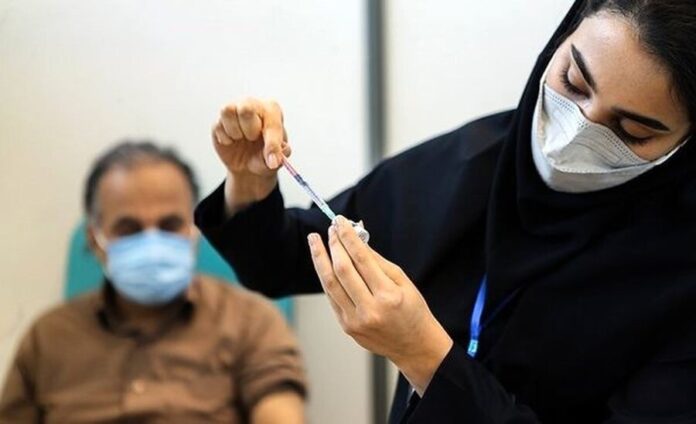
Meanwhile, the vaccination campaign is continuing across Iran at high speed. According to the Health Ministry’s announcement on Wednesday, over the past 24 hours, 1,056,645 people were inoculated. 

The high rate of vaccination has kept down the number of new infections and deaths. Officials say the entire population of Iran will be vaccinated fully against Covid within the next few months. 

They are however urging all unvaccinated citizens to get their jabs at inoculation centers which are not crowded given most people have been vaccinated. 

Most Covid-related curbs have been lifted in Iran. But officials including President Ebrahim Raeisi are warning people against relaxing health measures to prevent a sixth wave of the disease. 

The worst of the fifth wave ended several weeks ago and the downward trend in Covid deaths and infections is holding for the time being.

Iran’s 77th fleet returns home, ending 77-day journey

The Navy Fleet proceeded 10,500 nautical miles during 77 days of expedition.

Over the past few years, Iran’s Navy has increased its presence in free waters to safeguard naval routes and provide security for merchant vessels and tankers.

The Iranian Navy, in line with international efforts against piracy, has also been conducting patrols in the Gulf of Aden since November 2008 in order to protect cargo vessels and oil tankers owned or leased by Iran or other countries.

Iran’s Navy has managed to foil several pirate attacks on both Iranian and foreign tankers during the expedition.

Iran’s Army Navy Commander Rear Admiral Shahram Irani on Oct 17, 2021, said that the Iranian Navy 77th fleet docked at Salalah Port of Oman.

Rear Admiral Irani stated that one of the most important goals of sending naval fleets to high waters is to secure the transportation and shipping lines of the Islamic Republic of Iran.

According to the commander, the purpose of docking of the Iranian navy fleet at Salalah Port of Oman was to send the message of peace and friendship and establish security in the region, as well as to get acquainted with the cultures and strengthen the naval and military relations of the countries.

Iran says ready to expand military cooperation with Pakistan

Brigadier General Gholamreza Noshadi in the meeting with Rear Admiral Abdul Basit Butt, emphasized the role and impact of educational diplomacy on defense diplomacy and foreign policy of the two countries and announced the readiness of the IRGC to develop and increase the level of ties between the two neighboring countries in military education.

The director General Warfare and Training in Joint Staff Headquarters (JSHQ) of Pakistan Army, for his part in the meeting praised the IRGC’s capabilities and technological advances in the field of aerospace and expressed surprise and satisfaction with the IRGC’s high level of progress and operational readiness despite extensive sanctions.

At the meeting, he emphasized increasing the level of cooperation and interaction between the two countries’ military training.

Rear Admiral Abdul Basit Butt visited different parts of Imam Ali (AS) Military University and Iranian Army University of Command and Staff (DAFOOS).

Turkey deploys more military equipment to Syria’s Idlib

Syria’s official SANA news agency, citing local sources, reported that two convoys of 100 trucks each, carrying battle tanks, artillery batteries and logistical supplies, crossed into Syrian territories through Khirbet al-Joz crossing on Wednesday, and headed towards Jabal al-Zawiya area in Syria’s northwestern province of Idlib.

The report added that the convoys are meant to fortify the position of Turkish military forces in northwest Syria, and help Takfiri militants fighting Syrian government troops.

Idlib is the last major stronghold of foreign-backed terrorists, especially Hay’at Tahrir al-Sham (HTS) militant group, fighting against the legitimate government of Syrian President Bashar al-Assad.

The HTS is a coalition of different factions of al-Qaeda-linked terror outfits largely composed of Jabhat Fateh al-Sham, formerly known as al-Nusra Front.

Moreover, Syria’s official news agency SANA, citing local sources, reported that dozens of Turkish military trucks loaded with various ammunition and logistical supplies as well as armored personnel carriers entered Syrian territories on Tuesday.

The sources said the convoy later headed toward positions held by Turkish-backed militants in the city of Ras al-Ayn.

They noted that a large number of Turkish unmanned aerial vehicles flew overhead as military and logistical equipment were brought into Syria.

Ankara-backed militants were deployed to northeastern Syria in October 2019 after Turkish military forces launched a long-threatened cross-border invasion in a declared attempt to push fighters of the Kurdish People’s Protection Units (YPG) away from border areas.

Ankara views the US-backed YPG as a terrorist organization tied to the homegrown Kurdistan Workers’ Party (PKK), which has been seeking an autonomous Kurdish region in Turkey since 1984.

Turkey has played a major role in supporting terrorists in Syria ever since a major foreign-backed insurgency overtook the country more than ten years ago.

The Syrian president and other senior officials have said the Damascus government will respond through all legitimate means available to the ongoing ground offensive by Turkish forces and allied Takfiri militants in the northern part of the war-battered Arab country.

Iran, EU Nuclear Negotiators Begin Talks in Brussels

Bagheri, who is also Iran’s top nuclear negotiator, said before the meeting that Iran is “after proving the necessary and appropriate ground to shape serious negotiations to achieve an agreement that has practical results”.

Iran earlier reiterated that it seeks negotiations to fully remove “oppressive” and illegal sanctions, imposed by the US, against the country in a bid to guarantee normalized trade and economic ties between Iran and other countries.  

Tehran says the negotiations must be able to provide reliable guarantees that parties to the 2015 nuclear deal no longer stop fulfilling their obligations under the accord. 

The US that was among the signatories of the nuclear deal withdrew from the internationally-recognized accord in 2018 under former president Donald Trump, re-imposing anti-Iran sanctions.

‘Terrorists in Afghanistan could attack US in six months’

The US intelligence community has assessed that Islamic State in Afghanistan could have the capability to attack the United States in as little as six months, and has the intention to do so, a senior Pentagon official told Congress on Tuesday.

The remarks by Colin Kahl, under secretary of defense for policy, are the latest reminder that Afghanistan could still pose serious national security concerns for the United States even after it ended its two-decade-old war in defeat in August.

The Taliban, which won the war, are enemies of Islamic State and have seen its attempts to impose law and order after the US pullout thwarted by suicide bombings and other attacks claimed by Islamic State.

They include bombings targeting the minority Shi’ite sect and even an Islamic State beheading of a member of a Taliban militia force in the eastern city of Jalalabad.

In testimony before the Senate Armed Services Committee, Kahl said it was still unclear whether the Taliban has the ability to fight Islamic State effectively following the US withdrawal in August.

The United States fought the Taliban as well as striking groups like Islamic State and al Qaeda.

“It is our assessment that the Taliban and ISIS-K are mortal enemies. So the Taliban is highly motivated to go after ISIS-K. Their ability to do so, I think, is to be determined,” Kahl added, using an acronym for Islamic State in Afghanistan.

Kahl estimated Islamic State had a “cadre of a few thousand” fighters.

Acting Foreign Minister Amir Khan Muttaqi of the new Taliban government has announced the threat from Islamic State militants will be addressed. He also noted Afghanistan would not become a base for attacks on other countries.

Kahl suggested al Qaeda in Afghanistan posed a more complex problem, given its ties to the Taliban.

It was those ties that triggered the US military intervention in Afghanistan in 2001 following al Qaeda’s Sept. 11 attacks on New York and Washington. The Taliban had harbored al Qaeda leaders.

Kahl stated it could take al Qaeda “a year or two” to regenerate the capability to carry out attacks outside of Afghanistan against the United States.

Democratic President Joe Biden, whose supervision of the chaotic end to the war last summer has damaged his approval ratings, has said the United States will continue to be vigilant against threats emanating from Afghanistan by carrying out intelligence-gathering operations in the country that would identify threats from groups like al Qaeda and Islamic State.

Kahl added the goal was to disrupt those groups so that Islamic State and al Qaeda don’t become capable of striking the United States.

“We need to be vigilant in disrupting that,” he continued.

Still, US officials privately warn that identifying and disrupting groups like al Qaeda and Islamic State is extremely difficult without any troops in the country. Drones capable of striking Islamic State and al Qaeda targets are being flown in from the Gulf.

Kahl stated the United States did not yet have any agreement with countries neighboring Afghanistan to host troops for counterterrorism efforts.

Pakistani FM urges world to prevent humanitarian disaster in Afghanistan

Qureishi was speaking on Wednesday at the meeting of the foreign ministers of Afghanistan’s neighbors in Tehran. 

He added that the world must address the economic situation in Afghanistan. 

The Pakistani foreign minister added Islamabad believes that Afghanistan’s frozen assets abroad must be unlocked. He said the Taliban takeover triggered a huge refugee wave, adding the Tehran conference is for Afghanistan’s neighbors to deal with the challenges in the country. Qureishi said, “We all want a stable Afghanistan and we believe that today’s meeting can strengthen the results of the first session and result in important steps toward stability in the country”. 

The Pakistani foreign minister underlined that fighting terrorism in Afghanistan is vital, adding that an inclusive government is necessary for Afghanistan and all people’s rights should be respected. 

The Pakistani foreign minister also urged Afghanistan’s neighbors to prevent new conflicts in the region, highlighting the need to send humanitarian aid to Afghanistan. 

He added that Pakistan has already sent aid to its neighbor and will continue doing so.

Fmr. Iranian envoy: Tehran meeting on Afghanistan show of strength against U.S.

Fada Hossein Maleki, who is currently a member of the Iranian parliament’s National Security and Foreign Policy Committee, said on Wednesday that collective decisions made in the Tehran meeting can be in the interest of the people of Afghanistan and the region. 

“The security of Iran and Afghanistan’s other neighboring countries is deeply linked to the developments in this country, and the Tehran meeting will be held in order to address the concerns of the neighboring countries regarding the developments in Afghanistan,” he explained.

Maleki stated that given the demographic and ethnic composition of Afghanistan, neighboring countries agree that different ethnic groups must reach a consensus on the formation of the government in Kabul.

“Countries that can exert influence over the Taliban should encourage this group to form an inclusive and participatory government with the presence of all Afghan ethnic groups, and we hope that the Tehran summit will make these countries look in this direction, because this idea is ultimately in favor of stability and security of the region,” the former ambassador to Kabul said.

Russia urges Afghanistan neighbors to prevent US, NATO presence on their soil

Lavrov

“We once again call on Afghanistan’s neighboring countries to prevent the military presence of the US and NATO on their territory as those plan to move there in light of the troop withdrawal from Afghanistan,” he stated on Wednesday in a video address to participants in a ministerial meeting of Afghanistan’s neighboring countries involving Russia, China, Iran, Pakistan, Tajikistan, Turkmenistan and Uzbekistan.

NATO members including Washington should bear primary responsibility for the socio-economic recovery of Afghanistan because they are the ones who created the war-ravaged country’s current predicament, Lavrov continued.

“Clearly, establishing a national system of education and healthcare, as well as creating an effective socio-economic infrastructure in Afghanistan, will require enormous financial efforts. In this regard, I would like to emphasize that those who created the current situation in the country should bear the primary responsibility,” Lavrov pointed out.

According to him, the time apparently has come “to start mobilization work to collect resources in order to provide financial, economic and humanitarian assistance to the Afghan people”.

“I hope that the habit of Westerners holding conferences for the sake of conferences has become a thing of the past. The time has come for concrete action on this front,” Lavrov noted.

The Russian top diplomat also stressed that the United Nations needed to play a coordinating role in the process.

“It was the UN to whom delegates to the Moscow consultations on Afghanistan of October 20, 2021, appealed on the matter,” Lavrov added.

Terrorists disguised as refugees have been trying to infiltrate neighboring countries. These attempts must be resisted by all means, he stated.

“The current task on the agenda is to ease the effects of and control migration flows from Afghanistan, because terrorist and criminal elements posing as refugees may infiltrate neighboring countries and have already been trying to do so,” he underlined.

“This goal can be achieved only by creating normal conditions in Afghanistan. In the long term this will be a major prerequisite for the gradual return of Afghans to their homes,” Lavrov underscored.

After the United States announced plans to withdraw its troops from Afghanistan, the Taliban embarked on a large-scale operation to take the country under control. Taliban fighters swept into Afghanistan’s capital of Kabul on August 15, without encountering any resistance, with Afghan President Ashraf Ghani fleeing the country. On September 7, the Taliban announced an interim government, which has not been recognized by any country yet.

Russia is planning to send a batch of food products and medicines to Afghanistan in the near future, Lavrov said.

“Russia is ready to contribute to the joint effort. In the near future, we are planning to send to [our] Afghan partners a batch of humanitarian aid consisting of food products, medicines and basic necessities,” the Russian top diplomat added.

Iran president: Tuesday cyberattack aimed to disrupt lives

US Protests to Engulf Entire America: Iran's Top Judge

Raeisi said the attack failed to take authorities unawares and they handled the situation immediately. 

Raeisi added that the Iranian people also acted vigilantly and didn’t allow anyone to take advantage of the situation. He instructed the Oil Ministry to redress any possible losses citizens may have suffered. 

The president noted Iran must be able to predict and prevent cyberattacks and equip itself to counter them. 

He said citizens have rights regardless of their religion and ethnicity and officials must feel responsible toward all Iranians. 

The outage caused by Tuesday’s cyberattack closed gas stations countrywide, leaving millions of drivers stranded. The Iranian Oil Ministry said the entire digital payment mechanism supporting the subsidized payment system was out of service due to the incident. Later, many gas stations got back online.