Tuesday, April 14, 2026
Home Blog Page 2315

Palestinian activists phones hacked by Israeli firm

The mobile phones of six Palestinian human rights defenders who work for organisations that were recently – and controversially – accused by Israel of being terrorist groups were previously hacked by sophisticated spyware made by NSO Group, according to a report.

An investigation by Front Line Defenders (FLD), a Dublin-based human rights group, found that the mobile phones of Salah Hammouri, a Palestinian rights defender and lawyer whose Jerusalem residency status has been revoked, and five others were hacked using Pegasus, NSO’s signature spyware. In one case, the hacking was found to have occurred as far back as July 2020.

FLD’s findings were independently confirmed with “high confidence” by technical experts at Citizen Lab and Amnesty International’s security lab, the world’s leading authorities on such hacks.

The revelation is likely to provoke further criticism of Israel’s recent decision to accuse the six prominent Palestinian human rights groups of being terrorist organisations.

UN human rights experts have called the designation a “frontal attack” on the Palestinian human rights movement and on human rights everywhere, and said it appeared to represent an abuse of the use of anti-terrorism legislation by Israeli authorities.
The Joe Biden administration placed NSO on a US blacklist last week, a move that will make it exceedingly difficult for the Israeli company to buy any US-originating technology or services. The administration announced it took the decision after it found evidence that the Israeli spyware maker had acted “contrary to the foreign policy and national security interests of the US”.

There is no technical evidence that confirms the state of Israel ordered the hacks of the six Palestinians, but each of the individuals work for organisations that have been targeted and accused of crimes by Israeli authorities. NSO has stated it sells its spyware only to government clients for the purposes of fighting serious crime and terrorism, and the company is closely regulated by the Israeli ministry of defence.

A spokesperson for NSO Group noted, “Due to contractual and national security considerations, we cannot confirm or deny the identity of our government customers. As we stated in the past, NSO Group does not operate the products itself; the company license approved government agencies to do so, and we are not privy to the details of individuals monitored.”

“NSO Group develops critical technologies for the use of law enforcement and intelligence agencies around the world to defend the public from serious crime and terror. These technologies are vital for governments in the face of platforms used by criminals and terrorists to communicate uninterrupted,” the spokesperson added.

The Israeli government did not immediately respond to a request for comment.

The six groups are known to document allegations of human rights abuses by Israel and the Palestinian Authority. The six are Al-Haq, Addameer, Defense for Children International – Palestine, the Bisan Center for Research and Development, the Union of Palestinian Women’s Committees, and the Union of Agricultural Work Committees.

Three of the six activists who were hacked agreed to be identified. They are Hammouri, who is also a French national, Ubai Al-Aboudi, the executive director at the Bisan Center, who is also a US citizen, and Ghassan Halaika, a researcher for Al-Haq.

Ron Deibert, a Canadian professor and the head of Citizen Lab at the University of Toronto, noted that the group’s own forensic analysis showed that the hacking of the individuals had occurred prior to Israel’s designation of the groups as terrorist organisations.

Pegasus gives government operators complete control over a victim’s device, including being able to use microphones and cameras remotely.

The Israeli defence ministry has previously claimed that the six organisations were linked to the Popular Front for the Liberation of Palestine (PFLP), a secular political movement with an armed wing that has in the past carried out attacks against Israel.

The groups “were active under the cover of civil society organisations, but in practice belong and constitute an arm of the [PFLP] leadership, the main activity of which is the liberation of Palestine and destruction of Israel”, the ministry said.

FLD’s report was shared with Forbidden Stories, the French nonprofit that coordinated a recent investigation into NSO and the use of its Pegasus software by its government clients by a consortium of media outlets.

FLD condemned the hacking of the individuals. It examined 75 phones and found six contained traces of malware specifically associated with Pegasus. FLD also claimed that the hacking of the Palestinians – some of whom are dual nationals – would have allowed authorities to spy on conversations between the individuals and others, including Israeli citizens who could also have been surveilled. FLD said any such surveillance, if it occurred, would be a breach of Israeli law.
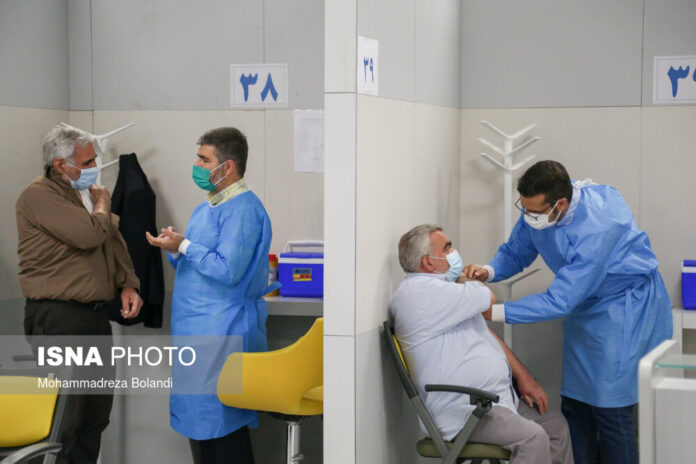

Nearly 95 million doses of Covid vaccine administered in Iran

So far, 55,319,795 people have received the first dose and 39,465,958 others have got the second dose of the jab. 198,634 people have received the third dose, known as the booster shot.

But there has been no change in the number of cities named red zone Covid hotspots in Iran. Latest data show 33 cities in Iran are red now. The Mask application which ranks cities in terms of risk from the Coronavirus shows that 95 cities are orange, 220 yellow and 100 blue, with the latter showing the pandemic is under control in an area.

Meanwhile, 140 people died in Iran from Covid from Sunday to Monday. The total death toll since the start of the pandemic now stands at 127,439. As of Sunday, 8,341 new infections including 1,164 hospitalizations were logged.

The latest rise in the number of cities marked red has rung the alarm for both people and authorities in Iran. Officials have time and again warned in recent days that relaxing Covid-related health protocols on the part of citizens could lead to a 6th wave of the outbreak.

“Mother of Iran’s environment” dies at 104

Mallah was born in 1917 while his parents were traveling in a convoy to the city of Mashhad for pilgrimage. Her father was a civil servant, who had to travel for his work. Therefore, Mahlagha completed her education in different cities of Iran.

She studied philosophy, social sciences and sociology before getting an M.A. in social sciences from the University of Tehran. She then went to Paris and got her PhD from the Sorbonne in the same field.

She also studied librarianship at French National Library and began working at the library of the University of Tehran upon return to Iran.

She was picked as the director of the Institute for Psychological Research in 1968.
She spent her life fighting pollution in environment after retirement. That led her to found the NGO she dubbed Women’s Society Against Environmental Pollution in 1994, with the cooperation of her husband. Their work focused on educating housewives and teachers on environment and how to preserve it.

She expanded his NGO over the next two decades establishing branches in 16 provinces of Iran. She spent the final years of her life holding gatherings of environmental activists in her own house.

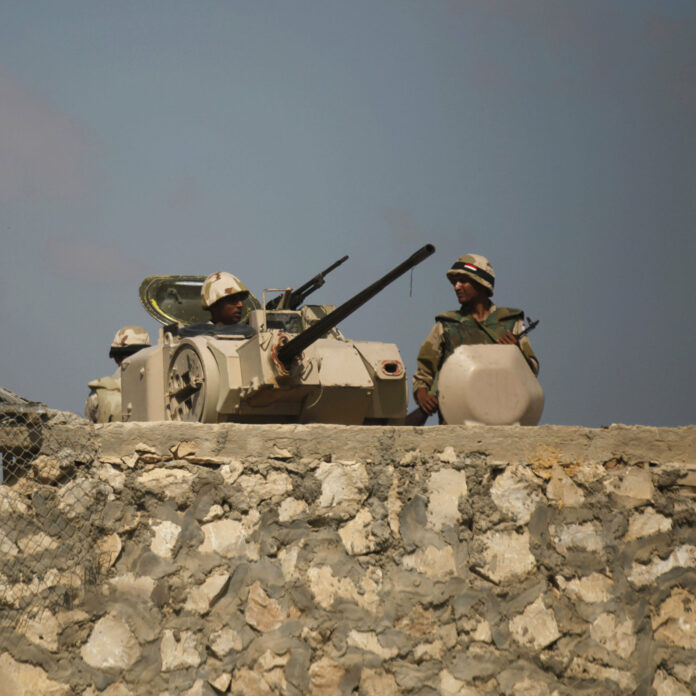
Tel Aviv, Cairo agree to bolster presence of Egyptian forces on Gaza border

On Sunday, the Joint Military Committee between the IDF and the Egyptian Armed Forces held a meeting in the city of Sharm el-Sheikh. The Israeli delegation was led by Head of the Operations Directorate Maj. Gen. Oded Basiuk, Head of the Strategic Planning and Cooperation Directorate Maj. Gen. Tal Kelman, and Head of the International Cooperation Division Brig. Gen. Effie Defrin.

“An amendment was signed on an agreement regulating the presence of security forces in the Rafah area, in favor of increasing the security presence of the Egyptian Armed Forces in that area. The amendment was approved by the State Security Cabinet,” the IDF said on its Telegram channel on Monday.

During the committee meeting, military officials also discussed other mutual issues faced by the countries’ armies, the IDF added.

Rafah is the only crossing point between Egypt and the Gaza Strip. For many years, it has been subjected to a prolonged Israeli-led blockade, which has placed severe restrictions on the Palestinian movement of goods and people.

Iran FM: Success of Vienna talks contingent on lifting sanctions, return to commitments

Hossein Amir Abdollahian also said the US is to blame for the disarray surrounding the Joint Comprehensive Plan of Action (JCPOA).

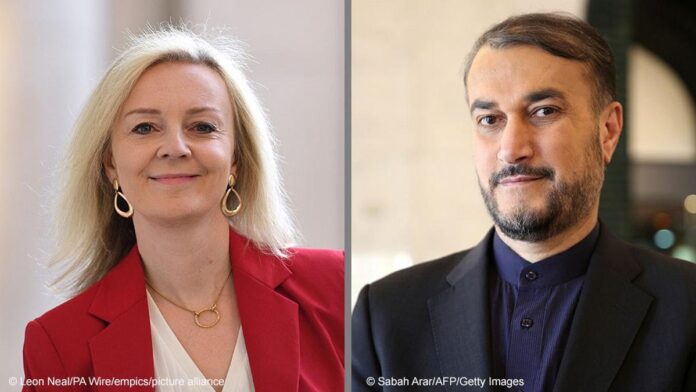
Iran’s Foreign Minister Hossein Amir Abdollahian and his British counterpart Liz Truss held negotiations on Monday over bilateral ties, the Vienna talks and some regional issues on the phone. 

Amir Abdollahian said the bulk of trade agreements between Tehran and London following the 2015 nuclear deal were not put into practice. He said that increasing trade and facilitating financial ties call for a more active role by London. 

The foreign minister also referred to Britain’s old debt to Iran, saying the Iranian people have a right to the repayment of the debt. Amir Abdollahian added that the UK must take immediate action to repay its debt as soon as possible. 

He referred to the state of the Iran nuclear deal, blaming the disarray on the US. He reiterated that some other signatories to the deal are also at fault over the current situation due to their irresponsibility and silence toward Washington’s actions. 

The Iranian foreign minister said the Vienna talks’ success is contingent on the removal of all  sanctions, the return of all sides to their obligations, giving necessary assurances about the implementation of all talks’ results, and verification of actions by the other sides.  

Amir Abdollahian added that normalizing trade ties with Iran was one of the commitments made by the other sides under the nuclear deal. He said the promise must be honored in the Vienna talks. 

The British foreign secretary also wished fast recovery from Covid for Amir Abdollahian. She expressed pleasure over setting a date to hold the nuclear deal’s joint commission. Liz Truss said the European troika is serious and eager about making progress in the Vienna talks. 

The two top diplomats also discussed some Consulate issues. 

The need for sending international humanitarian aid for the people of Afghanistan, the significance of the formation of an inclusive government in Afghanistan, the catastrophic humanitarian situation in Yemen and the need to end the siege on the country, the importance of supporting Lebanon’s stability were other topics Amir Abdollahian and Truss covered in their telephone conversation. They two top diplomats also expressed regret over the continued human rights abuse in Bahrain.

‘Azerbaijan Republic after discrediting Russian peacekeepers’

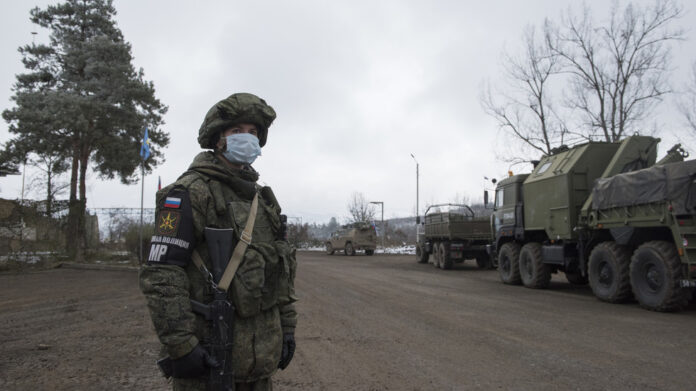
Armenian Prime Minister Nikol Pashinyan has highly assessed the activities of Russian peacekeepers in Nagorno-Karabakh.

“We highly assess the activities of Russian peacekeepers. Their role in ensuring security in Nagorno-Karabakh is exceptional. And it should be noted,” he said in an interview with Armenia’s Public Television on Sunday.

According to the Armenian prime minister, the deployment of Russian peacekeepers to the region is one of the most important and fully implemented provisions of the trilateral statement of November 9, 2020.

“The first provision is the cessation of fire and hostilities. I highly value Russia’s role and Russian President Vladimir Putin’s contribution to the cessation of war. One of the most important and fully implemented provisions of the November 9 statement was the deployment of Russian peacekeepers in Nagorno-Karabakh and the Lachin corridor,” he added.

At the same time, he accused Baku of seeking to discredit the activities of Russian peacekeepers.

“Ceasefire violations, the death of servicemen in Artsakh (non-recognized republic of Nagorno-Karabakh) after November 9, 2020 demonstrate that Azerbaijan is pursuing a policy of discrediting the activities of Russian peacekeepers,” he stated.

The conflict between Armenia and Azerbaijan over the highland region of Nagorno-Karabakh, a disputed territory that had been part of Azerbaijan before the Soviet Union break-up, but primarily populated by ethnic Armenians, broke out in February 1988 after the Nagorno-Karabakh Autonomous Region announced its withdrawal from the Azerbaijan Soviet Socialist Republic. In 1992-1994, tensions boiled over and exploded into large-scale military action for control over the enclave and seven adjacent territories after Azerbaijan lost control of them. Talks on the Nagorno-Karabakh settlement have been ongoing since 1992 under the OSCE Minsk Group, led by its three co-chairs – Russia, France and the United States.

Renewed clashes between Azerbaijan and Armenia erupted on September 27, 2020, with intense battles raging in the disputed region of Nagorno-Karabakh. On November 9, 2020, Putin, Azerbaijani President Ilham Aliyev and Pashinyan signed a joint statement on a complete ceasefire in Nagorno-Karabakh. Under the document, the Azerbaijani and Armenian sides stopped at the positions that they had held and Russian peacekeepers were deployed along the engagement line in Nagorno-Karabakh and along the Lachin corridor that connects Armenia with the enclave to exercise control of the ceasefire observance. Apart from that, a number of districts came over to Baku’s control.

The situation in Nagorno-Karabakh stabilized after the deployment of Russian peacekeepers and tens of thousands of Karabakh residents have returned to their homes.

Iran air defense chief: Home-made systems used in war games

Alireza Sabahifard made the remarks on the sidelines of the holding Iran’s Army Military Exercise dubbed “Zolfaghar 1400”.

Iran Air Defense Force is one of the four forces participating in the ‘Zolfaghar 1400’ military exercise of the Army of the Islamic Republic of Iran, he noted.

He considered the use of domestically manufactured systems as a prominent feature of the exercise, adding, “All the systems that we used in this exercise in the field of reconnaissance, radar systems, electronic warfare and, etc., are indigenous and domestically manufactured.”

Sabahifard also considered holding the exercise as the definite right of Iran, stating that holding military exercises in the Oman Sea, the Persian Gulf and other parts of the country is Iran’s inalienable right.

The joint military exercise of Iran’s Army entitled “Zolfaghar 1400” kicked off on Sunday under the command of the Army’s Zolfaghar base.

Monitoring of the country’s airspace and general training area in the southern part of the country by the Air Defense Forces of the Islamic Republic of Iran, as well as combating hostile targets are among the targets of the ‘Zolfaghar 1400’ joint exercise.

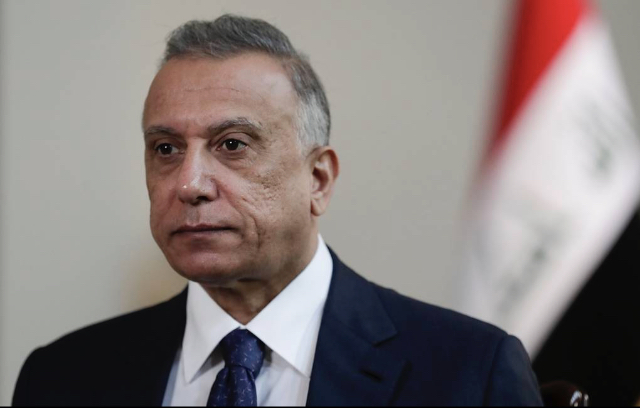
UN strongly condemns attack on Iraq’s PM

It comes following a drone attack overnight on Sunday, aimed on his house in Baghdad’s heavily fortified Green Zone.

According to news reports, the exploding drone caused damage to the residence and several of the Prime Minister’s security guards were injured in the attack.

Al-Kadhimi, was sworn into office in May last year.

The Green Zone houses Government offices and many foreign embassies.

No group has so far claimed any responsibility for the attack and remains from the explosive-laden drone have been recovered, as part of an on-going investigation.

“The Mission expresses its relief that the Prime Minister was not hurt in the drone attack,” said the UNAMI statement.

In a statement, the UN Secretary-General António Guterres, also strongly condemned the attack, and called for the perpetrators “of this crime, to be held accountable.”

“The Secretary-General calls on all Iraqis to exercise utmost restraint and reject all violence and any attempts to destabilize Iraq. He urges all political actors to uphold the constitutional order and resolve differences through peaceful and inclusive dialogue,” the statement read.

“Terrorism, violence and unlawful acts must not be allowed to undermine Iraq’s stability and derail its democratic process,” it continued.

The attack has been condemned by both the Government of Iran, and the United States.

On Friday, protests outside the Green Zone, against the results of the last month’s parliamentary elections turned violent, as demonstrators clashed with security forces, reportedly accusing Iraq’s political elite of rigging the vote.

One protester was reportedly killed, and dozens of security personnel were injured. The Prime Minister has ordered an investigation into what led to the violence.

Turnout for the election was low, with just 41 per cent turning out to vote, and supporters of pro-Iranian parties and militias, lost ground, according to preliminary results. Demonstrators are reportedly calling for the Government, and Iraq’s independent electoral commission, to hold a recount.

The UN Mission joined the Prime Minister, in calling for “calm and urging restraint” in the coming days following the assassination attempt.

“Moreover, UNAMI strongly encourages all sides to take responsibility for de-escalation and to engage in dialogue to ease political tensions, upholding the national interest of Iraq,” it said.

The UNAMI statement concluded by noting that the United Nations “stands by all Iraqis who long for peace and stability; they deserve nothing less.”

Taliban appoints new governors, police chiefs

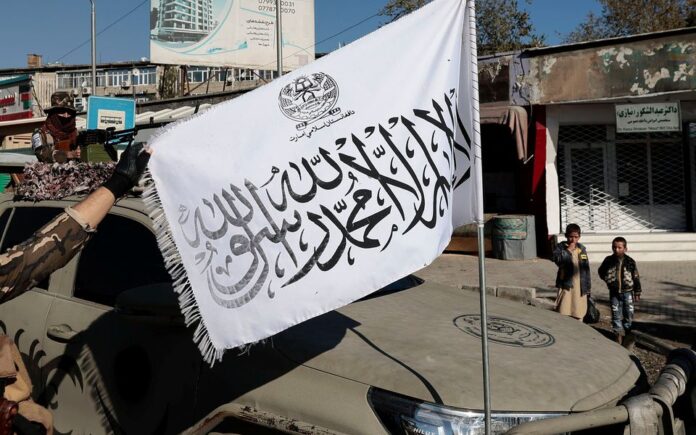
The Taliban appointed 44 of its members to key roles including provincial governors and police chiefs on Sunday, a key step in shoring up its governance as the country grapples with growing security and economic problems.

It is first large-scale round of appointments announced since the cabinet was formed in September.

The Taliban released the list of its members’ new roles, including Qari Baryal to serve as governor of Kabul and Wali Jan Hamza as the city’s police chief.

The previous commander in charge of Kabul’s security, Mawlawi Hamdullah Mukhlis, was killed this month in an attack on Afghanistan’s largest military hospital in downtown Kabul.

The Taliban took over the country on Aug. 15 but have faced an uphill battle in their promise to restore order and security after decades of war. Islamic State have carried out a spate of attacks around the country, while the economy has been plunged into crisis.

There have been international calls for the group to negotiate with other political players to form an inclusive government including minorities and women, although substantive progress on that has so far not materialised.

Iran: US JCPOA return hinges on removal of sanctions

“The US should know that it is not a member of the nuclear deal and cannot attribute comments to other signatories to the agreement or have demands [from them],” said the Ministry’s Spokesman Saeed Khatibzadeh during his weekly presser on Monday.

He was referring to the recent comments by Jake Sullivan the US national security advisor, who said that the US would return to the Joint Comprehensive Plan of Action (JCPOA) if Iran does so.

“[US officials] should not forget that they should remove illegal sanctions imposed during the Trump administration and those added under Biden.”

He stressed that the path to the United States’ return to the nuclear deal is clear and that they should admit they are to blame for the current situation.

The spokesman also said that no single text was agreed during the previous rounds of talks in Vienna. He said draft texts were prepared but they were not finalized due to “impasse” on a number of issues.  

“The obstinacy and stubbornness of the US is keeping the failed legacy of Trump and part of the sanctions in place created the most significant impasse in the Vienna agreement. The US should determine what it wants. Whether it is after the failed and illegal legacy of the former US administration in imposing unilateral sanctions and unilateral withdrawal from the nuclear deal and trumpet it. As long as these do not change, there will be no change in [the] Vienna [process],” he said.

The spokesman also touched on the talks between Iran and Saudi Arabia.

“The talks will be held and progress in the talks hinges on Riyadh avoiding comments solely aimed at media. If we witness serious will on the Saudi side, the next round of the negotiations will continue,” he said.

Khatibzadeh also addressed the crisis in Lebanon and how it affects the talks between Iran and Saudi Arabia.

“The talks between Iran and Saudi Arabia are bilateral and we have never held discussions about our friends with others for them to affect [the Tehran-Riyadh talks],” he said.

The spokesman noted that the negotiations with Saudi Arabia were “clear and transparent” adding that Tehran expects to see seriousness in the Saudi side.

“The contact between Iran and Saudi Arabia is not cut off. Of course, after the fourth round, no new face-to-face talks have been held, either,” he said.