Tuesday, April 14, 2026
Home Blog Page 2311

UN warns over 7mn Yemenis in need of shelter, non-food items

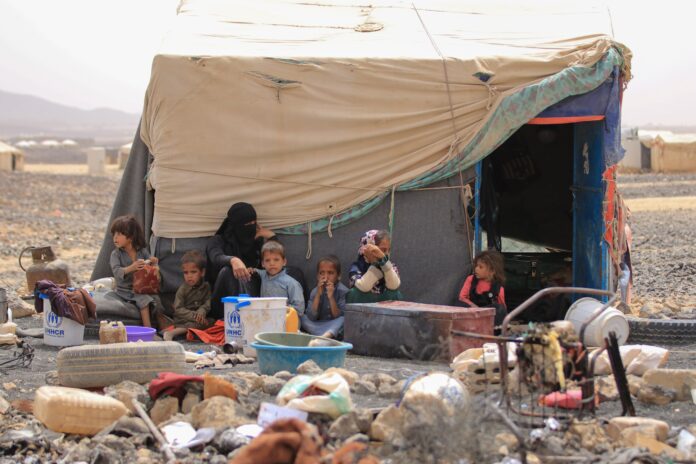
The UNHCR Yemen Office wrote on Twitter 7.3 million Yemenis require “shelter” and “non-food assistance”, with 75% being women and children.

The body added that an exhibition was being organized on Tuesday in the capital Sanaa, aimed at “presenting solutions to the soaring shelter needs”.

Saudi Arabia, backed by the US and regional allies, launched the war on Yemen in March 2015, with the goal of bringing the Mansour Hadi government back to power and crushing Ansarullah.

The war has left hundreds of thousands of Yemenis dead, and displaced millions more. It has also destroyed Yemen’s infrastructure and spread famine and infectious diseases.

Yemeni armed forces and the Popular Committees have grown steadily in strength against the Saudi-led invaders, and left Riyadh and its allies bogged down in the country.

New Iran humanitarian aid package in Afghanistan

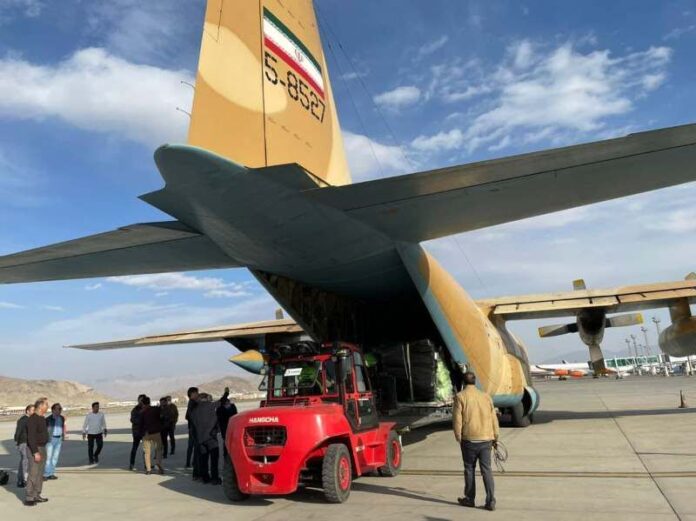
The aid shipment contains food and medicine for victims of two recent terror attacks on Sardar Mohammad Daoud Khan hospital and Eid Gah mosque in the capital Kabul which left dozens of people dead and many more injured.

This is the 11th shipment of Iranian humanitarian aid to the people of Afghanistan over the past two months

The Islamic Republic of Iran previously sent aid packages of food, warm clothes, medicine and other items for the victims of terrorist attacks in Kunduz and Kandahar and the poor and vulnerable people in the neighboring country.

Tehran says it is ready to allow the use of its its transit routes as well as facilities at Chabahar port for any humanitarian mission in Afghanistan. 

Over the past four decades Iran has hosted millions of Afghans fleeing civil war.

French daily: Iran hints France mediating between Washington-Tehran

“Although the approaches of Russia or China are closer to our stance, from the moment of my today’s meeting I assume that France wants to play a more serious role in those negotiations,” he stated, commenting on the November 9 meeting with Philippe Errera, the Director-General for Political Affairs and Security at the French Foreign Ministry.

“If France demonstrates a more independent stance from now on, it will strengthen its position as a negotiator state,” he added.

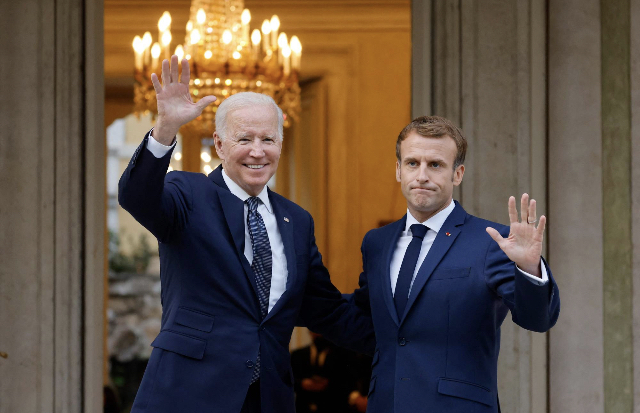
French Foreign Minsiter Jean Yves Le Drian had a phone conversation with his Iranian counterpart Hossein Amir Abdollahian. on Tuesday to discuss the Joint Comprehensive Plan of Action (JCPOA) on Iran’s nuclear program. The French FM emphasized the importance of resuming the talks, suspended by Iran on June 20. 

The JCPOA, also known as the Iran nuclear deal, was signed by Iran, the five permanent members of the United Nations Security Council (Russia, the United Kingdom, China, the United States and France) and Germany in 2015. Under the deal, Iran undertook to curb its nuclear activities and place them under total control of the International Atomic Energy Agency (IAEA) in exchange of abandonment of the sanctions imposed previously by the United Nations Security Council, the European Union and the United States over its nuclear program.

The future of the deal was called in question after former US President Donald Trump had announced his country’s unilateral pullout in 2018. US President Joe Biden has reiterated that he wants to take the United States back into the Iran nuclear deal.

Since April 2021, the P5+1 (Russia, the UK, Germany, China, the US and France) have been holding talks with Iran in Vienna to reinstate the deal. To date, six rounds have been held. The next round is due to begin in Vienna on November 29.

Shamkhani: US exit from Afghanistan a “fiasco”

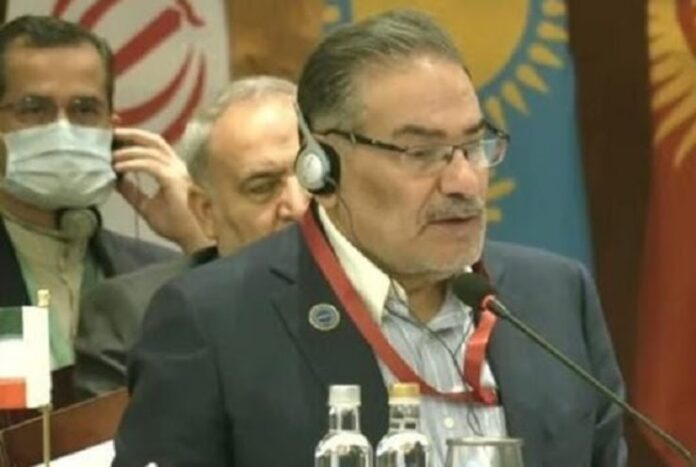
Ali Shamkhani was speaking on Wednesday at a regional security conference in India’s capital New Delhi. He said Iran’s ready to allow the use of its strategic ports like Chabahar and also transit routes to help resolve the problem.

Shamkhani also spoke of the US legacy is in Afghanistan. He said the US invaded Afghanistan with the stated goal of toppling the Taliban, eradicating al-Qaeda terror group and turn Afghanistan into a role model and a source of inspiration.

But, Shamkhani said, the invasion only made matter worse in the country, increasing poverty there and killing innocent Afghans.

He added Iran always warned that the US occupation will not resolve the crisis in Afghanistan, noting, “The US escape showed we were right and that Washington made a miscalculation as always”.

Shamkhani maintained that the US’s so-called nation building project ran ashore in Afghanistan, describing its escape from the war-torn country as a fiasco.

The secretary of Iran’s Supreme National Security Council said Tehran believes that the United Nations must play the role of the key mediator in talks aimed at restoring lasting peace in Afghanistan.

Security chiefs of Russia, Iran and five central Asian countries have gathered in New Delhi for a security dialogue on Afghanistan.

Iran: Israel trying to divert attention from own nuclear activities

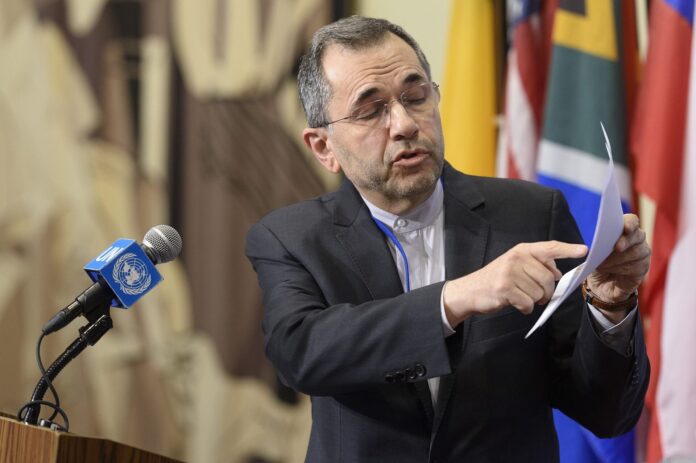
Takht-Ravanchi made the remarks in an address to the United Nations Scientific Committee on Effects of Atomic Radiation on Tuesday, during which he slammed Israel for refusing to join the Nuclear Non-proliferation treaty (NPT) as well as other arms control agreements.

He described Israel’s approach toward Iran as hypocritical and said Tel Aviv was trying to avert global attention from its own nuclear activities and arsenal.

The Iranian envoy highlighted Israel’s defiance of calls to create a nuclear-free region and described the regime’s nuclear arsenal as a threat to the region.

Takht-Ravanchi noted that Israel has a long history of aggression and crime against Palestinians, and has violated hundreds of UN resolutions.

“Throughout history, Israel has consistently and blatantly violated hundreds of UN resolutions against aggression, occupation and war crimes, and these are not to be forgotten,” Takht-Ravanchi said.

“Israel has not adhered to the rules and regulations prohibiting the production, development and stockpiling of weapons of mass destruction, and its arsenals, given the regime’s threatening attitude towards world peace and security, play a destabilizing role,” he continued, adding, “The world must be fully aware of Israel’s illegal actions and threats to regional peace and security.”

Israel, which pursues a policy of deliberate ambiguity about its nuclear weapons, is estimated to have 200 to 400 nuclear warheads in its arsenal.

The regime has refused to allow inspections of its military nuclear facilities or sign the NPT.

The Israeli regime, the Middle East region’s sole nuclear arms possessor, has also assassinated seven Iranian nuclear scientists.

Neither the International Atomic Energy Agency (IAEA) nor the United Nations have taken the Tel Aviv regime to task for its illegal activities aimed at endangering the regional and international peace and security.

Iran president, economists review ways to resolve economic problems

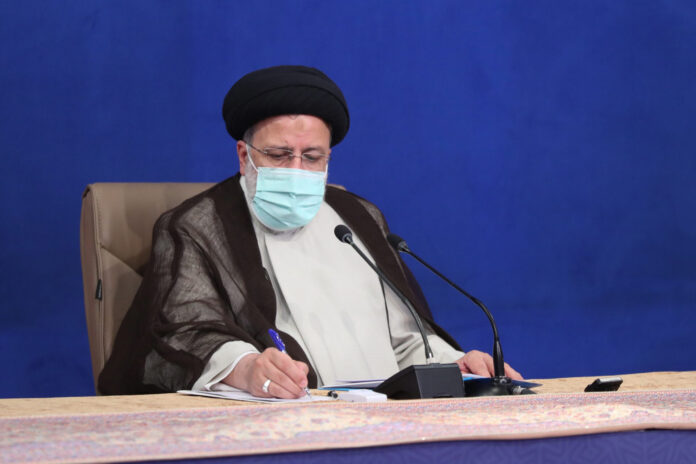
During the meeting on Tuesday night, Raeisi explained the economic situation of the country when it was handed over to his administration in early August, saying that the current situation should be changed based on expert opinion.

He touched on some of the pressing problems plaguing the Iranian economy including the high rate of inflation, and ineffective state subsidies, noting that according to economists inside and outside his administration, it is possible to change and improve Iran’s economic status.

Price stability and inflation management are among the main points pursued by the government in a way that prevents price increases and preserves the value of the national currency, makes the economy predictable for producers and business owners and the general public, the president said.

“We are about to begin preparing the most important financial document of the country, the budget for 1401 (next Iranian calendar year). The budget should be justice-oriented and based on spatial planning so that the resources can be distributed fairly,” the Iranian president stated.

Raeisi stressed that his administration views production prosperity as the way out of economic problems and seeks to act on the emphasis of the Leader of the Islamic Revolution Ayatollah Seyyed Ali Khamenei on removing barriers to production and supporting domestic manufacturing.

Data analysis: Iran releases Vietnam oil tanker

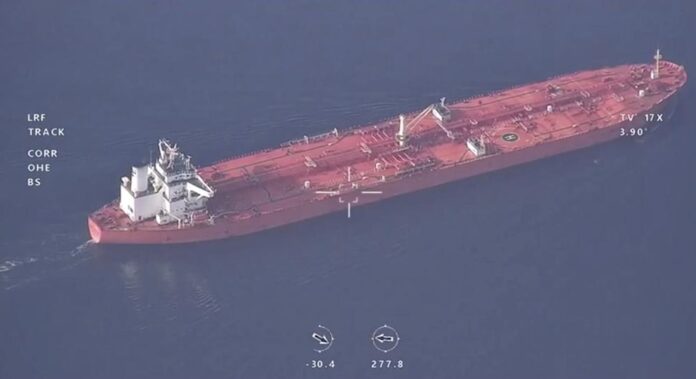
The Sothys left a position off Iran’s Bandar Abbas port and had reached international waters in the nearby Gulf of Oman early Wednesday, data analyzed by The Associated Press from MarineTraffic.com showed.

The vessel appeared anchored there, but there was no information about its crew.

Shahrokh Nazemi, a spokesperson for Iran’s mission to the United Nations (UN), told the AP on Wednesday that “Sothys left Iranian waters last night after transferring the oil.”

Vietnamese officials could not be reached for comment, though its officials earlier acknowledged trying to obtain more information about the seizure from Iran.

Last Wednesday, Tehran announced naval forces of the Islamic Revolution Guards Corps (IRGC) have thwarted an attempt by the United States Navy to confiscate a tanker carrying Iranian crude in the Sea of Oman.

The United States stopped the Iranian vessel and transferred its oil cargo to another tanker and was trying to take the vessel away when the IRGC Navy intervened.

The IRGC forces used a helicopter to board the tanker and led it towards Iranian territorial waters.

The naval forces of the United States used several helicopters and a frigate to chase the Iranian tanker but the IRGC blocked their way.

The American naval forces tried once again to block the path of the Iranian ship with several more vessels but failed.

Tehran has also released footage showing IRGC navy force blocking US attempts to confiscate Iranian oil in the Sea of Oman.

American officials have claimed Iranian forces had actually seized a Vietnamese-flagged oil tanker, MV Southys, and US naval forces were just monitoring the situation.

But, a Spokesman for the IRGC has rejected remarks by American defense officials claiming US forces involved in the recent tanker incident in the Sea of Oman were present at the scene only to monitor the situation.

The spokesperson has stated American forces had a mission to protect the ship.

Brigadier General Ramazan Sharif stated on Thursday that US forces had a mission to protect MV Sothys, a Vietnamese-flagged ship which was boarded by IRGC forces after it became known the tanker was stealing a large Iranian oil cargo.

“They had come to provide support to the bandits of the Iranian oil and to escort them,” Sharif noted.

Iran Army: Massive drills achieved goals

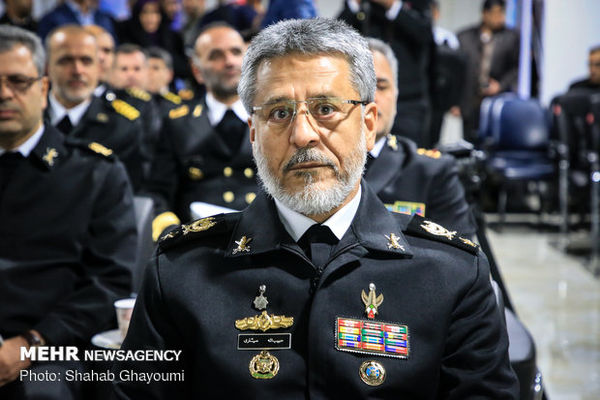
“By carrying out this exercise, we gained more confidence in our preparedness to confront any aggression or threat,” the Iranian Army’s Deputy Commander for Coordination Affairs Rear Admiral Habibollah Sayyari said in an interview with national TV on Tuesday.


“One of the goals of the military forces and the Army of the Islamic Republic of Iran is to maintain readiness in time of peace and the ability to respond decisively… to the mistakes of the enemies in time of war,” the Army commander stated.


He said that the drills were aimed at improving deterrence against future threats, self-confidence in monitoring and dealing with threats, foresight in operational, intelligence and training areas, and enhancing preparedness in large-scale land, air and sea operations by relying on indigenous technologies and achievements. 


Rear Admiral Sayyari noted that many countries are monitoring the power of Iran’s military and operational might and that such drills in peacetime has deterrent and strategic effects.


The latest exercises were launched on Sunday morning and wrapped up on Tuesday. 


The Army’s Ground Force, Navy, Air Force, and Air Defense took part in the annual drills that covered an area of more than one million square kilometers east of the Strait of Hormuz and the Sea of Oman and north of the Indian Ocean.

UAE FM meets with Syrian president in Damascus

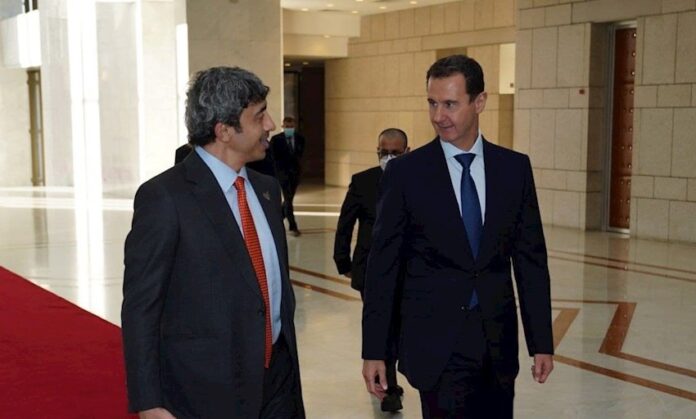
Assad and Bin Zayed also underlined the need for Syria and the UAE to invest in strategic areas and new technologies.

The Syrian president referred to the history of relations between Damascus and Abu Dhabi during the life of Sheikh Zayed Al Nahyan, the former leader of the UAE, and thanked the Persian Gulf country for its logical stance on Syria and its support for the Syrian people.

The Emirati foreign minister also noted that the Syria war affected all Arab countries, saying his country is ready to help restore stability to Syria and help the Syrian people.

Assad and Bin Zayed also called for the continuation of consultations between the two sides over the developments and also challenges facing the region so that the will of regional nations will prevail without the interference of extra-regional countries.

The UAE is among Arab states which have made efforts to normalize ties with Syria.

Syria’s Economic Minister Samir al-Khalil recently visited the UAE and held extensive talks with the country’s investors and economic activists and Syria expatriates there to convince them to invest in Syria. Following the visit, the Syria government agreed to grant a project to build a 400MW power plant using solar energy in the war-ravaged country to an Emirati company.

Most Arab states including the UAE sided with militant groups fighting to topple Assad during the last decade’s war in Syria. The current policy shift on the part of the Arab countries came following Assad’s victory over the militant groups and his recapture of nearly ninety percent of Syria from them.

Iran and Russia were key players in the war and helped Assad in the face of the militancy backed by Western governments including the US and their regional allies such as Saudi Arabia, the UAE and Turkey.

“US causing crisis in region through creating tension”

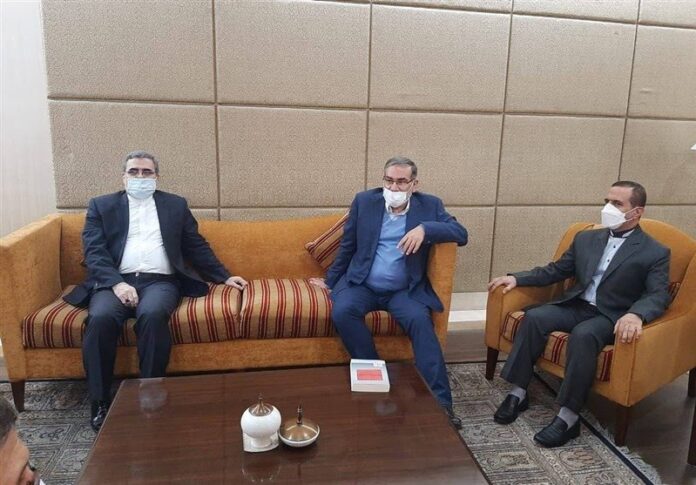
Ali Shamkhani made the comments on Tuesday upon his arrival in New Delhi where he’s going to attend a regional security conference.

Shamkhani also referred to the focus of the ongoing conference in New Delhi on the political and security developments in Afghanistan. He said participants in the meeting will make an effort to identify destabilizing factors in the region,

especially in Afghanistan, and come up with ways to restore lasting and inclusive peace and stability to Afghanistan.

Shamkhani expressed pleasure at the continuation of the security meeting and also the increase in the number of participants. The meeting will be held at the level of the national security advisers of Iran, Russia, China, India, Uzbekistan, Tajikistan, Turkmenistan and Kyrgyzstan.

He underlined the need for regional cooperation to counter threats and destabilizing factors.

The secretary of Iran’s Supreme National Security Council noted that holding the meeting provides a good opportunity for pursuing political and security talks between regional countries.

The security conference was first proposed by the Islamic Republic of Iran. Shamkahni is going to hold face-to-face talks with his counterparts from regional countries on the sidelines of the New Delhi security conference.