Sunday, December 21, 2025
Home Blog Page 2312

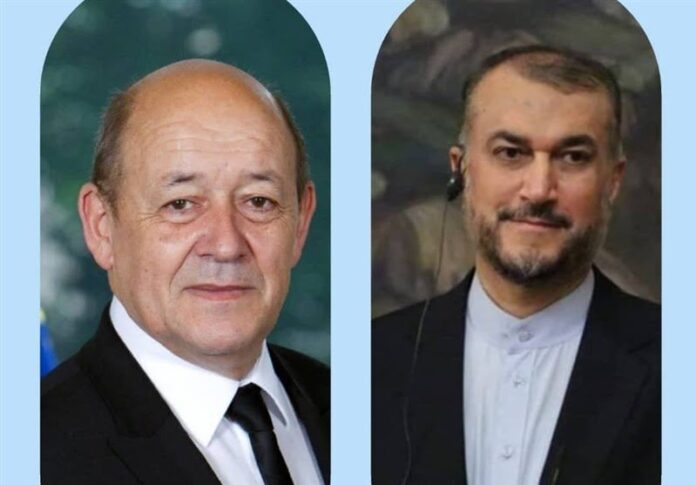
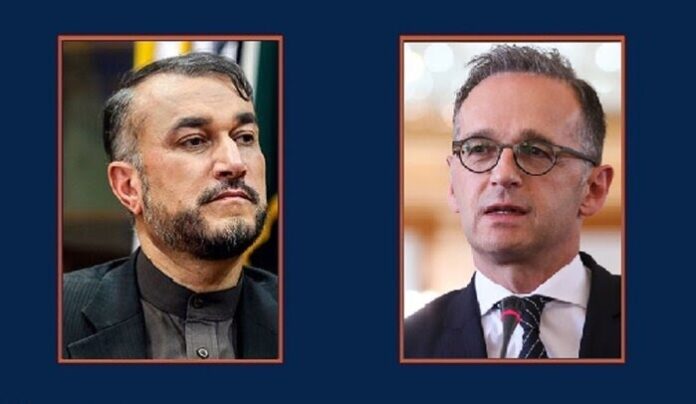
Iran top negotiator in Brussels for talks with EU’s Mora

Ali Bagheri Kani will sit down for talks with Enrique Mora on Wednesday over the possibility of further negotiations between Iran and the P4+1 group in the Austrian capital Vienna.

Iran’s top nuclear negotiator Bagheri and Mora, who coordinates talks between Tehran and the P4+1 group, sat down for talks in Tehran earlier in October and agreed to meet again.

The group is comprised of Russia, the UK, France, China plus Germany.

Bagheri has said that future talks to revive the Joint Comprehensive Plan of Action must guarantee a complete removal of all anti-Iran sanctions and the normalization of trade and economic relations.

Former U.S. president Donald Trump withdrew America from the JCPOA in 2018 and re-imposed unilateral sanctions against Iran to force it to negotiate a new deal. Iran rejected this and rolled back some of its nuclear commitments in response. Trump’s successor Joe Biden says he wants to return to the deal.

Iran and the remaining parties to the Iran nuclear agreement have held several rounds of negotiations on a possible return of the United States to the JCPOA.

Iran, Turkmenistan agree to expand trade relations

Qassemi said the two sides reached an agreement to double rail transit. He was speaking on Tuesday in the opening session of the 16th meeting of the Joint Commission for Economic and Trade Cooperation between Iran and Turkmenistan in Tehran.

He added that before the Covid pandemic, economic relations between the two countries were very good and reached several billion dollars of trade including exports and imports.

Ghasemi said Tehran and Ashgabat reached an agreement to expand relations in three areas. He went on to say that in the field of energy, gas and electricity, agreements were reached that will be included in the final agreement. Ghassemi reiterated that Iran can establish a much broader energy relationship with Turkmenistan than it currently has.

Ghasemi described transit as the second and very important prong of the talk, saying rail transit will double and expand while land transport will also increase with the observance of Covid-related health protocols.

He said maritime transport is also an important issue. Ghasemi also referred to the trilateral agreement between Iran, India and Afghanistan on using Chabahar port, in southern Iran. He said Turkmenistan can use Chabahar port for transit of goods to northern countries and even Russia.Iran, Turkmenistan agree to expand trade relations

Iranian Minister of Roads and Urban Development Rostam Ghassemi says Iran and Turkmenistan have agreed to improve relations in the fields of transport, energy and trade.
Qassemi said the two sides reached an agreement to double rail transit. He was speaking on Tuesday in the opening session of the 16th meeting of the Joint Commission for Economic and Trade Cooperation between Iran and Turkmenistan in Tehran.

He added that before the Covid pandemic, economic relations between the two countries were very good and reached several billion dollars of trade including exports and imports.

Ghasemi said Tehran and Ashgabat reached an agreement to expand relations in three areas. He went on to say that in the field of energy, gas and electricity, agreements were reached that will be included in the final agreement. Ghassemi reiterated that Iran can establish a much broader energy relationship with Turkmenistan than it currently has.

Ghasemi described transit as the second and very important prong of the talk, saying rail transit will double and expand while land transport will also increase with the observance of Covid-related health protocols.

He said maritime transport is also an important issue. Ghasemi also referred to the trilateral agreement between Iran, India and Afghanistan on using Chabahar port, in southern Iran. He said Turkmenistan can use Chabahar port for transit of goods to northern countries and even Russia.

‘Tehran, Baku defuse tensions through prudence’

That’s according to an analysis by Iran’s Nour News media oulet, close to Iran’s Supreme National Security Council.

The analysis said the telephone conversation between Iran’s Foreign Minister Hossein Amir Abdollahian and his Azerbaijani counterpart Jeyhun Bayramov and their emphasis on the need to overcome the current situation played a very decisive role in defusing tensions.

A directive by Iran’s Roads and Transportation Organization as to the need for transport companies to strictly observe laws and sensitivity of countries and also Azerbaijan’s move to release two innocent Iranian drivers unaware of the situation in the region were important steps that improved the situation and resolved misunderstandings.

What is important in realizing this interactive approach is the will to hold comprehensive talks and move away from illogical stances, which will only make ill-wishers happy.

Iran FM voices grave concern over the fate of stranded Iranians on Belarus border

They were speaking over the phone.

Amir Abdollahian said the Islamic Republic of Iran is gravely concerned over the situation of its citizens. He demanded that Belarus consulate officials and border guards offer humanitarian cooperation for the purpose of locating the stranded Iranians and providing them with medical care.

The foreign minister urged the Belarus government to give the Iranian embassy in Minsk access to the Iranians so that the people will be repatriated to their country.

Amir Abdollahian said worrisome news is making the rounds on social media regarding the situation of these people. He called for maximum cooperation from Belarus, particularly its border guards for the purpose of helping the Iranian nationals.

In the telephone conversation, the Belarus foreign minister briefed Amir Abdollahian on the measures taken by the Belarus Foreign Ministry to identify and find the Iranian nationals.
Maki reaffirmed Minsk’s readiness to provide maximum assistance in this regard and to keep in touch closely with the Iranian embassy in Minsk.

The two top diplomats also underlined their determination to implement the agreements Tehran and Minsk reached recently on the sidelines of the UN General Assembly’s meeting for the purpose of further expanding and deepening ties between the two sides.

Chinese FM meets Taliban’s Deputy PM in Qatar

During the meeting, Wang said that Afghanistan, now standing at a critical stage of transforming from chaos to governance, is currently facing a historic opportunity to truly master its own destiny, achieve reconciliation and tolerance, and advance national reconstruction.

At the same time, Afghanistan is facing quadruple challenges, namely a humanitarian crisis, economic chaos, terrorist threats and governance difficulties, he stated, adding that overcoming these challenges requires more understanding and support from the international community.

Wang expressed his hope that the Afghan Taliban will further demonstrate openness and tolerance, unite all ethnic groups and factions in Afghanistan to work together for peaceful reconstruction, and effectively protect the rights and interests of women and children.

The Chinese foreign minister also urged the Taliban to adopt a friendly policy toward its neighboring countries and build a modern country that conforms to the wishes of the people as well as the trend of the times.

China always respects Afghanistan’s sovereignty, independence and territorial integrity, and supports the Afghan people to determine their own destiny and choose a development path independently, Wang said.

China, which has never interfered in the internal affairs of Afghanistan and never sought selfish gains or a sphere of influence, firmly pursues a friendly policy toward all the people of Afghanistan, and supports the efforts to restore stability and rebuild the country, the Chinese diplomat added.

Attaching importance to the humanitarian difficulties facing Afghanistan, he urged the United States and the West as a whole to lift sanctions and called on all parties to engage with the Afghan Taliban in a rational and pragmatic manner to help Afghanistan embark on a path of healthy development.

He expressed China’s willingness to continue to provide humanitarian aid to Afghanistan within its capacity and work with the international community to help Afghanistan alleviate temporary difficulties and realize economic reconstruction as well as independent development.

Wang emphasized that the “East Turkestan Islamic Movement” (ETIM), an international terrorist organization listed by the UN Security Council, not only poses a real threat to China’s national security and territorial integrity, but also jeopardizes Afghanistan’s domestic stability and long-term peace.

He noted that he hopes and believes that the Afghan Taliban will make a clean break with the ETIM and other terrorist organizations, and take effective measures to resolutely crack down on them.

For his part, Baradar briefed Wang on the current situation in Afghanistan, which he said is under control and improving, with the governments at all levels being gradually established and government decrees being carried out effectively.

The Afghan interim government is working hard to meet the needs of the people, and will learn from its historical experience to take a development path in line with its national conditions, said Baradar.

It has taken and will continue to take inclusive measures to expand the representation of the regime, he added, citing that most officials and technocrats of the former government have stayed in office, and more talents of all ethnic groups will be recruited to participate in governance in the future.

Meanwhile, Baradar stated that the Afghan Taliban is willing to strengthen the efforts to protect the rights and interests of women and children and will not deprive them of the rights to education and work.

For now, women in medical institutions, airports and other places have resumed their work, and girls in primary and secondary schools in many provinces have returned to school, but they still face difficulties such as lack of facilities and funds, the Taliban official continued.

Baradar expressed the hope that China and the international community will increase assistance to Afghanistan to help it overcome the humanitarian crisis and return to the right track of development.
He also expressed thanks to China, an important neighbor of Afghanistan, for the respect and friendliness it has shown to Afghanistan during these difficult times.

Pursuing a friendly policy toward China is the firm choice by the Afghan Taliban, which hopes to strengthen cooperation in various fields, he said.
The Afghan Taliban, which attaches great importance to China’s security concerns, will resolutely honor its promise and never allow anyone or any force to use the Afghan territory to harm its neighbor, Baradar added.

During his stay in Doha, Wang will also meet Afghanistan’s acting Foreign Minister Amir Khan Muttaqi.

Russian concerned about Taliban selling NATO weapons

“A very dangerous aspect is that we all know about the large number of weapons, which the Americans and generally NATO forces have left behind in Afghanistan. That said, there are no signs, so these are purely my conjectures but, based on logic, just imagine that instead of state structures, terrorist groups interested in buying these weapons, begin turning to the Taliban. This may prompt the Taliban to start thinking about that if they are left without any means to keep the country alive,” Special Russian Presidential Representative for Afghanistan and Director of the Foreign Ministry’s Second Asian Department Zamir Kabulov said.

In this situation, if the West decided “to stifle” Afghanistan “with the gaunt hand of hunger” under the new authorities, “this would yield a completely counter-productive result,” Kabulov added.

The Taliban radical militant group launched a large-scale offensive to seize control of Afghanistan after the United States declared its intention in the spring of this year to withdraw its troops from the country.

On August 15, the Taliban swept into Kabul without encountering any resistance while Afghan President Ashraf Ghani stepped down and fled the country. The Taliban declared on September 6 that they had taken control of all of Afghan territory, and on September 7 they unveiled an interim government in Afghanistan that has not been recognized by any country so far.

The Taliban are waging a real war on militants of the Islamic State terrorist organization on the territory of Afghanistan, Kabulov stated.

“The Taliban are waging a ruthless war on IS militants. In the course of a brief talk with [Russian Foreign Minister] Sergey Lavrov before the beginning of the Moscow format meeting, they told him about heavy casualties in this war. This confirms what we said earlier that the Taliban and now the current Afghan authorities are really fighting against the IS,” the Russian envoy noted.

Almost all participants of the Moscow consultations on Afghanistan expressed their readiness to consider recognizing the country’s new government, he continued.

“Clearly, Afghanistan’s delegation was hopeful of securing support and official recognition of Afghanistan’s new interim government. Almost all participants, with a few exceptions, highlighted their readiness to seriously consider the matter, but sort of in response to the authorities’ positive reaction with regard to all related issues. On many things, they [the new Afghan authorities] reiterated the statements they had made before. This concerns terrorism, drug trafficking and the need to make sure that Afghanistan’s territory is not used for attacks on the security of neighboring and other states. These were important aspects so we agreed to continue the work,” Kabulov noted.

The freezing of Afghanistan’s assets in the US and EU is ridiculous, they should be unfrozen, which Moscow will be pushing for, Kabulov said.

“Out of $9.5 bln worth of assets of the state over $8 bln [have been frozen] in the US, whereas $1.5 bln, as we are told, have been frozen in Europe. This is absolutely ridiculous, they should be unfrozen,” he added.

The national reserves are not connected with the Taliban movement (banned in Russia) and belong to the Afghan people, Kabulov noted.

“This was reflected in the Moscow-format final document. This should be addressed, and we will continue pushing for [unfreezing] with other international partners,” he stated.

Kabulov considers it necessary to give the reserves belonging to the Afghan people back to them since “if the west attempts to stifle Afghanistan’s new power” using hunger this may lead to the development of the drug industry and weapons trade from Afghan territory.

If the west wants it, it is on the right track. The impoverished Afghan population, whose share rises each day, will only have two ways out: to join the destructive international terrorist groups to earn keep somehow, or to emigrate to Europe on a mass scale, which Europe opposes, at least rhetorically. If they want something different, they should do everything to encourage the Afghan people to stay at home, but for that they should be provided with emergency humanitarian aid at the first stage, and with jobs at the second stage, so that the situation for each separate Afghan family is stable and predictable,” he explained.

Iran, Syria to sign free trade agreement soon

TPO chief Alireza Payman Pak said on Monday that the free trade deal between Iran and Syria will be finalized during a trip by Iranian trade minister to Syrian capital Damascus on November 29.

Payman Pak added Iran will also implement a free trade deal with Pakistan as well as two preferential trade agreements with Indonesia and Venezuela in the near future.

Tehran has plan to rely more on revenues derived from exports with a focus on neighbors and allied countries.

The announcement is a fresh sign Iran is intent on expanding its non-crude exports to offset losses suffered on crude sales in recent years mainly because of US sanctions.

Exports to Syria currently account for a small portion of Iran’s total exports although authorities have repeatedly said that they have plans to increase the shipments.

Among the plans is setting up a direct shipping line between Iran’s southern port of Bnadar Abbas and Syria’s Mediterranean port of Latakia.

Iranian exports to Syria fell massively in 2010 when a terrorist-led war erupted in the Arab country.

Estimates by the TPO show that exports to Syria could reach over $300 million in the calendar year to March.

Trade between Iran and Syria is expected to hit a target of $1.5 billion in 2023 amid growing economic and political ties between the two countries.

Iran has been a major contributor to Syria’s reconstruction efforts in recent years as the country struggles to emerge from the ruins of a war that devastated the its economic infrastructure.

Iran: Cyber attack to blame for closure of gas stations

The center added that fuel supply will return to normal in a few hours.

The outage left millions of drivers stranded due to the closure of gas stations countrywide.
The Iranian Oil Ministry said the entire digital payment mechanism that supports the subsidized payment system was out of service.

It noted that non-card sales of gasoline remain unaffected during the hours following the outage.

Meanwhile the head of Iran ‘s Fuel Supply Department of National Iranian oil products Distribution Company has said some gas stations in the country have resumed ration-card sales after systems were disrupted for many hours on Tuesday.

He said after the incident, authorities made an effort to handle the issue and they decided that drivers should fill in manually.

This comes as according to Iran’s Tasnim News Agency nearly half of the gas stations are back online across Iran following the nationwide outage.

The report however said all these gas stations are selling non-subsidized fuel and that it’s unclear when selling subsidized fuel also known as card gas will resume.

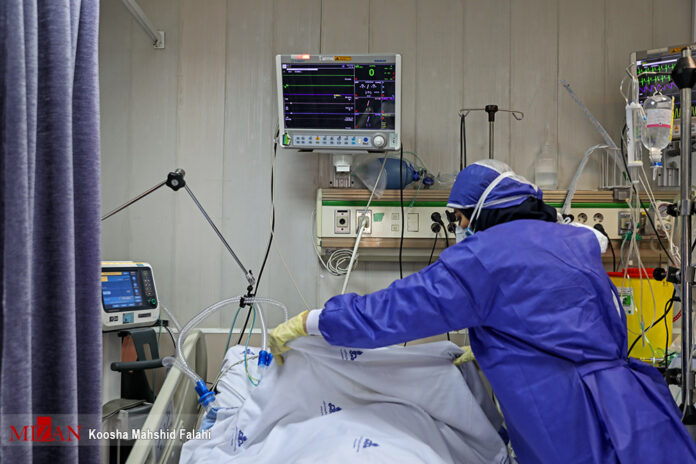
Iran maintains vaccination pace with over 1mn new shots

The latest figures show over 82,470,000 shots have been administered in Iran so far.

The ministry also reported 156 new fatalities from the deadly respiratory disease bringing the total death toll to over 125,500.

Covid-19 related deaths and infections have been declining over the past weeks after the peak of the fifth wave of the disease in Iran, but health officials are warning that a sixth wave could be looming on the horizon.

The government says it plans to keep up the pace of inoculations for now after it stepped up imports and domestic production of different types of coronavirus vaccine in recent months.

Bahrainis call for release of political prisoners after death of ex-inmate

Bahrain’s main opposition group, the al-Wefaq National Islamic Society, reported that demonstrators took to the streets in the Southern Sehla village, which lies on the outskirts of the capital city Manama, on Monday evening, waving national flags and chanting anti-regime slogans.

They voiced concerns over the alarming situation of the country’s prisons and condemned Bahraini authorities’ mistreatment of imprisoned activists.

They also demanded the immediate release of all political inmates.

The participants held up pictures of former detainee Ali Qambar, who passed away earlier in the day after losing his battle with cancer, which he had developed as a result of neglect and torture in the Manama regime’s detention centers.

They also expressed support for Bahrain’s most prominent Shia cleric Sheikh Isa Qassim, whom the Bahraini regime has stripped of his nationality as he was one of the leaders of the popular uprising that took place in 2011.

Elsewhere in Nuwaidrat, Qambar’s home village, a large number of local residents bid farewell to the deceased former Bahraini political prisoner.

They condemned the Al Khalifah regime’s brutal crackdown on dissent as they shouted anti-regime slogans.

Bahrain has come under pressure from human rights organizations over its prison conditions, including overcrowding, poor sanitation, and lack of medical care.

Back in April, Sheikh Qassim stated drawing up a new constitution was the only way out of the political crisis in the protest-hit tiny kingdom, urging the regime in Manama to pursue an agreement with the Bahraini opposition instead of increasingly suppressing dissent.

Demonstrations have been held in Bahrain on a regular basis ever since a popular uprising began in mid-February 2011.

The participants demand that the Al Khalifah regime relinquish power and allow a just system representing all Bahrainis to be established.

Manama, however, has gone to great lengths to clamp down on any sign of dissent.

On March 5, 2017, Bahrain’s parliament approved the trial of civilians at military tribunals in a measure blasted by human rights campaigners as being tantamount to the imposition of an undeclared martial law countrywide.

King Hamad ratified the constitutional amendment on April 3, 2017.