Sunday, December 21, 2025
Home Blog Page 2313

Israel to send envoy to US over outlawing Palestinian rights groups

The statement on Tuesday, made by senior Israeli Foreign Ministry official Joshua Zarka on Israeli Army Radio, comes as rights groups and United Nations experts have increasingly condemned the designation of the organizations, calling the move a major escalation of Israel’s decades-long crackdown on political activism in the occupied Palestinian territories.

For its part, the administration of President Joe Biden announced on Friday that it had not been notified by its close ally of the plans to single out the groups in advance. Israeli officials have contested that claim.

Zarka said on Tuesday the envoy would give United States officials “all the details and to present them all the intelligence” during the visit in the coming days.

He added he had personally updated US officials on Israel’s intention to outlaw the groups last week, and said he believed Washington wanted a more thorough explanation of the decision.

Observers say the situation, which comes amid a series of controversial moves against Palestinian rights from the government of Israeli Prime Minister Naftali Bennett, may represent the first test of the relationship between the Biden administration and Israel’s new coalition government, which ended the 12-year rule of former Prime Minister Benjamin Netanyahu in June.

Speaking to reporters on Monday, US State Department spokesman Ned Price declined to address the disagreement over whether Washington had been given pre-notice of the designation, but said the US was generally seeking more information from Israel.

He noted the US believes that “respect for human rights, fundamental freedoms, and a strong, independent civil society” were “critically important” in democracy and good governance.

Several of the organizations targeted by Israel – which are Al-Haq, a human rights group founded in 1979; the Addameer rights group; Defense for Children International-Palestine; the Bisan Center for Research and Development; the Union of Palestinian Women’s Committees; and the Union of Agricultural Work Committees – document alleged human rights violations by Israel as well as the Palestinian Authority, which governs parts of the occupied West Bank.

In a joint statement on Monday, more than 20 Israeli human rights groups, including some of the country’s most established organizations, condemned the step, calling it “a draconian measure that criminalizes critical human rights work”.

The labelling appears to pave the way for security forces to potentially raid the organizations’ offices, seize assets, arrest staff and criminalize any public expressions of support for them.

Since taking office, the Biden administration has continued the US’s staunch support for Israel, but has promised a more human rights-led policy than that of predecessor Donald Trump, who largely disregarded Palestinians in favour of a permissive approach towards Israel.

Meanwhile, Bennett, a right-wing politician who rose to power as part of a disparate coalition government, has generally downplayed Palestinian issues in his dealings with the US, apparently part of a larger strategy to “shrink” the international prominence of the longstanding conflict.

That approach appears to have shifted in recent weeks.

On Sunday, Israel announced plans to advance the construction of more than 1,300 new settlement homes in the West Bank. The move is the first of its kind since Biden – who has said he will take a harder line against settlements, which are illegal under international law – took office in January.

Washington has not publicly responded to the new plans.

Meanwhile, US Secretary of State Antony Blinken last month reiterated Washington’s plan to reopen a US diplomatic mission for Palestinians in Jerusalem that was closed under Trump.

On Sunday, Israel’s deputy foreign minister, Idan Roll, told Ynet TV the US may shelve those plans amid opposition from Israeli officials. The Biden administration has not responded to the statement.

Gas stations disrupted across Iran

The Iranian Oil Ministry says a technical problem is behind the nationwide disruptions that have led to long lines of vehicles at many gas stations.

Authorities say the state subsidized refueling system is currently unable to function but people can buy gas at market prices. Some reports also say the disruptions have affected the whole distribution systems.

Iran’s national society for the distribution of petrol products has held an urgent meeting to resolve the problem.

The Iranian Interior Minister Ahmad Vahidi has reassured the people that a technical glitch is behind the disruptions which will be resolved soon and that there are no plans for any fuel price increases.

Meanwhile, Iran’s Nour News, close to the Supreme National Security Council, says a cyber-attack is behind the problem that began around noon on Tuesday.

It says the attack and its source are being investigated and people will be informed about the outcome.

Iran’s Fars News Agency has raised the possibility of a cyber-attack as the anniversary of 2019 protests against fuel hikes approaches.

According to the latest, the fuel distribution process is returning to normal.

IRGC Commander: Iran expanding military might quickly

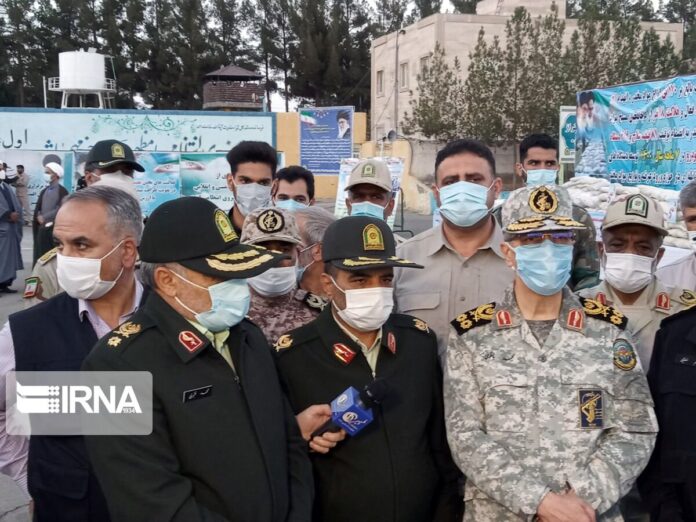
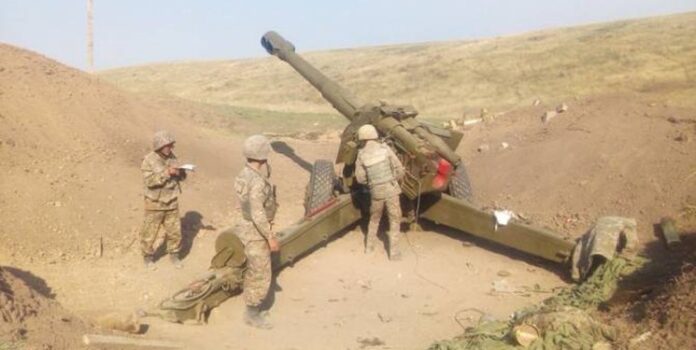
General Hossein Salami said the Islamic Republic is beefing up its naval might to be able to fight big powers as they are focused on sea. Salami however noted that Iran is witnessing a growth in its defensive capabilities in all areas.

He added that Iran’s ground forces, by expanding across borders and establishing security and building power behind frontlines, truly depicts a glorious display of a ground defense force.

According to General Salami, Iran’s aerospace force is advancing in the field of space, missiles, air defense, drones and electronic warfare in a balanced but rapid way. Salami said progress in electronic and cyber warfare is significant, and Iran has also had good achievements in information warfare.

Iran to develop oilfields near border with Iraq

Iran will need some $11 billion to develop four oilfields located to the west of the Karoun River near the Southwestern Iranian border with Iraq, NIOC Managing Director Mohsen Khojasteh Mehr said.

He pointed out that full development of the four oilfields will add some 1 million barrels per day to Iran’s total crude output.

“This issue is being regarded as one of NIOC’s high-priority projects,” he added.

Khojasteh Mehr stated that NIOC plans to fully develop South Azadegan oilfield within the next 12 months.

He noted that works for the three other fields, namely North Azadegan, Yadavaran and Yaran will also go ahead as planned.

Iran’s development projects in West Karoun Oilfields hit a snag in 2018 when sanctions imposed by the US caused some Chinese contractors to withdraw from the projects.

Experts say delays in developing the oilfields have also been due to Iranian Oil Ministry’s own focus of development of gas fields in the Persian Gulf.

However, a series of massive infrastructure projects for supplying electricity and other utilities to the fields were launched earlier this year, suggesting that Iran is intent on developing the fields which have shared reserves with neighboring Iraq.

That comes as Iraq has signed major contracts with Western oil companies to develop oilfields located across the Iranian border.

Iran, Turkmenistan agree to boost bilateral trade to highest level

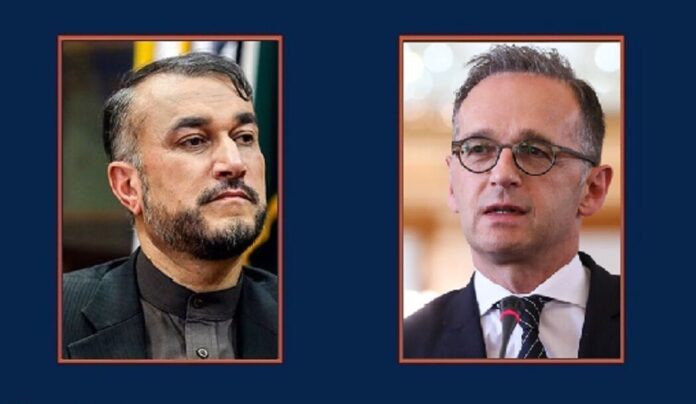
“Today we agreed to review the joint cooperation document between the two countries. So far, more than 100 official documents have been signed … and our agreement is on a comprehensive document of cooperation and increasing bilateral trade to a maximum level.” Iranian Foreign Minister Hossein Amirabdollahian said after discussions with his Turkmen counterpart Rashid Meredov in Tehran.

The top Iranian diplomat announced that an agreement had been reached with Turkmenistan on reopening the transit route for trucks from four border crossings adding that a basic agreement has been reached on provincial cooperation, and collaboration in the fields of electricity, water and other areas of interest.

During a joint press conference, the top Turkmen diplomat said “we talked about business development and bringing the volume of exchanges to the highest level, and we decided to take trade relations to the highest level in terms of quantity and quality. The Turkmen side is fully prepared for this.”

“I would like to emphasize that the Islamic Republic of Iran and Turkmenistan, as two friendly and brotherly countries, are taking steps and cooperating with each other,” Meredov added.

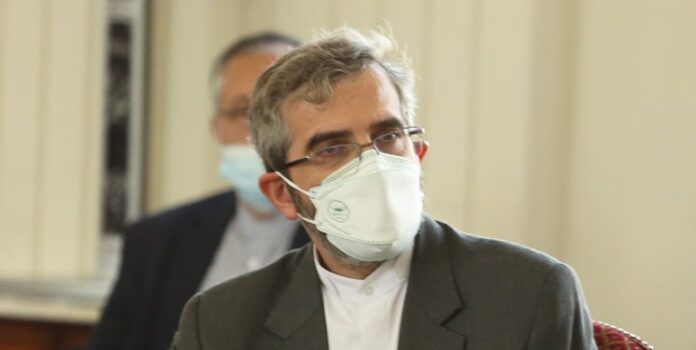
The Turkmen foreign minister is in Tehran to attend the meeting of Afghanistan’s neighbors plus Russia to be held in Tehran on Wednesday.

Iranian, Pakistani FMs meet in Tehran

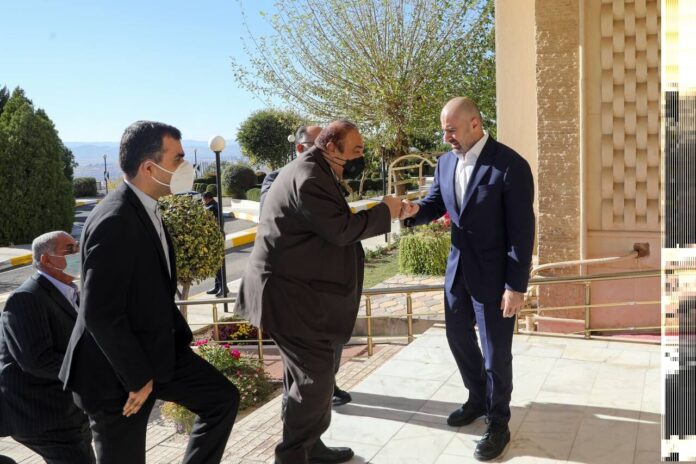
The Pakistani foreign minister arrived in the Iranian capital of Tehran on Tuesday and upon his arrival, he was welcomed by Amir Abdollahian. 

The foreign minister of Pakistan has traveled to Tehran to attend a meeting of foreign ministers of Afghanistan’s neighbors.

The meeting of foreign ministers of 6 neighboring countries of Afghanistan plus Russia will be held in Tehran on Wednesday in the presence of Iranian President Ebrahim Raeisi.

Saffron Harvest Season Begins in Iran’s Golestan


Residents of Vamenan village in the provincial town of Azadshahr have changed their plantation patterns on their fields and cultivated saffron in addition to the crops they have already been growing, raising their income and creating jobs for the youth.

Quality saffron is grown in the village despite its mountainous climate.

Other crops grown in Vamenan village include wheat, barely, lentils, beans and apples.

Orchards in Asadshahr also produce cherries, sour cherries, nectarines, apricots, prunes, pears and walnuts.اين

US Power Declining; Balance of Power Changing Worldwide: Top Iranian General

General Mohammad Hossein Baqeri

Major General Mohammad Baqeri, the chairman of the Joint Chiefs of Staff of the Iranian Armed Forces, said the US fleeing Afghanistan, American forces beginning to pull out of Iraq and parts of Syria, the transfer of, and a reduction in the United States’ modern air and missile defense equipment on the Persian Gulf rim as well as a drawdown of US naval troops and their redeployment to areas in southern Chia all indicate the United States’ declining power and a change in the balance of power in the world.

“After the tough days of past threats, now, thank God, we are seeing the days of the decline and weakness of criminal US and its cronies in the region,” said the general.

However, he said, this does not mean that threats have dropped.

“Although it has become difficult for the criminal United States and Zionists to take direct military actions, they have shown that they will never give up their plots and animosity against the holy establishment of the Islamic Republic of Iran and will, in different forms, make threats and create hardships for Islamic Iran and our regional allies,” he said.

The top general urged the country’s Armed Forces to remain vigilant as ever.

He said it will be a little easier to tackle overt and direct threats, but “when threats are complex and multi-layered, naturally we will have a more daunting task tacking them.”

Iran’s FM meets Turkmen counterpart

Heading a delegation, Meredov who traveled to the Iranian capital on Tuesday morning, met with Amir Abdollahian. 

The Turkmen FM has traveled to Tehran to attend a meeting of foreign ministers of Afghanistan’s neighbors.

After meeting with Amir Abdollahian, the Turkmen Foreign Minister is scheduled to participate in the Iran-Turkmenistan Joint Commission.

The meeting of foreign ministers of six neighboring countries of Afghanistan plus Russia will be held in Tehran on Wednesday in the presence of Iranian President Ebrahim Raeisi.

Iran’s Imports of Covid Vaccines Top 100mn

 The society’s director Karim Hemmati said the latest consignment consisted of six million doses of vaccines. He said his organization is ready to import any amount of vaccine the Health Ministry says is needed.

Hemmati added that Iran’s Red Crescent Society will continue to help to fight the coronavirus pandemic and continues its screening work at the borders, establishment of vaccination centers and cooperation with charity workers in this field. 

He said Iran is expected to inoculate 75 percent of the population against COVID-19, using both domestically-produced vaccines and imported jabs.

According to the Health Ministry, more than 81 million doses of coronavirus vaccines have been administered in Iran so far. This includes over 30 million people have also received a second dose.

The pandemic has so far infected nearly six million Iranians and has taken the lives of 125,363 people.

The latest national infection number for 24 hours was on Monday during which over 7,500 new infections and 140 deaths were recorded.