Sunday, December 21, 2025
Home Blog Page 2310

Turkey deploys more military equipment to Syria’s Idlib

Syria’s official SANA news agency, citing local sources, reported that two convoys of 100 trucks each, carrying battle tanks, artillery batteries and logistical supplies, crossed into Syrian territories through Khirbet al-Joz crossing on Wednesday, and headed towards Jabal al-Zawiya area in Syria’s northwestern province of Idlib.

The report added that the convoys are meant to fortify the position of Turkish military forces in northwest Syria, and help Takfiri militants fighting Syrian government troops.

Idlib is the last major stronghold of foreign-backed terrorists, especially Hay’at Tahrir al-Sham (HTS) militant group, fighting against the legitimate government of Syrian President Bashar al-Assad.

The HTS is a coalition of different factions of al-Qaeda-linked terror outfits largely composed of Jabhat Fateh al-Sham, formerly known as al-Nusra Front.

Moreover, Syria’s official news agency SANA, citing local sources, reported that dozens of Turkish military trucks loaded with various ammunition and logistical supplies as well as armored personnel carriers entered Syrian territories on Tuesday.

The sources said the convoy later headed toward positions held by Turkish-backed militants in the city of Ras al-Ayn.

They noted that a large number of Turkish unmanned aerial vehicles flew overhead as military and logistical equipment were brought into Syria.

Ankara-backed militants were deployed to northeastern Syria in October 2019 after Turkish military forces launched a long-threatened cross-border invasion in a declared attempt to push fighters of the Kurdish People’s Protection Units (YPG) away from border areas.

Ankara views the US-backed YPG as a terrorist organization tied to the homegrown Kurdistan Workers’ Party (PKK), which has been seeking an autonomous Kurdish region in Turkey since 1984.

Turkey has played a major role in supporting terrorists in Syria ever since a major foreign-backed insurgency overtook the country more than ten years ago.

The Syrian president and other senior officials have said the Damascus government will respond through all legitimate means available to the ongoing ground offensive by Turkish forces and allied Takfiri militants in the northern part of the war-battered Arab country.

Iran, EU Nuclear Negotiators Begin Talks in Brussels

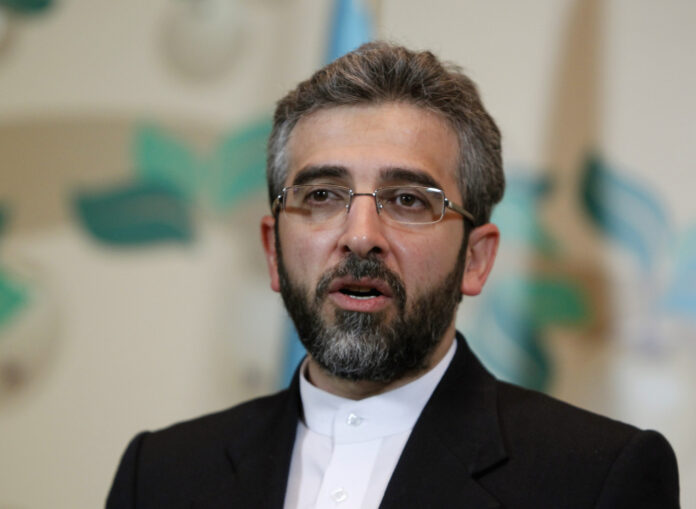
Bagheri, who is also Iran’s top nuclear negotiator, said before the meeting that Iran is “after proving the necessary and appropriate ground to shape serious negotiations to achieve an agreement that has practical results”.

Iran earlier reiterated that it seeks negotiations to fully remove “oppressive” and illegal sanctions, imposed by the US, against the country in a bid to guarantee normalized trade and economic ties between Iran and other countries.  

Tehran says the negotiations must be able to provide reliable guarantees that parties to the 2015 nuclear deal no longer stop fulfilling their obligations under the accord. 

The US that was among the signatories of the nuclear deal withdrew from the internationally-recognized accord in 2018 under former president Donald Trump, re-imposing anti-Iran sanctions.

‘Terrorists in Afghanistan could attack US in six months’

The US intelligence community has assessed that Islamic State in Afghanistan could have the capability to attack the United States in as little as six months, and has the intention to do so, a senior Pentagon official told Congress on Tuesday.

The remarks by Colin Kahl, under secretary of defense for policy, are the latest reminder that Afghanistan could still pose serious national security concerns for the United States even after it ended its two-decade-old war in defeat in August.

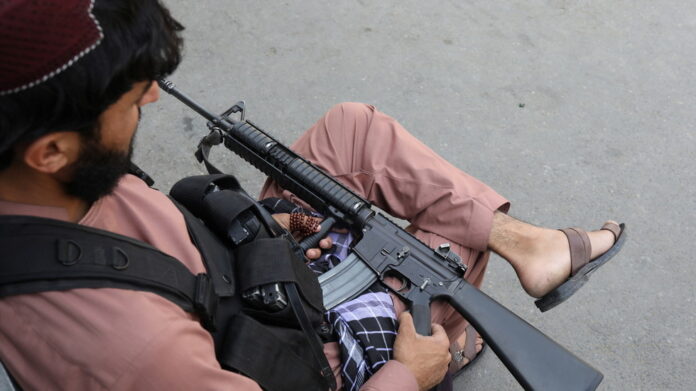
The Taliban, which won the war, are enemies of Islamic State and have seen its attempts to impose law and order after the US pullout thwarted by suicide bombings and other attacks claimed by Islamic State.

They include bombings targeting the minority Shi’ite sect and even an Islamic State beheading of a member of a Taliban militia force in the eastern city of Jalalabad.

In testimony before the Senate Armed Services Committee, Kahl said it was still unclear whether the Taliban has the ability to fight Islamic State effectively following the US withdrawal in August.

The United States fought the Taliban as well as striking groups like Islamic State and al Qaeda.

“It is our assessment that the Taliban and ISIS-K are mortal enemies. So the Taliban is highly motivated to go after ISIS-K. Their ability to do so, I think, is to be determined,” Kahl added, using an acronym for Islamic State in Afghanistan.

Kahl estimated Islamic State had a “cadre of a few thousand” fighters.

Acting Foreign Minister Amir Khan Muttaqi of the new Taliban government has announced the threat from Islamic State militants will be addressed. He also noted Afghanistan would not become a base for attacks on other countries.

Kahl suggested al Qaeda in Afghanistan posed a more complex problem, given its ties to the Taliban.

It was those ties that triggered the US military intervention in Afghanistan in 2001 following al Qaeda’s Sept. 11 attacks on New York and Washington. The Taliban had harbored al Qaeda leaders.

Kahl stated it could take al Qaeda “a year or two” to regenerate the capability to carry out attacks outside of Afghanistan against the United States.

Democratic President Joe Biden, whose supervision of the chaotic end to the war last summer has damaged his approval ratings, has said the United States will continue to be vigilant against threats emanating from Afghanistan by carrying out intelligence-gathering operations in the country that would identify threats from groups like al Qaeda and Islamic State.

Kahl added the goal was to disrupt those groups so that Islamic State and al Qaeda don’t become capable of striking the United States.

“We need to be vigilant in disrupting that,” he continued.

Still, US officials privately warn that identifying and disrupting groups like al Qaeda and Islamic State is extremely difficult without any troops in the country. Drones capable of striking Islamic State and al Qaeda targets are being flown in from the Gulf.

Kahl stated the United States did not yet have any agreement with countries neighboring Afghanistan to host troops for counterterrorism efforts.

Pakistani FM urges world to prevent humanitarian disaster in Afghanistan

Qureishi was speaking on Wednesday at the meeting of the foreign ministers of Afghanistan’s neighbors in Tehran. 

He added that the world must address the economic situation in Afghanistan. 

The Pakistani foreign minister added Islamabad believes that Afghanistan’s frozen assets abroad must be unlocked. He said the Taliban takeover triggered a huge refugee wave, adding the Tehran conference is for Afghanistan’s neighbors to deal with the challenges in the country. Qureishi said, “We all want a stable Afghanistan and we believe that today’s meeting can strengthen the results of the first session and result in important steps toward stability in the country”. 

The Pakistani foreign minister underlined that fighting terrorism in Afghanistan is vital, adding that an inclusive government is necessary for Afghanistan and all people’s rights should be respected. 

The Pakistani foreign minister also urged Afghanistan’s neighbors to prevent new conflicts in the region, highlighting the need to send humanitarian aid to Afghanistan. 

He added that Pakistan has already sent aid to its neighbor and will continue doing so.

Fmr. Iranian envoy: Tehran meeting on Afghanistan show of strength against U.S.

Fada Hossein Maleki, who is currently a member of the Iranian parliament’s National Security and Foreign Policy Committee, said on Wednesday that collective decisions made in the Tehran meeting can be in the interest of the people of Afghanistan and the region. 

“The security of Iran and Afghanistan’s other neighboring countries is deeply linked to the developments in this country, and the Tehran meeting will be held in order to address the concerns of the neighboring countries regarding the developments in Afghanistan,” he explained.

Maleki stated that given the demographic and ethnic composition of Afghanistan, neighboring countries agree that different ethnic groups must reach a consensus on the formation of the government in Kabul.

“Countries that can exert influence over the Taliban should encourage this group to form an inclusive and participatory government with the presence of all Afghan ethnic groups, and we hope that the Tehran summit will make these countries look in this direction, because this idea is ultimately in favor of stability and security of the region,” the former ambassador to Kabul said.

Russia urges Afghanistan neighbors to prevent US, NATO presence on their soil

Lavrov

“We once again call on Afghanistan’s neighboring countries to prevent the military presence of the US and NATO on their territory as those plan to move there in light of the troop withdrawal from Afghanistan,” he stated on Wednesday in a video address to participants in a ministerial meeting of Afghanistan’s neighboring countries involving Russia, China, Iran, Pakistan, Tajikistan, Turkmenistan and Uzbekistan.

NATO members including Washington should bear primary responsibility for the socio-economic recovery of Afghanistan because they are the ones who created the war-ravaged country’s current predicament, Lavrov continued.

“Clearly, establishing a national system of education and healthcare, as well as creating an effective socio-economic infrastructure in Afghanistan, will require enormous financial efforts. In this regard, I would like to emphasize that those who created the current situation in the country should bear the primary responsibility,” Lavrov pointed out.

According to him, the time apparently has come “to start mobilization work to collect resources in order to provide financial, economic and humanitarian assistance to the Afghan people”.

“I hope that the habit of Westerners holding conferences for the sake of conferences has become a thing of the past. The time has come for concrete action on this front,” Lavrov noted.

The Russian top diplomat also stressed that the United Nations needed to play a coordinating role in the process.

“It was the UN to whom delegates to the Moscow consultations on Afghanistan of October 20, 2021, appealed on the matter,” Lavrov added.

Terrorists disguised as refugees have been trying to infiltrate neighboring countries. These attempts must be resisted by all means, he stated.

“The current task on the agenda is to ease the effects of and control migration flows from Afghanistan, because terrorist and criminal elements posing as refugees may infiltrate neighboring countries and have already been trying to do so,” he underlined.

“This goal can be achieved only by creating normal conditions in Afghanistan. In the long term this will be a major prerequisite for the gradual return of Afghans to their homes,” Lavrov underscored.

After the United States announced plans to withdraw its troops from Afghanistan, the Taliban embarked on a large-scale operation to take the country under control. Taliban fighters swept into Afghanistan’s capital of Kabul on August 15, without encountering any resistance, with Afghan President Ashraf Ghani fleeing the country. On September 7, the Taliban announced an interim government, which has not been recognized by any country yet.

Russia is planning to send a batch of food products and medicines to Afghanistan in the near future, Lavrov said.

“Russia is ready to contribute to the joint effort. In the near future, we are planning to send to [our] Afghan partners a batch of humanitarian aid consisting of food products, medicines and basic necessities,” the Russian top diplomat added.

Iran president: Tuesday cyberattack aimed to disrupt lives

US Protests to Engulf Entire America: Iran's Top Judge

Raeisi said the attack failed to take authorities unawares and they handled the situation immediately. 

Raeisi added that the Iranian people also acted vigilantly and didn’t allow anyone to take advantage of the situation. He instructed the Oil Ministry to redress any possible losses citizens may have suffered. 

The president noted Iran must be able to predict and prevent cyberattacks and equip itself to counter them. 

He said citizens have rights regardless of their religion and ethnicity and officials must feel responsible toward all Iranians. 

The outage caused by Tuesday’s cyberattack closed gas stations countrywide, leaving millions of drivers stranded. The Iranian Oil Ministry said the entire digital payment mechanism supporting the subsidized payment system was out of service due to the incident. Later, many gas stations got back online.

Turkey extends military missions in Syria and Iraq

Turkey’s parliament on Tuesday ratified a motion extending authorization to launch cross-border anti-terrorist operations in northern Iraq and Syria for two more years, as well as continued participation in a Lebanon peacekeeping mission.

The Justice and Development (AK) Party, Nationalist Movement Party (MHP), and the opposition Good (IYI) Party backed the Iraq and Syria motion. The main opposition Republican People’s Party (CHP) and the Peoples’ Democratic Party (HDP), however, voted against the motion.

The motion, referred to parliament by the government of President Recep Tayyip Erdogan, allows the Turkish military to carry out cross-border operations in northern Iraq and Syria for two more years, from Oct. 30, 2021 until Oct. 30, 2023.

The motion stated that the risks and threats posed by ongoing conflicts near Turkey’s southern land borders “continue to rise.”

Stressing that Turkey places great importance on protecting Iraq’s territorial integrity, national unity, and stability, the motion said: “However, the presence of the (terrorist groups) PKK and Daesh in Iraq poses a direct threat to regional peace, stability, and the security of our country.”

The motion also decried the violent attacks of the terrorist PKK/YPG in Syria, adding that Turkey has taken necessary measures in line with its “legitimate national security interests” to preserve the “peace and stability established in Turkey’s operation areas.”

It also pointed to the situation in Syria’s Idlib province, the country’s last remaining opposition stronghold, saying that the peace and stability established via the Astana process continues to be under threat.

Idlib falls within a de-escalation zone forged under an agreement between Turkey and Russia.

In its more than 30-year terror campaign against Turkey, the PKK – listed as a terrorist organization by Turkey, the US, and EU – has been responsible for the deaths of some 40,000 people, including women, children, and infants. The YPG is its Syrian branch.

PKK terrorists often use northern Iraq, just across the Turkish border, to plot attacks in Turkey. Ankara says it uses its rights under international law to pursue these terrorists at their hideouts.

Daesh terrorists have carried out multiple attacks against Turkey, including at least 10 suicide bombings, seven bombings, and four armed attacks, which killed 315 people and injured hundreds of others.

In response, Turkey launched military and police operations at home and abroad to prevent further attacks.

Since 2016, several Turkish cross-border operations in northwestern Syria have liberated the region from YPG/PKK and Daesh terrorists, making it possible for Syrians who fled the violence to return home.

Turkish lawmakers also ratified a separate motion to extend for another year the deployment of troops in Lebanon as part of a UN peacekeeping force.

The AK Party, CHP, MHP, and IYI Party backed the motion, leaving the HDP as the sole party opposing it.

Under the motion, the term of Turkish soldiers in the UN Interim Force in Lebanon, also known as UNIFIL, is extended until Oct. 30, 2022.

The motion has been extended 14 times since it was first approved by parliament in 2006.

UNIFIL was established in 1978, when Israel withdrew from Lebanon. The peacekeeping force is intended to provide security and help the Lebanese government rebuild its authority.

Over 10,000 troops from 46 countries are part of the UNIFIL mission.

Tehran meeting of Afghanistan’s neighbors gets underway

Top diplomats from Pakistan, Iran, Tajikistan, Uzbekistan and Turkmenistan are attending the meeting in Tehran while Russian and Chinese foreign ministers have joined the session online.

The meeting will continue discussions that the neighboring countries had during a virtual meeting in September about the situation in Afghanistan and developments related to the country.

Iranian Foreign Minister Hossein Amirabdollahian addressing Tehran meeting on Afghanistan, renewed calls for an inclusive government in Afghanistan/

“We hope to be able to send a common message with a unified voice to the international community and regional countries, and inside Afghanistan,” the Iranian top diplomat said.

Amirabdollahian emphasized that the responsibility for the security of Afghan citizens and borders with neighboring countries lies primarily with the caretaker governing body in Kabul and that the international community must help Afghanistan to get out of its current situation.

“If today a strong message is sent from the Tehran meeting calling for the formation an inclusive government in Afghanistan, it is because of the history and the role of the Afghan people in confronting the occupation and the challenges of recent decades,” the top Iranian diplomat added.

The Iranian foreign minister said overcoming the recent crisis in Afghanistan requires internal cohesion and utilization of all Afghan capacities and talents. 

He said Iran believes that all neighbors, and at the same time the international community, should pay special attention to the political and humanitarian situation, the spread of terrorism, drug trafficking, and respect for human and women’s rights in Afghanistan.

Amiabdollahian also stressed that many of Afghanistan’s current problems are rooted in foreign intervention, and that the United States must loudly acknowledge its responsibility for the atrocities it committed in Afghanistan over the past two decades, and take serious steps, in line with international efforts, to help the Afghan nation overcome its woes. 

“The Americans and the U.S. military left Afghanistan as a result of the struggle of the great people of Afghanistan.” he added.

UN blasts Israel’s labeling of Palestinian rights groups as “terrorist”

Israel’s designation of six Palestinian civil society organizations as “terrorist organizations” is an attack on human rights defenders, freedom of association, and the right to public participation, and should be immediately revoked, the UN human rights chief said Tuesday.

Bachelet added the organizations are some of the “most reputable human rights and humanitarian groups in the occupied Palestinian territory” that have worked closely with the UN for decades.

“Claiming rights before a UN or other international body is not an act of terrorism, advocating for the rights of women in the occupied Palestinian territory is not terrorism, and providing legal aid to detained Palestinians is not terrorism,” Bachelet stated in a statement.

She asserted that the designation decisions under the Israeli Counter-Terrorism Law of 2016 are vague or unsubstantiated.

They included peaceful and legitimate human rights activities, such as providing legal aid to Palestinians in detention, organizing activities for women in the West Bank, and “promoting steps against Israel in the international arena.”

The rights chief reiterated that counter-terrorism legislation must not be applied to legitimate human rights and humanitarian work.

The banning of organizations must not be used to suppress or deny the right to freedom of association, quash political dissent, silence unpopular views, or limit the peaceful activities of civil society.

The national authorities responsible for proscribing organizations must comply fully with international human rights obligations, said the rights office.

These include respecting the principles of legal certainty, proportionality, equality, and non-discrimination.

“Restricting the space for legitimate activities under international law is not only wrong but counter-productive, as it risks limiting the space for peaceful dialogue,” Bachelet continued.

She noted that the organizations include some of the critical partners of the UN Human Rights Office and they face far-reaching consequences due to “this arbitrary decision,” as do those who fund them and work with them.

Bachelet stated, “And the crucial work they perform for thousands of Palestinians risks being halted or severely restricted.”

The published designation decisions by the Israeli Minister of Defense state that the organizations have become the “arm” of the Popular Front for the Liberation of Palestine (PFLP).

It says that they obtained financial resources, which in practice reached the “(PFLP) terror activity” or supported their activities.

The rights office announced there is no evidence presented to support these accusations, no information on the type of alleged “PFLP terror activity,” nor has any public process been conducted to establish the allegations.

The designations against the six organizations on Oct. 19 are the latest in a long-running series of actions to undermine and restrict human rights defenders and civil society organizations working for the human rights of Palestinians.

These include using military regulations to declare groups unlawful, added the rights office.

The organizations are Addameer Prisoner Support and Human Rights Association; Al Haq; Defense for Children International – Palestine; Union of Agricultural Work Committees; Bisan Center for Research and Development; and the Union of Palestinian Women’s Committees.