Monday, December 22, 2025
Home Blog Page 2309

Iran: UN Rapporteur should condemn devastating effects of economic terrorism on Iranians

Saeed Khatibzadeh said the report submitted to the 76th session of the UN General Assembly is selective and politically-motivated. He rejected the worthless allegations made in the report as deplorable.

The Iranian Foreign Ministry spokesman emphasized that the report is contrary to the principles and criteria set forth in the rules governing the work of reporters, including the need to obtain facts using objective and reliable information from reliable sources.

Khatibzadeh noted that the report can in no way give a true and accurate assessment of the human rights situation in Iran.

He referred to the repeated enmity and unfounded accusations made by the UN Special Rapporteur against the Islamic Republic, saying this record has completely damaged the credibility of his reports and turned them into political statements by terrorist groups and opponents of the Islamic Republic of Iran.

Khaitbzadeh expressed regret over the targeted concentration of the UN Special Rapporteur on allegations without heeding the measures that have improved human rights in Iran. He said as stressed repeatedly, appointing a special rights rapporteur for a country like Iran which is under the pressure of the US economic terrorism but has remained committed to its citizens and the international community is basically unjustified and non-constructive.

Khatibzadeh stated that the Islamic Republic, as a democratic system and within the framework of religious obligations and adherence to its constitution and other laws and international treaties, has taken steps to develop and promote human rights at the national, regional and international levels and is committed to it. He noted that the UN Special Rapporteur should first wake up from deep sleep and condemn the devastating effects of economic terrorism on Iranians’ access to basic necessities, including medical and pharmaceutical items during the Covid crisis.

Kharibazdeh also spoke of those who were behind the agenda of the Special Rapporteur. He said some of the countries, which carry out the largest number of international human rights attacks against Iran, impose or enforce oppressive sanctions against the Iranian people, sell advanced weapons to criminals, cooperate strategically with the Zionist regime against the Palestinian people, and support terrorist groups. Therefore, he said, these countries are themselves the biggest violators of human rights in the world.

Tehran Forum: Inclusive Political Structure with Participation of All Ethnicities Sole Solution for Afghanistan

The meeting held in Tehran on October 27, was attended by foreign ministers of Iran, China, Pakistan, Tajikistan and Turkmenistan plus Russia.

The meeting opened with remarks by Iranian First Vice President Mohammad Mokhber on the current situation in Afghanistan. Later a video message by UN Secretary General Antonio Guterres was played and then participating foreign ministers took turns to address the forum. Participants concluded their meeting with a joint final statement.

The Foreign Ministers:
Seeing that the situation in Afghanistan has drastically changed underlined their support for the national sovereignty, political independence, unity and territorial integrity of Afghanistan and no foreign interference in its internal affairs;
With emphasis on globally-accepted principles of international law and respect for the ambition of the people of Afghanistan to realize lasting peace, expressed hope to see an Afghanistan that enjoys stability, development, welfare and harmonious relations with regional countries;

Expressed deep concern about the complicated military-political, social-economic and humanitarian situation in Afghanistan;
Agreed that countries, which hold the main responsibility for the problems in Afghanistan, should seriously meet their obligations and provide the country with the necessary economic and humanitarian aid as well as the needed assistance for the livelihood [of its people] to help a lasting transition in the situation in Afghanistan;
Noted that the only solution for the problems of Afghanistan is an inclusive and all-encompassing political structure with the participation of all ethnicities;
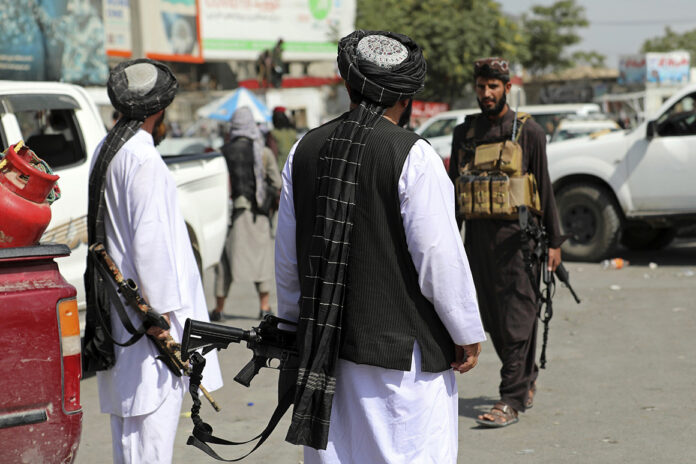
Expressed strong support of Afghanistan’s neighbors for achievement of peace, stability and national reconciliation in this country and encouraged all involved parties, including the Taliban, to continue talks and political consultations to help improve the future of the nation;
Reiterated that international and regional organizations, especially the United Nations and members of the UN Security Council, should adhere to their responsibility to advance a political resolution of the issues in Afghanistan and support Afghans with economic and humanitarian aid for development of [their country’s] economic-social infrastructures;
While expressing deep concern about the deteriorating economic situation in Afghanistan, called for provision of immediate humanitarian aid by the international community;

Strongly condemned terrorist attacks in any form and manner against ethnic and religious groups, especially the recent terrorist attacks against mosques;

The Statement:
1. Calls for continued and realistic support for resolution of disputes through talks and negotiations among relevant parties to achieve national reconciliation, a lasting political solution and formation of an inclusive government.

2. Asks all Afghan sides to implement modest and cautious domestic and foreign policies, to quickly restore order to the society, to ensure effective performance of state offices, to provide the needed primary services to the people, to move to improve the livelihood of the people and to protect the basic rights of the individuals including ethnic groups, women and children in Afghanistan.

3. Calls for attention to the guarantees and obligations of the relevant responsible Afghan sides to the international community, so that the territory of Afghanistan would create no threat for the neighboring countries and would not be used by criminal, terrorist and separatist groups, and expresses hope that [relevant responsible Afghan sides] seriously end their ties with different terrorist groups, attack them and effectively eliminate them.

4. Asks relevant parties to adhere to all their undeniable responsibilities, adopt a friendly approach to neighboring countries, respect accepted principles of international law and basic human rights and support the security and legitimate rights of foreign nationals and institutions in Afghanistan.

5. Encourages all relevant Afghan parties to counter different threats and challenges including terrorism, drugs trafficking and human smuggling and crack down on organized crimes and other criminal acts that are rooted in Afghanistan, while keeping an eye on the terrorist threats and ensuring an effective fight on terror in Afghanistan, and engaging in bilateral or multi-lateral negotiations with the aim of making resumption of cooperation on fighting terrorism in Afghanistan in due course.

6. Asks relevant sides in Afghanistan and the international community to address the main reasons for migration and forced displacement in Afghanistan, to avoid any destabilizing move that worsens the situation and to cooperate to find a permanent solution for the continued problem of Afghan refugees.

7. Asks the international community and countries, which provide aid, to provide continued, adequate and proportionate financial assistance to countries that host Afghan refugees, especially the Islamic Republic of Iran, the Islamic Republic of Pakistan and Afghanistan’s other neighbors.

8. Asks the international community to provide the most urgent humanitarian aid including food, medicine, winter equipment, etc., to prevent a humanitarian crisis and a [new] wave of refugees in Afghanistan and to prevent a new shock to the neighboring countries and the international community.

9. Asks the international community to take specific steps to help Afghanistan against COVID-19 and to prevent the spread of the virus.

10. Proposes the creation of a mechanism for holding regular meeting of special envoys on Afghanistan. Also, agreement was reached for cooperation on the regular mechanism for meetings of the representatives of embassies in Afghanistan in the near future to help promote relevant cooperation and discuss the details to achieve more tangible results.

11. Stressed that the international community should continue its positive interaction with Afghanistan and draw out a long-term roadmap to advance political interaction, economic integrity and links in the region.

The foreign ministers thank the Islamic Republic of Iran for hosting the second round of this meeting and agree to hold a third round of the same meeting in 2022.

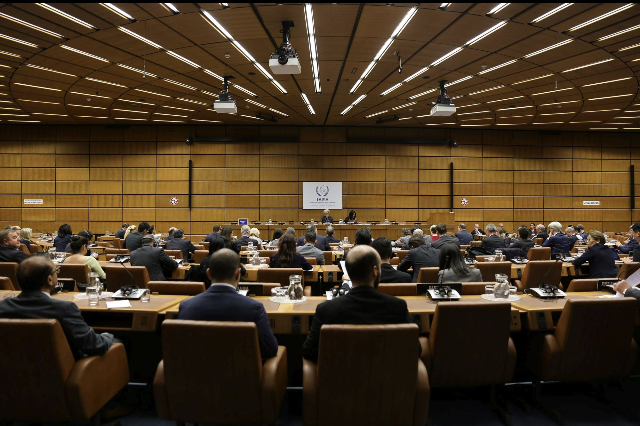
Iran: Vienna talks to resume before November’s end

Bagheir made the announcement in a tweet following his talks with Mora in Brussels on Wednesday.

He said he held serious and constructive negotiations with Mora over the vital components of the nuclear talks.

Bagheri added that the two sides agreed to resume negotiations before the end of November, saying the exact date of the talks will be announced next week. The Vienna talks stalled before a new administration took office in Iran several months ago. The current Iranian government has repeatedly said it’s ready for talks but insists any dialogue must bear tangible results that would serve the interests of the Iranian people.

The Iran nuclear deal plunged into disarray after former US president Donald Trump pulled Washington out of the agreement in 2018.

Following his withdrawal, Trump reinstated harsh sanctions on Iran. In response, the Islamic Republic rolled back its obligations under the deal.

The US under President Joe Biden has said multiple times it intends to return to the JCPOA.

It has called on Iran to return to full compliance with the deal. But Iran says the US must first show good-will by removing the anti-Tehran sanctions. Iran has also criticized the European troika for their inaction to resist the US’s unilateral sanctions on Iran.

China calls for Afghanistan sanctions lifted

“We need to call on the US and Western countries to fulfill their primary obligations to support Afghanistan through its transition from difficulties to a new life. Apart from many other things, they should lift unilateral sanctions on Afghanistan and make it possible to start using state assets to meet the people’s needs,” he pointed out.

He added the Taliban is eager to have dialogue with the rest of the world, and the international community should help Afghanistan with its development.

Wang said Beijing was ready to host further talks between Afghanistan and its neighbours on the country’s future.

“The Taliban are eager to have dialogue with the world … China will host the third Neighbours of Afghanistan meeting at the appropriate time,” Wang noted in comments broadcast live by Iranian state TV.

The meeting of Afghanistan and neighbouring countries was attended in person by the foreign ministers of Pakistan, Tajikistan, Turkmenistan and Uzbekistan, and China and Russia participated by video link.

The talks followed a similar conference involving Afghanistan’s neighbouring countries that was hosted by Pakistan in September, and are aimed at establishing durable peace in Afghanistan.

The United States and other Western countries are seeking ways to engage with the Taliban and ensure humanitarian aid flows into the country, without granting them the legitimacy they seek.

US officials and Taliban representatives discussed humanitarian assistance for Afghanistan this month in Qatar but Washington announced the meetings did not amount to recognition of the Taliban.

The United States and other Western nations are reluctant to provide the Taliban with funds until the militant movement provides assurances that it will uphold human rights, and in particular the rights of women.

At Wednesday’s conference in Iran, Iranian Foreign Minister Hossein Amir Abdollahian backed the formation of an inclusive government in Afghanistan, state television reported. His remarks echoed Iran’s official stance.

Iran commander says any threat to face decisive response

In an interview with Mehr News agency, Commander of Khatam al-Anbia Air Defense Base Brigadier General Ghader Rahimzadeh pointed to the tenth air defense military drill entitled ‘Modafean-e Aseman-e Velayat’ and the role of air defense network in this maneuver noted, “Air defense network has had a prominent role in all the tried maneuver.”

Stressing the active presence of Air Defense Force in all the tried maneuvers of the army, he stated, “Air defense network monitors the operation of all planes and drones closely to provide our pilots with necessary guides in case of happening any problems to them or entering enemy fighters in the country’s airspace in real war scene that may threaten our fighters or planes.”

Rahimzadeh added that all the missions and drills are the joint work coordinated with the country’s Air Defence network.

Pointing to the achievements of Iran in the field of countering aerial targets in different ranges, he noted, “During the holy defense, we had problems with encountering long-range targets because, in that war, we not only confronted Saddam’s regime but also the whole world powers that supported Saddam.”

“Today we are equipped with various missiles and defense systems,” Rahimzadeh added, saying that so it is inconceivable that targets could approach the country’s air borders.

Stating that Iran’s air defense definitely will respond to any kind of threat decisively, he said that it is able to defend the country’s sky completely.

Referring to the achievements and capabilities of the country in the field of air defense, he added, “We have air defense systems and equipment for confrontation and decisive reaction.”

Iran proposes solution for crisis in Afghanistan

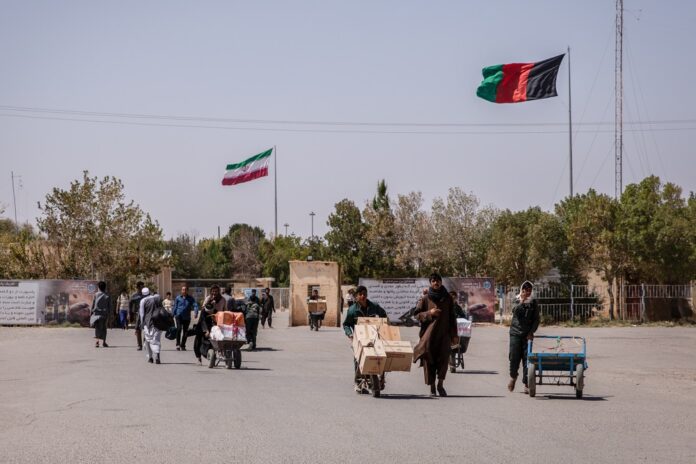
Speaking in the Second Meeting of Foreign Ministers of Afghanistan’s Neighboring Countries in Tehran, Amir Abdollahian said that the meeting was the second iteration of the initiative proposed by Pakistan.

He hoped that the current edition of the meeting would outline a clearer image of the realities in Afghanistan and the expectations of the countries most impacted by the developments in that country and provide a road map for the next steps.

Amirh Abdollahian, then, presented the Islamic Republic of Iran’s proposal to find a solution to the crisis in Afghanistan.

As the first point of the proposal, he mentioned the necessity of forming an all-inclusive government effectively and sustainably representing all ethnic and religious groups via intra-Afghan dialogue without the interference of foreign actors that are highlighted by the Islamic Republic of Iran.

As the second point, Amir Abdollahian singled out the Taliban, saying that the group has undeniable duties in providing security, fighting terrorism, observing the rights of all groups including women, supplying basic needs of Afghan people, putting an end to violation of ethnic and religious groups’ rights, rooting out displacement, and observing the basic and accepted principles of international law.

On the humanitarian needs of Afghan people, including food, medicine, and COVID-19 vaccine, the top diplomat said that humanitarian aids should be distributed fairly and this requires a cohesive mechanism which the Islamic Republic of Iran proposes, as the third point, the ECO Program for Afghanistan due to calendar constraints.

He also mentioned as the fourth point of the proposal that the countries in the region should form an intelligence-security cooperation mechanism to fight organized crimes and terrorism.

The foreign minister suggested seeking the good offices of the United Nations and its mediation between Afghan parties to reach an agreement on the structure of the future government in Afghanistan.

Before presenting Iran’s proposal, Amir Abdollahian touched on the roots of the current situation in Afghanistan, saying that the crisis which has concerned all countries neighboring Afghanistan was the legacy of improper interventions by oppressive powers.

He added that the US attacked Afghanistan 20 years ago under the pretext of fighting terrorism and caused instability, war and insecurity to persist and be reproduced by its continued military presence.

Instead of moving Afghanistan and its people forward and empower them, Amir Abdollahian criticized, Washington escaped the scene in a naïve and irresponsible way and caused the situation we all are faced with today.

The foreign minister went on to say that Afghanistan’s neighboring countries are well aware of the importance of the lack of consensus inside the country, in the surrounding region, and international arena as the root of the endurance of the current crisis.

He stressed that Afghanistan’s neighbors have been largely in agreement on Afghanistan due to the depth of their understanding of the situation, urging attempts to be focused on strengthening the agreement.

The history of Afghanistan shows that whenever the interaction between different ethnic groups in the country was looked over, the peace and stability were threatened and that no mechanism would work in Afghanistan without considering social and ethnic observations, Amir Abdollahian explained.

He further named economic poverty, low per capita income, high rate of illiteracy, and lack of professional skills as the motive for individuals to join criminal and terrorist groups who have been encouraged to extend their operational cores to Afghanistan due to a lack of an across-the-board governance that can provide nation-wide security.

Referring to the terrorist attacks carried out by the Daesh in recent weeks, Amir Abdollahian maintained that everybody knew that the terrorist group has gained operations capability and geography in Afghanistan and the Taliban has failed to contain them.

Continuance of underdevelopment in Afghanistan would entail nothing but recruitment by criminal and terrorist groups and thus the expansion of terrorism in the region, he underlined.

Taliban welcomes Ayatollah Khamenei’s message of unity

Mohammad Naeem said, hopefully, the enemies’ plot to destroy the unity among Shias and Sunnis will be foiled. In his recent speech to officials and guests attending the International Conference on Islamic Unity in Tehran, Ayatollah Seyyed Ali Khamenei said the reason why he often emphasizes the issue of unity among Muslims is the great distance between religious sects and the serious efforts of enemies to increase the distance.

The Leader aid, “Today the words Shia and Sunni have also entered the American political literature while the US is opposed to and is an enemy of Islam in principle”. Ayatollah Khamenei referred to the efforts of the United States and its pawns to create sedition everywhere in the Muslim world, saying the US openly acknowledged it created Daesh.

The Leader added that annual meetings and gatherings on the issue of unity are not enough. Ayatollah Khamenei said, “In this regard, there should be discussion, explanation, encouragement, planning and division of labor, and, as an instance, in the case of Afghanistan, one way to prevent incidents is the presence of current officials of Afghanistan at [religious] centers and mosques or encouraging Sunni Muslim brothers to attend joint gatherings”.

Covid kills 197 more people in Iran

Meanwhile, the vaccination campaign is continuing across Iran at high speed. According to the Health Ministry’s announcement on Wednesday, over the past 24 hours, 1,056,645 people were inoculated. 

The high rate of vaccination has kept down the number of new infections and deaths. Officials say the entire population of Iran will be vaccinated fully against Covid within the next few months. 

They are however urging all unvaccinated citizens to get their jabs at inoculation centers which are not crowded given most people have been vaccinated. 

Most Covid-related curbs have been lifted in Iran. But officials including President Ebrahim Raeisi are warning people against relaxing health measures to prevent a sixth wave of the disease. 

The worst of the fifth wave ended several weeks ago and the downward trend in Covid deaths and infections is holding for the time being.

Iran’s 77th fleet returns home, ending 77-day journey

The Navy Fleet proceeded 10,500 nautical miles during 77 days of expedition.

Over the past few years, Iran’s Navy has increased its presence in free waters to safeguard naval routes and provide security for merchant vessels and tankers.

The Iranian Navy, in line with international efforts against piracy, has also been conducting patrols in the Gulf of Aden since November 2008 in order to protect cargo vessels and oil tankers owned or leased by Iran or other countries.

Iran’s Navy has managed to foil several pirate attacks on both Iranian and foreign tankers during the expedition.

Iran’s Army Navy Commander Rear Admiral Shahram Irani on Oct 17, 2021, said that the Iranian Navy 77th fleet docked at Salalah Port of Oman.

Rear Admiral Irani stated that one of the most important goals of sending naval fleets to high waters is to secure the transportation and shipping lines of the Islamic Republic of Iran.

According to the commander, the purpose of docking of the Iranian navy fleet at Salalah Port of Oman was to send the message of peace and friendship and establish security in the region, as well as to get acquainted with the cultures and strengthen the naval and military relations of the countries.

Iran says ready to expand military cooperation with Pakistan

Brigadier General Gholamreza Noshadi in the meeting with Rear Admiral Abdul Basit Butt, emphasized the role and impact of educational diplomacy on defense diplomacy and foreign policy of the two countries and announced the readiness of the IRGC to develop and increase the level of ties between the two neighboring countries in military education.

The director General Warfare and Training in Joint Staff Headquarters (JSHQ) of Pakistan Army, for his part in the meeting praised the IRGC’s capabilities and technological advances in the field of aerospace and expressed surprise and satisfaction with the IRGC’s high level of progress and operational readiness despite extensive sanctions.

At the meeting, he emphasized increasing the level of cooperation and interaction between the two countries’ military training.

Rear Admiral Abdul Basit Butt visited different parts of Imam Ali (AS) Military University and Iranian Army University of Command and Staff (DAFOOS).