Tuesday, January 13, 2026
Home Blog Page 231

Another Palestinian baby dies of severe malnutrition in Gaza due to Israeli blockade

Gaza War

A medical source told Anadolu that 16-month-old Mohammed Zakaria Asfour lost his life at Nasser Medical Complex in Khan Younis as a result of starvation-related complications amid a severe shortage of food and medicine due to the Israeli siege.

Activists shared videos on social media showing Mohammed’s extremely frail body and protruding bones.

According to Gaza’s Health Ministry, at least 193 people, including 96 children, have died of starvation and malnutrition in the Gaza Strip since October 2023 due to Israel’s ongoing siege.

Israel has imposed a blockade on Gaza for 18 years and, since this March, has shut down all crossings, blocking the entry of humanitarian aid and worsening conditions for the territory’s population of 2.4 million.

According to Gaza’s Government Media Office, since July 27 Israel has allowed in just 843 aid trucks – far short of the 6,000 required to meet the daily needs of residents for just 10 days.

Israel has been facing mounting outrage over its destructive war on Gaza, where more than 61,000 people have been killed since October 2023. The military campaign has devastated the enclave and brought it to the verge of famine.

Last November, the International Criminal Court issued arrest warrants for Israeli Prime Minister Benjamin Netanyahu and his former Defense Minister Yoav Gallant for war crimes and crimes against humanity in Gaza.

Israel also faces a genocide case at the International Court of Justice for its war on the enclave.

Iran’s top military commander warns US, allies against provoking conflict

Abdulrahim Mousavi

Speaking at a ceremony marking 40 days since the deaths of Iranian figures killed in conflicts with Israel, Major General Mousavi said the world has witnessed that “Iran cannot be defeated” and warned that any invasion would be met with unified resistance from the Iranian people.

“The hand of Iran is strong both in negotiation and defense,” he said, adding that the memory of US “crimes and betrayals” will not be forgotten by Iranians.

General Mousavi criticized Western support for Israel amid its actions in Gaza, describing the regime as “collapsing” and warning that the “blood of Gaza’s children will not go unanswered.”

He stressed Iran’s commitment to regional stability but said any future aggression would be met with a powerful and unprecedented response.

“Our national unity is our greatest strength,” General Mousavi concluded, vowing to continue the path of fallen Iranian commanders and scientists.

Iran denies rumors of talks with U.S.

Iran US Flags

Baqaei called such claims part of a broader psychological operation by hostile actors aimed at destabilizing public sentiment.

“There has been no agreement on any time or place for negotiations with the U.S.,” Baqaei Baqaei told Iran’s radio.

“These rumors are part of the enemy’s psychological warfare campaign and an effort to stir unrest.”

Baqaei also reaffirmed Iran’s continued commitment to its international obligations, despite voicing objections to the “politicized behavior” of the International Atomic Energy Agency (IAEA).

In response to European statements, Baqaei stressed that “Europe has no legal grounds to invoke the snapback mechanism under UNSCR 2231,” referring to the so-called ‘trigger mechanism’ for reinstating UN sanction against Tehran.

He concluded with a pointed message to neighboring states: “We caution our neighbors to remain vigilant against schemes designed by our common adversaries.”

Iran’s Leader appoints Ali Larijani as his representative to top security body

Ayatollah Sayyed Ali Khamenei

In a decree on Thursday, Ayatollah Khamenei said the appointment is based on Article 176 of Iran’s Constitution, which outlines national security responsibilities.

The Leader expressed gratitude to Ali Akbar Ahmadian for his great efforts in the post in recent years.

The replacement comes after Ahmadian was tasked with carrying out important executive responsibilities, Ayatollah Khamenei said.

With the Leader’s appointment, Larijani replaces Ahmadian as one of Ayatollah Khamenei’s two designated representatives to the body. Saeed Jalili is the other representative currently serving in that capacity.

On Tuesday, President Masoud Pezeshkian appointed Larijani as the new secretary of the SNSC, replacing Ahmadian, who had served in that role since May 2023.

In a separate decree also on Thursday, Ayatollah Khamenei named Ahmadian and Ali Shamkhani, also a former SNSC chief, as his representatives to the Defense Council.

The appointment comes after the Supreme National Security Council approved the establishment of a Defense Council as part of major structural changes to the nation’s strategic defense policies.

The Defense Council is responsible for developing defense strategies and enhancing the capabilities of the Armed Forces.

The Iranian president will head the Defense Council, which also includes the heads of the three branches of government, senior military commanders, and designated ministers relevant to defense affairs.

Iran’s health minister: 5,700 injured in conflict with Israel, international complaint planned

Speaking to reporters, Zafarghandi said many of the injured were medical personnel, including doctors, nurses, and ambulance workers, as well as civilians, women, and children.
He condemned attacks on hospitals and medical transport, stating that such actions blatantly disregard international norms.

“The international community and those claiming to defend human rights should have reacted to these attacks,” he said, urging the collection of evidence to pursue formal complaints in global legal bodies.

He also dismissed reports that wounded Palestinians from Gaza were being treated in Iran.

Zafarghandi noted that while Israeli officials made aggressive statements, the outcome of the conflict forced them to request a ceasefire. “Our people delivered a strong and sufficient response,” he added.

The minister emphasized the need for a coordinated international response to hold those responsible accountable for the humanitarian toll of the conflict.

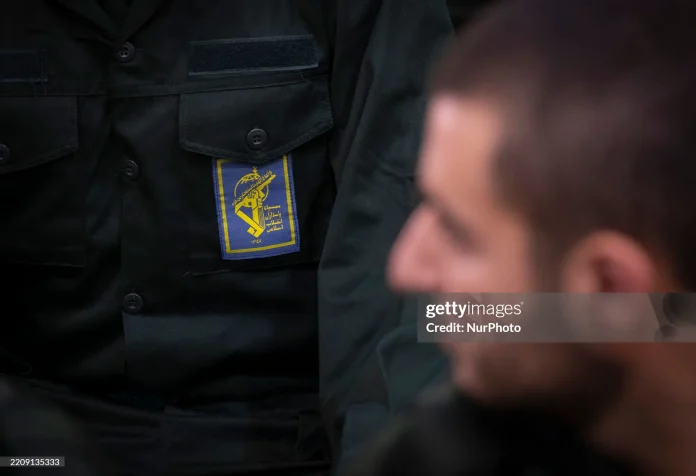
Iran’s IRGC vows decisive response to any US-Israeli assault

IRGC

In a statement marking the 40th day since the martyrdom of several IRGC commanders during the 12-day US-Israeli aggression, the IRGC warned that any new act of hostility would be met with a response that is “severe, beyond the enemy’s imagination, and far harsher than what the warmongering aggressors experienced in Operation True Promise III.”

“Together with other branches of Iran’s Armed Forces, the IRGC stands ready, at any time and in any place, to deliver a decisive and regret-inducing response to any threat or aggression from the United States, the Zionist regime, or their allies,” the statement declared.

It noted that the world now witnesses Iran standing firm in the pursuit of its independence-seeking goals in defiance of the “criminal Zionist-American gang.”

“Iran enjoys significant international support in condemning the savage and ruthless aggressions of the US and the Zionist regime, proving that no criminal act or threat can break the iron will of Iran and its people,” it said, referring to the 12-day aggression.

“The Iranian nation, in its quest for independence and freedom, will never yield to the pressures and threats of its enemies,” the statement read.

It added the Iranian nation succeeded in forcing a ceasefire on the US and Israel during the war.

“With strength and courage, Iran emerged victorious and proud from this historic battle. This victory not only boosted national morale and dignity but also opened a new path for confronting future threats,” the statement said.

“Today, thanks to the pure blood of our martyrs, Iran stands as an undeniable global power, ready to turn any threat into an opportunity to bring about the destined downfall of its enemies.”

The statement also praised the performance of Iran’s Armed Forces during the 12-day sacred defense against American and Zionist aggression, highlighting the successful execution of operations True Promise III and Herald of Victory.

“These operations forced a ceasefire on the Zionist regime and the United States, despite mounting global threats and pressures. This demonstrates Iran’s defensive and offensive capabilities, achievements made possible only through strength and wise, strategic measures,” the statement added.

Trump plans to meet Putin within days: Report

Putin and Trump

On Wednesday, U.S. special envoy Steve Witkoff met with Putin as Trump’s Aug. 8 deadline for Russia to reach a ceasefire with Ukraine looms.

Fox News reported that Putin told Witkoff about his intention to meet with Trump at some point in the near future.

In an phone call following the talks in Moscow, Trump told European leaders that he plans to meet with Putin and Zelensky without any other representatives from the continent, two sources familiar with the matter said.

The European officials Trump spoke with over the phone appeared to accept Trump’s decision not to involve more leaders in the process, one of the sources added.

Trump and Zelensky held a phone call following Witkoff’s visit to Moscow. U.K. Prime Minister Keir Starmer, NATO Secretary General Mark Rutte, U.S. Vice President JD Vance, U.S. State Secretary Marco Rubio, and Witkoff joined the conversation, the NYT reported.

In his public remarks following the call, Trump appeared uncommitted on a timeline for the potential meeting, adding “there’s a good chance that there will be a meeting very soon.”

When asked by reporters whether he believed the U.S. was close to reaching a ceasefire deal with Russia, Trump replied: “Well, look, I don’t want to say. I’ve been disappointed before with this one.”

Months earlier, U.S. attempts to broker a peace deal between Ukraine and Russia failed. Kyiv and Moscow later held three rounds of direct peace talks in Istanbul, which were largely inconclusive.

In the direct talks, Ukraine and Russia agreed to several prisoner exchanges, but progress toward a ceasefire was not made amid Russian maximalist demands.

Trump has threatened to impose secondary sanctions on Russia’s trading partners if Moscow does not agree to a ceasefire by Aug. 8. The measure could impose tariffs of up to 100% on countries that purchase Russian oil.

The U.S. leader has already imposed a 50% tariff on India for its continued purchase of Russian oil, raising the measure from an initial 25% announced on July 31.

As Trump pressures Russia to reach a ceasefire, the Kremlin is weighing a limited “air truce” involving a pause in drone and missile strikes if Ukraine agrees to do the same, Bloomberg reported on Aug. 5, citing undisclosed sources familiar with the matter.

Brazil’s president proposes BRICS leaders meeting to respond to Trump

BRICS

Earlier in the day, Trump announced he would raise tariffs on India – another founding BRICS nation – to 50% by late August. Trump already levied 50% duties on Brazilian goods earlier this month in a move that Brasilia condemned as an illegal attempt to politically influence its internal policy.

Lula said he will reach out to other BRICS nations and discuss how to tackle the tariffs. In addition, he said he would reach out to his Chinese and Indian counterparts Xi Jinping and Narendra Modi, followed by other leaders, Reuters wrote.

“I’m going to try to discuss with them about how each one is doing in this situation, what the implications are for each country, so we can make a decision,” Lula stated.

According to the Brazilian leader, Trump is attempting to “dismantle multilateralism,” and “unilateralism, where he negotiates one-on-one with other countries,” where the US has the advantage.

“What bargaining power does a small Latin American country have against the United States? None,” Lula added.

BRICS was founded by Brazil, Russia, India and China in 2006, and were joined by South Africa four years later. Having expanded in membership since, the bloc has now surpassed the G7 in terms of combined GDP.

Trump has previously threatened BRICS members with additional 10% tariffs, accusing them of a concerted effort to sabotage the dollar as the global reserve currency. BRICS nations have denied this, and argued that Washington’s own foreign policy undermines the greenback.

The US president has also threatened to impose further tariffs on Russian trade partners – the biggest of which are BRICS partner nations – to pressure Moscow into accepting a ceasefire deal in the Ukraine conflict.

Washington could also levy heavier tariffs on China, currently the biggest purchaser of Russian oil, Trump said on Wednesday.

Both Beijing and New Delhi have vowed to defend their sovereign interests in the face of US levy hikes.

American soldier charged with espionage after attempting to share sensitive data on US tanks with Russia

Taylor Adam Lee, 22, of El Paso, Texas is alleged to have transmitted technical information about the M1A2 Abrams tank in June to a person he believed was a Russian intelligence officer in exchange for Russian citizenship.

Lee, who holds top secret clearance within the U.S. Army, allegedly said online that he was willing to “volunteer to assist the Russian federation when I’m there in any way.”

Prosecutors allege that Lee delivered a piece of tank hardware to a storage unit in Texas, concluding the act by sending “Mission accomplished” to the person he believed was a Russian intelligence officer. In a separate in-person meeting in July, Lee allegedly provided an SD card to the individual containing controlled technical data documents on the tank, another armored fighting vehicle, and combat operations, according to the Justice Department.

A version of the U.S.-made Abrams tank is currently in use on the battlefield in Ukraine and would likely serve a broad purpose for Russian intelligence.

In a statement by the Justice Department, the commanding general of Army Counterintelligence Command, Brigadier General Sean Stinchon, said that the arrest was “an alarming reminder of the serious threat facing our U.S. Army.”

Lee has been charged with offences under the Espionage Act as well as charges stemming from attempting to export controlled technical data without a license. CNN reported, citing court documents, that prosecutors have requested the accused be detained without bond.

Since the start of Russia’s full-scale invasion of Ukraine, various Western countries have arrested citizens for covert espionage activities related to the war in Ukraine. Moscow has expanded its espionage activities primarily among European nation, seeking to disrupt aid deliveries to Ukraine.

Renowned Iranian artist Mahmoud Farshchian in critical condition, reportedly in coma

Farshchian, 96, is regarded as one of the most influential figures in modern Persian miniature painting. His condition is described as critical, and he is reportedly receiving care in an intensive care unit.

Seyed Ali Moareknejad, spokesperson for the Municipality of Isfahan, confirmed the news and called on Iranians to pray for the artist’s recovery.

“Master Farshchian, the creator of iconic works such as The Guarantor of the Deer, The Hardest Test, The Story of Prophet Abraham, Ghadir Khumm, and Stoning of the Devil, is currently in a serious medical state,” he said.

Born in Isfahan in 1929, Farshchian studied at the Isfahan School of Fine Arts before continuing his education in Europe.

He is known for blending traditional Persian miniature styles with modern techniques, producing artworks that have been displayed in prestigious museums and religious sites, including the shrine of Imam Reza in Mashhad.

His work is celebrated for its spiritual themes, artistic innovation, and deep cultural symbolism.