Saturday, December 27, 2025
Home Blog Page 230

Talks with Israel pointless while Gaza faces famine and genocide: Hamas

Gaza War

Khalil al-Hayya, deputy head of Hamas’s political bureau in Gaza, delivered the remarks in a video statement days after Israel pulled its negotiating team out of Doha for what it called “further consultations”, despite Hamas issuing what it described as a constructive response to the latest ceasefire framework.

“There is no point in continuing negotiations under the siege, genocide, and starvation of our children and women in the Gaza Strip,” al Hayya said.

He added that “the immediate and dignified entry of food and medicine to our people is a serious expression of the feasibility of continuing the negotiations.”

Al Hayya said Hamas had shown “all possible flexibility that did not conflict with the principles of our people” throughout the indirect talks. He said that “clear progress” had been made during the last round of negotiations and that Hamas had accepted key elements proposed by mediators.

“In the last round of negotiations, we agreed with what the mediators offered us regarding the withdrawal, prisoners, and aid,” he added.

But he expressed shock at Israel’s sudden departure from the talks, “we were surprised by the occupation’s withdrawal from the negotiations and its alignment with US envoy Steve Witkoff,” he added.

“The occupation’s withdrawal from the negotiations round is a transparent step aimed at wasting time and causing more genocide,” al-Hayya said.

He stated Hamas had responded to the mediators at every stage and reiterated that the Palestinian resistance had “used all its tools and relationships over the course of 22 months to stop the aggression against the people of Gaza.”

His remarks come amid growing international outrage over the deteriorating humanitarian situation in Gaza, where aid agencies say famine-like conditions have taken hold in several areas.

More than 100 humanitarian organisations warned on Wednesday that “mass famine” has been spreading across the Gaza Strip since Israel blocked humanitarian aid from entering in early March and began providing inadequate aid through the controversial GHF at the end of May.

The Israeli and US-backed initiative has allowed an insufficient amount of relief supplies, while carrying out attacks against civilians seeking aid at the GHF sites.

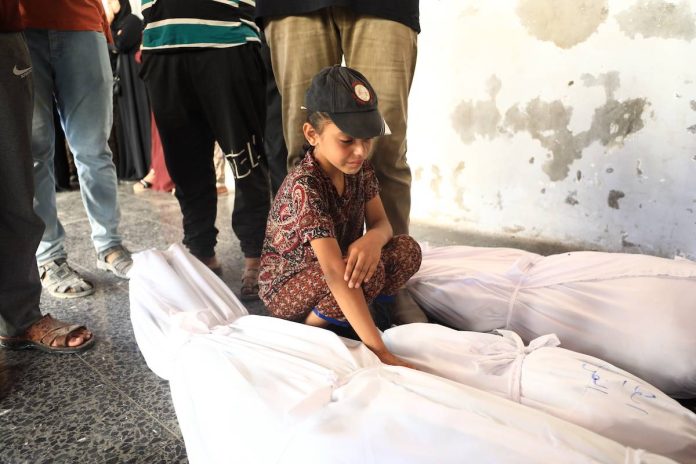
Dozens of Palestinians, including several children, have died of starvation since Israel’s blockade resumed in March, according to the Palestinian health ministry.

More than 1,120 Palestinians have been killed while seeking aid at distribution sites operated by the GHF, manned by Israeli soldiers and US security contractors.

US used quarter of its high-end THAAD missile interceptors during Israel-Iran war: CNN

More than 100, and possibly up to 150, Terminal High Altitude Area Defense (THAAD) interceptors were fired by US forces operating two of the country’s seven THAAD batteries deployed in Israel, CNN reported on Sunday.

The THAAD systems, each battery operated by 95 soldiers and equipped with six launchers and 48 interceptors, were tasked with protecting Israeli territory during one of the most intense missile barrages in the region’s recent history.

Despite their deployment, dozens of Iranian missiles penetrated the defense systems and caused extensive damage in Israeli cities, including Tel Aviv, with 29 people killed.

Each THAAD interceptor costs about $12.7 million, and the US produced only 11 in the previous fiscal year.

Current production plans project 12 more in 2025 and 37 in 2026, leaving a potential gap in readiness.

Pentagon Press Secretary Kingsley Wilson insisted that “the US military is the strongest it has ever been,” citing the effectiveness of Operation Midnight Hammer, which targeted Iranian nuclear sites, the outlet reported.

However, a preliminary intelligence report suggested that Iran’s nuclear capabilities were only delayed, not destroyed.

According to data from the Jewish Institute for National Security of America, US-operated THAADs intercepted nearly half of the 201 Iranian missiles that were downed, indicating a reliance on American systems amid shortages in Israel’s Arrow interceptor reserves.

Iron Dome, optimized for short-range threats, was not designed for Iran’s long-range ballistic missiles.

Interception efficiency declined as the war progressed.

While 92% of Iranian missiles were intercepted in the first week, the rate dropped to 84% in the second, and 75% on the final day, reportedly due to more advanced Iranian missile variants and strategic targeting of urban areas.

Mara Karlin, former US assistant secretary of defense for strategy, stated: “Air defense is relevant in all of the major theaters right now. And there’s not enough systems.”

“There’s not enough interceptors. There’s not enough production,” CNN quoted her as saying.

Nine THAAD batteries are currently active worldwide, with seven operated by the US.

Two of these were previously stationed in the state of Texas but were deployed to the Middle East to bolster Israel’s air defenses.

Others are located in Guam and South Korea, while the UAE has also used THAAD systems against Houthi missiles.

Defense analysts say the depletion of interceptor reserves presents a serious challenge to the US, particularly in the Indo-Pacific, where the threat from China is growing.

“Stockpiles are dropping. We need more. We need them faster than they are being built,” one former defense official noted.

The 2026 defense budget includes an additional $2.5 billion for missile and munitions production and $1.3 billion for supply chain improvements.

Still, experts warn that replenishing the THAAD inventory at current rates may take three to eight years.

“The 12-day war in June of this year essentially saw the first significant expenditure of THAAD interceptors,” stated Timur Kadyshev of the University of Hamburg.

“Israel was relatively successful in defending with US assistance – at the cost of depleting available arsenals,” Kadyshev added.

Iran’s Kordestan declares two days of public mourning after deaths of environmental volunteers

In an official statement released Monday, the governor expressed deep sorrow over the deaths of Hamid Moradi, Chiako Yousefi-Nejad, and Khabat Amini, who died during fire suppression efforts.

He extended condolences to the victims’ families and the people of Kordestan, calling the loss a profound tragedy for the province and the entire country.

“These devoted individuals made the ultimate sacrifice in defense of nature and natural resources. They were true symbols of responsibility, commitment, and love for the homeland,” the message read.

“Their names and memories will remain eternal in the history of Kordestan and in the hearts of all nature lovers.”

Yemen’s Houthis announce new phase of attacks on Israel-linked ships

The armed group has been targeting ships in the Bab el Mandeb Strait, a vital maritime route linking the Red Sea and the Indian Ocean, in what it describes as an act of solidarity with the Palestinians in Gaza.

Military spokesman Ameen Hayyan announced the escalation in a televised address, describing it as a new phase of the group’s campaign.

“This phase includes targeting all ships belonging to any company that deals with the ports of the Israeli enemy, regardless of the nationality of that company, and in any location within the reach of our armed forces,” he stated.

Hayyan also urged countries to sever ties with Israel and pressure it to lift the “blockade” of Gaza.

According to Reuters, the Houthis have attacked more than 100 vessels in the Red Sea since November 2023, sinking four ships, seizing one, and killing at least eight sailors. Earlier this month, the group seized and sank the Liberian-flagged, Greek-owned bulk carriers Eternity C and Magic Seas.

The Houthis have also launched ballistic missiles at the occupied territories, most of which have been intercepted. In response, Israel has intensified airstrikes in Yemen, hitting Houthi-linked targets and port infrastructure, including a series of strikes on Monday.

“Yemen will be treated like Tehran. The Houthis will pay heavy prices for firing missiles at the State of Israel,” Israeli Defense Minister Israel Katz stressed.

In May, the Houthis reached an Omani-mediated ceasefire with the US, ending a series of strikes ordered by US President Donald Trump.

1 in 3 people in Gaza Strip hasn’t eaten for days: UN

Gaza War

Tom Fletcher, under-secretary-general for humanitarian affairs and emergency relief coordinator, welcomed Israel’s decision to support a one-week scale-up of aid, including lifting customs barriers and easing movement restrictions.

“This is progress,” Fletcher said, “but vast amounts of aid are needed to stave off famine and a catastrophic health crisis.”

He called for urgent, sustained access, faster convoy clearances, multiple daily trips to crossings, consistent fuel supplies and safe humanitarian corridors free from attacks.

“People are being shot just trying to get food to feed their families,” he continued, adding, “Aid must not be blocked, delayed or come under fire.”

Fletcher also reiterated the UN’s demand for the immediate and unconditional release of all hostages.

“Ultimately of course, we don’t just need a pause – we need a permanent ceasefire,” he stated.

The Israeli army, rejecting international calls for a ceasefire, has pursued a brutal offensive on Gaza since Oct. 7, 2023, killing nearly 60,000 Palestinians, most of them women and children. The relentless bombardment has destroyed the enclave and led to food shortages.

Last November, the International Criminal Court issued arrest warrants for Israeli Prime Minister Benjamin Netanyahu and his former Defense Minister Yoav Gallant for war crimes and crimes against humanity in Gaza.

Israel also faces a genocide case at the International Court of Justice for its war on the enclave.

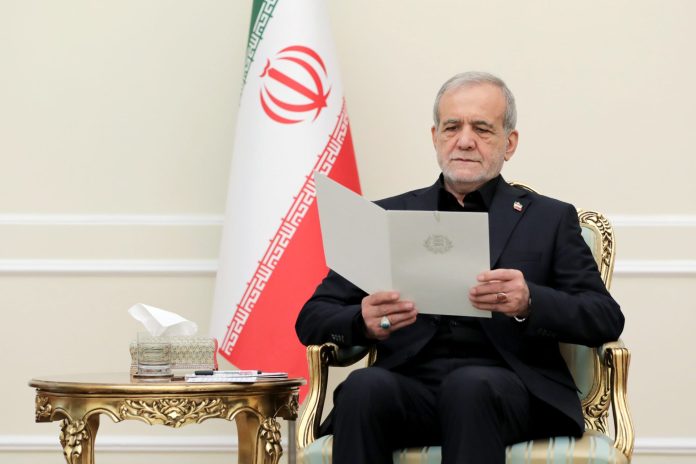
Daily: President Pezeshkian orders expert panel on ‘false content’ bill, outcome to decide its fate

Masoud Pezeshkian

According to the paper, the president has committed to accepting the outcome of this expert consultation as final.

If the majority consensus among the participants favors withdrawing the bill from parliament, the government will comply and remove it from the legislative agenda. Conversely, if the justice minister successfully persuades experts of the bill’s necessity, it will proceed as planned.

The bill, initially proposed by the judiciary following the conflict with Israel last month, has faced widespread criticism from political figures, civil society, and reformist cabinet members.

Critics argue it contradicts the government’s own discourse on transparency and open dialogue, while defenders stress its focus on curbing harmful misinformation.

Legal and political commentators, including Abbas Abdi and Azar Mansouri, have warned that the bill risks undermining digital freedoms.

Meanwhile, the Justice Ministry insists it targets only those who knowingly spread harmful, false information and does not threaten legitimate expression.

Iran’s oil sector ready to deal with potential return of UN sanctions: Minister

Iran Oil

Speaking to reporters on Sunday, Paknejad said that Iran is ready to deal with the impacts of UN sanctions on its oil sector, including on exports, investment, and equipment imports.

He made the remarks amid threats by Britain, France, and Germany that they would trigger the so-called snapback mechanism under a 2015 nuclear deal between Iran and world powers if Tehran fails to reach a new agreement on its nuclear program in the upcoming months.

The move could allow for a return of six UN sanctions resolutions that were adopted between 2006 and 2010 in response to Iran’s alleged non-compliance with UN nuclear regulations.

Experts say a re-imposition of the UN sanctions would have almost no impact on Iran’s ability to supply oil to international markets, as they do not directly target Iran’s oil sector.

However, they say the sanctions can affect Iran’s oil-related financial dealings with other countries, including with China, which has been the largest buyer of Iranian oil at the height of US sanctions on the country in recent years.

Iran: Europeans have no authority to trigger snapback mechanism

Esmael baghaei

Referring to the recent talks between Iran and the three European countries—Britain, France, and Germany—in Istanbul, Baqaei said the discussions focused on the nuclear issue and the lifting of sanctions.

He added, “We emphasized that the European parties have no authority to use the snapback mechanism. Such a right does not exist, and we oppose the very principle of it.”

Baqaei noted that the Europeans have long tried to use a clause in UN Security Council Resolution 2231 as leverage, but Iran has stressed that it is ineffective.

“If Europe misuses it, Iran will certainly respond,” he warned.

The spokesman further said that the European parties undermined the credibility of this resolution by supporting the recent aggression against Iran by the United States and Israel.

Baqaei also underlined that Iran’s defensive capabilities are non‑negotiable, stating, “What can help us defend ourselves are the capabilities that are the result of our own scientists’ efforts.”

Iranian lawmakers urge withdrawal of “false content” bill amid free speech concerns

The MPs, in a letter published by parliamentarian Farid Mousavi, said the bill contradicts Article 24 of the Constitution, which protects press freedom, and runs counter to repeated statements by Iran’s Leader emphasizing the need to hear public voices and strengthen social trust.

“It is shocking that a government founded on transparency, justice, and national dialogue has submitted such a bill,” the letter reads. “Censorship is neither a tool for explanation nor a guarantee of security.”

The MPs noted that the bill comes shortly after “a wave of public” unity during a 12-day conflict with Israel, which “the government is now undermining by silencing critical voices.”

In response, the Ministry of Justice defended the bill, citing public safety and national interest. Officials stated that the law targets only those who knowingly spread false information with broad reach and stressed it aligns with global standards and constitutional rights.

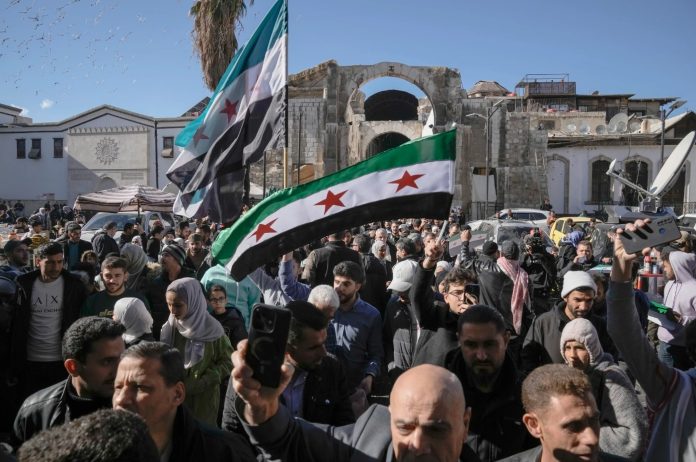
Syria to hold first parliamentary elections since al-Assad’s overthrow

Ahmad Al Sharaa

Mohammed Taha al-Ahmad, chairman of the Higher Committee for People’s Assembly Elections, told state news agency SANA on Sunday that elections will take place between September 15 and 20.

They will be the first to take place under the country’s new authorities after the fall of former President Bashar al-Assad in a lightning rebel offensive in December.

One-third of the 210 seats will be appointed by interim President Ahmed al-Sharaa, with the rest to be elected.

In a recent interview with the Erem News site, another member of the elections committee, Hassan al-Daghim, said an electoral college will be set up in each of Syria’s provinces to vote for the elected seats.

A temporary constitution signed by al-Sharaa in March called for a People’s Committee to be set up to serve as an interim parliament until a permanent constitution is adopted and general elections held, a process that could take years.

The announcement of impending elections comes at a time when the country is increasingly divided in its views of the new authorities in Damascus after sectarian violence broke out in the southern province of Suwayda earlier this month.

The fighting killed hundreds of people and threatened to unravel Syria’s fragile postwar transition.

The violent clashes, which broke out two weeks ago, were sparked by tit-for-tat kidnappings between armed Bedouin clans and fighters from the Druze religious minority.

Syrian government forces intervened, ostensibly to end the fighting, but effectively sided with the clans.

Some government troops reportedly executed Druze civilians and burned and looted houses.

Israel intervened, launching air strikes on government forces and on the Defence Ministry headquarters. Israel said it was acting to defend the Druze minority.