Sunday, December 28, 2025
Home Blog Page 2292

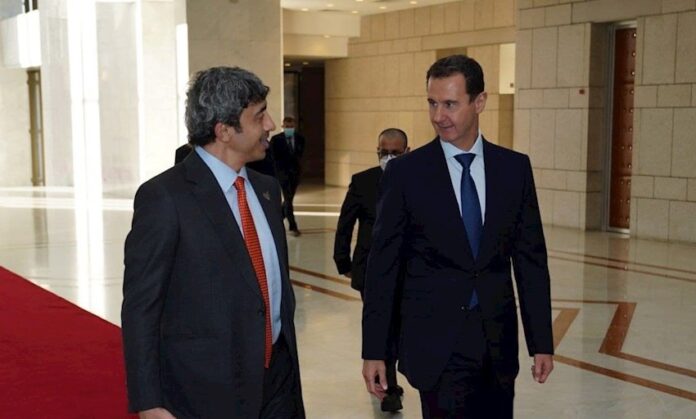
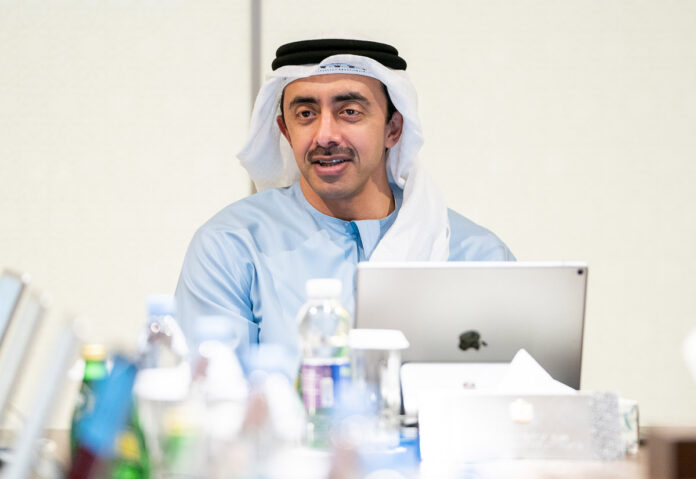
UAE FM meets with Syrian president in Damascus

Assad and Bin Zayed also underlined the need for Syria and the UAE to invest in strategic areas and new technologies.

The Syrian president referred to the history of relations between Damascus and Abu Dhabi during the life of Sheikh Zayed Al Nahyan, the former leader of the UAE, and thanked the Persian Gulf country for its logical stance on Syria and its support for the Syrian people.

The Emirati foreign minister also noted that the Syria war affected all Arab countries, saying his country is ready to help restore stability to Syria and help the Syrian people.

Assad and Bin Zayed also called for the continuation of consultations between the two sides over the developments and also challenges facing the region so that the will of regional nations will prevail without the interference of extra-regional countries.

The UAE is among Arab states which have made efforts to normalize ties with Syria.

Syria’s Economic Minister Samir al-Khalil recently visited the UAE and held extensive talks with the country’s investors and economic activists and Syria expatriates there to convince them to invest in Syria. Following the visit, the Syria government agreed to grant a project to build a 400MW power plant using solar energy in the war-ravaged country to an Emirati company.

Most Arab states including the UAE sided with militant groups fighting to topple Assad during the last decade’s war in Syria. The current policy shift on the part of the Arab countries came following Assad’s victory over the militant groups and his recapture of nearly ninety percent of Syria from them.

Iran and Russia were key players in the war and helped Assad in the face of the militancy backed by Western governments including the US and their regional allies such as Saudi Arabia, the UAE and Turkey.

“US causing crisis in region through creating tension”

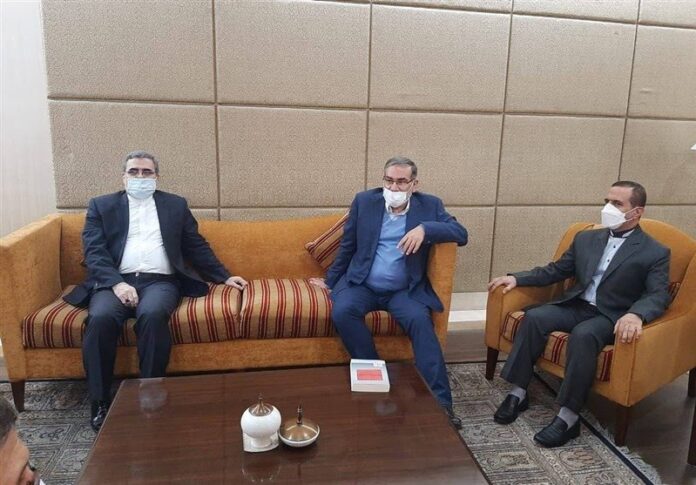
Ali Shamkhani made the comments on Tuesday upon his arrival in New Delhi where he’s going to attend a regional security conference.

Shamkhani also referred to the focus of the ongoing conference in New Delhi on the political and security developments in Afghanistan. He said participants in the meeting will make an effort to identify destabilizing factors in the region,

especially in Afghanistan, and come up with ways to restore lasting and inclusive peace and stability to Afghanistan.

Shamkhani expressed pleasure at the continuation of the security meeting and also the increase in the number of participants. The meeting will be held at the level of the national security advisers of Iran, Russia, China, India, Uzbekistan, Tajikistan, Turkmenistan and Kyrgyzstan.

He underlined the need for regional cooperation to counter threats and destabilizing factors.

The secretary of Iran’s Supreme National Security Council noted that holding the meeting provides a good opportunity for pursuing political and security talks between regional countries.

The security conference was first proposed by the Islamic Republic of Iran. Shamkahni is going to hold face-to-face talks with his counterparts from regional countries on the sidelines of the New Delhi security conference.

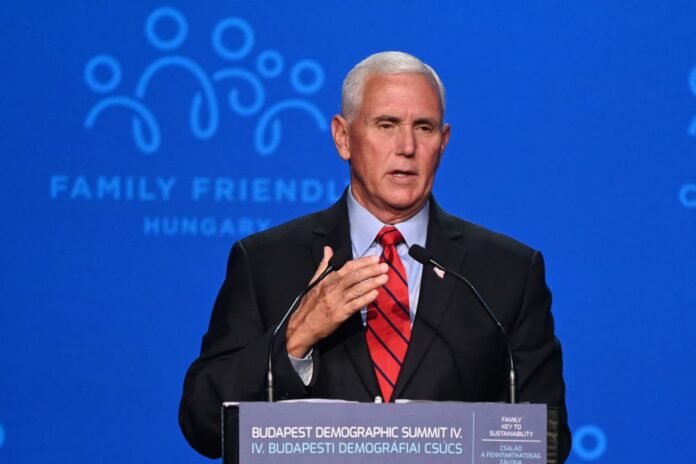
Iran hits back at Mike Pence over anti-Tehran remarks

Tehran has lashed out at Mike Pence after the former vice president used his address at last month’s Free Iran summit to condemn the Iranian government. The ex-VP has also accused President Joe Biden of “weakness” over his support for the Iran nuclear deal.

The Iranian mission to the United Nations (UN) in Geneva told Newsweek that Pence’s remarks—in which he predicted the end of the government in Tehran—were “wishful thinking”.

The Washington, D.C. event was organized by the opposition National Council of Resistance of Iran, the political wing of the guerrilla rebel group the People’s Mujahedin of Iran (MEK). Both are led by Maryam Rajavi and have long enjoyed backing from Iran hawks in the US, particularly within the GOP.

Iran and many other countries have designated the NCRI/MEK as a terrorist organization.

Bahram Heidari, counsellor of the Iranian mission in Geneva, condemned Pence for appearing at the Free Iran event in an email sent to Newsweek.

“Birds of a feather flock together to [the] Iranian nation,” Heidari said.

“Mike Pence, Mike Pompeo, Mark Dobowitz, John Bolton and other Trumpian criminals [deserve] to enjoy the infamy of a terrorist cult’s company and be on their paycheck,” he wrote, referring to other Iran hawks who have previously spoken at or attended NCRI/MEK events.

“I suggest you investigate how much Mike Pence has received for each word of praise he showered on the Monafeghin terrorist cult,” Heidari added, using another name for the MEK.

Newsweek has contacted Pence’s team to request comment on his relationship with the NCRI/MEK and to ask whether he was paid for last month’s address.

“Mike Pence et al can continue to amuse themselves with all sorts of wishful thinking,” Heidari stated.

“The dogs bark, but the caravan moves on. The Iranian nation is fully determined to keep going on its proud path of independence and dignity irrespective of the terrorists’ malice and malignancy and those of their prime supporters,” he continued.

“While we appreciate any awareness raising campaign about the MKO terror cult, we caution against any (intended or unintended) moves to launder them,” he noted.

“That would be both unjust and immoral. It would be a tremendous injustice to many thousands innocent people who fell victim to horrendous acts of terrorism perpetrated by the members of this terrorist cult, including the atrocities committed during their long time companionship with Saddam Hussein regime,” he added.

.
.
.

At last month’s event, Pence described the MEK as “a well-organized, fully prepared, perfectly qualified and popularly supported alternative” to the current government in Iran. Rajavi, he said, is “an inspiration to the world”.

The address was predictably hawkish, in line with the expected stance of all leading GOP 2024 presidential candidates.

Pence was part of former President Donald Trump’s “maximum pressure” strategy on Iran, throttling the nation’s economy with punishing sanctions and trying to isolate the country on the world stage.

Pence condemned Biden’s ongoing efforts to revive the Joint Comprehensive Plan of Action (JCPOA) nuclear deal, from which Trump withdrew in 2018 promising a better agreement that never materialized.

“Peace follows strength,” Pence told the attendees.

“With our current administration’s embrace of the JCPOA, their hesitation to condemn rockets being fired at our cherished ally Israel, and the heartbreaking and disastrous withdrawal from Afghanistan, our adversaries may be sensing weakness in the current American administration,” he said.

Pence added, “They may be emboldened to test our resolve…Weakness arouses evil.”

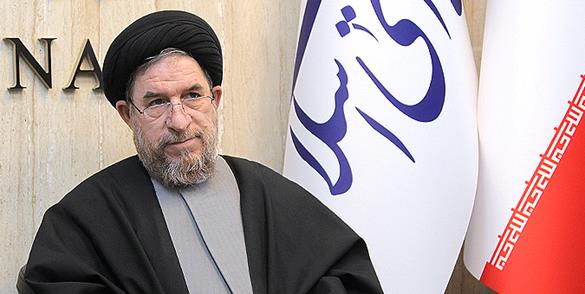
“Iran’s 7-month export revenues equal total of last year’

Seyyed Mohammad Reza Mir Tajeddini was speaking at Tuesday’s meeting of the Planning and Budget Commission.

He said the revenues involve earnings from sales of oil and gas condensates as well as non-oil exports.

Mir Tajeddini described the rise in revenues as a positive sign. He also attributed the increase in revenues to the accuracy and intelligence of decision-making and executive sectors.

Mir Tajeddini said despite the persistence of the oppressive and illegal US sanctions, those sectors have made it possible to claim revenues from oil and non-oil exports.

Participants in the meeting also explored ways of stabilizing the foreign exchange market and discussed new financing techniques in the capital market and financing in Iran’s construction and infrastructure sectors next year.

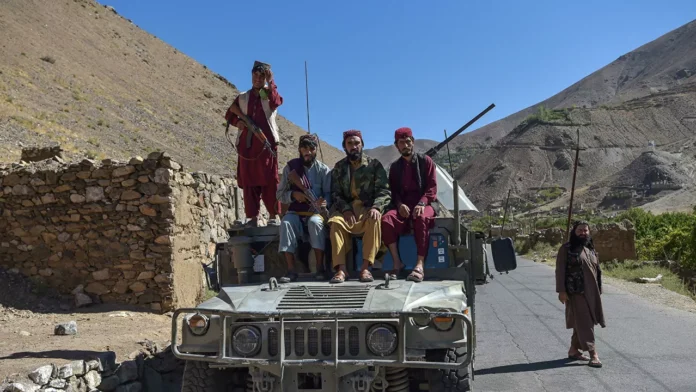
Taliban: US support of Panjshir front violates Doha agreement

In an interview with the Afghan 1TV News broadcaster on Tuesday, Taliban Spokesman Zabihullah Mujahid stated that if the US supports the Afghan resistance, the deal would become null and void.

The United States and the Taliban signed the peace agreement in February 2020 in the Qatari capital. Among other things, the deal stipulated the withdrawal of foreign armed forces from Afghanistan in exchange for the Taliban abating violence and guaranteeing that the country will not turn into a safe haven for terrorists.

On 15 August 2021, as foreign troops were withdrawing, the Taliban took over Afghanistan by entering Kabul, which led to the collapse of the US-backed civilian government. The last province to resist the group, Panjshir, surrendered in early September, with NRF leader Ahmad Massoud calling on all Afghans to rebel against the Taliban.

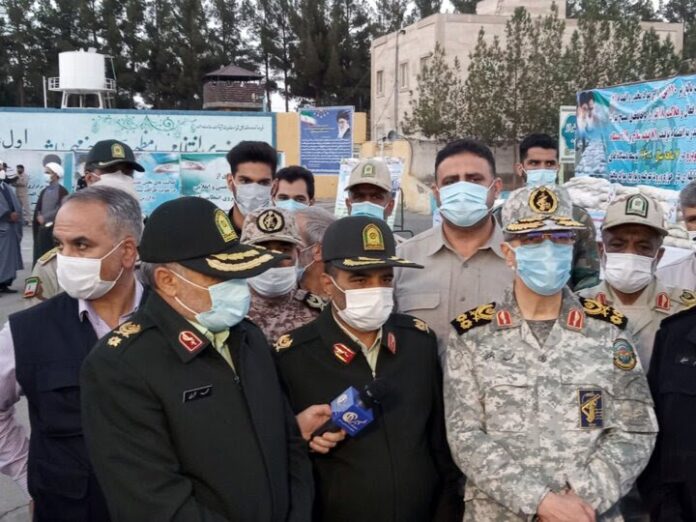
Iranian general: US suffered numerous defeats in recent months

He was speaking on Tuesday at the Conference of Scholars and Elders of Shia and Sunni Tribes in the southeastern Province of Sistan and Balouchestan.

Bagheri said Washington’s escape from Afghanistan shows the enemy concluded that its occupation of the West Asian region would bring it nothing but loss.

He noted that the Iranian Law Enforcement forces have done their best to tackle insecurity in the country. Bagheri also added the Army is at the apex of its readiness and its recent drills in the Sea of Oman and the Coast of Makran were among the most massive war games this year.

The chairman of Iran’s Joint Chiefs of Staff said all these exercises are aimed at making sure Iran is not facing any threat.

He said, “Definitely, there is a promising horizon ahead of us and our youth will be able to build a bright future for the country”.

According to Bagheri, the Iranian armed forces have helped with development projects in less privileged areas of Iran including those in Sistan and Balouchestan.

Report: UAE FM in Damascus for talks with Syrian officials

The United Arab Emirates foreign minister landed in Damascus on Tuesday, Lebanese broadcasters reported, a sign of improving ties between President Bashar al-Assad and one of the prominent Arab states that once backed rebels trying to overthrow him.

There was no immediate confirmation from either the UAE or Syrian foreign ministries or the Syrian presidency, and no word on the visit on Syrian state media.

Foreign Minister Sheikh Abdullah bin Zayed would be the most senior Emirati dignitary to visit Syria in the decade since the eruption of a war in which several Arab states lined up in support of rebels seeking to topple Assad.

The foreign minister arrived with a senior delegation, according to al-Manar TV.

The pro-government Syrian newspaper al-Watan cited unofficial media sources “talking about” his arrival.

The United Arab Emirates has been at the forefront of efforts by some Arab states to normalise ties with Damascus, and called for Syria to be readmitted to the Arab League earlier this year. It reopened its embassy in Damascus three years ago.

The United States, a close ally of the UAE, has announced it does not support any efforts to normalise ties with Assad or rehabilitate him until progress is made towards a political solution to the conflict.

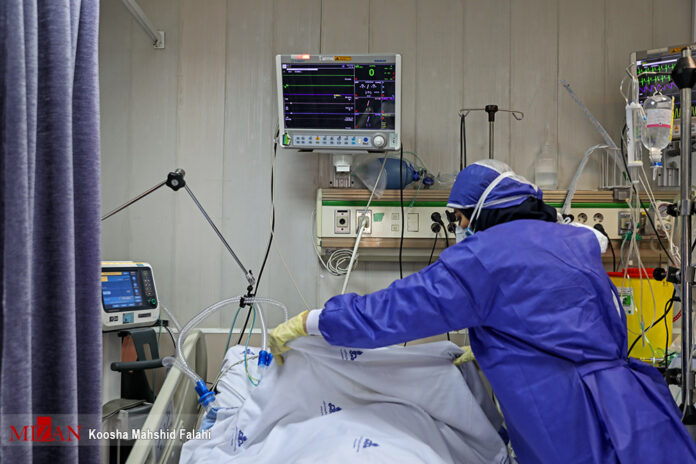
Covid kills more people in Iran

Meanwhile, the vaccination campaign is continuing across Iran. Over the past 24 hours, 882,603 doses of Covid vaccine have been administered.

The number of people having received the first dose has reached 55,405,154. Meanwhile, 40,193,195 people have received the second dose. The number of booster shots administered so far stands at 268,638.

They have mostly been given to healthcare staff.

The high rate of vaccination has kept down the number of new infections and deaths. Officials are however urging all unvaccinated citizens to get their jabs at vaccination centers which are not crowded given that most people have been fully inoculated.

They also say people should not relax health protocols because that will increase the likelihood of another wave of the pandemic in Iran.

Currently, 33 cities in Iran are marked red, which means the risk of Covid is very high there. 95 cities are orange, 220 yellow and 100 blue. Blue cities face the least level of risk from Covid.

Iran FM: Tehran to beef up defense irrespective of US

Hossein Amir Abdollahian also referred to the upcoming Vienna talks over the Iran nuclear deal.

He said Iran wants a good deal but it has requirements including the lifting of all anti-Tehran sanctions.

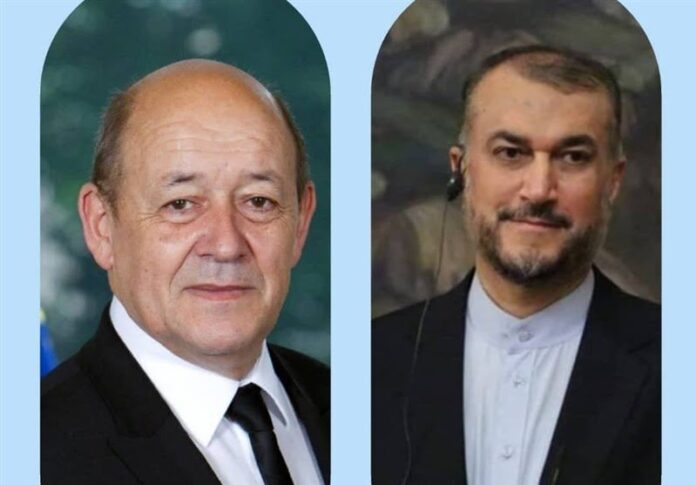
Iranian Foreign Minister Hossein Amir Abdollahian and his French counterpart Jean-Yves Le Drian have exchanged views on a whole range of topics in a phone conversation.

Among the issues discussed were bilateral relations and the upcoming talks in Vienna.
During the conversation, the top French diplomat asked about the health and physical condition of his Iranian counterpart and wished him a rapid recovery.

Amir Abdollahian, for his part, thanked the French foreign minister for asking about his physical health.

The Iranian foreign minister added Iran pursues a pragmatic and result-oriented approach vis-à-vis both bilateral ties and nuclear negotiations.
He expressed hope Tehran-Paris consultations will further promote practical collaboration between the two sides.

Amir Abdollahian added Iran and France enjoy great potential, saying the Islamic Republic of Iran stands ready for all-out expansion of bilateral relations based on mutual respect and common interests.

He said the two sides can forge closer cooperation on different fronts.

The two sides touched upon previous contacts between the presidents of both countries as well as talks between Amir Abdollahian and French President Emmanuel Macron on the margins of the Baghdad meeting along with the recent in-person meeting between the foreign ministers of the two countries, and traded views on reciprocal ties together with opportunities for cooperation.

The Iranian foreign minister also recalled the United States’ responsibility for the current situation of the JCPOA as well as the role that the three European countries’ silence has played in Washington’s excessive demands.

“Iran wants a good agreement, but it has requirements, including the other sides fully complying with their commitments and the effective lifting of sanctions,” said the top Iranian diplomat.

He referred to the United States’ recent sanctions against Iran, saying the move is yet another reason why Iran keeps distrusting the US.

He stressed the need for US guarantees and effective verification.

The foreign minister said Iran, like any other country, is entitled to have a defense program as a sovereign right, and added Tehran will move full steam ahead to increase its defense power without paying attention to the United States’ unconstructive sanctions policy.

He said Iran is serious in the nuclear talks and is ready to reach a good deal immediately.

He urged the International Atomic Energy Agency (IAEA) to avoid adopting politically-motivated approaches, and said Iran will continue its technical cooperation with the agency.

The French foreign minister, for his part, said Paris supports the return of all sides to the JCPOA, adding he will try his utmost in that regard.

He expressed hope that rapid headway will be made with the forthcoming negotiations in Vienna.

In the phone conversation, Macron’s greetings were conveyed to the Iranian president, and the mutual response was given by the Iranian side accordingly.

The deputy foreign ministers of the two countries will hold talks over bilateral, regional and international issues today in Paris.

Iran, world’s 3rd largest gas producer despite US sanctions

The country has produced 267 billion cubic meters of natural gas in 2019.

The US sanctions have affected Iran’s energy exports, financial transactions, and imports of certain technologies, but natural gas production in Iran has grown steadily over the past two decades despite, the US Energy Information Administration wrote on its website.

While the EIA estimated Iran’s total dry gas production in 2019 at 8.4 trillion cubic feet (237.8 billion cubic meters) which still made the country the third biggest producer, official figures have put it at 267 billion cubic meters.

Iran’s domestic natural gas demand, which the sanctions do not affect, has been the main driver of Iran’s natural gas production growth. According to officials, total gas production will hit 500 billion cubic meters in 2041.

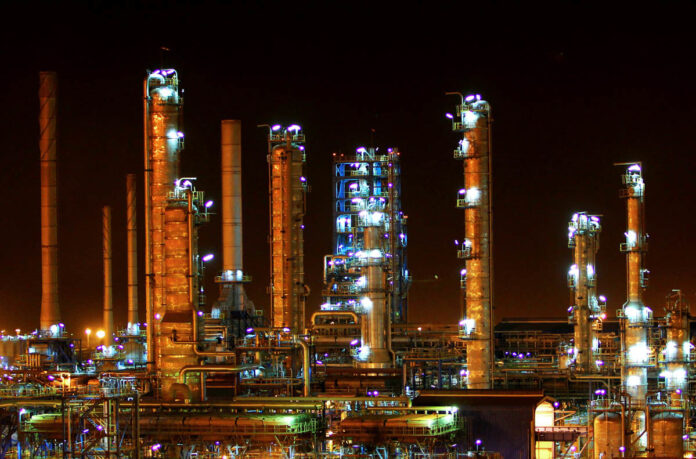
Much of the growth in natural gas production comes from development of the offshore South Pars field in the Persian Gulf.

In February, former Petroleum Minister Bijan Zanganeh stated Iran’s gas production had hit the record high above 1 billion cubic meters a day, a milestone reached three years after the US imposed its most draconian sanctions ever on the Islamic Republic.

The sanctions have discouraged international energy companies from dealing with Iran, but they have provided a rare chance for domestic firms to venture into a setting known to be an exclusive specialty of the elite club of companies.

When French oil and energy company Total ended participation in Phase 11 of Iran’s giant South Pars gas field in 2018, China’s state-owned energy major CNPC was said to be ready to take over the stake but the company also suspended investment in response to US pressure.

In January 2020, Zanganeh announced that Iran’s Petropars would develop Phase 11 of the world’s largest gas field.

Natural gas production at South Pars began in 2003, and so far, 23 of the 24 development phases have started producing. Phase 11 is the largest of the phases which currently produce 70 percent of natural gas consumed by Iranian households.

At maximum capacity, the South Pars natural gas field could annually produce 9.49 trillion cubic feet (268.7 billion cubic meters) of natural gas.

Iran holds the fourth largest oil reserves and the largest natural gas reserves in the world, and is considered an energy superpower, but its domestic consumption is disproportionately high and rising.

Almost all of the natural gas that Iran produced in 2019 was consumed domestically. That year, Iran consumed more natural gas than all but three other countries: The United States, Russia, and China.

In Iran, the residential and commercial sectors use natural gas for space heating, and the industrial sector uses it for feedstock, especially in the petrochemicals industry.

In January, Zanganeh chided residents in Tehran –a megacity of 12 million – over a 15 percent rise in gas consumption.

“The highest fuel consumption in the country is in homes, and I think this is because people think that if they leave windows open, the corona will go away. Authorities should tell people to close the windows and lower the temperature,” he noted.

The high consumption is driven by massive subsidies provided by the government which is in a race against time to catch up with the rising demand.

On Monday, head of Iran’s Renewable Energy and Energy Efficiency Organization (SABTA) Mahmoud Kamani said 10,000 megawatts of new renewable capacity will be built with the help of private investors over the next four years.

Currently, Iran has about 900 MW of installed renewable capacity, of which 310 MW is wind and 390 MW solar, he added.

According to Kamani, cheap and abundant fossil fuels in Iran are one of the factors contributing to the neglect of renewable energy.

“As a result, our power plants face problems in the winter despite the abundance of gas fuel, and the electricity supply becomes erratic, and in addition, a lot of pollution is produced,” he told reporters.

He said 100,000 MW of solar capacity and 40,000 MW of wind capacity has been identified in the country.

“10,000 MW is not a big figure compared to this huge capacity,” he added.

Dozens of cities across Iran faced power outages in January, with social media and news outlets wildly speculating that they might have been caused by bitcoin mining.

The natural gas is the major fuel used to generate electricity in Iran. Historically, the supply of low-cost electricity is a way to grow economies, increase populations and improve the quality of life.

Many producers in Iran are currently reaping the windfall from a record devaluation of the national currency, the rial, to ramp up production and increase exports.

Iran also trades relatively small volumes of natural gas regionally through pipelines. Since 2017, when Iran began exporting to Iraq, natural gas exports have risen substantially.

In 2019, Iran exported natural gas to Turkey, Armenia, Azerbaijan, and Iraq. It also imported natural gas from Azerbaijan.