Tuesday, December 23, 2025
Home Blog Page 2281

Iran: Over 97 million doses of Covid vaccine administered

The shots include 55,500,300 first doses and 41,506,171 second doses. Meanwhile, 393,865 people have received a third dose, known as the booster shot.

Over the past day alone, 772,237 doses were administered. Despite the high-speed vaccination process across Iran, Covid keeps claiming lives.

The Health Ministry announced on Thursday, over the past 24 hours, the disease killed 123 people, pushing the total fatalities since the pandemic’s beginning to 127,809. Meanwhile 7.539 new cases have been logged during the past day.

The daily death toll is however down compared with some two months ago when Iran was in the grip of the pandemic’s fifth wave.

Meanwhile, Authorities say most of those killed by Covid are unvaccinated people. They are urging all those who have not been inoculated to get their jabs as soon as possible to further bring down the deaths from the disease.

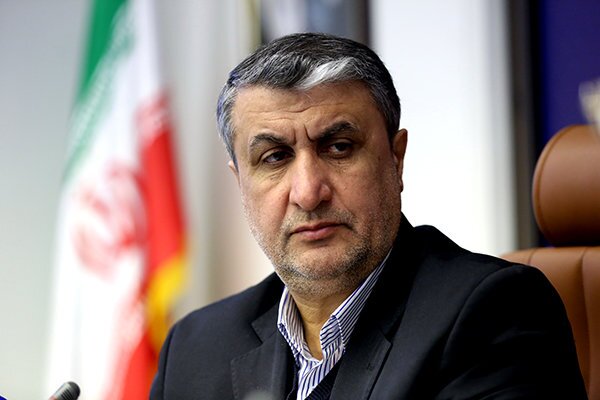
Iran’s First Vice President Mohamamd Mokhber warned on Thursday that ignoring health protocols could thwart all the efforts and achievements of the government and the healthcare staff across Iran in the fight against Covid. Mokhber urged the media and the press to give accurate information to citizens so that health protocols are not relaxed.

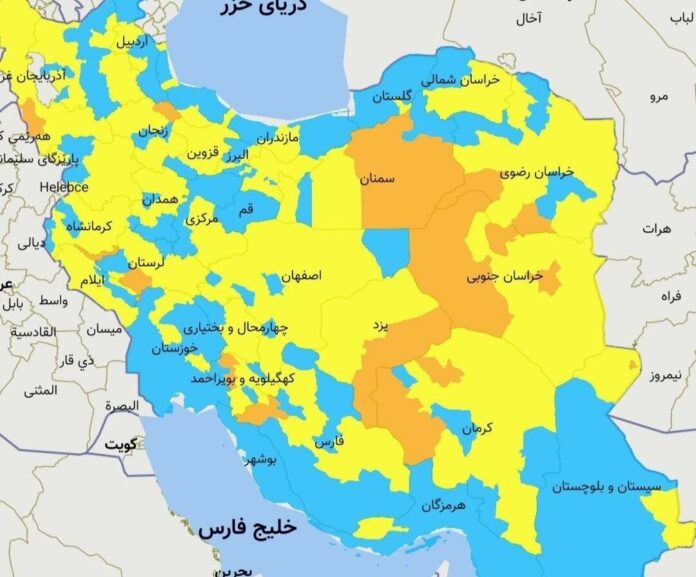
There’s been no change in the number of cities marked red in terms of risk from Covid in recent days. Now 33 cities are red in Iran. Red spots are areas where the risk is at its highest level. The rest of them are orange, yellow and blue.

Brain-dead kid’s girl organs save 4 lives

They gave their consent after 1.5-year-old Sama went into a vegetative state due to drowning.

Sama had been kept in ICU in the southern city of Bandar Abbas for several days after the accident.

After the arrangements were made, her heart was transferred to a Tehran hospital where a 22-month-old baby received the organ.

Sama’s kidneys and liver were also transplanted to three other children in the southern city of Shiraz.

Saudi warplanes pound Yemen, capital hit

Riyadh-led coalition aircraft conducted airstrikes on al-Sayanah area in the district of al-Thawra and on al-Hafa area in the district of al-Sabeen, both located in Sana’a, Yemen Press Agency (YPA) reported.

The war coalition also attacked Raymat Humaid area in Sanhan district of Sana’a province and Sihar and Harf Sufyan districts, which are located in Sa’adah and Amran provinces, respectively.

The latest round of Saudi-led onslaught against Yemenis comes as the Yemeni Army’s Missile Force launched ballistic missiles toward the southwestern Saudi region of Asir and also pounded the positions of Saudi-backed mercenaries in the Yemeni provinces of Ma’rib and Ta’izz.

Saudi Arabia, accompanied by its allies, launched the war on Yemen in 2015, to bring the Mansour Hadi government back to power and crush the popular Ansarullah movement.

Instead of achieving the professed goals, however, the Saudi-led war has left hundreds of thousands of Yemenis dead and displaced millions more. It has also destroyed Yemen’s infrastructure and spread famine and infectious diseases.

Meanwhile, Yemeni Foreign Minister Hisham Sharaf Abdullah called on the international community to address the root causes of the humanitarian crisis in Yemen, represented by the Saudi-led aggression and siege.

The Yemeni humanitarian file should be given priority and not be compromised or used as a political card, Abdullah said during a meeting with the head of the Office of the United Nations Resident Coordinator in Sana’a, Mathew Leslie, on Wednesday.

The chief Yemeni diplomat called on the UN Security Council to pay attention to the Yemeni people’s suffering and find appropriate solutions to end the suffering.

The Saudi-led war on Yemen has been accompanied by a tight siege that has led to fuel shortages in Yemen, devastated daily life in the impoverished country, and even prevented the entry of medicines and medical supplies into the country.

Meantime, according to the Yemen Petroleum Company (YPC), the Saudi-led coalition is detaining three Yemeni tankers carrying more than 80,000 tons of diesel, preventing them from reaching the port of Hodeidah despite the fact that the ships have obtained UN permits and were inspected in Djibouti.

In a statement, the YPC announced the tankers have been detained for 81 days of “unprecedented piracy.”

“All tankers have completed all UNVIM procedures in Djibouti and obtained United Nations permits,” the company explained, stressing that the cargo “complies with the conditions contained in the concept of verification and inspection operations.”

The YPC pointed out that in the face of “criminal piracy and its catastrophic repercussions,” no serious and tangible action has been taken by the UN, despite the fact that it is the international body concerned with facilitating the entry of imports of basic commodities.

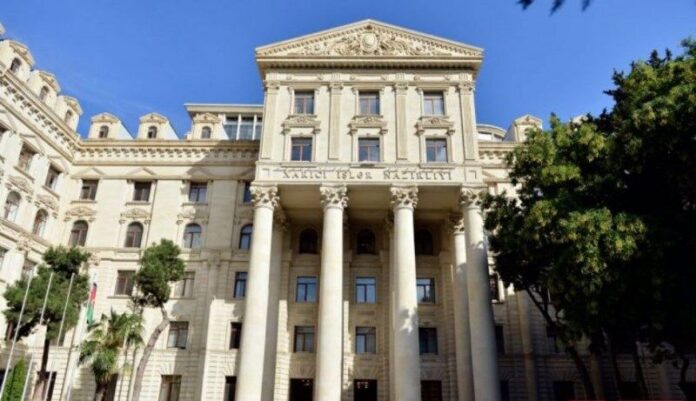
Azerbaijani, Armenian FMs meet in France

According to a statement from the France’s Foreign Ministry, Jean-Yves Le Drian held separate meetings with Jeyhun Bayramov and Ararat Mirzoyan, the Armenian Foreign Minister. They then had a trilateral meeting as part of the Organization for Security and Cooperation in Europe (OSCE) Minsk Group.

France seeks to strengthen the dialogue between the parties and establish lasting peace in the South Caucasus, added the statement.

It was also noted that Le Drian wishes to continue the dialogue with Azerbaijan and Armenia.

France has faced criticism for abandoning its neutrality and supporting Armenia in the Nagorno-Karabakh conflict as one of the co-chair countries of the Minsk Group, which was set up by the OSCE.

The Minsk Group, co-chaired by France, Russia and the United States, was formed in 1992 to find a peaceful solution to the conflict between Baku and Yerevan over the occupied Nagorno-Karabakh region. However, for years it has been unable to provide a solution.

Previously, Azerbaijan’s parliament called for France to be stripped of its mediation role in the Nagorno-Karabakh conflict to punish the French Senate for adopting a resolution backing the region’s independence.

Relations between the former Soviet republics of Armenia and Azerbaijan have been tense since 1991, when the Armenian military occupied Nagorno-Karabakh, a territory internationally recognized as part of Azerbaijan, and seven adjacent regions.

New clashes erupted on Sept. 27, 2020, with the Armenian army attacking civilians and Azerbaijani forces and violating humanitarian cease-fire agreements.

The fighting ended with a Russia-brokered agreement on Nov. 10, 2020.

During the 44-day conflict, Azerbaijan liberated several cities and 300 settlements and villages that were under the Armenian occupation for almost 30 years.

Iran VP calls for acceleration of booster covid jabs

Mokhber made the comments during a Thursday meeting with specialized committees of the National Taskforce Against the Coronavirus.

The vice president called for attention to health protocols saying that several other countries are facing a new wave of the pandemic, despite mass vaccination.

“Although vaccines are being administered fast in our country, failure to pay attention to health protocols can offset efforts and achievements of the government, the efforts of the health personnel and the cooperation of the people,” he warned.

“Fortunately, thanks to extensive efforts by the government to import vaccines and the work by Iranian producers, there is no problem in terms of the availability of vaccines in the country and the process of administering the third dose of the jab should be sped up based on the announced priorities.”

During the meeting, the health minister also briefed participants on the situation on the ground in different provinces and their number of infections and deaths.

Meanwhile, the Interior Ministry offered its report on the plan for smart management of the coronavirus disease at the National Taskforce Against the Coronavirus.

Iran has passed five waves of the Covid pandemic with officials warning of the sixth wave. The respiratory disease has so far claimed over 127,000 lives in the country.

Iran victim of terror, inhuman sanctions: Rights official

“Some 17,000 innocent Iranian were killed by the MKO terrorist group whose members freely travel in European safe havens,” tweeted Kazem Gharibabadi, the deputy Judiciary chief for international affairs and the secretary of Iran’s Human Rights Council.

“Five Iranian nuclear scientists were assassinated; the great hero of fighting terrorism (Major General Qassem Soleimani) was assassinated by the US regime; Iran is under the United States’ inhumane sanctions,” he added.

“Still, those who have turned a blind eye to these merciless practices are introduced as supporters of human rights and, instead, Iran is accused of violating human rights!” he said.

Traditional pumpkin festival held in north iran

As many as 22 types of dishes made with pumpkin were cooked in the event, which also featured other programs such as traditional music as well as local games and entertainment.

The festival is known as “Keii-Pela” in the local vernacular. “Keii” means “pumpkin,” and “Pela” means “pilaf” or “cooked rice.”

Pumpkin is a popular ingredient of Mazandaran’s local cuisine, though it is used less frequently nowadays.


Russia warns many groups operate in Afghanistan

Secretary of Russia’s Security Council, Nikolay Patrushev, told Russian media the participants in the meeting in the first place had discussed the security situation in Afghanistan and also its regional and global effects.

“The worst threat coming from Afghanistan is terrorism. According to different estimates, there are more than 20 terrorist organizations in Afghanistan. Their total strength exceeds 23,000 militants,” Patrushev said.

He stressed that the main sources of funding of terrorist activities remained the same – drug trafficking and the levying of a so-called tax on organized crime rings that manufacture and traffic narcotic drugs.

“Afghanistan remains one of the world’s largest producers of opiates in the world, its share of the global market reaching 90%,” Patrushev added.

He noted more than 18 million people are starving in Afghanistan and the country is on the brink of a humanitarian crisis.

“Afghanistan is on the brink of a humanitarian crisis. Drought has continued for several years, food prices are growing, and already over 18 million people are starving,” Patrushev said.

“Meanwhile, instead of recognizing their responsibility for the collapse of the Afghan economy and the social sector, the US and its allies continue to contribute to the further degradation of the situation through the economic isolation of Afghanistan,” the security chief continued.

He also stressed that the surging numbers of refugees from Afghanistan were a threat to regional stability.

“We see serious risks of the penetration of terrorist and extremist elements, as well as drug dealers disguised as refugees or Afghans who cooperated with the West, to the territory of the neighboring countries to Central Asia and then to Russia,” he added.

IRGC warns Israel military action will spell its end

Iran Develops Its Space Program While Keeping Low Profile: IRGC

“Among all the countries that currently exist in the world, the only state or regime, which we see, speaks about its survival and existence and holds forums on this topic is the Zionist regime [of Israel],” Brigadier General Amir Ali Hajizadeh said.

“Therefore, a regime that talks about its existence is condemned to annihilation and such a regime cannot talk about another country and the threats they issue are mostly meant for domestic consumption.”

“The officials of the Zionist Israeli regime know that they can be the initiator [of military conflict], but we will determine the end; the end to such a scenario is the annihilation of the Zionist regime. If they give us any pretext, they will not see the afterward and surely their annihilation – in historical terms – will be hastened.”

He made the remark in response to comments by the Israeli army chief who said earlier this week that it “is accelerating operational planning and preparedness to deal with Iran” to target the country’s nuclear sites.

Hajizadeh also touched on Iran’s drone capabilities saying the enemies got nothing out of their years of arms embargo on Iran.

“The drones of the Islamic Republic [of Iran] have become a thorn in the eyes of the enemies and they say we should impose restrictions on them,” he said.

“Today, thanks to God, we are in good shape in defense, military and security terms and under the auspices of this security we should enter other fields and solve [existing] problems one after the other.”

Russia: US ‘irresponsible policy’ root-cause of tension in ME

The recent incident in the Gulf of Oman between Iran and the United States requires a thorough examination, Russian Foreign Ministry spokeswoman Maria Zakharova said at a briefing on Wednesday.

“The recent incident in the Gulf of Oman certainly needs to be thoroughly checked,” she added.

As the diplomat noted, Russia is against any escalation of the situation in the Middle East region.

“We call on all parties involved to find ways to resolve the emerging contradictions and not to aggravate them,” Zakharova continued.

She stated that “this requires mutually respectful, equal and constructive dialogue based on international law and the UN Charter. This is what our country’s renewed concept of collective security in the Persian Gulf is all about. Tehran, which is one of the key players in the region, consistently supports the Russian concept”.

“The tense situation [in the Gulf of Oman] is largely the result of Washington’s irresponsible policy, which constantly escalates the situation around Iran and the region as a whole with its provocative actions,” the diplomat stressed.

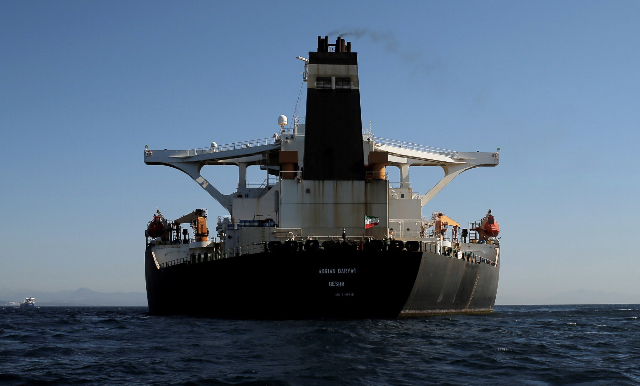
Last Wednesday, Tehran announced naval forces of the Islamic Revolution Guards Corps (IRGC) have thwarted an attempt by the United States Navy to confiscate a tanker carrying Iranian crude in the Sea of Oman.

The United States stopped the Iranian vessel and transferred its oil cargo to another tanker and was trying to take the vessel away when the IRGC Navy intervened.

The IRGC forces used a helicopter to board the tanker and led it towards Iranian territorial waters.

The naval forces of the United States used several helicopters and a frigate to chase the Iranian tanker but the IRGC blocked their way.

The American naval forces tried once again to block the path of the Iranian ship with several more vessels but failed.

Tehran has also released footage showing IRGC navy force blocking US attempts to confiscate Iranian oil in the Sea of Oman.

American officials have claimed Iranian forces had actually seized a Vietnamese-flagged oil tanker, MV Southys, and US naval forces were just monitoring the situation.

But, a Spokesman for the IRGC has rejected remarks by American defense officials claiming US forces involved in the recent tanker incident in the Sea of Oman were present at the scene only to monitor the situation.

The spokesperson has stated American forces had a mission to protect the ship.

Brigadier General Ramazan Sharif stated last Thursday that US forces had a mission to protect MV Sothys, a Vietnamese-flagged ship which was boarded by IRGC forces after it became known the tanker was stealing a large Iranian oil cargo.

“They had come to provide support to the bandits of the Iranian oil and to escort them,” Sharif noted.

On Wednesday, the news site of the Islamic Revolution Guards Corps reported Iran has released oil tanker Sothys on a court order after unloading its crude oil at the southern port of Bandar Abbas.