Wednesday, December 24, 2025
Home Blog Page 2280

Armenian PM: Problem of Iranian trucks traveling to Yerevan solved

He said by launching the new Tatev-Aghvani road in southern Armenia as an alternative to the Goris-Kapan road in the part controlled by the Republic of Azerbaijan, the transportation of Iranian cargo has been facilitated.

He added after Azerbaijan notified Armenia that it will conduct inspections of Armenian and Iranian citizens and vehicles in the part of the Goris-Kapan road which is under its control, Armenia decided to build an alternative route.

“Yesterday we learned trhough an unofficial announcement from Azerbaijan that they intend to impose customs and passport controls on Armenian citizens and vehicles from midnight on November 11, so we decided to manage traffic and facilitate the movement of our citizens on the Kapan-Aghvani route,” he said.  Pashinyan also said, “The Tatev-Aghvani section that was practically impassable for several decades was asphalted and put into operation last week.

Iranian trucks faced a $130 levy imposed by the Azeri authorities, who stopped Iranian trucks using the Goris-Kapan road. This, along with some other disputes, caused tension in ties between Tehran and Baku. With the new road built, Iran no longer needs to use the route on the Azeri soil. Parts of Armenian soil offer Iran access to markets in Georgia, Russia, the Black Sea states, and European countries.

Iran maintain unbeaten run with dramatic win over Lebanon

Iran defeated Lebanon 2-1 at Saida Stadium on Thursday with a show of strength in the added time.

Lebanon’s Soony Saad scored a first-half goal giving the hosts a very valuable lead.

But Iran finally managed to maintain its unbeaten run with added time goals from Sardar Azmoun in the 91st minute and later Ahmad Nourollahi.

The Asian Football Confederation’s website published a report on the dramatic match hailing Iran’s last-minute comeback which guaranteed the team’s victory over Lebanon.

Iran currently lead Group A with 13 points from five games followed by South Korea.
The top two teams in each of Asia’s qualifying groups will make it to the finals in Qatar.

Asghar Farhadi wins Asia-Pacific Best Director Award for “A Hero”

The winners of the 14th Asia-Pacific Film Festival were announced, and “A Hero,” which was nominated in four categories, eventually won the award for the best director at the event.

“A Hero” had been nominated for an award for the best movie, best screenplay and best actor (Amir Jadidi). Japanese director Ryusuke Hamaguchi’s film “Drive My Car” won the award for the best movie at the annual Asia-Pacific Festival, and the jury’s grand award went to Abdullah Mohammed Sad’s “Rehana,” a joint production of Bangladesh, Qatar and Singapore.

In addition to winning the Best Movie award, “Drive My Car” also won the Best Screenplay Award, with Asghar Farhadi nominated for “A Hero” and Nasim Ahmadpour and Shahram Mokri nominted for “Careless Crime.” Iranian and Japanese cinemas, each with a nomination in 7 categories, were the leading countries in this year’s Asia-Pacific Festival.

Farhadi is one of a select list of directors who have won the Best Foreign Film Oscar more than once. His movies “A Separation” and “The Salesman” won the Academy Award for Best Foreign Language Film respectively in 2012 and 2012.

Pakistan: Iran played pivotal role in Afghanistan peace

Shah Mahmood Qureshi while talking to media on the sidelines of the Troika Plus Meeting with the special representatives of China and Russia in Islamabad praised the cooperation of Iran with its neighbors and country’s positive role towards Afghanistan issue.

In his speech, Qureshi stressed the need for continued cooperation between Afghanistan’s peace stakeholders, including neighbors and key players in the region, to achieve the common goal of peace, stability and lasting security.

He called on the international community to take immediate action to provide humanitarian assistance to the Afghan people, work together to overcome the humanitarian crisis and provide economic assistance.

“Islamabad is a strong supporter of continuing consultations with regional actors, especially Afghanistan’s main neighbors, to help resolve the country’s problems,” the Pakistani foreign minister added in his interaction to state media.

He also praised Tehran for contributing to peace and stability in Afghanistan.

Referring to Pakistan’s consultations with Afghanistan’s neighbors, including Iran, and inviting Russia to attend the second ministerial meeting of Afghan neighbors in Tehran, Qureshi noted the interim Taliban government would be invited to attend the next meeting in Beijing.

It is worth mentioning that a delegation from Afghanistan headed by Acting Foreign Minister Amir Khan Muttaqi is in Islamabad to discuss ways to facilitate transit trade, cross-border movement and support for the people of Afghanistan.

It will be a three-day official visit, and members of the Taliban delegation are scheduled to meet with Pakistani political and military officials, as well as members of the expanded troika.

Qureshi participated the second foreign ministerial meeting of neighbors of Afghanistan held in Tehran on October 27. During the visit he also met with President and Minister of Foreign Affairs of the Islamic Republic of Iran.

The Pakistani Foreign Minister also paid an official visit to Tehran on September 25 and met with President Ebrahim Raisi and Foreign Minister Hossein Amirabdollahian to discuss regional developments in Afghanistan and strengthen bilateral relations.

Iran’s deputy FM meets British counterpart in London

Bagheri arrived in London heading a diplomatic delegation Wednesday evening. He met with Iran pundits and representatives of British think tanks earlier Thursday.

He is scheduled to meet with several other British Foreign Office officials. Bilateral and regional issues, as well as the Vienna talks, are among the issues on the agenda of Bagheri’s talks with the British officials.

Before flying to Britain, Bagheri traveled to France and Germany, where he met with high-ranking officials of the two countries. He described those meetings as detailed, candid, serious and constructive.

The Deputy Foreign Minister said in a tweet about the meetings with the European officials that exchanging views on bilateral and regional issues as well as the future talks are on the agenda.

He added, “We will spare no effort to advance our national interests, including getting illegal sanctions lifted”.

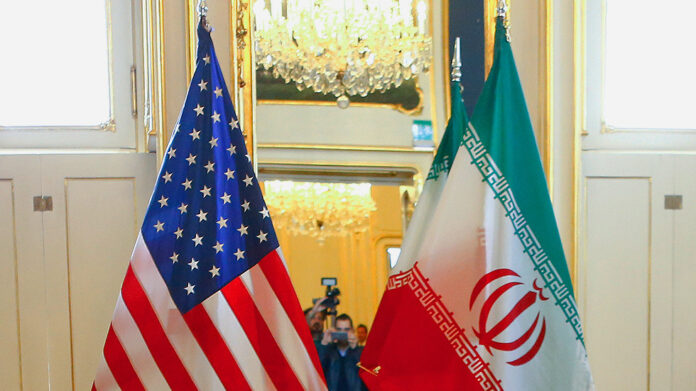
The shuttle diplomacy on the part of Iranian officials come as the date for the resumption of the Vienna talks aimed at reviving the Iran nuclear deal and getting the sanctions removed draws closer. The talks will start on November 29.

Bagheri: US must first remove sanctions before returning to JCPOA

Bagheri, also Iran’s deputy foreign minister, said the US must first meet the preconditions for returning to the nuclear deal known as the JCPOA before making an attempt to do so.

Bagheri was speaking during an exclusive interview with CNN’s senior correspondent Christian Amanpour.

Also saying that the main subject of negotiations is not the JCPOA, he added Iran does not need to return to the agreement because it’s already a signatory to the deal.

Bagheri earlier told the German media that the removal of the anti-Iran sanctions will top the agenda of the Vienna talks.

He added that success in the negotiations is contingent upon coming close to the lifting of the bans.

The Iran nuclear deal plunged into chaos after the US under former president Donald Trump left it in 2018 and reinstated sanctions on Iran.

Iran did not leave the JCPOA, but reduced its commitments under the agreement. Tehran however says it will return to full compliance only after the US removes the sanctions.

Iran and the 4+1 – Russia, UK, France, China plus Germany- have held several rounds of talks to pave the way for the US return to the agreement and get the sanctions removed.
The next round of talks will start on November 29 in Vienna.

Amir Abdollahian: UAE FM Damascus visit positive step

Hossein Amir Abdollahian, in a phone conversation with his Emirati counterpart on Thursday evening, also said Tehran-UAE ties are of special importance for both countries.

The two top diplomats discussed the pursuit of a growing trend in bilateral relations, as well as regional and international developments.

The Iranian foreign minister described relations between Iran and the UAE as traditional and positive, saying: Tehran-UAE ties are of special importance for both countries and we are confident that a good trend in improving relations will lead to the full development of bilateral ties.

Amir Abdollahian said resolving some executive problems between the two countries will facilitate and help develop trade ties, and expressed hope that with the cooperation between the two governments, the problems that currently exist in the financial exchanges will be overcome based on mutual relations and international law.

Referring to the forthcoming nuclear talks, the top Iranian diplomat said: We are ready to reach a good agreement and believe that the other parties must return to their commitments.

The UAE foreign minister also asked Amir Abdollahian about his health and wished his Iranian counterpart excellent health and full recovery.

Referring to the problems in trade exchanges between the two countries, the UAE foreign minister said that the existing problems are being studied by experts from the two countries and efforts are being made to resolve them.

Referring to environmental crises, the UAE top diplomat called for global and regional cooperation to solve environmental problems, adding that the UAE is ready to cooperate with regional countries in this regard.

Amir Abdollahian called the UAE foreign minister’s visit to the region, including Damascus, a positive step.

The Emirati foreign minister invited his Iranian counterpart to visit the UAE. Amir Abdollahian for his part invited the top Emirati diplomat to visit the Islamic Republic.

The foreign ministers of the Islamic Republic of Iran and the United Arab Emirates referred to the fact that the new Iranian administration prioritizes relations with neighbors, saying that increasing dialogue and cooperation among regional countries is important and stressed the need to strengthen this process.

Iran and Russia call for joint fight against terrorism

The secretary of Iran’s Supreme National Security Council has, in a meeting with his Russian counterpart, said regional problems like terrorism, military aggression and refugee crisis will end if extra-regional powers stop interfering in the region and if regional countries work together.

Ali Shamkhani, on the sidelines of the third security conference in New Delhi, held talks with secretary of Russia’s Security Council Nikolai Patrushev on Thursday.

In the meeting, Shamkhani said given the ethnic and religious fabric of Afghan society, the solution to the crisis in the country is the continuation of inter-Afghan dialogue and the formation of an inclusive government based on the demographic realities in Afghanistan.

Shamkhani further said the expansion of relations with Russia in all areas, especially security and joint fight against terrorism, has a decisive role in regional stability. He said Iran and Russia are the targets of the US conspiracies and sanctions and must bring down the illegal and inhumane sanctions regime of the United States through boosting their cooperation.

Patrushev also expressed pleasure at the expanding ties between Tehran and Moscow in various fields and said the continuation of the relations will benefit both nations. Patrushev referred to the constructive impact of the third regional security meeting on bringing closer the views of the countries on common threats and ways to deal with them.

He said regional cooperation is not just an option but an inevitable path to sustainable security.

He also said Afghanistan can get out of the current situation and have a better future if other regional nations work together in concert to restore stability to the country.

Iran FM praises Algeria’s no vote for Israel membership in AU

Hossein Amir Abdollahian, in a phone talk with his Algerian counterpart, said Algeria’s rational stance on Syria’s return to the Arab League is valuable.

Amir Abdollahian and Ramtane Lamamra talked over the trend of bilateral ties and issues of mutual interest regionally and internationally.

Referring to the good political relations between Iran and Algeria, the Iranian foreign minister expressed hope that the bilateral ties would further develop in all fields.

Amir Abdollahian described the recent meeting of the Chamber of Commerce of the two countries as a fruitful step and said holding this meeting will create a good opportunity to improve the level of trade relations between the two countries.

He also spoke of Algeria’s negative vote for the Zionist regime’s membership in the African Union. The Iranian foreign minister praised Algeria’s move and said the country has acted wisely and logically. Amir Abdollahian also said the move and also Algeria’s rational stance on Syria’s return to the Arab League are valuable.

He expressed hope that the upcoming meeting of the Arab League will have important benefits for the Islamic ummah.

The Algerian foreign minister also wished Amir Abdollahian health and full recovery from Covid and expressed hope that the world will soon hear good news regarding the end of the pandemic and also about the successful end of the Iran nuclear talks.

Lamamra referred to the meeting of the Iran-Algeria Chamber of Commerce. He said holding the meeting is positive for developing trade relations and boosting exchanges between the two countries.

The Algerian Foreign Minister, while formally inviting Amir Abdollahian to visit his country, stressed the importance of forming a political committee and a relations monitoring committee.

The two top diplomats described the process of political and parliamentary relations between Tehran and Algiers as positive and constructive. They also pointed to the recent developments in Libya, emphasizing that the problems there can be solved with the presence of Libyan groups and without foreign interference.

Russia: US should revise sanction policy against Iran

“The utmost must be done so that the negotiations ensure the restoration of what’s known as the ‘factory settings’ of the JCPOA. <…> Political will is now required,” Russian Deputy Foreign Minister Sergey Ryabkov stated on Thursday.

“From the US side, it is important to prove and demonstrate in practice that the sanctions policy which has been carried out over the recent years is being reviewed and the Iranian side is given the opportunity to reap those economic advantages that are included in the package of agreements that lies at the heart of the JCPOA,” the diplomat added.

According to Ryabkov, in the interests of reviving the JCPOA, Iran should implement a number of activities which allows other countries to record the absence of any deviations from the nuclear deal’s parameters.

“The Iranian side must carry out a series of measures to make it clear to all the other parties to the agreements, and, of course, to the IAEA that there aren’t any deviations from the parameters of the JCPOA in the nuclear field,” he noted.

The Russian deputy foreign minister stressed that sides should return to the implementation of the agreements on the Iranian nuclear deal in its original form. In order to accomplish this, it is important to continue negotiations “on the basis of the progress achieved by June 20” in Vienna, when the parties suspended consultations.

“There is a solid base there, and there are reasonable solutions to a number of essential aspects. But, of course, not everything was agreed on back then,” Ryabkov explained.

The JCPOA was signed between Iran, the five permanent members of the United Nations Security Council (Russia, the United Kingdom, China, the United States and France) and Germany in 2015. In 2018, then US President Donald Trump announced Washington’s withdrawal from the deal. Incumbent US President Joe Biden has repeatedly made it clear that Washington was ready to return to the JCPOA. Talks involving Iran and the P5+1 (Russia, the United Kingdom, Germany, China, France and the US) on restoring the nuclear deal in its original form have been underway in Vienna since April. So far, six rounds of consultations have taken place, the next round is set to begin on November 29.