Tuesday, December 23, 2025
Home Blog Page 2282

1,000s of Afghan refugees crossing into Iran daily

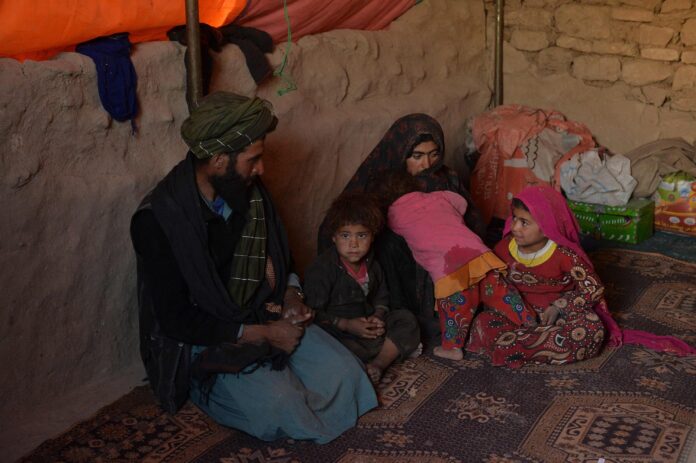
Head of Norway Refugee Council has urged the international community to help thousands of Afghan refugees entering Iran with food and shelter.

Jan Egeland, Secretary-general of the Norwegian Refugee Council, after visiting Iran’s Kerman province near the border with Afghanistan, asked the international community to help Afghan refugees with food and shelter.

Egeland told The Associated Press that after the Taliban grabbed power in Afghanistan, thousands of Afghan refugees fled the Taliban and crossed the border into Iran daily.

“Many of the refugees called their relatives, telling them they are on their way to Iran and many want to go on to Europe, so Europe should be less occupied with a few thousand refugees sitting on the Polish-Belorussian border. More people came today to Iran than are now on that border,” Egeland stated.

The Norwegian Refugee Council estimates that since the Taliban took control of Afghanistan in August, 300,000 people have left Iran.

“Millions and millions are in need for food and shelter,” Egeland warned.

According to Egeland, in winter in Afghanistan, when the condition would be “horrific” because of bad economic conditions in the country, “hundreds of thousands of additional refugees will leave Afghanistan for Iran”.

Refugees from Afghanistan have been coming to Iran since 1979 when Soviet troops occupied the country.

It’s estimated that there are 800,000 registered Afghan refugees in Iran and 3 million more undocumented.

Iran has been supporting the new arrivals, Egeland told The AP, but more aid needs to be sent to help during the cold months.

“How can you expect Iran to shoulder this responsibility on their own?” Egeland noted, adding, “What Europe should do is invest in hope, possibility, opportunity inside Afghanistan and in the neighboring countries if they want to avoid people wandering towards Europe.”

Iran urges all countries to get involved in war on drugs

Ahmad Vahidi added his ministry faces numerous challenges in the domain of maintaining order and security, namely narco-trafficking, mass migration, organized crime, the smuggling of goods and terrorist activities.

He said thousands of Iranian forces have given their lives in the fight against drugs, adding Iran has the lion’s share when it comes to the seizure of narcotics.

“90% of all the opium, 72% of all the morphine and 20% of all the heroin confiscated across the world last year were seized in Iran,” said the minister in a joint meeting of Tehran-based foreign ambassadors as well as heads of offices of international organizations in Iran.

He said drug production in Afghanistan grew multifold during the 20 years when US troops were present in the country.

“Such a huge volume of narcotics was produced and exported right in front of the Americans’ eyes.” he said.

“Indubitably, had Iran not countered drug-trafficking, the [seized] narcotics would have been destined for Europe and other countries,” he added.
Elsewhere in his remarks, the interior minister said Iran hosts the second largest number of migrants in the world.

“Currently, there are 3.5 million Afghan migrants in our country, and the subsidies provided for Iranian people are offered to these migrants as well,” he noted.

“The assistance that the UN High Commissioner for Refugees offers Iran for hosting migrants is very minimal,” the minister said.

He then called on countries to exchange information in the domains of fighting the smuggling of goods and drugs as well as migration.

Remains of 16th-century ship found off Caspian Sea

“A ship measuring 48 meters in length has been found 300 meters off the coast of Astaneh-ye Ashrafiyeh city [in northern Gilan province],” announced the provincial cultural heritage department.

“After the information on the ship was compared to that of other vessels discovered off the Caspian Sea coast, one can say it dates back to the late Safavid era,” the department added.

The Caspian Sea is the world’s largest inland body of water, lying between Europe and Asia.

Russia, Iran Kazakhstan, Turkmenistan and the Republic of Azerbaijan are littoral  states of the Caspian Sea.

Diplomats: IAEG board unlikely to issue resolution against Iran

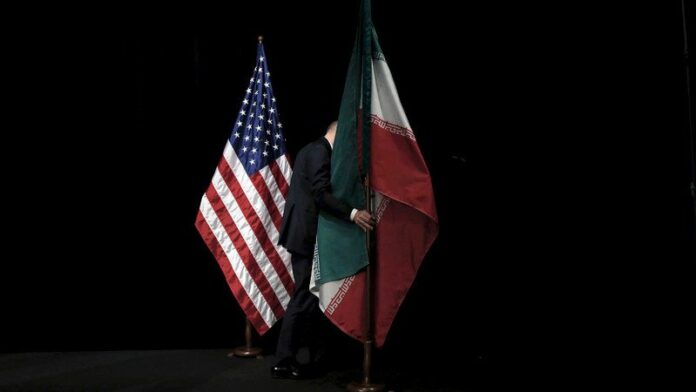
Less than three weeks before indirect negotiations are set to resume between the US and Iran about a possible return to the 2015 nuclear deal, Iran is holding talks with other signatories to the agreement to try to set the stage for the new round of talks.

The talks on Nov. 29 in Vienna will be the seventh round of negotiations since President Joe Biden assumed office and the first round since Ebrahim Raisi was inaugurated as president of Iran.

It comes after more than three months of suspension and amid skepticism in Washington and European capitals about Iran’s willingness to return to full compliance with the nuclear deal.

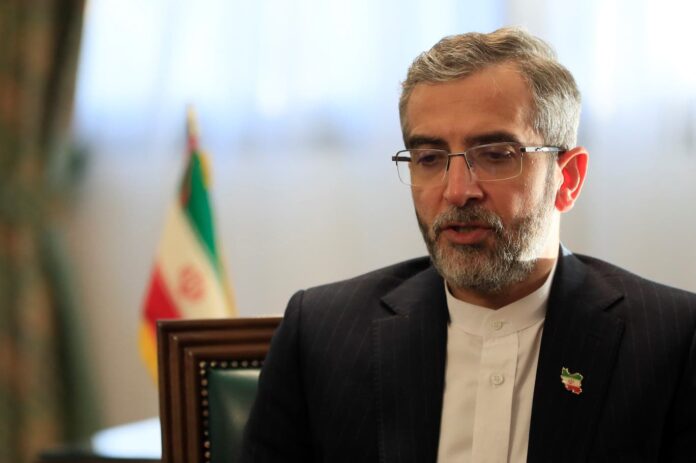
Iran’s chief nuclear negotiator Ali Bagheri is traveling to Paris, Berlin and London this week for preparatory talks ahead of the Vienna negotiations.

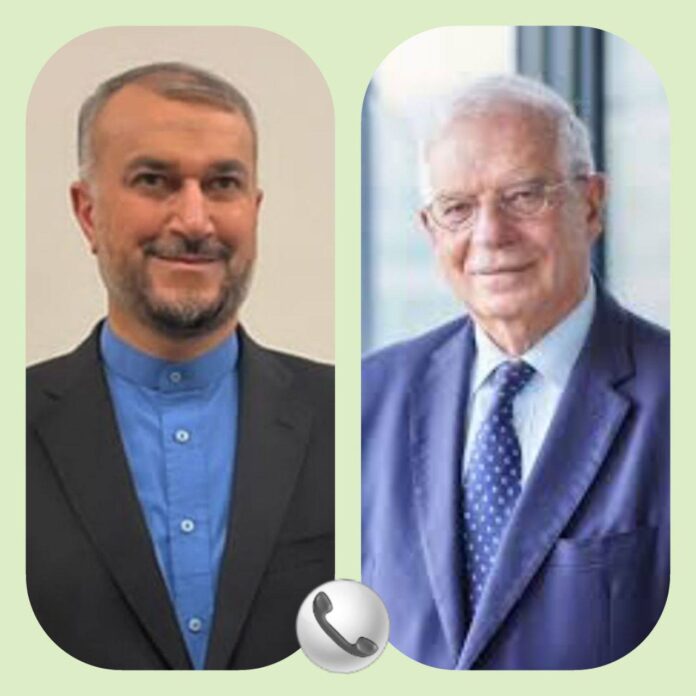
Iran’s Foreign Minister Hossein Amir Abdollahian has been working the phones in recent days talking to his Russian, Chinese, British, German and French counterparts.

In a call with his French counterpart, the Iranian foreign minister criticized the Biden administration’s decision to impose sanctions on Iran’s Islamic Revolutionary Guard Corps drone units and called the move unconstructive. But he stated Iran is going to come to the talks seeking “a good deal”.

The French Foreign Minister said in the call that the talks should resume from the point they stopped after the last round of negotiations in June. At the time, the parties had already reached a draft agreement.

In a phone call with his Chinese counterpart, Abdollahian noted Iran hopes the US and its European allies will come to Vienna with a realistic approach “so that an agreement could be reached quickly”.

When he spoke to his Russian counterpart, the Iranian foreign minister announced Iran is “skeptical of the US intentions” but added if the Biden administration fully implements its commitments and doesn’t make more demands, Iran will return to full compliance with the deal.

The Iranian Foreign Ministry laid out several conditions ahead of the next round of talks.

The US must accept responsibility for withdrawing from the nuclear deal during the Donald Trump administration.

The US must lift all sanctions imposed by the Trump administration.

The US must give a guarantee that the next administration won’t withdraw from the agreement in the future.

State Department spokesperson Ned Price said on Tuesday the Biden administration “continues to seek constructive engagement in Vienna, including when the talks resume later this month”.

The board of the International Atomic Energy Agency (IAEA), which is responsible for verifying whether a country’s nuclear program is in compliance with international treaties, will convene in Vienna on Nov. 25, several days before the talks are set to resume.

The US, France, Germany and the UK have been discussing for several weeks the possibility of using this event to pass a censure resolution against Iran over the limitations it puts on UN inspectors.

The UK has been actively pressing the US, France and Germany to move ahead with the censure. But European diplomats briefed on the issue stated after Iran’s announcement of resuming the nuclear negotiations, it is unlikely that such a move will take place.

Iran is prepared to reach a good agreement in nuclear negotiations, Foreign Minister Hossein Amir Abdollahian stated on Wednesday.

He wrote on Twitter that chief nuclear negotiator “engaged in successful talks in Europe”.

Pentagon: Dozens of US family members in Afghanistan

The Pentagon said Wednesday that “dozens” of family members of American troops remain in Afghanistan nearly three months after President Joe Biden’s administration withdrew forces from the country.

Asked during a news conference about the “number of immediate family members of US service members in Afghanistan”, Pentagon spokesperson John Kirby told reporters he did not “have a whole number on that”.

“We believe it’s certainly most likely in the dozens, but one of the reasons we put the memo out last week was to encourage service members to come forward,” Kirby stated.

He was referring to a defense memo sent out last week that called on service members and civilians to provide information about immediate family members who remain in Afghanistan.

“We’re working this as hard as we can,” Kirby continued, adding that the Pentagon takes “the obligation seriously to our people and to their families”.

“That’s why we put the advisory out to the services last week, to give them a place, a portal where they can go to put information on there that we can then share with our State Department colleagues to get them out,” he added.

Kirby said that “we’re going to stay at this”.

Earlier this week, Kirby announced the memo was sent out to the services to let members know that “immediate family members that are in Afghanistan are eligible for facilitated departure”.

Kirby also reaffirmed Wednesday that the mission to get Americans out of Afghanistan “is not over”, and that defense officials are “going to continue to work inside the interagency to do that”.

Asked whether there was concern for the well-being of family members of troops who remain in Afghanistan, Kirby noted, “Of course there is.”

Data: Iran’s monthly oil export revenues at $1.3bn

Oil takners pass through the Strait of Hormuz, December 21, 2018. REUTERS/Hamad I Mohammed

The Wednesday report by the Reuters news agency said that Iranian crude oil shipments to China had increased over the past three months to an average of more than half a million barrels per day (bpd).

The report cited data obtained from traders and ship-tracking firms showing that indirect Iranian crude sales to China had picked up in August after Beijing released new quotas for oil imports.

China’s state-run refiners avoid importing Iranian oil because of the US sanctions and data by the Chinese customs office shows the country has not imported any oil from Iran since the start of 2021.

However, independent refiners in China started to increase their purchases of Iranian oil in August after they obtained fresh permits from the government, added the report by Reuters. 

Data by Vortexa Analytics covered in the report showed that Iranian oil exports to China hit 660,000 bpd in August and 545,000 bpd in September, before dropping back to 470,000 bpd in October.

The figures indicate that shipments over the three-month period had increased by over 17% compared to the average reported for June-July.

Analysts regard the growing Iranian oil sales to China and other customers as a sign of failure for Washington sanctions against Tehran.

While announcing the sanctions in early 2018 after pulling out of the Iran nuclear deal, authorities in Washington said they would do their best to cut Iran’s crude exports to zero.  

However, unconfirmed reports show that flow of oil from Iran has steadied since the middle of last year as Tehran has come up with various solutions, including offering major discounts to buyers, to circumvent the sanctions.

Iran’s deputy FM in Europe for talks

Iran's deputy negotiator Ali Bagheri speaks during a news conference in Almaty April 5, 2013. REUTERS/Shamil Zhumatov

Heading a diplomatic delegation, Ali Bagheri Kani is scheduled to meet with his opposite number as well as several other Foreign Office authorities on Thursday.

Among issues on the agenda are consultations about Vienna talks.

A fresh round of negotiations about the 2015 Iran nuclear deal known as the Joint Comprehensive Plan of Action (JCPOA) is to resume in Vienna on October 30, 2021. The talks will focus on the lifting of cruel and inhumane sanctions against Iran.

Bagheri Kani’s tour of Europe had already taken him to Paris and Berlin.

“As part of consultations with my colleagues in other countries, I will meet several European counterparts in the coming days,” he tweeted.

“Exchanging views on bilateral and regional issues as well as the future talks [in Vienna] is on the agenda. We will spare no effort to advance our national interests, namely the lifting of illegal sanctions,” he added.

As for the Vienna talks, the senior diplomat underlined, “We will have no nuclear negotiations because the nuclear issue was completely agreed on, in 2015, in a deal between Iran and the 5+1 group,” he explained.

Meanwhile, Iranian Foreign Minister Hossein Amir Abdollahian described Bagheri’s negotiations in Europe as successful.

“These days, Dr. Bagheri is engaged in successful talks in Europe,” he said in a tweet.

“At the negotiating table in Vienna, we are ready to deliver a good agreement. The return of all parties to their commitments is an important and leading principle,” Amir Abdollahina added.

Shamkhani underlines need to expand ties with India

Ali Shamkhani said the level of economic relations between the two sides is not in line with the intentions of the leaders of India and Iran and the brilliant history of bilateral relations.

Shamkhani added that obstacles to expanding ties should be diligently removed with a view to the future. Shamkhani, who is in the Indian capital to attend a regional security conference, also held talks with India’s National Security Advisor Ajit Duval Wednesday afternoon.

In the meeting, Shamkhani said a highly important issue is to speed up the full launching of Chabahar Port in southern Iran.

He added that the Islamic Republic of Iran is willing to use its capacities for the development and growth of the region, and strong bilateral relations with India can pave the way for achieving that goal.

The secretary of Iran’s Supreme National Security Council emphasized in addition to cooperation with India in the international, regional and bilateral areas, Iran wants to expand relations proportional to scientific, technical and transit capacities.

Referring to the developments in Afghanistan and the West’s plot to destabilize the region, Shamkhani stressed the need for all regional countries to help the Afghan people and deal with destabilizing factors.

He expressed hope that Iran and India can further cooperate in this regard.

Ajit Duval also underscored the importance of bilateral relations with Iran, saying the two sides should expand cooperation, especially regarding economy and security. India’s national security adviser also expressed regret over the inadequate level of economic relations between the two sides, stressing the need to remove obstacles in this regard.

Shamkhani: Iran to use its capacities for regional development

Ali Shamkhani, who is in the Indian capital to attend a regional security conference, held talks with Secretary of Kygyzstan’s Security Council Marat Imankulov Wednesday afternoon.

In this bilateral meeting, Shamkhani stressed the need for cooperation between the two countries that are in the same region. He said the Islamic Republic of Iran can and is willing to use its capacities for the development and growth of the region.

Referring to the developments in Afghanistan and the West’s plot to destabilize the region, Shamkhani stressed the need for all regional countries to help the Afghan people and deal with destabilizing factors.

He expressed hope that Iran and Kyrgyzstan would further cooperate in this regard.
Imankulov also underscored the importance of bilateral relations with Iran, saying the two sides should expand cooperation, especially regarding regional security.

“We have good facilities in the field of agriculture and renewable energy that we can use in our relations,” he said.

New Delhi summit calls for inclusive Afghan govt., respect for women’s rights

On Wednesday, the national security advisers (NSA) of eight regional countries – India, Iran, Kazakhstan, Kyrgyzstan, Russia, Tajikistan, Turkmenistan, and Uzbekistan – met in New Delhi at the Delhi Regional Security Dialogue on Afghanistan.

At the meeting, the NSAs voiced strong support for a stable Afghanistan, “respect for the sovereignty, unity, and territorial integrity and non-interference in its internal affairs”.

They also called to ensure that the fundamental rights of women, children and minority communities are adhered to.

Issuing a joint declaration after the event, the countries expressed deep concern over the humanitarian crisis in Afghanistan and condemned the terrorist attacks in Kunduz, Kandahar, and Kabul.

While the dialogue was attended by the security heads of Russia, Iran, Kazakhstan, Kyrgyzstan, Tajikistan, Turkmenistan, and Uzbekistan, China did not participate this time, the third edition of the dialogue, due to “scheduling reasons”. Pakistan had earlier refused to participate due to differences with India.

“The sides paid special attention to the current political situation in Afghanistan and threats arising from terrorism, radicalisation, and drug trafficking as well as the need for humanitarian assistance,” the Delhi Declaration issued after the meeting read.

The nations emphasised that Afghan territory should not be used for sheltering, training, planning, or financing any terrorist acts.

The NSAs highlighted that it is of high importance that an “open and truly inclusive government representing the will of the entire people of Afghanistan, which will include representatives of all major ethnopolitical forces” is formed in Afghanistan.

“Inclusion of all sections of society in the administrative and political structure is imperative for the successful national reconciliation process in the country,” the declaration noted.

The security heads reiterated that humanitarian assistance should be provided in an unimpeded, direct, and assured manner to Afghanistan and that the assistance is distributed within the country in a non-discriminatory manner across all sections of Afghan society.

Russian Security Council Secretary Nikolai Patrushev advised the countries holding security dialogue mechanisms on Afghanistan to avoid duplicating each other’s work, but to “complement each other”.

Patrushev hoped that the Delhi Regional Security Dialogue on Afghanistan will be a step forward in finding common measures to ensure national security and maintain regional stability.

“We expect that the practice of holding such meetings will be continued, including by introducing other relevant regional questions in the agenda,” Patrushev said at the Delhi Regional Security Dialogue on Wednesday.

India’s National Security Adviser Ajit Doval agreed with Patrushev, stating his advice will be considered when carrying out such meetings on Afghanistan.

Patrushev additionally underscored that the Moscow format of consultations on Afghanistan retains significant potential.

Doval, chairing the eight-nation dialogue, said it is time to have close consultations, greater cooperation, and coordination among the countries in the region on the Afghan situation.

“We are meeting today to discuss matters relating to Afghanistan. We all have been keenly watching the developments in that country. These have important implications not only for the people of Afghanistan but also for its neighbours and the region,” Doval added.