Sunday, April 19, 2026
Home Blog Page 2276

Report: Underground intelligence operatives helped Taliban seize Kabul

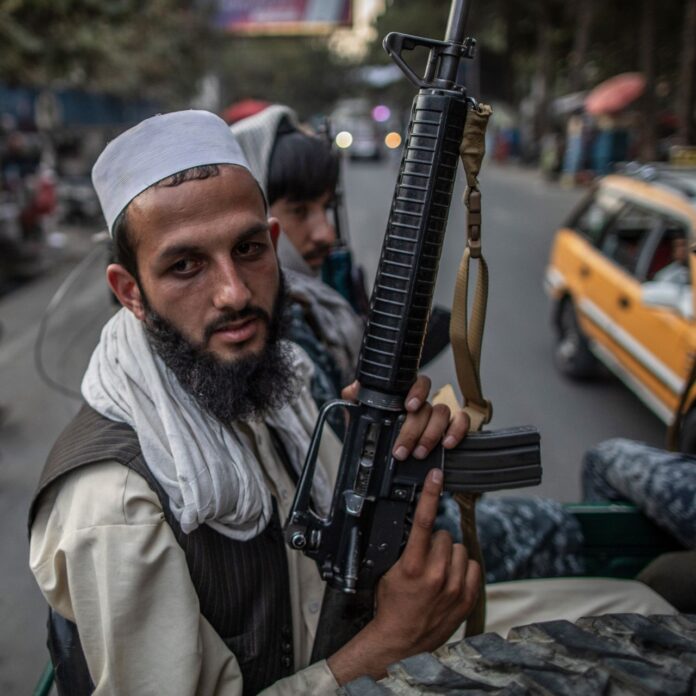
Taliban’s agents have been present in ministries, universities, business entities, and aid organizations, The Wall Street Journal reported on Sunday.

Mawlawi Mohammad Salim Saad, a key Taliban leader loyal to Haqqani Network has told WSJ they had agents in every organization and department who had already taken the control of strategic locations before they enter Kabul.

Mohammad Salim Saad is the security chief for the Kabul International Airport.

According to WSJ, the Taliban’s men were tasked on August 15 to take out their guns from hiding and conduct special operations in disarming security forces and taking the control of the strategic locations in the capital Kabul.

Mohammad Rahim Omari, a mid-level commander in the Badri force, was working undercover at his family’s gasoline-trading business in Kabul before he was called into action that day. He said he and 12 others were dispatched to an Afghan intelligence service compound in the east of the city, where they disarmed the officers on duty and stopped them from destroying computers and files.

Other cells fanned out to seize other government and military installations and reached Kabul airport, where the US was mounting a massive evacuation effort. They took control of the airport’s perimeter until better-armed Taliban troops arrived from the countryside in the morning. One agent, Mullah Rahim, was even dispatched to secure the Afghan Institute of Archaeology and its treasures from potential looters.

Kamran, who didn’t want his surname to be used, was tasked with taking over his alma mater, Kabul University, and the Ministry of Higher Education.

A 30-year-old from Wardak province west of Kabul, he stated he became a Taliban recruiter when he was pursuing a master’s degree in Arabic at the university in 2017. He estimates that, over the years, he persuaded some 500 people, mostly students, to join the insurgency. To maintain his cover, he shaved his chin, wore sunglasses and dressed in suits or jeans.

“Many of our friends who had beards were targeted,” he recalled, adding, “I was above suspicion. While many of our low-ranking friends were arrested, I wasn’t. Even though I was their leader.”

Many of his acquaintances—former classmates, teachers and guards—first realized he was a member of the Taliban when he showed up with a gun on Aug. 15, he continued.

“Many employees of the ministry and the entire staff of the university knew me. They were surprised to see me,” said Kamran, whose new job is head of security for Kabul’s several universities.

Kamran has since adopted the Taliban’s trademark look: a black turban, a white shalwar kameez and a long beard. As for his suits and jeans, they are gathering dust in his closet.

“Those aren’t our traditional outfits,” he stated, adding, “I don’t think I will have to wear them again.”

The WSJ report also uncovers that there have been key Taliban members among the students who were given scholarship opportunities to study in India.

Ahmad Wali Haqmal, who is now the spokesperson for the Ministry of Finance was a key Taliban member in the Kandahar University and was later sent to study Human rights in Aligarh Muslim Univesity of India, WSJ reported.

Bilal Sarwary, journalist and an activist on Twitter has shared a snapshot of his earlier post in response to the Wall Street Journal’s correspondent saying two Taliban members were employees of AIB in a Kabul downtown, Shahre-e-Now.

My neighbor who posed as an ordinary Afghan and lived with his family for years in Taymani was indeed a key Taliban intel operative. He was a good and polite neighbour until the end, Bilal Sarwary tweeted on Sunday.

This comes as the 20-year-old US-backed administration fell in the hands of the Taliban in almost 11-day fights, while the capital Kabul collapsed without any gunfire on August 15 as the former President Mohammad Ashraf Ghani fled without any early notice.

The way the security institutions fell in the hands of the Taliban without any resistance amid Ghani’s earlier claim to fight until death, has still remained an unanswered question.

The Taliban government is said to not be recognized by any country until they do not show they have the capacity to maintain human rights, women’s rights, freedom of speech and an inclusive administration that includes the ethnic groups including women.
Nine Iranian provinces report no Covid-19 fatalities

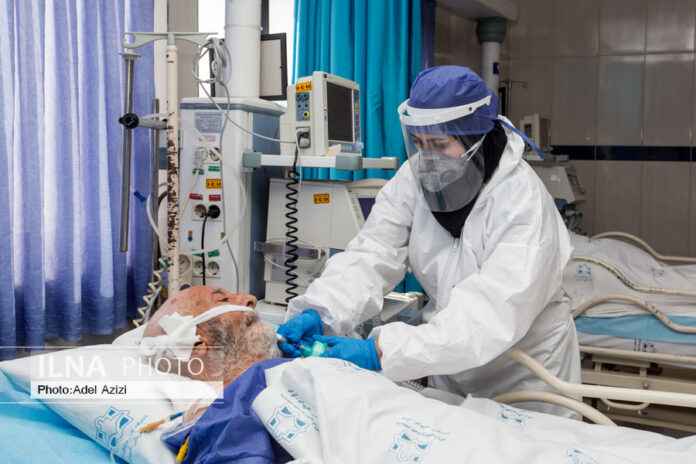
The provinces with no new deaths are Khouzestan, Golestan, Kordestan, Hormozgan, Northern Khorasan, Zanjan, Kohgiluyeh and Boyer-Ahmad and Sistan and Balouchestan.

The ministry also reported on Monday that 82 people have died from the respiratory disease over the past 24 hours.

According to official figures, over 129,700 Iranian have lost their lives to the virus since its outbreak began in the country in 2020.

The ministry’s latest figures also showed that over 105 million doses of Covid-19 doses have been administered in Iran with more than 57,480,000 people fully vaccinated.

Over the past weeks Iran has been reporting a downward trend in the number of fatalities and new infection cases.

Health officials are mostly attributing the decreasing numbers to an intensified vaccination campaign over the past months.

Iran, which has been hit by five waves of the disease, has imported tens of millions of vaccine doses and is domestically manufacturing several types of Covid-19 shots to battle the virus.

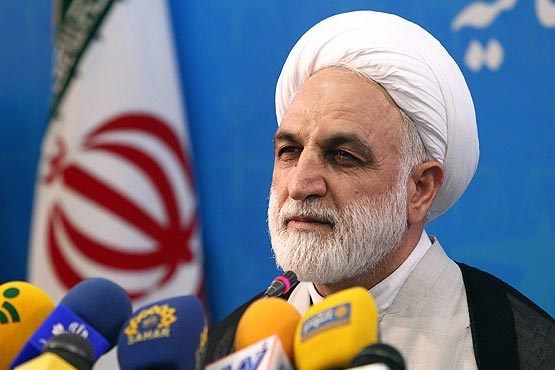
Iran judiciary chief: People have rightful demands about water

Mohseni Ejei however noted that the Iranian people must be vigilant in the face of enemy movements and should not allow ill-wishers among themselves.  

The judiciary chief added that officials should have made necessary plans for the management of water. 

He also called for efforts to allocate water to industries, agriculture and for drinking so that consumption is streamlined. 

Ejei’s comments comes as the central Iranian city of Isfahan was recently the scene of protests by residents over mismanagement regarding water supply in the Province of Isfahan. 

A small number of protesters however shouted anti-government chants which prompted police to disperse them.

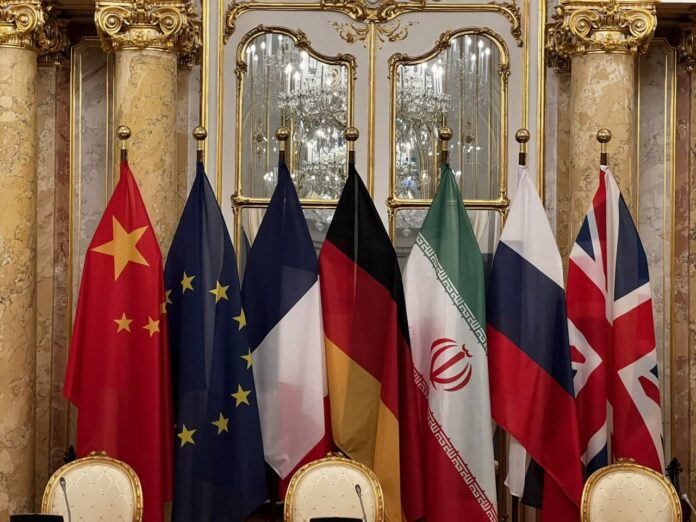
Russia says optimistic about Vienna talks

“Count Russia out, please. We are fully aware of all the problems at the Vienna Talks but remain cautiously optimistic,” Russia’s Permanent Representative to the Vienna-based international organizations Mikhail Ulyanov wrote on his Twitter account.

“The reason for this cautious optimism is very simple: we have no reasonable and acceptable alternative to a successful conclusion of the talks on JCPOA,” he continued.

Tehran, Moscow and Beijing held useful informal consultations ahead of the beginning of the Vienna talks on the restoration of the Iran nuclear deal, Ulyanov had said.

“China, Iran and Russia held today trilateral informal consultations in preparation of the official resumption of the Vienna Talks on November 29,” he noted, adding, “The exchange of views was useful, first of all for better understanding of the updated negotiating position of Tehran.”

The seventh round of talk on the restoration of the Joint Comprehensive Plan of Action (JCPOA) on the Iranian nuclear program, which was suspended in June because of elections in Iran and the formation of its new government, will begin on November 29.

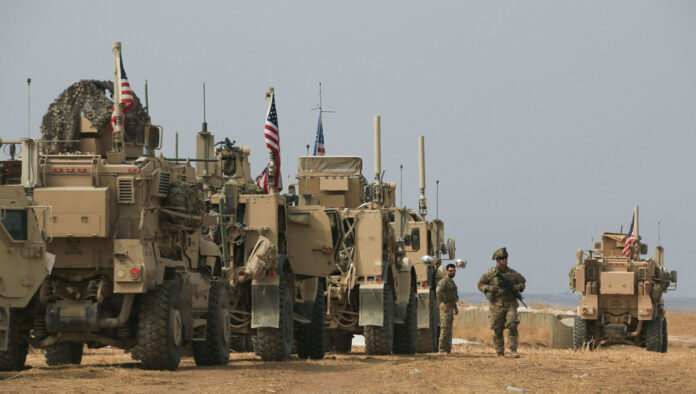
Report: US sends two military convoys to Syria

The convoys reportedly consisted of 100 trucks carrying containers with unknown cargo, purportedly “logistics materials”, and refrigerator trucks.

The first convoy reportedly consisted of around 60 vehicles, while the second had around 40 of them.

They crossed into Syrian territory from Iraq via the al-Waleed crossing, SANA’s sources stated.

Both convoys moved under the protection of several armoured vehicles.

The US deployed in Syria under the pretext of fighting Daesh, but has not completely withdrawn despite declaring the terrorist organisation defeated. Washington also lacks a UN Security Council mandate or an invitation from the elected government in Damascus to justify the deployment of its forces in the country.

Damascus, Tehran, and Moscow have repeatedly objected to the continuing stay of American troops in Syria, calling it illegitimate. Washington, in turn, claims that its forces have stayed behind to prevent the local oil resources from ending up in the hands of terrorists. However, the Syrian government insists they are, in fact, are engaged in the theft of the nation’s oil resources.

Iran: Some European parties not serious in Vienna talks

“The fact that the British foreign secretary, on the eve of the Vienna talks publishes a joint memo with a party, which from the day one has put all its efforts into preventing the JCPOA from being signed and for the nuclear deal to be eliminated and even today is the main opponent of the negotiations in Vienna and the revival of the JCPOA, when you see this arrangement, you realize that, at least, some European countries are not in Vienna with the required will for removal of the sanctions,” Foreign Ministry spokesman Saeed Khatibzadeh said in his weekly presser.

“Moreover, this shows not only some of these countries are not serious, but they are also preparing grounds so that these talks and negotiations expand so that the implementation of the JCPOA does not take place effectively. This is fully clear. Tell me with whom you’re friends with, I tell you who you are.”

Khatibzadeh was referring to the article by Liz Truss and Yair Lapid in which they vowed to “work night and day to prevent the Iranian regime from ever becoming a nuclear power.”

The spokesman also said the Iranian negotiating team is in Vienna with strong determination and is thinking of fruitful talks.

“If the other party’s team enters the talks to make sure extra-territorial sanctions are removed, then the negotiations are on the right course,” he said.

The spokesman also said Americans killed Iran’s time during the past six rounds of the talks to maintain what he called the “failed legacy of [former US President Donald] Trump.

“My advice is that now, at the beginning of the talks under [Iran’s] new government, they enter the negotiations with good will and real will and determination for fruitful talks. Real parties should take this window of opportunity as this window will not remain open indefinitely,” he said.

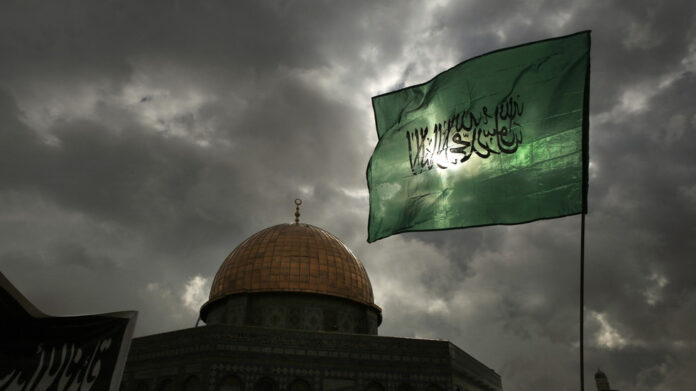
Hamas to take legal action against UK for declaring it “terror group”

Speaking at an online conference held by the Center for Palestinian Refugee Studies, Hamas Political Bureau chief Mousa Abu Marzouk said the group is actively working with various institutions and organizations against the move.

Hamas is working on a strategy with British lawyers for the cancellation of the decision, Marzouk added.

He noted that causing division in Palestine would not serve the interests of Hamas, adding the movement intends to protect its homeland and the resistance.

Marzouk also urged the Palestinian administration and the Fatah movement to reconciliate on the basis of the interests of the Palestinian public, partnership and resistance.

The UK’s Interior Ministry declared in a statement that Hamas was included on a list of banned terrorist organizations after legislation was approved by parliament on Nov. 19.

The statement announced members of Hamas or those who support it could be sentenced up to 14 years in prison.

The UK outlawed Hamas’ military wing, known as the Izz ad-Din al-Qassam Brigades, in 2001.

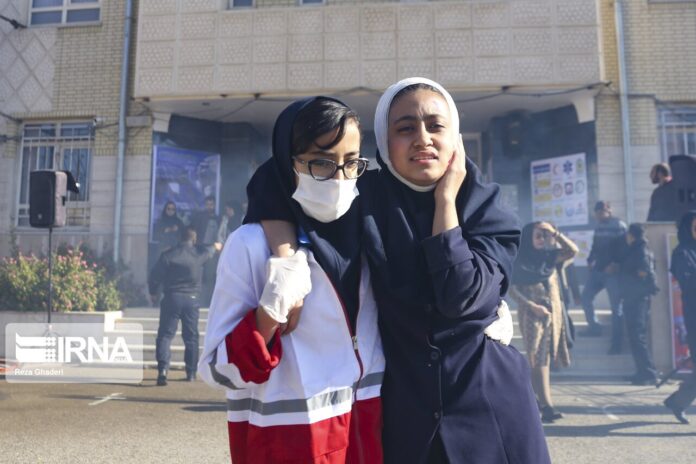
Iran schools hold key annual earthquake safety drills

The 23rd General Earthquake and Safety Maneuvers were held at a girls’ school in the capital Tehran and virtually across the country.

Officials said the purpose of the drills is increasing students’ awareness on tremors and preparing them for proper and quick response during quakes.

The drills were also aimed at promotion of safety against temblors, strengthening of buildings and reduction of casualties during earthquakes.

During the drills, the students practiced safe sheltering, safe emergency exiting, evacuation of the possible injured and extinguishing fires. 

Earthquakes maneuvers are Iran’s largest public educational activity for the purpose of schools’ safety against tremors.

It was first held 25 years ago and is organized annually with the cooperation of the Ministry of Science, Research and Technology, the Ministry of Education and the Interior Ministry as well as Iran’s Red Crescent Society.

Iran FM: Baku stance on Tehran concerns promising

“On our concerns, the Azerbaijani president had promising comments [during his meeting with his Iranian counterpart] and reiterated that Baku will act accordingly,” Amir Abdollahian said in an Instagram post.

“The will of the president is all-out expansion of ties. Cooperation in the fields of transit, energy, tourism, culture, … is among the topics reiterated and agreed by both sides.”

The foreign minister also described relations between the two countries and nations as “beyond being neighbors” and into “kinship”. 

He also said Tehran and the Azerbaijan Republic had important political, diplomatic and security consultations a day before the presidents’ meeting, stressing that Iran will continue to expand ties with the neighboring countries.

‘UK, Israel to work together to stop Iran gaining nuclear weapons’

“The clock is ticking, which heightens the need for close cooperation with our partners and friends to thwart Tehran’s ambitions,” the UK’s Liz Truss and her Israeli counterpart Yair Lapid wrote in the Telegraph newspaper on Sunday.

Israeli Prime Minister Naftali Bennett stated earlier in the day that his country was “very worried” that world powers will remove sanctions on Iran in exchange for insufficient caps on its nuclear programme, as negotiators convene in Vienna on Monday in a last-ditch effort to salvage a nuclear deal.

Iranian officials have stressed the country “has not been and is not after nuclear weapons” and the nation will keep on paving the path of peaceful nuclear energy and technology. Tehran has also called on the world for the total elimination of nuclear weapons throughout the world.

Iranian Supreme Leader Ayatollah Sayed Ali Khamenei has on many occasions stated the Islamic Republic considers the pursuit and possession of nuclear weapons “a grave sin” from every logical, religious and theoretical standpoint. In April 2010, Ayatollah Khamenei issued a fatwa declaring that the production, stockpiling, and use of nuclear weapons are all haram (religiously banned).

Israel is the only holder of nuclear weapons in the West Asian region, and that regime has so far refused to sign the Nuclear Non-Proliferation Treaty (NPT).

Iran, however, is a signatory to the NPT, and Iran’s nuclear program is closely monitored by the International Atomic Energy Agency (IAEA) inspectors.