Sunday, April 19, 2026
Home Blog Page 2275

China renews call for removal of U.S. sanctions against Iran

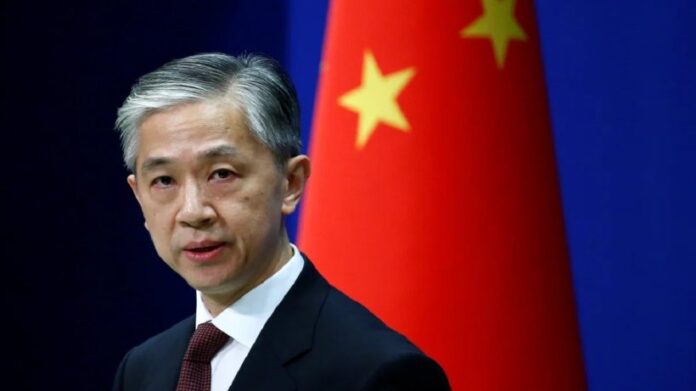
Chinese Foreign Ministry Spokesman Wang Wenbin said the United States, as the party which created the current crisis in the implementation of the Joint Comprehensive Plan of Action, should remove the sanctions including those against third parties like China.

He also welcomed the resumption of the Vienna talks on lifting anti-Iran sanctions, calling it the result of serious efforts by all parties, which showed the group’s willingness to move forward in line with the expectations of the international community.

“We must respect the legitimate rights, interests and concerns of all parties, and these negotiations must be based on mutual respect, seeking win-win results, restoring the balance between the rights and obligations of the parties to this agreement, and strengthening regional peace and stability, the Chinese foreign ministry spokesman stated.

He noted that in the Vienna negotiations, the rights and interests of all parties to establish normal relations and economic and trade cooperation with Iran must be respected.

China is Iran’s biggest trade partner and remains an important customer of its crude oil even as many other countries avoid buying Iranian oil out of fear of unilateral sanctions imposed by the United States.

The two sides signed a 25-year cooperation agreement this year to strengthen their long-standing economic and political ties.

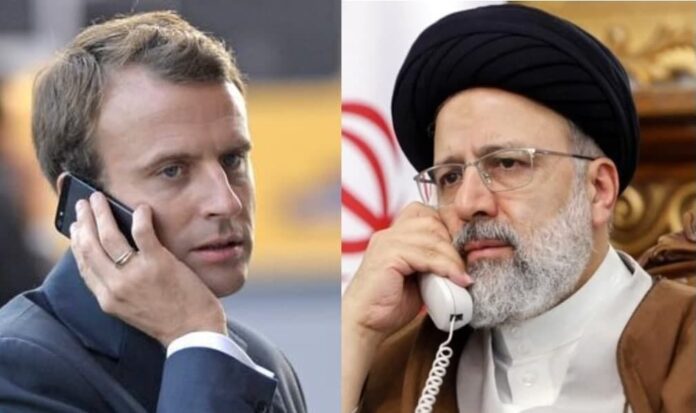
Iranian, French presidents speak over the phone

During the conversion that lasted one and a half hours, Raisi and Macron discussed bilateral issues between Iran and France and also the ongoing nuclear talks between Tehran and the Western parties in Vienna.

Baghari: Sanctions removal group to be launched Tuesday

Bagheri stressed the need to lift all inhumane and coercive US sanctions against the Iranian people, saying the lifting of sanctions must be the top priority in the talks.

He noted that the Islamic Republic has demonstrated its adherence to its obligations under the nuclear deal in practice.

Bagheri stressed that the revival of the JCPOA is nothing more than an exaggeration as long as the US campaign of maximum pressure is alive.

During the talks it was agreed that the meeting of the working group for the lifting of sanctions should be held Tuesday morning.

Meanwhile, EU deputy Foreign Policy chief Enrique Mora described the preliminary talks in Vienna as positive, expressing hope that this round of meetings will result in the removal of US sanctions on Iran.

Mora said the talks will continue in the coming days and that all sides are determined to revive the JCPOA.

The EU official noted that a working group will be launched on Tuesday with the aim of removing the sanctions and from Wednesday, the nuclear working group will be formed.

Mora noted that the foreign ministers of the parties will meet in a separate session which is not expected to happen in the near future. He also said the nuclear deal is in a difficult situation and said there is an urgent sense to revive the JCPOA and end the “ordeal” of the Iranian people.

Iran FM thanks Russia role in Vienna talks

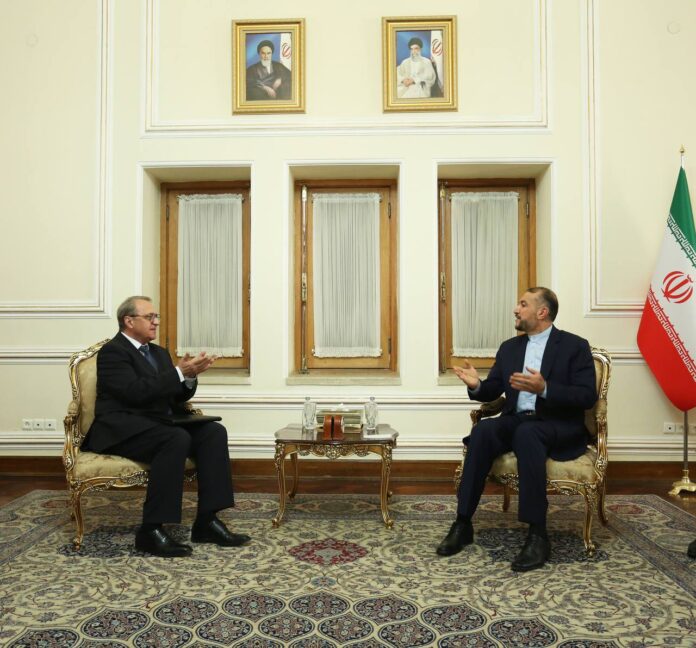
Hossein Amir Abdollahian, in a meeting with Mikhail Bagdanov Russian Deputy Foreign Minister and Special Representative of Russia’s President for the Middle East and Africa, said the Islamic Republic is attending the negotiations with a serious will to reach a good and effective agreement.

Amir Abdollahian described Tehran’s cooperation with the Russia Federation on regional issues as effective and fruitful.

He also declared Iran’s readiness to host the summit of the Astana peace process as well as the meeting of foreign ministers regarding Syria and underlined that Iran and Russia share the same view in this respect.

The top Iranian diplomat also welcomed the Russian side’s offer for cooperation between the two countries in the fight against Covid-19.

Amir Abdollahian referred to the recent ECO Summit in Ashgabat, Turkmenistan, and expressed satisfaction with the process of cooperation in the region.

He called the meetings of the Iranian president with the leaders of regional countries fruitful and positive.

Mikhail Bagdanov also said in the meeting that friendly ties between Iran and Russia are based on long-standing relations and have continued steadily and solidly.

He said Russian officials are satisfied with the level of relations between the two countries, adding, “We are interested in receiving the views of the officials of the Islamic Republic of Iran regarding regional developments.”

The Russian deputy foreign minister called the issues of the Caucasus important for both countries and the region.

The Russian official said the withdrawal of US forces from Afghanistan is a cause of suspicion and concern for regional countries.

He highlighted the importance of relations with Syria and condemned sanctions on the country.

Iran FM calls for continuous consultations with UAE

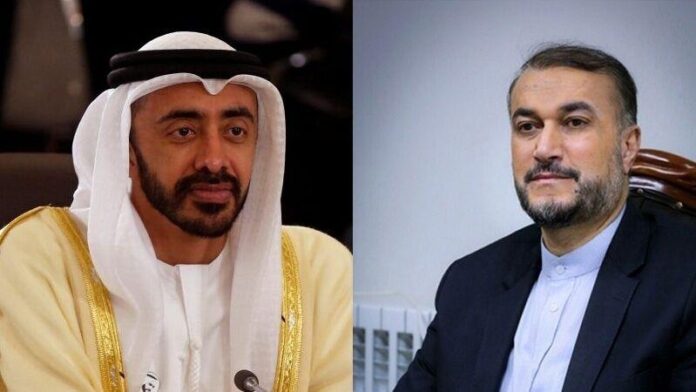
Foreign Minister Hossein Amir Abdollahian and Minister of Foreign Affairs and International Cooperation of the United Arab Emirates Sheikh Abdullah bin Zayed Al Nahyan discussed different topics, including bilateral political and consular issues during a phone call on Monday.

Amir Abdollahian referred to the Iranian President’s emphasis on the development of relations with neighbors including the UAE in different fields. The top Iranian diplomat stressed the need for continuous consultations between the two countries.

Describing bilateral relations with the UAE as expanding, Amir Abdollahian said that the new administration of the Islamic Republic of Iran is determined to continue its effective consultations and cooperation with friends and neighbors, and in this regard he referred to the recent visit of the deputy foreign minister for political affairs to the UAE and also the positive negotiations between the two sides.

The Iranian foreign minister also invited his Emirati counterpart to visit the Islamic republic.

In this telephone conversation, the UAE foreign minister also thanked Amir Abdollahian for establishing close and continuous relations with the UAE, calling it a sign of the two countries’ efforts to enhance ties.

It should be noted that the two sides exchanged views on consular issues as well as some issues related to Iranian nationals with the Emirati side promising to provide assistance and follow up on those matters.

Russian envoy: Reaching agreement is feasible in Vienna talks

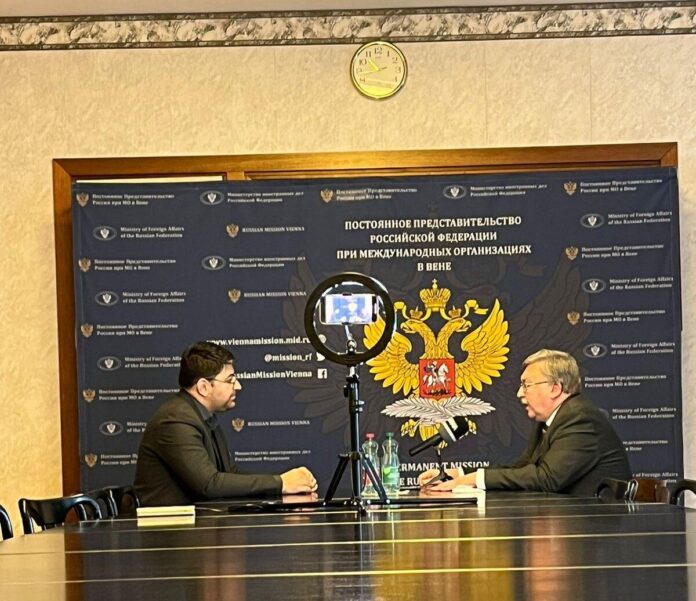
During an exclusive interview with IRNA on Monday, Ulyanov reiterated that he firmly believes that reaching an agreement is feasible in this round of negotiations.

The Russian diplomat added that he was optimistic about the current round of talks in Vienna.

He stressed that negotiations should be in a direction that would lead to success otherwise any alternatives would be disastrous and would have extremely negative consequences for everybody.

Referring to the differences between Iran and the Western sides, he noted “It is the task of diplomats to overcome differences and difficulties, that’s why we work and get paid. So I remain optimistic and I do believe that we are obliged to make these processes successful because the alternative is disastrous. It might have very extremely negative consequences for everybody. So our task is preventing negative threats and overcoming them and bringing the negotiations to the successful conclusions.”

Iranian FM: Tehran will not accept anything beyond JCPOA

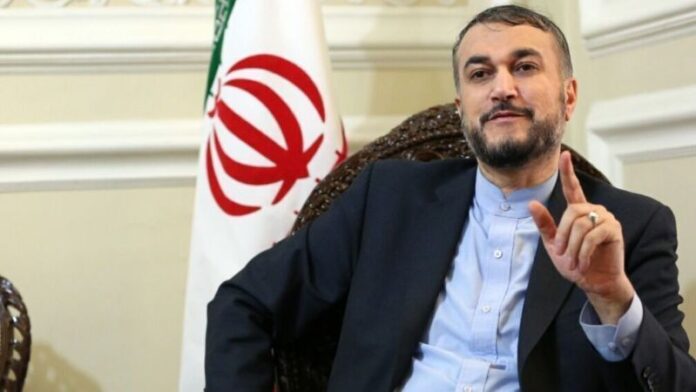
Hossein Amir Abdollahian made the remark in an Op-Ed published by the Iranian Newspaper, Iran Daily.

He added, the Islamic Republic of Iran will not enter into any discussion whatsoever about issues beyond the nuclear deal.

He reiterated that this window of opportunity will not remain open forever and the US and the three European countries must understand that.

Amir Abdollahian added that the Islamic Republic of Iran, while doing its best to get the oppressive US sanctions removed, has devised an effective program to neutralize the bans as part of its sustainable economic development program.

He also said the Islamic Republic will safeguard its nuclear achievements and at the same time will remain committed to non-diversion from its peaceful nuclear program.

The Iranian foreign minister said the main objective of the Vienna talks must be the full and effective implementation of the JCPOA and the normalization of trade relations with Iran.

According to Amir Abdollahian, it goes without saying that in order to return to the JCPOA, all the anti-Iran sanctions must be removed.

He said Iran is prepared to reverse its measures and to roll back its obligations under the deal if guarantees are given, damage assessment is done, and all sanctions are effectively and verifiably lifted.

The foreign minister noted that the possible return of the US to the nuclear deal will not be meaningful unless Washington gives guarantees that it will not make the mistakes it did and that Iran’s trade partners can enter into long term economic deals with Tehran without any concern.

Iran, P4+1 negotiations begin in Vienna

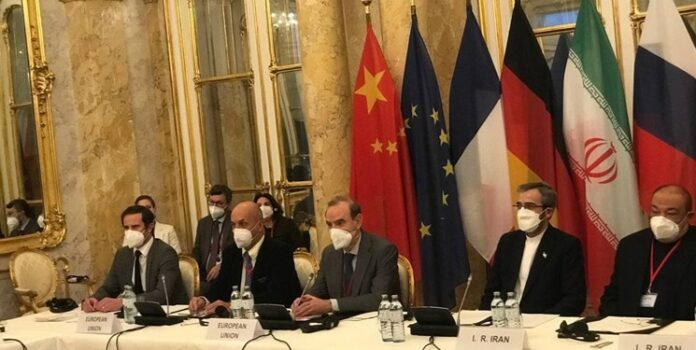
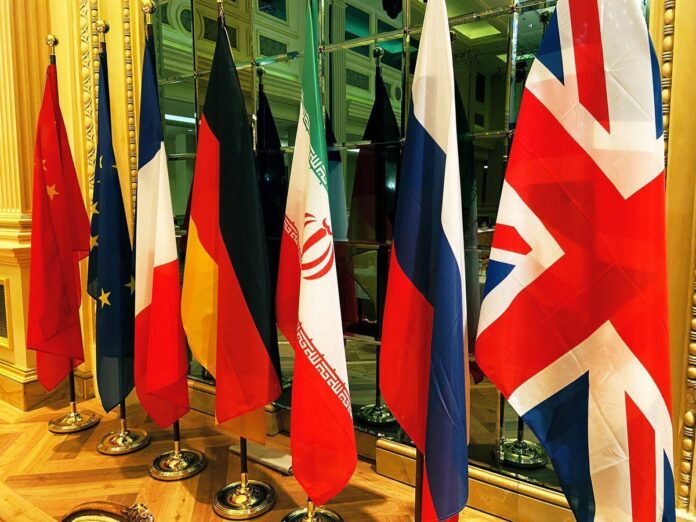
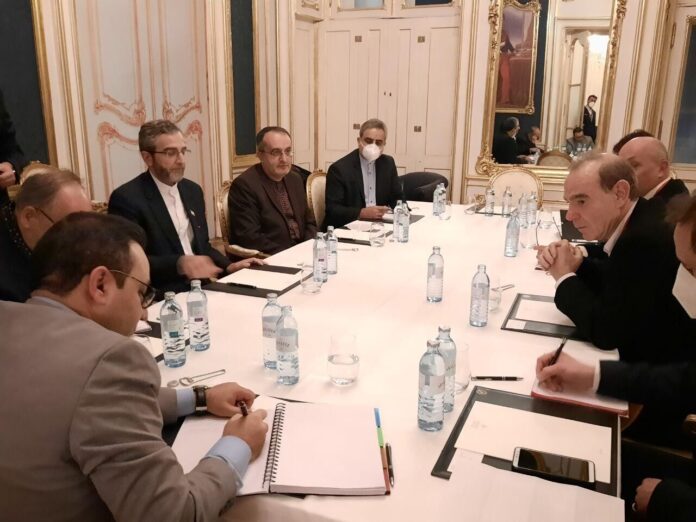
The meeting of the Joint Commission of the Joint Comprehensive Plan of Action is taking place in the Palais Coburg hotel.

Deputy foreign ministers and political directors of the foreign ministries of the Islamic Republic and the P4+1 group namely Russia, China, Britain, France and Germany are taking part in the meeting on Monday.

The session is chaired by European External Action Service Deputy Secretary General Enrique Mora, and Deputy Foreign Minister Ali Bagheri Kani is heading the Iranian delegation as its chief negotiator.

Iran says the talks are focused on finding ways to remove all sanctions imposed on Iran since the United States’ unilateral withdrawal from the JCPOA in May 2018.

“We have entered the negotiations with a strong will and strong preparation to lift illegal and oppressive sanctions,” Iran’s chief negotiator said ahead of the latest Vienna talks.

Tehran also insists that the United States must offer guarantees that it will not violate its commitments or withdraw from the deal again.

American negotiators are also present in the city but are not taking part in the meeting of the JCPOA Joint Commission because Iran says it will not talk to the party that unilaterally pulled out from the nuclear agreement.

Talks between Iran and 4+1 begin in Vienna

EU Foreign Policy chief Enrique Mora is presiding the meeting of the nuclear deal, JCPOA, joint commission.
He said in a tweet that he has returned to Vienna for the 7th round of talks aimed at reviving the JCPOA.
Mora also said the preliminary work is ongoing. He added that he met with Iranian Deputy Foreign Minister Ali Bagheri and the Russian and Chinese delegations.
The new round of negotiations at the JCPOA’s joint commission has begun at Coburg Hotel in Vienna.
Iran’s lead negotiator Ali Bagheri Kani has said the talks will only succeed if all JCPOA-related sanctions are lifted including bans imposed under the so-called maximum pressure campaign of the US.
He has warned if the sanctions are not removed, the talks will fail.

Cash-strapped Lebanon wakes up to countrywide roadblocks

Demonstrators block a road with burning tires during a protest on the back of the continuing deterioration of living conditions, in Beirut, Lebanon November 29, 2021. REUTERS/Mohamed Azakir

Protesters across Beirut, Tripoli, Saida, and other cities closed highways and intersections Monday morning with their vehicles, and lit tyres and garbage dumpsters on fire.

They called on the government to control the spiraling Lebanese pound, which for the past week has hovered at about 25,000 to the US dollar.

The pound has lost about 90 percent of its value in just over two years.

Mohammad, a taxi driver with his rental car parked at an intersection on Beirut’s bustling Hamra Street, said it has become less costly to be unemployed than to work.

“I can’t afford to pay my weekly rental fees for my car, not including gasoline prices and my monthly expenses for the family,” he told Al Jazeera, adding, “And there are barely any customers.”

The taxi driver said he has lost hope in political change, be it from the country’s ruling parties, or the slew of opposition political groups.

“I don’t trust anyone anymore. They’re all liars and thieves. And I don’t want charity. I want to just have a decent living,” said Mohammad, who gave only his first name.

The Lebanese Army was able to clear some closed intersections and thoroughfares. However, in Sports City just south of Beirut, protesters doused the highway with petrol so cars could not drive through, even if the army cleared the roadblock.

Anonymous calls to protest from across the country circulated on WhatsApp and other messaging apps over the weekend. Some political opposition groups said the demonstrations were organised by some of Lebanon’s sectarian parties.

Over the past month, Lebanese authorities have hiked petrol prices weekly as they continue to lift subsidies. They also partially lifted medicine subsidies, which increased prices on several medications for chronic illnesses and mental health.

Adham Hassanieh, from the opposition group Li Haqqi, told Al Jazeera he was not unsure who organised the protests. He noted he believes the Lebanese economy will continue to spiral without wholesale changes.

“It’s one failed government after the other,” Hassanieh said, adding, “The solution isn’t just technical … it’s about political will and who will bear the country’s financial losses.”

Prime Minister Najib Mikati’s government remains gridlocked, and has not convened in almost two months, unable to resolve a diplomatic dispute with Saudi Arabia and several Gulf countries, and settle differences over Beirut blast investigator Judge Tarek Bitar.

The government for months promised to introduce a one-year ration card programme to cushion the financial blow for about 500,000 families. However, they have yet to secure funding for the plan, which costs more than $500m.

Lebanon is also struggling to implement financial and accountability reforms, including a forensic audit of the Central Bank and state institutions. The international community has urged the country to restructure its wasteful and ineffective economy and reach an agreement with the International Monetary Fund in order to deliver financial assistance.

In just two years, more than three-quarters of Lebanon’s population has slipped into poverty, according to the United Nations.