Thursday, January 1, 2026
Home Blog Page 2264

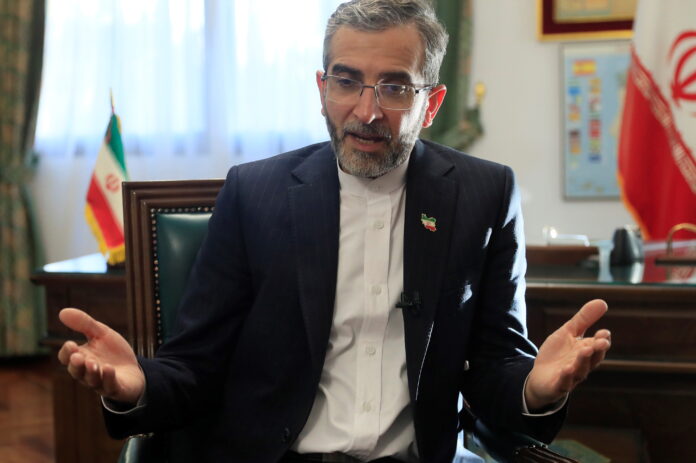
Top Iran negotiator: West does not seek to implement a deal

Ali Bagheri Kani

This week, Iran and five global powers gather in Vienna for so-called “nuclear negotiations”. This very term — which is used to refer to the Joint Comprehensive Plan of Action (JCPOA) agreement — is rife with error.

Western countries, in particular the US, work tirelessly to portray “negotiations” as merely a process to restrict Iran’s legitimate and peaceful nuclear programme, which is enshrined in international treaties and watched by oversight organisations. From Iran’s perspective, however, “negotiations” must pursue real objectives, observed by all parties.

In this vein, we have two goals: the first is to gain a full, guaranteed and verifiable removal of the sanctions that have been imposed on the Iranian people. Without this, the process will continue indefinitely. “Negotiations” without an airtight solution benefit no one.

The second is to facilitate the legal rights of the Iranian nation to benefit from peaceful nuclear knowledge, especially the all-important enrichment technology for industrial purposes, according to the terms of the international Non-Proliferation Treaty (NPT).

Previous attempts to close the “trust gap” between parties of the nuclear talks have failed mainly because the west regards any agreement solely as an established platform from which to launch more pressure against Iran. In English, you call it “moving the goalposts”.

This is the crux of the dispute that has forced us, six years after the initial agreement, to the table yet again. We will be starting these new discussions under circumstances influenced by the unfortunate fate of the JCPOA, when US president Donald Trump unilaterally decided to abandon this deal. This was a terrible betrayal of trust for Iran and Iranians.

Experience tells us that the west does not seek to implement a deal. Rather, it seeks to score public perception points by announcing one while stealthily “dis-implementing” the agreement in every possible way. From our experience, this is followed by actions to “hijack” the JCPOA platform to force Iran to make more concessions in areas unrelated to the nuclear issue. As a result, the Iranian people trust neither the process, nor its outcome.

It would be naive to attribute these problems solely to the Trump administration and to his “maximum pressure campaign”. Constant US efforts to deny Iran any economic benefits for reducing its nuclear activities are why many once-passionate Iranian defenders of the agreement have now changed their minds: they no longer trust either its tangible benefits or its intent. Trump merely removed the velvet gloves from the cast-iron hand of the previous US administration.

From our viewpoint, past blunders should not be repeated. We have all, respectively, learned over the past six years what and who can be trusted. To ensure any forthcoming agreement is ironclad, the west needs to pay a price for having failed to uphold its part of the bargain. As in any business, a deal is a deal, and breaking it has consequences.

Iran remains committed to the process and we will adhere to our commitments. From our perspective, the principle of “mutual compliance” cannot form a proper base for negotiations since it was the US government which unilaterally left the deal. The US should therefore demonstrate that it is serious this time, and that it possesses the necessary competence to fulfil its commitments.

In Iran’s recent presidential elections, voters decided to invest their confidence in a paradigm that espouses a more realistic engagement with the west. Actions now matter more than mere words. We should be offered a clear and transparent mechanism to ensure that sanctions will be removed. For what other conceivable reason would we compromise regarding Iran’s technological advances and nationally-precious domestic nuclear programme?

Iran did not succumb to the use of either military threats, economic sanctions or “maximum pressure” under Trump and it will not do so under Joe Biden. In order to secure the rights and interests of our nation, we are ready for a fair and careful discussion, based on the principles of “guarantee” and “verification”. This must prioritise compensation for the violation of the deal, which includes the removal of all post-JCPOA sanctions.

In return, Iran is ready to voluntarily fulfil its nuclear commitments in accordance with the agreement. We remain prepared to react proportionately to any pressure and reciprocate any goodwill gesture.

We have made our choice. We will now find out whether or not the west has the will to enter real negotiations.
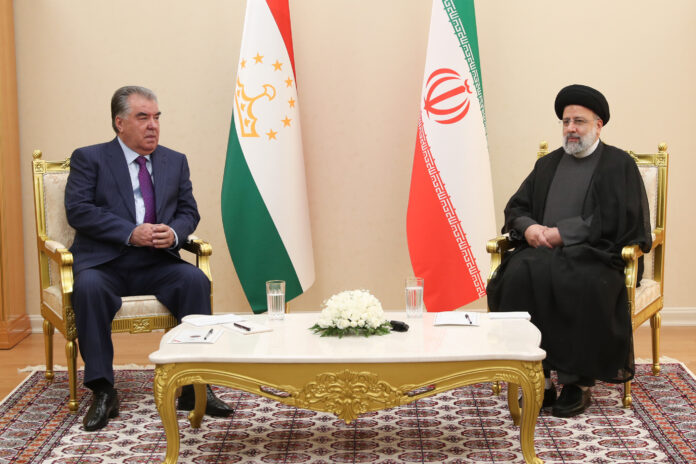
Raisi: Iran proudly hosts 4 million Afghans

Raisi and Emomali Rahmon met on the sidelines of the ECO summit in Turkmenistan’s capital Ashgabat.

Raisi expressed pleasure for meeting the president of Tajikistan again after the Shanghai Summit, saying “My first foreign trip as President of Iran was to Tajikistan, and this trip changed relations between the two countries.”

“We have no doubt that relations will expand, because the current level of trade is not convincing, and by restoring capacities between the two countries, the level of ties can be improved many times over,” he added.

While inviting Emomali Rahmon to Tehran, the Iranian president said Iran thinks that due to deep cultural and linguistic relations and a long history of friendship, the two sides should cooperate more than others.

Regarding Afghanistan, Raisi said Tehran’s position on the country is clear and it welcomes the formation of a truly inclusive government in Afghanistan that represents all Afghan people, ethnic groups and political groups.

The president emphasized that the US occupied Afghanistan for two decades and left only a trail of deaths and looting.

He said Iran proudly hosts about 4 million Afghans and it hopes that only Afghans can decide their own fate.

The Tajik president also said all ethnic groups should be present in the Afghan government, stressing that insecurity in the country is to the detriment of the region.

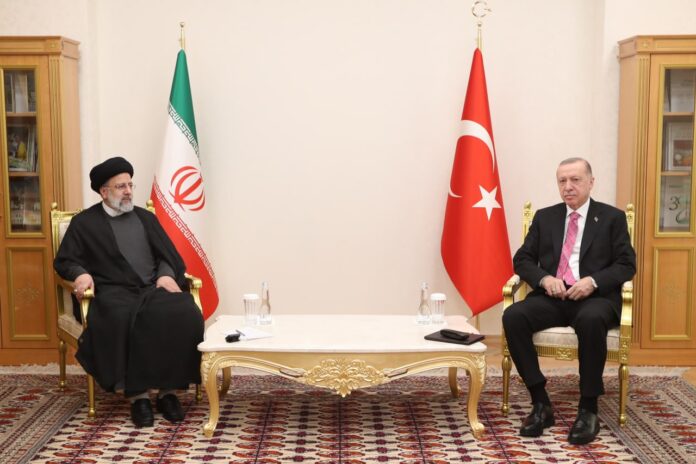
Turkish president: US training and arming terror groups

Recep Tayyip Erdogan, in a meeting with the Iranian President Seyyed Ebrahim Raisi, added the White House

is providing those groups with terrorist equipment to create insecurity.

Erdogan referred to the need for security arrangements based on the active presence of regional countries.

He said Iran, Turkey and Russia can maintain security and stability with the cooperation of other regional countries.

The Turkish president added his country views expansion of bilateral and regional cooperation with Iran as a must, adding Tehran and Ankara can give a momentum to the level of ties, especially in the economic sectors.

President Raisi also called for the establishment of peace and security in war-ravaged Syria.

President Raisi said, “We must use all our capacities to establish peace and security in Syria”.

He added regional problems must be resolved by regional countries and foreign interference will not only solve anything but it will also further complicate the situation.

Raisi also spoke of the situation in Afghanistan, saying the Islamic Republic of Iran supports the formation of an inclusive government in Afghanistan.

He expressed concern over Daesh’s activity in the country, saying regional countries must not let terror groups like Daesh and the PKK threaten security of the region.

On bilateral ties with Turkey, the Iranian president said Tehran and Ankara can boost the current trade and political ties to a strategic level.

He added that Iran and Turkey must pave the way for expanding economic relations and, to that end, they can review preferential tariffs.

The president also said Iran, Turkey and the Republic of Azerbaijan have many cultural and religious commonalities and they should not allow their ties to be disrupted and should disappoint their common enemies.

The meeting between Riasi and Erdogan was held on the sidelines of the ECO summit in Ashgabat.

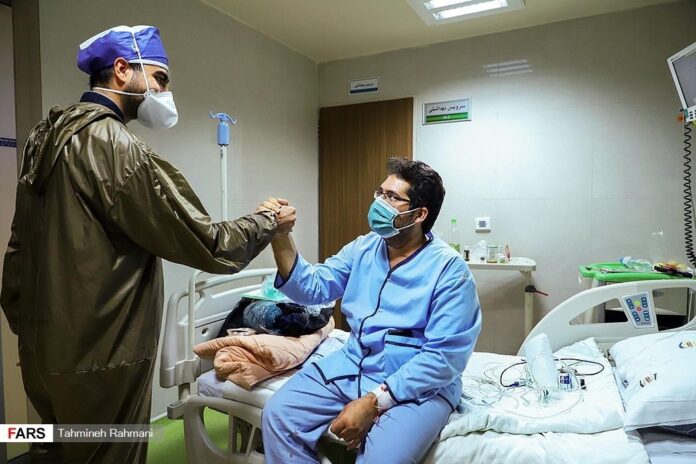
Iran’s Covid deaths hit new low

Over 270,000 Iranians Recover from COVID-19: Ministry

The Iranian Healthy Ministry figures show the number of blue cities where the risk from Covid is lowest has increased to 219. There are no red zones. The number of orange and yellow cities is respectively 22 and 207. Meanwhile, single-day Covid fatalities since Saturday fell to 80, the lowest death toll in nearly 8 months. Over the past 24 hours, 3,781 new infections were logged including 649 hospitalizations. 

The total caseload since the start of the pandemic nearly two years ago is 6,108,882. Of that figure, 5,863,248 people recovered from Covid. 

The downward trend gives credence to statements by authorities that their nationwide vaccination campaign has been effective. 

The number of Covid vaccine doses administered to Iranians is 104,886,372. So far, 57,408,046 people have received the first dose of vaccine while the number of those who have been given the second shot is 46,510,395. The number of the third dose, known as the booster shot, is 967,931.  

Despite the positive moves by the Healthy Ministry and the retreat of Covid, officials warn people against relaxing health protocols given the emergence of the new strain of the virus known as Omicron variant and the possibility of a new wave of the outbreak.

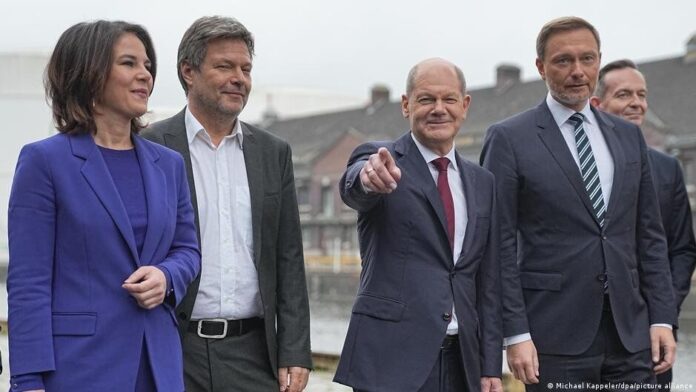
Germany’s new govt.: We will stick to JCPOA

 The parties signed a governing coalition deal to this effect and declared the new government’s policies regarding domestic and international issues in the document. Germany’s Social Democrats, Greens and Free Democrats demanded all signatories to the JCPOA abide by their commitments under the deal. 

Germany’s governing coalition deal addresses security and political challenges faced by Germany and other international issues including the Iran nuclear deal and the situation in the Middle East. 

The publication of the 178-page document paves the way for the takeover of power by Olaf Scholz as Germany’s new chancellor. The government coalition deal refers to the Iran issue several times. 

It also urges Iran to keep cooperating with the International Atomic energy Agency and remain committed to the JCPOA. The document however fails to cite inaction on the part of the European troika to stick to its part of the nuclear agreement.  

It also highlights what it calls Israel’s security without referring to the Zionist regime’s nuclear arsenal which is full of atomic warheads. 

Germany’s governing coalition deal also speaks of Israel’s settlement expansions in occupied Palestinian territories and reiterates opposition to the settlements.

Raisi: Daesh handiwork of Washington

Seyyed Ebrahim Raisi reiterated Daesh terrorists have been a handiwork of the US. 

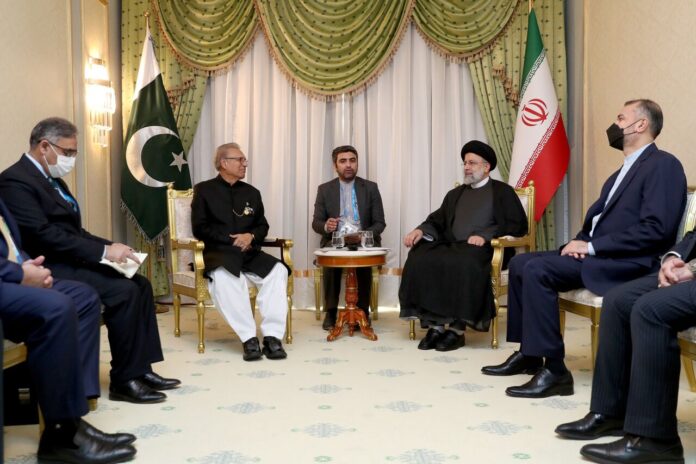
In a meeting with his Pakistani counterpart Arif Alvi, the Iranian president also called for support for oppressed Afghan people.

He stressed the roughly 4 million Afghan migrants currently residing in Iran is the result of the US invasion of Afghanistan.

“Twenty years of foreign presence in Afghanistan not only did not help solve problems facing the country, but had no outcome other than tyranny, killing, looting and insecurity,” Raisi said.

“The Islamic Republic of Iran backs the formation of a broad-based government in Afghanistan represented by all Afghan people, ethnic groups and political factions, and we are ready to cooperation with Pakistan in that regard,” said the Iranian president.

He made the remarks on the sidelines of the Economic Cooperation Organization summit in the Turkmen capital, Ashgabat.

Iran’s president also called for the enhancement of all-out cooperation with Pakistan.

“The two countries enjoy not only a neighborhood relationship, but also deep-rooted emotional, historical and cultural bonds,” he said.

“Utilization of these potentialities in a bid to further boost mutual relations will serve the interests of the two nations and help promote regional progress and prosperity,” 

He said the level of Iran-Pakistan relations should be upgraded, saying areas of cooperation include the development of border markets, transportation, energy and tourism, among other things.

Iran team meets Chinese, Russian, EU diplomats

“The Iranian team arrived on Saturday in Vienna and started meetings which continued on Sunday at an expert level with the heads of the Russian and Chinese negotiating teams, as well as the EU Coordinator Enrique Mora,” Iranian diplomat Mohammadreza Ghaebi told ISNA.

The meetings at the International Atomic Energy Agency’s Vienna headquarters came ahead of a resumption of talks to salvage the landmark 2015 nuclear deal after former US President, Donald Trump withdrew from the agreement, dismaying the other world powers involved – Britain, China, France, Germany and Russia. With the withdrawal, Washington also re-imposed sanctions on Tehran that were lifted under the accord’s terms. 

Tehran has stated Washington should stop demands and remove the illegal sanctions against Iran.

Bagheri, the top negotiator, has stressed Washington must remove all sanctions against Tehran and provide guarantees that future US administrations will not leave the 2015 nuclear deal again.

The indirect negotiations in Vienna will resume Monday after a five-month suspension imposed by Iran.

Raisi: US sanctions not to hinder Iran cooperation with others

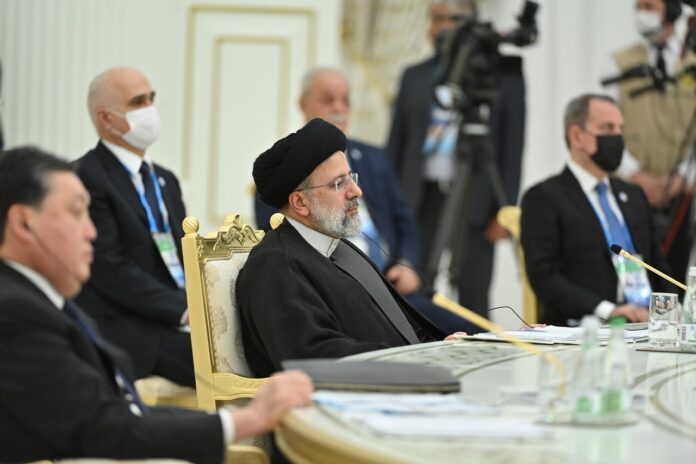
“The United States’ cruel sanctions against Iran will not have the slightest impact on the Islamic Republic of Iran’s policy of maximum interaction with neighboring and regional countries,” said Seyyed Ebrahim Raisi at a summit of the Economic Cooperation Organization (ECO) in Turkmenistan’s capital, Ashghabat on Sunday.

Elsewhere in his remarks, Raisi said Iran unconditionally supports the ECO and its activities.

“The Islamic Republic of Iran attaches special importance to cooperation and economic partnership with Asian countries, especially its neighbors in South Asia, West Asia, Central Asia and the Caucasus,” he noted.

“Indubitably, we pay due regard to the reinforcement of the role and status of regional organizations as facilitators of bilateral and multilateral cooperation a clear example of which is the ECO,” President Raisi explained.

“Good achievements and progress have been made within the ECO over the past years, but there still is a meaningful gap between the accomplishments achieved and the real potential of the organization. For instance, intra-regional trade is less than 10% despite the great trade potential which exists,” he said.

Raisi said Iran seeks to elevate the status of the ECO in regional and international relations, adding effective tools exist for the organization to leap forward.

He called on member states to work together in a range of fields, from the creation of a regional electricity market, to water transfer projects as well as energy ventures. 

He said Iran is ready to help connect the fiber optic networks of member states as well as promote artificial intelligence projects and virtual education programs. 

President Raisi also proposed that the organization create an internal financial mechanism to boost its efficacy.

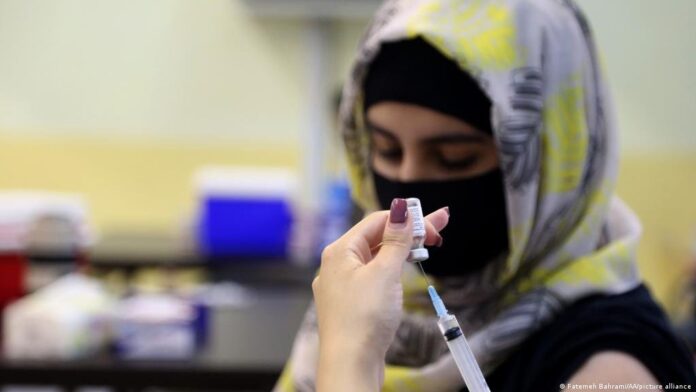
‘Inoculation of 4m Afghan migrants against Covid key Iran achievement ‘

“Providing coronavirus vaccines for migrants who live in Iran is a great job completed by the government of this country,” said Jaffar Hussain, who heads the WHO mission in Iran.

“Through expansion of general vaccination in Iran, daily fatalities due to Covid have fallen down below 100 people and most provinces are now out of the red alert and into the orange and blue zones.”

Hussain added that some one million people in Iran have received the booster dose of the Covid vaccine. He said the WHO is helping Pasteur Institute of Iran and its Barekat group to complete their evidence on their vaccines and receive the organization’s quality certificate, so that they can export their jabs to the regional countries and Africa.

He added that Iran now has over 160 million doses of Covid vaccines available for administration, stressing that the public vaccination campaign that saw up to 1.5 million doses administered in 24-hour periods show I0ran’s capability in the field.

Iran-Turkmenistan natural gas deal to be revived: President Raisi

Under a 25-year contract signed between Iran and Turkmenistan back in 1997, the latter undertook to export between 8 to 10 billion cubic meters of natural gas to Iran annually. Iran, in turn, was obliged to make payments for the imported gas to the Turkmen Gas Company. 

The agreement remained in effect even at a time of toughest sanctions, but its implementation halted in 2016 due to financial disputes.

Seyyed Ebrabim Raisi also touched upon a meeting with his Turkmen counterpart Gurbanguly Berdimuhamedow where, as he said, the two sides discussed the promotion of Tehran-Asghabat ties on different fronts, namely in the oil and gas sector.

“Turkmenistan has received assurances that the Iranian government is set to remove the existing problems and obstacles,” Raisi said.

He further stressed that impediments to the activities of businessmen and exporters should be removed, too. 

Raisi said his administration’s policy is to forge closer ties with neighboring countries.

“Suitable economic and trade infrastructure exists for the promotion and upgrading of our country’s bilateral and regional cooperation, and we should step in that direction by facilitating the activities of businessmen and exporters,” he explained.

President Raisi is in Turkmenistan to attend the Economic Cooperation Organization summit in Asghabat.