Thursday, January 1, 2026
Home Blog Page 2265

Iranian athletes win 3 medals at World Taekwondo Women’s Open

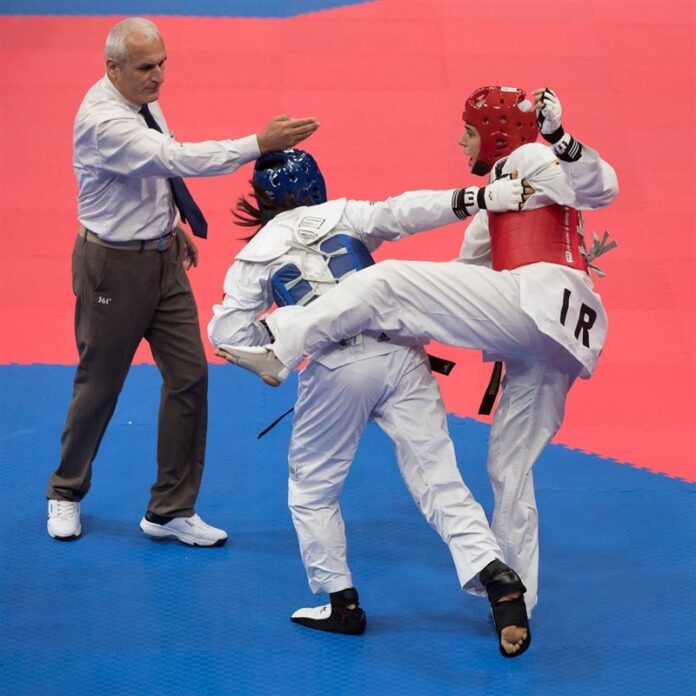
The Iranian female taekwondo practitioners have finished the World Taekwondo Women’s Open Championships after winning three medals on Saturday.

On the last day of the World Taekwondo Women’s Open Championships on Saturday, Zahra Sheidaei of Iran in the final of under-57kg division defeated Russia’s Margarita Blizniakova to bag the gold medal for her country.

Accordingly, the Iranian women ended the World Taekwondo Women’s Open Championships with a gold medal and two bronze medals by Melika Mirhosseini and Kowsar Asaseh. The other Iranian fighters Saeedeh Nasri, Ghazal Soltani, Nahid Kiani, Narges Mirnorollahi and Zeinab Esmaeili were eliminated from the competition earlier.

The championships took place for the first time, in Riyadh, Saudi Arabia.

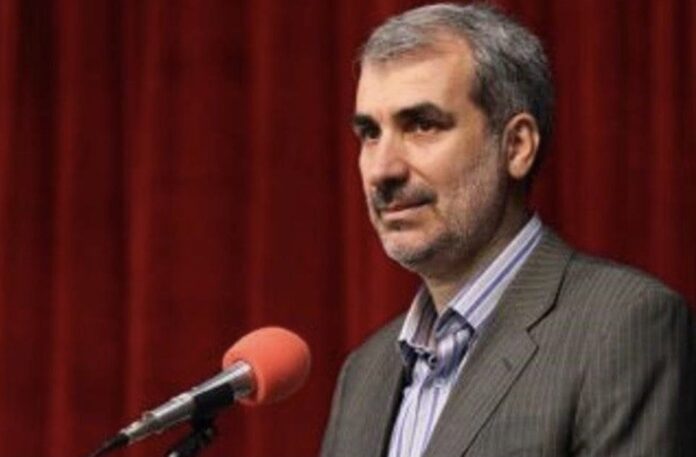
Iranian MPs confirm Yousef Nouri as new Education Minister

Nouri made it to the top post with 194 votes in favor, 57 against and 17 abstentions.

He had been nominated by President Ebrahim Raisi for the post of Education Minister.

Speaking on Parliament floor during the confirmation session on Sunday, Noursi criticized the performance of the Education Ministry.

He said the Supreme Council of the Education Ministry did not do enough to counter Education Document 2030, and that even some of the councilors supported that document.

“Those behind Education Document 2030 will have no place in the education system,” he noted.

“During the second phase of the Revolution, we will take a leap toward new Islamic civilization, which requires the education of a generation with a model of new Islamic civilization,” he explained.

Two other nominees, namely Hossein Baghgoli and Masoud Fayazi, had previously failed to get the Parliament’s approval.

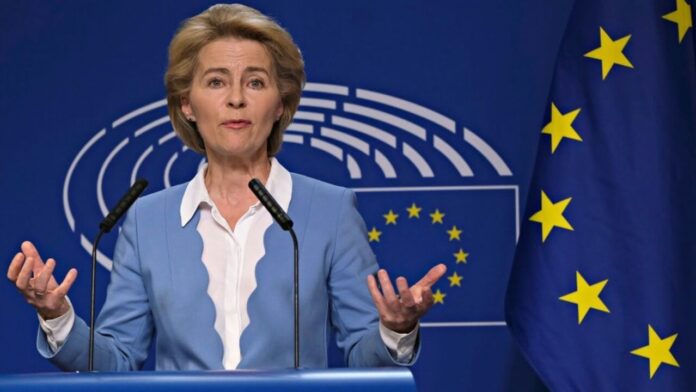
EU says does not recognize Taliban regime

“The European Union does not recognize the new regime, imposed through violence, but we need to prevent the imminent economic and social collapse that the country faces,” she stated.

“We need to stand by the people of Afghanistan”, she added, reminding of the EUR 1 billion worth support package the EU announced in October 2021.

Meantime, the Taliban prime minister said in his first public address the new rulers of Afghanistan “wants good relations with all countries and economic relations with them”, as the war-ravaged nation grapples with an economic and humanitarian crisis, according to Bloomberg.

Taliban Prime Minister Mullah Mohammad Hassan Akhund during his Saturday address called for the release of billions of dollars in Afghan assets now sitting in US banks in order to alleviate Afghanistan’s economic and financial issues, according to the news outlet.

The group has claimed that the US government has prevented it from accessing some of the country’s assets. Bloomberg reported that concerns over human rights abuses, the lack of inclusivity in the Taliban’s cabinet and the regime’s terrorist ties have led the US to withhold that money.

Akhund also assigned blame to former President Ashraf Ghani’s government for the present-day turmoil that the country has been mired in, saying those issues started prior to the Taliban’s rule.

“Nation, be vigilant. Those left over from the previous government in hiding are … causing anxiety, misleading the people to distrust their government,” Akhund added.

Akhund stated that his cabinet has started taking steps to address the economic crisis, including issuing government workers payments again after many of them had not received paychecks for weeks, The Associated Press reported.

The remarks come as international organizations sound the alarm on a worsening crisis within Afghanistan as the country has dealt with a wave of Daesh attacks last month, food insecurity and poverty.

Earlier this week, the United Nations’s Development Programme cautioned in a report that Afghanistan’s financial system could collapse in months due to a buildup of unpaid loans straining the country’s banks.

Meanwhile, a report from the UN’s World Food Program and Food and Agriculture Organization in October noted that roughly half of Afghanistan’s population were facing “high levels of acute food insecurity.” The UN also warned in mid-September that one million Afghan children were on the brink of starvation before the winter.

Akhund in his Saturday address called the lack of food “a test from God, after people rebelled against him”, and asked people to pray it would end soon.

China: West employing nuclear double-standard

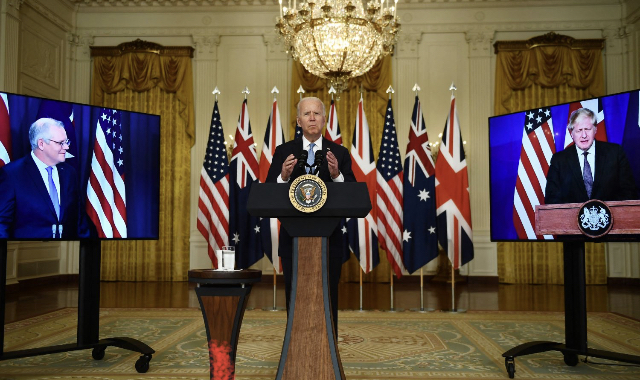
Chinese envoy to the International Atomic Energy Agency (IAEA), Wang Qun, has suggested that the upcoming handover of nuclear submarine technologies to Australia under the AUKUS security pact is a pressing issue similarly worthy of the attention of the IAEA like the restoration of the Iran nuclear deal, Bloomberg has reported, citing an obtained note.

The latter was reportedly circulated by China among diplomats gathered in Vienna for a new round of Iran nuclear deal negotiations.

“Why do the US and UK say Iran can’t manufacture enriched uranium above 3.7%, while on the other hand openly and directly transferring to Australia tonnes of 90% highly-enriched nuclear-weapons material? This is a classic case and point of a double standard”, he stated.

The official accused western nations of following double standards as they push for a renegotiation of the nuclear accord with Iran that would ban the Islamic Republic from producing military-grade enriched uranium akin to that the US and the UK will be handing over to Australia as part of their security pact.

Beijing has repeatedly insisted that this provision of the AUKUS security agreement, which is seen as directed against China by many political analysts, violates the principles of nuclear non-proliferation.

Wang also stressed that AUKUS “constitutes serious risks of nuclear proliferation” and condemned the pact as a “small Anglo-Saxon clique” in his note, Bloomberg claims.

The Chinese diplomat suggested that by handing over the submarine technologies to Australia, the US and UK will prompt more countries to go nuclear. He suggested that the pact should be scrutinised by the IAEA and the international community. The Russian Ambassador to the Vienna talks, Mikhail Ulyanov, echoed Wang’s statements.

Australia’s envoy to the IAEA, Richard Sadleir, rejected China’s suggestion insisting that the transfer of nuclear technologies under the AUKUS deal does not fall under the purview of the international organisation, which monitors the use of nuclear energy by countries making sure they don’t utilise the technology for military purposes.

Sadleir insisted that it was not the IAEA’s place to discuss the “full scope” of AUKUS. He also promised that his country will continue to provide the agency with all the necessary information.

“Many of these factors are beyond the scope of the board’s purview and would be inappropriate for the board’s agenda at any time. We will continue to provide updates at the IAEA and elsewhere as appropriate,” Sadleir continued.

China has been opposing AUKUS since its announcement in August of this year and the next round in Beijing’s fight against it comes right ahead of a new attempt by the signatories of the Joint Comprehensive Plan of Action (JCPOA, also known as the Iran nuclear deal) to revive the accord with Tehran. The last round of talks in Vienna in May did not result in a breakthrough in negotiations between Iran and the US, who had jeopardized the 2015 accord by withdrawing from it in 2018 and slapping sanctions on the Islamic Republic. Since 2019, Tehran has been systematically backtracking on its JCPOA commitments to convince the US to change its course and lift the aforementioned sanctions. Washington under the new administration of Joe Biden suggested that the lifting of economic measures is possible but not until after Iran returns to compliance with the deal that was undermined by the US in 2018. Tehran has so far refused to do that, but a new round of talks in Vienna will be carried out with Iran represented by a new delegation and a new presidential administration following elections in June 2021.

Iran president calls for closer ties with Turkmenistan

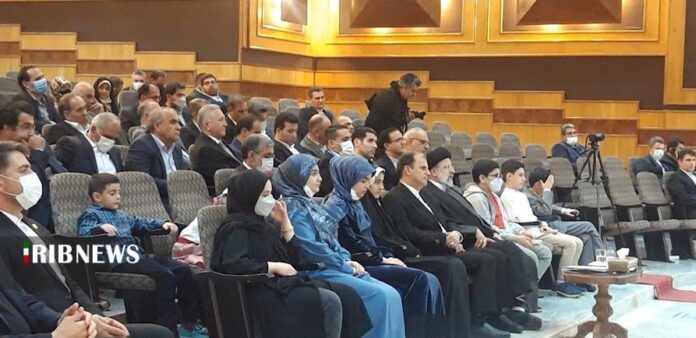
“Our bonds with Turkmenistan are ideological, civilizational and come from the heart,” said Seyyed Ebrahim Raisi in a meeting with Iranian expatriates at the Iranian embassy in Ashgabat.

He urged Iranian embassies to facilitate travel by Iranian expats to their homeland.

The president said the level of ties between the two countries is not sufficient.

“Our political, economic and cultural relations with Turkmenistan should expand,” he stressed.

“The people of Turkmenistan are very much interested in Iranian goods and services, but this potential is not utilized as much as it should,” he explained.

Raisi also touched upon his meeting with the Turkmen president where the two sides emphasized the necessity of forging closer ties.

President Raisi also met with Iranian businessmen residing in Turkmenistan as well as businessmen taking part in a meeting of the Economic Cooperation Organization (ECO) hosted by Ashghabat.

He said the problems and concerns of Iranian businessmen can be settled, and promised to follow up on the issue.

President Raisi has travelled to Ashghabat at the official invitation of his Turkmen counterpart to attend the ECO summit.

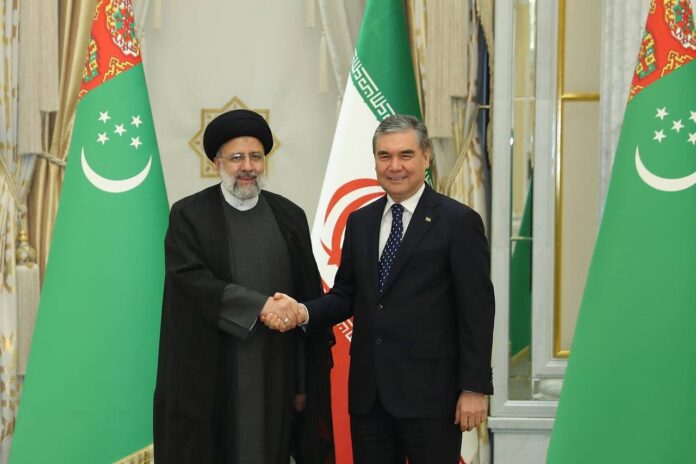
Iranian, Turkmen presidents hold meeting in Ashgabat

The meeting took place in Ashgabat where the Iranian president has traveled to attend the 15th summit of the Economic Cooperation Organization (ECO).

The event will open on Sunday, December 27th, with Turkmenistan hosting it as the chair the ECO.

President Raisi arrived in Turkmenistan Republic’s capital city Ashgabat Saturday night and was officially received by his counterpart and a number of Turkmenistan government’s high ranking officials at the airport.

The 15th ECO Summit, hosted by Turkmenistan, the ECO rotating head, will start tomorrow, on Sunday Nov 28.

President Raisi is scheduled to address at the ECO Summit Meeting, in which he will elaborate on Iran’s stands and present the Islamic Republic of Iran’s proposals on strengthening ECO’s regional and international relations, and further expansion of economic transactions among member states.

The president will in this trip also meet and confer with his counterparts from participating countries, and during bilateral talks try to strengthen ties and further expand them.

Meeting with the Iranians residing in Turkmenistan, the Iranian merchants, and the participants at ECO summit are among the president’s other programs.

Iran, Turkey, Pakistan, Afghanistan, Turkmenistan, Kyrgyzstan, Uzbekistan, Kazakhstan, Tajikistan, and Azerbaijan are ten members of the ECO. The president will in this trip also meet and confer with his participating counterparts, and in bilateral talks try to strengthen ties and further expand them

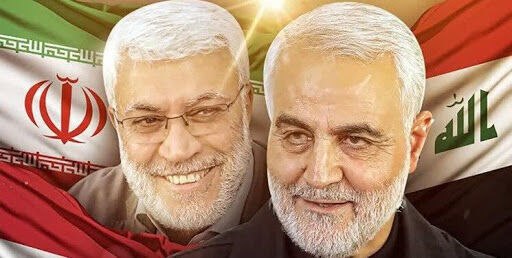
Investigating body calls for prosecution of Soleimani assassins

The committee convened in Baghdad and released the 5-point communiqué after the first round of their probe into the assassination. 

The committee says all possible judicial and legal measures should be taken to prosecute and punish those involved in the assassination of General Soleimani and Abu Mahdi Al-Muhandis and their companions, especially American agents and elements. 

According to the communiqué, bilateral cooperation to complete the ongoing judicial investigations by the joint committee must continue and be boosted. 

It added that all available capacities must be used to provide and complete the required information based on the “Agreement on Legal and Judicial Cooperation in Criminal Matters” between Iraq and Iran. 

The joint investigation committee also says it must keep working in Iran and Iraq to ensure the completion of the information required in the judicial investigation. 

The next session of the Joint Committee will be held in Tehran next month. 

General Qassemi Soleimani and Abu Mahdi al-Muhandis were killed in a drone strike directly ordered by former US president Donald Trump in January 2020. Following the terrorist attack, Iran launched a salvo of missiles at a US base in northern Iraq in retaliation. Iran said its retaliatory acts would not be limited to the missile strike and it will pursue the matter through legal international channels.

Iranian intelligence agents deal blow to home appliance smuggling cell

During its two years of operation, the network has smuggled about 30,000 home appliances, often with South Korean trademarks.

During the intelligence operation, key members of the network were arrested and about 4,000 appliances, including refrigerators, washing machines, dishwashers, air conditioners and televisions, were seized.

The report also said, by abusing the legal practice of carrying goods by human porters and launches, that has been made legal in order to protect the livelihoods of border residents, the network smuggled these home appliances via the western borders and southern ports of Iran.

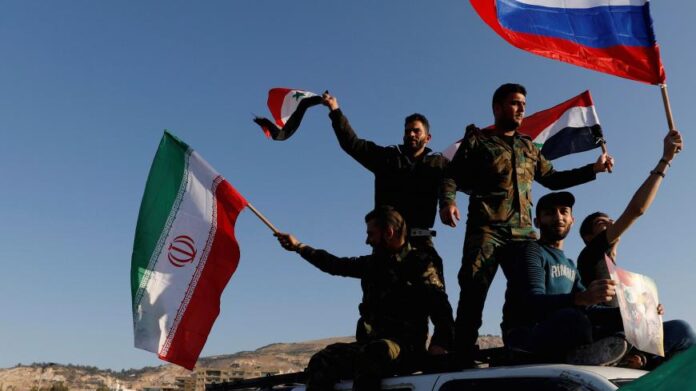
Iran ready to help Syria counter western sanctions

Iranian Ambassador in Damascus Mehdi Sobhani stated that Iran and Syria have bravely stood against US sanctions, highlighting the strategic ties between the two countries in an interview.

Speaking with the Lebanese news website Alahed on Friday, he noted that the Islamic Revolution in 1979 made a transition in Iran’s identity, creating new values, goals, and norms that outline Iran’s foreign policy and its role in the international arena that is manifested in supporting freedom-seeking movements enshrined in the Constitution of the Islamic Republic of Iran.

This led to Iran and Syria’s standing against the wave of normalization with the Israeli regime in the 1980s, Sobhani continued, adding that this provided a ground for the common interests of Iran and Syria and a common foe.

The diplomat mentioned the levels of interaction between countries in the international arena, including cooperation, partnership and alliance, adding that Iran and Syria have put the initial levels behind and are allied states now.

Sobhani also stated that the Islamic Republic of Iran has emerged from the so-called maximum pressure imposed by the US and was ready to provide Syria with all required expertise to stand against the sanctions.

He also noted that Iran’s tankers reaching Syrian and delivering oil from there to Lebanon show that no one could block the Axis of Resistance if they decide to do something.

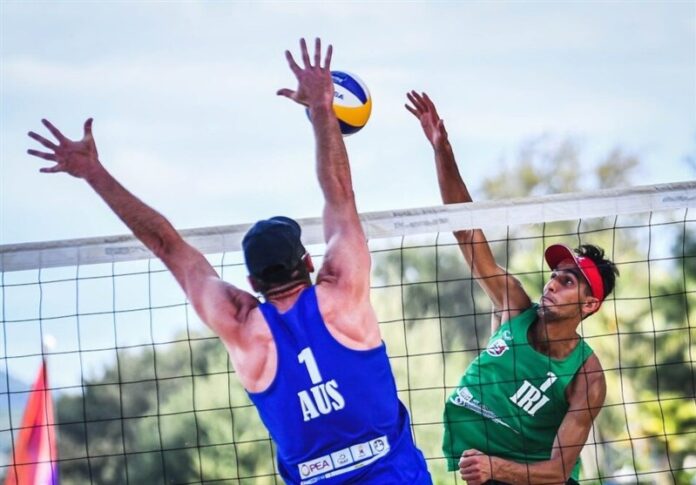
Iran runners-up at Asian beach volleyball championship

Iran A team of Bahman and Abolhassan Khakizadeh lost to Australia’s Christopher McHugh and Paul Burnett 2-0 (21-16, 21-13) in the final.

Qatar also defeated Kazakhstan 2-0 (21-15, 21-15) to win the bronze.

This championship was scheduled to be held in July 2020 in China, but was postponed twice, until finally approved to be held in Thailand according to the applicable measures for COVID-19 prevention.