Friday, December 26, 2025
Home Blog Page 2248

Iran, 4+1 talks continues in Vienna

The senior negotiators form what has been described as the sanctions removal working group are seeking to set a prospect for the continuation of the talks with the lifting of the bans, topping their agenda.

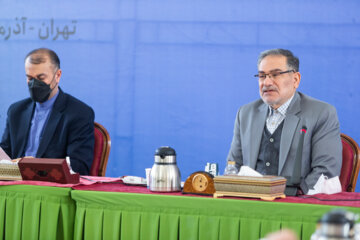
Meanwhile, Iran’s chief negotiator Ali Bagheri Kani met with the EU’s Deputy Foreign Policy Chief Enrique Mora as Iran and the 4+1 group – Russia, China, Britain, France and Germany- are trying to reach an agreement.

Today’s talks are the continuation of Tuesday’s meeting where the Iranian negotiators outlined the Islamic Republic of Iran’s views and reaffirmed their seriousness to interact with the other parties to get the sanctions removed.

Most diplomats attending the negotiations have described them as positive.

Meanwhile, most experts and members of the delegations of both sides believe an agreement is possible though the road ahead is bumpy.

Iran has made its full compliance with the nuclear deal, JCPOA, conditional on other parties sticking by their part of the agreement and the US removing its sanctions on Tehran before Washington’s return to the deal.

No Covid deaths in 8 Iranian provinces

Iran's COVID-19 Cases Rise to 530,000: Ministry

Figures show there were no fatalities from the Coronavirus in 8 Iranian provinces.

Meantime, 4,312 new infections have been logged since Tuesday including 660 hospitalizations.

So far 6,121,757 people have contracted the disease. Of that figure, 5,892,574 people recovered from the it.

Iran’s nationwide inoculation drive has been credited with the downward trend in deaths, infections and hospitalizations countrywide.

The number of Covid vaccine doses administered to Iranians has now crossed the 106 million mark.

So far, 57,776,917 people have received the first dose of vaccine while the number of those who have been given the second shot is 47,385,346. The number of the third dose, known as the booster shot, is 1,105,056.

There are no Coronavirus red zones in Iran. Red zones are areas and cities facing the highest risk from the disease. Meanwhile, 22 cities across Iran are orange, 207 brown and 219 blue with the latter showing the lowest level of risk.

Russia, Iran mull ratification of convention on legal status of Caspian Sea

“The Caspian Summit was held in Astrakhan when Russia’s turn came. This summit took place in the Astrakhan Kremlin. It turned out to be productive – it laid the foundation for completing the work on the Convention on the Legal Status of the Caspian Sea, which four countries had already ratified,” the foreign minister said.

“Only Iran remained, they asked for a pause because they had an election campaign, and now we are returning to this topic,” he added.

The presidents of Russia, Kazakhstan, Iran, Azerbaijan, and Turkmenistan signed the Convention on the Legal Status of the Caspian Sea at the end of the 5th Caspian summit in Aktau on August 12, 2018. This agreement will take effect only after ratification by all five signatories. So far, the convention has been ratified by all countries except Iran.

Russia tells US embassy staff to leave by Jan. 31

If Washington fails to compromise on the issue of Russian diplomats, another group of US diplomats will have to leave Russia by 1 July, the ministry warned.

Meanwhile, Deputy Foreign Minister Sergei Ryabkov has stressed that Washington still has time to stop the ouster of American diplomats from Russia. He warned that the move comes as a mirror response to the US expulsion of Russian diplomats from Washington.

The announcement comes a day after Russian Ambassador to the United States Anatoly Antonov said that Washington was de facto expelling Russian diplomats.

“The American side is trying to mislead the local and world public, deliberately distorting facts. We are credited with something that has nothing to do with reality. The situation is exactly the opposite,” Antonov noted.

The ambassador added that in December 2020, the US State Department unilaterally set a three-year limit on long-term assignments for employees of the Embassy in Washington and Russian consulates general in New York and Houston.

“Regarding other diplomatic missions, there is a five-year period of stay in the US. The statement that the departure of 55 Russian diplomats cannot be regarded as expulsion does not stand up to criticism either. It was clearly indicated to us that in case of refusal to comply with this requirement, the Russians would be deprived of immunity and other diplomatic privileges. So, the talk is actually about expulsion,” the ambassador stressed.

Antonov called on Washington to return to international obligations regarding diplomatic property and the normal practice of the operation of diplomatic missions.

“Our proposals remain on the negotiating table,” he said.

Meanwhile, Russian Deputy Permanent Representative to the United Nations Dmitry Polyanskiy warned that every Russian diplomat in the United States faces the risk of expulsion, stressing that the overall situation is unpredictable.

“Nobody is safe, including myself, because you never know what will come to the minds of our American friends,” he stated, adding that the complexity of the situation prevents Russia and the United States from achieving a “renaissance” in their bilateral relations.

Although Russian diplomats working at the country’s permanent mission to the United Nations in New York experience fewer difficulties than their colleagues in Washington, they still face issues caused by restrictions imposed by the US government that obstruct the working process, Polyanskiy said.

“The status [of the diplomatic mission to] the United Nations helps us a lot but… we still face very problematic and nervous situations when we want to bring somebody here to the United Nations, which should be done automatically as part of US obligations as the host country,” he added.

On Monday, State Department Principal Deputy Spokesperson Jalina Porter claimed the order for 27 Russian diplomats to leave the United States by late January is not an expulsion, as Moscow can assign other diplomatic members instead of those departing ones. Porter called it a measure to ensure “greater parity.”

Google changes logo to respect Iranian scientist

Aliasker Zadeh was born in Baku, Azerbaijan, on February 4, 1921, while his father, a journalist, was on assignment there from Iran. In 1931, at age 10, Askar Zadeh and his family moved back to Tehran, Iran.

While attending school in the Iranian capital, Askar Zadeh earned a degree in electrical engineering from the University of Tehran and later moved to the United States with his wife.

Askar Zadeh’s greatest contribution to computer science came in the form of a paper called “Fuzzy Sets”. In the “Fuzzy Sets” paper, and the ensuing field of “fuzzy mathematics,” Askar Zadeh shows the usefulness of the infinite number of decimal places between 0 and 1.

As for why Google chose today to celebrate Askar Zadeh, the “Fuzzy Sets” paper was first submitted on November 30, 1964, and was ultimately published in 1965.

Askar Zadeh died in Berkeley, California, in 2017 and was buried in his birthplace.

President Raisi meets ralliers outside parliament

After leaving Parliament at the end of a joint meeting between government officials and lawmakers on Wednesday, the president got off his car and talked to the ralliers who were there along with their ill children.  

They rushed to Raisi upon seeing him and put forward their demands about medicines and treatment challenges of their loved ones.  

Raisi expressed sympathy with them and promised that his administration will do its best to resolve problems of people suffering from specific diseases including SMA patients.

Spinal muscular atrophy (SMA) is a rare neuromuscular disorder that results in the loss of neurons and progressive muscle wasting. The US sanctions have hampered Iran’s efforts to import highly-needed medical supplies.

Report: European troika calls for swift end to Vienna talks

The source told Tasnim that the Iranian delegation is willing to continue the talks as long as needed. 

On Tuesday, the sanctions removal working group held a meeting at the level of experts and with representatives of Iran and the 4+1 group of countries, namely Russia, China, Britain, France and Germany, in attendance at Vienna’s Coburg Hotel. 

At the meeting, the Iranian negotiators outlined the Islamic Republic of Iran’s views and made some fresh proposals as to how to further the negotiations. 

They also underlined the need to effectively remove the sanctions against the Iranian people and encouraged other members to constructively participate in the talks. The representatives of other countries attending the session also declared their readiness and seriousness to work on the issue of lifting the bans. 

Iran says the talks in Vienna must result in the removal of unilateral US sanctions against Tehran.

“Whatever is taking place in Vienna is intended for the removal of sanctions. Neither will we accept anything less, nor will take on any nuclear commitments beyond what has been stated in the JCPOA,” Iran’s Foreign Ministry’s Spokesman Saeed Khatibzadeh told IRNA on Tuesday.

He stressed, “Subjects like step-by-step negotiations and new commitments have no place in our dialogues.”

Blinken discusses Iran nuclear program with E3

“Secretary of State Antony J. Blinken met today with French Foreign Minister Jean-Yves Le Drian, German Foreign Minister Heiko Maas, and UK Foreign Secretary Elizabeth Truss, representatives of the Transatlantic Quad, in Riga, Latvia,” Price stated in a press release on Tuesday.

“Secretary Blinken and the Quad foreign ministers discussed the threats to Europe, including Russia’s concerning moves towards Ukraine,” he added.

Blinken and his counterparts also discussed their concerns over difficult efforts to revive the Joint Comprehensive Plan of Action (JCPOA) as the seventh round of talks continue in Vienna, Price stated.

Binken, according to Price, noted he looks forward to continuing talks on global challenges at the second G7 Foreign and Development Ministers’ Meeting in Liverpool from December 10 to 12.

After a five-month hiatus, diplomats on Monday resumed negotiations on reviving the nuclear deal, which then-US President Donald Trump abandoned in 2018 and reimposed harsh US economic sanctions.

Senior British, French and German diplomats, a group known as the E3, told reporters that this week would be key to determining whether Iran was serious about reviving the pact, though they also did not want to impose artificial deadlines.

“We are still waiting for a solid confirmation that the Iranian side is willing to start working there where we left off in June,” said a senior European diplomat, estimating that 70-80% of a draft agreement was completed in June.

“The next 48 hours will be quite important to know and to confirm that hopefully we can pick up there and get into very intensive working mode,” he continued, adding, “If they don’t show us that they’re serious this week, then we have a problem.”

The diplomat stressed that some of the most difficult issues were among the 20-30% that remain unresolved, including what to do about advanced centrifuges that Iran is using to enrich uranium in defiance of the original agreement.

Tehran has ruled out the introduction of new commitments in the ongoing talks with the remaining parties to the Iran nuclear deal in the Austrian capital, stating nothing less or more than the removal of sanctions is acceptable.

“Whatever is taking place in Vienna is intended for the removal of sanctions. Neither will we accept anything less, nor will take on any nuclear commitments beyond what has been stated in the JCPOA,” Saeed Khatibzadeh told IRNA on Tuesday.

He stressed, “Subjects like step-by-step negotiations and new commitments have no place in our dialogues.”

US delegation met with Taliban representatives in Qatar

The two sides discussed the international community’s response to the humanitarian crisis in Afghanistan, and the US delegation pledged to continue to support UN efforts to address the situation, the State Department announced in a statement on Tuesday.

The US officials “expressed deep concern regarding allegations of human rights abuses and urged the Taliban to protect the rights of all Afghans, uphold and enforce its policy of general amnesty and take additional steps to form an inclusive and representative government”, the State Department added.

The US officials urged the Taliban to implement a commitment on providing countrywide access to education at all levels for women and girls.

“The Taliban expressed openness to engaging with the international community on full access to education and welcomed efforts to verify and monitor progress to enroll women and girls in school at all levels,” the State Department said.

It added the US delegation included representatives from the intelligence community, the Treasury Department and the US international aid agency USAID, while “technocratic professionals” also took part on the Afghan side.

In a post on Twitter, Taliban Foreign Ministry Spokesman Abdul Qahar Balkhi described the discussions as “positive”, saying the two sides exchanged views on political, economic, health, education, security and humanitarian issues.

“The Afghan side assured them about security, urged immediate unconditional unfreezing of Afghan reserves, ending of sanctions and blacklists, and disconnecting humanitarian issues from political considerations,” Balkhi stated, adding, “Overall the sessions were positive and both sides agreed to continue such meetings moving forward.”

The Taliban, who had previously ruled Afghanistan from 1996 to 2001, took power again on August 15 as the US was in the middle of a chaotic troop withdrawal. The group announced the formation of a caretaker government on September 7. No country has yet recognized their rule. Since then, the Taliban have been struggling to contain a deepening economic crisis.

Most of the international forums stopped their aid and assistance to Afghanistan after the Taliban returned to power. Besides, the United States also seized nearly $9.5 billion in assets belonging to the Afghan central bank. The Taliban have repeatedly called for the release of the assets, but Washington has rebuffed the call, saying the new government in Kabul must “earn” international legitimacy first.

War-ravaged Afghanistan also needs urgent international action to support millions of people struggling with rising hunger and the collapse of services. The Taliban’s efforts to stabilize the situation have been undermined by international sanctions, as banks are running out of cash and civil servants are going unpaid.

The new Afghan rulers have warned Western diplomats that insisting on sanctions as a means to pressure their governance could undermine security and trigger a wave of economic refugees.

The United Nations says Afghanistan is facing “one of the world’s worst humanitarian disasters”.

Raisi: Politics without spirituality to blame for ills of humanity

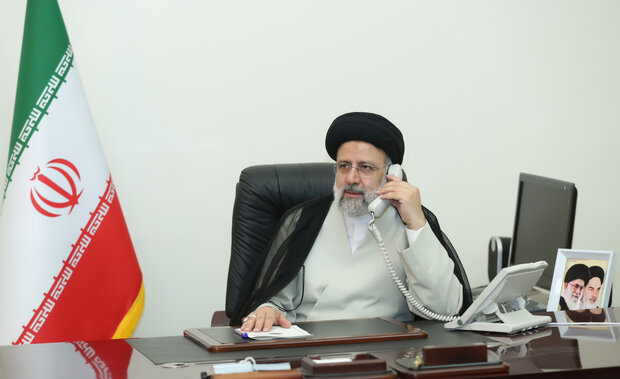
Raisi was speaking on Wednesday at a joint meeting of the government and Parliament at the legislature. 

He said the divorce of politics from spirituality led to the production of nuclear warheads. 

He also described 70 years of oppressive treatment of Palestinians as another outcome of the separation of politics from spirituality. 

Raisi also spoke of Iran’s internal affairs. He reiterated that the key point must be law and adherence to law. All people must respect law and move within its confines. The president added that the main task of Parliament is making laws for the movement of society. 

The president said Iran’s Parliament today is the manifestation of people’s will, and that a country where elections are held must ensure the prevalence of law. Raisi also said just laws, just enforcement of laws and just judgments are main pivots of administering justice. 

He also spoke of the budget of the next Iranian year, 1401. Raisi said his administration wants a budget that ensures economic growth and lacks deficit or inflation. The president said his administration’s proposed budget  draft will be presented to Parliament within the next few days.