
No US troops to be punished for Afghan deadly strike

The strike was launched three days after a deadly suicide bombing outside Kabul airport that killed 13 US military members and scores of Afghan civilians. The US had intelligence that the Islamic State Khorasan, the militant group’s Afghanistan affiliate, was plotting an attack against the airport using a white Toyota Corolla, but they began tracking the wrong vehicle after it showed up at a known Daesh location, according to a Pentagon review.
The review found that the incident did not violate any laws of war but left decisions on punishment up to the commanders. The two senior commanders — Gen. Kenneth McKenzie, the head of US Central Command, and Gen. Rich Clarke, head of US Special Operations Command — both recommended no punishment for the troops involved, according to the officials, who also stated Defense Secretary Lloyd Austin agreed.
Pentagon spokesman John Kirby confirmed the news, which was first reported by The New York Times, at a Monday afternoon news conference.
“It wasn’t an outcome that we came to without careful thought and consideration,” Kirby noted, adding, “There was not a strong enough case to be made for personal accountability.”
The driver of the Toyota, Zemari Ahmadi, worked for a California-based aid organization, Nutrition & Education International.
“This decision is shocking,” stressed Dr. Steven Kwon, the founder and president of the aid group.
“How can our military wrongly take the lives of 10 precious Afghan people, and hold no one accountable in any way?” Kwon asked.
The incident occurred during a chaotic period in Kabul when the US was working to evacuate thousands of Americans, Afghans and other allies in the aftermath of the collapse of the country’s government.
The vehicle driven by Ahmadi – the intended target of the strike — was assessed at the time as an imminent threat to US forces at Hamid Karzai International Airport, 3 kilometers (1.8 miles) away. Multiple issues, including execution errors, confirmation bias and communication breakdowns, led to the mistaken drone strike, according to the review.
The 10 dead Afghan civilians were all members of the same extended family, relatives told NBC News, and included the seven children, some as young as 2 and 3.
In September, McKenzie made a rare public admission that the strike “was a mistake”, and stated he is “fully responsible for this strike and the tragic outcome”.
The Pentagon has vowed to provide condolence payments to the victims’ relatives and help them relocate to the US, but the payments have yet to be made and the family members are still in Afghanistan, officials said.
Iran negotiator calls on Western parties in Vienna to stop blame game
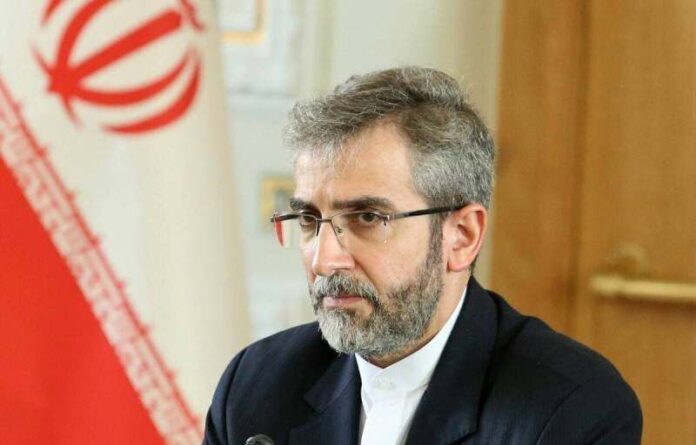
“Some actors persist in their habit of blame game instead of real diplomacy,” Ali Bagheri Kani said in a tweet on Tuesday.
He noted that during the latest round of talks in the Austrian capital, Iran was quick to offer its suggestions and worked constructively and flexibly to narrow the differences.
“Diplomacy is a two-way street. If there is a will to make up for the culprit’s wrongdoing, the way to a good and quick agreement will be paved,” the Iranian chief negotiator added.
Bagheri’s tweet came soon after British, French and German diplomats said Iran had yet to get down to business at the Vienna negotiations, warning that the unraveling Iran nuclear deal will very soon become “an empty shell”.
“As of this moment, we still have not been able to get down to real negotiations,” the European diplomats said in their statement.
Meanwhile, Iran’s Ambassador to Britain Mohsen Baharvand said in response to the European diplomats’ statement that Iran cannot trust the West.
“If you’re worried about time, start lifting sanctions. At least show us that you are serious; we do not trust you,” Baharvand said in an interview with the BBC.
Senior diplomats from Iran and the P4+1 group – Russia, China, Britain, France and Germany – have been trying to find a way to revive the Joint Comprehensive Plan of Action by allowing the United States to return the 2015 nuclear deal and remove anti-Iran sanctions.
UN chief calls for removal of US sanctions on Iran
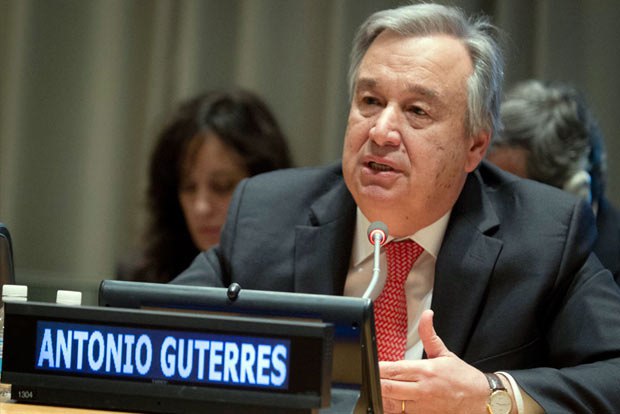
Guterres, in his 12th report to the UN Security Council on the implementation of the resolution 2231, said despite existing difficulties concerning the implementation of the deal, known as the Joint Comprehensive Plan of Action, it remains the best option to resolve the Iranian nuclear issue.
The UN secretary general says the negotiations for the return of all parties to the accord to their commitments should be sped up.
He says the US should end its unilateral sanctions against Iran to ensure the economic benefits of the JCPOA for the country.
The UN chief also says removal of sanctions on Iran’s oil sector will specifically help revive the accord, expressing regret over Tehran’s rollback of its relevant nuclear commitments.
The report also mentions the correspondence by the western governments and Israel on Iran’s missile program and their claims that it breaches the terms of the resolution 2231.
Guterres also touches on Iran’s response on the legitimate and conventional nature of the defensive missile program of Iran.
The report, together with the six-month report of the facilitator on the implementation of Security Council resolution 2231, will be discussed during the Tuesday meeting of the council.
The session will be held with the presence of Iran’s ambassador to the UN Majid Takht Ravanchi.
The report comes amid the seventh round of the Vienna talks on removal of the US sanctions on Iran and revival of the nuclear deal.
US security chief to visit Israel to discuss Iran
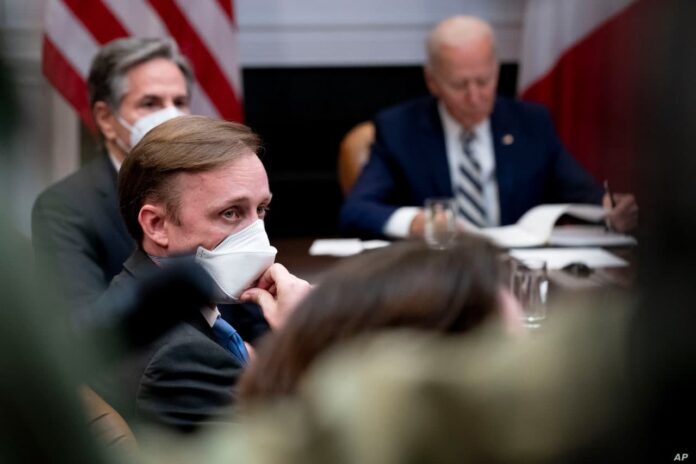
The Israeli government is concerned that the Joe Biden administration could opt for a “less for less” deal if the path back to the original agreement remains stuck. Israeli officials claim such a deal will give Iran sanctions relief without rolling back its nuclear program.
During the Barack Obama administration, Sullivan took part in the secret talks with Iran that led to another interim nuclear agreement, the 2013 Joint Plan of Action.
Sullivan recently floated the idea of an interim agreement to his Israeli counterpart if a return to the 2015 deal proves impossible.
Sullivan is expected to meet Prime Minister Naftali Bennett, Foreign Minister Yair Lapid and Minister of Defense Benny Gantz.
Israeli officials say he’s also expected to visit Ramallah for meetings with Palestinian officials.
The White House declined to comment on Sullivan’s travel plans.
Iran warns against Israel’s destructive presence in region
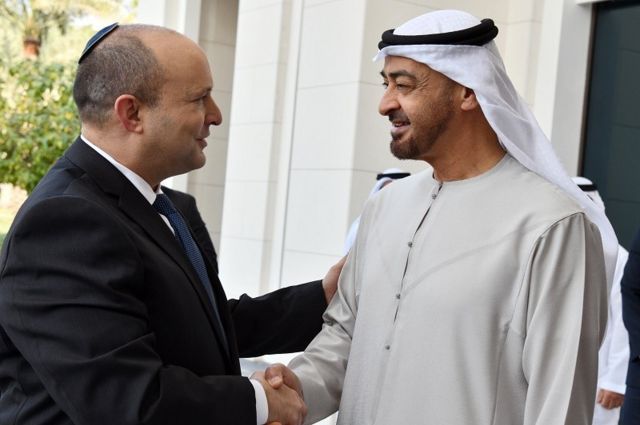
Khatibzadeh added that welcoming the prime minister of an illegitimate regime which has been the root cause and creator of insecurity, tension and warmongering for more than 70 years in the territory of Arab and Muslim countries will linger in the historical memory of the Palestinian people, regional nations and the freedom-seeking people of the world.
He strongly warned against any move that would strengthen the fake regime’s destructive and seditious presence in West Asia.
Khatibzadeh said such acts disrupt security in the region and run contrary to the interests of the Islamic ummah, regional people and Arab countries.
The Iranian Foreign Ministry spokesman reaffirmed the permanent cause of the liberation of Holy Quds as the first qibla of world Muslims.
The Iranian Foreign Ministry spokesman stressed that no move toward normalization with Israel will stifle the lofty cause of Palestine.
Israel’s prime minister met with the crown prince of Abu Dhabi on Monday as part of the first official visit to the UAE by a prime minister of the Zionist regime. The UAE became only the third Arab state to fully recognise Israel last year as part of the so-called Abraham Accords brokered by former US president Donald Trump.
Russia says Iran proposals at Vienna talks to be ‘properly considered’
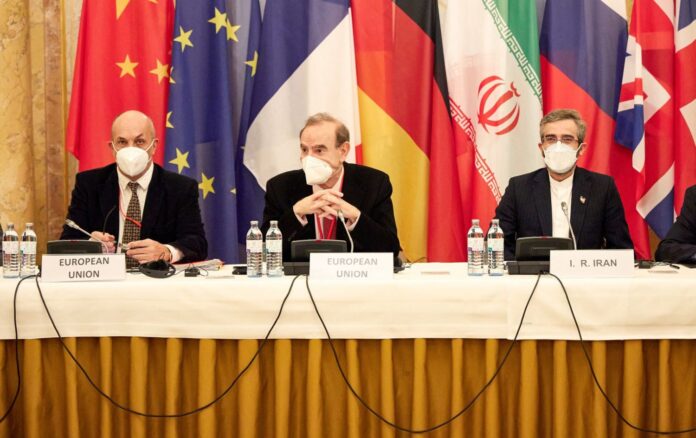
“The negotiators managed to reconcile the new Iranian ideas and the need for continuity of Vienna Talks,” Mikhail Ulyanov wrote on Twitter on Monday.
“The work will continue on the basis of the previous drafts. The Iranian proposals will be properly considered and either incorporated or rejected or modified. Normal practice,” the Russian envoy added.
Earlier, Russian Deputy Foreign Minister Sergey Ryabkov told Sputnik proposals put forward by Iran at the Vienna-hosted talks on the nuclear deal demonstrate Tehran’s utmost seriousness about restoring the 2015 landmark agreement.
He stated the chances of reaching an agreement on restoring the Joint Comprehensive Plan of Action (JCPOA) have increased.
“I think that now, the likelihood that we will come to an agreement has increased compared to what it was before the resumption of negotiations. I would rather say that there are reasons to expect some progress, not fast but at least clear, without any kickbacks and additional factors that can complicate [the situation]” Ryabkov said.
Besides, the proposals put forward by Iran at the Vienna-hosted talks on the JCPOA, according to Ryabkov, demonstrate Tehran’s utmost seriousness about restoring the nuclear deal.
“There are other proposals presented not only by Iran. Negotiations are for finding a common denominator. It is not hopeless. On the contrary, there is material for consideration. As for the Iranian proposals, I can only say one thing — they have demonstrated the utmost seriousness of their approach to the task,” Ryabkov added.
At the same time, the deputy foreign minister noted, that it is counterproductive to threaten Iran with sanctions against the background of the nuclear talks in Vienna – something the US does.
“This is their usual method — trying to drive someone to heaven with sticks. We constantly explain to the Americans the counterproductiveness of this approach,” Ryabkov stated.
Delegations in Vienna hold intensive meetings
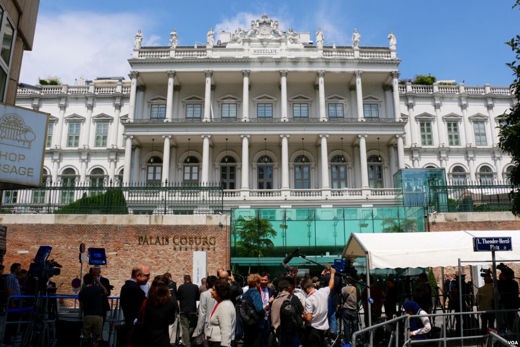
The European Union’s Deputy Foreign Policy Chief Enrique Mora said the parties are making an effort to hammer out an agreement.
After the discussions at the Coburg Hotel in the Austrian capital on Monday, the P4+1 diplomats held talks with the delegation of the United States.
Iran has refused to talk directly to U.S. negotiators because America unilaterally withdrew from the nuclear deal in 2018 and re-imposed harsh sanctions against Tehran.
Russian Deputy Foreign Minister Sergei Ryabkov said earlier on Monday that the chances of reaching an agreement are higher than before the resumption of negotiations, and it is better to say that there are reasons to expect progress.
Reports say the talks in Vienna have made progress and the involved parties are narrowing their differences.
Iran’s chief negotiator Ali Bagheri said on Sunday that as a result of the interaction and meetings held over the past few days at different levels, the differences between the parties on the scope of negotiable issues are narrowing.
Iran’s ‘A Hero’ nominated for Golden Globe
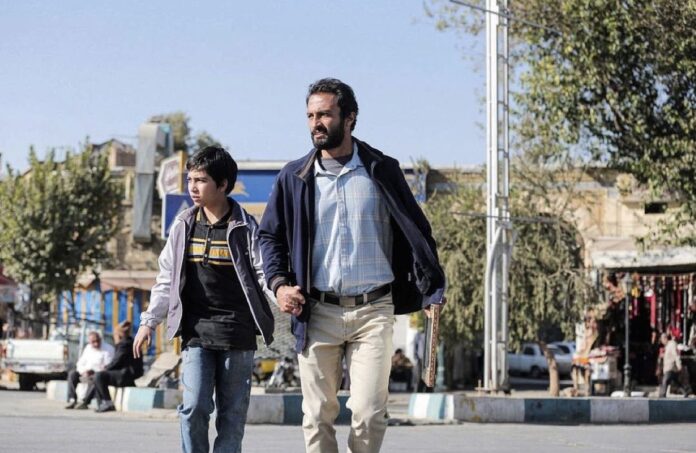
The beleaguered and scandal-plagued Hollywood Foreign Press Association announced the nominees for the 2022 Golden Globe Awards on Monday, with Netflix’s “Power of the Dog” and Focus Features’ “Belfast” landing a leading seven nominations. HBO’s “Succession”, a dynastic drama about a cutthroat media mogul and his family, topped all television shows with five nominations.
The other candidates at the foreign language category are ‘Compartment No. 6’ (Juho Kuosmanen, Finland), ‘Drive My Car’ (Ryusuke Hamaguchi, Japan), ‘The Hand of God’ (Paolo Sorrentino, Italy), and ‘Parallel Mothers’ (Pedro Almodovar, Spain).
This is the fourth time the Iranian director is nominated for the foreign language film award at Golden Globe. His previous movies ‘A Separation’, ‘The Past’ and ‘The Salesman’ found their way into the final list in the category in 2012, 2014 and 2017, while ‘A Separation’ won the award.
Farhadi has received two Oscars for Best Foreign Language Film for ‘A Separation’ and ‘The Salesman’, making him one of the few directors worldwide who have won the category twice.
The Iranian filmmaker has also received the Cannes Film Festival Award for Best Screenplay for ‘The Salesman’. In 2021, he received the Cannes Film Festival’s Grand Prix for ‘A Hero’.
Iran has chosen ‘A Hero’ as its entry for the 94th Academy Awards’ best international feature film category.
Russia wants illegal anti-Iran sanctions removed
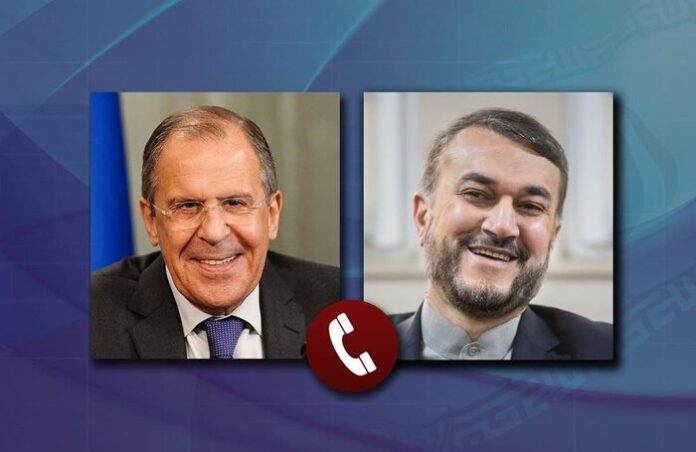
In a phone call with Iranian Foreign Minister Hossein Amir Abdollahian on Monday, Lavrov called the constructiveness and diplomatic creativity of the parties, along with patience for further coordination, the key to the success of the ongoing negotiations in the Austrian capital, Vi.
He added that Moscow has always tried to bring the Americans in line with all the rules of the JCPOA and UN Security Council resolution 2231.
The Iranian minister of foreign affairs also called for the West to be as serious as possible, urging the involved parties to come up with initiatives in the negotiations.
Iran and the P4+1 countries namely Russia, China, Britain, France and Germany are engaged in their seventh round of talks this year aimed at finding ways to remove anti-Iran sanctions and allow the United States to return to the agreement.
