Friday, December 26, 2025
Home Blog Page 2227

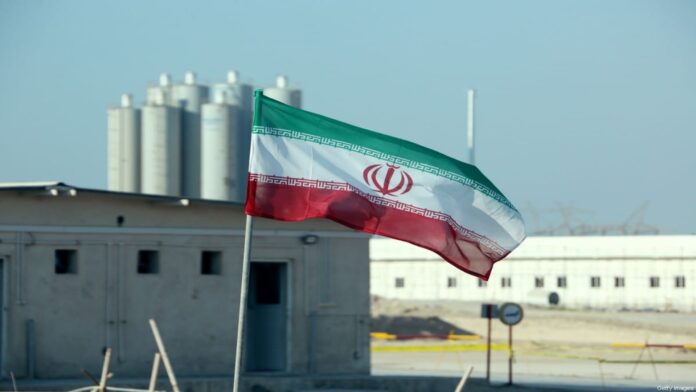
Report: Israel consulted US prior to strikes on Iran nuclear site, missile factory

Long-running differences over how to deal with Iran’s nuclear program have erupted into new tensions between the Joe Biden administration and Israel, with two senior Israeli officials leaving Washington this week concerned that the Americans’ commitment to restoring the 2015 nuclear deal will lead to a flawed agreement allowing Tehran to speed ahead with its nuclear enrichment program.

The strains were evident all week, as the Biden administration sought to bring the alliance with Israel into a united front about how to deal with Iran over the next year.

In an effort to close the gap, American officials let out word this week that two months ago, Biden asked his national security adviser, Jake Sullivan, to review the Pentagon’s revised plan to take military action if the diplomatic effort collapsed.

Administration officials also outlined new efforts to tighten, rather than loosen, sanctions on Iran.

Biden’s focus on military options and sanctions was an effort to signal to Tehran that the United States was running out of patience with Iranian foot-dragging in the nuclear negotiations in Vienna, administration officials said. Secretary of State Antony J. Blinken stated last week that the new Iranian government “does not seem to be serious about doing what’s necessary to return to compliance” with the 2015 nuclear deal.

But the tougher line was also aimed at calming increasingly frustrated Israeli officials. Though they will not criticize the American president in public the way former Prime Minister Benjamin Netanyahu did during the Barack Obama administration, Israeli officials in private argue that the Iranians are advancing their nuclear program while betting that the United States, eager to diminish American commitments in the Middle East, will not abandon the Vienna talks for more forceful action.

This article is based on discussions with more than a dozen American and Israeli officials who spoke on the condition they be granted anonymity to discuss both sensitive matters of diplomacy and classified intelligence assessments.

After a tense phone call with Blinken 10 days ago, the Israeli Prime Minister, Naftali Bennett, dispatched his Defense Minister, Benny Gantz, and the new head of the Mossad, David Barnea, to Washington this week armed with new intelligence about Iranians’ uranium enrichment and the work of what Israel says is their weapons group. Despite the tougher American talk, Israeli officials left worried that the diplomatic outreach to Iran would continue.

The disagreement over Iran is just one of several issues troubling the Biden-Bennett relationship. The pair started off on a strong footing: Biden spoke with Bennett within hours after the Israeli leader took office in June — a signal of support given that Biden had taken weeks after his inauguration to speak directly with Bennett’s predecessor, Netanyahu.

But the two governments have since clashed on whether the US should reopen the American consulate to the Palestinians in Jerusalem, which was closed by President Donald J. Trump. Bennett says such a move would undermine Israel’s sovereignty in its capital city.

There are also disagreements over Israeli plans to expand its settlements in the occupied West Bank, and over the Biden administration’s decision to blacklist two Israeli spyware firms, NSO Group and Candiru, whose products, the US alleges, have been used by authoritarian governments to hack the phones of dissidents and rights activists.

But at the heart of the tensions between Israel and the United States is the fundamental disagreement over how to stop the Iranian program. It is not a new argument: The two allies fought bitterly over the 2015 agreement, which Israel opposed and Obama signed.

More recently, they have disagreed about the wisdom of Israeli sabotage of Iranian facilities, which Bennett’s government believes has set back the program, and which some in the United States argue only encourages the Iranians to build back the nuclear enrichment facilities with more efficient, up-to-date equipment.

Israeli officials had been happy with the warm welcome the White House offered Bennett. The Biden administration had praised his government for being far more transparent with it than Netanyahu had been. Indeed, the Israelis consulted with the Americans before launching two covert strikes against Iran, one in September against a missile base and one in June against an Iranian factory building nuclear centrifuges, according to people briefed on the actions.

But the call between Bennett and Blinken last week was contentious, with the two sides embracing very different opinions about the value of a renewed agreement to check Tehran’s nuclear ambitions.

The call left officials in both countries frustrated, according to officials from both countries.

During the phone call, Bennett said that Iran was trying to blackmail the United States by increasing the enrichment percentage, according to an official familiar with details of the call. Bennett added that no official, American or Israeli, wants to be the one to report that Iran has reached bomb-grade enrichment, but fears of a nuclear-armed Iran should not lead to surrendering to Iranian demands or signing a reckless agreement.

Tehran denies seeking nuclear weapons, stressing it wants to master nuclear technology for peaceful purposes. Iranian officials have also stressed the country reserves the right to respond to any adventurism by the United States and Israel.

Some American officials believe those concerns about concessions are misplaced. Israeli officials had complained that the United States was considering offering an interim deal with Tehran that would roll back some sanctions in return for a freeze on some of its nuclear activity. But American officials say such an offer is not actively being considered, at least for now, because of Iran’s unwillingness to engage.

Israeli officials have not been reassured. They are increasingly concerned that the United States will eventually reach a deal with Tehran and then seek to block Israeli intelligence services from carrying out covert sabotage attacks. Israeli leaders say they want a guarantee from the Biden administration that Washington will not seek to restrain their sabotage campaign, even if a renewed nuclear deal is reached.

Disagreements over intelligence assessments about the Iranian nuclear stockpile and bomb-making know-how remain relatively small, mostly focused on how long it would take Iranians to produce a weapon if they get enough bomb-grade nuclear fuel.

But the gulf about the meaning of those assessments is wide. American officials believe that so long as Iran has not moved to develop a bomb it does not have a nuclear military program, since it suspended the existing one after 2003. Israeli officials, on the other hand, believe that Iran has continued a clandestine effort to build a bomb since 2003.

Some Israeli officials believe that the sabotage campaign is having strategic effects and could be one of the reasons Iranians, however tentatively, have returned to Vienna. A senior Israeli intelligence official noted the sabotage operations had created crippling paranoia at the top of the Iranian government. The operations, the official claimed, have caused Tehran to rethink whether it should accelerate the nuclear project.

But even American supporters of the Israeli approach say it is akin to “mowing the grass”, a necessary step to keep Iran in check but not one that will ever fully halt Tehran’s nuclear research. These American officials believe that the only durable way to prevent Iran from developing a weapon is to reach an agreement, like the one in 2015, that requires Iran to ship its nuclear fuel out of the country. And that would require significant sanctions relief in return.

In the meetings this week, Israeli officials tried to persuade Washington not to work toward a diplomatic agreement and to instead tighten sanctions. But Israeli officials say they fear that the US is conducting secret back-channel communication with Iran, and that a new round of talks in Vienna will eventually lead to the signing of a deal.

The meetings came against the backdrop of a recent Iranian attack on American forces in Syria, a senior American official said. The Israelis, the official added, had an aggressive attitude on the Iranian threat, related to both the nuclear program and the risk of missile and other weapon proliferation.

But there is a growing American concern that it is just a matter of time before an American service member is killed or wounded by an Iranian proxy drone strike on Biden’s watch. With Iran making clear it will retaliate against American personnel in Syria or Iraq if Israel strikes Iran or its proxies, it complicates strike planning.

Iran has repeatedly stressed claims of its role in attacks on United States interests in Iraq and Syria are baseless and lacking legal credibility.

In an appearance at The Wall Street Journal’s CEO Council on Monday, William J. Burns, the CIA director, raised concerns about the Iranian nuclear work.

He stated the Iranians were “dragging their feet” on negotiations as they were “making steady advances in their nuclear program, particularly enrichment to 60 percent now as well”.

But, Burns added, the United States continues to believe that Iran has not made a decision to weaponize its nuclear program.

Raisi urges focus on domestic potential as he presents budget bill to MPs

“Our economy should enjoy stability so that it foster trust among producers, consumers and the market,” the president told lawmakers, as he submitted his budget bill to the parliament on Sunday.

“The requirement for economic stability is that we propose a budget without a deficit, because budget deficit will become the root cause of many other problems in the country.”

“The key difficulty that affected everyone in the past was that the economy was tied to the foreigners and ignoring domestic capabilities had led to economic problems.”

Raisi stressed that, in the next year’s budget, borrowing from the Central Bank and increasing the Monetary Base are considered a “redline”, warning that these are factors that create serious problems for the economy.

The president also called for comprehensive national efforts to push the economy forward.

“For the target 8 percent growth to materialize, we need a fully national perspective to the budget bill,” he said.

Iran’s Leader meets nurses, families of late medical staff caring for COVID patients

The meeting was held to coincide with the anniversary of the birthday of Hazrat Zeinab, a sister of Imam Hussein the third Shia Imam, which is designated as Nurse’s Day in Iran.
Ayatollah Khamenei appreciated the services rendered by nurses caring for coronavirus patients.
The Leader said nurses were working extra hours and took fewer leaves during the coronavirus pandemic to help patients.
“The coronavirus issue showed that we will suffer at sensitive junctures if the nurses’ community is not reinforced,” said the Leader.
Elsewhere in his remarks, Ayatollah Khamenei urged officials to give people true accounts of the realities in society, the history of the 1979 Islamic Revolution of Iran, the eight-year Iraqi imposed war on Iran in the 1980s and various events which have unfolded over the past 42 years since the Revolution.
“If this is not done, which has actually not been done on numerous occasions, the enemy will instill its own distorted and false account into the public opinion and create the impression that the oppressor was the oppressed, and vice versa, hence justifying its ongoing cruel actions,” he said.
Ayatollah Khamenei also said “Hazrat Zeinab showed to the whole world the greatness of women’s spiritual and rational power as well as their lofty status.”
“One point is that a woman can be a vast ocean of patience and tolerance,” said the Leader.
“Another point is that a woman can be a towering peak of wisdom and prudence,” Ayatollah Khamenei added.
The Leader then touched upon the values of working as a nurse.
“The key point of these values is helping people in need, that is ‘patients,’ who need nurses’ attention and assistance in all their affairs,” the Leader explained.

Resigned Lebanon minister not to back down from absuardity of Yemen war

On December 3, Kordahi submitted his resignation in a bid to ease tensions between Lebanon and Saudi Arabia, which put unprecedented pressure on Beirut to oust the 71-year-old minister after he attacked, with disparaging remarks, the ongoing Saudi-led war on impoverished Yemen.

In his resignation statement, he stated that he stepped down not because he was willing to do so but because of unrelenting external pressure built up against him.

“The interests of my country and my people and supporters are above my personal interest. Lebanon is more important than George Kordahi, and the Lebanese interests are more important than a ministerial role,” he said a t a news conference as he announced his resignation.

In an exclusive interview with Iran’s Arabic-language Al-Alam television news network, whose full script was published on Saturday, Kordahi noted he would not back down from his remarks, when asked whether he would repeat the same critical remarks against Saudi Arabia over its brutal war on Yemen.

Kordahi stated, “Yes, I will repeat the same remarks. Because I did not say anything that offended anyone and I spoke in good faith. The campaign against me for my statements started in Lebanon. Therefore, if this campaign had not started in Lebanon, no one would have felt it.”

He once again noted that he was forced to resign under external pressure.

“When I resigned, I did not feel good about being forced to resign,” Kordahi said, adding, however, that he stepped down for the good of Lebanon. “If Lebanon did not have these current problems and crises and bankruptcy, I would have no reason to resign, and the government could have opposed my resignation, and the whole Lebanese nation would have rejected this resignation.”

“In fact, I can say that this resignation has achieved much more than what I had in mind at the national and personal level. For forty days, I was pressured from all sides to be forced to resign. I resisted for forty days. I could have resisted for up to four years, but I had to consider national interests,” the ex-minister continued.

“Therefore, I was looking for a way out to guarantee [my country’s] national interests, to maintain my dignity, and to show those who blamed us all over the Arab world that I know the concept of national sovereignty and national dignity,” he added.

Back on August 5, Kordahi, who was not appointed to the post at the time, said during a television program, which was aired in October, that the devastating war on Yemen was an act of aggression by Saudi Arabia and the United Arab Emirates (UAE), Riyadh’s most significant ally in the military coalition. He called the war “absurd,” saying it must stop because he is opposed to wars between Arabs.

Kordahi also added at the time that the Yemeni army forces and their allied fighters from Popular Committees were “defending themselves … against an external aggression,” and that “homes, villages, funerals and weddings were being bombed” by the Saudi-led coalition. He also stated the war was “futile” and it was “time for it to end.”

His scathing remarks at the program infuriated Riyadh and prompted Saudi Arabia to expel the Lebanese ambassador from Riyadh and withdraw the kingdom’s ambassador from Beirut. In solidarity with Riyadh, Kuwait, Bahrain and the UAE took similar measures.

Riyadh also banned all imports from the Mediterranean country.

The incident shed light on the region’s power politics and the lengths that the oil-rich Arab kingdom will go to blunt criticism by putting pressure on other countries, including Lebanon, which has been suffering from a crippling economic crisis since 2019, amid fuel shortages.

Kordani said that his interview, which sparked the diplomatic crisis, was “available on YouTube, but it was removed,” adding, “I did not change anything in my words during the interview, but it was necessary for me to explain more and more clearly when dealing with the war on Yemen. This war is a war of attrition for both sides and the warring parties, so I want an end to this seven-year-long war.”

“I am proud of my position. Many scolded me … but I expressed my opinion and I am proud of it. I have borne the cost of my positions on Syria and the Lebanese resistance over the past decade. Today, I paid the price for my position on Yemen, which I am proud of,” he continued.

He noted “every media activist is the voice of the people and should not conceal the truth. The media activist must work tirelessly for the truth, even if it has consequences for him. He must be honest with himself first and then with his audience and not betray their trust. This is a summary of my message to the media.”

The Lebanese resistance movement Hezbollah, which holds a dozen seats in Lebanon’s parliament and is part of the current coalition government, praised the “brave and honorable position of the Minister of Information in defense of the oppressed people of Yemen.”

Elsewhere in his remarks, Kordahi touched on the issue of Lebanese resistance, stressing that resistance has made the Arab country proud.

“In my opinion, the resistance has changed all concepts in Lebanon. The resistance made Lebanon proud. Every Lebanese must accept and understand this issue and not feel ashamed of this position. Those who are not members of the resistance should know that the youth of the resistance sacrificed their lives and … blood in the best years of their lives to defend Lebanon. They did not sacrifice their blood only for the Shia parties or other groups, but for each and every Lebanese. We must bow to this sacrifice. What I am saying is not because my positions are close to those of the resistance. My words come from my heart and are real and honest. Members of resistance are our family and part of our flesh and blood,” the ex-minister added.

Saudi Arabia, backed by the United States and regional allies, launched the war on Yemen in March 2015, with the goal of bringing the government of former Yemeni President Abd Rabbuh Mansour Hadi back to power and crushing the popular Ansarullah resistance movement.

The war has left hundreds of thousands of Yemenis dead, and displaced millions more. It has also destroyed Yemen’s infrastructure and spread famine and infectious diseases there.

Despite heavily-armed Saudi Arabia’s incessant bombardment of the impoverished country, the Yemeni armed forces and the Popular Committees have grown steadily in strength against the Saudi-led invaders and left Riyadh and its allies bogged down in the country.

Iran athlete wins gold in 2021 Para Taekwondo World Champs

Mahtab Nabavi won the gold after beating her Turkish opponent 34 to 27 in the final contest.

Also in the men’s competitions, Iran’s Saeed Sadeghianpour breezed past his Mongolian rival 21 to 4 in the opening face-off. The minus-63-kilogram taekwondoka, however, failed to beat his Mongolian challenger in his second match, getting eliminated from the run for medals.

The Iranian team open their competitions in the second day of the championships Sunday in the women’s minus and plus 65 kilogram and men’s minus-70 and minus and plus 80-kilogram weight categories.

The two-day championships, hosted by the Turkish city of Istanbul, bring together 264 taekwondokas from 41 countries around the world.

Russia: US sanctions changed opinion of no country

“We all know that the United States likes to play this game of sanctions, although we know an understanding they [have] never reached their goals. They have never managed to make a single country change their point of view,” Dmitry Peskov said.

“Our policy is to be open for cooperation with various countries, especially our partners. This kind of cooperation between Russia and Turkey should not be a threat for any country, especially for Greece, because the system is not offensive, it is defensive. 100% defensive,” Dmitry Peskov said.

He was answering a question in an interview with Greece’s ANT1 television network on Russia’s “specific interest” in the supply of the S-400 system to Turkey ahead of the Russian president’s meeting with the Greek prime minister in Sochi.

Washington and Ankara had an understanding on development of the American F-35 fighter jets in Turkey. However, the US excluded Turkey from the program over Ankara’s refusal to end its agreement to buy the Russian S-400 system. The US has never abandoned efforts to pressure Turkey to give up the deal and has imposed sanctions on Anakra in connection with the S-400 contract.

Iraqi PM says foreign combat forces to leave soon

US troops

“In a few days, we will witness the withdrawal of all combat forces of the international coalition from Iraq according to the strategic agreement with the American side,” al-Kadhimi said in his televised speech during a ceremony on the occasion of the centenary of the founding of the modern Iraqi state in 1921.

“Their (remaining forces) role will be in the advisory areas, indicating the ability of the Iraqi forces to preserve the security of Iraq, the stability of its people,” al-Kadhimi added.

In the midst of the political debate about the results of Iraq’s early parliamentary elections, “everyone must be reassured. We will not allow any impact on your security and stability”, the Iraqi prime minister noted.

“The path of building the Iraqi state may be difficult and painful, but it is the only path that our children and grandchildren can take,” al-Kadhimi continued.

On Dec. 9, Iraqi National Security Adviser Qasim al-Araji announced the end of the combat mission in Iraq and the withdrawal of the US-led coalition forces from the country.

On Nov. 24, Tahseen al-Khafaji, spokesman of the Iraqi Joint Operations Command, stated the foreign combat forces would leave Iraq within 15 days, except for some advisers who will stay to support the Iraqi forces.

On Jan. 5, 2020, the Iraqi parliament passed a resolution requiring the government to end the presence of foreign forces in the country.

In July this year, the United States and Iraq held a session of strategic dialogue, during which the two countries agreed on withdrawing all US combat troops from Iraq by Dec. 31.

Negotiators at Vienna talks seeking to bridge differences

According to Iranian Students News Agency, ISNA, the negotiators have kicked off work on the proposed documents on the third day of the eighth round of talks.

Several meetings have so far been held in different formats with the focus being on the lifting of sanctions.

The documents proposed to the other parties by Iran in the seventh round of talks in two domains of sanctions removal and nuclear activities were based on the very same draft documents presented in the sixth round, with only some changes and revisions being added to them.

In fact, the revised documents were within the text and spirit of the 2015 Iran nuclear deal known as the Joint Comprehensive Plan of Action (JCPOA).

As reports suggest, although the climate of the talks is better than that of last week as parties have started reviewing Iran’s proposed documents, it seems some parties, namely the United States, are dragging their feet on efforts to help talks gain momentum.

ISNA adds It is true that negotiations are taking place between Iran and the 4+1 group of countries – Russia, China, Britain, France and Germany- and are running their course, but the presence of the US alongside other negotiating teams is necessary, too, especially with regards to the issue of sanctions.

So it is necessary that the other side, as a goodwill gesture, show its seriousness in the talks in the coming days in order to pave the way for the negotiations to move forward.

Meanwhile, Russia’s Permanent Envoy to International Organizations in Vienna Mikhail Ulyanov described the atmosphere of the negotiations as posivite.

“To my surprise, some analysts and journalists describe the situation at the #ViennaTalks as dramatic, “almost deadlock”. This is not the case in point. After the break, the negotiators returned to normal diplomatic business and maintain intensive dialogue. Atmosphere is positive,” he tweeted.

Top Iranian negotiator: Nuclear deal a redline

Ali Bagheri was speaking in an interview with Iran’s English news channel Press TV.

He said Iran will accept nothing short of the 2015 nuclear deal, formally known as the Joint Comprehensive Plan of Action, JCPOA.

Bagheri noted that Iran’s red-line is the JCPOA, to which the US intends to return. He said the rationale behind Iran’s stance in this regard is absolutely clear and the other sides understand this.

Bagheri added that the differences required decision-making at the highest level and are still on the table.

He added that Iran has outlined its views regarding its nuclear activities, the sanctions removal and verification of the sanctions removal.

According to the Iranian deputy foreign minister, the other sides have accepted some of Iran’s proposals but have rejected some others.

He noted that there are some other issues over which Iran and the P4+1 group must hold talks at a higher level.

Bagheri said Iran will not pre-judge about the US behavior in the talks and that Tehran is looking forward to seeing Washington’s new approach.

Intense negotiations over the removal of the US sanctions and Washington’s return have been continuing in Vienna since Thursday.