Thursday, December 25, 2025
Home Blog Page 222

Former PSG, Tottenham defender Serge Aurier joins Iran’s Persepolis

The Ivorian international, who also played for Villarreal, Nottingham Forest, and Galatasaray, has had a decorated career, including two Africa Cup of Nations titles with the Ivory Coast.

His signing marks a significant addition to the Tehran-based club as they prepare for the upcoming domestic and continental campaigns.

Aurier had been on trial with Persepolis over the past week during their pre-season training camp in Turkey.

Under the supervision of assistant coach Vahid Hashemian, he underwent a series of fitness and medical evaluations.

He also made a brief appearance in a recent friendly match against Turkish side Igdirspor, impressing the coaching staff enough to finalize a deal.

The 32-year-old brings top-level experience and defensive versatility to Persepolis, who are seeking to reclaim dominance in the Persian Gulf Pro League and make a deeper run in the AFC Champions League.

Club officials are expected to present Aurier formally at a press conference later this week.

US strikes oil agreement with Pakistan: Trump

Oil

The announcement on Trump’s social media platform, Truth Social, came hours after a post in which he said he would impose 25% tariffs on India plus penalties for its trade and defense ties with Russia.

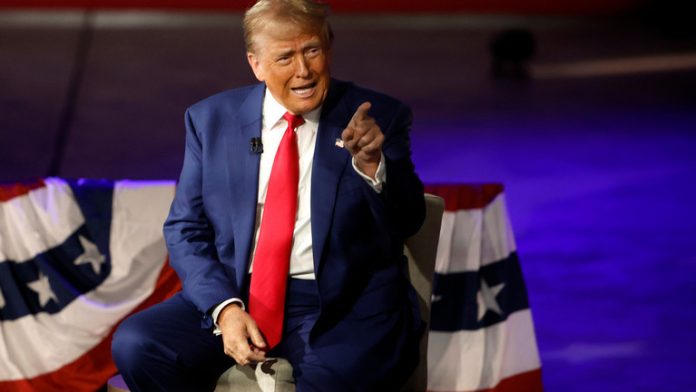
“We have just concluded a Deal with the Country of Pakistan, whereby Pakistan and the United States will work together on developing their massive oil reserves,” Trump stated.

“We are in the process of choosing the oil company that will lead this partnership. Who knows, maybe they’ll be selling oil to India some day!”

Pakistani Prime Minister Shehbaz Sharif noted that the countries also finalized a trade deal.

“I wish to convey my profound thanks to President Trump for his leadership role in finalization of the historic US-Pakistan trade agreement, successfully concluded by our two sides in Washington, last night,” Sharif wrote on X.

“This landmark deal will enhance our growing cooperation so as to expand the frontiers of our enduring partnership in days to come,” he added.

Sharif did not reveal any specific details of the trade agreement.

In April, Trump announced ‘Liberation Day’ tariffs on countries around the world, which would have included a 29% tariff on Pakistani exports to the US. They were, however, suspended until July 31.

Pakistani officials recently visited the US for talks; Foreign Minister Ishaq Dar met with US Secretary of State Marco Rubio last week. After the meeting, Dar said the US and Pakistan were “very close” to a trade deal.

The talks included discussions on expanding trade and ties in critical minerals and mining. Total goods traded with Pakistan were an estimated $7.3 billion in 2024, according to 2024 data from the US trade representative.

Nearly 50 Israeli soldiers committed suicide since onset of Gaza war: Report

Israeli Army

The daily Haaretz said 17 soldiers committed suicide this year, while 24 killed themselves in 2024, and 17 in 2023, including seven following the Gaza war.

The newspaper cited a severe shortage of military mental health professionals, including psychiatrists, psychologists, and social workers, as a contributing factor.

It noted systemic failures in the army’s ability to support discharged soldiers, reservists, and personnel in highly traumatic units — particularly those involved in the identification of fallen soldiers.

According to the paper, hundreds of soldiers with psychological injuries are admitted to the army’s rehabilitation division every month, many of whom suffer from post-traumatic stress disorder (PTSD) following combat operations in Gaza.

On Monday, the Israeli military confirmed that a reserve soldier was found dead in his home in the southern town of Ofakim, in what officials described as a suicide. The soldier had served in a unit responsible for identifying the remains of fallen soldiers.

According to military data, 898 Israeli soldiers have been killed and 6,134 injured since the beginning of the war in Gaza in October 2023. The army faces domestic accusations of concealing higher losses.

The Israeli army has pursued a brutal offensive on Gaza since Oct. 7, 2023, killing over 60,000 Palestinians. The relentless bombardment has devastated the enclave and led to food shortages.

On Monday, Israeli rights groups B’Tselem and Physicians for Human Rights-Israel accused Israel of committing genocide in Gaza, citing the systematic destruction of Palestinian society and the deliberate dismantling of the territory’s healthcare system.

Last November, the International Criminal Court issued arrest warrants for Israeli Prime Minister Benjamin Netanyahu and his former Defense Minister Yoav Gallant for war crimes and crimes against humanity in Gaza.

Israel also faces a genocide case at the International Court of Justice for its war on the enclave.

Iran increased its oil output by nearly 0.4 mln bpd in 9 months: Report

Iran Oil Gas

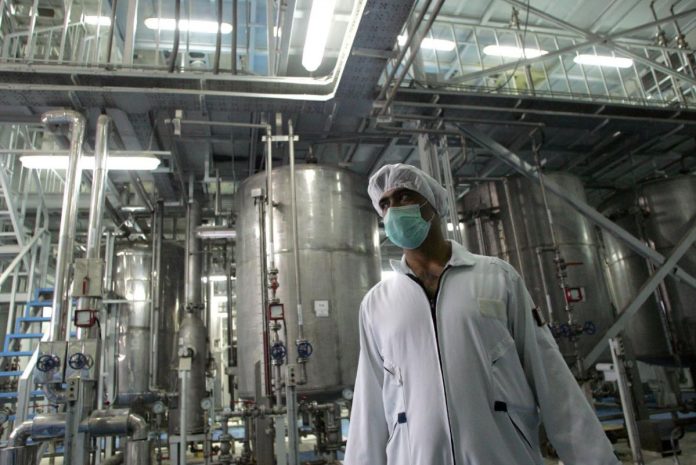
The Wednesday report by Fars news agency said that the National Iranian Oil Company (NIOC) had raised its crude oil output by 0.247 million barrels per day (bpd) in the six months to late March.

The report said the increase in output had come after the Central Bank of Iran provided the NIOC with some $3 billion worth of new funds in August last year.

It said the NIOC then increased oil production by another 0.15 million bpd in the three months to late June, adding that the increase came mainly from oil fields shared with Iraq in the southwestern province of Khuzestan.

The report said the major increase in oil production has enabled Iran to boost its supply of feedstock to domestic refineries while raising its oil exports and beefing up its hard currency reserves.

A report published in early July by Bloomberg showed that Iran reached a record in oil production last year that had not been seen in the country since the late 1970s.

The report, which cited figures published last month by the UK Energy Institute and its Statistical Review of World Energy, said Iran had produced about 4.3 million barrels per day (bpd) of crude oil plus another 725,000 bpd of other liquids in 2024.

Latest data from international tanker tracking firms show oil exports from Iran have increased from historic lows of below 0.3 million bpd reported in 2019, when Washington toughened its sanctions on the country, to records of more than 1.8 million bpd in recent months.

Iran’s president faces backlash & praise over withdrawal of online content bill

Critics, including Hossein Shariatmadari, editor-in-chief of the Kayhan daily, condemned the move as a retreat that “pours water into the enemy’s mill,” arguing the bill was essential to protect national unity from foreign disinformation campaigns.

The bill, originally submitted with “double urgency” and approved for fast-track review in parliament, was designed to counter the spread of false content online.
However, government spokesperson Fatemeh Mohajerani announced on Wednesday the decision to withdraw the bill was made “to preserve national cohesion” and allow for further expert consultation.

Supporters of the president hailed the move as courageous. Mahmoud Vaezi, a former minister and a senior political figure, said the decision reflected Pezeshkian’s commitment to public opinion and willingness to correct mistakes.
“He listened to the people, just as he promised,” Vaezi stated.

Despite the bill’s initial parliamentary support, the controversy underscored potential tensions over freedom of expression, misinformation, and public trust in Iran’s policymaking process.

US should compensate losses to Tehran’s nuclear program: Iran’s FM

Abbas Araghchi

“They should explain why they attacked us in the middle of […] negotiations, and they have to ensure that they are not going to repeat that,” he said in an interview with the Financial Times.

“And they have to compensate [Iran for] the damage that they have done,” the top Iranian diplomat added.

Araghchi noted that the possibility of the talks resuming remains but in Tehran, distrust to US diplomatic initiatives had deepened.

“People are telling me, ‘Don’t waste your time anymore, don’t be cheated by them […]. If they come to negotiations it’s only a cover-up for their other intentions,’” he continued.

“With the Europeans, there is no reason right now to negotiate because they cannot lift sanctions, they cannot do anything,” the Iranian foreign minister stated.

“If they do snapback [which would reinstate UN Security Council sanctions against Iran], that means that this is the end of the road for them,” he emphasized.

Earlier, US President Donald Trump announced that the United States is prepared to launch new strikes against Iran’s nuclear facilities if it deems that Tehran aspires to rebuild its potential.

Araghchi vowed a resolute response in the event such assault is repeated.

The Israeli regime launched a blatant and unprovoked act of aggression against Iran on June 13, assassinating many high-ranking military commanders and nuclear scientists in addition to civilians.

The war came as Iran and the United States had held five rounds of indirect negotiations, mediated by Oman, over Iran’s nuclear program since April, and were preparing to hold fresh talks in the Omani capital on June 15, which was cancelled following the Israeli onslaught.

The US joined Israel’s war on Iran and launched attacks on three peaceful nuclear facilities, violating the United Nations Charter and the Non-Proliferation Treaty.

President Pezeshkian welcomes Venezuela’s initiatives for promoting peace in West Asia

In a phone conversation with President Maduro on Tuesday, President Pezeshkian expressed his support and appreciation for Maduro’s proposal to hold a peace summit and counteract war, as well as for presenting a comprehensive Middle Eastern plan in this context.

Pezeshkian expressed gratitude for the principled, clear, and courageous stance of the Venezuelan government in condemning the aggressions of the Israeli regime against Iran’s national sovereignty and in expressing solidarity with the Iranian people. He emphasized the necessity of deepening bilateral cooperation across all sectors.

During the call, President Pezeshkian reaffirmed Iran’s dedication to diplomacy and peace, stating that while Iran prefers dialogue and peaceful solutions, the United States has, through irresponsible actions and a betrayal of diplomatic norms, facilitated the aggressions of the Israeli regime. He characterized these aggressive actions as blatant violations of international laws and norms. The Islamic Republic has responded decisively and forcefully to such aggression, and any further provocations from this criminal regime will be met with a resolute response.

The president reiterated Iran’s commitment to advancing relations with Venezuela, noting that this partnership will continue to evolve across all areas, with officials striving to make it deeper, more strategic, and broader.

In response, President Maduro expressed condolences and sympathy to the families of Iranian martyrs following the Israeli regime’s criminal actions, emphasizing the full support and solidarity of the Venezuelan government and people with Iran.

Maduro strongly condemned the attacks by the Israeli regime, highlighting that the noble, dignified, and heroic Iranian people have stood firm against these aggressions, creating a significant chapter in history. He noted that this bravery and decisive response have inspired and motivated independent and justice-seeking nations pursuing development, peace, and resistance against hegemony.

He also referred to Iran’s successful 12-day resistance, asserting that the Iranian people have demonstrated their capacity to defend their right to life and peace, effectively shattering the might of the Zionists. Maduro expressed confidence that through continued diplomatic efforts and the initiative for a peace summit, significant agreements and lasting peace, an inherent right of the Iranian people and all nations in the West Asia region, can be achieved.

Additionally, Maduro called for the expansion of cooperation between Iran and Venezuela in all areas, marking the 75th anniversary of diplomatic relations between the two nations, and emphasized that now is the time to deepen bilateral ties and strengthen the strategic connections between both governments and peoples.

Lack of accountability emboldens Israel to intensify its crimes: Iranian speaker

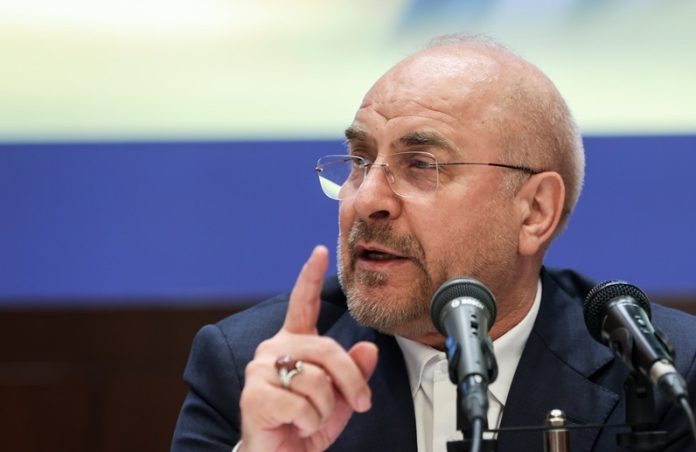
Iran’s Parliament Speaker Mohammad Baqer Qalibaf has warned that the international community’s failure to hold Israel accountable has emboldened the regime to intensify its crimes, posing a serious threat to world peace.

Qalibaf made the remarks at the Sixth World Conference of Speakers of Parliament, hosted by the Inter-Parliamentary Union (IPU) in collaboration with the United Nations, in Geneva on Wednesday.

Referring to Israel’s US-backed aggression against Iran in June, which killed about 1,100 Iranians, Qalibaf said, “In these attacks, our peaceful nuclear facilities, which were regularly monitored by the International Atomic Energy Agency (IAEA), were targeted.”

He noted that the IAEA “even refused to condemn this illegal action, thereby legitimizing the attack and putting an end to the non-proliferation policies.”

The Parliament Speaker added that the aggression took place while “Iran was present at the negotiating table and committed to dialogue,” emphasizing that the Islamic Republic delivered a “devastating” response to Israel, forcing the regime to request a ceasefire.

The Israeli regime launched a blatant and unprovoked act of aggression against Iran on June 13, assassinating many high-ranking military commanders and nuclear scientists in addition to civilians.

The war came as Iran and the United States had held five rounds of indirect negotiations, mediated by Oman, over Iran’s nuclear program since April, and were preparing to hold fresh talks in the Omani capital on June 15, which was cancelled following the Israeli aggression.

The US joined Israel’s war on Iran and launched attacks on three peaceful nuclear facilities, violating the United Nations Charter and the Non-Proliferation Treaty.

“The Zionist regime’s aggressive act, which was a deliberate violation of international law and the United Nations Charter, was condemned by 120 countries around the world,” Qalibaf said.

However, Israel’s “few but more powerful” supporters “prevented the international bodies from taking decisive action to punish the criminal Israel.”

Qalibaf emphasized that the institutions that should safeguard peace have remained silent in the face of aggression and occupation, and structures that should be impartial and independent “have often become tools for the political exploitation of specific powers.”

At the conference, Qalibaf also held up the pictures of the two-month-old Ryan, the youngest victim of Israel’s 12-day war on Iran, and a Palestinian child from Gaza, as symbols of Israeli crimes.

He noted that Gaza has turned into “a museum of crimes against humanity” and a laboratory for the testing of killing technologies, calling for stopping the crimes of “the Nazis of the 21st century,” amid Israeli strikes in other countries in the region, including Lebanon and Syria.

The regime’s bloody onslaught on Gaza has so far killed more than 60,000 Palestinians, mostly women and children.

Canada says to recognise Palestine at UN General Assembly

Palestine

Canada’s plans follow similar announcements by France and the UK to formally recognise Palestine, while New Zealand and Australia were also signatories to a declaration that indicates they could follow suit in the coming months.

The New York Call, published by the French foreign minister, Jean-Noël Barrot, on Wednesday, stated signatories “have already recognised, have expressed or express the willingness or the positive consideration of our countries to recognise the State of Palestine”.

The signatories include Andorra, Australia, Canada, Finland, Luxembourg, New Zealand, Portugal and San Marino, each of which has not yet recognised an independent Palestinian state. They also include Iceland, Ireland, Malta, Norway, Slovenia and Spain, which have. President Emmanuel Macron last week noted that France would recognise Palestinian statehood in the near future.

The statement, which was published before the conclusion of a three-day UN conference set on reviving a two-state solution to the Israeli-Palestinian conflict, said the states would “reiterate our unwavering commitment to the vision of the two-state solution where two democratic states, Israel and Palestine, live side by side in peace within secure and recognised borders”.

It stressed the “importance of unifying the Gaza Strip with the West Bank under the Palestinian Authority”.

On Wednesday evening, Carney stated that Canada would recognise the state of Palestine at the UN general assembly in September if certain conditions were met. He held a virtual cabinet meeting on the Middle East earlier on Wednesday.

Carney added Canada would recognise Palestine if the Palestinian Authority, the body that governs the occupied West Bank, held an election in 2026 in which Palestinian militant group Hamas could play no part, and agreed to other democratic reforms.

He called on Hamas to release all hostages it is holding, disarm, and play no role in the future governance of Palestine.

Carney’s remarks come amid growing pressure on Israel to end its military campaign in Gaza, which began in October 2023 in response to a Hamas raid that led to the deaths of 1,200 people, mainly Israelis, and the taking of more than 250 prisoners. More than 60,000 people have died in Gaza in the ensuing conflict, according to the Hamas-led health ministry in Gaza.

Drop in Afghan repatriations from Iran raises questions amid tighter controls

According to local media, the Imam Reza Return Center near Qiamdasht, previously bustling with activity, has seen a sharp decline in numbers over recent weeks.

Officials attribute the slowdown to a mix of logistical shifts and increasing reluctance among undocumented migrants to come forward.

While repatriation procedures remain straightforward, requiring only a verbal request and baggage scan, costs have reportedly risen, with some migrants paying up to 30 million rials (around $35 USD) for transport.

Despite more than one million Afghan nationals being deported from Iran since March, officials from Iran’s Ministry of Interior say daily repatriation rates have dropped from a peak of 29,000 to 13,000.

Analysts suggest many undocumented migrants are now going into hiding, hoping current enforcement efforts will ease.

Authorities have warned that enforcement is likely to intensify. “Unauthorized migrants must return via official channels,” said Tehran’s head of foreign nationals affairs.
New measures and updates are expected to be announced in the coming weeks.