Saturday, December 27, 2025
Home Blog Page 2218

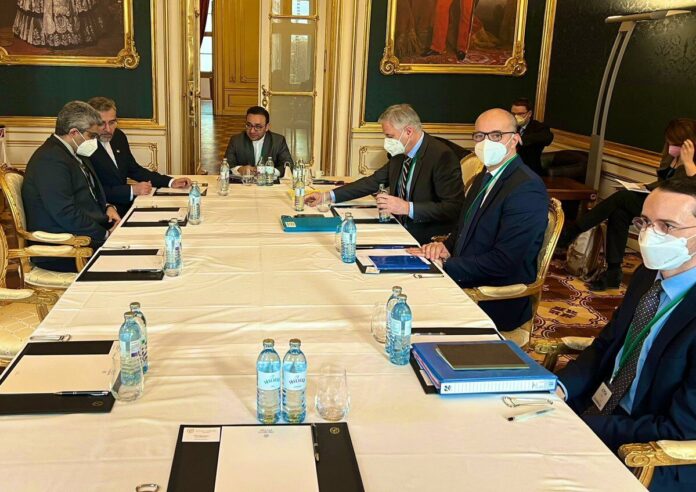
Vienna talks: Iran govt. daily says no full trust in E3

According the “Iran” daily, the Islamic Republic is the main player in the Vienna talks aimed at getting US sanctions against Iran lifted.   

“In the new round of talks, the main player is the Islamic Republic of Iran, and the respondent is the Western side, which can give us the upper hand,” wrote the daily, that normally reflects the government stances.

The paper noted talks are moving at a snail’s pace, adding “However, we are at the beginning of the talks, and from now on, we should discuss every single item and areas on which divisions remain.”

“Obviously, the Western side will not sit idly by and will be strict with giving concessions, the same way that it has been trying all along to use all levers and propaganda campaigns as well as the “good cop, bad cop” game in order to keep Iran from securing its demands,” it explained.

“It is clear that the talks are moving forward slowly and one can never have complete trust, especially in the three European countries, as there is uncertainty over whether they will fully go for real talks or will just display a show and only sometimes get engaged in real negotiations,” the daily added.

“It is up to our negotiating team to keep talks with the Western side on a positive and forward-moving track,” it said, adding, “This is a difficult job which our diplomats seem to have been able to do, so far.”

Al-Jazeera corrects report of ‘Tehran-Washington deal’ on sanctions removal

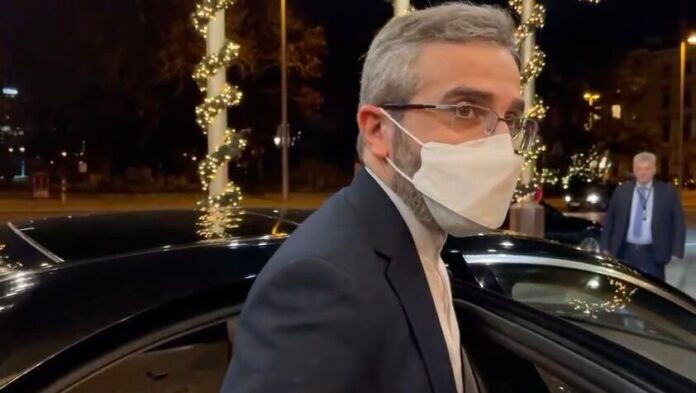
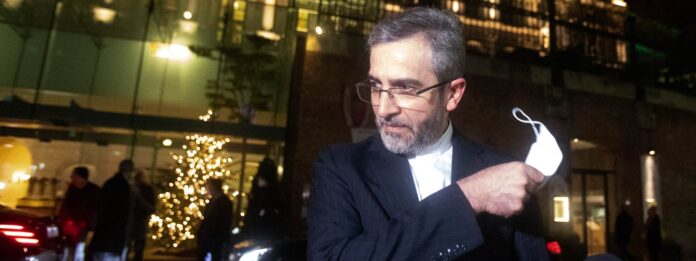
Iran’s chief nuclear negotiator to Vienna talks Ali Bagheri Kani had been quoted as telling Al-Jazeera that Iran and the US were close to reaching agreement on the removal of sanctions.

However, as quoted by IRNA, Bagheri Kani had made no mention of “the US” in his remarks.

According to IRNA, In a false report due to translation error, Al-Jazeera had quoted the chief negotiator as saying that Tehran and Washington were close to reaching a deal on the lifting of sanctions.

In the corrected version of the report, Al-Jazeera revised its original account by quoting Bagheri Kani as saying that the Western sides have accepted some points with regards to the lifting of sanctions “which I consider as minor progress.”

Al-Jazeera further quoted Bagheri Kani as saying that the future round of talks could be the last one if the other parties to the negotiations accept Iran’s logical point of view.

Rescuers find body of climber who went missing in Dizin heights

Authorities say the body of the climber, who fell to his death, was transferred out of the mountainous area by a helicopter.  

Search teams found the nine others alive in the early hours of Friday after a hunt that lasted several hours.

The group of climbers, who went to the Dizin heights for a hike, went missing on Thursday triggering a search and rescue operation.

“Kalaneh”, a reason for getting together in Iran’s Sardasht

This traditional food is made by women, especially the older ones in villages, and when it is ready, the rest of the people of the village show up and eat it together.

Recipe for Kalaneh:

Traditional tools can be used for spreading the dough and baking it. You will also need some local green onions, flour, dough and a clean place for the tools and the ingredients needed to prepare the traditional dish.

One of the women mixes the flour and water to prepare the dough.

Ingredients: Two cups of flour, 100 grams of spring onion, 1/2 cup of butter oil, one cup of milk, salt and sugar.

First, finely chop the spring onions.

Sift the flour 2-3 times and pour it into a relatively large bowl and dig a hole in its center. 

Then add some milk to it and if you want, you can add some sugar at this point.

Add some salt to the flour mixture and stir until more milk needs to be added. Add the milk to the dough and stir until you finally get soft dough. Knead the dough thoroughly with your hands until it is ready. 


Then leave the prepared dough for 25 to 30 minutes to rest and rise.

When the dough puffs up and doubles in volume, divide it into several equal portions.

Place the rounded parts of dough (approximately 100 grams each) one after the other on a clean mat to which some flour has already been added.

Another one of the women spreads the dough pieces so that it is neither thick nor so thin that it burns, and delivers them to another woman who pours the finely chopped onions over the flattened dough.

In the final stage, the dough and the chopped onions are put on a heated traditional tool called “Saaj” to bake.

The lady in charge of cooking the Kalanehs turns them on the Saaj at regular times to bake them on both sides, and finally puts the cooked and prepared Kalanehs on a table to cool.

You can eat them any way you want, some like it hot, some like it cold!

Iran’s trade with neighbors reach $33bn in eight months: official

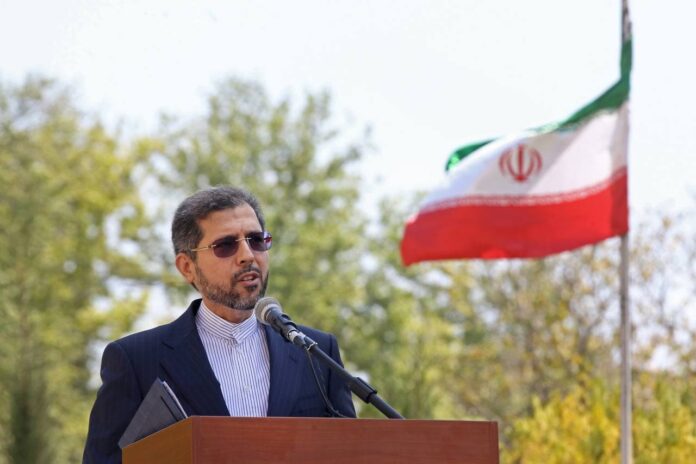
Iranian Customs Spokesman Rouhollah Latifi said Iraq, Turkey, the United Arab Emirates (UAE), Afghanistan and Pakistan are the top five countries purchasing Iranian goods.

Except for Afghanistan, he added, Iran’s exports to the other four countries rose in recent months.

He added these five countries are followed by Russia, Oman, the Azerbaijan Republic, Turkmenistan, Kazakhstan, Qatar, Kuwait, Bahrain and Saudi Arabia as countries purchasing commodities from Iran.

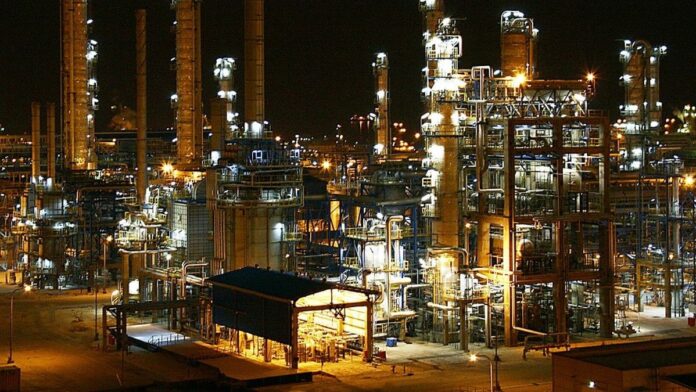
In terms of value, said the official, some 40% of Iran’s exports to neighboring countries included petrochemical products, LNG and oil derivatives.

“The rest included foodstuff, agricultural produce and industrial products as well as construction and mineral materials,” he explained.

He said Iran has also imported over $32 billion worth of goods from neighboring countries over the past eight months.

Iran has been under crushing US sanctions that severely limit it trade with other countries.

Tehran, Washington close to reaching deal on sanctions removal: Iran negotiator

“All parties to the negotiations have accepted the two draft documents that Iran submitted at the beginning of this round of talks,” said Ali Bagheri Kani in an interview with al-Jazeera.

“The reason behind a delay in clinching a deal has been the European sides’ stance on nuclear issues,” said the head of the Iranian negotiating team.

He also told Al Mayadeen that “After one week of intense talks, the 4+1 group agreed to the proposal that Iran put forward while presenting its draft documents.”

“At the moment, there are two new drafts; one about the removal of sanctions, and the other about nuclear measures,” he noted.

“The two drafts presented by Iran will be the basis of the fresh round of negotiations,” the chief negotiator explained. 

“For the eighth round of talks, we have a lot to do and have a very complicated responsibility,” he said.

Meanwhile, the European Troika announced in a statement on Friday that the breakthrough made with the talks in the past 24 hours has only brought the trend of talks closer to the point where they had been left off back in June when the previous Iranian administration was in office. 

Iran and the P4+1 group – China, Russia, Britain, France and Germany – have been negotiating in Vienna aimed at removing anti-US sanctions and the revival of the Iran nuclear deal, JCPOA. 

The negotiating delegations are expected to return to Vienna in about one week.

Iran official: Missing IAEA memory card destroyed in June sabotage attack

FILE PHOTO: The logo of the International Atomic Energy Agency (IAEA) is seen at their headquarters during a board of governors meeting, amid the coronavirus disease (COVID-19) outbreak in Vienna, Austria, June 7, 2021. REUTERS/Leonhard Foeger

The unnamed official at the Atomic Energy Organization of Iran told Nournews that the memory card mentioned by Rafael Grossi was destroyed in the sabotage operation in June. The attack the TESA Karaj complex was blamed on the Israeli regime.

“The Agency must answer why it is not using its capacity to prevent such sabotage operations, the origin of which is also known,” the official added.

The IAEA chief said on Friday that “we have doubts about that and this is why we are asking, ‘Where is it?’”

“I am hopeful that they are going to come up with an answer because it’s very strange that it disappears,” Grossi added.

Grossi’s remarks came two days after the IAEA struck a deal with Iran on replacing surveillance cameras that had been removed after the attack.

Iran has shown the International Atomic Energy Agency the surveillance cameras and their storage media, except the memory card from the destroyed camera.

16 Iranian provinces without any Covid fatalities

Since Thursday, 46 people have died of the disease in Iran, pushing the total fatalities to 130,992 as of the onset of the pandemic.

There were 2,196 new infections of Covid in Iran over the past 24 hours. They included 341 hospitalizations.

Meanwhile, 112,596,571 doses of Covid vaccine have been administered since the beginning of a vaccination campaign across Iran. Nearly 3.5 million people have received a third shot of the jab.

Iran left the fifth Coronavirus wave a couple of months ago. During that wave, Covid killed hundreds of people daily.

The current downward trend in Covid deaths and infections has been attributed to the swift vaccination drive. Officials are warning Iran is not yet completely out of the woods, though there are no red zones of the Coronavirus in the country.

Bagheri: Talks with P4+1 will resume in near future

Bagheri noted that the proposals were put forth in two draft documents the Iranian negotiating team has already presented to the P4+1, China, Russia, Britain, France and Germany.

He added that initially, the European troika resisted Iran’s proposals regarding nuclear issues but finally agreed to continue the talks based on the Iranian draft documents.
The lead Iranian negotiator further said the negotiations will resume in the near future but no date has yet been set for that purpose.

Bagheri added that the EU’s Deputy Foreign Policy Chief Enrique Mora will be in touch will all sides and a date will be set for the resumption of talks in due course. Meanwhile, the European troika has expressed disappointment at the ending of the talks but said it respects Bagheri’s decision to return to Tehran for consultation.

The European troika also said the progress made during the past 24 hours has brought the talks close to where they stopped under the former Iranian administration.

Iran slams dismissal of female teacher in Canada for wearing hijab

Kazem Gharibabadi urged the Canadian government to intervene in the case of Ms.

Fatemeh Anvari who is a third-grade teacher in Canada’s Quebec Province.

The removal of the teacher has drawn widespread condemnation of a controversial law in Quebec, which critics say unfairly targets ethnic minorities under the pretext of secularism.

Fatemeh Anvari was told earlier this month that she would no longer be allowed to teach at a school in the city of Chelsea because her hijab violated a law passed in 2019.

Authorities at the school say the law bars public servants including police officers, lawyers, judges and teachers from wearing religious symbols while doing their work.