
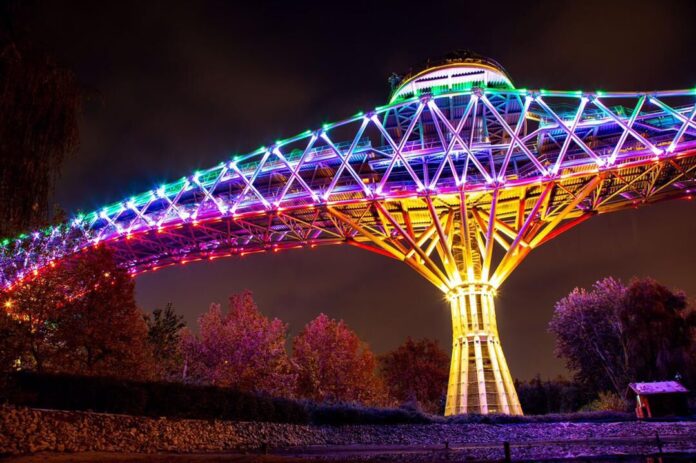
Iranian soldier killed while chasing drug traffickers
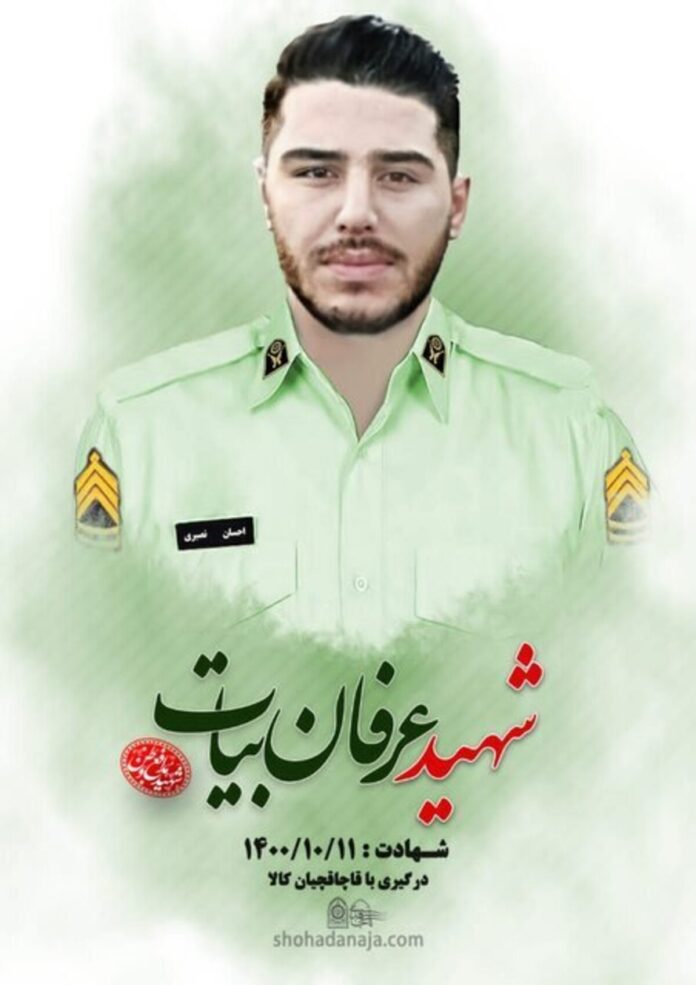
Sergeant Erfan Bayat had his tires punctured from nails planted by the drug smugglers and his car got upside down, killing him.
Iran has lost more than 3,700 Iranian law enforcement forces in counter-narcotics operations over the last three decades. Over 12,000 forces have also been maimed in the war on drugs.
Iran says it deserves praise for its efforts to block narcotrafficking pathways to the West.
The country has spent hundreds of millions of dollars on sealing its borders and preventing the transit of narcotics destined for European, Arab and Central Asian countries.
Iran spends around 800 million dollars annually to fight drug trafficking.
Report: Israeli forces killed 357 Palestinians in 2021
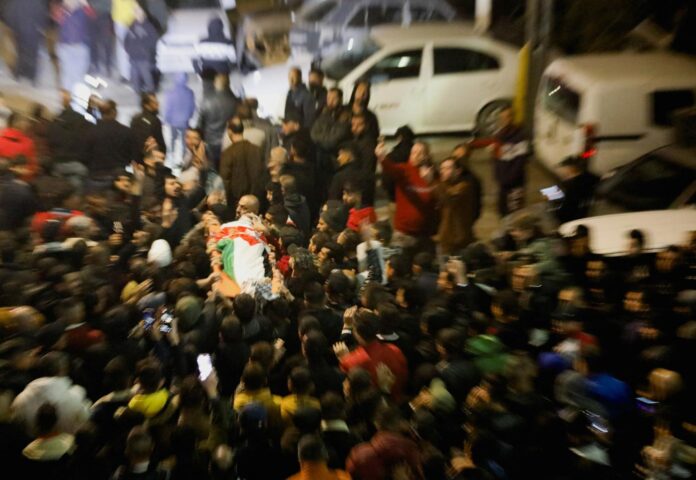
The secretary general of the National Association of the Martyrs’ Families of Palestine, Muhammad Sbeihat, said on Saturday that the body has carried out field research and investigations in various provinces and found out that all these Palestinians were killed at the hands of the Israeli regime last year.
The report showed that some 19 percent of those killed were women, which is the highest figure in the history of the Israeli regime’s crimes and acts of violation after its occupation of Palestinian land in 1948.
The report added that 22 percent of those martyred were children, emphasizing that silence of the international community has encouraged Tel Aviv to commit such crimes against the Palestinian people.
The global silence towards Israel’s crimes has encouraged the regime to ignore and belittle blood of the Palestinian people of all ages.
Sbeihat also called on the international community, humanitarian institutions and the Palestinian Authority, particularly the Palestinian ministries of justice and foreign affairs to pursue legal prosecution of Israeli officials in international courts.
Rights advocates say that Israeli forces have adopted a “shoot-to-kill” policy during clashes with Palestinians, even in clear cases where they could be captured.
Tel Aviv has been criticized for its extensive use of lethal force and extrajudicial killing of Palestinians who do not pose an immediate threat to its forces or to settlers.
Israeli troops have on numerous occasions been caught on camera, brutally killing Palestinians, with the videos going viral online and sparking international condemnation.
The Israeli regime occupied the West Bank in 1967 before starting to dot the Palestinian territory with illegal settlements and severely restricting the Palestinians’ freedom of movement there.
Palestinians want the West Bank as part of a future independent Palestinian state with East al-Quds as its capital.
‘Gen. Soleimani perfectly linked diplomacy, military field’
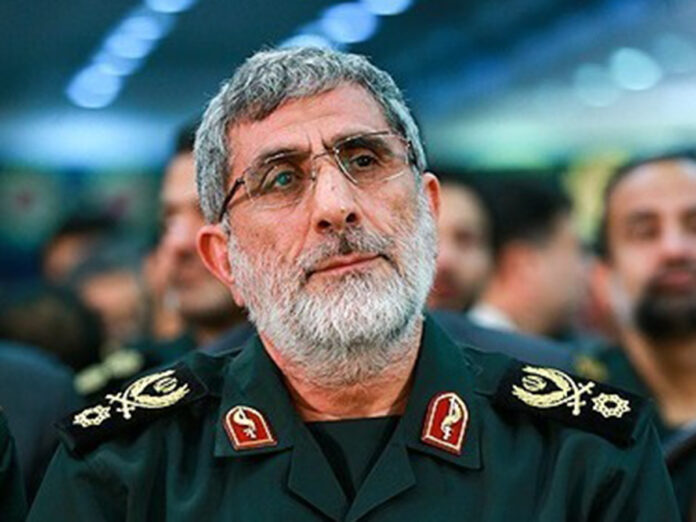
Brigadier General Esmail Qa’ani made a speech at a ceremony held at the Iranian Foreign Ministry’s Institute for Political and International Studies to commemorate General Soleimani on Sunday.
The senior military official said General Soleimani “was a flag-bearer in various fields.”
Qa’ani said General Soleimani perfectly linked diplomacy and the military field.
General Soleimani viewed politics from Islam’s standpoint and avoided becoming a “political player,” Qa’ani said, adding that his school of thought necessitates everyone to stand united on the country’s political stage.
The Quds Force chief said that the iconic figure’s initiatives turned Tehran into the hub of resistance and Islamic convergence.
General Soleimani was assassinated by a targeted US drone strike on January 3, 2020 upon arrival in the Iraqi capital on an official visit.
IRGC: US will be forced to leave region in disgrace
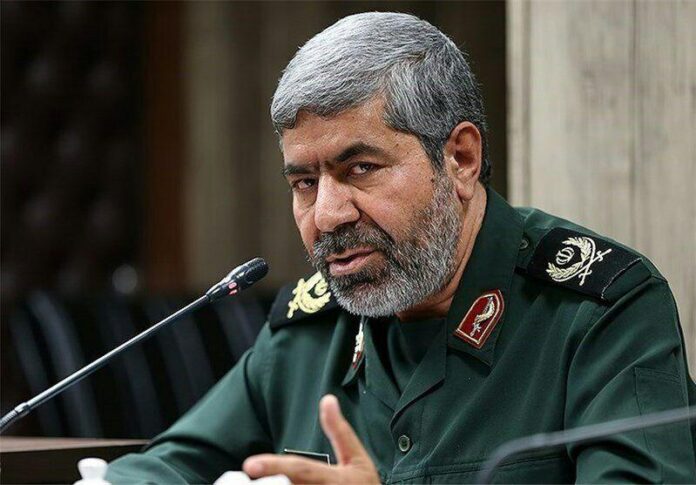
IRGC spokesman Brigadier General Ramezan Sharif was speaking at a ceremony in the Iranian city of Urmia on Sunday marking the second anniversary of the US military’s assassination of Lieutenant General Qassem Soleimani, the ex-commander of the IRGC’s Quds Force, in Iraq.
“Just as the Americans left Afghanistan with humiliation, they will have to leave other countries of the region as well,” Sharif said. “That will be the first punishment that they will have to suffer.”
General Soleimani was murdered, along with his companions, in a US drone strike in January 2020 upon arrival in Iraq on an official visit. The assassination has given rise to calls for the American military to withdraw from the region.
Meanwhile, Sharif delivered a warning to the Arab countries in the Persian Gulf region against putting their trust in the US, saying the fate of the dictators and leaders who misplaced their trust shows that these regimes are only relying on a “feeble” base of support.
Sharif said General Soleimani had predicted the defeat of the Daesh terror group and their American partners in the region long before that actually happened thanks to his commanding view of the enemy camp as well as the resistance front’s strength.
Afghans urge US to release frozen assets
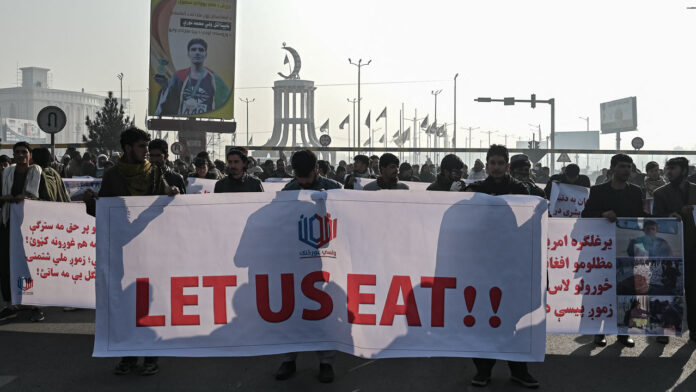
They called for the release of around $9 billion in the central bank assets blocked by the United States following the fall of the republic government in mid-August.
The rally members also asked Muslim nations and the international community to recognize the Islamic Emirate (IE) and advocate for the release of Afghan assets.
“Afghanistan is faced with huge problems amidst a harsh winter. The protesters’ demand is that Afghanistan’s assets are unblocked. The money belongs to the people of Afghanistan,” said Abubakr Zaland, a protester.
“People have protested here for the release of Afghan assets. We urge the world, especially the Organization for Islamic Cooperation (OIC) member states, to recognize the current government,” said Mohammad Nasim Zawak, a protester.
The rally members stated the international community will be responsible if any crisis happens in the country.
They asked the international community to engage with the Islamic Emirate to avert a humanitarian crisis in Afghanistan.
“Our today’s protest is to call on the international community to recognize the current government and engage with it,” noted Hamidullah, a protester.
The demonstrators issued a 12-article statement, listing their demands and asking the international community to address their problems.
“The international community should respect the sacrifices the Afghans have made and should stop creating problems and interference in Afghan affairs. All the countries should recognize the Islamic Emirate and start engaging with it,” Qudratullah Niazi, a protester, added.
Unfreezing Afghanistan central bank’s assets and recognizing the Islamic Emirate were the core demands chanted by the protesters during their protest. The protesters warned of staging widespread rallies in Kabul and other the provinces if their demands are not met.
Iranian movies among top films of 2021 in France
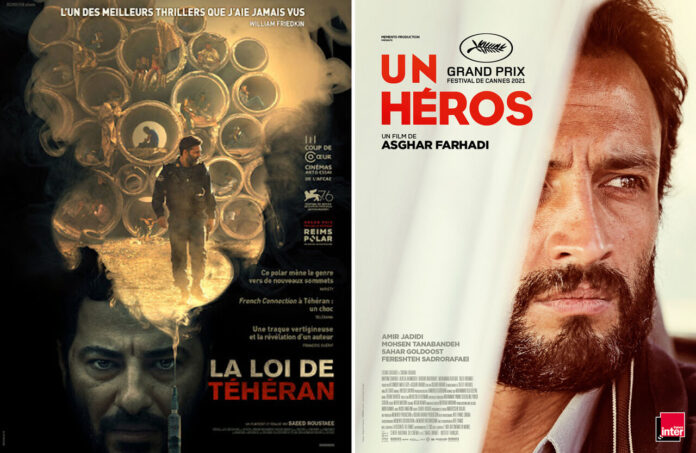
Iran’s cinema is going through its golden days in France nowadays, a fact which is obvious by both people’s welcoming the screened movies in France and critics’ points of view.
Welcoming the Christian New Year, a number of seasoned French experts introduced top movies of the year 2021 in their country. Among them is Roostai‘s “6.5 per Meter” known as “The Law of Tehran” in France.
The France Inter website describes the movie as an exciting one, a movie which had already been welcomed with a standing ovation at Venice Film Festival.
The movie was first screened at the 37th International Fajr Film Festival in Iran in 2019 and received the Crystal Simorgh Trophy for being chosen as the best film by viewers.
Farhadi’s “A Hero” has also received a prestigious award at the 74th Cannes Film Festival.
Thousands of British troops discharged due to Iraq war mental crisis
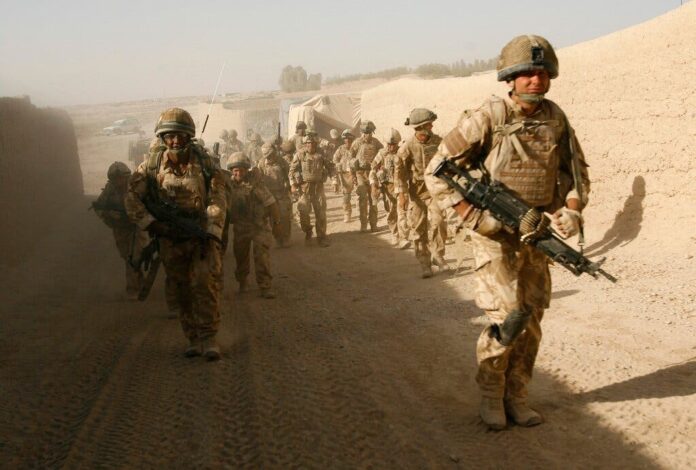
The most senior clergyman in the British Army has revealed that mental scars from the Iraq War left him in “the valley of the shadow of death, a place of utter desolation” for years after returning from the war zone.
Clinton Langston, the outgoing chaplain-general of the Army, said he became “sick with fear” after writing letters to his wife and children that were to be opened in the event of his death during a six-month deployment in 2004.
He said: “Another fear began to emerge, that the fear of losing my family would stop me from caring for my soldiers.”
“That instead of risking my life going out and about to visit them in their bases, I would seek out places of relative safety and so give myself the best chance of returning home safely,” he stated.
Over 10,000 troops have been discharged because of mental health problems over the past 20 years, according to official figures.
Another 500 quit last year after being diagnosed with post-traumatic stress disorder, depression and other disorders.
In a bid to tackle the issue, the Army has launched a £220 million mental health initiative, including a 24-hour helpline for troops following a campaign by The Mail on Sunday.
Padre Langston noted he decided “to do my best for my soldiers”, but in order to do so “had to dial down all my emotional connections to my family”.
The 59-year-old added: “I remember getting on the aircraft into theatre [the war zone] and deciding I had already died, because then I would have no feelings and no fear.”
“I returned home six months later. Both the immediate days after and the years since have been dominated by my inability to dial my emotions back up,” Langston continued, stating, “I have remained, as have so many of our soldiers, in the valley of the shadow of death – a place of utter desolation where our shadows yearn to feel and love and live again but where our families find only the shell of who we were.”
Langston, who also served tours in Bosnia and Northern Ireland and is set to retire in May, made the candid remarks during the Thought For The Day segment on BBC Radio 4’s Today programme, which was guest-edited by General Sir Nick Carter, the UK’s former Chief of the Defence Staff.
He said the biblical story of Jesus bringing his friend Lazarus back from the dead had helped him to believe that “it’s OK to live again, but it’s a long road”.
He went on: “I know this experience of trauma and halting recovery is shared by countless people beyond the military, who have faced physical or emotional trauma, who feel condemned to a lifeless existence as they seek to numb the pain of what is and what might be.”
“But maybe, as we turn in to this New Year, we can all find ways to reconnect and to escape the tombs and shrouds that imprison us, holding once more the hands that want us to live again,” he added.
Iran begins natural gas swap with Turkmenistan, Azerbaijan Republic
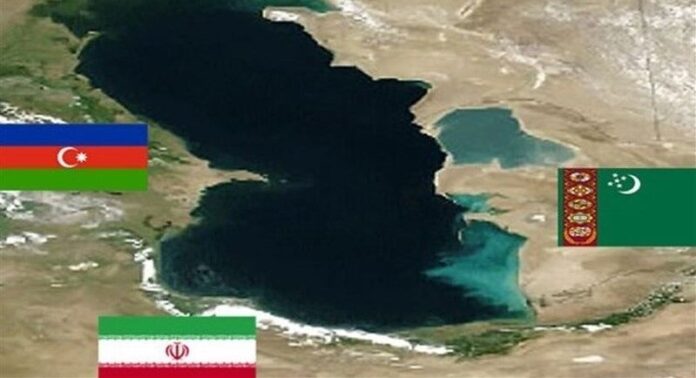
Based on the agreement, signed on the sidelines of the summit of the Economic Cooperation Organization in Ashgabat, Iran imports 1.5 to 2 billion cubic meters of natural gas from Turkmenistan a year and delivers an equal amount of its own natural gas to the Azerbaijan Republic.
After the contract was signed, the Iranian oil ministry described it as a “step forward in energy ties” among the countries.
Javad Owji also said the agreements helps Iran to ensure the stability of its natural gas network and supply of energy to several of its own provinces including Khorasan Razavi, Golestan and Semnan.
The gas deal is seen as a key step forward in Iran’s energy ties with neighboring countries, especially as it raises the prospect of the country exporting its natural gas to European countries through the Azerbaijan Republic.
Iran covid: Number of vaccine doses crosses 120 million
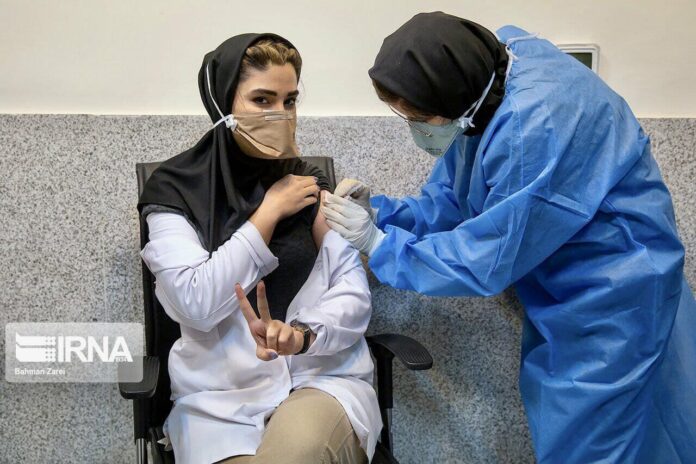
Iranian Health Ministry figures on Sunday showed that 120,003,437 doses have been given since the nationwide vaccination process was rolled out in the summer of 2021 in the country. Over 8 million people have also been triple-vaxxed.
The vaccination campaign has however failed to eliminate Covid deaths and cases though it’s credited with a downward trend in new fatalities and infections. According to the Health Ministry figures on Sunday, 41 people died of Covid in the past 24 hours while 1,510 people tested positive for the disease.
The daily caseload included 294 hospitalizations.
Iran has so far been shielded by the vaccination drive from a highly contagious new variant of Covid known as Omicron.
The strain has brought much of Europe to a standstill. It has also hit the US hard.
