Monday, January 12, 2026
Home Blog Page 221

Putin faces ‘very severe consequences’ if no Ukraine truce agreed: Trump

Speaking after a call with Volodymyr Zelensky and other European leaders, Trump also suggested he would push for a second summit if his meeting with Putin goes well – this time including his Ukrainian counterpart.

“If the first one goes OK, we’ll have a quick second one,” Trump told reporters in Washington.

“I would like to do it almost immediately, and we’ll have a quick second meeting between President Putin and President Zelenskyy and myself, if they’d like to have me there.”

Trump did not provide a timeframe for a second meeting. He is to meet Putin in Anchorage, Alaska, on Friday. The meeting will reportedly be held at Joint Base Elmendorf–Richardson, a military facility crucial to countering the Soviet Union during the height of the cold war.

Asked if Russia would face consequences if Putin did not agree to stop the war after the Alaska meeting, Trump said: “Yes, they will … very severe consequences.”

The president’s remarks followed what he described as a very good call with European leaders in which he consulted about the goal and strategy for his summit. He pleased Europe’s leadership by giving reassurances that a ceasefire was his priority and he would not make any territorial concessions without Kyiv’s full involvement.

Trump’s approach at the video conference, as described by France’s Emmanuel Macron, appeared to reassure some of the leaders, who were making a final collective plea to the unpredictable US president that he had a duty to protect Ukraine’s sovereignty – and European security – at the talks.

The European leaders spoke to Trump and his vice-president, JD Vance, in a hastily convened one-hour meeting in an effort to shape Trump’s negotiating strategy. Zelensky and European leaders have been excluded from the summit and fear that Trump, intent on fulfilling his election campaign guarantee that he could easily end the bloodshed in Ukraine, will make concessions that compromise Ukraine’s future sovereignty.

But Trump underlined his promise that the summit was not in itself a substantive negotiation and was what he described as a “feel-out” to test Putin’s terms to sign a temporary ceasefire that would then lead to talks with Kyiv. Trump said it had been a very good call, and that he rated it 10 out of 10.

Britain, France and Germany, co-chairs of the so-called “coalition of the willing”, later laid out their position on the talks, reiterating that international borders must not be changed by force, and insisting that Ukraine must have “robust and credible security guarantees to effectively defend its sovereignty and territorial integrity”.

The three countries repeated that meaningful negotiations could happen only with a ceasefire in place, and called for Russia to face further economic sanctions if it did not agree to cease hostilities at the summit.

Speaking alongside Zelensky in Berlin, the German chancellor, Friedrich Merz, said Europe wanted Trump to be successful in Alaska but that it had made clear to the US president that Ukrainian and European interests had to be protected at the summit.

Merz called for a 30-day ceasefire, and then substantive talks. Putin has resisted a ceasefire for months.

Setting out the key principles on which Europe is united he stated: “Negotiations must be part of a common transatlantic strategy. Then they can ultimately be most likely to succeed. This strategy must continue to rely on strong support for Ukraine and necessary pressure against Russia. This also means, if there is no movement on the Russian side in Alaska, then the United States and we Europeans should … increase the pressure.”

He added that there could not be any Russian legal ownership of Ukrainian territory. “President Trump knows this position, he shares it very extensively and therefore I can say we have had a really exceptionally constructive and good conversation with each other.”

Macron said no serious discussions had taken place about Russian-Ukrainian land swaps involving the ceding of Ukrainian territory, and Trump had anyway underlined that any such discussions could only be negotiated with Kyiv. He added Trump would fight for a trilateral meeting between Ukraine, the US and Russia and that such a meeting would be held in Europe.

One European diplomat stated: “Overall the meeting was reassuring in that our points came across, but the question remains whether Trump will stick to the agreed script when he gets into the room with Putin.”

Trump met heads of state and government leaders from Germany, the UK, France, Italy, Poland and Finland, as well as the European Commission president, Ursula von der Leyen. The issue of security guarantees for Ukraine was raised in the call with Trump, but no breakthrough was made in the US offering to provide practical support to the coalition.

But the Europeans’ main objective had been to seek reassurances from the notoriously fickle Trump that he would not be lured into making irretrievable pledges requiring Ukraine to make concessions of land as the price for securing Putin’s agreement to a ceasefire. They also tried to extract assurances that Trump was still prepared to deploy as yet unused economic levers that could damage Russian revenues.

European leaders have been careful in public to welcome Trump’s summit but in private fear Trump is bent on improving US-Russia relations and sees a loss of Ukrainian sovereignty as a necessary and unavoidable price to secure that objective.

Trump has been vague about his strategy, including the terms he will offer to induce Putin to agree to a ceasefire.

Zelensky has vowed that the Ukrainian military will not voluntarily surrender territory in Donetsk and Luhansk, but Russia is insisting at least four Ukrainian regions will become Russian either at the negotiating table or through force.

Earlier on Wednesday, Trump vented his fury at media reporting of his meeting with Putin, writing on Truth Social: “The media is being really, really unfair about my meeting with Putin. They keep quoting fired losers and really stupid people like John Bolton, who just said that even though the meeting is on US soil, ‘Putin has already won’. What the hell is this? We win EVERYTHING.”

The treasury secretary, Scott Bessent, said further sanctions or secondary tariffs could yet be placed on Russia’s trading partners if the Alaska meeting did not go well.

A confident Moscow dismissed the importance of Europe’s consultation with Trump. The foreign ministry spokesperson Alexei Fadeyev said: “We consider the consultations requested by the Europeans to be politically and practically insignificant actions. Verbally, the Europeans support the diplomatic efforts of Washington and Moscow to resolve the Ukrainian crisis, but in reality the European Union is sabotaging them.”

Russia says the Alaska meeting is likely to address the full gamut of Russian-American bilateral relations, and not just Ukraine.

“We hope that this meeting will allow the leaders to focus on the full range of issues, from the crisis in Ukraine to the obstacles that hinder normal and constructive dialogue, which is crucial to ensuring international peace and stability,” the spokesperson stated.

The veteran Russian foreign minister, Sergei Lavrov, will be present at the talks.

German manufacturer mulls relocating to US to avoid weapons embargo against Israel: Report

Renk CEO Alexander Sagel mentioned the prospective shift on a post-earnings call, as reported by Reuters on Wednesday.

The call comes five days after German Chancellor Friedrich Merz announced the country would freeze military exports to Israel that could be used in the Gaza Strip, amidst an Israeli plan to occupy the entire Palestinian enclave.

Israel’s war on Gaza has drawn international condemnation, and its plan to empty Gaza City of its one million inhabitants has drawn criticism even from staunch Israeli allies such as Germany. If enforced, the plan would amount to the forced expulsion of Palestinians, an illegal move under international law.

Renk produces tank transmissions and engines for the Israeli military, accounting for two to three percent of the company’s business portfolio.

These parts are essential components in Israel’s main Merkava battle tanks, which were used in the killing of six-year-old Hind Rajab and her family, as well as Namer armoured personnel carriers.

“If we cannot produce [transmissions] in Germany, we will relocate these volumes to a different plant, for example, to the US,” Segal stated.

“This might take maybe 8 to 10 months, but if there’s no move forward, we will do it because we have this business.”

Renk has seen rising profits from its vehicle mobility solutions department in recent months, as Israel’s genocide in Gaza continues.

Chancellor Friedrich Merz said on Friday that the exports were frozen “until further notice” and expressed concern for the plight of Gaza’s Palestinians, who are suffering under Israeli-imposed starvation.

Germany is Israel’s second-largest supplier of weapons, following the US.

Merz added it was Israel’s right to disarm Hamas and seek the release of its captives in Gaza, but that these goals have become harder to achieve due to Israel’s planned military action.

“The German government believes that the even tougher military action in the Gaza Strip decided upon by the Israeli cabinet last night makes it increasingly difficult to see how these goals can be achieved,” Merz announced in a statement.

Politically, Germany is one of Israel’s closest allies. The country has not recognised Palestine and has committed to ignoring the International Criminal Court’s arrest warrant against Israeli Prime Minister Benjamin Netanyahu.

Germany has also cracked down on pro-Palestine speech by banning symbols associated with the movement, such as the inverted red triangle, and by withholding public funds from individuals and organisations that boycott Israel.

After Israel’s cabinet approved a plan to occupy the entire Gaza Strip, Germany announced it would halt “any exports of military equipment that could be used in the Gaza Strip until further notice”.

If enforced, a German arms embargo could represent a significant step in Israel’s growing international isolation.

Yet according to the Palestinian-led Boycott, Divest and Sanctions movement, on the same day Germany’s arms embargo was announced, the country issued a licence to export a submarine to Israel.

On 31 July, Slovenia became the first European Union country to impose an arms embargo on Israel.

Citing the failure of the EU to impose restrictions itself, the central European country unilaterally banned the export or import of weapons to Israel.

Iranian National Security chief meets Hezbollah leader in Beirut before returning home

Naim Qassem

During the meeting, Qassem expressed renewed appreciation for Iran’s ongoing support for Lebanon and its resistance against Israel.
He also praised Iran’s steadfast stance in supporting Lebanon’s unity, sovereignty, and independence.

Qassem highlighted the brotherly ties between the peoples of Iran and Lebanon, describing these relations as a cornerstone of stability and resistance in the region.

Larijani returned to Tehran on Friday following a three-day visit to Iraq and Lebanon.

During his visit to Lebanon, Larijani held meetings with senior officials, including President Michel Aoun, Prime Minister Najib Mikati, and Parliament Speaker Nabih Berri.

He also met with prominent Lebanese and Palestinian figures to discuss bilateral relations and regional issues.

The trip marked the conclusion of Larijani’s maiden tour after assuming top security post, which aimed to strengthen political and security cooperation between Iran and its regional partners.

Arbaeen pilgrimage walk for those unable to travel to Iraq held nationwide in Iran

In Tehran, with millions of participants taking the designated symbolic routes to honor the 40th day after the martyrdom anniversary of Imam Hussein, the third Shia Imam, nearly 1400 years ago.

In the capital Tehran, the participants walked from Imam Hussein Square, in downtown the city, to the holy shrine of Abdul Azim al-Hasani in Shahr-e Rey, southern Tehran, under the slogan “I Pledge.”

The event started at 5 a.m. local time with morning prayers and the recitation of the Arbaeen Ziyarat. Approximately 2,200 service stations, or mawkibs, were set up along the route, providing food, cultural activities, and other services.

Special programs such as storytelling campaigns for youth, pledges in memory of martyrs, and Qur’an recitations were organized to engage younger participants.

The 13-kilometer route offered interactive art, games, and displays highlighting the historical and religious significance of Arbaeen.

Tehran’s municipal authorities and cultural organizations also installed thousands of banners, flags, and symbolic structures along the path to enhance the religious and cultural atmosphere.

Israeli air attacks on Tehran killed inmates in ‘apparent war crime’: HRW

HRW’s investigation, based on satellite imagery, videos and witness accounts, found the 23 June Israeli airstrikes destroyed visitation halls, prison wards, the central kitchen, the medical clinic and administrative offices.

No evident military targets were identified in the facility, which held more than 1,500 prisoners at the time.

“Israel’s strikes on Evin prison on June 23 killed and injured scores of civilians without any evident military target in violation of the laws of war and is an apparent war crime,” said Michael Page, deputy Middle East director at HRW.

“The Israeli attack placed at grave risk the already precarious lives of Evin’s prisoners, many of them wrongfully detained dissidents and activists,” he added.

At least 80 people died in the attack, which occurred during visiting hours, when public areas were at their busiest.

HRW described the strike as unlawfully indiscriminate.

The prison attack took place during a 12-day conflict between Israel and Iran.

Aid groups slam Israel’s ‘weaponisation of Gaza relief’

Gaza War

Aid trucks have massed on Gaza’s borders amid Israel’s blockade of the famine-stricken territory, and new rules are being used by Israel to deny the entry of food, medicine, water and temporary shelters, the groups said in a joint statement released on Thursday.

“Despite claims by Israeli authorities that there is no limit on humanitarian aid entering Gaza, most major international NGOs [nongovernmental organisations] have been unable to deliver a single truck of life-saving supplies since 2 March,” the groups said.

“Instead of clearing the growing backlog of goods, Israeli authorities have rejected requests from dozens of NGOs to bring in life-saving goods, citing that these organisations are ‘not authorised to deliver aid’,” the groups, which include Doctors Without Borders (known by their French acronym, MSF) and Oxfam, said.

Relief organisations that have worked in Gaza for decades are now told by Israel that they are not “authorised” to deliver aid due to new “registration rules”, which include so-called “security” vetting.

Hospitals in Gaza are now without basic supplies as a result, and children, the elderly and those with disabilities are “dying from hunger and preventable illnesses”, the statement continued.

At least 1500 Palestinians have been killed attempting to access aid supplies around GHF distribution sites since May.

The more than 100 relief organisations that signed the statement have called for pressure to be exerted on Israel to end its “weaponisation of aid”, for Israel to end its “bureaucratic obstruction” and for unconditional delivery of life-saving humanitarian aid to Gaza.

The joint outcry by aid groups comes as Israeli forces launch a new operation to take over Gaza City, which will displace more than a million people and force them to move south to concentration zones.

Israel’s operation to occupy Gaza City has triggered international outrage, with the United Nations and world leaders warning of devastating humanitarian consequences for the war-shattered territory.

Iran defeats Chinese Taipei 78-75 to reach FIBA Asian Cup Semifinals

In a thrilling match, Iranian forward Mohammad Amini delivered a standout performance, scoring 30 points and grabbing 10 rebounds, earning comparisons from local media to NBA superstar LeBron James.

His dominance on both ends of the court proved decisive in overturning a significant deficit.

Iran trailed by as many as 17 points during the first half, but strong defensive play and relentless determination saw them chip away at Chinese Taipei’s lead. By the final minutes, the momentum had shifted firmly in Iran’s favor, and the team closed out the win in front of an enthusiastic crowd.

With this victory, Iran advances to the semifinals later this week, where it will face Australia, one of Asia’s strongest contenders, for a spot in the final.

European leaders set out stance on Ukraine ceasefire pathway

“Ukraine must have robust and credible security guarantees to effectively defend its sovereignty and territorial integrity,” said the joint statement, published by Britain two days before a planned summit between U.S. President Donald Trump and Russian President Vladimir Putin in Alaska.

“The Coalition of the Willing is ready to play an active role, including through plans by those willing to deploy a reassurance force once hostilities have ceased,” it added.

“No limitations should be placed on Ukraine’s armed forces or on its cooperation with third countries. Russia could not have a veto against Ukraine’s pathway to EU and NATO.”

Iranian Foreign Ministry spokesperson meets UK ambassador in Tehran

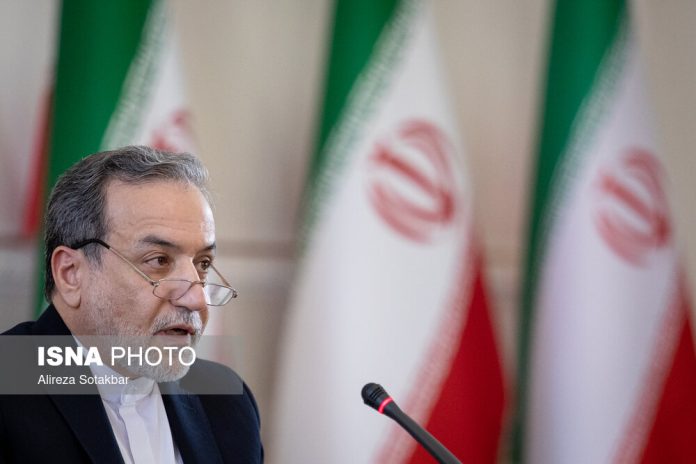
Esmael Baghaei

According to a post by Baqaei on the social media platform X, the meeting was held at his office and focused on issues posing threats to regional and international peace and security.

“We discussed matters of concern to regional & int’l peace and security and the need for all States to shoulder their responsibilities under int’l law,” he wrote.

Ukraine downplays Putin-Trump summit

President Volodymyr Zelensky

Zelensky – who earlier called the summit a “personal victory” for Putin – sought to downplay the potential of the Friday meeting in Anchorage. Both Moscow and Washington have said that the summit would be primarily dedicated to finding a peaceful settlement of the Ukraine conflict, with Trump suggesting that the sides would discuss a potential land swap arrangement between Russia and Ukraine.

“As for the talks, they are important at the leadership level in any case. But it is impossible to talk about Ukraine without Ukraine, and no one will accept that,” Zelensky claimed.

He acknowledged that “a conversation between the US president… and Putin, can certainly be important for the bilateral track.”

“But they cannot decide anything about Ukraine without us,” Zelensky insisted.

The Ukrainian leader also suggested that there will be “a trilateral meeting at the level of leaders,” adding that the date for such a gathering is yet unknown.

Moscow earlier did not rule out direct talks with Zelensky, but said it should be preceded by significant diplomatic progress, while voicing concern about his right to sign any binding agreements, given that his presidential term expired last year.

Ahead of the Alaska summit, Zelensky is expected to hold virtual talks with several European leaders as well as Trump. Several unnamed European officials have told Reuters they see a risk that the summit would lead to an unfavorable deal for Ukraine and its backers. Another source suggested that Trump might seek a deal directly with Putin without involving Ukraine or the EU.

A Daily Telegraph report on Monday claimed that Zelensky could agree to freeze the current front lines and concede land to Russia as part of a possible settlement. Kiev has repeatedly rejected any territorial concessions to Moscow.