Friday, December 26, 2025
Home Blog Page 2199

Top Iran commander: Israel’s Iron Dome can be penetrated

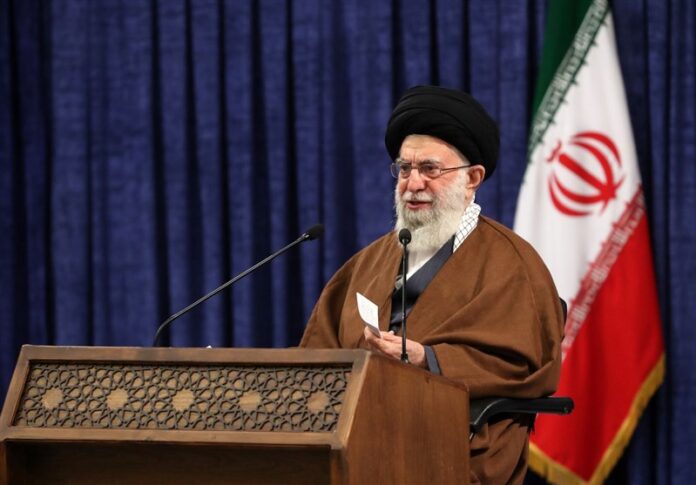
Major General Mohammad Bagheri said the exercise made it clear that Israel’s Iron Dome system can be defeated and penetrated if a barrage of missiles is fired from different directions at a target at once.
The top Iranian general described the drill as one of Iran’s most successful military exercises.
On the final day of military drills codenamed Great Prophet 17 in southern Iran last week, the Islamic Revolutions Guards Corps fired 16 missiles at the mock-up of Dimona destroying it completely.
Tensions between Iran and Israel are skyrocketing after the regime’s latest military threats against the Islamic Republic’s nuclear facilities.
Iran has pledged to give a crushing response to any Israeli aggression.

Syria says Israel attack caused ‘significant material damage’

“At around 03:21 AM, the Israeli enemy carried out an aerial aggression with several missiles from the direction of the Mediterranean… targeting the container yard in Latakia port,” Syrian state news agency SANA cited a military source as saying.

The strike caused “significant material damage” and led to fires, the agency added.

Last time, the Israeli regime had targeted Latakia around 20 days ago.

The Israeli regime maintains a significant military presence in the territory, which it uses as a launch pad for its attacks on the Syrian soil.

The attacks started to grow significantly in scale and frequency after 2011, when Syria found itself in the grip of rampant foreign-backed militancy and terrorism.

Tel Aviv claims that its attacks target alleged supplies that are headed for the Lebanese resistance movement of Hezbollah. On countless occasions, though, the strikes have targeted the reinforcement belonging to Syria’s military and its allies.

The regime has also been providing safe passage and medical treatment to the Takfiri terrorists, who flee the allies’ defensive operations.

Exquisite book in Tehran’s Armenian Museum

Rima Ojaghian, a veteran restorer of old manuscripts at the National Library of Iran who studied in France, told the Mehr News Agency about the old books kept in the Armenian Museum in Tehran.

“I restored these books, which are mostly Bibles, ten years ago. These books are now kept in the Armenian Museum. One of them is exquisite because there are only 7 books similar to it in the world. This book contains prayers that Armenians recited in churches,” she said.

She said that the pattern of the cover of the book is driven from the miniatures inside.

“This book was discovered in ancient Turkey in the early 1700s and was in poor condition when it was delivered to me. I had to clean it 5 times. I even had to wash it. If I remember correctly, this book was hidden in old jars. No other copies of this book were ever made. Similar books are now kept in Armenian libraries,” Ojaghian added.

“This book features the Armenian binding style to the audience. In the past, men used to sew the pages. I tried to bind this book with about 1500 pages in the same old style; even the headband and the tailband on both sides of the book were restored,” she explained.

The type of endband and binding shows well that the Armenians sewed the pages of paper, covered them with wood and closed the book in a certain style to prevent the destruction of the pages, Ojaghian stated.

She added that these books are now kept in two showcases of the Armenian Museum in Tehran.

Sanandaj becomes Iran’s book capital

The symbol of the city of Sanandaj, this huge statue was installed in the city in April 2020 as a memorial to those who lost their lives in the chemical bombing of Kurdistan.

The announcement was made by Obaid Rostami, Director General of Islamic Culture and Guidance Organization of Kurdistan Province on Monday.

Rostami made the announcement in the final ceremony of introducing and selecting the book capital of Iran attended by Mohammad Mehdi Esmaili, Minister of Culture and Islamic Guidance.

He added that Sanandaj is one of the most cultural cities in Iran with great potentials in various fields of culture, art and media.

Rostami also said holding major national and international festivals and events is a key reason why the city was given the title of the Book Capital of Iran.

The official noted that currently Sanandaj has 45 publishers, 70 bookstores, seven public libraries, 6 university libraries and four centers of Kurdish studies and research.
He said the Iranian cities of Ahvaz (2015), Neishabour (2016), Bushehr (2017), Kashan (2017), Yazd (2009) and Shiraz (2016) have previously been given the title “Book Capital” over the past six years.

Now Sanandaj has been selected from 192 cities across Iran and the plaque and statue of the seventh book capital of Iran were presented by the minister of culture and Islamic guidance to the representative of the people of Kurdistan Province.

Tehran nights in run up to New Year

With the New Year fast approaching, some of the neighborhoods of the Iranian capital Tehran are bustling with Christian citizens who are shopping for the festive season.

But it is not only Christians who are out, Muslims and people of others faiths are also enjoying the festive mood and exciting nightlife in the lit up streets.

New Year celebrations in Isfahan’s Julfa neighborhood, Vank Cathedral

New Year celebrations in Isfahan's Julfa

Members of the Armenian community in the Julfa neighborhood of the Iranian city of Isfahan are celebrating the festive season ahead of the New Year.

People in Isfahan have attended the celebrations in Julfa and at Vank Cathedral alongside Armenians.

They posed for photos with Santa in front of Christmas trees that were all lit up for the occasion and congratulated the arrival of the New Year.

Read more:

Iran reaffirms demand for concrete guarantees in Vienna talks

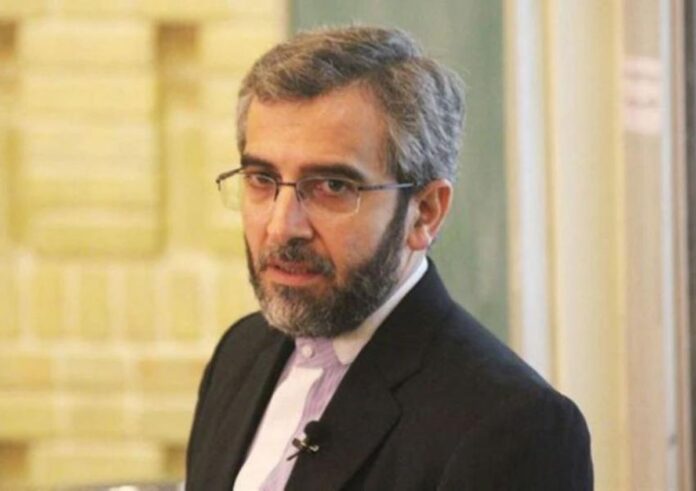
Iran's deputy negotiator Ali Bagheri speaks during a news conference in Almaty April 5, 2013. REUTERS/Shamil Zhumatov

Bagheri was speaking at the joint commission of the Iran nuclear deal, JCPOA, in Vienna on Monday.

He also said any sanctions removal must be verifiable.

The top Iranian negotiator noted that Tehran is fully ready for serious interaction and advancement of talks. The joint commission of the JCPOA was presided by Bagheri and the EU’s Deputy Foreign Policy Chief Enrique Mora.

At the meeting, participants reviewed the progress of the Vienna talks and the continuation of the negotiations. All sides also declared readiness to continue their consultations.

Following the meeting, Mora told reporters the Vienna talks are on the right track to reach a final agreement.

He refused to set a date for reaching a deal but said the negotiations are aimed at achieving an agreement within a few weeks, not months. Mora added that if all sides work hard, a deal is within reach.

The EU’s deputy foreign policy chief however said the parties must make difficult decisions and that is the goal of the Vienna negotiations.

Meanwhile, Russia’s envoy to the international organizations in Vienna Ulyanov said on Twitter that at the meeting of the JCPOA’s joint commission, the participants held businesslike and result-oriented discussions and agreed to speed up the drafting process to achieve a deal as soon as possible.

The eighth round of talks aimed at removing anti-Iran sanctions began Monday in Vienna. Iran has already put forth two draft documents during the previous rounds which it says will be the basis of talks in the Austrian capital.

Iranian negotiator says optimistic about Vienna talks

Iran’s Deputy Foreign Minister and top nuclear negotiator Ali Bagheri and the EU’s Deputy Foreign Policy Chief Enrique Mora are presiding over the session while negotiators from the P4+1 group of countries are also in attendance.

Bagheri said before the session started that he’s optimistic about the outcome of the Vienna talks that are aimed at removing the anti-Iran sanctions.

He added that had he not been optimistic, he would not have travelled to Vienna for negotiations.

Iran has repeatedly said it’s after a good deal in the shortest possible time. The Islamic republic has also rejected any deadlines imposed by the Western parties to the talks.

Tehran has also criticized the West for insinuating time is running out for a deal. It says Western governments can dispel their concern over the matter by adopting a logical and constructive approach during the talks and return to their obligations under the 2015 nuclear deal.

Iraq top court ratifies parliamentary election results

The court had rejected earlier appeals by Iran-backed Shia factions against the results.

Monday’s ratification, following a delay of more than two months, clears the way for a new parliament to hold its inaugural session within two weeks, under Iraqi law.

“The Federal Supreme Court has ratified the results of the legislative elections,” its media officer announced in a brief statement.

Iran-backed factions, including powerful armed groups, had alleged irregularities in the October 10 vote, in which they performed poorly.

“The Federal Court has decided to reject the complaint aimed at not having the (election) results ratified, and to make the plaintiff bear the costs,” Judge Jassim Mohammed earlier said as he read out the ruling at the court headquarters in the capital, Baghdad, on Monday.

“The verdict is binding on all authorities,” he added.

Ratifying election results paves the way for a new parliament to be inaugurated and a new government – to replace the outgoing cabinet led by Prime Minister Mustafa al-Kadhimi – formed.

The formation of governments in Iraq has involved long and complex negotiations among Shia, Sunni and Kurdish groups ever since the 2003 United States-led invasion removed Saddam Hussein.

The biggest winner in the vote was the movement led by Shia populist leader Muqtada al-Sadr which won 73 seats, more than any other group in the fractious 329-seat house.

The election, which was staged months ahead of schedule, came amid widespread frustration with Iraq’s political elite.

Turnout stood at 41 percent, the lowest since the US-led invasion.

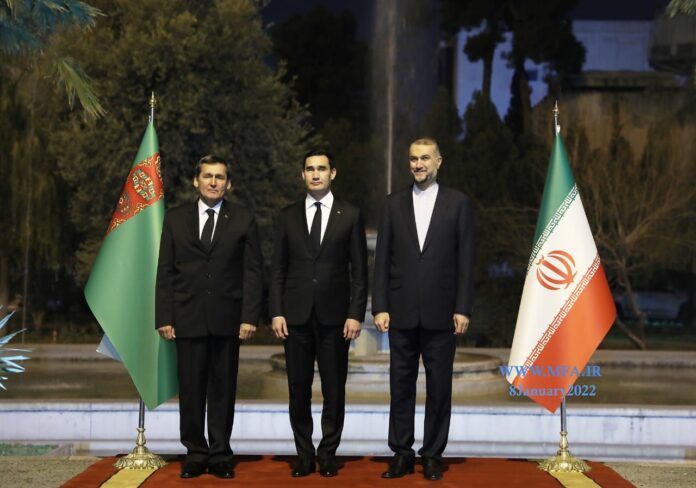
Iranian ambassador: exports to Turkmenistan have increased six-fold

Gholam Abbas Arbab Khales added that since the beginning of the year, we have not had any returned products from Turkmenistan to Iran, and the return of the recent shipment was because the product had become stale and this has nothing to do with toxins.

He said during the Covid pandemic, Turkmenistan has allowed trade from Iran to Turkmenistan to Central Asia.

Arbab Khales added that agricultural products coming from Iran are apples, oranges, tangerines, kiwis and potatoes and onions as well as dairy products.

He said Iran even exported dates to Turkmenistan during the holy month of Ramadan.

He said agricultural products are perishable goods, adding that no goods leave the country without quality control and quarantine, so what happened recently was due to the huge quantities of goods in customs within 10 days.

Earlier, some media outlets said several countries including Turkmenistan had returned Iranian products because they contained high levels of pesticide residues.