Thursday, December 25, 2025
Home Blog Page 2180

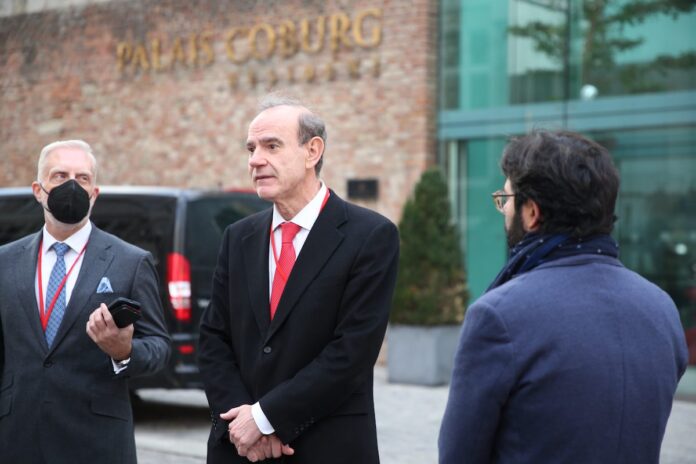
Analyst: Optimism prevailing in Hotel Coburg

Despite pessimistic speculations regarding the outcome of the negotiations in Vienna, now odds are in favor of optimistic probabilities.

According to Iranian officials and what the Russian government’s special envoy, Mikhail Ulyanov, have said, Tehran has agreed to relinquish some of its maximum demands by accepting recommendations by Moscow and Beijing so that the lengthy Vienna talks result in a deal based on the results of six rounds of talks that stopped last June.

Although it is unclear to what extent Tehran will show flexibility in the new round of talks, the Russian and Chinese envoys’ optimism that the Vienna talks will produce results, recent talks between the foreign ministers of Iran and Oman and the US and European troika’s expression of hope about achievable results all indicate the way is paved for an agreement.

However, unexpected events are still possible. The staunch opponents of the JCPOA inside Iran now face the reality that has imposed itself on their slogans and opposition that continued until recently.

To claim that a possible future deal is the inevitable result of efforts by the current administration to correct mistakes by former president Hassan Rouhani’s government is more like a repulsive behavior that seeks to hijack from the outcome of the negotiations.”

Those who try to hamper the talks in Vienna need to finally realize that foreign policy is an arena of realism, flexibility, and practical understanding, regardless of factional affiliation.

So instead of stymieing the negotiations, it would be good for some political currents to try to change their attitudes in the national interest.

Russian negotiator says progress ‘visible’ in Vienna talks

Intensive informal consultations are under way in Vienna within the framework of talks to restore the Joint Comprehensive Plan of Action (JCPOA) on Iran’s nuclear program, stated Russia’s Permanent Representative to the International Organizations in Vienna Mikhail Ulyanov, who heads the Russian delegation at the talks.

“The eighth round of Vienna talks continues. Intensive informal consultations in various formats are under way. The work to lift [US] sanctions [on Iran], on nuclear issues and sequence of steps to restore JCPOA continues,” he added.

When asked whether any progress has been made, the head of the Russian delegation replied that it is already visible.

“The main stumbling blocks are becoming clearer,” he noted.

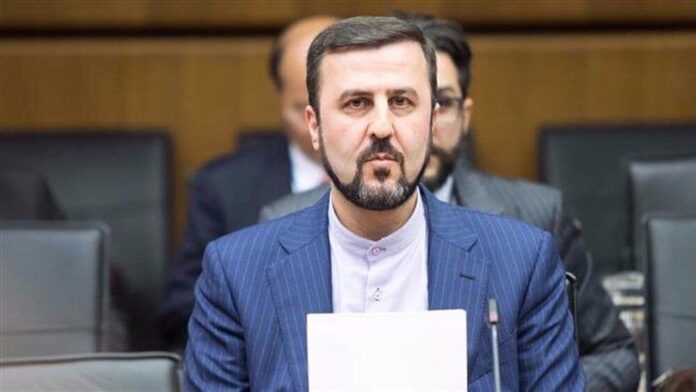
On January 4, the Russian diplomat held three separate working meetings in Vienna. He met with Iran’s chief negotiator, Deputy Foreign Minister Ali Bagheri Kani to discuss the main issues that are yet to be settled in the course of the negotiations. Ulyanov also discussed the current situation and possible further steps with European Union coordinator Enrique Mora and US Special Envoy for Iran Robert Malley.

The eighth round of talks kicked off in Vienna on December 27. The negotiations seek to restore the JCPOA in its original form and bring the US back into the agreement.

Iran insists that the talks must lead to the removal of all American sanctions that were imposed against Tehran following Washington’s unilateral withdrawal from the landmark agreement in May 2018.

Tehran has also demanded credible guarantees that Washington will not abandon the deal again.

US military camp in Iraq hit by rocket attack

According to Iraq’s military sources, a Katyusha rocket struck the Camp Victory near Baghdad International Airport on Wednesday morning.

Earlier in the day, four rockets hit the base which hosts American forces.

The sources stated nobody was hurt in the incident.

The attacks followed a drone strike on Ain al-Asad Air Base in the Anbar province on Tuesday.

The American forces’ positions in Iraq have been attacked several times in recent days, as Iran and Iraq marked the second anniversary of the US assassination of two key anti-terror and anti-imperialist commanders, Lieutenant General Qassem Soleimani and Abu Mahdi al-Muhandis, at Baghdad International Airport.

Iraqis have been firmly pushing for the expulsion of American forces from their country since the US assassination, carried out on January 3, 2020.

Two days after the heinous crime, the Iraqi parliament passed a law requiring the Iraqi government to end the presence of the US-led foreign forces in the Arab country.

Five days after it, Iran’s Islamic Revolution Guards Corps (IRGC) launched a volley of ballistic missiles at Ain al-Asad airbase in Iraq’s western province of Anbar and at another airbase in Erbil in the Kurdistan Region. Over 100 American troops were later diagnosed with “traumatic brain injuries” in Ain al-Asad.

Ain al-Asad has been repeatedly targeted ever since.

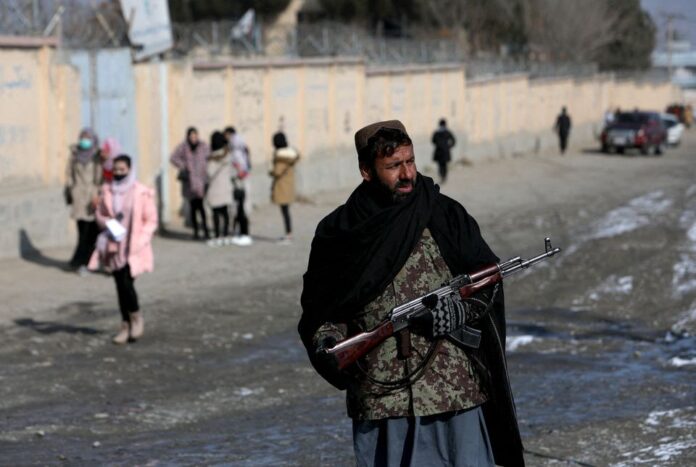
Taliban: Former Afghan officials to get no place in cabinet

Mullah Abdul Ghani Baradar said the Taliban did not want to taint the fresh government in Afghanistan with corruption by including the ex-officials in the cabinet lineup.

In the course of the negotiations in Doha, Qatar in 2019-2020, the US offered the Taliban a list of Afghan officials for the formation of an all-inclusive government in Afghanistan, said Mullah Baradar.

“It was, however, decided that those facing accusations of corruption, theft and murder will not be present in the new system,” he added.

Mullah Baradar rejected claims that the Taliban planned to assassinate ex-President Ashraf Ghani after taking over the capital in August, saying a number of former officials and politicians still live in Kabul peacefully.

He said that their current government was interim and qualified individuals would soon enter the government as ministers and deputy ministers.

The official added that the Taliban had met all the conditions set by the global community for recognition.

The world should recognize the Taliban government and release Afghanistan’s funds so that the country can engage in economic relations with other countries, said Mullah Baradar.

He added that any delay in recognizing the new Kabul government would be an act of oppression against Afghanistan and its people.

Kazakh president accepts govt. resignation after protests

A presidential decree, published on Wednesday, says that “in accordance with Article 70 of the Republic of Kazakhstan, I hereby resolve to accept the resignation of the government of the Republic of Kazakhstan.”

“Smailov Alikhan Askhanovich is to be vested with interim duties of the Prime Minister of the Republic of Kazakhstan,” it adds.

In accordance with the document, government members will continue their duties until a new cabinet of ministers is formed.

At present, Smailov holds the post of first deputy premier. The previous government was approved last January, following elections to the lower chamber of the country’s parliament. Askar Mamin was reappointed as prime minister then. He held the post since February 2019.

The government of Kazakhstan is to be particularly blamed for protests in the country, Tokayev stated during a meeting on social and economic issues on Wednesday.

“Speaking about the current difficult socal, political and socio-economic situation in the country, Kassym-Jomart Tokayev noted that the government, as well as companies KazMunayGas and KazakhGas, bear special blame for allowing the protest situation, caused by an increase in liquefied gas prices, to happen,” the presidential press service said.

Tokayev also noted that the situation in the country’s largest city of Almaty and the Mangistau Region was gradually stabilizing after the state of emergency had been imposed in those areas.

“He emphasized that all authorizations for stabilizing the situation had been made. The Interior Ministry, the Special Rapid Response Unit and the National Guard bear the main load and are coping with their tasks successfully,” the press service added.

Besides, the president criticized the implementation of his instructions, aimed at speeding up the construction of a new gas processing plant on the basis of KazGPZ, which produces liquefied gas in the Mangistau Region.

On January 2, crowds took to the streets in the cities of Zhanaozen and Aktau in the Mangistau region, protesting against high fuel prices. According to them, the price per liter of liquefied gas increased to 120 tenge ($0.27) since January 1, so the demonstrators demanded to halve it, to 50-60 tenge ($0.11 – $0.13). The president commissioned the government to assess urgently the situation in the region, taking into account economic feasibility and legal issues. The government commission arrived in Aktau and commenced work. On Tuesday, after the talks with protesters the commission announced the price of liquefied gas would be brought down to 50 tenge in the Mangistau region.

The president imposed a two-week state of emergency and a curfew in the country’s largest city of Almaty and the southwestern Mangistau Province early on Wednesday.

Law enforcement agencies of Kazakhstan detained over 200 people for violating public order during unauthorized demonstrations in several regions of the country, the Kazakh Interior Ministry announced on Wednesday.

US: Some modest progress in Vienna talks

Nuclear deal talks with Iran in Vienna have shown modest progress and the United States hopes to build on that this week, Price stated on Tuesday amid efforts to revive a 2015 agreement.

In the latest round of indirect talks between Iran and the United States in Vienna, Tehran is focused on getting Washington sanctions lifted again.

“There was some modest progress in the talks last week. We hope to build on that this week,” Price told reporters.

“Sanctions relief and the steps that the United States would take… when it comes to sanctions together with the nuclear steps that Iran would need to take if we were to achieve a mutual return to compliance with the JCPOA – that’s really at the heart of the negotiations that are ongoing in Vienna right now,” he added.

Earlier, British Prime Minister Boris Johnson warned Iran that time was running out to salvage the 2015 nuclear deal.

In a call with Israeli Prime Minister Naftali Bennett, Johnson discussed the ongoing talks on the Iran nuclear deal in Vienna.

“The prime minister said the UK wants to see the negotiations in Vienna lead to full restoration of the JCPOA, but that we need Iran to engage in good faith,” a Downing Street spokesman said, adding, “The diplomatic door is open, but time is running out to reach an agreement.”

Iran has rejected any deadlines for the talks and has criticized the west for insinuating time is running out for a deal. Tehran has stressed it will continue the negotiations as long as necessary.

Senior diplomats from Iran, Russia, China, Britain, France and Germany are engaged in the eighth round of talks to try to find a way to remove sanctions against Tehran and allow Washington to return to the agreement.
Iran insists that the talks must lead to the removal of all US sanctions that were imposed against Tehran following Washington’s unilateral withdrawal from the Joint Comprehensive Plan of Action in May 2018.

Tehran has also demanded credible guarantees that Washington will not abandon the deal again.

Top IRGC’s commander: Trump, other assassins of Gen. Soleimani not safe

At a ceremony on Tuesday marking the martyrdom anniversary of his predecessor, Esmail Qa’ani, who heads the IRGC’s Quds Force, said Iran is determined to avenge General Soleimani’s blood “in its own style.”

“Criminal Trump and his overt and covert partners, such as [his foreign minister] Pompeo are known to us. Martyr Soleimani had repeatedly humiliated Pompeo in the region and they thought they had achieved a victory by assassinating him,” he said.

Nevertheless, Trump and his other partners remain “under the magnifying glass” and they will not be safe, he added.

Addressing the Americans, Qa’ani said, “You imagined that you hit and ran, but the Islamic society and the world’s freedom-seekers will take revenge in a way that you won’t forget as long as you’re alive,” he said.

In the wake of Gen. Soleimani’s murder, Iran and other regional nations were seeking the US withdrawal from the region, Qa’ani said. Something worse, however, happened to the Americans and they were instead expelled.

He added that the people of Iraq, where Gen. Soleimani was targeted in a drone strike in early 2020, and the country’s resistance forces will not tolerate the presence of the remaining 2,000 US troops on their soil.

‘US has no control over consequences of General Soleimani’s assassination’

The ministry made the announcement in a tweet, adding the assassination of the anti-terrorism icon also showed Washington could commit a crime without having any control over consequences thereof.

It also said the absence of rationality in the US actions is the main cause of its decline.

Monday, January 3rd, was the second anniversary of the assassination of General Soleimani in a US drone strike. Iran has called for the trial of the perpetrators of the attack, vowing to also exact revenge on them.

The drone strike, which also killed General Soleimani’s companion Abu Mahdi Muhandis and a few others, was carried out by direct order of former US president Donald Trump.
Trump’s secretary of state Mike Pompeo was instrumental in pushing for the assassination of General Soleimani as well.

Iran makes Omicron testing kit

The President of Kashan University of Medical Sciences in central Iran said the kit has been produced in the Molecular Biomarkers Laboratory of Kashan University of Medical Sciences by Majid Lotfinia, a member of the scientific board of this university.

Seyyed Alireza Moraveji added that the kit can detect different strains of the coronavirus including alpha, beta, gamma, epsilon, eta, zeta, utah, delta, delta plus and omicron.

The president of Kashan University of Medical Sciences further referred to the assistance of this university in the production of the diagnostic kit. He said the testing kit has been produced with the help of Kashan University of Medical Sciences, especially Dr. Hamidreza Banafsheh, the university’s Vice Chancellor for Research and Technology.

Moraveji said that a year of research was spent to make this kit. He added that 20 foreign companies have also produced the test kit and the product of Kashan University of Medical Sciences is quite similar to those made outside Iran, though with one fifth of the cost of foreign ones.

Ulyanov: U.S. sanctions obstacle to progress in Vienna talks

Russia's Governor to the International Atomic Energy Agency (IAEA) Mikhail Ulyanov is pictured at the Coburg Palais, venue of the Joint Comprehensive Plan of Action (JCPOA) after the meeting aimed at reviving the Iran nuclear deal, in Vienna on December 27, 2021. (Photo by ALEX HALADA / AFP)

Mikhail Ulyanov described the American sanctions as an obstacle to progress in the ongoing negotiations in the Austrian capital.

“In the Vienna talks, we must focus on the issue of removing U.S. sanctions,” the senior Russian diplomat said on Tuesday.

He also said he is surprised by the skepticism of the Western parties about the seriousness of Iran in the negotiations.

Also on Tuesday, the Russian chief negotiator sat down for talks with head of the Iranian delegation in Vienna Ali Bagheri Kani as part of intensive negotiations that resumed on Monday after a New Year break.

Ulyanov said in a tweet that the two sides discussed outstanding issues that have to be addressed during the talks in Vienna.

Senior diplomats from Iran, Russia, China, Britain, France and Germany are engaged in the eighth round of talks to try to find a way to remove sanctions against Iran and allow the United States to return to the 2015 agreement.

Iran insists that the talks must lead to the removal of all American sanctions that were imposed against Iran following America’s unilateral withdrawal from the Joint Comprehensive Plan of Action in May 2018.

Tehran has also demanded credible guarantees that the U.S. will not abandon the deal again.

The Islamic Republic has refused to sit down for direct talks with American diplomats who are also present in the Austrian capital. Iran and the U.S. convey their messages via the P4+1 group.