Thursday, April 30, 2026
Home Blog Page 2178

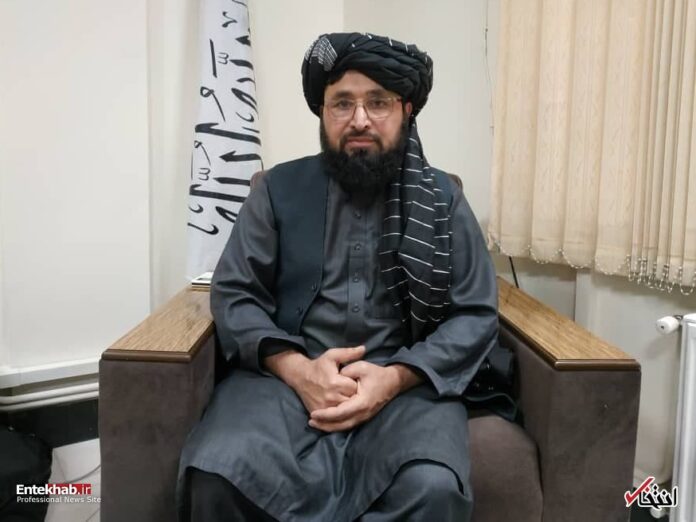
Taliban spokesperson: Muttaqi’s visit to Iran had major achievements

Deputy spokesman for Afghanistan’s Taliban-run government Bilal Karimi told Tehran-based Entekhab news and analysis website that during the trip, the two sides discussed in detail issues such as the expansion of security and economic cooperation, expressing hope that such bilateral talks would continue.

Muttaqi visited Iran earlier in January and held talks with Iranian Foreign Minister Hossein Amir Abdollahian.

Karimi noted that Iran is an important country in the region and one of Afghanistan’s most important neighbors, stressing that the Taliban leadership wants to expand relations with Tehran.

Afghanistan and Iran share a long border, have many religious and cultural commonalities and relations between the two sides need to be free from political and security tensions, Karimi stated.

He added that Iran is currently hosting several million Afghan refugees, which shows its goodwill and cooperation with Afghanistan.

“We assure all countries in the region, and especially our neighbors such as Iran and Central Asian countries that we will not pose any threat to them,” the Taliban spokesperson noted.

Asked about a border skirmish between Taliban forces and Iranian border guards in early December, he said the incident was a misunderstanding due to lack of coordination.

“We want to work closely with the Islamic Republic of Iran to prevent a recurrence of such incidents,” he added.

Karimi also said the Taliban government meets all the criteria for an independent government, calling on regional countries and the rest of the international community to recognize the group.

The Taliban took control of Afghanistan following America’s chaotic withdrawal of its forces in August. Ever since, the group has faced international calls to form an inclusive government.
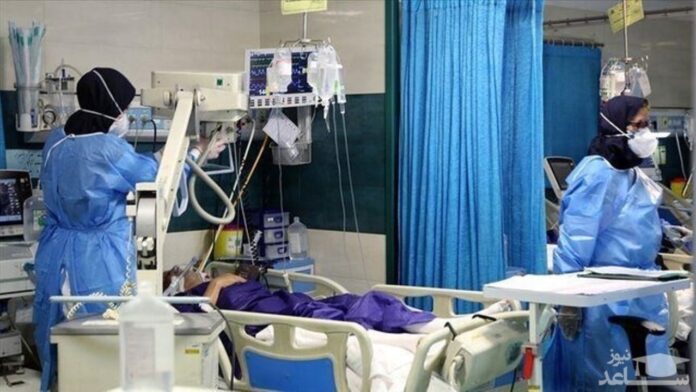
Number of Covid cases surge in Iran

The Health Ministry also logged 3,163 new Covid cases including 338 hospitalizations. The number of new infections on Monday shows a surge compared to Sunday. Yesterday’s caseload was 2,292.

Despite the surge in the cases, there are no red zones across Iran in terms of risk from Covid due to a nationwide vaccination campaign that has seen some 130 million doses of vaccine administered to people.

But it seems Iran is not out of the woods yet as authorities are warning that it’s highly likely that Iran will soon get hit hard by a new wave of the Covid pandemic.

A member of the scientific committee of Iran’s National Task Force for Fighting the Coronavirus has said the country is already in a new wave of Covid driven by the Omicron variant.

Minoo Mohraz added that the wave will reach its peak in the next 3 to 4 weeks. She also said the vaccine has little effect on Omicron, so it is important people get their boosters.

Omicron has already overwhelmed many countries around the world, including the US and countries in European.

The strain is said to be way more contagious than Delta, the previous variant, though less deadly.

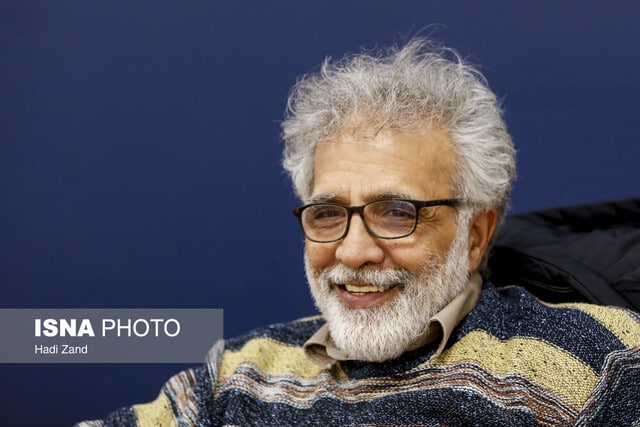
Iran’s Behrouz Afkhami announces retirement as cinema director

Afkhami said, “I think Child of the Morning is the best film I have made and I would like this to be my last film as a cinema director in Iran.”

He added that it’s likely he will make a movie abroad for worldwide distribution and release on platforms, and “I have some thoughts about that.”

Afkhami went on to say that he will not quit making and directing TV series. “I think I might make a TV series or even a theater, but I think Child of the Morning is a good ending to directing movies, especially since it’s so good on screen.”

Afkhami is the director of such movies as Bride, Poison, and The Day of Satan. He is said to be among top ten film directors of Iran.

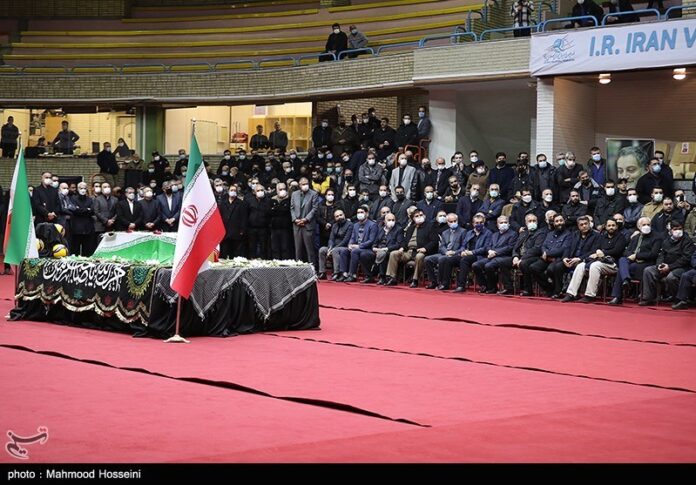
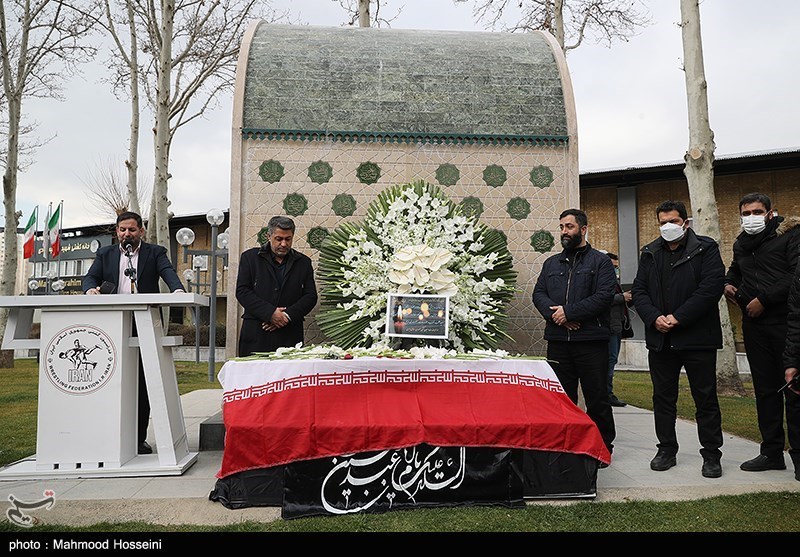
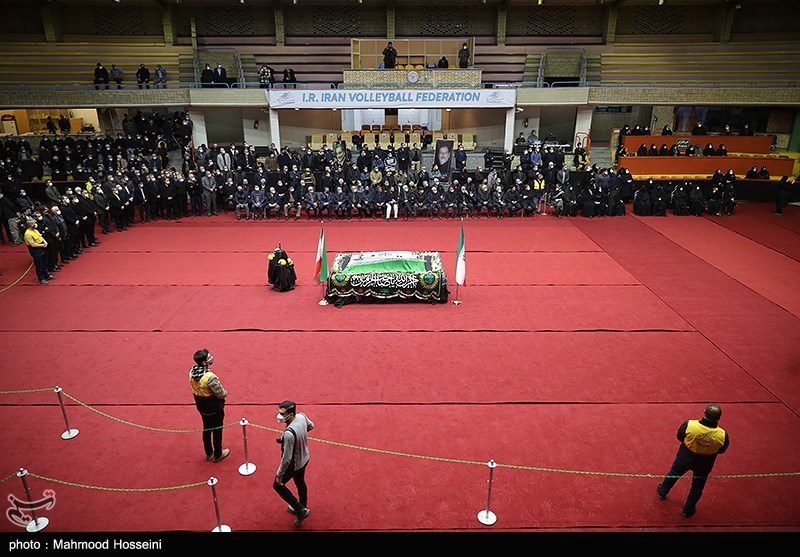
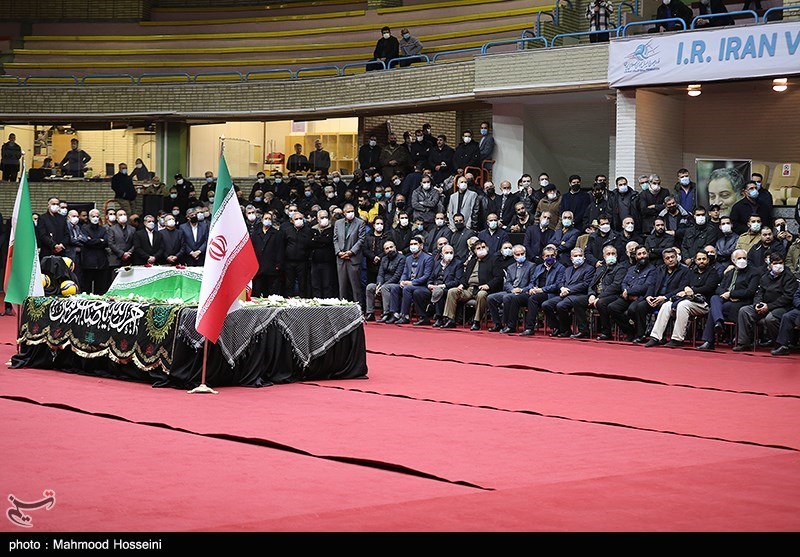
Funeral procession held for former Iranian volleyball and wrestling icon

A number of volleyball players and wrestlers attended the funeral with some being pallbearers. Yazdani Khorram died on January 16. He was 75.

China says firmly opposes ‘illegal unilateral sanctions’ against Iran

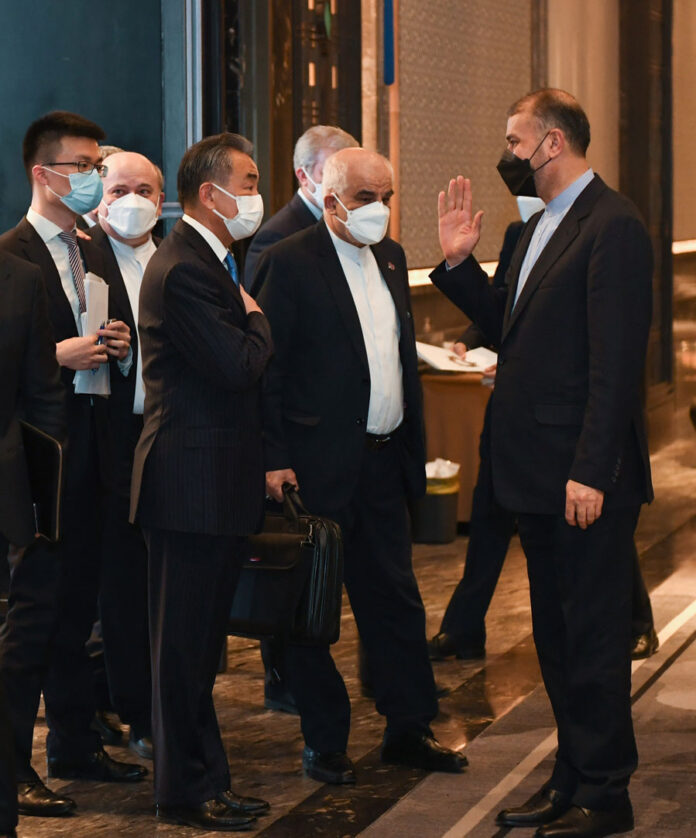
On January 14, Chinese State Councilor and Foreign Minister Wang Yi held talks with Iranian Foreign Minister Hossein Amir Abdolahian in Wuxi, Jiangsu Province.

“The two sides jointly announced the launch of the implementation of the comprehensive cooperation plan and agreed to step up cooperation in energy, infrastructure, production capacity, science and technology, medical and health care, expand cooperation in agriculture, fisheries, cyber security and third-party markets, and deepen people-to-people and cultural exchanges including education, film and personnel training to deliver more tangible outcomes of cooperation,” Spokesperson Zhao Lijian stated at a regular news briefing on Monday.

“Wang said that over the past year, China and Iran, under the guidance of the two heads of state, took the 50th anniversary of the establishment of diplomatic ties as an opportunity to strengthen solidarity and cooperation and deepen political mutual trust, making new achievements in bilateral relations. China stand ready to work with Iran to constantly enrich the two sides’ comprehensive strategic partnership, and open a new 50-year period for the development of bilateral relations,” Zhao continued.

“China will continue to make utmost efforts to provide vaccines for Iran to help the country defeat COVID-19,” he stated.

“China firmly opposes illegal unilateral sanctions against Iran, political manipulation on human rights and other issues, and gross interference in the internal affairs of Iran and other regional countries. China will firmly support the process of negotiations on resuming compliance with the JCPOA, and continue to constructively participate in the follow-up negotiations. China hopes that all parties will overcome difficulties, work in the same direction, and adhere to moving forward the political and diplomatic settlement process,” he added.

The Iranian FM “spoke highly of the celebration of the 50th anniversary of the establishment of diplomatic ties and the signing of the comprehensive cooperation plan between the two countries last year, and thanked China for providing strong support for Iran in its fight against COVID-19”, he noted.

“He said that Iran is firmly committed to the one-China principle, highly appreciates and will actively participate in the Belt and Road cooperation, firmly commits itself to promoting Iran-China cooperation, supports China in hosting a successful Beijing Olympic Winter Games, and will work with China to jointly oppose bullying acts and unilateral sanctions,” the Chinese diplomat added.

Iran and China signed the landmark agreement in March last year in defiance of the US’s unilateral sanctions, in a move aimed at bolstering their long-standing economic and political alliance. Amir Abdollahian and Wang signed final documents to announce the start of the Comprehensive Strategic Partnership between the two countries on Friday.

Wang has said the US bears primary responsibility for the ongoing difficulties with Iran, having unilaterally withdrawn from a 2015 nuclear deal. He added China firmly opposes unilateral sanctions against Iran, political manipulation through topics including human rights, and interference in the internal affairs of Iran and other regional countries.

In an article published by China’s Global Times newspaper on Thursday, Amir Abdollahian said Iran and China have criticized the sanctions system as The Long Arm Jurisdiction and stood against the double standards of human rights and the politicization of sports issues while emphasizing the development of commonalities and common human values.

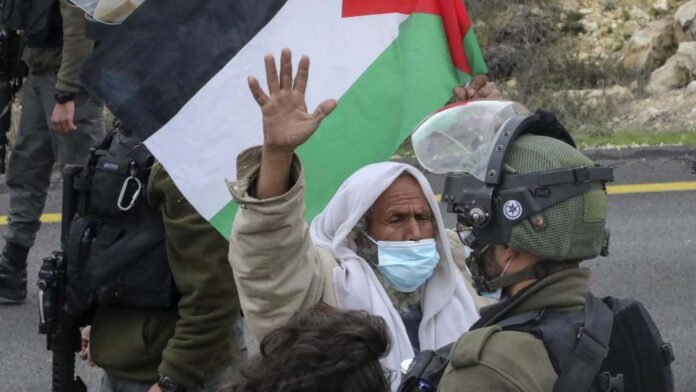
Iconic Palestinian activist dies after being run over by Israeli police

The health ministry said Suleiman Hathalin died of his critical wounds he sustained after being deliberately run over by an Israeli police vehicle at the entrance to Umm Al-Khair village in Masafer Yatta, south of Hebron, about two weeks ago.

Hathalin sustained critical injuries in the head, chest, stomach and hips. He was rushed to a hospital in Hebron until he succumbed to his wounds on Monday.

Breaking the Silence, the Israeli NGO dedicated to making public the atrocities performed by Israeli military authorities in the occupied territories, said that Hathalin was run over by an Israeli police-commissioned tow truck, which was in the middle of confiscating Palestinian cars in the village.

“After running over Haj Suleiman, the truck immediately left, without calling an ambulance. Hit and run, courtesy of Israel Police. That’s what happens when Palestinian life has virtually no value in the eyes of the occupier,” it added.

“This isn’t the first time the Israeli authorities have left a Palestinian severely injured in their quest to confiscate Palestinian property, all in order to enforce the occupation. Only last year Harun Abu Aram was shot in the neck when soldiers came to confiscate a generator, also in the South Hebron Hills. Abu Aram remains paralyzed to this day,” it continued.

“While Israeli settlers are demanding of the government to recognize an illegally built settlement, Homesh, on private Palestinian land, meanwhile some of the most vulnerable Palestinians in the occupied territories aren’t even allowed to lead normal lives on their own land,” it said.

“Um al-Kheir, where last week’s incident took place, is the site of constant Israeli demolition and confiscation operations, while the neighboring settlement of Carmel continues to expand on the Palestinian village’s land,” it added.

Also on Monday afternoon, Israeli troops shot and killed a Palestinian youth at the Gush Etzion colonial settlement junction, south of Bethlehem, according to security sources.

They stated that Israeli forces gunned down Faleh Jaradat, a resident of the southern Hebron-district town of Sa‘ir, at the junction after allegedly attempting to carry out a stabbing attack.

Israeli media claimed that the alleged “assailant” exited a car at the junction and attempted to stab a soldier who shot him before the man reached him.

The circumstances surrounding the alleged stabbing attempt remain unclear and largely based on the Israeli version of events.

Israeli has been criticized for its reflexive use of lethal force and “extrajudicial killings” when Palestinian alleged attackers no longer pose an immediate threat. The UN Office for the Coordination of Humanitarian Affairs (OCHA) announced that circumstances surrounding such killings over the past months remain disputed.

Video footage for similar alleged attacks appear to disapprove Israeli military claims, showing alleged Palestinian attackers did not even attempt to carry out any attacks. Some footage showed Israeli forces manipulating the crime scene following such killings.

Such Israeli measures, taken under the guise of security, are intended to entrench Israel’s 53-year-old military occupation of the West Bank and its settler colonial project which it enforces with routine and frequently deadly violence against Palestinians.

‘Iranian-Australian SpikoGen booster to increase antibodies by 25 times’

Speaking in a press conference on Monday, Dr. Payam Tabarsi added, “The conducted studies showed that the antibodies were generated by over 25 times by the SpikoGen booster administered to recipients whose first Covid-19 vaccines were inactive.”

He assured that the Iranian-Australian booster can be administered as the third dose for all vaccines.

Only 12 to 13 million people in Iran have received the third dose, regretted the researcher, saying around 60 million Iranians have been vaccinated with first dose and about 53 million with the second one.

On Thursday, Iran’s deputy health minister announced that SpikoGen has been approved as the third dose for all Covid-19 vaccines.

Dr. Kamal Heidari, in a letter to the universities’ deputy chancellors for health affairs and universities of medical sciences, wrote, “Based on studies, the authorization of Iran’s Food and Drug Administration, and the approval of the National Covid-19 Vaccine Committee, SpikoGen has been approved as the booster for all vaccines used in the country and can be injected at least three months after the second dose.

He added that SpikoGen is being injected as the first and second doses for people aged 18 to 50 and as a booster for the above-18 persons.

SpikoGen has been developed in the Iranian company CinnaGen in collaboration with the Australian Company Vaxine and has received the emergency use license.

New wave

Dr. Minoo Mohraz, a member of the National Coronavirus Taskforce’s Scientific Committee, on Monday said that Iran is witnessing a new wave which will reach its peak within the next two or three weeks.

The vaccines have little impact on the new variant of Covid-19, dubbed Omicron, she warned and underlined that the third dose is necessary for fighting the new variant of the virus.

Afghan journalists say unable to cover stories independently

The union has cited its polling that was conducted in all 34 provinces of Afghanistan during which 500 Afghan journalists were questioned.

Statistics of the polling were released in Kabul on Sunday in a press conference.

90% of the attendants are facing serious problems in collecting information as there is no specific law of access to the information after the Taliban regained power, according to the survey.

“We asked attendants if the media are censored, 90% said yes and only 10% said no, 90% attendants said yes to the question of access to information while the same percentage said they have been censored by de facto authorities,” Masroor Lutfi, the head of the union, stated.

The polling has also found that 30% of Afghan journalists found it difficult to interview Taliban authorities while 50% noted that they have problems in interviewing common people.

It comes as journalists have been accusing the Taliban of censoring, beating, intimidating, and threatening them while covering stories especially outdoor ones.

National Union of Afghanistan’s Journalists added that they do not have a legal document and guideline for media coverage by the Islamic Emirate of Afghanistan that has put media and Afghan journalists in great trouble.

The union announced that during the past twenty years there was a legal document for the activities of media in Afghanistan that had facilitated media coverage and access to information.

Members of the union stated that lack of the document and guidelines has led to a lack of access to information that will definitely lead to the collapse of the Afghan media outlets.

They added that after the Taliban takeover, the life of Afghan journalists is getting worse day by day and more restrictions are being imposed on access to information.

Lutfi noted that the Islamic Emirate of Afghanistan has promised not to cause troubles for male and female journalists and the situation is also getting better in Kabul but provinces still have the problem of access to information.

“Absence of a legal document and guideline is a serious problem that has made people cover stories by themselves and based on their interests. We cannot address incidents happen to journalists until we have a guideline by IEA,” Masroor added.

It comes as more than 70% of Afghan media have close due to economic woes after the Taliban takeover on August 15 last year.

Journalists’ Foundation of Afghanistan had reported that Afghan Journalists are going through the worst economic situation as 79% of them have lost their jobs and resorted to other professions to make money and survive.

Report: UAE under major ‘Yemeni retaliatory attack’

Yemeni forces say they have launched a major retaliatory drone and missile attack against the United Arab Emirates.

The Yemeni Army and Ansarullah forces have reportedly used 20 drones and 10 ballistic missiles to target vital Emirati installations.

Police in the UEA capital Abu Dhabi said on Monday that a number of fuel tankers were destroyed in the city leaving three people dead and several others injured.

Senior member of Yemen’s Supreme Political Council Mohammed al-Bukhaiti warned that the UAE would suffer more painful attacks if it did not end its involvement in the aggression against Yemen.

Meanwhile Information Minister of Yemen’s National Salvation Government Zeifollah al-Shami said the operation deep inside Emirati territory was totally legitimate.

“The attack by the Yemeni armed forces on the UAE was part of a legal and legitimate response and was carried out in response to the escalation of the UAE’s ongoing attacks and military actions against the Yemeni people,” the Yemeni information minister told Iran’s Tasnim News Agency.

“The UAE is carrying out these attacks while it has previously officially announced that it has withdrawn from Yemen, but not only has it not withdrawn its forces, but it has intensified its airstrikes and increased its conspiracies against Yemen and its people,” he added.

Al–Shami said one of the most important messages of this operation to the UAE is that as long as they carry out attacks and continue killings in Yemen, everything in the UAE is in with Yemeni forces’ reach and that the equations have changed.

The United Arabic Emirates has been the most important partner of Saudi Arabia in the war on Yemen which began in March 2015.

The devastating military campaign has caused a humanitarian catastrophe in Yemen and claimed hundreds of thousands of lives

Yemen forces say they conducted attack ‘deep in UAE’

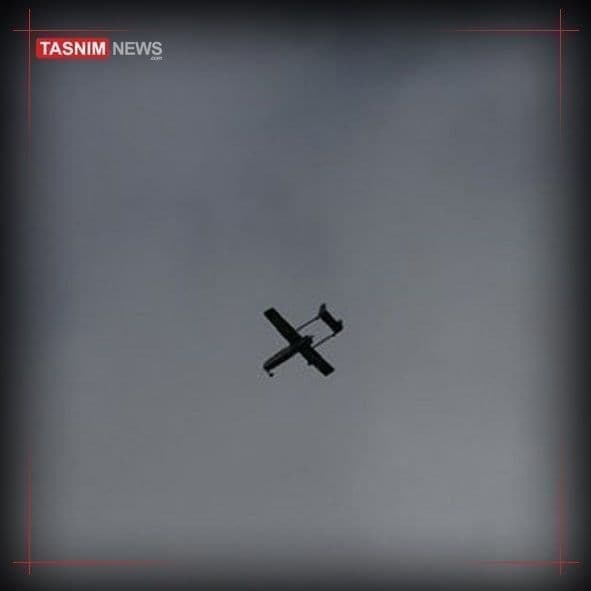
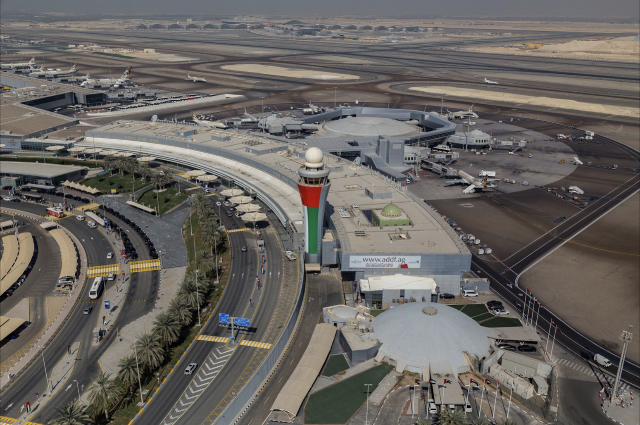
Abu Dhabi police said three fuel tanker trucks had exploded in the industrial Musaffah area near storage facilities of oil firm ADNOC and that a fire broke out at a construction site at Abu Dhabi International Airport.

“Initial investigations found parts of a small plane that could possibly be a drone at both sites that could have caused the explosion and the fire,” the police announced in a statement on state news agency WAM.

There was no “significant damage” from the incidents and a full investigation has been launched, the statement added.

Yemen’s Armed Forces Spokesman Brigadier General Yahya Saree has stated Yemeni troops launched a military operation “deep in the UAE” and would announce details in coming hours.

Pro-coalition forces backed by the UAE have recently joined fighting against the Houthis in Yemen’s energy-producing regions of Shabwa and Marib. The UAE had largely scaled down its military presence in Yemen in 2019 but continues to hold sway through fighters it armed and trained.

The Houthis have repeatedly launched cross-border missile and drone attacks on Saudi Arabia and have in the past threatened to attack the UAE.

Saudi Arabia and its allies launched a war against the Arab world’s most impoverished nation in March 2015. The war has been seeking to restore power in Yemen to Riyadh’s favorite officials.

The death toll of the war, now in its seventh year, will reach an estimated 377,000 by the end of 2021, according to a recent report from the UN’s Development Programme.

The fighting has seen some 80 percent of the population, or 24 million people, relying on aid and assistance, including 14.3 million who are in acute need.