Thursday, December 25, 2025
Home Blog Page 2174

Iran parliament approves generalities of next year’s budget bill

According the parliamentary procedure, the 864-billion-dollar budget bill (with the official rate of 42,000 rilas each dollar) is submitted to a cross-committee commission for expert work on its details.

The commission has a 15-day window to examine the details of the bill. Meanwhile, lawmakers have a 10-day window to present their possible proposals for any change in the budget bill to the experts committees.

Iran foreign ministry dismisses report on Afghan embassy operations

Earlier, Iranian news website Asr Iran reported that the Iranian government has decided to hand over Afghanistan’s embassy in Tehran to the Taliban without recognizing the Taliban government.

“Diplomatic operations of the Afghan embassy in Tehran, just like all other foreign embassies, fall within the framework of the principles and regulations defined in the 1961 Vienna convention on diplomatic relations, and no change in them is possible,” Khatibzadeh said in a statement.

Asr Iran also claimed that the ambassador of former Afghan government to Tehran has already left Iran for a European country.

The foreign minister of the provisional government of the Taliban is now in Tehran for meetings with Iranian officials, which are focused on economic relations between Iran and Afghanistan.

Russia says not optimistic about talks with US

“We will, of course, make no concessions under the constant pressure and threats coming from the Western side of the upcoming negotiations,” Ryabkov told Sputnik.

He noted concessions under duress were “entirely impossible”, stating that “this would mean going against our own interests, our security interests”.

The diplomat stressed that Moscow is “very disappointed” by signals from Washington and Brussels ahead of the meeting on the security guarantees proposed by Russia last month.

“In a nutshell, they reflect a lack of understanding of what we need. And we need legal guarantees, legal guarantees that NATO will not expand further; elimination of everything that the alliance has created driven by anti-Russian phobias and all sorts of misconceptions about the essence of Russian policy since 1997,” Ryabkov explained.

The deputy foreign minister lamented the fact that the United States is continuing to insist that Moscow make unilateral concessions, and said that Russia is not optimistic about the forthcoming talks.

The unilateral approach promoted by the US and NATO cannot serve as a basis for the discussion on security guarantees, Ryabkov added.

He stressed that Moscow’s main goal in Geneva is to discuss the non-expansion of NATO and the non-deployment of offensive weapons near Russia’s borders.

“Unfortunately, we have been hearing all kinds of speculations about what Russia must do and what steps it must take. We have repeatedly reacted to such statements – at all levels – and there can be no basis for any agreement, let alone a productive discussion,” the official stated.

The security guarantee talks will be held in three formats: between Russia and the US in Geneva on 10 January, followed by a Russia-NATO Council meeting on 12 January, and Russia-OSCE consultations on 13 January. Ryabkov will face off with US Deputy Secretary of State Wendy Sherman in Geneva to discuss Russia’s security proposals for the US and NATO. Moscow wants legally-binding guarantees from the military alliance that it will not expand eastward.

In the lead-up to the security talks in Geneva, US Secretary of State Antony Blinken noted the US and Germany believe Russia’s actions in Eastern Europe pose “an immediate challenge” to stability in the region.

At the same time, Blinken claimed that the US remained ready to resolve the issues via diplomacy, stressing that if Russia is serious about de-escalating tensions, the United States could take steps to build greater confidence and address the issues, even though some of them will take time.

NATO Secretary General Jens Stoltenberg also asserted that the alliance will not compromise during the talks with Russia on its basic principle that any country may choose its own defence alliances.

In mid-December, the Russian Foreign Ministry laid out two comprehensive drafts of agreements on security guarantees between Russia, the United States, and NATO.

In these proposals, Russia suggests that the US commit to not setting up military bases in former Soviet republics that are not NATO members and refrain from expanding the alliance further to the east.

“The Parties shall refrain from deploying their armed forces and armaments, including in the framework of international organisations, military alliances or coalitions, in areas where such deployment could be perceived by the other Party as a threat to national security, with the exception of such deployment within the national territories of the Parties,” the document says.

The proposals also stipulate the creation of “hotlines” for emergency contacts between the parties, among others.

Iran Leader: We might sit down with enemies, but won’t submit to bullying

Ayatollah Seyyed Ali Khamenei said “Sometimes we sit down for talks with the enemy and engage with it.
This is another matter. But we should not submit to the enemy’s bullying, as we haven’t so far, and we won’t, either, from now on,” he said.

Ayatollah Khamenei also said the US assassination of Lieutenant General Qassem Soleimani only further strengthened the movement that he had set in motion.

The Leader said Washington was under the delusion that the martyrdom of General Soleimani would stop his struggles.

However, the he added, the US later found out that it had made a miscalculation as the slaying of the top commander only further promoted his campaign.

Elsewhere in his remarks, Ayatollah Khamenei added Washington’s profound animosity toward the Islamic Republic of Iran emanates from the religious nature of the country’s Establishment.

He said tyrants have always been opposed to movements and establishments with a religious foundation.

“The country’s independence, fighting corruption and tackling injustice are among the principles of the Revolution,” the Leader underlined.

“This is part of the country’s soft, extensive and diversified war,” he said.

The Leader made the comments on the anniversary of the January 9, 1978 uprising in Iran against the dictatorial rule of the then Iranian monarch, the Shah.

Kazakh government says situation ‘stabilized’ following unrest

“The anti-terrorist operation to restore law and order in the country continues,” he stated.

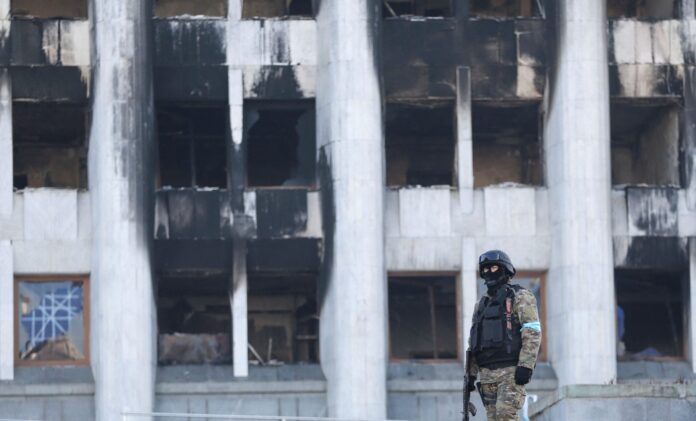
“As of today, the situation has been stabilized in all regions of the country,” the report said, adding that law enforcement officers have retaken the earlier seized buildings of local administrations.

“The work of communal facilities and vital services is being restored,” Turgumbayev noted.

Law enforcement agencies of Kazakhstan have detained over 5,100 people who took part in the riots in several regions of the country, the press service of the republic’s Interior Ministry reported on Sunday.

“By this time, 5,135 people have been detained throughout Kazakhstan,” the press service added.

According to the ministry, 125 pre-trial investigations have been launched into murders, violence against government officials, robberies, hooliganism and thefts.

As Turgumbayev told the Khabar 24 TV channel, during the riots, more than 400 vehicles were damaged and destroyed, including 346 police vehicles. The looters have plundered more than 100 large trade facilities and banks.

Protests erupted in several Kazakh cities on January 2, escalating into mass riots with government buildings getting ransacked in several cities a few days later. The ensuing violence left scores of people injured, with fatalities also being reported. Subsequently, Kazakh President Kassym-Jomart Tokayev turned to the Collective Security Treaty Organization (CSTO) requesting assistance from the Russia-led bloc. As a result, peacekeepers have already been deployed to Kazakhstan. Law and order, Kazakh authorities affirm, was restored to all of the country’s regions by the morning of January 7. However, the situation remains tense in Almaty. Tokayev declared January 10 as the day of national mourning in the republic.

Iran blacklists dozens of US officials over Gen. Soleimani assassination

In a statement released on Saturday, Iran’s Foreign Ministry said the United States, by conducting the “callous terrorist act,” acted in glorification of terrorism and in violation of the fundamental human rights.

“The Islamic Republic of Iran underlines that the heinous terrorist act will not in any manner diminish the resolute determination and resolve of the Islamic Republic of Iran in following the path of the revered General Soleimani in fighting terrorism and terrorist groups, in particular, the US-backed terrorist groups,” the statement read.

On January 3, 2020, the US military conducted an air operation under Donald Trump’s order targeting General Soleimani near Baghdad International Airport after his arrival. The attack also killed the general’s companions, including Deputy Commander of the Popular Mobilization Units (PMU) Abu Mahdi al-Muhandis.

The following is the full text of the Iranian Foreign Ministry’s statement and the name of the individuals freshly blacklisted:

The Ministry of Foreign Affairs of the Islamic Republic of Iran, in accordance with the “Act on Countering Violations of Human Rights and Adventurist and Terrorist Actions of the United States of America in the Region”, particularly, Articles 4 and 5, and in addition to the American individuals including Trump, Michael Pompeo, John Bolton, Mark Esper, Gina Haspel, Christopher Miller and Steven Mnuchin and also Matthew Tueller, Steven Fagin and Rob Waller, who were listed respectively on 19 January 2021 and 23 October 2020, identifies and imposes sanctions as set forth in the abovementioned Act on the following persons for the role they played in the terrorist act of the United States against Martyr General Soleimani and his companions, in glorification of terrorism and in violating the fundamental human rights. The said persons, as the case may be, have taken part in decision-making, organizing, financing, and carrying out the terrorist act or have otherwise justified terrorism which is a threat to the international peace and security through supporting such egregious terrorist attack.

It is reiterated that the United States, by conducting the callous terrorist act, has flagrantly breached its international legal obligations in countering terrorism and terrorism-financing, in particular, the obligation to refrain and desist from organizing and participating in terrorist acts and the obligation to respect, protect and fulfill human rights which constitute internationally wrongful acts entailing the international responsibility of the United States. As such, the Islamic Republic of Iran, in conformity and compliance with its human rights obligations and also duties in combating terrorism and countering terrorism financing, in particular the state terrorism perpetrated by the United States and to ensure the international peace and security, imposes the sanctions as stipulated in the Act on the said persons on a reciprocal basis.

The Islamic Republic of Iran underlines that the heinous terrorist act will not in any manner diminish the resolute determination and resolve of the Islamic Republic of Iran in following the path of the revered General Soleimani in fighting terrorism and terrorist groups, in particular, the US-backed terrorist groups.

In the light of the above and taking into account the provisions of the “Act on Countering Violations of Human Rights and Adventurist and Terrorist Actions of the United States of America in the Region”, all relevant national authorities will take appropriate measures for effective implementation of the sanctions set forth in the Act.

The freshly designated Americans are: Mark Alexander Milley, the chairman of the Joint Chiefs of Staff, Robert Charles O’brien Jr., former national security advisor, Paul M. Nakasone, director of the National Security Agency (NSA) and commander of United States Cyber Command, Robert Greenway, former deputy assistant to the president and senior director for Middle Eastern and North African Affairs at the National Security Council, Victoria C. Gardner Coates, former deputy national security advisor, Matthew F. Pottinger, former deputy national security advisor, Joseph Keith Kellogg Jr., former national security advisor to the vice president, Frank Dixon Whitworth, director for Intelligence of the Joint Staff, Andrew P. Poppas, former director of operations of the Joint Staff, Kenneth Franklin McKenzie Jr., commander of the United States Central Command (CENTCOM), Richard Douglas Clarke, commander of the United States Special Operations Command (SOCOM), Scott Alan Howell, former commander of Joint Special Operations Command (JSOC), James C. Slife, commander of Air Force Special Operations Command (AFSOC), Joseph Thomas Guastella, former commander of United States Air Forces Central Command, David L. Goldfein, former chief of staff of the Air Force, Stephen R. Jones, Jason B.Bell, Andre T. Johnson, Kevin Auger, Jordan Smith, Abishai Giles, Landon Quan, Mark R. August, Bradley Chance Saltzman, Mark Holmes Slocum, Nathan Andrew Mead, Timothy Garland, Staci Coleman, Kurt A. Wendt, Alexus Gregory Grynkewich, Daniel H. Tulley, Rodney Lee Simpson, Allen Ray Henderson, Jason Colon, Brenden Endrina, Tayler Arbaugh, Ryan Kuhn, Jordan Cornelius, Korbin Steinwehr, Antonio Dorce, Charles Seth Corcoran, James Neal Blue, Linden Stanely Blue, Michael Anthony D’andrea, John M. Keane, Reuel Mark Gerecht, Andrew Croft, Nimarta Nikki Haley, John Michael Mulvaney, and Erik Dean Prince.

Report: Iran to hand over Afghan embassy to Taliban

The embassy handover is reportedly aimed at helping Afghan nationals in their consular issues.

This comes as the foreign minister of the provisional government of the Taliban arrived in Tehran for meetings with Iranian officials.
Amir Khan Motaqi is heading a diplomatic and economic delegation that will discuss economic cooperation between Iran and Afghanistan during the visit.

“Amir Khan Motaqi, during his visit, will discuss political, economic, transit and migrant issues with officials of the Islamic Republic of Iran,” said Abdul Qahar Balkhi, the spokesman for the Taliban foreign ministry in a tweet.

Lebanon hit by nationwide blackout

The small Mediterranean country is already grappling with round-the-clock power cuts that last at least 20 hours a day due to a financial crisis that has hampered key imports, including fuel for power stations.

Demonstrators angered by the blackouts stormed an Electricite du Liban substation in the Aramoun region north of Beirut on Saturday, EDL said in a statement.

“Protesters disconnected a 150-220 kilovolt power transformer and opened circuit breakers connecting the Zahrani power plant to the Aramoun station,” it added.

“This caused disturbances on the electrical grid… which led to a total blackout across Lebanese territory as of 17:27 (1527 GMT),” it continued.

The disruption will pile more pressure on private generators that are already struggling to keep up with the near-total absence of state power. Private generator owners have hiked prices and rationed supply in recent months, with costs surging after the government gradually lifted fuel subsidies.

The average generator bill for a Lebanese family usually costs more than the monthly minimum wage of 675,000 Lebanese pounds — now worth just $22 as the local currency hits record lows against the dollar on the black market.

The international community has long demanded a complete overhaul of Lebanon’s ruinous electricity sector, which has cost the government more than $40 billion since the end of the 1975-1990 civil war.

Lebanon has reached an agreement on bringing Jordanian electricity and Egyptian gas into the country via war-torn Syria, while Hezbollah has separately started hydrocarbon deliveries from Iran.

Iran says to transfer wheat, vaccines to Afghanistan

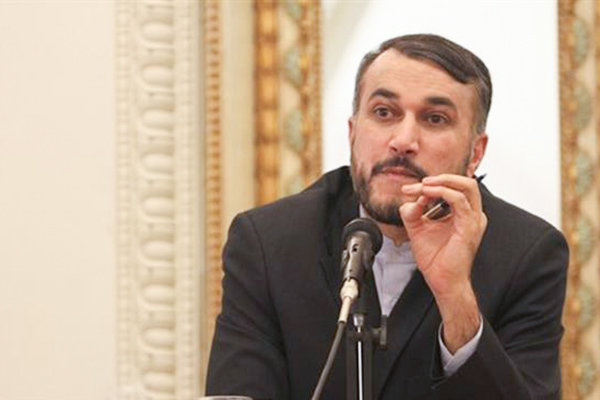
Amir Abdollahian was speaking during a phone call with his Indian counterpart Subrahmanyam Jaishankar over key bilateral, regional and international issues.

He renewed Iran’s call for the formation of an inclusive government in Afghanistan.

About the latest situation in the fight against the Coronavirus in Iran, Amir Abdollahian referred to the good trend of the nationwide vaccination in the Islamic Republic.

The Iranian foreign minister said, “We have been able to properly contain the virus, and so far 89% of people have been vaccinated and are receiving a third dose of vaccine”.

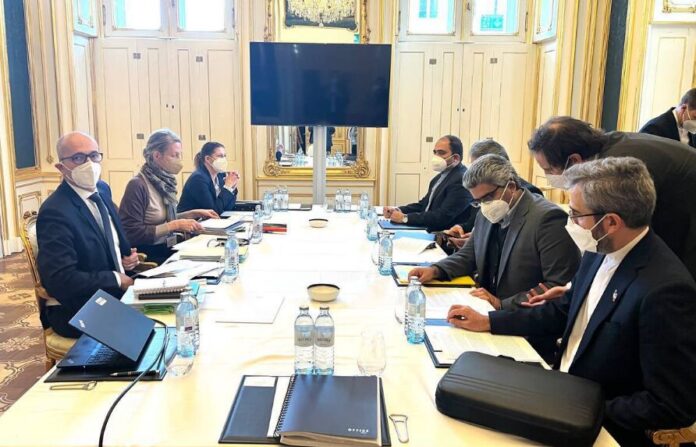
On the Vienna talks over lifting the sanctions against Iran, the Iranian foreign minister stressed that the discussions are going in the right direction.

Amir Abdollahian also said, “We have the necessary determination to reach a good agreement in good faith, and if the Western side also has this goodwill and determination, all parties can reach a good agreement”. The Indian foreign minister also said, “The number of Covid cases in India is rising, but due to the good speed of vaccination, we can stop the process”.

Jaishankar expressed pleasure with the forthcoming visit of Iran’s top diplomat to India and called it a very good opportunity to develop bilateral cooperation.

Govt. seeking to neutralize sanctions: Iran president

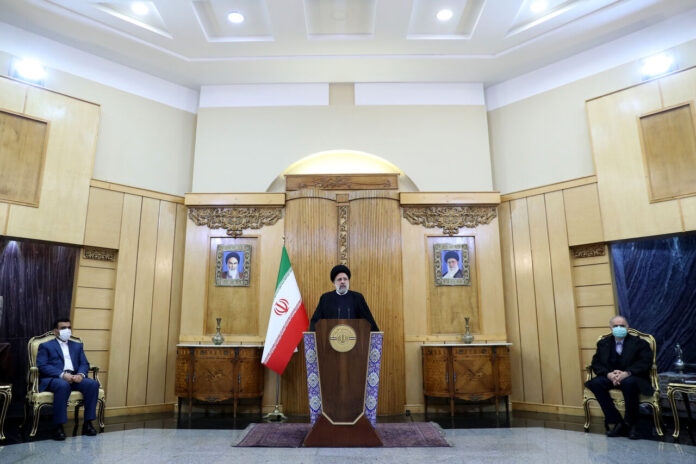
“Today, the power base for neutralizing the sanctions is up and running,” said Ebrahim Raisi in a speech on Parliament floor where he was defending the budget bill for the next Persian Year that his administration has already submitted to MPs.

“Our economic relations with regional countries have risen by up to three times over the past three months,” he said.

“Non-oil exports have fortunately increased by 40%, and the country’s forex resources are swelling,” he noted.

“Today, we are seeing exports bringing in revenues,” he said.

“The government seeks to reach an economic growth target of 8% and we hope we will achieve that. This is while the figure was less than 1% in the previous years,” said the president.

“We had promised to strike a balance in our foreign policy, and today, we are witnessing both interaction with countries and balance in the foreign policy, especially with regards to our neighboring countries,” he added.

“It has proven to the neighboring countries and the whole world that the Islamic Republic of Iran pursues a balance it its foreign policy,” the president noted.

President Raisi underlined people’s trust in the administration has increased over the past few months.
“This is a great asset which cannot be replaced by anything else,” he explained.

Elsewhere in his remarks, the president touched upon the administration’s decision to cancel the allocation of the greenback at a subsidized exchange rate for the provision of basic commodities called “preferential foreign currency.”

He said the government cares about people’s livelihood and believes a substitute should be introduced if the allotment of the preferential forex is stopped.