
EU official says nuclear talks ‘on right track’
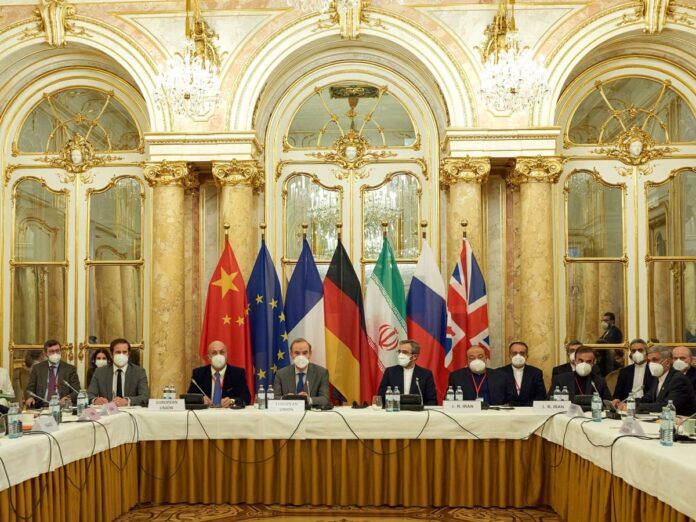
“My assessment is that we are on the right track for a final agreement,” the official, who spoke on the condition of anonymity, stated on Friday, referring to “small” progress in a number of issues.
“My concern, more than in the substance, is about the timing. There I have a feeling that we are going too slow. It would be an incredible mistake if, because of timing, we would not get a good solution,” the official noted without elaborating.
“Still, I think that we will have an agreement…and I think that it will be rather sooner than later,” the official added.
As Iran and the P4+1 group of countries proceed with diplomatic efforts to revive the landmark agreement, Russia’s lead negotiator in the Vienna talks stated Moscow’s “close coordination” with Tehran plays a key role in continuing and completing the negotiations in the Austrian capital.
In a post on his Twitter account on Friday, Mikhail Ulyanov said he held a “very useful” meeting with Iran’s chief negotiator to the Vienna talks, Ali Bagheri Kani.
“Close coordination between our two delegations is one of prerequisites of successful continuation and completion of negotiations on restoration of JCPOA and sanctions lifting,” the top Russian diplomat added.
Iran and the other participants to the nuclear deal, officially known as the Joint Comprehensive Plan of Action (JCPOA), have been holding talks in the Austrian capital since April last year with the aim of reviving the deal by bringing the US into full compliance.
The US left the JCPOA in May 2018 under former President Donald Trump. The Vienna talks began on a promise by Trump’s successor, Joe Biden, to rejoin the deal and repeal the so-called maximum pressure campaign against Iran. Biden, however, has so far failed to undo Trump’s own undoing of Barack Obama’s Iran policy, which led to the JCPOA in June 2015.
In response to the US withdrawal, Iran began to reduce its nuclear commitments under the JCPOA in 2019. Tehran maintains that it will reverse its nuclear measures once the US – the main culprit behind the failure of the JCPOA – removes its sanctions and abides by all of its contractual commitments in practice.
Iran has also rejected the pessimistic assessment of the talks by the US and the European trio – namely France, Britain, and Germany – as a psychological ploy to win concessions.
In an earlier tweet, Ulyanov said Russia rejects “artificial deadlines” set by Western parties after their meeting with the US.
“The Western colleagues, as they do it publicly, underlined the need to finalize negotiations ASAP. Russia shares the sense of urgency but is against artificial deadlines,” Ulyanov added.
Iranian Foreign Minister Hossein Amir Abdollahian has reaffirmed that Tehran has no intention to waste time or derail the sanctions removal talks in Vienna, criticizing the West, particularly the US, for failing to present any innovative proposals in the negotiations.
“China and Russia support Iran’s constructive plan, but Western countries, including the United States, have so far offered no innovative proposals in the talks,” he noted, emphasizing that “if the parties can resume their commitments under the Iran deal, Iran will also return to commitments based on the agreement.”
Also in a Friday meeting between Bagheri Kani and Enrique Mora, the European Union’s deputy foreign policy chief and head of the JCPOA Joint Commission, the sides discussed various issues pertaining to the Vienna negotiations.
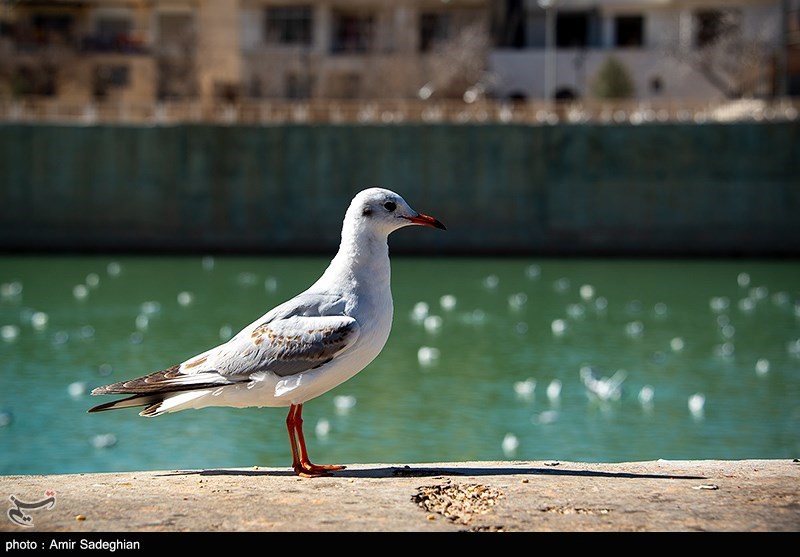
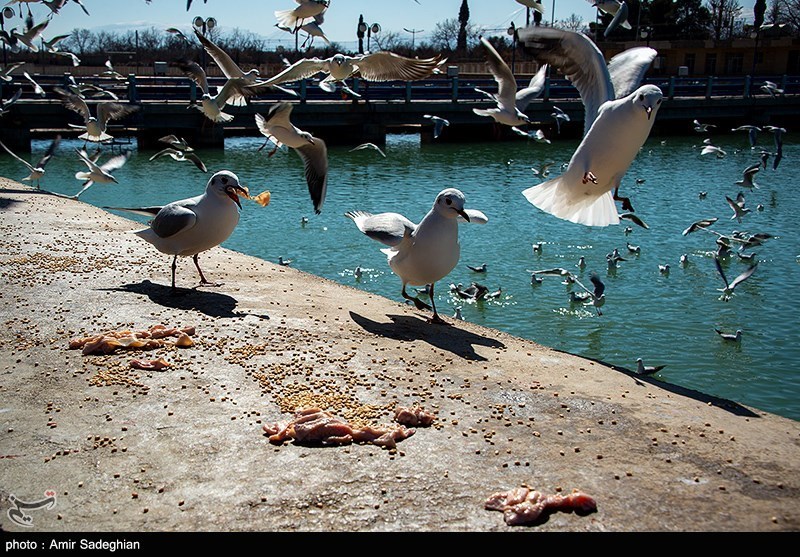
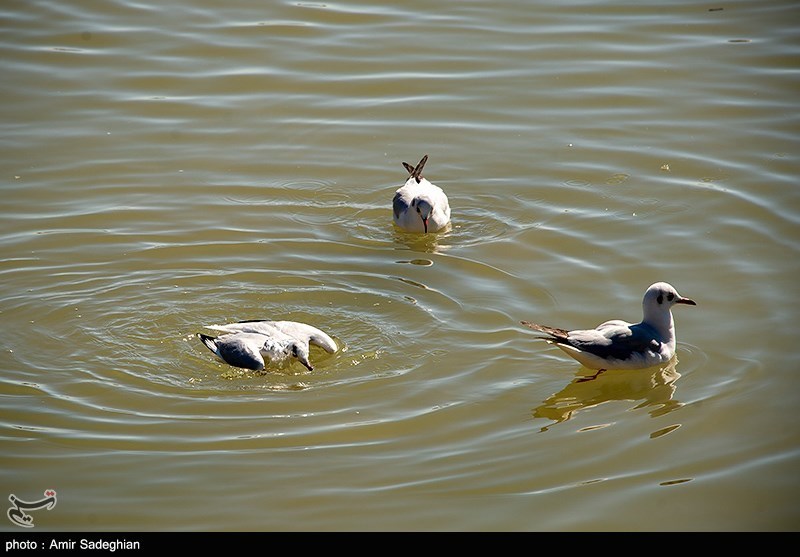
Iran’s Shiraz city hosting migratory birds

The seabirds migrate to city in late December each year, creating a beautiful scene on a canal named the Great Canal also known as the Dried River.



‘Govt. coordinated currency, trade policies help Iran’s export value top $40bn’
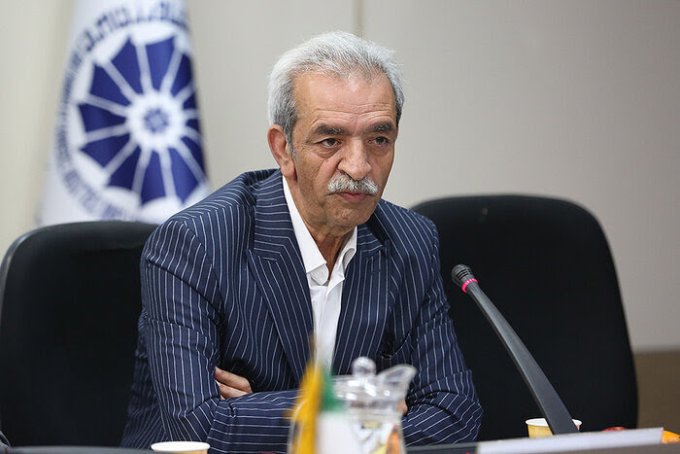
Gholamhossein Shafei added although the new administration took office less than six months ago, it has adopted policies in the currency and trade sectors that the businessmen have assessed as very positive.
The ICCIMA head said the country’s foreign trade would witness greater growth if the current trend keeps going.
He said the government’s measures to remove obstacles to exports encourage exporters to do their job without any concerns.
According to Shafei, the administration of President Seyyed Ebrahim Raisi has managed to remove some 60 percent of obstacles in the way of trade and exports, causing the country’s exports to soar.
He referred to the years-long problems facing Iran’s trade with Tajikistan and Turkmenistan, adding President Raisi’s recent visit to Tajikistan led to their settlement and the country’s trade volume with Iran started to grow since then.
Shifting to the trade between Iran and Iraq, Shafei said the Raisi administration is resolved to boost trade with the neighboring states.
He predicted that Iran-Iraq trade volume would hit $20 billion during the current government.
The chief of Iran Chamber of Commerce, Industries, Mines and Agriculture added a trade center will be set up by Iranians in the Iraqi city of Karbala in the near future.
Iraq PMF to support army in wake of deadly attack on Diyala barracks
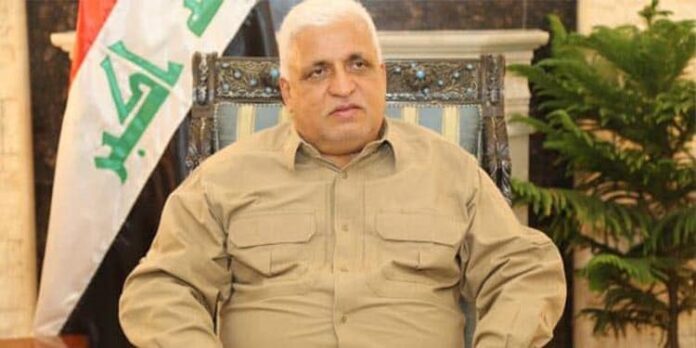
“We work with the armed forces to pursue the remaining terrorists and those who plan to undermine the security and shed the blood of the people, and we use all the capacities and facilities of the popular mobilization forces to serve this common goal,” Chairman of the Popular Mobilization Forces Falih al-Fayadh said in a statement issued on Friday.
The PMF chairman offered his condolences to families of those who lost their lives in the attack which bore the hallmarks of the Daesh terrorist group.
The brazen pre-dawn attack was carried out on Friday in the al-Azim district, a mountainous area over 100 kilometers north of Baghdad.
Two Iraqi officials say the terrorists broke into the barracks and opened fire on the soldiers in their sleep before fleeing.
It was one of the deadliest attacks against the Iraqi army in months.
The Daesh terrorist group seized large swathes of Iraq and Syria in 2014. But it was defeated in 2017 – although it is still active in some areas of the two countries.
Iraq’s Popular Mobilization forces played a major role in clawing back territory held by the ISIL.
US says has no specified schedule for recognition of Taliban
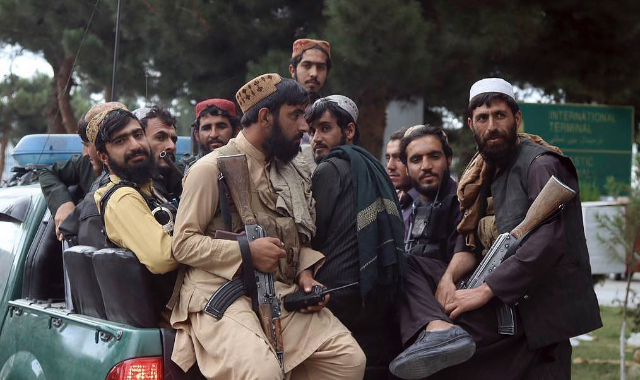
Speaking with BBC Pashto, West stated that normalization of ties between the US and the Taliban does not seem easy and that they (the US) have outlined preconditions in this regard.
Respect for human and women’s rights, freedom of speech, education of women, and formalization of the rights of minorities in Afghanistan are preconditions of the US to the Taliban.
The special representative added that the US will pay the salaries of Afghan teachers in collaboration with the International Society in case the Taliban reopen schools.
About the frozen assets of Afghanistan, West said that part of the nearly $10 billion will be paid to the victims of 9/11 as ransom but added that the final decision has not been made yet.
He stated that part of the money will be released for humanitarian purposes in Afghanistan but reiterated that it will not be given to the Taliban.
Afghanistan’s over $9.5 billion funds has been frozen by the US since August last year.
Amid the ongoing worst humanitarian crisis on earth in Afghanistan, three US lawmakers have urged US President Joe Biden to release Afghanistan’s frozen funds to prevent imminent economic and humanitarian disasters facing the people of Afghanistan.
The House Representatives in a letter to the US president on Thursday said, Washington has a moral obligation to help the Afghan people who worked alongside American Forces and that helping the people is a national interest of the US to prevent Afghanistan from becoming safe haven for terrorists.
Lawmakers also wrote that the US has promised not to abandon the Afghan people, so the promises must be upheld and gains of the past twenty years should not be let go in vain.
“We cannot allow Afghanistan once again become a breeding ground for terrorists intent on killing Americans and attacking our nation, but that dreadful scenario will be made more likely if we fail to address that heart-wrenching humanitarian situation unfolding there today,” added the letter.
The letter is written to Biden after 40 lawmakers urged the US secretary of state and Treasury to release the assets of Afghanistan.
Sources: Russia proposed interim deal to Iran
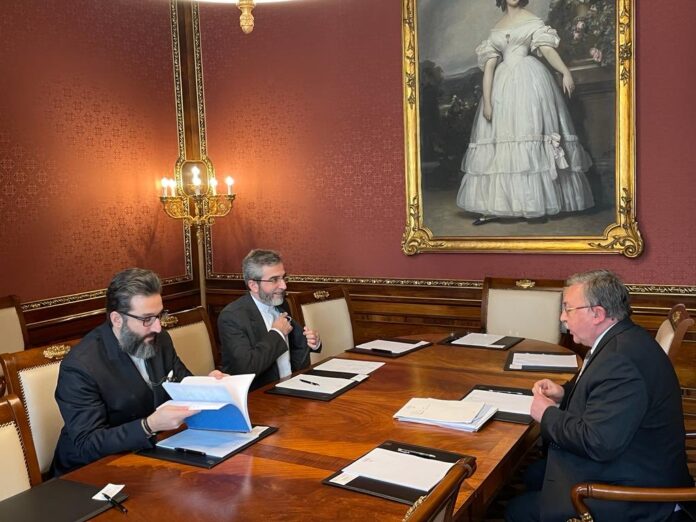
Two US officials, one Congressional official, one former US official and four other people familiar with the discussions said Washington is aware of Russia’s proposal to Iran, which comes as concern grows within the Joe Biden administration that time is running out on negotiations between Iran and world powers over a full return to the 2015 nuclear deal, called the Join Comprehensive Plan of Action (JCPOA).
In 2018, Washington pulled out of the pact and reinstated sanctions under the so-called ‘maximum pressure campaign’ against Tehran, effectively depriving Iran of the deal’s benefits by forcing third parties to stop doing business with Iran. Iran remained patient for an entire year, after which it began to take incremental steps away from its nuclear obligations, especially after Europeans failed to salvage the deal under the US pressure.
While the officials and people familiar with the discussions stated Russia’s talks with Iran about an interim deal have been conducted with the knowledge of the US, senior Biden administration officials distanced the US from the Russian effort.
Iran has so far rejected the proposal presented by Russia, the officials and other people familiar with the discussions added.
The Iran Permanent Mission to the United Nations announced on Friday that Tehran does not want an interim deal, and declined to discuss specifics of the Russian proposal.
Any new agreement separate from the JCPOA could trigger a review by Congress.
As such, if an understanding were to be reached on an interim Russian proposal, the US and other governments likely would portray it as a first step toward a full return to the 2015 accord, and not as a new or separate agreement, the sources said.
A senior Biden administration official underlined an interim “arrangement” is not under serious discussion.
“Though we cannot speak for any discussions that may have taken place between Russia and Iran, at this stage we are certain that no such interim arrangement is being seriously discussed,” the official underscored.
“Regarding an interim deal, we will not negotiate in the press or comment on specific claims about the negotiations. Our timeline is based on a technical assessment of Iran’s nuclear progress rather than a temporal clock,” the official continued.
The Russian government did not immediately respond to a request for comment.
On Friday, Secretary of State Antony Blinken urged Russia to use its influence on Iran.
“If a deal is not reached in the next few weeks Iran’s ongoing nuclear advances will make it impossible to return to the JCPOA, but right now there’s still a window, a brief one,” Blinken said after meeting with Russian Foreign Minister Sergey Lavrov in Geneva.
“Russia shares our sense of urgency, the need to see if we can come back into mutual compliance in the weeks ahead, and we hope that Russia will use the influence that it has and relationship that it has with Iran to impress upon Iran that sense of urgency,” he added.
Under one draft interim agreement that sources said Russia presented to Iran, Tehran would be required to stop enriching uranium up to 60 percent purity and dispose of its current stockpile, possibly by exporting it to Russia, along with other restrictions. In exchange, the Iranian government would receive access to billions of dollars in oil revenues frozen in foreign bank accounts, including in South Korea, the sources added.
The discussions between Russia and Iran have taken place on the sidelines of formal talks in Vienna between Iran and world powers that are aimed at all parties returning to the 2015 nuclear deal, according to the two US officials, one Congressional official, according to the sources.
Negotiations in Vienna have been complicated by Iran’s insistence that it will not hold direct talks with US officials. Instead, the Americans have had to communicate with their Iranian counterparts via European diplomats. The Biden administration has announced Iran’s stance has slowed down the discussions and it has urged Tehran to reconsider its position.
“We would be in favor of speaking directly with the Iranian delegation and believe it would be more productive, however, Iran has not agreed,” the senior administration official noted.
Iran’s mission to the United Nations said Friday that Iran remains opposed to holding direct talks with the US in Vienna, and that Tehran’s goals of sanctions relief and a guaranteed Washington return to the 2015 agreement “would not be achieved under an interim deal, and therefore any such proposal must be rejected”.
“Iran seeks a reliable but also durable agreement that is consistent with the promises made in the JCPOA, and any agreement that does not meet these two criteria is not on the agenda for us,” the Permanent Mission announced in a statement.
US officials say major differences remain in negotiations on returning to the 2015 nuclear deal and that there’s little time left before Iran’s nuclear program advances to a point where Tehran would have enough fissile material to build an atomic bomb. An interim deal could slow down Iran’s nuclear program while giving negotiators more time to broker a full return to the 2015 agreement.
Tehran denies seeking nuclear weapons, stressing it wants to master nuclear technology for peaceful purposes.
The US negotiating team in Vienna recently changed, with one key member, Richard Nephew, leaving to return to a different role at the State Department. Two people familiar with the matter said Nephew and US Special Representative for Iran, Robert Malley, had a disagreement over the direction of the talks.
A State Department official stated in a statement, “Richard Nephew made important contributions to the team, where he served for nearly a year. He remains with the Department of State.”
An interim nuclear agreement with Iran could be a difficult sell in Washington and Tehran.
Some US lawmakers who opposed or had reservations about the 2015 nuclear deal are increasingly concerned about the possibility of an interim deal because while it would impose more limitations on Iran’s nuclear program than are currently in place, it would lack the stricter restrictions in the 2015 agreement, congressional aides noted.
Should the White House insist an interim “arrangement” was merely the first step towards renewing the 2015 deal, Republicans and some moderate Democrats likely would argue that the administration is legally required to submit it to Congress for review. Under a law passed after the 2015 Iran nuclear deal, any new nuclear agreement must be reviewed and approved by Congress before it can be implemented. The law, the Iran Nuclear Agreement Review Act, gives Congress 60 days to do so.
Rep. Michael McCaul of Texas, the ranking Republican on the House Foreign Affairs Committee, and other GOP lawmakers wrote a letter last year to the administration arguing that even a return to the 2015 nuclear deal would require congressional approval.
One person familiar with the Russian proposal described it as “an interim step towards a full return to compliance” with the 2015 deal.
“It’s not a substitute,” this person continued, adding, “In that sense, it’s not a new agreement. It’s an understanding to go part of the way there.”
For Iran, an interim deal with some limits on its nuclear activity could diminish Tehran’s leverage in broader negotiations, experts and former officials claim. An interim arrangement with only limited sanctions relief also could be politically damaging to Iran’s new government, which has portrayed the previous Iranian president, Hassan Rouhani, as too ready to compromise with the West and failing to deliver economic benefits to Iran.
The International Atomic Energy Agency (IAEA) is due to issue its next report on Iran’s program in February, and Western officials fear it will show yet more advances in Tehran’s nuclear program.
In addition to requiring Iran to stop enriching uranium up to 60 percent, the interim proposal Russia discussed with Iran would also put restrictions on enrichment at 20 percent and Iran’s advanced centrifuges, the US official, Congressional official and four people familiar with the proposal said. The proposal had a six-month duration, with the option to extend after it expired, the sources added.
One person familiar with the proposal stated it stipulates Iran would receive additional sanctions relief for each extension and some $10 billion in sanctions relief from unfrozen assets in South Korea, Japan and Iraq.
The idea of an interim agreement was discussed after Biden took office, but administration officials decided instead to focus on trying to negotiate a full return to the 2015 deal.
Iran insists that the talks must lead to the removal of all American sanctions that were imposed against Tehran following Washington’s unilateral withdrawal from the landmark agreement in May 2018. Tehran has also demanded credible guarantees that Washington will not abandon the deal again.
Hezbollah condemns Saudi-led deadly air raids on Yemen
In a statement, Hezbollah highlighted that these brutal crimes are a testament to the savagery of the aggressors and indicates they are devoid of any human values.
Hezbollah also denounced the international community’s silence in the face of the atrocities, calling for support for Yemenis.
Warplanes of the Saudi-Emirati coalition bombed a prison in the northern Yemeni city of Sa’ada in the early hours of Friday. Yemeni sources say at least 80 people were killed and scores more wounded in the attack.
At least three children also died in a separate air raid on telecommunications facilities in the western city of Hudaydah. The attacks led to a nationwide internet blackout.
UN chief condemns Saudi coalition deadly attacks on Yemen
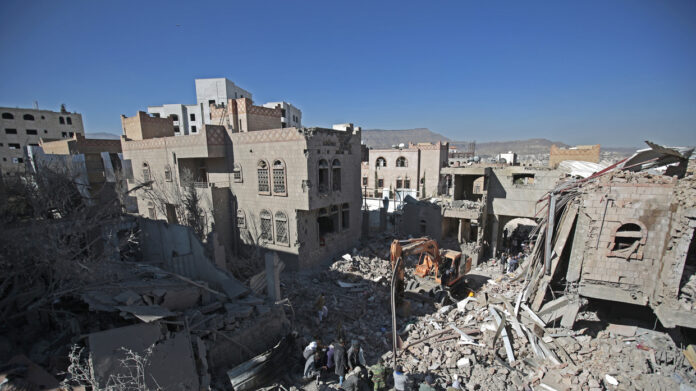
Military aircraft of the Saudi-led military coalition pounded a detention center in Sa’ada in the early hours of Friday, killing tens of people and injuring dozens more, with reports saying that the death toll is expected to rise since many of the wounded were seriously hurt.
Guterres’ spokesman, Stephane Dujarric, stated further deadly strikes had been reported elsewhere in Yemen with children among those killed.
“An airstrike on telecommunications facilities in Hodeidah has also significantly disrupted vital internet services across much of the country,” Dujarric announced in a statement.
“The Secretary-General calls for prompt, effective and transparent investigations into these incidents to ensure accountability,” he added.
Save the Children announced in a statement that three children were reportedly killed in the western city of Hodeidah.
Saudi Arabia and its allies launched a war against the Arab world’s most impoverished nation in March 2015. The war has been seeking to restore power in Yemen to Riyadh’s favorite officials.
The death toll of the war, now in its seventh year, will reach an estimated 377,000 by the end of 2021, according to a recent report from the UN’s Development Programme.
The fighting has seen some 80 percent of the population, or 24 million people, relying on aid and assistance, including 14.3 million who are in acute need.
Yemen military urges foreign firms to leave UAE
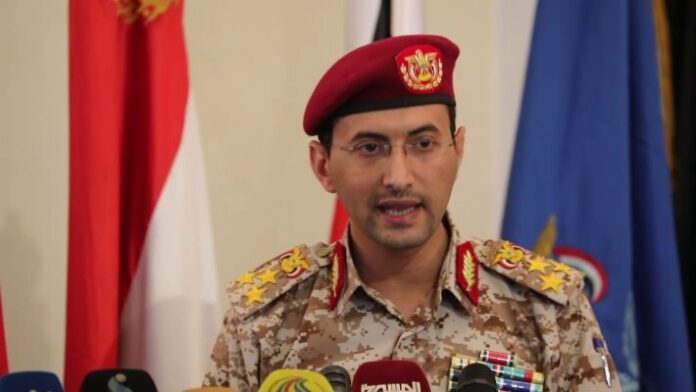
Yahya Saree, the spokesman for the Yemeni Army also recalled the killings of Yemeni people at the hands of the Saudi-led coalition, warning the UAE to stop its aggression against Yemen.
The recent missile and drone attacks by the Yemeni Army and popular committees on UAE soil caused explosions near the depots of an oil company and another blast at the Abu Dhabi International Airport, leaving at least three people dead and six wounded.
Saree said the strikes were in response to growing attacks on Yemen by a coalition of the US, Saudi Arabia and the UAE.
He reiterated the Yemeni military has delivered on its warnings to invading countries about harsh retaliatory attacks, saying the UAE will remain unsafe if the country keeps attacking Yemen.
Saudi Arabia leading a coalition launched its aggression on Yemen in 2015 following a green light by Washington.
Riyadh pressed ahead with its assaults in a bid to bring back to power fugitive former Yemeni president Abd Rabbuh Mansour Hadi.
The war has killed some 130,000 people, including over 13,000 civilians, according to the Armed Conflict Location & Event Project. Yemeni sources say the number is much higher. Millions of people have also been displaces in the Saudi-led aggression.
