Friday, May 1, 2026
Home Blog Page 2158

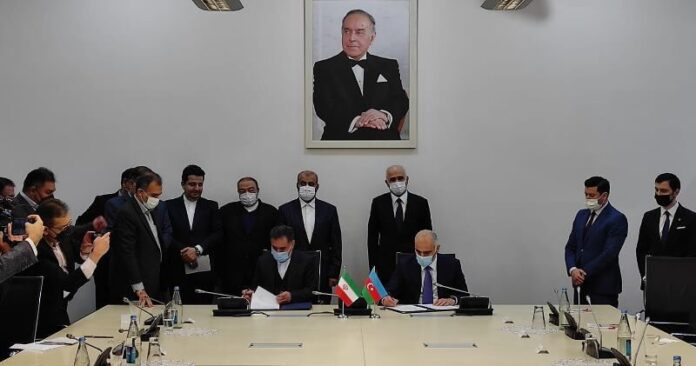
Iran, Azerbaijan sign deal to construct border road bridge

The agreement was signed during the second day of a trip by Iran’s Minister of Roads and Urban Development Rostam Ghasemi to Baku.

Ghasemi and Deputy Prime Minister of the Republic of Azerbaijan Shahin Mostafayev held a groundbreaking ceremony for the bridge project.

The Astarachay bridge will be 97 meters long and 32 meters wide and will be built in four lanes. Its credit will be provided jointly by the governments of Iran and the Republic of Azerbaijan.

During the signing ceremony on Tuesday, Mostafayev said the construction of the bridge will be completed before the end of 2022.

He also described the Iranian minister’s visit to Baku as a good opportunity to examine the cooperation capacities of the two countries in different fields.

Mostafayev said the president and the government of the Republic of Azerbaijan attach special importance to expanding relations with Iran.

Noting that the Republic of Azerbaijan and Iran have deep relations in the fields of trade, economy, energy, customs and investment, Azerbaijan’s deputy prime minister said there are good opportunities to implement joint projects.

The Iranian minister of roads and urban development also called the Republic of Azerbaijan the closest neighbor to the Islamic Republic saying “We hope that after the meeting of the two presidents, relations between the two countries will develop as much as possible.”

He called the development of relations with neighbors one of the priorities of the Iranian administration and, highlighted Iran’s participation in the implementation of projects in the liberated territories of the Republic of Azerbaijan saying bilateral cooperation could accelerate the reconstruction of these areas.

Iranian general says Tehran ready to fight  terrorists in Central Asia

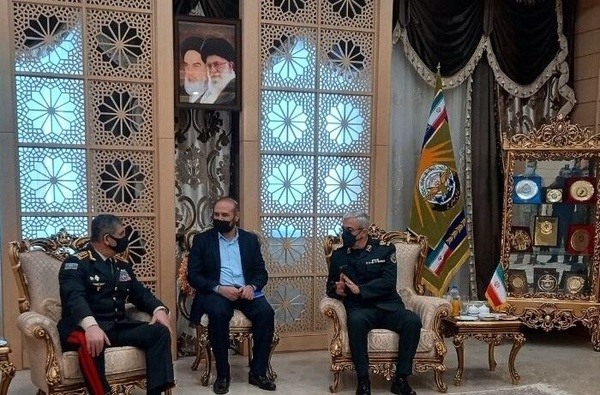
Bagheri was speaking during a meeting with Defense Minister of the Republic of Azerbaijan Colonel Zakir Hasanov in Tehran.

Bagheri added that these terrorists were defeated in Syria and Iraq but were not annihilated and are now trying to expand in Afghanistan, the Caucasus and Central Asia.

Bagheri also noted that the Zionist regime’s presence in the region is a cause for division and a threat to the security and stability of regional countries.

Iran’s Chairman of Joint Chiefs of Staff also spoke of ties between Iran and the Republic of Azerbaijan. He said Tehran is ready to participate in the reconstruction of Azerbaijan’s liberated areas.

Bagheri added that Iran is opposed to any occupation in the region and that the liberation of Azeri territories made the leader of Iran’s Islamic Revolution, happy. He stressed the need for respecting the territorial integrity of all countries, saying Tehran is highly sensitive to the matter.

Bagheri said the Azeri defense chief’s visit to Iran will definitely expand friendly military ties between the two sides.

In the meeting, General Hasanov gave a detailed briefing on the operation that led to liberation of occupied Azeri territories during last year’s 44-day war with Armenia.

UK says nuclear talks reaching dangerous impasse

UK says nuclear talks reaching dangerous impasse

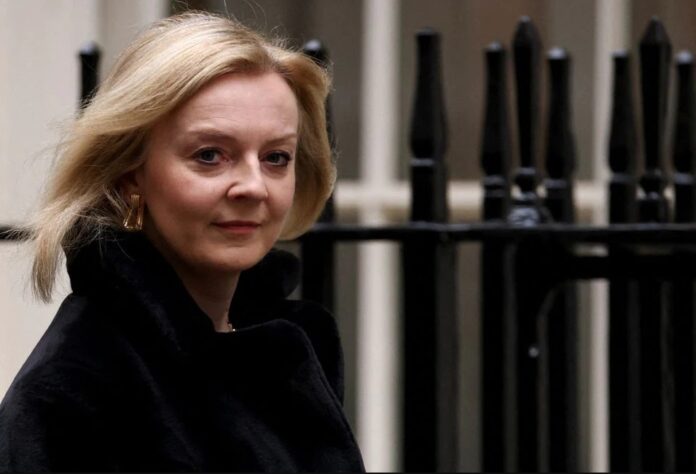
“This negotiation is urgent and progress has not been fast enough. We continue to work in close partnership with our allies but the negotiations are reaching a dangerous impasse,” Truss told parliament on Tuesday.

“Iran must now choose whether it wants to conclude a deal or be responsible for the collapse of the JCPOA (Joint Comprehensive Plan of Action). And if the JCPOA collapses, all options are on the table,” she added.

On Thursday, US Secretary of State Antony Blinken and German Foreign Minister Annalena Baerbock had noted urgent steps will need to be taken to revive the 2015 landmark agreement.

Iranian officials have rejected western diplomats’ remarks about a deadline for reaching an agreement in Vienna talks, and stressed Tehran is only after a good agreement.

Iran insists that the talks must lead to the removal of all American sanctions that were imposed against Tehran following Washington’s unilateral withdrawal from the landmark agreement in May 2018. Tehran has also demanded credible guarantees that Washington will not abandon the deal again.

The US left the JCPOA in May 2018 under former President Donald Trump. The Vienna talks began on a promise by Trump’s successor, Joe Biden, to rejoin the deal and repeal the so-called maximum pressure campaign against Iran. Biden, however, has so far failed to undo Trump’s own undoing of Barack Obama’s Iran policy, which led to the JCPOA in June 2015.

In response to the US withdrawal, Iran began to reduce its nuclear commitments under the JCPOA in 2019. Tehran maintains that it will reverse its nuclear measures once the US – the main culprit behind the failure of the JCPOA – removes its sanctions and abides by all of its contractual commitments in practice.

Iranian Foreign Minister Hossein Amir Abdollahian has reaffirmed that Tehran has no intention to waste time or derail the sanctions removal talks in Vienna, criticizing the West, particularly the US, for failing to present any innovative proposals in the negotiations. He stated Iran is hearing good words from the US in Vienna but words must be backed up with serious actions.

The Iranian FM also spoke of guarantees that Iran must receive regarding its oil exports. He noted one tangible guarantee is that Iran must be able to sell crude and have access to revenues from the oil sales.

Russia voices concern over US fomenting tensions around Ukraine

“Nothing has changed in terms of what is happening with regard to the information aspect and what the US is de facto doing to foment tensions. We are watching the actions of the United States with great concern,” he pointed out, according to TASS news agency.

When commenting on the Pentagon’s statements about its readiness to send 8,500 troops to Europe, Peskov said that it could in no way affect the negotiations on security assurances.

“It’s not affecting the course of the talks. The talks are over for now. We need to get the text (the written response of the US and NATO to Moscow’s proposals on security guarantees in Europe) before we figure out when and how we will continue. We hope that it will happen this week,” the Kremlin spokesman added.

Pentagon Press Secretary John Kirby has stated that the US was ready to send 8,500 troops to Europe but no final decision had been made yet. He pointed out that so far, the troops had been put on “high alert”.

RIA Novosti news agency quotes the Russian military as saying Moscow has begun combat readiness inspections involving more than 6,000 troops in its southern military district, which borders Ukraine.

It comes as Russian and Ukrainian officials are set to meet in Paris on Wednesday for talks with their French and German counterparts. The meeting marks a revival of four-way talks between the nations known as the Normandy Format.

Also, French President Emmanuel Macron and German Chancellor Olaf Scholz will meet in Berlin to seek a common response to Russia.

NATO has announced it was putting forces on standby and reinforcing Eastern Europe with more ships and fighter jets, and could also send additional troops to its southeast flank, in what Russia denounced as an escalation of tensions over Ukraine.

Welcoming a series of deployments announced by alliance members in recent days, Secretary General Jens Stoltenberg said on Monday NATO would take “all necessary measures”.

So far, NATO has about 4,000 troops in multinational battalions in Estonia, Lithuania, Latvia and Poland, backed by tanks, air defenses and intelligence and surveillance units.

Denmark, Spain, France and the Netherlands were all planning or considering sending troops, planes or ships to Eastern Europe, NATO announced. Ukraine shares borders with four NATO countries: Poland, Slovakia, Hungary and Romania. A Polish official stated Warsaw would draw the line at sending troops to Ukraine.

In a sign of concern about the situation, the United Kingdom said it was withdrawing some staff and dependants from its embassy in Ukraine, a day after the United States said it was ordering diplomats’ family members to leave. US diplomats are being allowed to leave voluntarily.

Peskov has accused the West of “hysteria” and putting out information “laced with lies”.

“As for specific actions, we see statements by the North Atlantic Alliance about reinforcement, pulling forces and resources to the eastern flank. All this leads to the fact that tensions are growing,” he continued, adding, “This is not happening because of what we, Russia, are doing. This is all happening because of what NATO and the US are doing and due to the information they are spreading.”

Asked whether he thought an invasion was imminent, British Prime Minister Boris Johnson told broadcasters that intelligence was “pretty gloomy on this point” but that “sense can still prevail”.

He repeated Western warnings that invading Ukraine would be “a painful, violent and bloody business” for Russia.

EU foreign ministers meeting in Brussels warned Russia it would face “massive” consequences, but are divided about how tough to be on Moscow and did not say what the consequences might be.

Ukrainian President Volodymyr Zelenskyy told EU President Charles Michel by phone that it was important for iv that the EU showed unity.

Moscow is accused by Western nations of a troop build-up on the frontier with Ukraine, allegedly with the intent of invading the country in the coming weeks and months. The Kremlin has repeatedly denied any plan to attack and has suggested that NATO is invoking the specter of “Russian aggression” as a pretext to deploy more military equipment in the region.

IRICA: Iran’s 10-month exports up 38%

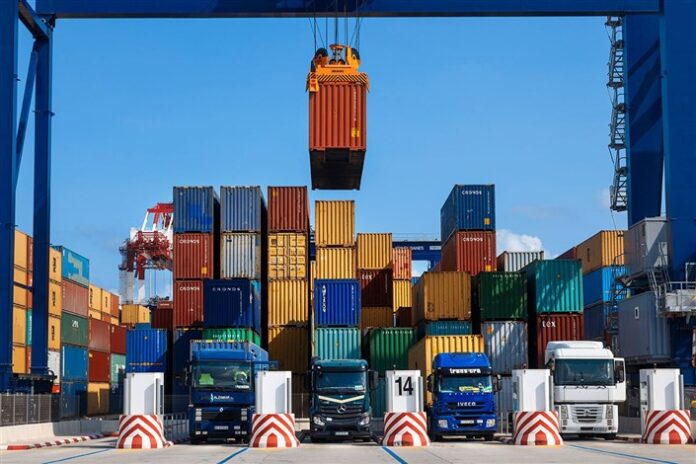
Speaking in a Tuesday press conference marking the International Customs Day, Alireza Moqaddasi added that the import and export statistics promise the improvement of foreign trade.

He said some 100 million tons of Iranian goods have been shipped to foreign countries during the first 10 months of the current Iranian calendar year (starting March 21, 2021), indicating a seven percent hike in terms of weight.

According to the IRICA chief, China, Iraq, and Turkey were the main markets that imported the Iranian products.

He also added that Iran has imported some 33 million tons of commodities worth $41.473 billion, showing 17 percent and 34 percent increases in terms of weight and value, respectively, as compared to figures in its previous year.

On Monday, Iran’s deputy minister of industry, mine and trade predicted that the country’s annual non-oil exports would hit $45 billion.

Alireza Peyman-Pak said that the value of Iran’s non-oil exports has so far reached $40 billion and could be increased by $5 billion more by the end of the current Iranian year.

Iran Covid-19 infections climb as Omicron spreads

Coronavirus Figures Continue to Rise in Iran

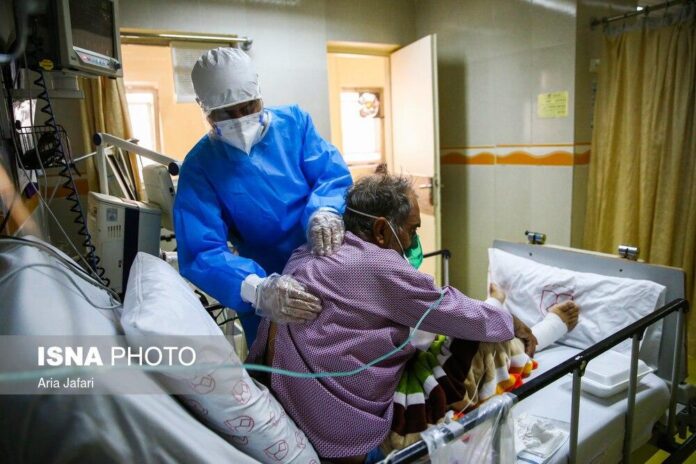
Iran’s Health Ministry said on Tuesday that over 9,300 new cases of the disease were detected compared with nearly 7,700 on Monday.

The ministry also said on Tuesday that 23 more people lost their lives to the respiratory disease compared with 21 on the previous day.

Secretary of the Epidemiological and Research Department of Iran’s Anti-Covid Scientific Committee said this week that Omicron has become the dominant strain in Iran.

Iran has administered over 129,500,000 Covid-19 vaccine doses so far with more than 53,700,000 people fully vaccinated.

Health authorities are asking people to get their booster jabs as soon as possible to prevent another wave of the disease.

Over 15,250,000 people in Iran have so far received their booster shots.

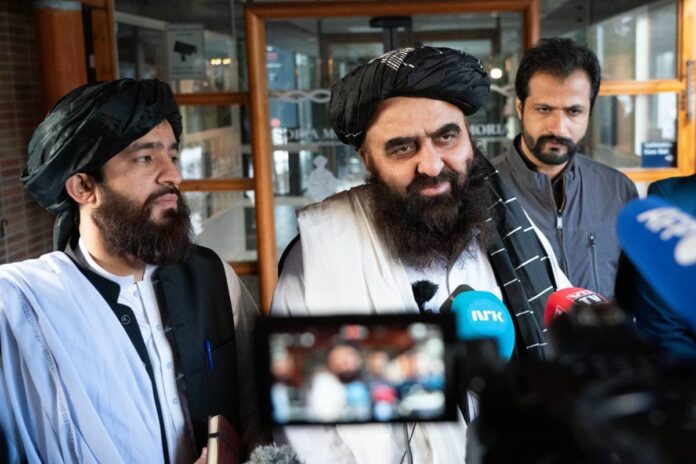
Acting Afghan FM says progress made in Norway talks

The Taliban and western diplomats have begun their first official talks in Europe since they took over control of Afghanistan in August.

The closed-door meetings were taking place at a hotel in the snow-capped mountains above the Norwegian capital.

Taliban representatives will be certain to press their demand that nearly $10 billion frozen by the United States and other Western countries be released as Afghanistan faces a precarious humanitarian situation.

“We are requesting them to unfreeze Afghan assets and not punish ordinary Afghans because of the political discourse,” said Taliban delegate Shafiullah Azam, adding, “Because of the starvation, because of the deadly winter, I think it’s time for the international community to support Afghans, not punish them because of their political disputes.”

Ahead of the talks, western diplomats met with Afghan women’s rights activists and human rights defenders to about their demands and assessment of the current situation on the ground. The meeting was attended by representatives of the EU, the US, Britain, France, Italy and hosts Norway.

Standing silent as attendees gathered, women’s rights activist Heda Khamoush, who lives in Kabul, held up the photos of Tamana Zaryabi Paryani and Parwana Ibrahimkhel, two women arrested by the Taliban last week following an anti-Taliban protest. They haven’t been seen since.

Rejecting the accusation the Taliban had abducted them, Azam stated he was “not aware of that” and suggested activists may be using this event to seek asylum.

The three-day talks opened on Sunday with direct meetings between the Taliban and civil society representatives.

On Monday the Taliban’s acting foreign minister spoke to reporters, saying meetings with Afghanistan’s civil society were not a negotiation, but rather a constructive exchange.

The country’s new rulers have been sharply criticized for their heavy-handed approach to security, dispersing women demonstrators with pepper spray and firing in the air, intimidating and and beating journalists and coming in the night to arrest anti-government demonstrators.

The Taliban have been criticized for establishing an interim Cabinet that is all-male and all-Taliban. Most are ethnic Pashtuns. Successive Afghan organizations as well as the international community have urged the Taliban to open the government to non-Taliban, as well as a strong showing of ethnic and religious minorities and women.

Muttaqi stated most of the civil servants who have returned to work are from the previous government and about 15,000 women are working in the health and education sectors. There has been no decision yet he said on more women in the government work force.

“We have not dismissed anyone,” he continued, adding that “this is progress, but of course it is not enough”.

Talks with European and US representatives were expected to cover everything from education to humanitarian aid to greater inclusivity.

Muttaqi said he had a message to Afghans and the international community, adding, “Our message is that after 40 years of war Afghans are in peace. War is ended and now is the time for progress and economic activity . . . We want Afghans to be happy after all those years of suffering. We want good relations with the world, with our neighboring countries, with the European countries . . . We have had good results and progress in our meetings.”

Women’s rights activist Mahbouba Seraj acknowledged the progress made.

“Yes, they were listening. I should say that,” she said Monday morning, adding, “We gave them a paper. We asked them what we wanted. They took it. They were very, very cordial about it.”

The talks come at a crucial time for Afghanistan as freezing temperatures are compounding misery from the downward spiral that has come with the fall of the US-backed government and the Taliban takeover.

Aid groups and international agencies estimate about 23 million people, more than half the country, face severe hunger and nearly 9 million are on the brink of starvation. People have resorted to selling possessions to buy food, burning furniture for warmth and even selling their children. The United Nations has managed to provide some liquidity and allowed the Taliban administration to pay for imports, including electricity.

Faced with the Taliban’s request for funds, Western powers are likely to put the rights of women and girls in Afghanistan high on their agenda, along with the West’s recurring demand for the Taliban administration to share power with Afghanistan’s minority ethnic and religious groups.

Since sweeping to power in mid-August, the Taliban have imposed widespread restrictions, many of them directed at women. Women have been banned from many jobs outside the health and education fields, their access to education has been restricted beyond sixth grade.

The Taliban have increasingly targeted Afghanistan’s beleaguered rights groups, as well as journalists, detaining and sometimes beating television crews covering demonstrations.

In a tweet Monday the US Special Representative for Afghanistan Tom West welcomed talks between Taliban and the country’s civil society representatives and noted, “We will continue clear-eyed diplomacy with the Taliban regarding our concerns and our abiding interest in a stable, rights-respecting and inclusive Afghanistan.”

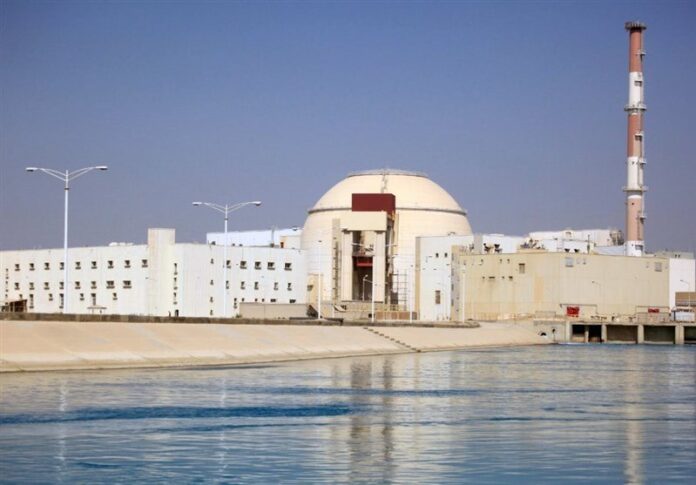
Iran plans to produce 17k MW of nuclear power in 20 years

Mohammad Eslami, who is visiting the southern city of Abadan, says Bushehr nuclear power plant has already saved Iran 80 million barrels of crude oil and has been a great boon to addressing shortage of electricity supply in the country. 

“Expanding power generation capacity through nuclear power plants is one of the objectives of the 13th administration. The Darkhovein site is part of the planning in this regard,” the vice president said.

“Today, using nuclear power plants is the cleanest, the most long-lasting, the most reliable and the most economical solution for power generation in the world. Seeing the emphasis by the Islamic Revolution Leader on production of 17,000 MW of nuclear power in the country, we included production of 10,000 MG of nuclear power in the next year’s budget,” he said. 

Eslami added that planning is needed to ensure enough power generation to address the needs of the future generations.

Iran stands 23rd in 2021 world nano patent registration rankings

Iran-Made Nano-Spray Disinfects Wound Infections

Based on the data released by StatNano, 23,750 inventions in the nanotechnology were registered in USPTO in 2021, with nearly half of patent applications belonging to the United States. China, South Korea, Japan, and Taiwan follow the U.S., respectively.

Out of the 55 nano inventions that Iran submitted to the U.S. office, 21 were registered and their patents were granted while applications for the remaining 34 were published by the United States Patent and Trademark Office.

Iran ranked 23rd in both categories in the previous year’s standings.

In an exhibition held last week, Iran unveiled more than 50 nanotechnology products that meet the country’s needs in medical, industrial, aviation, and construction sectors.

Over 450 knowledge-based and industrial companies in Iran have so far produced mor than 800 types of nano products that are used inside the country and also exported to over 40 countries.

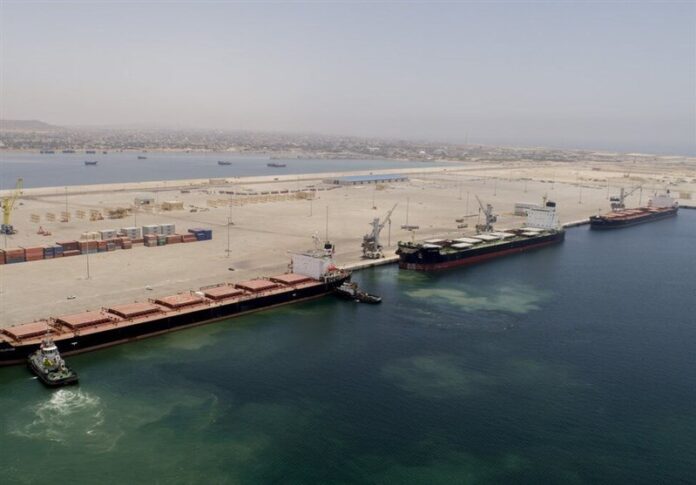
Uzbekistan finalizes Chabahar Agreement accession

Director General of Sistan and Baluchestan Ports and Maritime Organization Behrouz Aghaei said on Tuesday that Uzbekistan’s deputy ministers of transport and trade were present in the Iranian city of Chabahar to put the finishing touches on the accession.

“A draft of the accession has been prepared, and within a month at a meeting in Tehran, Uzbekistan will be formally added to the Chabahar International Agreement,” Aghaei stated.

The agreement aims to create a new transport corridor for shipment of goods among Afghanistan, India, and Iran through the Iranian Chabahar Port.

“The agreement’s ultimate goal is to add all the countries of the commonwealth of Central Asia and then expand to the Caucasus and Eastern Europe. The port of Chabahar is the most cost-effective, safest and most economical way to trade for more than 3 billion people in different parts of the Indian Ocean, Central Asia, the Caucasus and Eastern Europe. According to international experts, this port will soon replace the Suez Canal route for trade in Europe, Asia and Africa,” Aghaei explained.