Thursday, January 1, 2026
Home Blog Page 2126

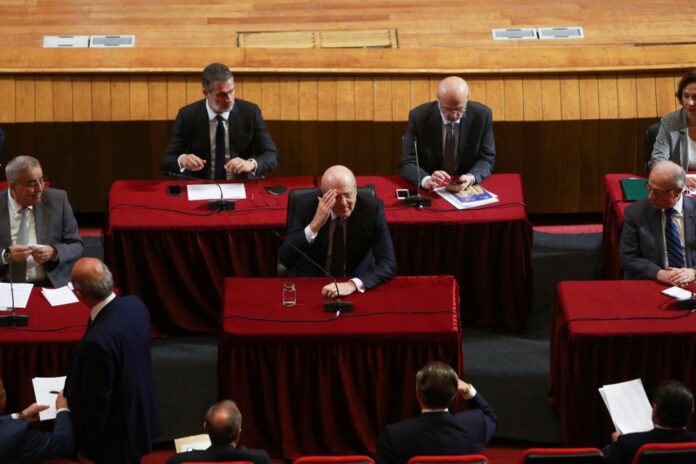
Hezbollah, Amal to end boycotting Lebanon cabinet sessions

The groups, which back several ministers in a government made up of members from across the political spectrum, said in a statement on Saturday that the decision was driven by a desire to approve the 2022 budget and to discuss an economic recovery.

The Lebanese cabinet under Prime Minister Najib Mikati has not met since October 12 due to squabbling about the investigation into the deadly Beirut port explosion in August 2020, and a continuing diplomatic rift with Saudi Arabia and some Persian Gulf states.

As a result, the government has been unable to take swift action to address the country’s dire economic crisis.

Since August 2019, the Lebanese pound has lost more than 90 percent of its value as more than three-quarters of the population has slipped into poverty.

The country’s inflation rate has exceeded those of crisis-hit Venezuela and Zimbabwe. The World Bank has reported the Lebanese financial crisis is one of the worst since the mid-19th century.

In December, President Michel Aoun stated Lebanon needs “six to seven years” to emerge from the crisis.

The economic meltdown began in 2019 when the financial system collapsed under the weight of huge state debt and lack of foreign currency – the result of decades of corruption, economic mismanagement, and unsustainable financing.

The international community has for years pressed Lebanon to reform its economy, implement anti-corruption mechanisms, and reach an agreement with the International Monetary Fund in order to unlock billions of dollars in developmental aid.

Beirut is also struggling to resolve a diplomatic row with Saudi Arabia, Bahrain, the United Arab Emirates and Kuwait, which have been critical of Hezbollah for its role in regional conflicts.
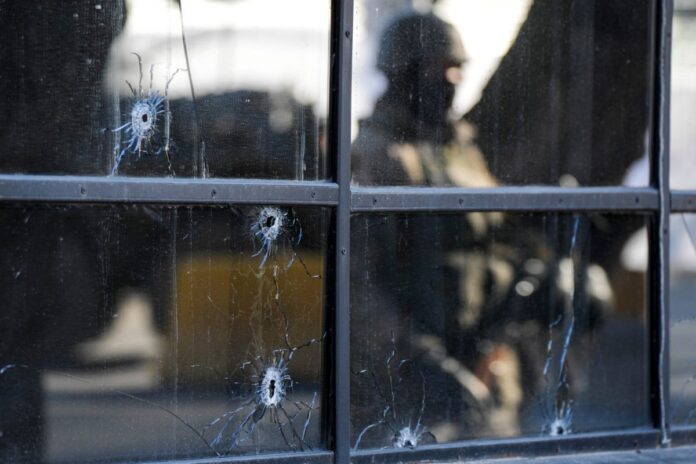
Kazakhstan: 225 killed; thousands injured during unrest

“4,578 victims have been identified. Of those, 4,353 were injured, including 3,393 members of the law enforcement agencies. During the state of emergency, 225 bodies were transported to the country’s morgues,” Shalabayev said.

The prosecutor added that 19 police officers and service members were among those killed.

Shalabayev clarified that some of those killed were “armed bandits who took part in the terrorist acts and attacked buildings and law enforcers.” 

“Regrettably, civilians became victims of the terrorist acts as well,” Shalabayev continued.

The Kazakhstan’s Health Ministry reproted that of those 225 people killed, 175 died at medical facilities.

Protests erupted in several Kazakh cities on January 2, escalating into mass riots with government buildings getting ransacked in several cities, primarily in Almaty, a few days later. The ensuing violence left thousands of people injured, with fatalities also being reported. Subsequently, Kazakh President Kassym-Jomart Tokayev turned to the Collective Security Treaty Organization requesting assistance from the Russia-led bloc. As a result, peacekeepers were deployed to Kazakhstan. Law and order, Kazakh authorities affirm, was restored to all of the country’s regions.

The Kazakh president announced that the post-Soviet security bloc’s forces played a crucial role in stabilizing the situation in Kazakhstan and called their mission successful. On January 13, the CSTO began the pullout of its peacekeeping contingent from the Central Asian republic.

The peacekeeping contingent of the CSTO collective forces will be withdrawn from Kazakhstan by January 19, Secretary General of the CSTO Stanislav Zas said in a televised interview with Belarus-1 channel on Saturday.

“Almost within a week, all the units and all the personnel will be pulled out to their permanent deployment locations. Unless the weather interferes, it is scheduled to return everyone to their permanent deployment locations by January 19, according to the Russian Defense Ministry’s plan,” the CSTO secretary general added.

The situation has returned back to normal in Kazakhstan, but still the law enforcement agencies have much work ahead, he noted.

“It probably is not quite right to say that the situation has returned back to normal,” Zas said, recalling that the state of emergency had not yet been lifted in some regions of Kazakhstan.

“At the same time, the situation is improving, the turning point has been passed, and we can say that the country is getting back to normal life,” the chief of the CSTO added.

Nevertheless, Zas pointed out that Kazakhstan’s law enforcement and special agencies have loads of work to do.

Foreign nationals were among the terrorist groups participating in the unrest in Kazakhstan, but they were not the main participants, he claimed.

“We can say that terrorists group were operating. Among those arrested are foreigners from different countries. You have read about it. Of course, we cannot say that foreigners prevailed there,” he stated.

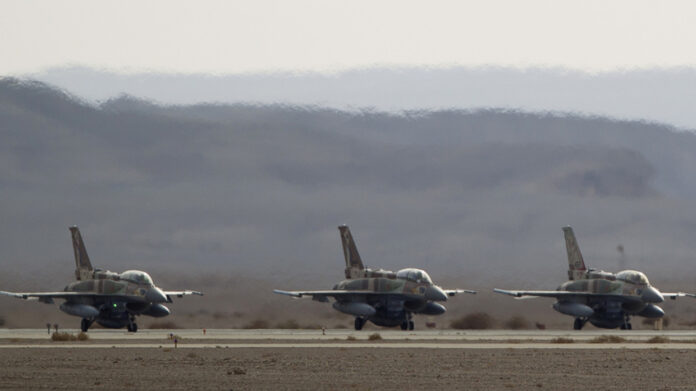
Report: Israel prepares weapons wish list for action against Iran, Hezbollah

The wish list is “highly classified” and includes aerial munitions that the occupying regime “predicts would be needed” if it dares to militarily engage Iran or fend off against Hezbollah’s retaliatory rocket strikes, Breaking Defense military news outlet reported, citing Israeli military sources in Tel Aviv.

The US War Reserves Stock Allies stockpile, established in the 1980s, allows the US military to “stockpile arms and equipment at Israeli bases for American use in wartime” and has included missiles, armored vehicles and artillery ammunition, according to a report by the official US Congressional Research Service (CRS).

Later the US amended the rules for the stockpile, the report further noted, explaining that the Israeli regime could have direct access “in emergency situations,” and weapons could be transferred through significantly streamlined Foreign Military Sales channels.

“Officially, all this equipment belongs to the US military. If, however, there is a conflict, the IDF (Israeli military forces) can ask permission to use some of the equipment,” said an Israeli military officer quoted in a 2020 CRS document cited in the report.

That has happened at least twice, according to the Washington-based CRS: once during the Israeli regime’s massive military aggression against Lebanon in 2006 and again during the regime’s brutal military onslaught in 2014 against the Palestinian resistance movement, Hamas, in the besieged Gaza Strip. Israeli forces suffered huge losses in both instances, prompting it to work out ceasefire deals through intermediaries.

The US also simulated a stockpile weapons transfer for a bilateral war games with Israeli regime forces back in 2019, according to the report.

The report further cited a senior Israeli military source as emphasizing the advantages of increasing the stockpiles of US weaponry in occupied Palestine, stating, “First, since the weapons are owned by the US, they don’t affect Israel’s military budget until they’re needed. Second, while Israel does foot the bill for the systems’ maintenance, they’re stored in US-controlled areas” of Israeli military bases.

Munitions stockpiles, the report insist, remain an intense concern for Israeli military planners after the regime depleted most of its Iron Dome stockpile last year to ward off retaliatory rocket strikes from Gaza following another military aggression against the impoverished Palestinian enclave. The US Congress is set to approve $1 billion in American tax-payers’ money to finance Israeli efforts to replenish its supply of Iron Dome missile system despite the regime’s terrible record of human rights abuses against native Palestinians.

The news outlet also reported last October about Israeli plans to request from the US the purchase of its new 2.3-ton GBU-72 bunker buster bombs for what it claimed as potential operations against tunnel systems in Gaza as well as “fortified Iranian nuclear sites” – a claim widely viewed as merely a publicity stunt to boast its military might.

 It also reported back in November 2021 that the US and the Israeli regime have stepped up joint “operations against Iran’s drone industry” in response to significant Iranian advancements in drone technology and development.

The US has served as the key sponsor of the Israeli regime’s atrocities and military aggressions against occupied Palestinian territories and its native population, neighboring Syria and Lebanon, as well as terrorist assassination operations against opponents across the globe and Iranian nuclear scientists.

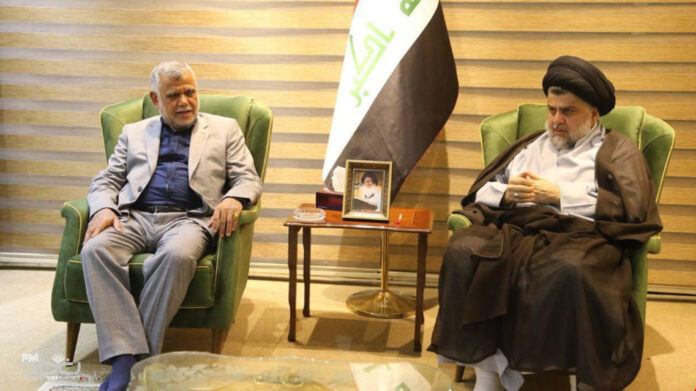
Report: Iraq Shia leaders discuss “parliamentary coalition”

Shafaq News quote an informed source as saying that the meeting between Muqtada al-Sadr and Hadi al-Amiri, the Secretary General of the Badr Organization, focused on formation of a majority coalition in the parliament to form the next government. 

The source said the issues of Iraq’s Popular Mobilization Units and coordination among Shia groups for security decision-making in the next government were also on the agenda of the talks. 

Other reports said the Fatah Alliance, which involves Badr Organization as a key member, and Sadr Party, are planning to form a majority parliamentary coalition. 

Iraq held a snap parliamentary vote in October. It saw Sadr Party win 73 seats. Fatal also won 17 seats. 

But Fatah official largely disputed the results saying the US and other foreign players pressured the Iraqi federal court to confirm the outcome. 

Fatah officials, including Amiri, however, later accepted the court ruling and the results. 

3 Iranians die of Omicron, cases on the rise

“Unfortunately, one person has died in each of the cities of Tabriz, Yazd and Shahrekord due to the Omicron infection, and another person is in critical condition. The warning is very serious!” announced the Public Relations Office of Iran’s Ministry of Health and Medical Education. 

“The number of those infected with Omicron in the country has reached 1,162, and the figure shows a considerable rise in the city of Mashhad where 249 people have contracted the disease,” the office added. 

This comes as the number of triple-vaxxed people in the country has crossed the 12 million mark while the total number of Covid vaccine doses administered to citizens has reached well over 125 million. 

The vaccination campaign has generally resulted in a downward trend in Coronavirus deaths and infections. 

However, authorities have warned of a surge in the number of Omicron cases across the nation.

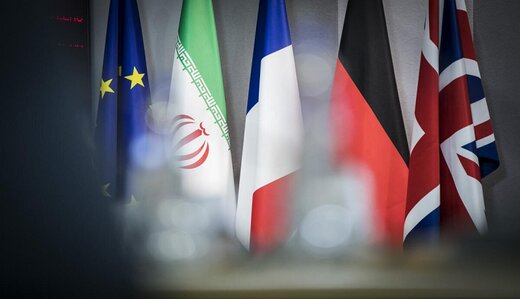
US eager to discuss Iran military might during Vienna talks: Kayhan

“Western powers, particularly the US and France, have stressed, during Vienna negotiations, their desire for talks to be held on Iran’s military prowess,” wrote Kayhan.

“But when they faced opposition by the Iranian delegation in that regard, they asked the Iranian team to accept their demand generally, even if talks are not really held about Iran’s military capabilities!” the paper added.

“Why is it important for the United States to see Iran’s military power being put on the agenda of the talks, even in a very general and unspecified manner?” Kayhan asked rhetorically.

“The reason is clear. The US wants to shatter Iran’s will to use its own power,” it added.

“In that case, even very modern and efficient missiles will not have any stronger impact than that of atomic bombs of Pakistan or India,” the paper added.

“Of course, it goes without saying that if we accept this demand, the US will definitely begin, as of the following week, to put pressure on Iran to drag it to the negotiating table for military talks,” the paper said.

“So, the bottom line is to break Iran’s willpower,” said the newspaper.

“When it comes to Iran’s nuclear dossier, the Americans have been saying that they know they cannot eliminate Iran’s nuclear know-how and, at the end, cannot prevent Iran from going nuclear. But if Iran agrees to accept the limits set by the hegemonic system with regards to this dossier, it means Iran has compromised on its ‘will’ and has, in fact, crossed out its future,” Kayhan wrote.

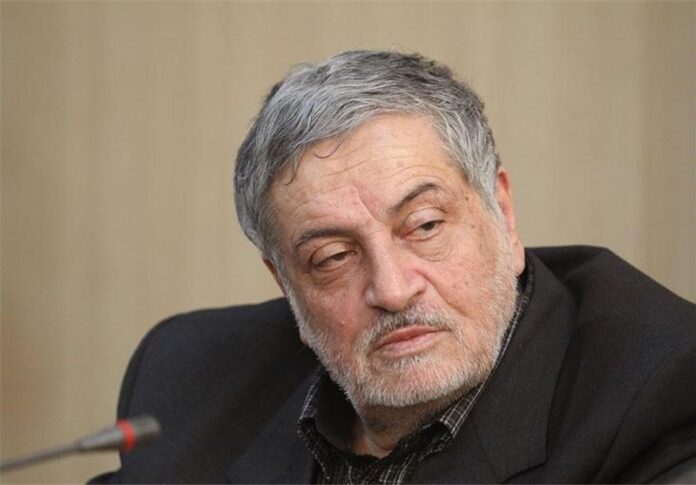
Veteran volleyball, wrestling manager Yazdani Khorram passes away

Yazdani Khorram headed the volleyball federation of Iran between 1989 and 2006 and its wrestling federation beween 2006 and 2011.

He is credited with laying the grounds for the development of Iran’s volleyball into an Asian power.
He is also considered a force in helping the national wrestling win key international titles.

“We would like to offer our condolences on the greatly saddening passing away of Mohammad Reza Yazdani Khorram to his esteemed family and the sporting family of the country. He was a veteran of national sports, who, during his management tenure, left a unique imprint on Iranian sports,” the National Olympic of Iran said in a statement.

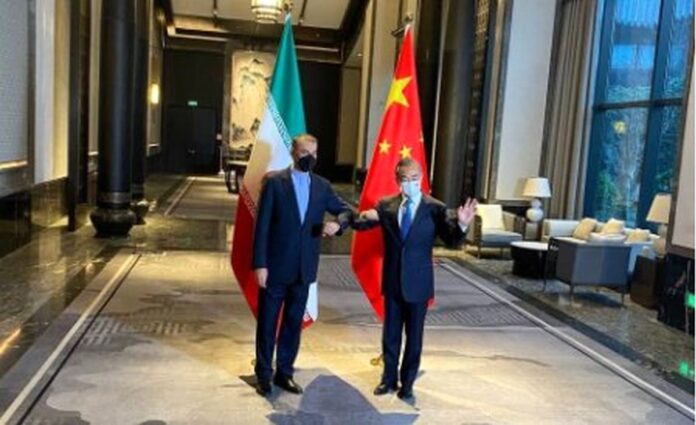
Iran FM: 25-year agreement with China a win-win deal

“Relations and ties between Tehran and Beijing are expanding on all fronts and the 25-year strategic cooperation between the two countries will be a win-win deal,” he told China’s CGTN state television.

Amir Abdollahian added that China has played a constructive role in the Vienna talks to revive the 2015 nuclear deal.

He said the Chinese envoy has supported Iran’s right to civilian nuclear activities and has called for the removal of cruel sanctions against Tehran.

During his two-day visit to China, Amir Abdollahian held talks with his Chinese counterpart Wang Yi.

The Iranian diplomat had earlier said his talks in Beijing focused on bilateral political ties and the implementation of the 25-year agreement for economic cooperation.

Iran and China signed the agreement during a visit by Chinese President Xi Jinping to Tehran in 2015. The agreement aims to boost economic cooperation between the two countries for the next 25 years, and paves the way for Iran’s participation in the Belt and Road Initiative, a massive infrastructure project stretching from East Asia to Europe.

Iran reaffirms support for UN efforts to preserve Syria sovereignty

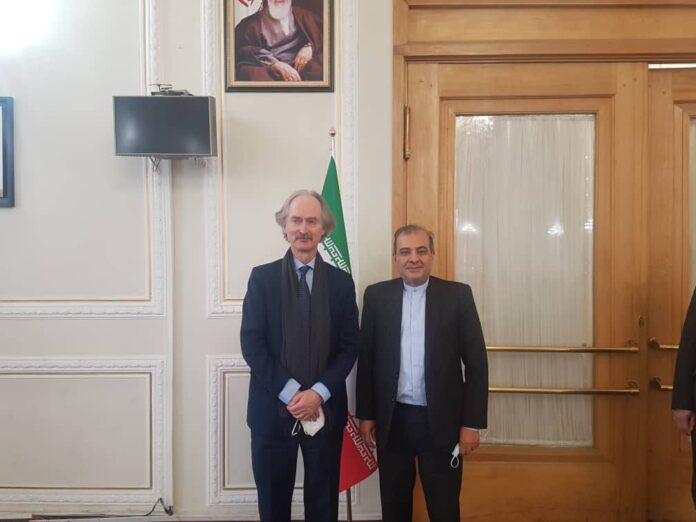
Ali Asghar Khaji was speaking during a meeting with UN Special Envoy for Syria Geir O. Pedersen in Tehran.

Khaji and Pedersen held talks over the Syrian constitutional committee’s negotiations as well as tackling the anti-Syria sanctions and ways of sending humanitarian aid to the country.

Khaji said the people and government of Syria have been standing up against Daesh and other terror groups and the country has now achieved relative stability while its ties with regional nations are improving.

He urged the UN as well as regional and international players to take account of the situation of the Syrian government and people and step up efforts to send aid to the country.

Pedersen, who is visiting Tehran at the head of a delegation, appreciated Iran’s
efforts in cooperation with the UN and within the framework of the Astana peace
talks to strengthen the negotiated settlement of the Syria crisis.

Pedersen also thanked Tehran for supporting national dialog in Syria and stressed the need for the continuation of cooperation between Iran and the UN in this regard.

Iran, along with Russia, helped Syria during its decade-long war on terror that
resulted in the defeat of myriads of terror groups that wreaked havoc across
the Arab country during the foreign-backed war.
The Syrian government is now in
control of most of the country.

Iran urges UN to do more to end Yemen war

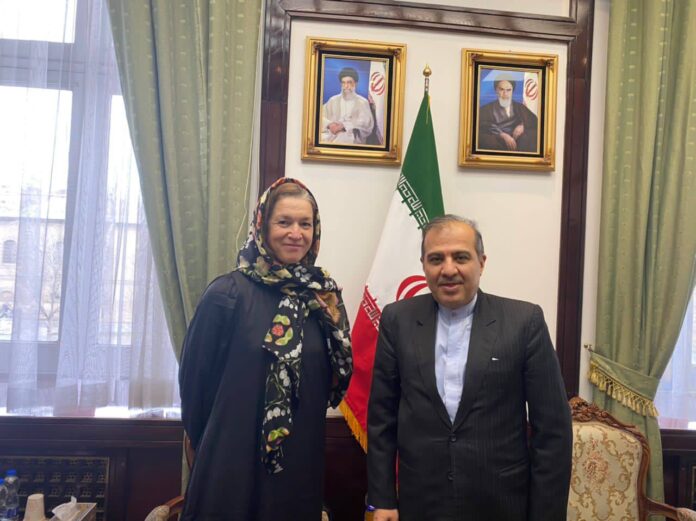
Ali Asghar Khaji made the call during a meeting with Norway’s special envoy for Yemen Ms. Kjersti Tromsdal in Tehran.

Ms. Tromsdal also spoke of Norway’s non-permanent membership in the UN Security Council, stressing that the Yemen crisis tops the
agenda of the world body.

She added that Norway will continue efforts to peacefully resolve the crisis and reaffirms its support for the efforts of the UN Secretary General’s special envoy for the Yemeni affairs.

Khaji and Ms. Tromsdal further discussed latest developments inside and outside Yemen. They held talks over areas of mutual cooperation between Iran and Norway with regard to the Yemen crisis.

The two diplomats also exchanged views over various issues and aspects of the Yemen crisis and ways of achieving peace and ending the crisis.

Iran has repeatedly called for an end to the Saudi-led war on Yemen. Tehran believes that the crisis in the war-torn country can only be resolved through dialog among Yemeni factions and without foreign interference.