Tuesday, December 30, 2025
Home Blog Page 2095

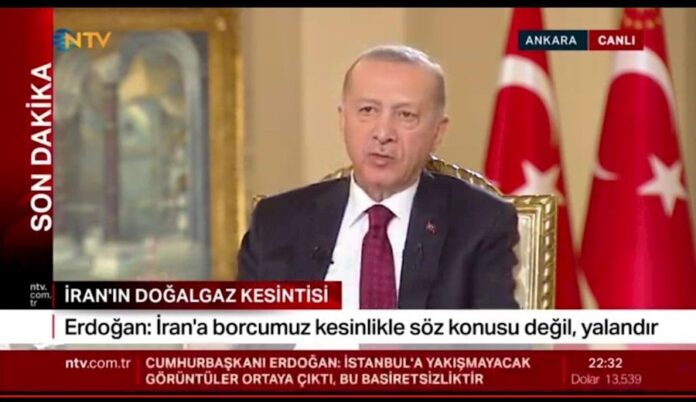
Erdogan: Iran natural gas supply problem to be resolved soon

“Mr. Raisi said Iran is also experiencing extreme winter conditions and the problem of the halt in natural gas supply is due to technical issues, and I hope that the problem is addressed in a matter of 10, or maximum 15, days,” Erdogan cited Raisi as saying.

Erdogan also dismissed Turkish media reports on debt to Iran saying his country has no deferral in payments to Iran on its natural gas.

He said a delegation from Turkish Energy Ministry and its Energy Transfer Company are visiting Iran to discuss a solution to the problem.

Export of Iranian natural gas to Turkey was halted last week due to technical problems and low pressure, triggered by adverse weather conditions.

The situation has forced Turkey to redirect fuel, aimed for its gas-fired power plants, to other sectors. This has also halted many production lines in the country.

China envoy: Parties in Vienna talks working to address differences

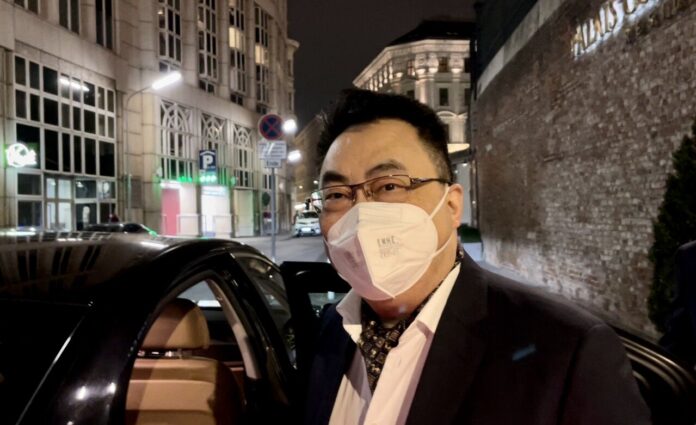
Wang Qun made the comments after lengthy talks with the Iranian delegation in Vienna on Wednesday.

“These are issues we have been discussing to see how we can decrease existing differences,” he told Iran’s official  news agency, IRNA.

“We think Iran’s demands are logical and legitimate and we are working to put them into writing.”

The eighth round of the Vienna talks for removal of anti-Iran sanctions began on December 27. The talks have been progressing, though participants say, slowly.

On Wednesday, the Iranian chief negotiator Ali Baqeri Kani also held talks with the representatives of Russia and the European Union in the talks.

Iran has said the other sides’ will to remove sanctions is the key to how fast the negotiations produce results.

Former Iran MP: Decision for direct talks with US correct

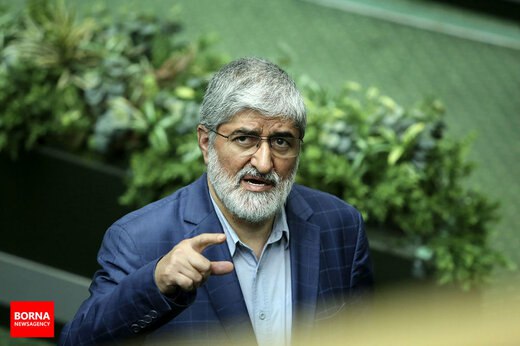
“This is a correct decision that should have been made earlier. This is surely in the interest of the people and would better serve national interests,” Motahari says.

Motahari’s comments place  him among other supporters of the nuclear deal, who back its revival and believe it is better to lose the saddle than the horse on the agreement.

“[Officials of the current administration] previously, because of the slogans there were shouting, to save their face before their supporters and to maintain their revolutionary gesture, they used to say we should humiliate the US and that is why we do not engage in direct talks. This is while it was a detriment to the people and led to intermediary countries use the status quo in their own interests,” he said.

“Now they have reached a point where they know, to exit this impasse, the best way forward is the same direct talks.”

Motahari further said there will be ultimately an agreement, as both sides want it and there is not domestic opposition against the nuclear deal, which was the status quo over the past years.

“I believe the outcome will be what previous negotiators had achieved back in February 2021, we were very close to full agreement. But, there were, unfortunately, some acts of sabotage inside the country and things were delayed for almost a year. After all, I believe what will be agreed, will be not be much different than what Mr. Zarif and Mr. Araqchi had achieved,” he said.

‘Ukraine toy in US, NATO’s hands for pressure on Russia’

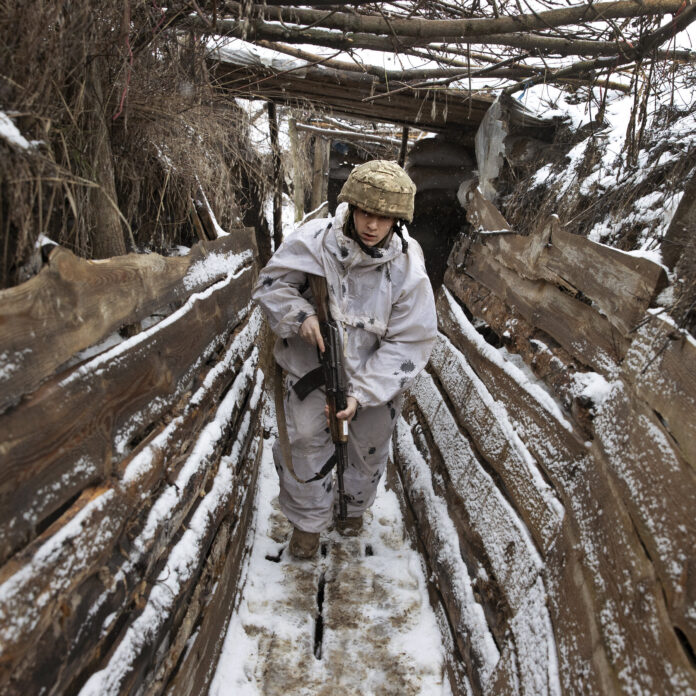
“Unfortunately, Ukraine has become to a certain degree a toy in the hand of NATO and, primarily, of the US, because Ukraine is being used as an instrument of geopolitical pressure on Russia,” the official stated.

He expressed his certainty that “Ukraine, however sad this may sound for the Ukrainians, is of no need for the Americans and for the Europeans as well by itself.”

“But it is an argument in the geopolitical game against Russia, and, to a certain extent, even against China. So these tensions are first and foremost connected to this. On the other hand, these tensions are connected to the course that has been implemented by Ukrainian authorities in recent years,” Medvedev added.

Moscow stands against the deployment of weapons in Ukraine not only on behalf of NATO member states, but other western countries as well, Medvedev said.

“The matter is not only about NATO’s non-expansion, however, it is very important. I believe, that the matter is about to provide other guarantees,” Medvedev stated speaking with Russian media outlets.

According to him, offensive weapons and missiles can be deployed on the territory of Ukraine and any other country based on bilateral agreements.

“It can be assumed later as ‘No-No’ we are not NATO and let’s say it is under an agreement between the United States and Ukraine, Britain and Ukraine, it has nothing to do with NATO and it is about our bilateral relations. However, it is all the same for us,” Medvedev continued.

The high-ranking security official noted that “there can be no invitation for Ukraine to join NATO.”

“We are conversed in whispers from time to time that Ukraine would not join NATO in the years to come. But this is not what we are talking about here,” he added.

The North Atlantic Treaty Organization (NATO) failed to keep its previously voiced promises regarding its non-expansion to the east and moved to the Russian state borders, Medvedev said.

“They promised not to expand NATO, but didn’t keep the promise,” he added.

“They say that ‘we did not sign anything.’ But we all know well who and when granted to whom such promises, such assurances,” he noted.

“Did they promise not to expand, let’s say, on the territory of the former Soviet Union? They promised it either in this way or another in private talks,” Medvedev continued, stating, “They failed to keep all their promises. They are now encroaching on our state borders.”

Recently, the west and Ukraine frequently echoed an allegedly looming Russian invasion of Ukraine. Kremlin Spokesman Dmitry Peskov castigated these statements as an empty and groundless escalation of tension, emphasizing that Russia posed no threat to anyone. At the same time, the Kremlin press secretary did not exclude some possible provocations to justify such claims and warned that the attempts to resolve the Ukrainian conflict by force would carry extremely serious consequences. According to him, Moscow is making every effort to help Kiev resolve the conflict in Donbass, while remaining committed to the Normandy format and the Minsk agreements.

UN chief warns Afghanistan ‘hanging by thread’

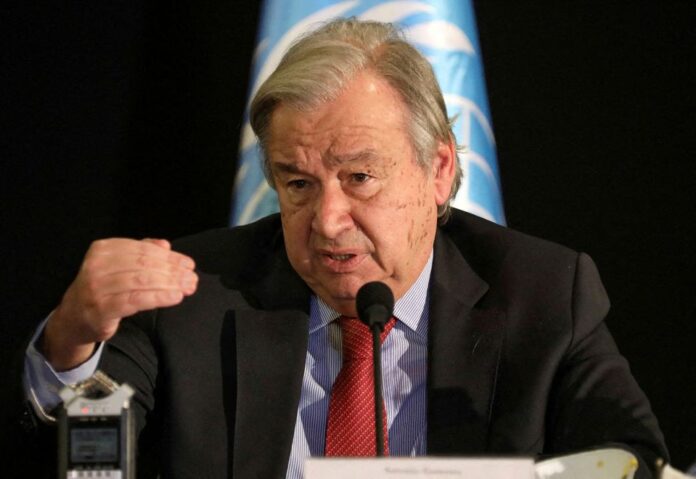
He also pushed for a suspension of any rules or conditions constricting “lifesaving” aid operations as millions in the country suffer extreme hunger, education and social services are on the brink of collapse, and a lack of liquidity limits the capacity of the United Nations and aid groups to reach people in need.

“We need to give financial institutions and commercial partners legal assurance that they can work with humanitarian operators without fear of breaching sanctions,” said Guterres, noting that the 15-member council last month adopted a humanitarian exemption to UN sanctions tied to Afghanistan.

Some $9.5 billion in Afghan central bank reserves remain blocked abroad and international development support has dried up since the Taliban seized power in August. Donors seek to use the money as leverage over the Taliban on issues including human rights.

“There is compelling evidence of an emerging environment of intimidation and a deterioration in respect for human rights. This suggests that the consolidation of government authority may be leading toward control of the population by fear,” the UN special envoy on Afghanistan, Deborah Lyons, told the council.

In December, donors to a frozen World Bank-administered Afghan Reconstruction Trust Fund agreed to transfer $280 million to the World Food Program and UN children’s agency UNICEF to support nutrition and health in Afghanistan.

Guterres stated the remaining $1.2 billion in the fund needed “to be freed up urgently to help Afghanistan’s people survive the winter.”

The US ambassador to the United Nations, Linda Thomas-Greenfield, told the council that Washington had moved to ensure that US sanctions do not impede humanitarian activity and it is examining various options to ease the liquidity crunch.”

UN aid chief Martin Griffiths and International Committee of the Red Cross President Peter Maurer met virtually with US Secretary of State Antony Blinken earlier this month on Afghanistan.

Dominik Stillhart, ICRC director of operations, announced “intense” discussions between the United Nations, the ICRC, the World Bank and key donor countries were centered on a “humanitarian exchange facility” that would be supported or managed by the World Bank and allow for cash to be injected into the Afghan economy.

He told reporters that money could be deposited in the facility and “under certain conditions that cash could be made available to traders in Afghanistan,” though he stated it was a stopgap measure because “it needs to be the central bank that has to be capacitated to discharge these functions.”

Thomas-Greenfield added that “ultimately, a functioning Afghan economy will require an independent and technically competent central bank that meets international banking standards.”

Stillhart said agreement was needed between the UN, World Bank and key donors to “kick-start this facility,” noting that the discussion was not related to the unfreezing of Afghan assets or changes to sanctions on the Taliban.

He added a separate idea was also being discussed that would involve using money from the World Bank-administered Afghan Reconstruction Trust Fund to pay non-security public sector employees.

The United Nations earlier this month appealed for $4.4 billion in humanitarian aid for Afghanistan in 2022. On Wednesday, it announced it needed a further $3.6 billion for health and education, basic infrastructure, promotion of livelihoods and social cohesion, specifically the needs of women and girls.


Repirt: Members of radical group among detainees in Khazakistan

The group was categorized as extremist in 2018 by Kazakhstan’s security department and its activities have been prohibited throughout the country.

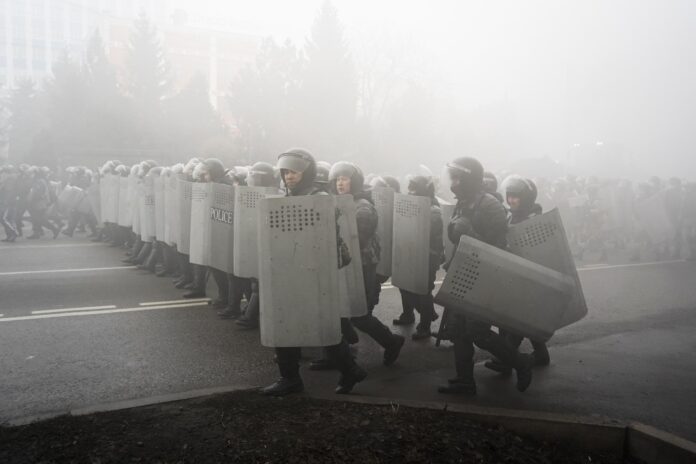
Protests erupted in several Kazakh cities on January 2, escalating into mass riots with government buildings getting ransacked in several cities, primarily in Almaty, a few days later. The ensuing violence left thousands of demonstrators injured, with fatalities also being reported.

Subsequently, Kazakh President Kassym-Jomart Tokayev turned to the Collective Security Treaty Organization requesting assistance from the Russia-led bloc. As a result, peacekeepers were deployed to Kazakhstan. Law and order, Kazakh authorities affirm, was restored to all of the country’s regions.

At least 225 people were killed in unrest, the prosecutor general’s office has announced.

‘Saudi-led coalition carries out 60 airstrikes across Yemen’

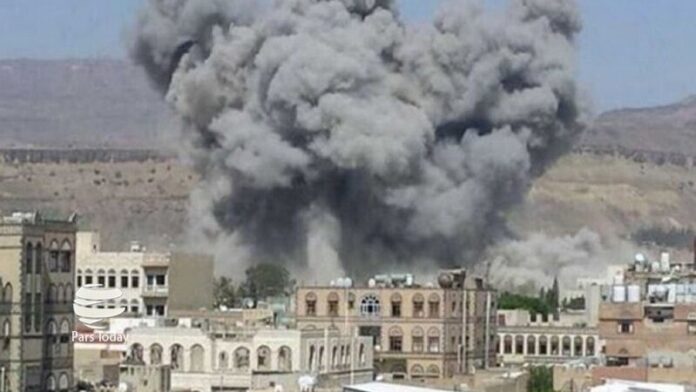
The areas bombed include the capital Sanaa, Maareb, Jawf, Saadah, Shabwah, Najran and Omran. 

Meanwhile, the Saudi-led coalition violated a purported ceasefire in Hudaydah with missile and artillery attacks and reconnaissance flights. 

The Saudis and their allies have stepped up their attacks on Yemen in the past few days. The Yemeni forces are fighting back with missile and drone strikes deep in Saudi Arabia and Yemen. 

The Saudi-led coalition wants to reinstate former Yemeni president Abd Rabbuh Mansur Hadi who was overthrown amid a popular uprising several years ago.

“Iran team has authority to hold direct talks with US”

“I am citing the deputy foreign minister that no direct and face-to-face talks have been held [with the US] up to this point. But based on the three principles of dignity, wisdom and expediency and the emphasis on removal of all sanctions after verification and securing guarantees, if there is any need for starting negotiations with the US, the negotiating team has the authority to take the necessary step,” Ebrahim Azizi cited Ali Baqeri Kani as saying. 

Azizi added that the foreign ministry has been so far transparent on the process of the Vienna talks though there have been times when “national expediency” ruled otherwise. 


He stressed that Iran has been insisting on the principle that any negotiations which is not aimed at the removal of sanctions is “unacceptable”. The lawmaker added that verification of the removal of sanctions is the second issue, which Iran has been pursuing. 

“Past record showed that we cannot trust promises by the US the Europeans are conveying to Iran directly or through intermediaries. We are adamant that the agreements should be there also in the practical phase and the other party should fulfill its obligations,” he said.

“Europeans follow the policy of the US and have no authority of their own to undertake obligations or offer guarantees on their promises to Iran.”

Azizi further dismissed talks of an impasse in the negotiations or any comments that negotiations without the presence of the US are futile. He said this is media propaganda and politicized.

Envoy: Iranian, Qatari FMs hold two phone calls in a single night

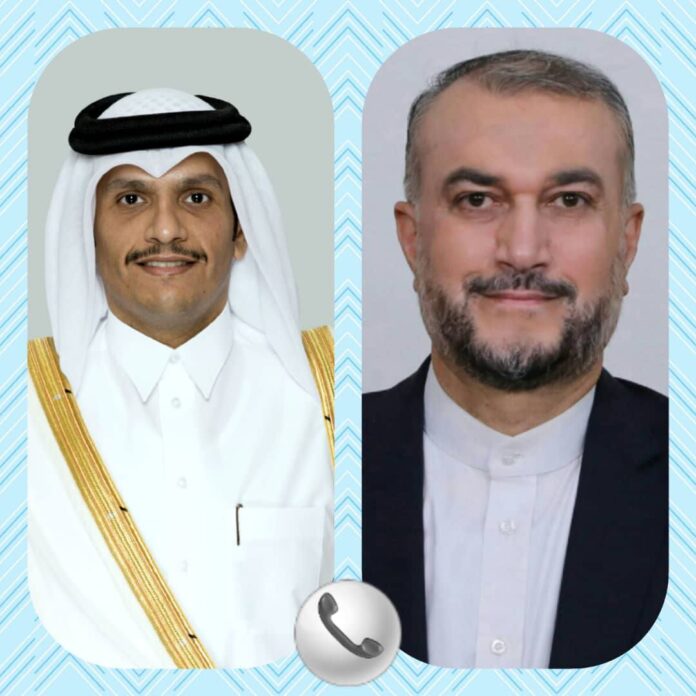
Iranian Ambassador to Doha Hamidreza Dehghani has said in a tweet that the foreign ministers of Iran and Qatar held talks twice on the phone in a single night. Dehghani said, “When ties are close, developments are dramatic, (and) the issue is important, (then) two phone calls happen in one single night.”  

MP: Govt. must not repeat mistake of negotiating with US

MP: Govt. must not repeat mistake of negotiating with US 

An Iranian lawmaker has cautioned administration officials against bringing up the issue of direct negotiations with the United States again, saying such a mistake during the ex-president’s terms promoted Iran’s allies to distance themselves from the country. 

Ahmad Rastineh reacted to recent comments by Foreign Minister Hossein Amir-Abdollahian, who said Iran would consider direct talks with Washington if negotiations to revive the 2015 nuclear deal reached an advanced stage that required such dialog. 

“One of the mistakes made in the administration of [former President] Hassan Rouhani was that they used to think they could solve the problems via direct talks with the US, but such negotiations instead filled the Islamic Republic’s allies with doubt over cooperation with our country,” he said. 

The lawmaker warned, “We should not repeat the Rouhani-era mistake by bringing up the issue of direct negotiation with the US again. If officials believe they can safeguard and fulfill the country’s interests this way, they are making a strategic mistake.” 

He said the Rouhani administration wrongly thought that it could serve the country’s interests through “political give and take.” 

Putting trust in the US during Rouhani’s eight-year tenure, however, kept Iran’s resources and capacities in wait and created frustration among the youth over the country’s growth and progress, Rastineh added. 

He said talks with Washington also enabled the European states to stop shouldering their responsibilities under the 2015 nuclear agreement and offered the global domineering system an opportunity to exert even more pressure on Iran.