Friday, December 26, 2025
Home Blog Page 2095

Iranian official: Some difficult issues in nuclear talks still remain unsolved

Vienna-talks

A senior Iranian official told Reuters that “some 30% of difficult issues remain to be resolved but it is possible to reach a deal by early March”.

A second Iranian official said Tehran was also insisting on being able to seal and store its advanced centrifuges inside Iran, rather than dismantling and sending them abroad, as Western powers have called for.

He added Tehran further wants the removal of some 300 extra sanctions on Iranian entities and individuals not related to the nuclear deal.

A Western diplomat has also stated “reaching a deal is possible around early March, if all goes well”.

On Monday, Iranian Foreign Minister Hossein Amir Abdollahian called on the US and the West to stop playing with time and wording in the Vienna talks.

He stated Iran is in a rush to reach a good deal with the P4+1 and achieve the rights of the Iranian people within the framework of logical negotiations.

The foreign minister has emphasized that if an agreement is reached in Vienna today and the sanctions on the Islamic Republic of Iran are lifted, it is better for the country than for this to happen tomorrow.

The Iranian foreign minister added that the Western parties to the Vienna talks should show determination to return to their compliance with the nuclear deal, officially known as the Joint Comprehensive Plan of Action, JCPOA.

Amir Abdollahian also said the US officials in their messages to Iran speak of their goodwill to reach an agreement, but “we have yet to see a concrete measure from their side”. He added that Tehran believes that a good deal is at hand in a short term.

Earlier, a senior US official had noted that major issues on the table remain unresolved.

Negotiations are both “closer than we have been to a deal”, in that some progress has been made, and “closer than we have been to breakdown”, as time for agreement runs out, the official added.

“Both outcomes are still very possible,” the official continued.

Western leaders say time is running out for a viable accord. The US administration has also announced that only a “handful” of weeks remain before ongoing advances in Iran’s nuclear program will make agreement impossible.

Iran, Russia and China have pushed back on the need to establish a fixed deadline for the nuclear negotiations to conclude. Iranian officials have rejected western diplomats’ remarks about a deadline for reaching an agreement in Vienna talks, and stressed Tehran is only after a good agreement.

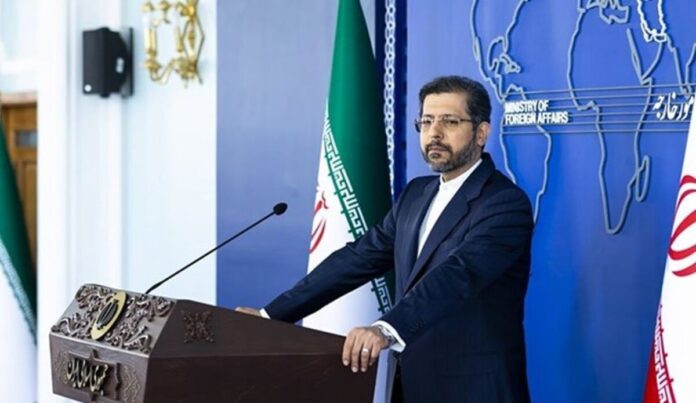
Foreign Ministry Spokesman Saeed Khatibzadeh stated on Monday “talks are not at a dead end…Iran has already taken its political decision by staying in the deal despite the US withdrawal”.

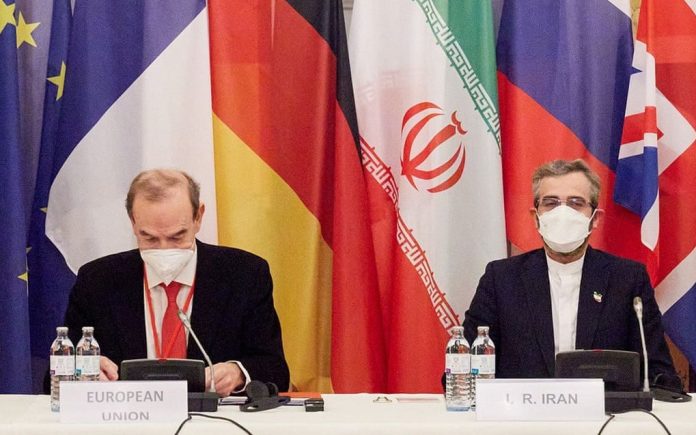
Intensive diplomatic talks continue in the Austrian capital of Vienna between Iran and the P4+1 group of countries to discuss all possible ways to salvage the 2015 nuclear deal by removing all sanctions imposed by Washington against Tehran.
China urges US to take active measures in nuclear talks

Vienna talks

“Negotiations on resuming compliance with the JCPOA have entered the final stage, presenting an important opportunity to bring the agreement back on track,” Foreign Ministry Spokesperson Wang Wenbin stated at a press conference on Monday.

“At the same time, there are still some important issues that need to be resolved. All parties are conducting intensive consultations to seek a package solution,” he added.

“As a Chinese saying goes, ninety miles is only half of a hundred-mile journey, for the going is toughest toward the end. In the final stage of negotiations, all parties should persevere, uphold mutual respect, think out of the box, gather consensus and strive for breakthroughs on outstanding issues,” he added.

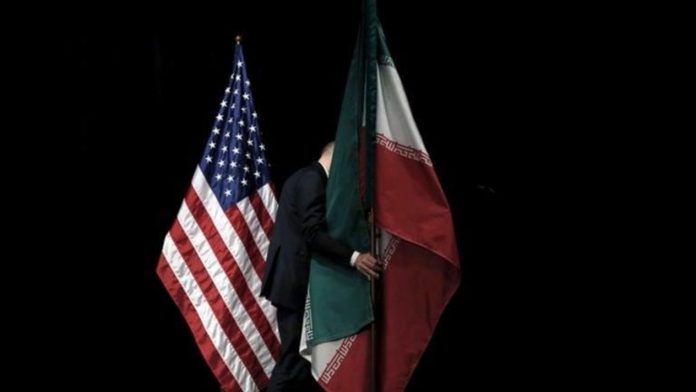
“It is incumbent on the US, the culprit of the Iranian nuclear crisis, to take further active measures in exchange for reciprocal steps by the Iranian side so that all remaining issues may be resolved at an early date,” the spokesman noted.

“China always adopts an objective and just position, constructively participates in negotiations, actively mediates on sticking points, and works toward all parties’ reaching practical and reasonable solutions. Going forward, we will continue to work with all relevant sides to advance the compliance resumption talks and also resolutely safeguard our own legitimate and lawful rights and interests,” he continued.

Intensive diplomatic talks continue in the Austrian capital of Vienna between Iran and the P4+1 group of countries to discuss all possible ways to salvage the 2015 nuclear deal by removing all sanctions imposed by Washington against Tehran.
Iran has put many offers on the table and encouraged the other side to come up with new proposals to resolve the outstanding issues.

Earlier, Iran’s foreign ministry spokesman denied claims the Vienna talks have hit an impasse, adding it is possible to reach a deal right now.

Speaking at his weekly news briefing, Saeed Khatibzadeh said the talks are continuing and negotiating teams are engaged in consultations as before.

Khatibzadeh however stated the negotiations move forward slowly on days when tough issues are on the agenda.

He noted that the other sides have reached the  point where they must take political decisions as Iran did so years ago.

“We are awaiting the West’s response to Iran’s initiatives,” Khatibzadeh continued.

The spokesperson stressed that the US is not trustworthy and Iran wants concrete guarantees so Washington will not be able to make a mockery of international law again.

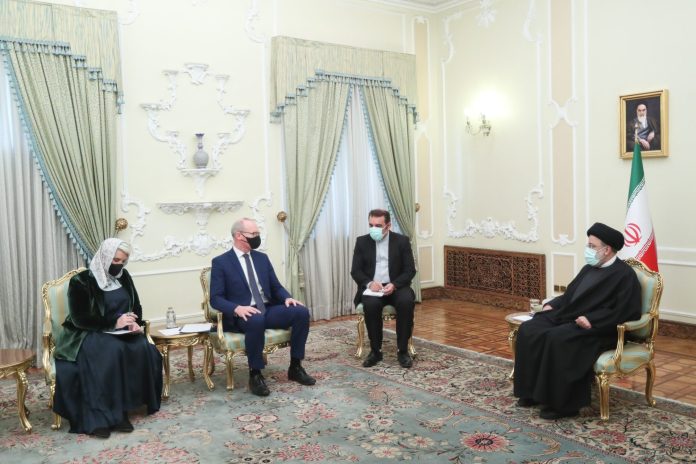
Raisi: Iran wants sanctions to be lifted genuinely 

Iran wants sanctions to be lifted genuinely 

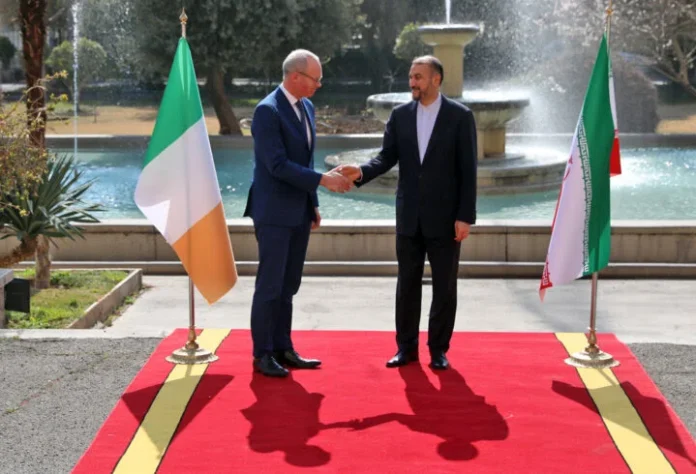
He was speaking during a meeting with Irish Foreign Minister Simon Coveney in Tehran on Monday.

Raisi said Iran demands necessary guarantees in the talks before the revival of the 2015, nuclear deal, JCPOA.

He also added the main prong of his administration’s foreign policy is to protect the interests of nations and mutual respect.

On ties with Ireland, Raisi said that Tehran and Dublin have huge potentials to expand their ties in different fields including trade. Referring to the cooperation capacities of the two countries in various sectors, including energy, science and technology, industry and agriculture, Raisi said the volume of trade between Iran and Ireland can be much higher than the current level.

The Irish foreign minister also stressed that his country attaches special importance to the development of relations with Iran.

Hr said, “We believe we are at a strategic stage in our relations with Iran and want to develop and improve the level of ties.” Coveney also said Dublin wants to reopen its embassy in Tehran.

He also spoke of the JCPOA.

“Ireland believes that the Iranian people are disillusioned and have no trust in the nuclear negotiations because of the US failure to keep its word,” said the Irish foreign minister.

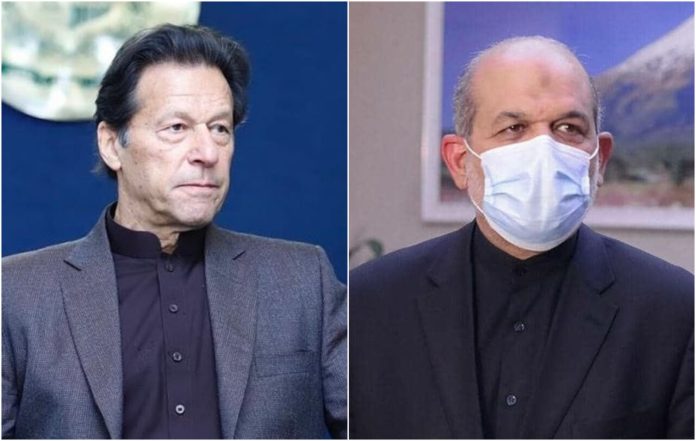
Pakistani PM calls for expansion of ties with Iran

Pakistani PM calls for expansion of ties with Iran

During the meeting, Imran Khan called for expansion of relations between Tehran and Islamabad in various fields like trade along the border.

Imran Khan also said military action has never been a solution to the problems of Afghanistan and the global community must now play its role in rescuing the Afghan people from the severe humanitarian and economic crisis they are facing.

Earlier, Vahidi met with Pakistani Army chief Qamar Javid Bajua and Interior Minister Rashid Ahmad.

During the meetings, the two sides underlined the need to further strengthen border control and security and economic cooperation.

Vahidi told the IRIB reporter in Islamabad that Iran and Pakistan have ready potentials to boost ties and regional coordination.

He referred to his meeting with the Pakistani Army chief, saying security cooperation with Pakistan is at a good level.

With the launch of the ECO freight train of Islamabad -Tehran- Istanbul and the strengthening of rail transport lines between Iran and Pakistan, the ground for the development of bilateral trade has been provided more than before.

The Iranian interior minister also praised the efforts of Iran and Pakistan to increase the number of border markets, saying this will strengthen bilateral economic ties.

Vahidi added that political relations between the two countries are at a good level and that Iran and Pakistan are engaged in positive negotiations to cooperate in regional issues.

Daily Covid-19 deaths in Iran rise to 168

Coronavirus in iran

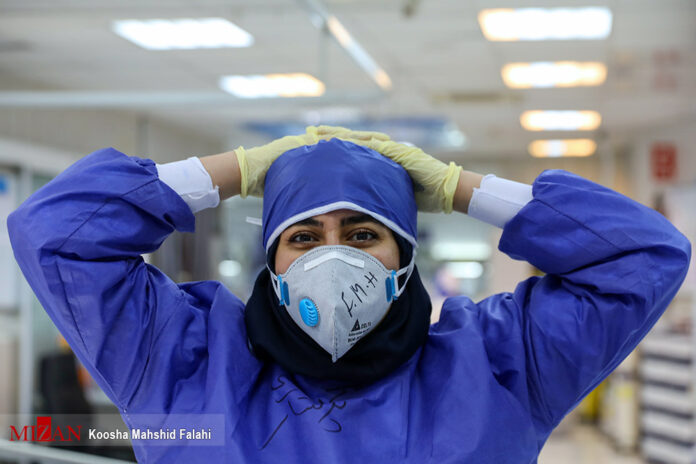
Iran’s Health Ministry announced on Monday that 168 more people had lost their lives to the virus over the past 24 hours, taking the total official death toll to 133,886.

The ministry also said over 28,950 people had contracted the disease in the same period.

On Sunday, Iran reported 148 fatalities and over 25,800 infection cases.

The spread of a new variant of the coronavirus known as Omicron has pushed up the number of Iranian cities declared Covid-19 red zones to 247 with no blue (very low risk) cities left in the country.

The latest surge comes despite an accelerated vaccination campaign over the past months.

Nearly 138 million doses of coronavirus vaccine have been administered in Iran so far with over 54,850,000 people fully vaccinated. Over 21,470,000 have received their booster shots.

According to health officials, 90% of the target population in Iran has received one dose, 80% two doses and 27% three doses of coronavirus vaccine.

They believe the current wave of the disease will reach its peak in two weeks, urging people to observe health protocols.

Iranian FM calls on west to stop playing with time in Vienna talks

Iranian FM calls on west to stop playing with time in Vienna talks

Speaking during a press conference with his Irish counterpart in Tehran on Monday, Amir Abdollahian said Iran is in a rush to reach a good deal with the P4+1 and achieve the rights of the Iranian people within the framework of logical negotiations.

He emphasized that if an agreement is reached in Vienna today and the sanctions on the Islamic Republic of Iran are lifted, it is better for the country than for this to happen tomorrow.

The Iranian foreign minister added that the Western parties to the Vienna talks should show determination to return to their compliance with the nuclear deal, officially known as the Joint Comprehensive Plan of Action, JCPOA.

Amir Abdollahian also said the US officials in their messages to Iran speak of their goodwill to reach an agreement, but “we have yet to see a concrete measure from their side.”

He noted that Iran believes that a good deal is at hand in a short term.

He also stressed that the end result of the negotiations will not be decided by threats from the other parties but by realities and those parties’ seriousness in returning to their commitments. Amir Abdollahia said, “Our goal is to completely lift the sanctions invoked by the JCPOA, which the international community endorsed in 2015.”

Simon Coveney for his part expressed pleasure to be in Iran and to meet with Iranian President Ebrahim Raisi.

Coveney said Ireland has encouraged all sides to return to their commitments under the JCPOA.

He added that his country understands Iran’s anger at the US over its unilateral withdrawal from the deal.

The Irish foreign minister also announced that the country wants to reopen its embassy in Iran next year.

China: US plundering wealth of Afghanistan

“Whatever the pretext, the wealth of the Afghan people should be owned and controlled by themselves, especially at their hour of greatest need,” Foreign Ministry spokeswoman Hua Chunying wrote on Twitter.

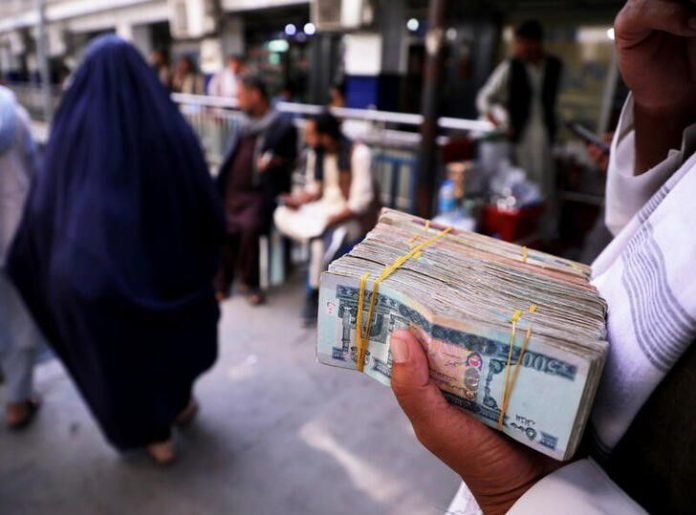
Following the pullout of its troops from Afghanistan in August 2021, the United States has frozen nearly 10 billion US dollars worth of assets of Afghanistan’s central bank, which worsened the economic crisis and poverty in the war-torn Asian country.

In a decree issued on Friday, President Joe Biden reportedly ordered the allocation of 3.5 billion dollars from the assets as damage to the victims of the 9/11 terrorist attacks and diverted 3.5 billion more dollars to the Afghans as humanitarian aid, without the consent of the Taliban-run administration.

Several Afghan officials have criticized Biden’s decision to seize the Afghan central bank’s funds, stressing that stealing from the pocket of the world’s poorest country was unfair. Activists have also described Washington’s move to divert billions in frozen assets from the Afghan central bank to American families of 9/11 victims as “theft”.

G7 warns sanctions would have ‘massive’ impact on Russia

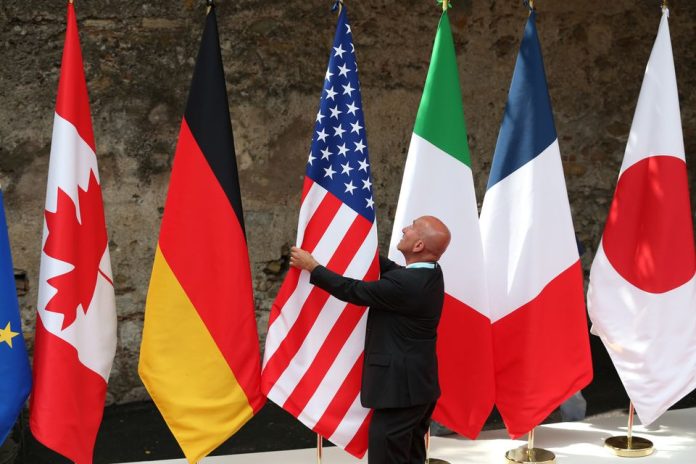
“Our immediate priority is to support efforts to de-escalate the situation,” finance ministers of the G7 group of most developed nations announced in a statement.

However, if Moscow ramped up military action, the G7 warned that they “are prepared to collectively impose economic and financial sanctions which will have massive and immediate consequences on the Russian economy.”

The Joe Biden administration and its allies are assembling a punishing set of financial, technology and military sanctions against Russia that they say would go into effect within hours of an invasion of Ukraine, hoping to make clear to President Vladimir Putin the high cost he would pay if he sends troops across the border.

The White House is coordinating a package of ‘high-impact’ restrictive measures to slap on Moscow in case it invades Ukraine.

If Moscow encroaches on Ukraine’s sovereignty, the US will impose sanctions against Russia like no one has ever seen before, Vice President Kamala Harris has warned. Secretary of State Antony Blinken has also warned that, in the event of a military conflict between Moscow and Kiev, the US would impose “high-impact economic measures” on Russia that it had “refrained from using in the past”. This was similarly echoed by Under Secretary of State for Political Affairs Victoria Nuland.

The threat of economic measures follows claims from Western media outlets and politicians that Moscow has begun to concentrate troops on its border with Ukraine, with the view to launching an offensive in the near future. Kremlin Spokesman Dmitry Peskov has denied the accusations, stating that Russia is simply moving its armed forces within its territory and that reports of an attack are groundless.

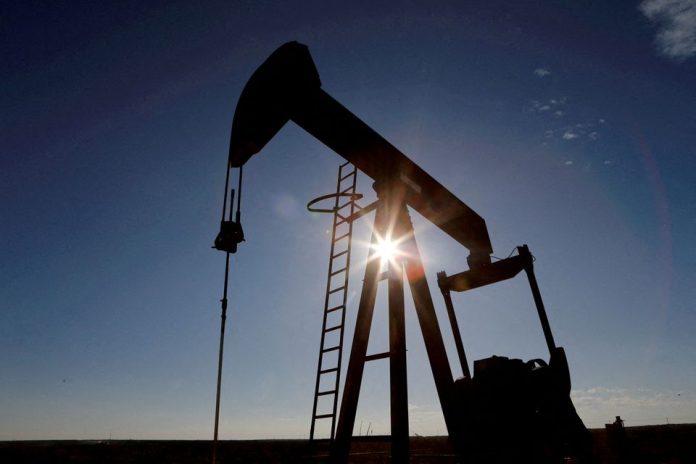
Oil prices hit seven-year high over Russia-Ukraine tensions

Brent crude futures was at $95.65 a barrel by 0742 GMT, up $1.21, or 1.3%, after earlier hitting a peak of $96.16, the highest since October 2014.

U.S. West Texas Intermediate (WTI) crude rose $1.28, or 1.4%, to $94.38 a barrel, hovering near a session-high of $94.94, the loftiest since September 2014.

Comments from the United States about an imminent attack by Russia on Ukraine have rattled global financial markets.

Russia could invade Ukraine at any time and might create a surprise pretext for an attack, the United States claimed on Sunday.

Over the last few months, the US and UK have been accusing Russia of planning to invade Ukraine, which Moscow has vehemently denied, dismissing the allegations as “fake news”. Ukraine has also urged Western media and politicians who are warning of an “imminent” invasion to stop fueling panic.

“If … troop movement happens, Brent crude won’t have any trouble rallying above the $100 level,” OANDA analyst Edward Moya said in a note.

“Oil prices will remain extremely volatile and sensitive to incremental updates regarding the Ukraine situation,” Moya added.

The tensions come as the Organization of the Petroleum Exporting Countries (OPEC) and its allies, a group known as OPEC+, struggle to ramp up output despite monthly pledges to increase production by 400,000 barrels per day (bpd) until March.

While geopolitical tensions help add to the bullish view, this oil supercycle is fundamentally driven, RBC Capital analysts stated.

“We see upside visibility for prices to touch or flirt with $115/bbl or higher this summer,” said analyst Mike Tran in a note.

The International Energy Agency said the gap between OPEC+ output and its target widened to 900,000 bpd in January, while JP Morgan announced the gap for OPEC alone was at 1.2 million bpd.

“We note signs of strain across the group: seven members of OPEC-10 failed to meet quota increases in the month, with the largest shortfall exhibited by Iraq,” JP Morgan analysts said in a Feb. 11 note.

The bank added that a supercycle is in full swing with “oil prices likely to overshoot to $125 a barrel on widening spare capacity risk premium”.

Investors are also watching talks between the United States and Iran to revive the 2015 nuclear deal.

Iran’s foreign ministry spokesman stated on Monday during a news conference in Tehran that the talks have not reached a dead end, even though a senior Iranian security official noted earlier that progress in talks was becoming “more difficult”.

In the United States, the robust oil prices are encouraging energy firms to ramp up output as they added the most oil rigs in four years last week, energy services firm Baker Hughes Co announced on Friday.

Iran: Reaching deal in Vienna possible right now

Speaking at his weekly news briefing, Saeed Khatibzadeh said the talks are continuing and negotiating teams are engaged in consultations as before. 

Khatibzadeh however said the Vienna talks move forward slowly on days when tough issues are on the agenda.  

He added that the other sides have reached the  point where they must take political decisions as Iran did so years ago. 

“We are awaiting the West’s response to Iran’s initiatives”, Khatibzadeh noted. 

In response to the question if a deal is possible by February’s end, he said if Europeans and the US respond to Iran’s initiatives, a deal is made right now.

Khatibzadeh, however, said the US is not trustworthy and Iran wants concrete guarantees so Washington will not be able to make a mockery of international law again.

He said all sanctions that violate the 2015 Iran nuclear deal, JCPOA, and UN Security Council Resolution 2231 must be terminated.

Elsewhere in the news briefing, Khatibzadeh condemned the US move to seize Afghanistan’s frozen assets as inhumane.

He said the US invasion of Afghanistan cost Afghans billions of dollars in losses and destroyed their infrastructure and it’s now plundering their remaining assets under a false pretext.

He also spoke about the situation in Ukraine. Khatibzadeh said Iran is concerned about mounting tension between Ukraine and Russia, adding the Eurasian region cannot afford another war.

Khatibzadeh also said the US is causing tension in the region and this shows it has not learned a lesson from its destructive behavior in Afghanistan and the Middle East.

He also criticized the Pentagon spokesman’s claim that the US is concerned about threats from Yemen’s Ansarullah movement. Khatibzadeh said the US is part of the war on Yemen and supplies arms to the Saudi-led coalition, so it cannot pretend to be a well-wisher of the Yemeni people.

Khatibzadeh also referred to the issue of prisoner swap between Iran and the US. He said Iran has made this a priority on humanitarian grounds.

The Foreign Ministry spokesman said it seems the US has tied the prisoner exchange to the Vienna talks and is waiting for the outcome of those negotiations.