Tuesday, December 30, 2025
Home Blog Page 2093

Iran’s COVID-19 map gets 7 ‘red’ spots as Omicron rages on

Over 300,000 Iranians Infected by Coronavirus: Ministry

According to the latest updates, seven cities located in the Iranian provinces of Isfahan, South Khorasan, Qom and Yazd were once again classified as “red”.

The situation in the capital, Tehran, and 42 other cities were also updated to “orange.”

The map also shows 217 “yellow” cities and 181 “blue” ones, with the number of “orange” and “red” classifications expected to sharply rise in the weeks to come.

Official data released on Friday by the country’s Health Ministry showed coronavirus-related complications have taken the lives of another 23 people in Iran over the past 24 hours taking the overall death toll in Iran to 132,356.

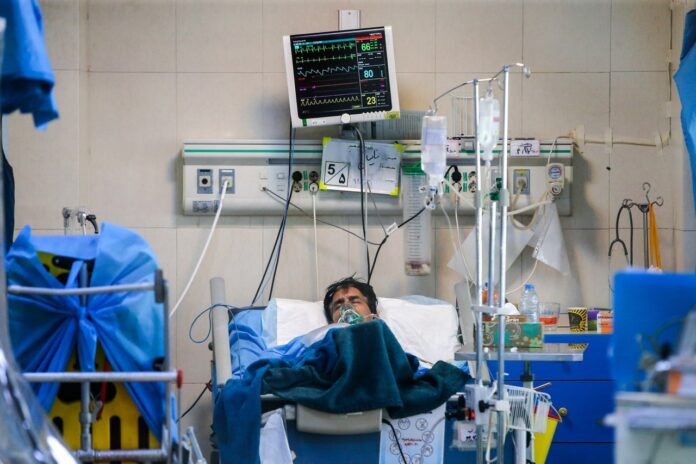
According to the data 16,757 new cases of COVID-19 were detected in Iran over the past 24 hours. Some 994 cases had to be hospitalized for professional medical care.

Meanwhile, 130,711,386 doses of COVID-19 vaccines have been administered in Iran so far. Over 298,590 doses were injected in the past 24 hours.

The Omicron-fueled surge has prompted officials to sound the alarm over a sixth wave of infections and call on the public to better abide by the health protocols and get inoculated.

At the same time, the country has stepped up its mass vaccination campaign using both domestically-developed shots and imported ones to increase protection against the virus.

Iraqi sources say Baghdad airport hit by rockets

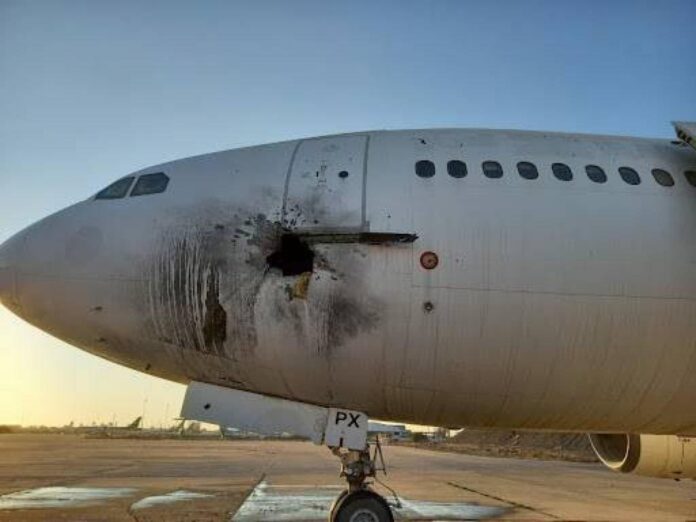
The rockets hit Baghdad International Airport’s runways or parking areas, one of the sources said.

“One civilian plane has been hit and damaged,” this source, based at the interior ministry, added.

A second security source confirmed the attack consisted of six rockets that fell around civil installations at the airport, damaging a stationary plane.

A third source identified the plane as a Boeing 767 belonging to the state-owned Iraqi Airways, noting that it was not in service and was undergoing repairs.

No group has claimed responsibility for the attack yet, which is the latest in a series of assaults that have targeted US occupation forces over the past few months.

The incident came as anti-American sentiments have been on the rise in Iraq since the assassination of Lieutenant General Qassem Soleimani, commander of the Quds Force of Iran’s Islamic Revolution Guards Corps (IRGC), his Iraqi trenchmate Abu Mahdi al-Muhandis, second-in-command of Iraq’s Popular Mobilization Units (PMU), and their companions in a US drone strike authorized by former president Donald Trump near Baghdad International Airport on January 3, 2020.

Two days after the attack, Iraqi lawmakers approved a bill that requires the government to end the presence of all foreign military forces led by the US in the country.

Both commanders were highly revered across the Middle East because of their key role in fighting the Daesh Takfiri terrorist group in the region, particularly in Iraq and Syria.

On January 8, 2020, the IRGC targeted the US-run Ain al-Asad in Iraq’s western province of Anbar after launching a wave of attacks to retaliate the assassination of General Soleimani.

According to the Pentagon, more than 100 American forces suffered “traumatic brain injuries” during the counterstrike on the base. The IRGC, however, says Washington uses the term to mask the number of the Americans who perished during the retaliation.

Iran has described the missile attack on Ain al-Assad as a “first slap.”

Iran urges UN to take swift action against Saudi bloodshed in Yemen

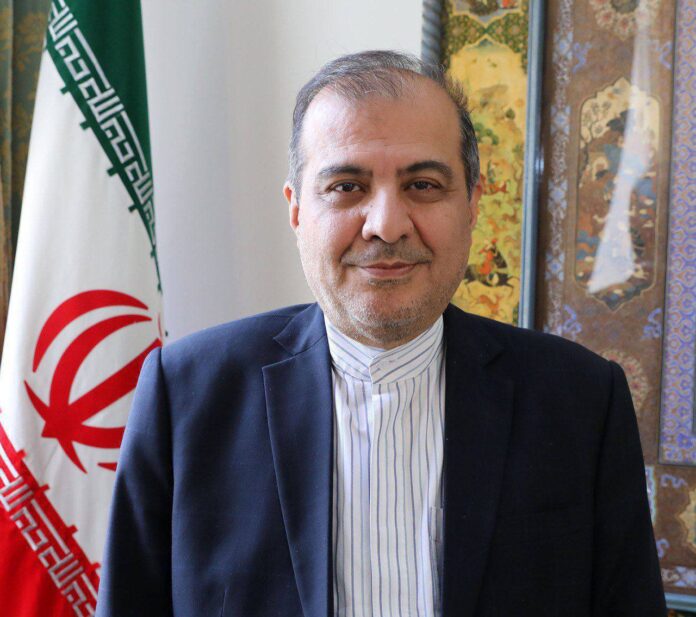
In a message to the UN Secretary-General’s Special Envoy for Yemen Hans Grundberg, Ali Asghar Khaji, the Iranian foreign minister’s senior advisor on special political affairs, condemned the intensification of Saud-led air raids on civilian sites in Yemen and the killing of innocent civilians there.

Khaji urged the UN and all global humanitarian bodies “to take swift action to stop the crimes against humanity and condemn the cruel measures that run counter to recognized international law.”

The official said experience had proved over the past seven years of war that military attacks and carnage of civilians were no solution to the crisis in Yemen, adding that the only way out of the situation is for the Saudi-led aggressor states to end the bloodshed and begin instead to respect the country’s sovereignty and independence.

Iran FM, UN chief discuss regional issues, Vienna talks

In a phone conversation, Foreign Minister Hossein Amir Abdollahian and UN Secretary-General Antonio Guterres discussed the situation in Yemen and Afghanistan, among other issues of regional and international significance.

Amir Abdollahian slammed an escalation of Saudi-led air raids on residential areas of Yemen and reiterated Iran’s long-held position on the need to find a political solution to end the war and secure a removal of the siege imposed on the country by Saudi Arabia and its coalition allies.

The top diplomat also called on the UN chief to play a more active part in efforts to bring about a ceasefire in Yemen, lift the paralyzing blockade on the country and start political negotiations between the conflicting sides.

Turning to the crisis in Afghanistan, Amir-Abdollahian called for global cooperation with Tehran to help it address a rising influx of displaced Afghans into Iran.

He stressed the need for the formation of an inclusive government in Afghanistan, with the participation of all groups and ethnicities there.

The minister also described as “positive” the process of negotiations in the Austrian capital on removing the US sanctions on Iran and revitalizing the nuclear deal.

Amir Abdollahian said Iran was firmly determined to reach a good deal as soon as possible, urging the US and the Western side in the talks to adopt “practical, tangible, and verifiable” measures to ensure the conclusion of a “lasting, reliable” agreement.

For his part, Guterres welcomed Iran’s constructive positions in support of a cessation of the Yemen war, removal of the siege, aid delivery, and political dialog.

On Afghanistan, the UN chief called for the continuation of efforts to establish an all-inclusive government, adding that all Afghans need to be able to exercise their human rights and have access to education.

He said the UN welcomes any progress in the Vienna negotiations.

Iran and Russia demand withdrawal of foreign troops from Syria

Speaking at a UN Security Council session in New York on Thursday, Zahra Ershadi, deputy permanent representative of Iran to the UN, described last week’s attack by the Daesh terrorists on the Kurdish-run Ghwayran jail in Syria’s northeastern province of Hasakah as a wake-up call that once again showed that the foreign-sponsored Takfiri terrorists remain a significant threat to regional security and stability.

Ershadi noted that Iran is closely monitoring developments in the eastern bank of the Euphrates River, stressing that Hasakah violence clearly showed that the occupying forces and their allies have not been able to ensure security and order in their occupied territories, and the status quo has helped Daesh to extend its influence there and endanger the lives of local population.

“It is deeply unfortunate that countries that have repeatedly alleged to be pioneers in human rights are refusing to repatriate their nationals, especially women and children, who have been caught up in deplorable conditions of conflict zones,” she stated.

Ershadi added, “Given the threats posed by foreign terrorists to the security and stability of the region, the Security Council should prioritize their repatriation to respective countries.”

The Iranian diplomat highlighted that the fight against terrorism should not be an excuse to violate Syria’s sovereignty and territorial integrity.

The continued occupation of Syrian territories creates favorable conditions for terrorist activities in Syria, and must end immediately, she underlined.

“As per the UN Security Council resolutions, the sovereignty and territorial integrity of Syria must be respected. The Syrian government has a legitimate and inalienable right to counter terrorist activities on its territories, and any action taken to combat terrorism must be coordinated with the Syrian government,” Ershadi stressed.

The Iranian diplomat underscored that the Syrian nation continues to suffer, and nothing is more important than ending Israel’s aggression in order to ensure the country’s sovereignty and territorial integrity.

“The guarantors of the Astana format in December 2021 urged the international community, the United Nations and its humanitarian agencies to enhance their assistance to the whole of Syria through ‘early recovery and resilience projects’. Such activities are key in preventing a further increase in the number of people in need and reducing dependence on external assistance,” Ershadi added.

She said, “Serious efforts are needed to remove unilateral sanctions imposed on Syria. Those unlawful measures have prolonged the sufferings of the people and adversely affected the work of international and national humanitarian agencies there.”

Separately, Dmitry Polyanskiy, deputy permanent representative of Russia to the United Nations, renewed Moscow’s call on all foreign occupation forces to immediately withdraw from Syria.

“We demand the immediate withdrawal of all foreign forces, who are illegally deployed, from Syria,” Polyansky said at the UN Security Council session.

“It is clear that the United States does not deal with the fight against terrorism even on a domestic level, let alone on a global scale,” he added.

He stressed, “Russia will not stop fighting terrorism in Syria in cooperation with the country’s authorities.”

“Syrian forces, with the support of the Russian Air Force, continue to hunt down and eliminate the Daesh militants in Syria,” the Russian diplomat noted.

“In areas where the United States is directly involved in oil theft, an environmental catastrophe is unfolding, and at the same time, the United Nations does not provide any assessment of what is happening,” Polyansky pointed out.

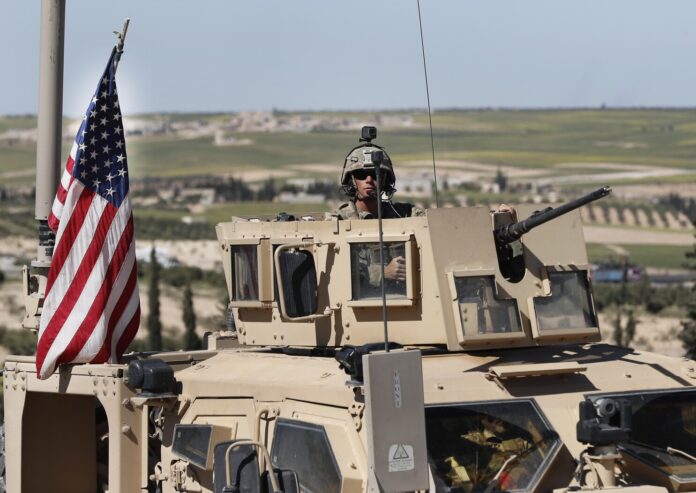
The US itary has stationed forces and equipment in eastern and northeastern Syria, with the Pentagon claiming that the deployment is aimed at preventing oilfields in the area from falling into the hands of the Daesh terrorists.

Damascus, however, says the unlawful deployment is meant to plunder the country’s resources.

Former US president Donald Trump admitted on several occasions that American forces were in Syria for its oil.

After failing to oust the Syrian government with the help of its proxies and direct involvement in the conflict, the US government has now stepped up its economic war on the Arab country.

In recent months, Turkish-backed militants, who have maintained heavy presence in vicinity of the border areas with Turkey, have launched frequent attacks on Syrian infrastructure, residential areas and agricultural land.

Turkey has itself deployed forces in Syria in violation of the Arab country’s territorial integrity..

Biden aide says US, Iran in ‘ballpark’ of nuclear deal

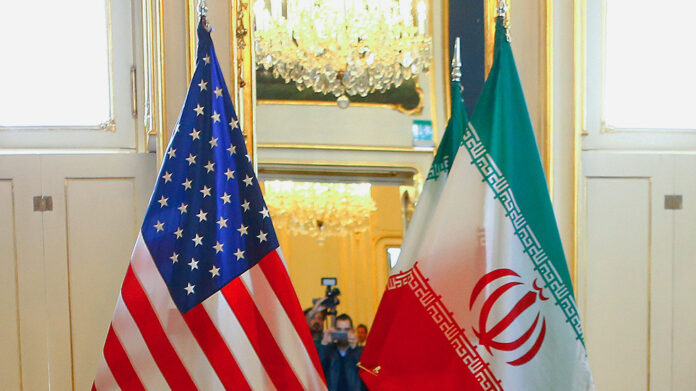
It’s the most optimistic statement from the administration of President Joe Biden since the nuclear talks resumed in Vienna last December.

McGurk, who was speaking at a Carnegie Endowment event, didn’t explain the reasoning behind his assessment.

Biden administration officials have set the end of January or beginning of February as an unofficial deadline for the negotiations, in large part because they believe Iran’s nuclear advances will soon render the 2015 deal ineffective.

Iranian officials have rejected western diplomats’ remarks about a deadline for reaching an agreement in Vienna talks, and stressed Tehran is only after a good agreement.

Both US and European officials have announced in recent weeks that progress in Vienna has been modest and very slow.

McGurk stated the talks are close “to a culmination point” and the US will soon know if Iran is ready to return to full compliance with the 2015 nuclear deal on terms Washington can accept.

Despite his relative optimism, McGurk noted the US was prepared for the possibility that the talks would collapse without a deal.

He also added the Biden administration remains focused on restoring the 2015 accord and is not interested in a “less for less” interim deal.

The Joint Comprehensive Plan of Action (JCPOA) was inked by Iran and six world powers in 2015. Under the deal, Tehran agreed to put limits on certain aspects of its nuclear activities in exchange for the removal of draconian international sanctions imposed against the country.

In 2018, however, the US, under President Donald Trump, pulled out of the pact and reinstated sanctions under the so-called ‘maximum pressure campaign’ against Tehran, effectively depriving Iran of the deal’s benefits by forcing third parties to stop doing business with Iran.

Iran remained patient for an entire year, after which it began to take incremental steps away from its nuclear obligations, especially after Europeans failed to salvage the deal under the US pressure.

The Islamic Republic’s decision to ramp up its nuclear activities prompted other parties to revive talks earlier this year.

Iran and the five remaining parties to the JCPOA — Germany, Britain, France, Russia and China — began the talks in the Austrian capital in April with the aim of removing the sanctions after the US voiced its willingness to return to the agreement.

During the seventh round of the Vienna talks, the first under President Ebrahim Raeisi, Iran presented two draft texts which address, separately, the removal of US sanctions and Iran’s return to its nuclear commitments under the JCPOA. Tehran also said it was preparing a third draft text on the verification of the sanctions removal.

The eighth round of talks kicked off in Vienna in late December. The negotiations seek to restore the JCPOA in its original form and bring the US back into the agreement.

Iran insists that the talks must lead to the removal of all American sanctions that were imposed against Tehran following Washington’s unilateral withdrawal from the landmark agreement in May 2018. Tehran has also demanded credible guarantees that Washington will not abandon the deal again.


Two Tajik citizens killed, ten injured in conflict with Kyrgyzstan

The committee reported that two Tajik citizens were killed during the conflict on the border with Kyrgyzstan – a local resident hit by a mortar shell “launched by Kyrgyz servicemen into his yard” and a driver of a local hospital’s ambulance killed while rescuing local residents in a “mortar explosion by the Kyrgyz side.”

As a result of the border conflict, on the Tajik side, 10 people were wounded, including six servicemen and four civilians.

According to Tajikistan’s State Committee for National Security, currently, the situation on the state border between Tajikistan and Kyrgyzstan is stable, a joint commission of the appropriate structures of both sides is analyzing the reasons and facts of the border conflict.

It is noted that after reviewing and discussing the armed border conflict, the sides declared a ceasefire until 08:00 (10:00 Moscow time) on January 28, 2022, in order to move all additional forces and equipment to the sites of permanent deployment.

Kyrgyzstan’s border guards also said on Friday envoys of Kyrgyzstan and Tajikistan have agreed to cease fire and to pull back their additional forces, deployed in the area of the latest border conflict.

“Agreements on full ceasefire and on each side’s pullback of additional personnel and equipment deployed near the border, have been reached,” the Border Service of Kyrgyzstan’s National Security Committee added.

The two states also agreed to reopen the Batken-Isfana highway and to carry out joint patrols in border areas.

Kyrgyz border guards announced that during the meeting, delegations of the two states also visited Tort-Kocho, an area where a conflict between servicemen of the two states broke out on Thursday.

According to the border service of Kyrgyzstan, the conflict emerged in the area of Tort-Kocho. The incident was first settled, but later, it broke out with renewed vigor.

Kyrgyzstan accused Tajikistan of using mortars and grenade launchers during the conflict, saying that its neighbor was deploying military hardware near the border. Tajikistan also accused Kyrgyzstan of using mortars and drones and reported civilian casualties on its territory.

Shooting reported between Kyrgyz, Tajik border troops

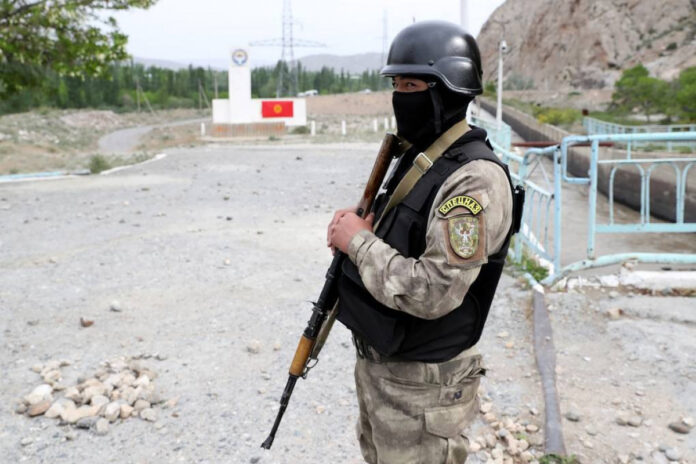
6353236 10.10.2020 Kyrgyz servicemen stand guard in the street after President Sooronbai Jeenbekov declared a state of emergency in the capital and ordered troops to be deployed there, in Bishkek, Kyrgyzstan. Alexey Maishev / Sputnik (Photo by Alexey Maishev / Sputnik / Sputnik via AFP)

Earlier in the day, Bishkek announced that forces were put on alert over “tensions” at the border over the Tajik side unilaterally blocking the area that connects two Kyrgyz towns, Batken and Isfana.

“However, at around 19:35 [13:35 GMT], the situation worsened due to the use of weapons by the Tajik side against Kyrgyz border units … in the area of Chyr-Dobo area of the Batken region. The main skirmishes between units of the border troops of Kyrgyzstan and Tajikistan are taking place in the areas of Tort-Kocho and Chyr-Dobo. The Tajik side uses mortars and grenade launchers,” the spokesperson of the border service stated.

The border between Kyrgyzstan and Tajikistan sometimes turns into a conflict zone between local residents and border officers on both sides. The reason for the conflict: non-demarcated areas of where it is impossible to say which of the two countries the land belongs to.


Iranian president congratulates Team Melli on qualifying for World Cup finals

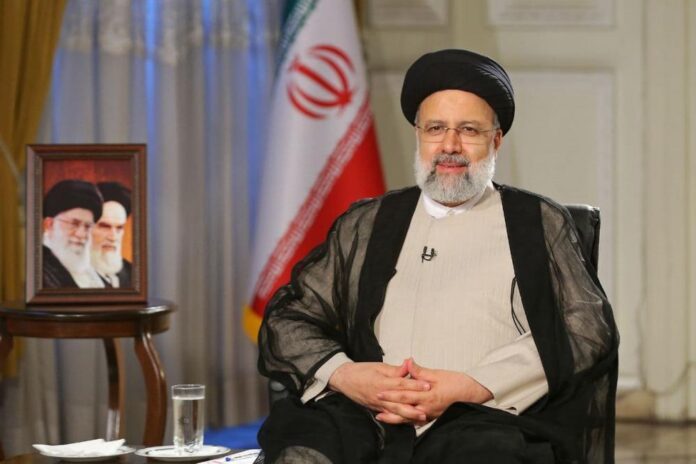
President Ebrahim Raisi

The president emphasized that the consecutive and decisive victories of the Iranian national football team in the matches and its qualification for the 2022 World Cup in Qatar, brought a wave of joy and happiness for the proud nation of Iran. He added, “I sincerely thank all the managers, coaches and especially the capable and zealous players of the national football team for their valuable efforts, and I wish them health, pride and continued victory in the next stages.”

Qatari FM invites Iran president to attend next GECF meeting

The Gas Exporting Countries Forum, headquartered in Doha, Qatar, is an intergovernmental organization with 19 members. The group controls over 70% of all natural gas reserves in the world.

The top Qatari diplomat said his country is determined to develop relations with Iran in different political and economic fields, and that the Emir of Qatar Sheikh Tamim bin Hamad Al Thani personally monitors the expansion of relations between the two sides.

The Qatari Foreign Minister also said Qatar agrees with Iran that “the presence of foreign forces in the region has negative effects, and we believe that the countries of the region should take the path of peace and progress by relying on regional cooperation.”

During the meeting, the Iranian president also emphasized the importance of regional cooperation.

“Deepening relations and further synergy among neighboring countries can provide security”, Raisi stated.

He referred to the capacities of Tehran-Doha cooperation in different political, economic and cultural sectors.

“We stand ready to activate all areas for the development of bilateral and regional cooperation for the benefit of the two nations,” the Iranian president added.

Raisi stressed that the presence of foreign powers in West Asia increases insecurity, adding that foreign powers do not respect the identity and dignity of regional nations and governments.