Tuesday, December 30, 2025
Home Blog Page 2090

Iran demands UN intervention to end Yemen war 

Khaji made the demand in a video conference with Hans Grundberg, the UN secretary general’s special envoy for Yemen,

Khaji underlined that Iran will continue efforts to help establish a fair peace in Yemen.

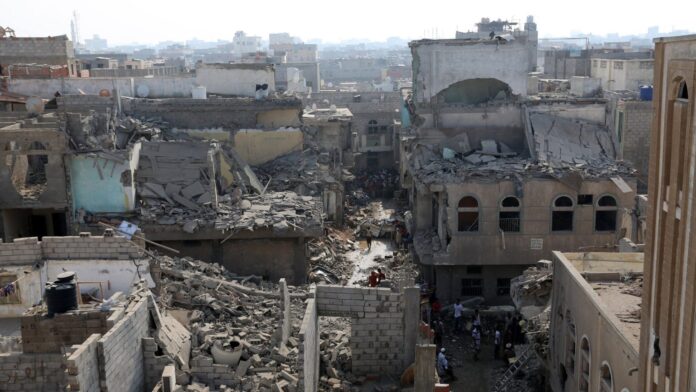
During the video conference, the senior advisor to the Iranian foreign minister expressed extreme concern over an escalation of tensions and a surge in recent airstrikes by the Saudi-led coalition against residential and civilian areas in Yemen.

The UN secretary general’s special envoy for Yemen also underscored the Islamic Republic of Iran’s role in helping establish peace in Yemen.
Grundberg outlined the UN efforts to lift the Saudi-led blockade, establish a ceasefire and resume political talks in Yemen.

In war-hit Yemen. One of the deadliest attacks on Friday, January 21, targeted a prison, killing at least 91 people and wounding 200 more.

The Saudi-led coalition first denied it was behind the bombing of the jail. Now it says it’s probing the incident.

But the United Nations has demanded an independent investigation into the attack. UN figures show that during 2021, the world body recorded less than 600 Saudi-led coalition airstrikes a month across Yemen. The UN also says so far this year, there have been over 1,400 coalition airstrikes.

Thieves steal Iranian football manager’s safe 

Farhad majidi

Reports say Farhad Majidi, who lives in a two-story villa with his mother, left home in the first floor Saturday night and went upstairs to visit his mother. When he returned a few minutes later, he suddenly noticed his safe was missing.

The manager of Esteqlal FC kept his personal belongings and securities in the safe. It’s yet unclear how the thieves broke into his house.

There is no word of the exact losses Majidi suffered. Word is that similar thefts have occurred in Tehran’s Niavaran and Kashanak districts recently. Police are currently investigating the matter and following up on the incident.

Esteghlal’s manager has been told that he was lucky that he did not face the thieves, otherwise, something bad could have happened to him.

Calls grow in Iran for tighter COVID curbs as Omicron surges

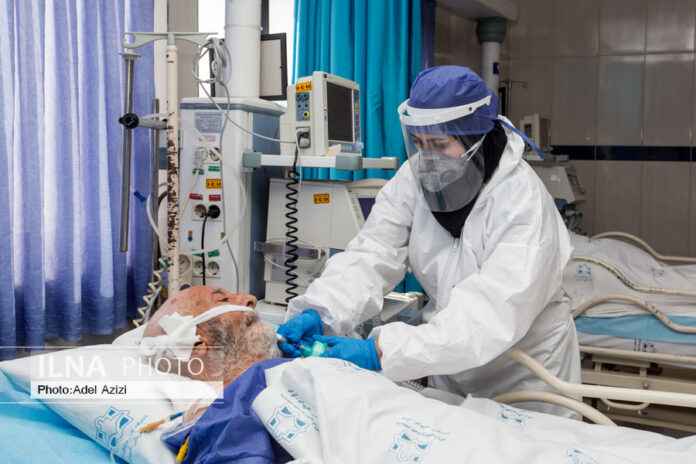
Iranian mobile application ‘Mask” issued a warning on Sunday over rising hospitalizations as a result of Omicron, despite earlier assumptions that the new coronavirus variant cannot cause serious illness. 

The application called on officials to consider two-week lockdown on non-essential “before it is too late.” 

“One of the unsuccessful experiences in the previous coronavirus waves was delaying the imposition of serious restrictions to the extent it got too late. Restrictions can be effective only if they are placed before the number of infections reach the peak,” it said. 

Health officials have said Iran is now witnessing the sixth wave of the coronavirus. 

On the country’s color-coded COVID-19 map, seven cities have once again been classified as “red,” which signifies a high risk of infection, following a period of calm, with more cities expected to get the same classification in the weeks to come. 

According to the latest figures released by the Iranian Health Ministry  on Sunday, 21,996 people have been diagnosed with COVID-19 over the past 24 hours, bringing the total figure recorded up until now to 6,344,179. 

Out of the new cases, 1,209 people have been hospitalized in the past day, it added. 

The Ministry said 44 people also lost their lives to COVID-19, putting the total death toll at 132,424. 

Meanwhile, the country has intensified vaccinations countrywide, with officials calling on people to receive booster jabs as soon as possible. 

So far, a total of 131,617,252 doses of vaccine have been administered in the country, according to the updates.

Report: Israel grappling with lack of medical staff, equipment

Until recently, Israel has been a model for the way it has handled the coronavirus pandemic. The number of daily cases has been rapidly dropping, while the number of vaccinated individuals has been on the rise. 

Then, at the end of November, the Omicron variant showed up and turned the situation upside down. 

Today, Israel is leading in daily COVID-19 cases per capita. On Friday, more than 53,000 people were registered as sick with the virus, but experts believe the real numbers are much higher. 

“Although the Omicron variant is less severe, it is very contagious and thus we see more people being admitted to hospitals”, said Professor Arnon Afek, the co-chairman of the Israel Association of Hospital Directors and former director-general of the Health Ministry. 

“What we also see is that it impacts children, and we have some worrisome information coming from abroad that it affects teens as well”, he added. 

Coupled with such “usual” winter diseases such as influenza and other respiratory viruses, the coronavirus has put tremendous pressure on Israeli hospitals, primarily because the thousands of medical personnel that are supposed to be treating patients are either in isolation or are sick with COVID-19 or other diseases themselves. 

“As a result, the existing medical staff needs to juggle between COVID-19 and non-COVID patients. Instead of giving attention to eight patients, a nurse is now splitting her focus between 13 people. Of course, it is not the quality of service we used to give in the past when the situation was normal. But we are doing the best we can,” reassured Afek. 

Yet, splitting that attention is not an easy task, because COVID-19 patients require special care. For the sake of comparison, a regular intensive care unit (ICU) normally operates 8 doctors and 16 nurses. 

For COVID, the numbers are higher, some 20 and 95 medical professionals respectively. 

Israel currently has more than 2,400 coronavirus patients in hospital, 1,010 of them in critical condition. To treat those, as well as many other patients seeking medical attention, they will need equipment but the problem is that – just as with personnel – it is stretched way too thin, and is located mainly in the centre, while the periphery is struggling. 

Although the country has 80 ECMO machines that help in treating patients in critical condition, experts are worried that this number will not be sufficient if the situation continues to deteriorate. And now they are also worried that the number of beds will be insufficient as well. 

According to official data, at the end of 2020, Israel had 16,331 beds dispersed across its 45 hospitals. Although over the years the number of beds has been increasing, it has hardly managed to cater to the needs of the constantly growing Israeli population, leaving the country way behind other developed OECD countries. 

The situation with ICU beds is also alarming. Israel now has some 400 intensive care units, which means four per 100,000 people, compared to other developed OECD countries, whose average stands at 11.5 for the same amount of patients. 

Some of those beds are not even in use, simply because Israel now lacks the necessary medical staff to operate that equipment. 

Experts have long warned that the country needed to boost its equipment to be able to cope with the coronavirus challenge. Israel and its Health Ministry definitely have the funds to do so. 

The Health Ministry’s overall budget for 2021 stood at roughly $13.7 billion. For 2022, that number has jumped to $14 billion. $256 million of the 2022 budget is supposed to be allocated to boost Israeli hospitals and their public health organisations. Another $100 million is expected to be poured into creating more medical jobs and positions. 

But so far only a small fraction has been delivered. It was reported that Prime Minister Naftali Bennett and Health Minister Nitzan Horowitz have decided to allocate an additional 45 ICU beds to hospitals, instead of the 342 requested by the Israel Association of Hospital Directors. 

Hospitals’ pleas to get more medical staff haven’t been answered yet. 

“We expect the state to give us more positions, more nurses, more ICU beds, and other equipment. And I don’t know why it hasn’t been done already,” stated Afek. 

“[In 2018] Bloomberg ranked Israel’s healthcare efficiency as 6th in the world. We are very good at what we do but we need resources to do that, and we expect the state to provide us with them”, he summed up.

Afghan girl robotics team secure second place in Intl. competition

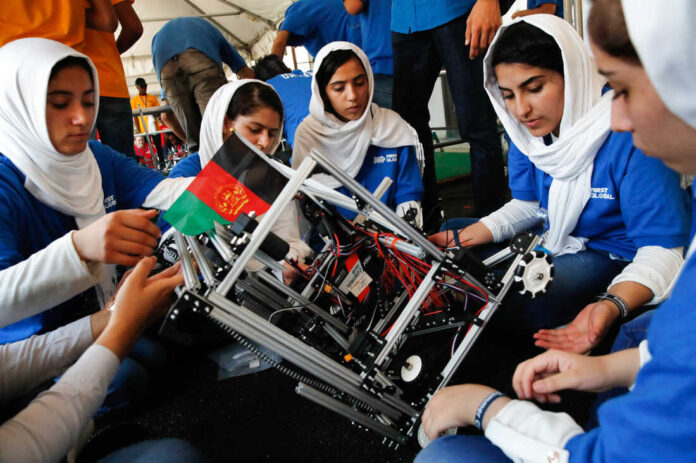
Lida Azizi, right, and other members of the Afghanistan team repair their robot during the competition.

The Afghan team said the online competition started two months ago and included teams from Europe, America and Asia. 

The theme of the competition was for each team to come up with solutions for problems in their society. 

The robotics team designed an electronic traffic regulator for addressing traffic problems in Afghanistan. 

“Traffic is a big problem in Afghanistan, and we are trying to solve that problem. We used the Upverter modular to design a board for this project,” Somaya Faruqi, captain of the team, stated. 

“We will add counters on the streets and those counters will count the cars that cross the streets. And as streets become more crowded, the duration of the red light will increase and the duration of the green light will be decreased,” a member of the team added. 

The Afghan robotic team has won several medals in international competitions and has earned an international reputation. 

After the August 15 political changes, the robotics team left Afghanistan They are now living and working in Qatar.

Russia says not threatening Ukraine

“Everybody is saying these days that Russia is threatening Ukraine. Total absurdity! There is no threat whatsoever,”

Nikolay Patrushev Security Council Secretary stated, stressing that “even the Ukrainians themselves, including the officials, are stating” that there is no threat. 

“However, American officials maintain that the threat is here, and they are ready to fight, supplying weapons, down to the last Ukrainian,” Patrushev added. 

Over the past few months, Western media and top officials have repeatedly sounded alarm over an allegedly imminent Russian “invasion” of Ukraine. Moscow, however, has consistently denied harboring any plans to attack its neighbor, with the Kremlin spokesman Dmitry Peskov dismissing such claims as “groundless.” 

Movements of Russian troops in the relative vicinity of the Ukrainian border has been cited as the only ‘proof’ of the looming aggression alleged, with Russia pointing out it is in its full right to move its military wherever it pleases across the country’s own territory. 

Downing Street announced its “biggest possible offer” to NATO in a statement late on Saturday. The UK’s prime minister is weighting this “major military deployment” needed to deter an allegedly “rising Russian aggression” in Europe in general and in Ukraine in particular. 

“This package would send a clear message to the Kremlin – we will not tolerate their destabilising activity, and we will always stand with our NATO allies in the face Russian hostility,” Boris Johnson stated. 

“I have ordered our Armed Forces to prepare to deploy across Europe next week, ensuring we are able to support our NATO allies on land, at sea and in the air,” he continued. 

Should Russian President Vladimir Putin choose “a path of bloodshed and destruction,” Johnson went on, it would result in a “tragedy” for the whole European continent. 

The UK’s potential offer to NATO may involve sending “defensive weapons to Estonia” as well as doubling the number of British troops on the ground. London is also considering sending in military specialists, warships and “fast jets” to reinforce its NATO allies. Downing Street did not specify where exactly, apart from Estonia, the cited assets might go. 

“The UK already has more than 900 British military personnel based in Estonia, more than 100 in Ukraine as part of Operation Orbital, and a Light Cavalry Squadron of around 150 people is deployed to Poland,” it said in the statement, adding that, since 2015, some “22,000 Ukrainian troops” have been trained under that operation. 

Additional “military trainers” were sent to Ukraine earlier in January along with a haul of British-made anti-tank missiles, to teach the Ukrainian service personnel how to use the weaponry. 

The details of the NATO deal are expected to get fleshed out next week, with UK officials “deployed to Brussels” to discuss London’s offer with other NATO allies. The potential deployment “will reinforce NATO’s defences and underpin the UK’s support for Nordic and Baltic partners,” London stressed. 

At the same time, the UK signaled it was still willing to engage in diplomacy with Moscow, insisting that without its efforts “thousands of lives will be lost in both Russia and Ukraine.”  

“The Prime Minister is expected to speak to President Putin and travel to the region early this week to relay that message in person,” Downing Street revealed. 

On Sunday, British Foreign Secretary Liz Truss stated that the government will widen the scope of sanctions targeting Russia. 

“What the legislation enables us to do is hit a much wider variety of targets. So there can be nobody who thinks that they will be immune to those sanctions”, Truss told Sky News. 

The foreign secretary claimed, “There will be nowhere to hide for Putin’s oligarchs” and “Russian companies involved in propping up the Russian state”

ia earlier suggested that the authorities have been contemplating cutting Russia off from the inter-bank system SWIFT and imposing sanctions on the Nord Stream 2 pipeline amid the escalation in Ukraine. 

Tensions between Moscow and London have been on the rise over the past few weeks, with the Foreign Office claiming that Russia is planning to “install a puppet government in Kiev”. London even named former Ukrainian MP Yevhen Murayev as a potential leader of the “pro-Russian” government – despite him having been under Russian sanctions since 2018. 

Earlier, US President Joe Biden announced that Washington will boost its military presence on Russia’s doorstep by moving more troops to Eastern Europe in the near future. The US leader made the remark while speaking to the media on Friday evening. 

Asked if he had decided “how soon” he “would be moving US troops to Eastern Europe,” Biden reportedly said that he would sent a small number of American servicemen to the region “in the near term.” 

On Monday, the Pentagon announced that some 8,500 American troops had been placed on “heightened alert” to deploy to Eastern Europe. 

Speaking at a briefing earlier on Friday, US Secretary of Defense Lloyd Austin said that these troops would be used to “reinforce security on NATO’s eastern flank,” adding that a hypothetical Russian attack would face a “unified” response from the US-led military bloc. While Ukraine is not a NATO member, Austin warned Moscow about retaliation in case it attacks a member of the alliance, stating, “An attack against one NATO member is an attack against us all.”  

However, he appeared to rule out the involvement of US troops in any military action in Ukraine itself. Biden “does not intend to put troops into Ukraine for combat operations,” the Pentagon chief noted

TPO: Iran to use its funds in Iraq to import products

The TPO, in a letter to the deputy agricultural as well as industry, mine, and trade ministers, pointed to the capacity created for the use of the country’s foreign exchange resources at the Trade Bank of Iraq (TBI).

Alireza Peyman-Pak, who is the TPO head and deputy industry minister, urged the officials to offer their preferred lists of products needed to import from the neighboring state.

Iraq has released Iran’s funds blocked at Trade Bank of Iraq (TBI) for the import of food and medical products.

Iranian officials have earlier announced that 6 to 7 billion dollars of the country’s  revenues earned by gas and electricity exports have been held in Iraq.

Iran’s assets had been frozen in Iraq’s banks due to obstacles to the transfer of money caused by US sanctions.

Meanwhile on Saturday, the South Korean official news agency, Yonhap, said Seoul will hold talks with Tehran next month in the South Korean capital to settle the dispute over Iran’s funds blocked under US sanctions. 

South Korea owes Iran more than $7 billion.

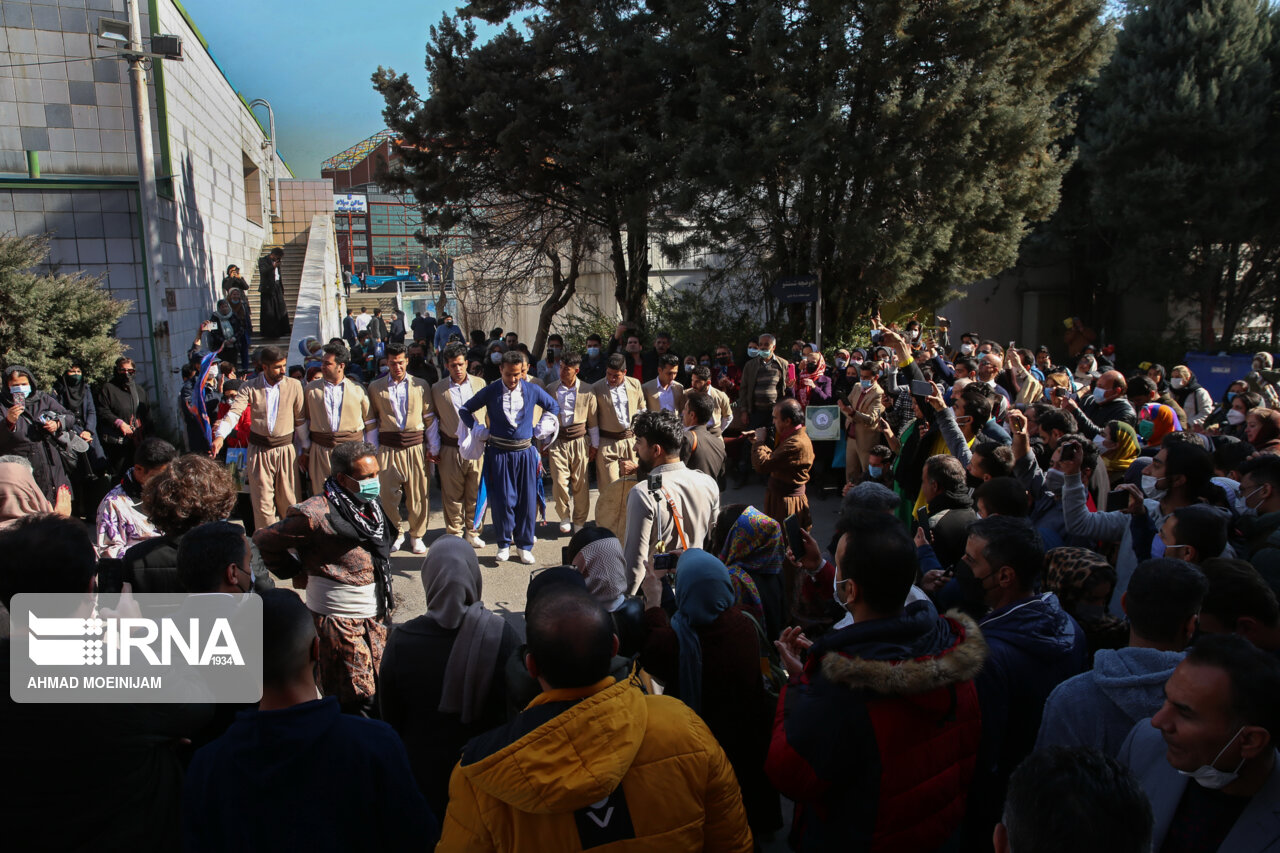
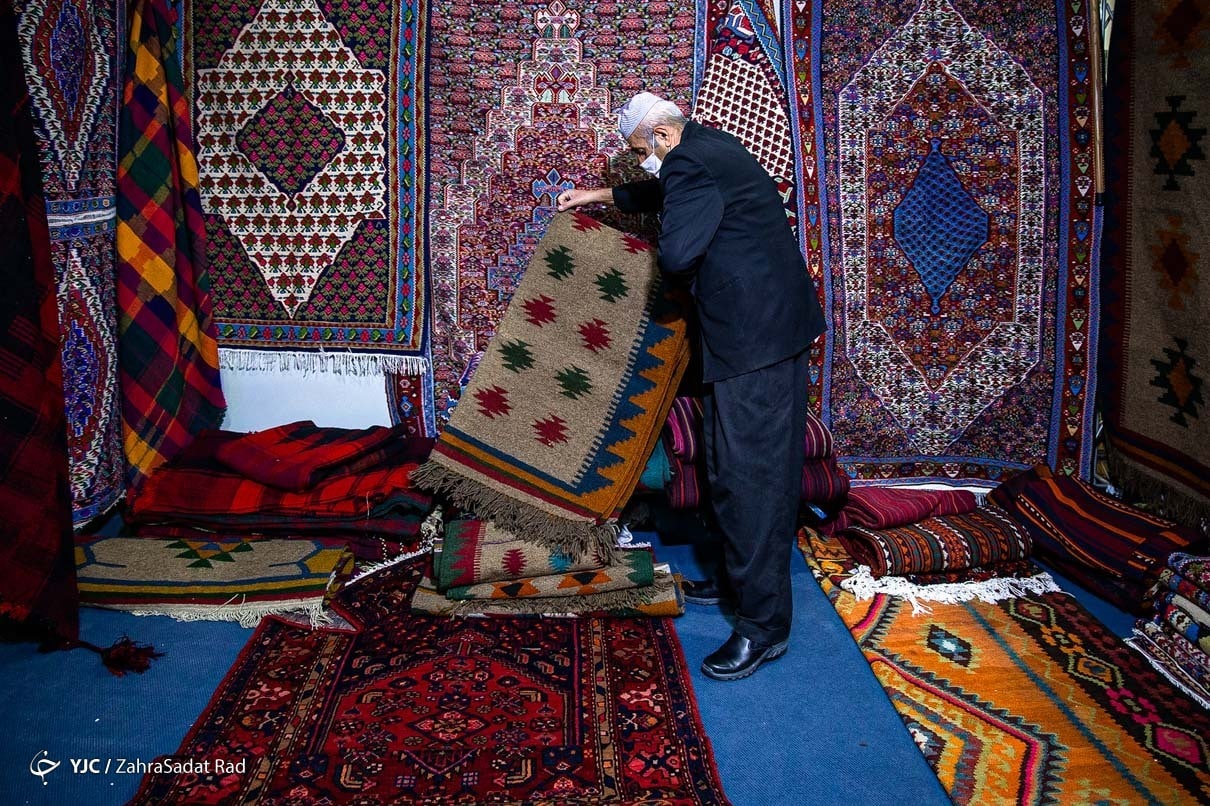
Tehran hosting International Exhibition of Tourism

Tehran hosting International Exhibition of Tourism

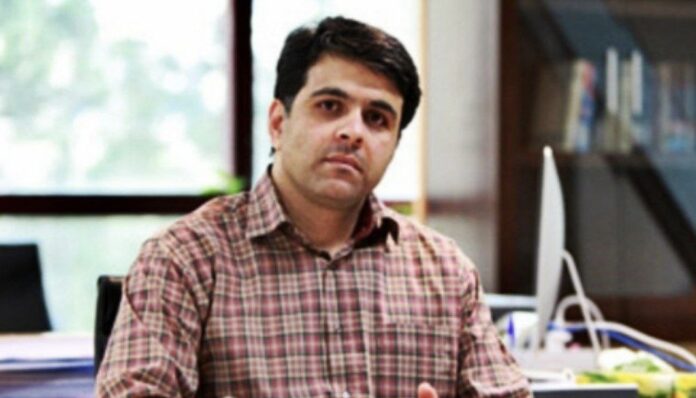
University professors, students urge return of Reza Omidi

In the letter, the signatories said “firing” of the professor was “not only a serious blow to the scientific stature of the University of Tehran and students studying policy-making and social welfare, but will seriously damage the entire government and the society”. 

They also described  Omidi as a distinguished scholar in social welfare who is focused on teaching and “has never put personal interests before scientific, social and national interests”. 

“Today, with poverty, inequity and tiered and social discrimination increasing in the country every day, Dr. Omidi’s concern for promotion of welfare policies in favor of underprivileged classes, attention to justice … is hugely significant,” the letter read. 

“But rather than using his knowledge, expertise and experience … under the current difficult economic and living conditions, … unfortunately, we are witnessing that he is removed from the academic arena, under the pretext of security inquiries.” 

The signatories questioned talks about security concerns saying security bodies have already clarified that Omidi’s continued tenure in the university is by no means prohibited. 

University officials had earlier said the contract of the professor, who has been teaching in the University of Tehran since 2018, was not extended after its expiry, because he could not qualify in the vetting process.