Thursday, December 25, 2025
Home Blog Page 2086

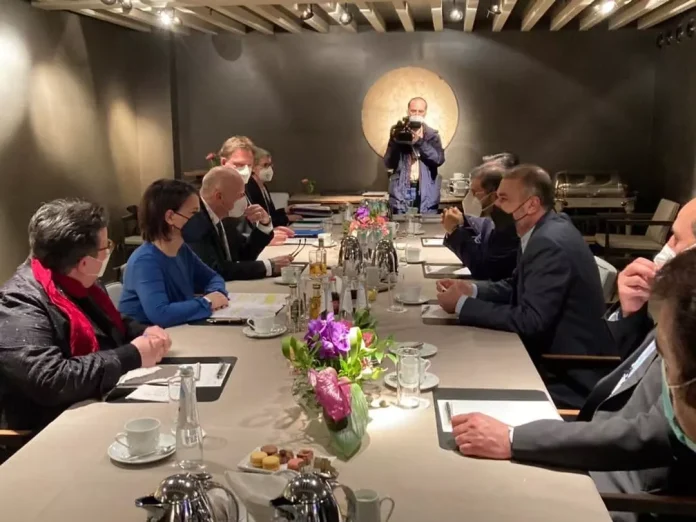
Iranian FM discusses Vienna talks with peers from other countries in Munich

The main focus of the negotiations between the Iranian foreign minister and his counterparts was the Vienna talks between Iran and the P4+1 group of countries.

In a meeting with Dutch Foreign Minister Wopke Hoekstra Amir Abdollahian underlined Iran’s position on the need to lift all sanctions inconsistent with the nuclear deal, JCPOA, and the need to respect the Islamic Republic’s red lines during the negotiations.

Hoekstra also expressed hope that an agreement will be reached in Vienna as soon as possible.

During talks with Sweden’s top diplomat, Amir Abdollahian briefed Ann Linde on Iran’s principled position in the negotiations and underlined the country’s serious will to reach a good agreement if the other parties fulfill their obligations.

Another foreign top diplomat the Iranian foreign minister met in Munich was his Italian counterpart Luigi Di Maio. He told Di Maio that Iran is determined to reach a good agreement in the shortest time, but it is unknown how many days or weeks it will take depending on the behavior and will of the United States and Europe’s attention to the principles and rules of negotiations and Iran’s legitimate rights.

Di Mio said for his part that Italy will maintain economic ties with Iran regardless of the outcome of the Vienna negotiations. He however noted that a comprehensive agreement to revive the Iran nuclear deal will certainly create a new space for a leap in relations between Tehran and Rome.
Amir Abdolalhain also held talks with Austrian Foreign Minister Alexander Schallenberg over the Vienna talks.

He outlined Iran’s red lines in the negotiations, saying, “If the final choice is between no deal and violation of the interests of the Iranian people, then Tehran’s definite choice is to respect national interests and not cross its red lines.

Amir Abdollahian added, “Now the Western parties must make their final decision on whether they want to end the current economic terrorism and their inaction and misdeeds, or still want to leave the scar unhealed under unacceptable pretexts.”

He stressed that the launch of media campaigns by the three European countries – France, Britain and Germany- and the United States to achieve their goals in negotiations does not affect the mission of the Iranian negotiators to protect the interests of Iran.

Schallenberg for his part said, “The final stages of the talks are very tough and sometimes breathtaking, and some days progress may not be made, but we must all continue to work to reach a deal”.

He added that although Austria is not a party to the Iran nuclear deal, JCPOA, it has a firm commitment to give any possible assistance to the negotiations.

The Austrian foreign minister also said there is no doubt that the restoration of the JCPOA and the return of all parties to their commitments is the solution to the crisis that was created by the former US president in the first place.

Amir Abdollahian and his counterparts also spoke about the situation in Afghanistan and Yemen.

The top diplomats and his peers agreed that an inclusive government is the solution to the crisis in Afghanistan and that the Yemen conflict can on be resolved through political means and dialog between the warring sides.
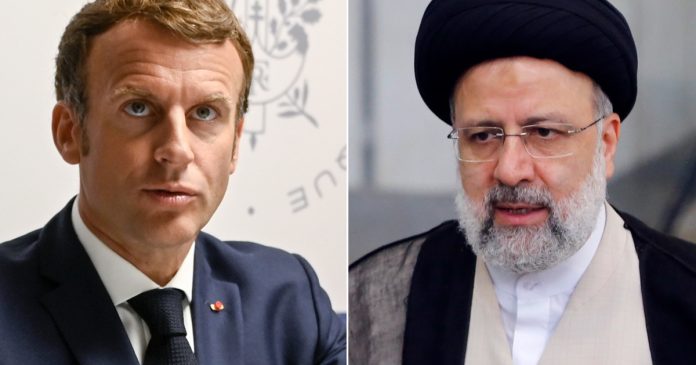
Raisi to Macron: Any deal in Vienna must result in sanctions removal

Raisi to Macron: Any deal in Vienna must result in sanctions removal

The Iranian president made those comments during a telephone conversation with Emmanuel Macron on Saturday.

He noted that Iran’s negotiating team in Vienna is containing the talks with the P4+1 with seriousness, adding Tehran has put forth constructive proposals and has studied offers by the other sides to see if they are in line with the interests of the Iranian people.

The Iranian president said the country’s delegation in Vienna has time and again said it welcomes proposals that guarantee the rights of the Iranian people.

Raisi went on to say that pressures and political claims that aim to maintain leverage against the Islamic Republic will only undermine the prospects of the Vienna talks.

He pointed out that Iran’s record in interaction with the International Atomic Energy Agency and the IAEA’s numerous reports confirming the peaceful nature of the Islamic Republic’s nuclear activities testify to the falsity of some countries’ allegations against Tehran.

He said Iran has always emphasized professional cooperation with the agency to prove its goodwill.
France is among the remaining signatories to the Iran nuclear deal, JCPOA.

Also referring to Iran’s active role in the fight against terrorism alongside Iraq and Syria, Raisi noted that if it were not for Iran’s effective confrontation with terrorism, ISIS would have been stationed in Europe today.

French President Emmanuel Macron also said in the telephone call that there has been good progress in the Vienna talks.

Macron expressed hope that the negotiations will be concluded as soon as possible.

The presidents of Iran and France also discussed the latest developments regarding the Covid pandemic and developments in the region.

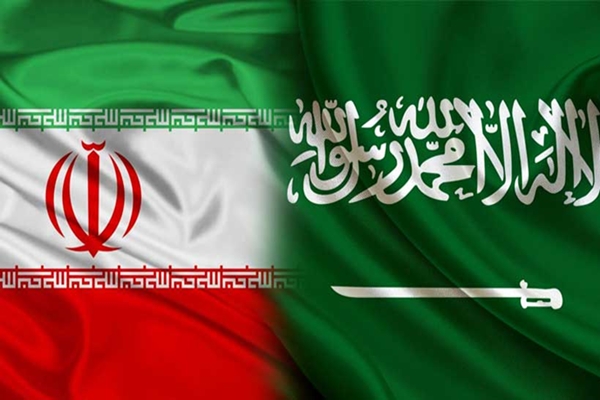
Iran says ready to hold fresh talks with Saudi Arabia

Tehran Still Ready to Mend Ties with Riyadh Despite ‘Foolish’ Moves

In the meeting, the top Iraqi diplomat also voiced his country’s readiness to host the next round of talks between Iran and Saudi Arabia.

Baghdad has so far hosted three rounds of talks between Iran and Saudi Arabia.

Amir Abdollahian and Hussein also discussed bilateral issues and the latest regional and international developments.

The Iraqi foreign minister briefed Amir Abdollahian on the latest developments and the post-election situation in Iraq.

Iran’s foreign minister reiterated the need for a civil transfer of power in Iraq based on compromise between all Iraqi groups.

The foreign ministers of Iran and Iraq also discussed economic ties between the two countries.

Covid kills 191 more people in Iran

US Regime Complicit in Iran's COVID-19 Deaths: Foreign Ministry

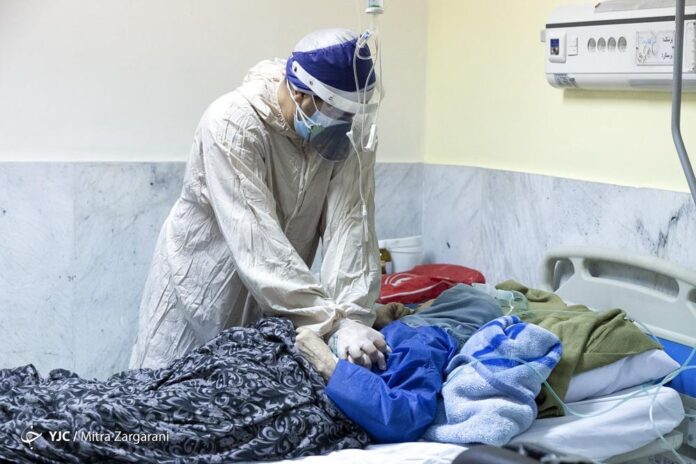
Iranian Foreign Ministry figures on Saturday showed 191 people died of Covid 19 in the past 24 hours, pushing the total fatalities since the start of the pandemic to 134.798. Over the past day, 12,058 new Covid cases were also logged including 2,062 hospitalizations.

The Coronavirus pandemic is now driven by the Omicron strain of the virus.

Until several weeks ago, most Iranian cities were marked blue, which denotes the lowest level of risk from Covid. Now over 300 cities and towns are red and there are no blue areas countrywide.

Omicron is more contagious than other Covid strains.

Meanwhile, health officials in Iran dismiss claims that the variant is less deadly compared to other strains of the virus.

The officials are urging citizens to get their third dose of vaccine. Over 22 million people have so far done so.

But authorities say all people must be triple-vaxxed. They maintain that this will be instrumental in containing Omicron.

Germany says chances of saving JCPOA dwindling

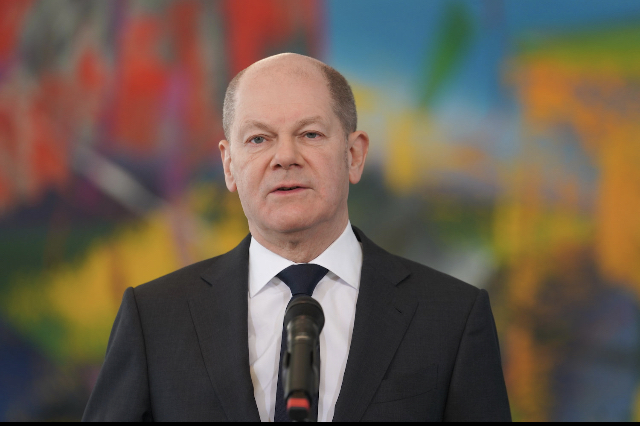
“We now have the chance to reach an agreement that will allow sanctions to be lifted. But if we do not succeed very quickly, the negotiations risk failing,” Scholz told the Munich Security Conference on Saturday.

“The Iranian leadership has a choice. Now is the moment of truth,” he stated.

The United States left the 2015 nuclear deal, officially known as the Joint Comprehensive Plan of Action (JCPOA), in 2018 and began to implement what it called the “maximum pressure” campaign of sanctions against the Islamic Republic, depriving the country of the economic benefits of the agreement, including the removal of sanctions, for which Iran had agreed to certain caps on its nuclear activities.

In the meantime, the other parties to the deal, in particular France, Britain and Germany, only paid lip service to safeguarding Iran’s economic dividends as promised under the JCPOA, prompting Iran – after an entire year of “strategic patience” – to reduce its nuclear obligations in a legal move under the deal.

Iran has stressed the ball is in the court of the United States, and that Washington must remove the anti-Tehran sanctions.

The Vienna talks, which involve Iran as well as Britain, China, France, Germany and Russia directly, and the United States indirectly, resumed in late November with the aim of restoring the landmark agreement.

Western diplomats say they are now in the final phase of the talks and believe that a deal is within reach.

Iran’s Foreign Minister Hossein Amir Abdolahian has called on the European parties to the Vienna negotiations “not to make any miscalculations” during the final phase of the talks.

He made the comment in a meeting with his German counterpart Annalena Baerbock on the sidelines of a security conference in Munich.

Amir Abdollahina reiterated that Tehran has been determined to reach a good deal with other negotiators since day one, adding Iran expects the European sides and all signatories to the 2015 Iran nuclear deal to closely keep Tehran’s red lines in mind.

He said Iran also expects the Europeans to, after years of inaction, play an effective role in restoring the legitimate rights of Iran as the party which suffered losses due to Washington’s unilateral and illegal withdrawal from the 2015 agreement.

He stressed Iran believes the “quality” of an agreement should be assessed within the context of “time.”

“If Iran’s legitimate demands are heeded today, it will be possible to reach an agreement in Vienna,” he noted.

The top German diplomat, in turn, reviewed the breakthroughs made in Vienna and, stating the talks are at a sensitive juncture and that it is necessary that all sides make utmost efforts to pass through this phase in the shortest possible time and usher in a new chapter in their engagement.

She stressed that Iran’s rights must be respected, calling for redoubled efforts to reach a good deal in Vienna.

Iranian FM to UN chief: Significant progress made in Vienna talks

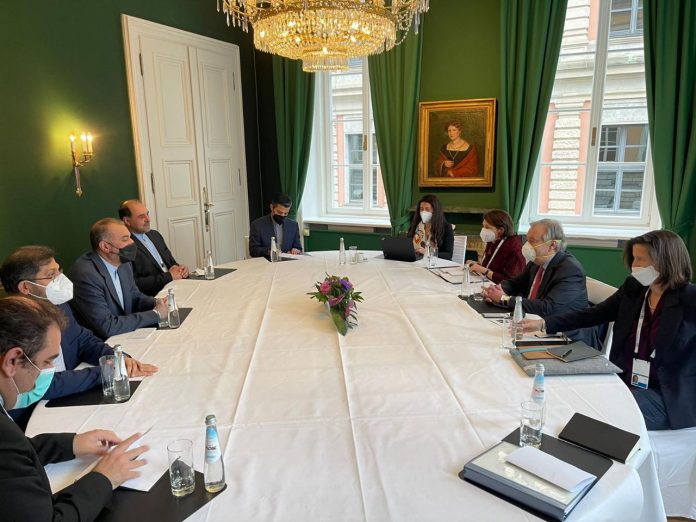
Amir Abdollahian met António Guterres on the
sidelines of the Munich Security Conference.
He told the UN chief that progress in the Vienna talks is significant but the other parties have yet to make serious political decisions and show determination about some key issues.
He underlined the need for the P4+1 group, namely Russia, China, France, Britain and Germany, to secure the rights of Iran.
Guterres said, “We are all looking forward to an agreement being signed and implemented as soon as possible by the negotiating parties that will be acceptable to all sides and ensure the interests of Iran.”
Amir Abdollahian and Guterres also discussed other issues during the meeting including the situation in Yemen and Afghanistan.
Regarding Afghanistan, the Iranian foreign minister underlined the need for the continuation of delivering humanitarian aid to Afghans.
Amir Abdollahian said the issue of forming an inclusive government in Afghanistan with the participation of all political groups is also vital. As for the situation in Yemen, Amir Abdollahian said the crisis has reached a dangerous point and political efforts to resolve it should be stepped up.
Guterres said, “We also think that the government of Afghanistan should be really inclusive.”
The UN chief thanked Iran for its assistance to Afghan refugees and stressed the need to increase global support to Iran.
He noted that the continuation of the catastrophe in Yemen is not unbecoming of the world and that warring sides must find a political solution in the Yemen crisis.

Iran tells Europeans not to make “miscalculations” during Vienna talks

He made the comment in a meeting with his German counterpart Annalena Baerbock on the sidelines of a security conference in Munich.
Amir Abdollahina reiterated that Tehran has been determined to reach a good deal with other negotiators since day one, adding Iran expects the European sides and all signatories to the 2015 Iran nuclear deal to closely keep Tehran’s red lines in mind.
He said Iran also expects the Europeans to, after years of inaction, play an effective role in restoring the legitimate rights of Iran as the party which suffered losses due to Washington’s unilateral and illegal withdrawal from the 2015 agreement.
He stressed Iran believes the “quality” of an agreement should be assessed within the context of “time.”
“If Iran’s legitimate demands are heeded today, it will be possible to reach an agreement in Vienna,” he noted.
The top German diplomat, in turn, reviewed the breakthroughs made in Vienna and, adding the talks are at a sensitive juncture and that it is necessary that all sides make utmost efforts to pass through this phase in the shortest possible time and usher in a new chapter in their engagement.
He stressed that Iran’s rights must be respected, calling for redoubled efforts to reach a good deal in Vienna.

Blast reported in Russia near Ukraine border

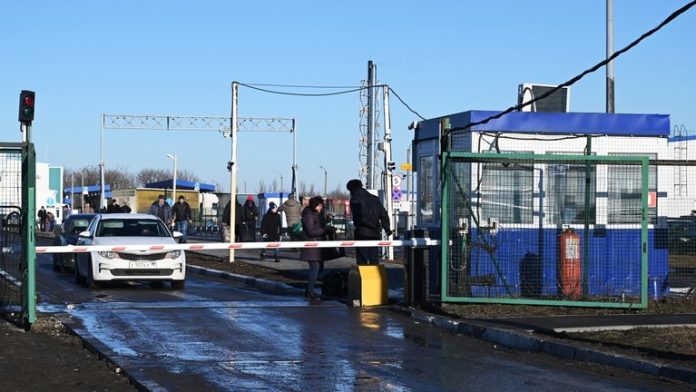
On Saturday, RIA Novosti wrote that a police source in the southern Rostov region had claimed authorities were responding to the detonation in a rural community in the area.

“The blast occurred at 4 am, 300 meters (984 feet) away from a house in the village of Mityakinskaya,” the official stated.

The incident reportedly occurred one kilometer (0.6 miles) from the border with the Donbass, much of which is controlled by the two self-declared breakaway republics of Donetsk and Lugansk.

The source noted there were no casualties or damage on the ground.

The Ukrainian Army and leaders from the two breakaway eastern regions have accused each other of massive shelling in violation of a signed ceasefire agreement, with a sharp spike in firefights reported over the past several hours.

Leaders in the self-proclaimed Donetsk People’s Republic (DPR) and Lugansk People’s Republic (LPR) announced that they would begin evacuating civilians to Russia on Friday in response to what they claim is an escalation in hostilities. It is unclear how many people will be relocated as part of the plans, and both regions declared that they were mobilizing their armed forces and calling up able-bodied men on Saturday for a potential conflict.

Two explosions rocked the city of Lugansk in eastern Ukraine late on Friday, a Sputnik news agency correspondent has reported. Local media have also confirmed that the first blast affected a pipeline in the area, resulting in a major fire. The second one reportedly took place at a gas station.

The reports of explosions come just hours after the neighboring city of Donetsk was rocked by another blast. It was caused by a car bomb, which targeted a vehicle belonging to the head of the people’s militia of the self-proclaimed Donetsk People’s Republic, and did not result in any casualties, according to RT.

It came as the US and NATO have accused Russia of intending to invade Ukraine. Moscow has repeatedly rejected the accusations as ‘fake news’. Both sides have accused the other of planning a ‘false-flag’ attack to create a pretext for a military operation.

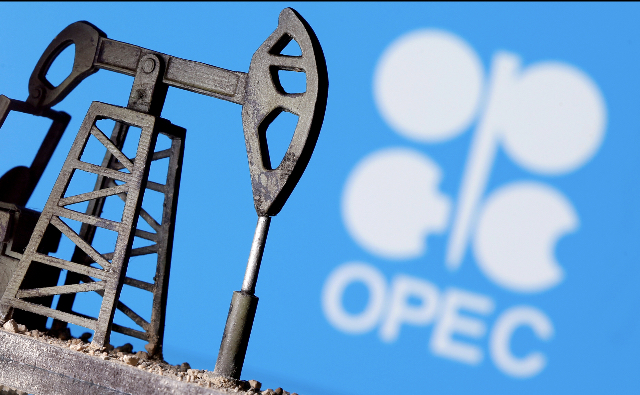
OPEC+ wants Iran to join supply deal if sanctions lifted

A successful outcome to the talks could lift U.S. sanctions on Iran’s exports, according to the International Energy Agency, potentially bringing 1.3 million barrels per day (bpd) of Iranian oil back into the market. That could ease tight global supply and take some heat out of a rally that has taken benchmark prices to just a few dollars short of $100 a barrel.

Due to the impact of sanctions on its exports, Iran is exempt from the existing deal between the Organization of the Petroleum Exporting Countries and allies, known as OPEC+, to limit oil supply. While that exemption allows Iran to boost output, OPEC+ would eventually seek to bring Iran into the accord, sources stated.

“It is very likely OPEC will adjust Iran into the deal, as there is no other option,” said an OPEC+ source, who added that an agreement on reviving the nuclear accord looked close.

A source familiar with Iranian thinking noted Iran would first seek to restore its lost output, but would likely, after talks with OPEC+, agree to a quota. Iran is one of the five founding members of OPEC.

Iran is pumping about 2.5 million bpd, some 1.3 million bpd less than in 2018 when former U.S. President Donald Trump withdrew the United States from the nuclear accord and re-imposed sanctions, drastically cutting Tehran’s oil income.

“With the lifting of sanctions, Iran will increase its oil production according to its facilities, capabilities and interests, to compensate for its lost oil revenues,” the source familiar with Iranian thinking added.

“In my opinion, OPEC+ will set a quota for Iran’s oil production but will apply it gradually, and Iran will accept the quota with some bargaining to show its support for OPEC,” the source continued.

OPEC Secretary General Mohammad Barkindo, asked if OPEC+ would work out a new supply agreement that included Iran, said the group’s track record gave grounds for confidence.

“Having survived the last five years since the establishment of the historic partnership between OPEC and non-OPEC that helped us to navigate through two oil cycles, we have every reason to remain reasonably optimistic going forward,” he told Reuters.

OPEC+ is gradually boosting oil output after making record cuts in 2020 when demand collapsed due to the pandemic. But it has failed to hit its target because some producers did not make the investment or do the maintenance needed on oilfields during the pandemic to keep those facilities ready to increase output quickly.

For the United States, it would make sense to lift the sanctions on Iran to help lower prices given the domestic pressure the administration of President Joe Biden is facing due to rising inflation. The United States may also be considering that any output from Iran would ease the impact on global oil markets of any conflict between Russia and the Ukraine, a source familiar with Russian oil thinking said.

“The U.S. will surely lift the sanction from Iran as soon as they decide to put more pressure on Russia given the current tensions over Ukraine,” the source continued, adding, “Iranian oil will cool oil prices.”

OPEC+ sources have also made the point that extra Iranian supply could also help plug the hole in OPEC’s output target misses.

OPEC+ has not dealt with this issue by, for example, having larger producers step in to boost output to compensate for those who cannot. These talks can be difficult as they encroach on sensitive topics such as national prestige and market share.

But any nuclear deal will most likely force OPEC+ to rearrange its quotas to make room for Iranian barrels, as in previous years. When Tehran last returned to the fold from U.S. sanctions in 2015-2016, it negotiated strongly among oil producers for its own interests by first refusing to take part in a proposed output “freeze” to address oversupply as it recovered output.

Later, during talks to form OPEC+ in 2016 while the other producers were agreeing on production cuts, Iran eventually secured a quota that allowed it to increase output, citing the impact of sanctions that had squeezed its market share.

Still, a third OPEC+ source noted the group would not shy away from talks on a return of more Iranian oil to the market, and has a track record of tackling similarly thorny issues.

“We will deal with it very well,” this source said, adding, “OPEC has been around for 60 years and we can deal with all issues.”

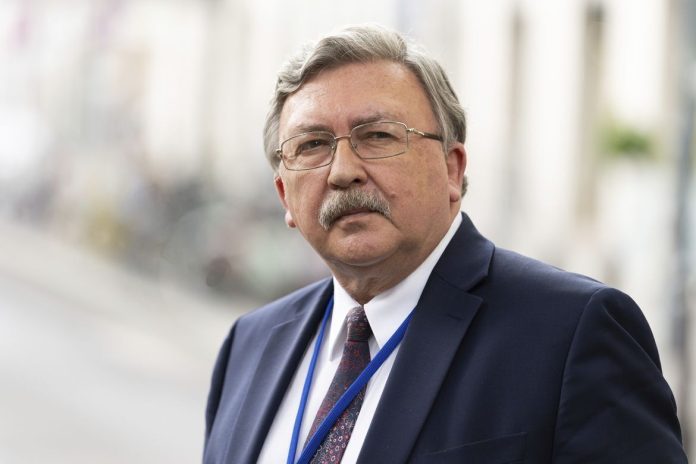
Vienna talks likely to end successfully soon: Russia

Mikhail Ulyanov re-published a tweet by Philippe Errera, the director general for political and security affairs at the Ministry for Europe and Foreign Affairs of France, saying chief negotiators of the three European countries will leave Vienna for two days, but other members of the negotiating teams will remain in Vienna and continue the talks.
Ulyanov had already said in an interview that the Vienna negotiations were in their final stage, and that it was highly likely that parties to the talks would reach an agreement by the end of February.
Meanwhile Iranian Foreign Minister Hossein Amir Abdollahian has said Tehran and the P4+1 group are very close to reaching a good deal in Vienna but for this to happen, the other sides should show genuine flexibility.
Amir Abdollahian added that the P4+1 group has a decisive role in this regard. The top Iranian diplomat also said some differences between Tehran and the Western parties to the Vienna talks remain unresolved.
The eighth round of sanctions removal talks kicked off in Vienna on December 27, 2022, and, according to Tehran, has now reached a point where the success or failure of the talks only depends on the political decisions of the Western parties.
If the Western negotiators adopt the necessary decisions that they are well aware of, the few outstanding issues could be resolved and a final agreement can be worked out in a matter of days.
The Iranian negotiating team says it has put on the table its clear suggestions and demands based on the existing principles and instructions received from Tehran, and now the ball is in the court of the Western sides.