Wednesday, December 24, 2025
Home Blog Page 2073

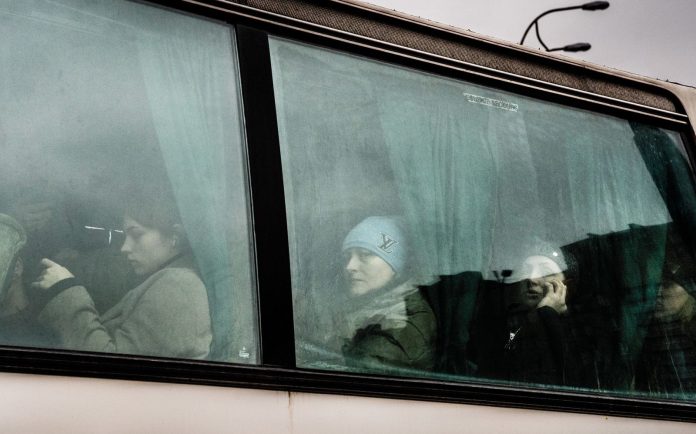
UN says 100k Ukrainians fled after Russia attack

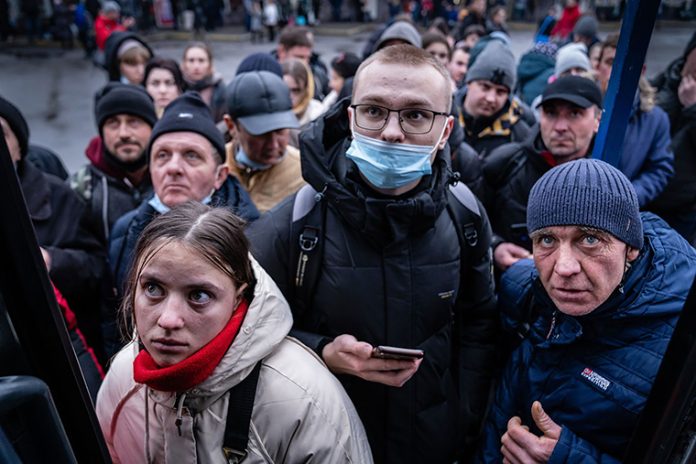
Several thousand Ukrainians have crossed into neighbouring countries, mainly Moldova and Romania, while an estimated 100,000 have fled their homes and are uprooted in the country after Russia’s invasion, the U.N. refugee agency has confirmed.

Shabia Mantoo, spokesperson of the U.N. High Commissioner for Refugees (UNHCR), stated the figures were compiled from reports from national authorities and its staff and partner agencies.

“It’s a ballpark figure,” she told Reuters.

The head of the International Committee of the Red Cross (ICRC) has warned Russia’s invasion of Ukraine could unleash death and destruction on a scale that is “frightening to contemplate”.

“I fear increased suffering, with the potential of massive casualty numbers and extensive destruction of civilian objects like water and electricity plants, as well as mass displacement, trauma, family separation, and missing persons,” Peter Maurer said in a statement.

“The ICRC has seen many conflicts start and escalate in recent years, but too few of them end, and in each one, it is the civilian populations that bear the consequences,” he added.

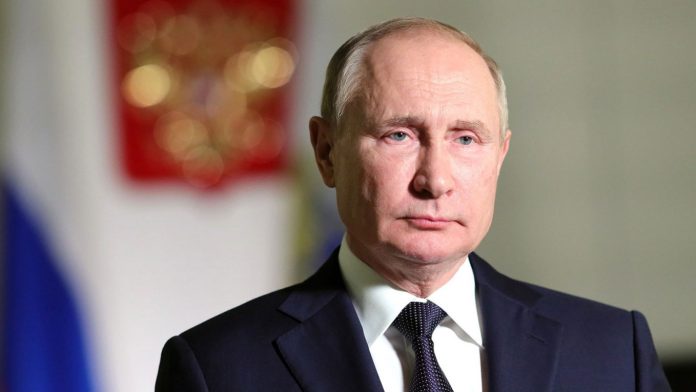
Russian President Vladimir Putin early on Thursday announced a military operation in Ukraine, leading to international condemnation of what world leaders called the start of a Russian invasion.

Ukrainian President Volodymyr Zelensky said in a speech Thursday that Ukraine has been “left alone” to defend against the Russian invasion.

“Today Russia attacked the entire territory of our state,” Zelensky stated, adding, “And today our defenders have done a lot.”

“They defended almost the entire territory of Ukraine,” he continued, noting, “Which suffered direct blows. They regain the one that the enemy managed to occupy.”

Zelensky said that “we are supported,” citing conversations he had with worldwide leaders after the invasion.

However, he added that Ukraine is “left alone in defense of our state.”

“Who is ready to fight with us?” Zelensky asked, stressing, “Honestly — I do not see such.”

Zelensky has stated more than 137 people had died and hundreds more were injured after Putin ordered a military operation in Ukraine.

Zelenksy, citing preliminary data, announced in a statement that 137 people had died, including 10 military officers, and that 316 had been injured.

The Ukraine’s president ordered a full military mobilization on Thursday amid the deadly invasion of his country.

The United States has assessed Russian forces to have fired more than 160 missiles into Ukraine. The Kremlin has launched “in total more than 160 missiles for airstrikes,” fired from a mixture of ground and naval-based platforms, a senior Defense official told reporters.

Russian forces are making advances on Ukraine’s capital Kyiv and Moscow has continued to flow forces into the country, the official claimed.

Ukraine’s military has said that Russian forces aim to block Kyiv while creating a land corridor on the southern coast towards the annexed Crimea peninsula and the Transdniestria region of Moldova.

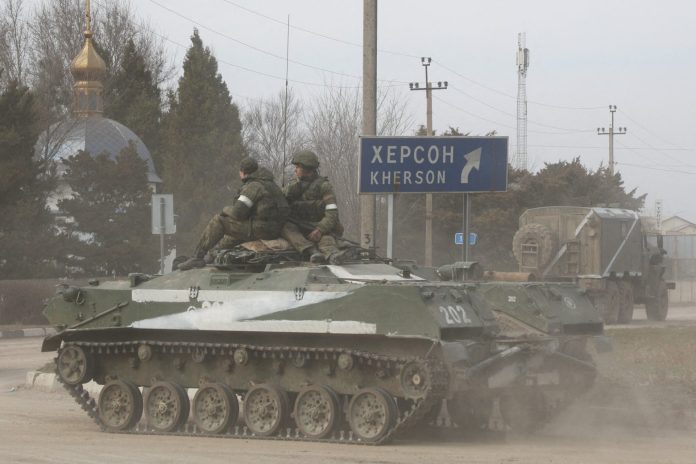
Ukrainian forces have battled Russian invaders on three sides after Moscow mounted an assault by land, sea and air.

A senior Ukrainian defence official has also warned that Russian forces would enter areas just outside Kyiv after officials noted the city and other locations had been struck by Russian missiles in the early hours of the morning.

Russian mechanized forces that had entered Ukraine through Belarus were about 20 miles (32 kilometers) from Kyiv, top Joe Biden administration officials told House lawmakers in a briefing Thursday, according to two sources on the call.

The officials described another Russian element that entered Ukraine from Russia being a bit further away, but that both were headed toward Kyiv with the goal of encircling the city and potentially toppling the Ukrainian government, according to the lawmaker on the call.

The Ukrainian Defense Ministry has claimed its armed forces have inflicted some 800 casualties on Russian forces since the invasion began in the early hours of Thursday.

It was not immediately clear whether the ministry was referring solely to the number killed.

The ministry added more than 30 Russian tanks had been destroyed, as well as seven Russian aircraft and six helicopters.

Dmytro Kuleba has slammed the “horrific rocket strikes” that shook Kyiv.

“Horrific Russian rocket strikes on Kyiv,” the foreign minister wrote on Twitter, adding, “Last time our capital experienced anything like this was in 1941 when it was attacked by Nazi Germany”.

Top European Union leaders have said Putin “must and will fail”, as they agreed new sanctions over Russia’s invasion of Ukraine. They added he is trying to bring the continent back to the age of empires and confrontations.

The bloc’s leaders agree in principle at an emergency overnight summit to impose new economic sanctions, joining the US and others in taking steps such as curbing Russia’s access to technologies.

The EU will freeze Russian assets in the bloc and halt its banks’ access to European financial markets as part of what EU foreign policy chief Josep Borrell described as “the harshest package of sanctions we have ever implemented”.

European Union leaders have agreed to sanctions on Moscow that target 70 percent of the Russian banking market and key state-owned companies, including in defence, EU Commission chief Ursula von der Leyen said in a tweet.

The United Nations Security Council will vote on Friday on a draft resolution that would condemn Russia for invading Ukraine and require Moscow to immediately and unconditionally withdraw, but the measure is set to fail because Moscow can cast a veto.
Viral pic appears to show notes on Raisi’s reply to indirect US message

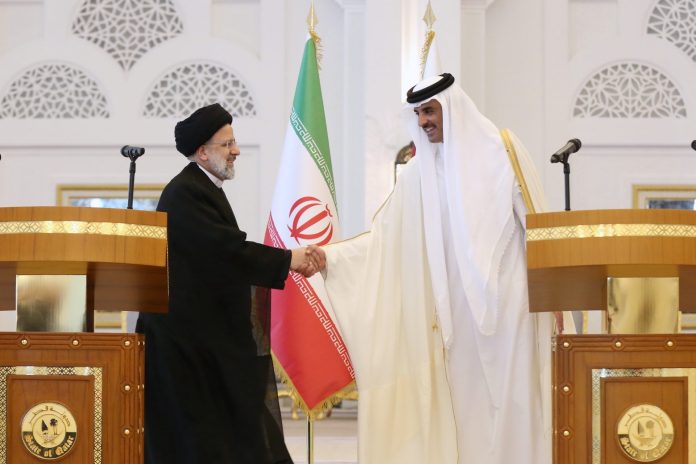
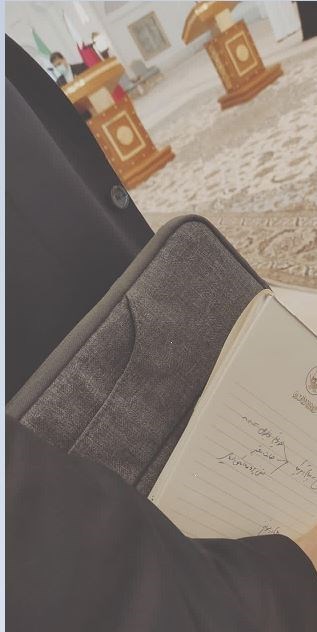
According to Tasnim News Agency, from the content of the notes in the picture, it could be understood that President Ebrahim Raisi set three conditions for reaching a deal in Vienna in response to Washington’s message relayed to him by Qatari Emir Sheikh Tamim bin Hamad Al Thani.

The conditions include removing the sanctions, giving credible guarantees and closing the case of sites where Iran is claimed to be involved in secret nuclear work.

Viral pic appears to show notes on Raisi’s reply to indirect US message

Meanwhile, other sources said that the Americans had asked for direct bilateral talks with Iran through the same channel.

The Iranian president, however, rejected the request and said the Vienna talks were underway smoothly and without any obstacles whose removal would need direct talks with the US, according to the sources.

The parties to the negotiations in Vienna say significant progress has been made in the diplomatic process aimed at revitalizing the 2015 nuclear deal, which the US left around three years ago.

Tehran, however, says reaching a final deal requires the Western side to adopt a realistic approach at the current sensitive stage and take political decisions aimed at meeting Iran’s interests.

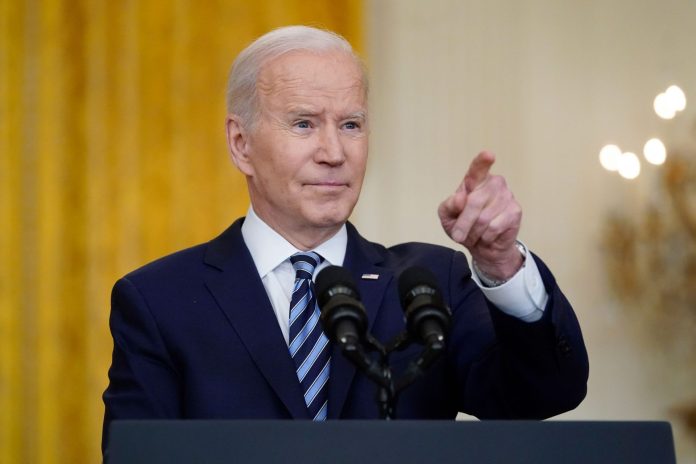
Biden announces new sanctions against Russia, calls Putin ‘aggressor’

“This is going to impose severe cost on the Russian economy, both immediately and over time. We have purposefully designed these sanctions to maximize a long-term impact on Russia and to minimize the impact on the United States and our allies,” he said.

The United States is not doing this alone, he stated, adding that the 27 EU members and G7 members will participate in these sanctions.

Here are the sanctions he announced:

Limit Russia’s ability to do business in dollars, euros, pounds and yen to be part of the global economy.

Stop the ability to finance and grow the Russian military.

Impair their ability to compete in high-tech 21st century economy.

US sanctioned Russian banks that together hold around $1 trillion in assets.

He added, “we’re also blocking four more major banks. That means every asset they have in America will be frozen.”

“It’s going to take time and we have to show resolve, so he knows what is coming. So the people of Russia know what he’s brought on them. That’s what this is all about. This is going to take time,” Biden later said.

Biden stated Putin bears full responsibility for attacking Ukraine and stressed Russia will face the consequences because of it.

“Putin is the aggressor. Putin chose this war. And now he and his country will bear the consequences,” Biden noted.

Biden said direct sanctions on Russian President Vladimir Putin are still “on the table”.

“It’s not a bluff. It’s on the table,” he said, responding to CNN’s Kaitlan Collins.

He did not answer when she asked why he was not personally sanctioning Putin today.

Biden also stated he has no plans to talk to Putin after outlining the steps the US is taking to retaliate against the Russian attack on Ukraine.

Biden noted removing Russia from SWIFT is not the direction the rest of Europe wants to go in at this moment.

Biden added removing the nation from SWIFT, a high security network that connects thousands of financial institutions around the world, is “always an option,” but said, “right now, that’s not the position that the rest of Europe wishes to take.”

“The sanctions that we’ve proposed on all their banks are of equal consequence, maybe more consequence than SWIFT,” Biden continued.

Removing Russia from SWIFT would make it nearly impossible for financial institutions to send money in or out of the country. It would deliver a shock to Russian companies and their foreign customers — especially buyers of oil and gas exports denominated in US dollars.

The Foreign Minister of Ukraine Dmytro Kuleba on Thursday urged the West to ban Russia from SWIFT in a tweet. Earlier on Thursday, CNN reported that the EU was undecided as to whether to cut Russia off from SWIFT and that EU nations were split over the decision.

Biden declined to comment when asked about whether China would help isolate Russia.

Following his remarks on the Russian invasion of Ukraine, a reporter asked the president, “Are you urging China to help isolate Russia?”

I’m not prepared to comment on that at the moment,” Biden responded.

China has refused to condemn Russia’s attack on Ukraine Thursday, instead repeating calls for parties to “exercise restraint” and accusing the United States of “fueling fire” in the tensions.

Biden said he authorized the deployment of air and ground forces in Europe to the eastern flank of allies and reaffirmed the United States’ commitment to defend NATO.

“We’re also taking steps to defend our NATO allies. Particularly in the east,” the US president added.

Biden continued, “Tomorrow, NATO will convene a summit. We’ll be there to bring together the leaders of 30 allied nations and close partners to affirm our solidarity and to map out the next steps we will take to further strengthen all aspects of our NATO alliance.”

The US Secretary of Defense has ordered the eployment of 7,000 US service members to Europe, a senior defense official told reporters shortly after Biden’s announcement.

The United States is prepared to respond to cyberattacks by Russia, said Biden, adding that for months the US has been working with the private sector to bolster its security.

“If Russia pursues cyberattacks against our companies, our critical infrastructure, we are prepared to respond,” Biden said during remarks from the White House.

“For months, we’ve been working closely with the private sector to harden their cyber defenses [and to] sharpen our ability to respond [to] the Russian cyberattacks as well,” he added.

“America stands up to bullies; we stand up for freedom,” Biden continued, noting, “This is who we are.”

US officials remain on high alert for any cyber activity against key domestic targets including banks and critical infrastructure, an official recently told CNN. US officials told businesses to watch for potential ransomware attacks following sanctions issued against Russia earlier this week.

Putin announced a “military operation” in Ukraine on Thursday. Moscow claims that the country’s military has achieved the goals it set out for the first day of its invasion of Ukraine.

An adviser to the Ukrainian presidential office has said the Chernobyl nuclear power plant has been captured by Russian forces after a fierce battle for control of the now-defunct site.

“It is impossible to say the Chernobyl nuclear power plant is safe after a totally pointless attack by the Russians,” Mykhailo Podolyak stated.

“This is one of the most serious threats in Europe today,” he added.

A Ukrainian presidential advisor has told Al Jazeera that the Russians hold Hostomel airfield just 10km from Kiev.

Three US officials have told Newsweek they expect Ukraine’s capital Kyiv to fall to incoming Russian forces within days.

UK, Canada announce new sanctions on Russia

The UK will impose its “largest ever” set of economic sanctions on Russia, including pushing to end Russia’s use of the Swift international payment systems, freezing assets of all major Russian banks, limiting cash held by Russian nationals in UK banks and sanctioning more than 100 individuals and entities.

Prime Minister Boris Johnson has urged European leaders to agree that Russia’s use of the major payments system should be suspended, making the argument in a call with the German chancellor, Olaf Scholz, and in a meeting of G7 leaders. The move is likely to be resisted by EU countries.

Announcing a package of sanctions which Johnson had promised would “hobble” Russia’s economy, the PM stated legislation would be laid on Tuesday to ban major Russian companies from raising finance on UK markets and to prevent Russia raising sovereign debt on UK markets.

The sanctions include more key oligarchs who will have assets frozen, though sources said that more names – including what they said would be more recognisable figures – would be released in the coming weeks.

The prime minister announced 10 measures the UK was taking immediately. The UK will freeze assets of all major Russian banks including VTB, the country’s second largest bank with assets totalling £154bn.

Individual sanctions will be imposed on over 100 individuals, entities and subsidiaries, including Rostec, the country’s biggest defence company, which exports £10bn in arms a year, as well as four other defence companies.

Oligarchs who will be sanctioned include Vladimir Putin’s former son-in-law Kirill Shamalov, Russia’s youngest billionaire; Denis Bortnikov, the chair of VTB Bank management board; and Yury Slyusar, the director of the United Aircraft Corporation. The Russian airline Aeroflot will be banned from landing in the UK.

A diplomatic source noted, “These are people who have international lifestyles. They come to Harrods to shop, they stay in our best hotels when they like, they send their children to our best public schools, and that is what’s being stopped.”

“So that these people are essentially persona non grata in every major western European capital in the world. That really bites,” the source added.

The UK will suspend and prohibit all dual-use export licences to Russia, which covers items that could have civilian or military use. There will also be legislation to prohibit a wide range of hi-tech exports to Russia, including semi-conductors, aircraft parts such as Rolls Royce jet engines, and oil refinery equipment.

Number 10 announced it would set out more detail in the coming days about new legislation to limit the deposits that all Russian nationals can hold in UK bank accounts, intended to choke off the ability of Russians to raise finance and keep their money in London.

Number 10 added it would extend a full range of measures to Belarus, which Russian forces have used to invade Ukraine, treating the country as subject to same sanctions regime as Russia. The final measure was a pledge to bring forward the economic crime bill, before Easter recess, aimed at making assets more transparent.

Johnson had faced criticism from across the political spectrum earlier this week for introducing a package of sanctions many MPs, including in his own party, felt were too weak. They included sanctions on five Russian banks, including those with links to the defence sector, and three individuals closely associated with President Putin.

Earlier the chair of the foreign affairs select committee, Tom Tugendhat, suggested the limited sanctions announced on Monday may have encouraged the Russian president.

“What that did, I’m afraid, was it didn’t deter, but encouraged, because it gave the suggestion or made clear that we weren’t willing to do anything serious,” Tugendhat told the BBC Radio 4 Today programme.

EU ambassadors met in Brussels on Thursday afternoon to discuss a major package of sanctions across the financial and energy sectors including export controls on key components.

The announcement followed an acrimonious meeting in Whitehall between the foreign secretary, Liz Truss, and Russia’s ambassador to the UK, Andrei Kelin. Truss ended the meeting early, according to sources, who said Kelin “spouted the usual propaganda” but that Truss was “having none of it” and told him he “should be ashamed of himself”.

The source added that the foreign secretary had told Kelin the international community would “rally around Ukraine” and that Russia had turned itself into “an international pariah”.

Some Conservative MPs called for the UK to increase military aid to Ukraine, including the former cabinet minister David Davis, who said the UK should consider providing air support to the Ukrainian armed forces.

Davis stated that even the most “ferocious sanctions … are no longer a deterrent, they are a punishment” and that the invasion of Ukraine meant Putin had “effectively declared war on the west”.

Alicia Kearns, a Conservative MP and former senior communications officer at the Ministry of Defence, announced Britain providing defensive support in Ukrainian airspace should be “on the table and under discussion”.

Canada announced more sanctions against Russia on Thursday, targeting 62 individuals and entities, including members of the Russian elite and major Russian banks, and canceling all export permits, after Moscow launched an all-out invasion of Ukraine.

“Today, in light of Russia’s reckless and dangerous military strike, we are imposing further, severe sanctions,” Prime Minister Justin Trudeau told a news conference.

Meantime, the Group of Seven industrialised nations has strongly condemned Russia’s invasion and promised to hit Moscow with severe and coordinated economic sanctions.

“This crisis is a serious threat to the rules-based international order, with ramifications well beyond Europe,” the G7 leaders said in a joint statement released by Germany.

They added Putin had re-introduced war to the European continent and said the Russian president had “put himself on the wrong side of history”.

The G7 is comprised of Canada, France, Germany, Italy, Japan, the United Kingdom and the United States.

In a Twitter message, US President Joe Biden said he agreed with fellow G7 leaders “to move forward on devastating packages of sanctions and other economic measures to hold Russia to account.”

“We stand with the brave people of Ukraine,” he added.

Four people familiar with the deliberations tell NBC News Biden has been presented with a menu of options for the U.S. to carry out massive cyberattacks designed to disrupt Russia’s ability to sustain its military operations in Ukraine.

Two U.S. intelligence officials, one Western intelligence official and another person briefed on the matter say no final decisions have been made, but they say U.S. intelligence and military cyber warriors are proposing the use of American cyberweapons on a scale never before contemplated. Among the options: disrupting internet connectivity across Russia, shutting off electric power, and tampering with railroad switches to hamper Russia’s ability to resupply its forces, three of the sources noted.

“You could do everything from slow the trains down to have them fall off the tracks,” one person briefed on the matter said.

The sources said the options presented include pre-emptive responses to Russia’s invasion of Ukraine, irrespective of whether Russian launches its own cyberattacks on the U.S. in retaliation for sanctions. They stated most of the potential cyberattacks under consideration are designed to disrupt but not destroy, and therefore fall short of an act of war by the United States against Russia.

They say the idea is to harm networks, not people.

Officials are debating the legal authorities under which the attacks would take place — whether they would be covert action or clandestine military activity. Either way, the U.S. would not publicly acknowledge carrying out the operations, the sources say. U.S. Cyber Command, the National Security Agency, the CIA and other agencies would have a role to play in the operations, the sources added.

“Our response will be harsh and measured, but not so severe as to encourage Putin to take more drastic steps,” one U.S. official noted.

The person briefed on the matter said there was a significant divide within the U.S. government, with one camp fearful of escalating and another urging a strong cyber response.

Any use of cyberweapons to retaliate for the Russian invasion of Ukraine would be a turning point for U.S. cyber operations, which have largely been focused on intelligence gathering, information operations and targeted strikes, many of them for counterterrorism purposes.

But the U.S. has been laying the groundwork for years for possible cyber operations against Russia, China and other adversaries, experts say. Those countries have done the same on American infrastructure networks.

Officials stressed that the options being presented to Biden cover a broad range, from fairly modest disruptions to drastic ones. U.S. officials anticipate that Russia will retaliate, the sources say, likely with Colonial Pipeline-style attacks that seek to hurt American consumers.

“Anything we can do to them, they can do to us,” one U.S. official noted.

Some experts say the risk of escalation is high.

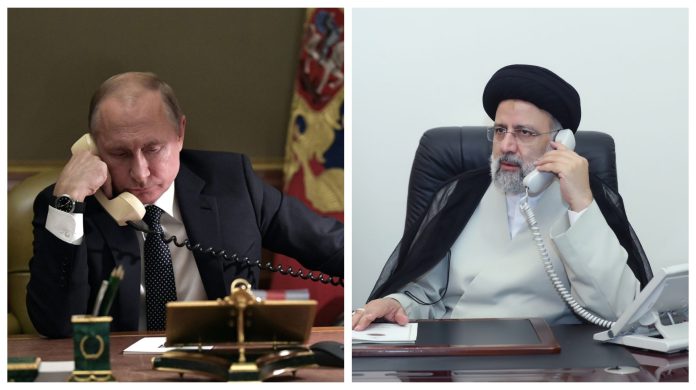
Raisi to Putin: NATO’s expansion serious threat to security and stability

The two leaders held the phone conversation on Thursday night.

Raisi then referred to Russia’s operations in Ukraine, expressing hope that what is happening in Ukraine will serve the interests of nations and the region.

Raisi also touched on the Vienna talks over the revival of the Iran nuclear deal. He said Iran seeks a lasting deal and not a fragile one.

The Iranian president added that credible guarantees, putting an end to political claims and effective removal of sanctions are necessary for a lasting deal with the P4+1 group.

Putin for his part spoke of the issue of Ukraine. He said the current operations by the Russian forces are a legitimate response to decades-long violation of security pacts and to the West’s attempts to harm Russia.

Putin also spoke of Iran’s active cooperation with the International Atomic Energy Agency and underlined the need for the two countries to keep consultations over the Vienna talks.

U.S. expects Ukraine capital to fall in days

The officials, speaking on the condition of anonymity, said that Moscow’s focus, as revealed in Russian President Vladimir Putin’s references to a “special military operation” to “demilitarize” the neighboring country, would be to encircle Ukrainian forces and force them to surrender or be destroyed.

They expect Kyiv to be taken within 96 hours, and then the leadership of Ukraine to follow in about a week’s time.

And Russia’s thunderous attacks on Ukrainian government and military institutions, paired with reports of ground personnel seeking to take strategic points including the Chernobyl nuclear facility, appeared to only be the initial phase of what may be a more comprehensive ground campaign.

One former senior U.S. intelligence officer with extensive experience dealing with Russia expressed a similar sentiment.

“After the air and artillery end and the ground war really starts, I think Kyiv falls in just a few days,” the former senior U.S. intelligence officer told Newsweek on the condition of anonymity as well.

“The military may last slightly longer,” the former intelligence officer added, “but this isn’t going to last long.”

Afterward, the senior U.S. intelligence officer stated the next stages may be determined by U.S. President Joe Biden’s capability and willingness to risk further provoking Moscow by supporting partisan efforts on behalf of a potential Ukrainian resistance.

“Then it either becomes a robust insurgency or it doesn’t, depending largely on Biden,” the former senior U.S. intelligence officer continued.

A source close to Ukrainian President Volodymyr Zelenskyy’s government, who also asked not to be named, agreed with the U.S. assessment that Kyiv could be surrounded within 96 hours. But they did not believe Zelenskyy’s government would collapse.

Asked by Newsweek whether the government was confident it could break a possible Russian encirclement, the source noted, “I think it’s too early to say…They say Ukraine is holding better than they expected.”

A NATO diplomatic official, who also did not wish to be named as the official was not authorized to speak publicly on the subject, told Newsweek of the U.S. assessment.

“My personal opinion: unfortunately, it does sound rather believable. However, I think now the first 24 hours are the most critical,” the official stated.

The Antonov Airport near the town of Hostomel, just outside Kyiv, was the scene of some of the most dramatic early fighting. Ukrainian Interior Ministry officials reported early Thursday that Russian helicopter-borne forces had seized the airfield, though fighting around it is believed to be ongoing.

The outcome could be pivotal to Ukraine’s fate. The airport is 15 miles west of Kyiv. If secured by Russian troops, Antonov could become a springboard for an assault on the capital.

“Let’s see if they can counter,” the Ukrainian source said of the Ukrainian troops at Hostomel.

Zelensky tweeted on Thursday evening that Russian troops are trying to capture the Chernobyl nuclear power plant in the northern part of the Kiev Region. The plant was the site of the 1986 disaster, which caused massive contamination of the surrounding area and parts of Europe.

He claimed there was fighting in Chernobyl hours into Moscow’s “special operation”.

“Our defenders are giving their lives so that the tragedy of 1986 will not be repeated,” Zelensky tweeted.

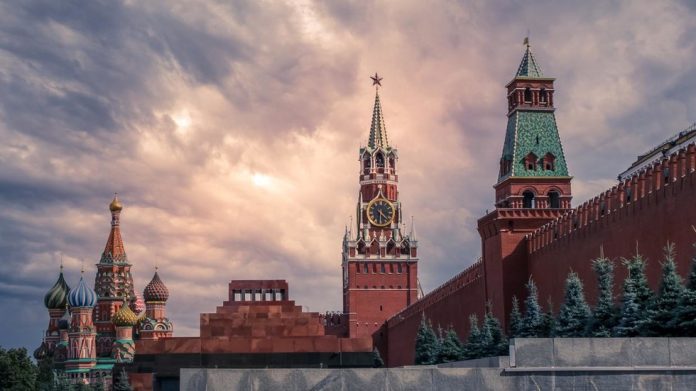
Putin’s decision to invade Ukraine came late Wednesday as the Russian leader accused the fellow former Soviet republic of acting as a puppet to Western interests by seeking to join the U.S.-led NATO military alliance and acquire weapons to threaten Russia’s national security.

Ukrainian officials have repeatedly denied that their country poses any threat to Russia. Amid an unprecedented Russian military buildup along Ukraine’s borders, the Biden administration has warned for weeks that incursion could begin at any time.

Newsweek reported Wednesday, prior to the beginning of the invasion, that the United States had warned Zelenskyy that a full-scale Russian invasion to include the use of airstrikes, missiles, ground troops and cyber attacks was anticipated to begin within 48 hours.

In the weeks and months leading up to eruption of the conflict, Moscow had accused Washington of hyping up the possibility of a war. On Monday, however, Putin sent in troops he termed “peacekeepers,” after offering recognition to two breakaway separatist states in Ukraine’s eastern Donbas region, signaling that more military action might follow.

The self-proclaimed Donetsk and Luhansk People’s Republics then appealed to the Russian leader for military support, which Putin granted.

The United States and its allies have roundly condemned Putin’s actions. They have begun to introduce a series of sanctions designed to hurt Russia’s economy and the wealth of influential officials and business within Putin’s inner circle, as well as their family members.

A spokesman for Russia’s defence ministry says the country’s military has achieved the goals it set out for the first day of its invasion of Ukraine.

“All of the tasks assigned to the groups of troops of the Armed Forces of the Russian Federation for the day were successfully completed,” Igor Konashenkov said.

Ukrainian officials have announced dozens of people have been killed during the first hours of Russia’s invasion of Ukraine, with fighting widespread across the country.

Putin has noted that the Kremlin had analyzed the geopolitical risks of new sanctions by the West, but could not forecast all potential impacts.

“We all, and you too, understand the world we live in, and prepared in one way or another for what is happening now in terms of restrictions and sanctions policy,” Putin stated on Thursday afternoon.

“What is happening is a forced measure,” Putin said of the military operations in Ukraine.

“They left us no chance to do otherwise. Security risks created such that it was impossible to respond by other means,” he added.

Protest monitoring group OVD-Info said on Thursday Russian police have detained more than 650 people at anti-war protests held in cities throughout the country.

The group added demonstrations had been staged in 40 different locations, including in the capital, Moscow.

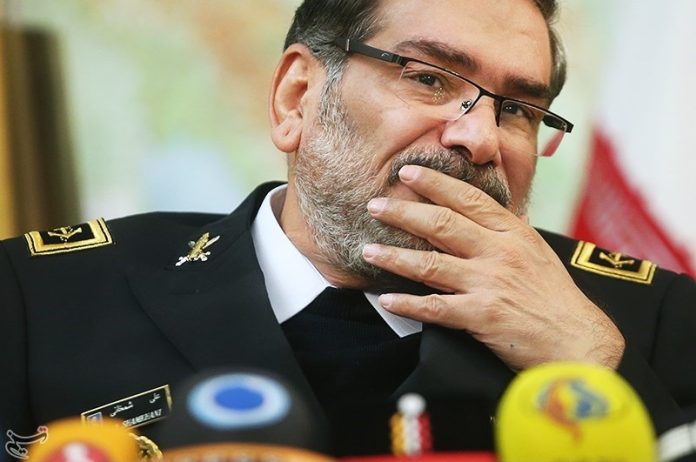
Shamkhani: West should learn lesson from Ukraine crisis

“The financial markets’ fall and the sharp rise in energy prices due to the crisis in the easternmost part of Europe showed that instability and insecurity in all its forms in the Eastern Hemisphere would do serious damage to Western interests. The Ukraine crisis can be a lesson,” Secretary of Iran’s Supreme National Security Council Ali Shamkhani wrote in a twitter post on Thursday.

The comment comes as Russian forces are engaged in a military operation inside Ukraine after a long dispute between Moscow and the United States over NATO’s eastward expansion.

In a television address announcing the “specialized military operation”, Russian President Vladimir Putin said it was needed to protect people subjected to “genocide”.

Putin accused the U.S. and its allies of rejecting Moscow’s demands to prevent Ukraine from joining the Western military alliance.

The conflict in Ukraine roiled global markets on Thursday and sent oil prices above $100 a barrel for the first time since 2014.

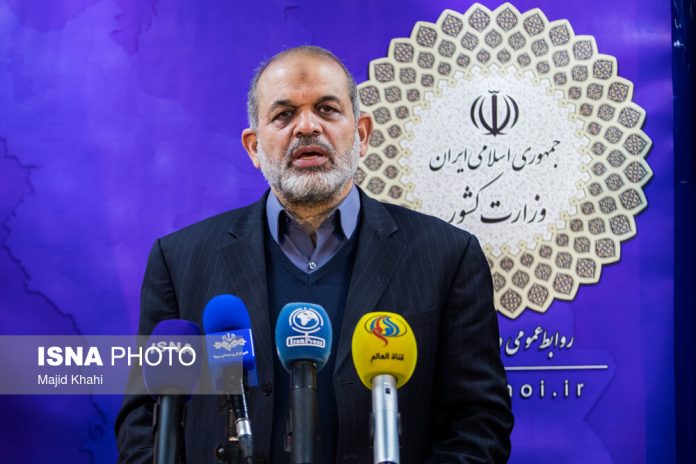
Iran minister calls for development of border markets with Pakistan

Vahidi was speaking to reporters during a visit to the Mirjaveh border market and border terminal.

He said the reopening of the Mirjaveh border terminal is a very good event and will be very instrumental in improving livelihoods of border residents.

Vahidi also said during the visit to Mirjaveh border terminal, its problems were examined and now there is no problem in traffic.

Regarding the opening of new markets, the interior minister said, “We are ready to launch a new market, but this depends on the readiness of the Pakistani side.”

He added that Iran is ready to launch six markets, of which three are ready to become operational, and the construction of three more markets has been agreed with Pakistan.

Vahidi noted that border markets are very valuable for the livelihoods of border people.

Iran voices regret over Ukraine hostilities, calls for ceasefire

Saeed Khatibzadeh said Tehran is following the developments in the country with concern.

He said, “Unfortunately provocative moves by NATO spearheaded by the US have led to a situation which has pushed the Eurasian region on the verge of a big crisis.

He underlined that the Islamic Republic of Iran invites the two sides to stop the hostilities and establish a ceasefire for immediate talks in order to resolve the crisis through political means.

Khatibzadeh also referred to the situation of the Iranian expatriates in Ukraine, adding the Embassy of the Islamic Republic in Ukraine is fully active and serves students and Iranians 24 hours a day.

EU considers omitting Putin from sanction list

The ambassadors met on Thursday morning, just hours after the Russian invasion of Ukraine, and were scheduled to meet again in the afternoon to prepare for negotiations that E.U. leaders will hold in Brussels on Thursday evening about an overall response to the invasion.

Diplomats said that earlier resistance by some countries over specific sectors — for example, by Italy over luxury goods and Belgium over diamonds — had evaporated in the face of the invasion and that there was now broad consensus across the 27 member states.

The EU’s top diplomat, Josep Borrell Fontelles, described the proposed measures on Thursday morning as the “the harshest package of sanctions we have ever implemented.”

But a new rift emerged. A handful of member states led by Germany were advocating that the package exclude Putin for now.

Asked for comment, a German diplomat did not deny that Germany wanted to keep Putin off the latest sanctions.

The rationale for omitting him is a desire to keep channels open for dialogue with the top Russian leadership. They were considering exempting Foreign Minister Sergei Lavrov for the same reason.

But other member states argued that the bloc should immediately inflict the maximum possible pain on Russia rather than hold back in hopes of renewed diplomatic dialogue.

EU leaders were scheduled to convene in Brussels on Thursday evening and were expected to meet through the night. The sanctions they are expected to agree on will come into effect when the legal language is published, on Friday or Saturday, diplomats stated.

The chief of the European Commission Ursula von der Leyen warned the European Union will “make it as difficult as possible” for the Kremlin to pursue its “aggressive actions” in Ukraine.

Speaking in a joint press conference with NATO chief Jens Stoltenberg and European Council chief Charles Michel in Brussels, von der Leyen said the EU will “hold Russia accountable for this outrageous violation of Ukraine’s sovereignty and territorial integrity.”

The EU chief stressed she had a phone call with Ukrainian President Volodymyr Zelensky during which he asked her for “whatever the different stakeholders can do for help.”

The EU is set to unveil a further package of “massive” and “targeted” sanctions later Thursday, she continued.

The package will include “financial sanctions that harshly limit Russia’s access to the capital markets” and “suppress Russia’s economic growth,” she explained.

The second pillar of this package will limit Russia’s access to “crucial technology,” von der Leyen continued, in a bid to “cut off Russia’s industry from the technologies desperately needed today to build a future.”

“Our measures will weaken Russia’s technological position in key areas, actually, from which the elite makes most of their money. And this ranges from high tech components to cutting edge software. This will also seriously degrade the Russian economy in all areas in the future,” she added.

“Let me be very clear. It is President Putin who will have to explain this to his citizens. I know that the Russian people do not want this war,” von der Leyen said.

The Kremlin is aware that European unity “is our best strength,” she said, adding that this is “why they have tried their best to divide us.”

“They have achieved the exact opposite. We are more united and more determined than ever,” she concluded.