Wednesday, December 24, 2025
Home Blog Page 2061

Mixed reactions to Russian invasion of Ukraine in Iranian newspapers

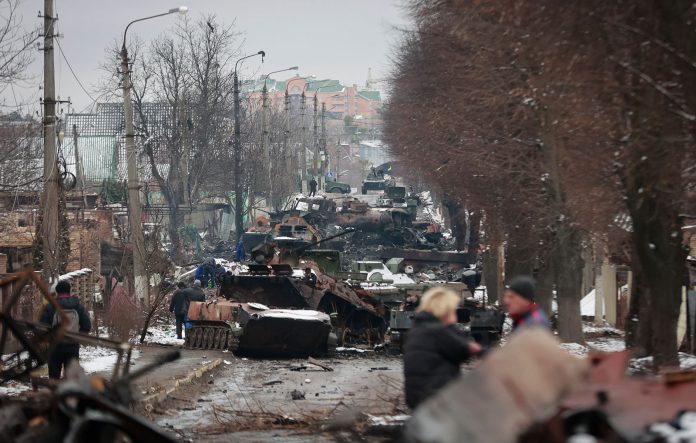
People look at the gutted remains of Russian military vehicles on a road in the town of Bucha, close to the capital Kyiv, Ukraine, Tuesday, March 1, 2022. (AP Photo/Serhii Nuzhnenko) The remains of Russian military vehicles line a road in Bucha, Ukraine, on March 1. (Serhii Nuzhnenko/AP)

The Etellaat newspaper said in an editorial that as an independent, democratic, and prosperous European country adjacent to Russia, Ukraine could have been seen as a threat to Moscow because it could set a bad example for other ex-republics of the former Soviet Union, as well as for the Russian people.

The editorial said Russian President Vladimir Putin also believed that the divisions between European and North American governments had left the Western nations vulnerable.

According to this analysis, for this reason, Putin took the opportunity to resort to use force to prevent the Ukrainian government from fulfilling its application for NATO membership.

The newspaper also said the history of war between Russia and Ukraine actually dates back to 2013-2014 when widespread protests by the Ukrainian people, demanding closer ties with Europe, ousted then-president Viktor Yanukovych.

Following Yanukovich’s overthrow, the Etellaat said, Putin arrived at the conclusion that the annexation of Crimea would cause the southern and eastern Ukrainian states to secede from Kyiv and join the Russian Federation. But his predictions did not come true.

The editorial then touched on the role of the United States and the European Union, saying they dragged Russia into a quagmire.

The Etellaat maintained Putin thought that without any consequences he could violate international law but even if the resistance of Ukrainians is broken, the Russian leader will have to pay dearly for the continuation of Russia’s presence in Ukraine.

The influential Keyhan newspaper also suggested that Russia drew inspiration from Iran as it summoned the courage to say “no” to NATO and stand up against the US.

The newspaper also criticized those who are after extracting revenge on Iran instead of inviting Russia to exercise restraint.

Iran’s Leader Ayatollah Seyyed Ali Khamenei on Tuesday said the Islamic Republic of Iran supports cessation of hostilities in Ukraine. Ayatollah Khamenei however noted that the root-cause of the crisis in Ukraine is the US policies and those of Western countries.

The leader said the West’s support for puppet regimes is a mirage and all puppet regimes must know this.

Things came to a head between Ukraine and Russia after Kiev pushed for membership in NATO. Russia says it does not accept NATO’s eastward expansion. It also says accession of the ex-Soviet republics to the Western military alliance is meant to encircle Russia.
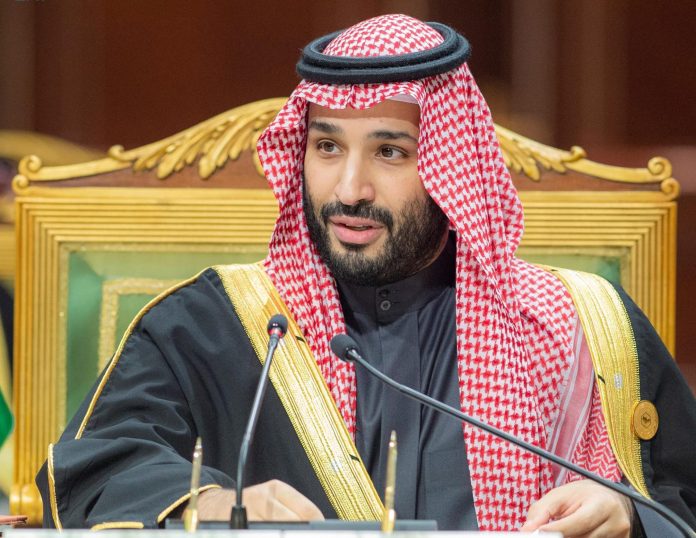
MbS says Saudi Arabia hopes to reach agreement with Iran

MbS

He expressed hope that the talks would enable the two countries to reach “a good situation and mark a bright future” for both countries, the Al Ekhbariya TV station reported.

“Iran is a neighbor forever, we cannot get rid of them and they cannot get rid of us,” he added, according to state TV.

Iranian Foreign Minister Hossein Amir Abdolahian has recently said Tehran is ready to continue talks with Saudi Arabira, “however this depends above all on Riyadh’s will”.

Last month, Iranian President Ebrahim Raisi said Iran was ready for more talks with Saudi Arabia if Riyadh is willing to hold the talks in an atmosphere of mutual understanding and respect.

“Iran is ready to continue these negotiations until reaching an outcome, provided that the Saudis are willing to continue the negotiations in an atmosphere of mutual understanding and respect,” Raisi added.

Saudi Arabia cut diplomatic ties with Iran in early 2016, after Iranian protesters, angered by the kingdom’s execution of top Shia cleric Sheikh Nimr Baqir al-Nimr, attacked Riyadh’s missions in the country.

Riyadh has since stepped up its belligerent foreign policy toward the Islamic Republic, but the kingdom appears to be ready to change course.

Riyadh and Tehran have announced they hope the talks can ease tensions while playing down expectations of a significant diplomatic breakthrough.

The talks have led to “serious progress” regarding Persian Gulf security, Tehran’s Foreign Ministry Spokesperson Saeed Khatibzadeh stated in September.

In a sign of a thaw in relations, Iran announced last month that three Iranian diplomats arrived in Saudi Arabia to take up posts at the headquarters of the Organisation of Islamic Cooperation (OIC) in Jeddah.

Bin Salman has also said he does not care whether U.S. President Joe Biden misunderstood things about him and stated the U.S. leader should be thinking about America’s interests, in an interview to The Atlantic published Thursday.

The de facto ruler of the world’s top oil exporter, known as MbS, also warned the United States not to interfere in the internal affairs of the absolute monarchy.

“Simply, I do not care,” he continued.

It is up to Biden “to think about the interests of America”, he said when asked whether Biden misunderstood things about him.

“We don’t have the right to lecture you in America,” he stated, adding, “The same goes the other way.”

While the crown prince enjoyed close relations with former President Donald Trump, Biden has taken a tougher stance on the kingdom’s human rights record and the Yemen war in which a Saudi-led coalition is engaged since early 2015.

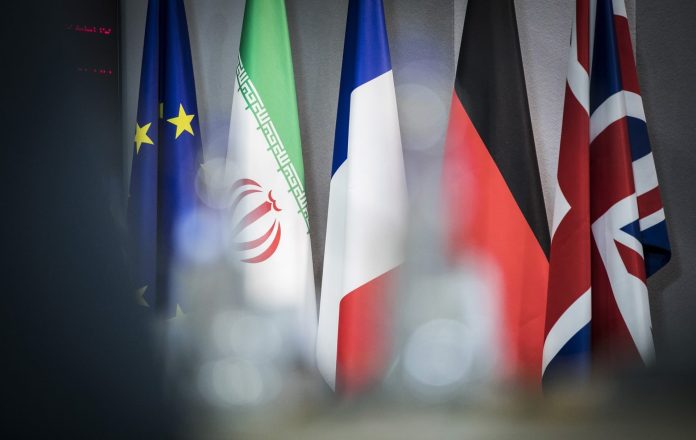
Russia says Vienna nuclear talks “almost over”

“Yesterday marked 11 months since the Vienna Talks started. A long and gruelling marathon. Now it is almost over,” Mikhail Ulyanov wrote on Twitter on Thursday.

On Wednesday, Ulyanov stated the talks are reaching the finish line and Iran and the P4+1 group of countries could reach a deal any moment. He added it’s highly unlikely the negotiations, over the revival of the Iran nuclear deal, will fail.

Tehran calls for the removal of all sanctions in a verifiable manner and giving necessary guarantees that the US will not again withdraw from the deal.

Iranian Foreign Minister Hossein Amir Abdolahian said during a phone conversation with his Chinese counterpart, Wang Yi, on Wednesday, Tehran has so far put forth many initiatives to resolve the remaining issues and now reaching an agreement requires a political decision and a realistic view by the Western parties.

The Chinese FM stated his country understands Iran’s concerns over the unresolved issues in the Vienna talks, adding Beijing supports Iran in this regard.

Iranian minister calls for strengthening of economic ties with Armenia

Seyyed Reza Fatemi said on Thursday it is our duty to strengthen economic relations. Fatemi was speaking at a meeting with Armenia’s Economic Minister Vahan Karoubian in Yerevan.

“We have capacities that can complement each other, but now financial transfers are one of the main obstacles to the growth of economic relations, although we use methods such as set-off that have been very effective,” the Iranian minister said.

He added that Iran and Armenia can pursue exchanges at two levels, with the first being the exchange of goods, and the second being investment in the two countries.

Fatemi later outlined the outcome of his visit to Armenia. He said developing relations with neighbors is one of the current Iranian administration’s priorities, which has been pursued in recent months with trips to Oman, Qatar, Syria, the UAE, and now Armenia.

The minister of industry, mines and trade added that Iran and Armenia complement each other, adding, “We can help this country in many technologies and industries and get help from Armenia in many other fields.”

Regarding the deepening of relations, he said Iranian companies operating in areas such as food and home appliances should make inroads in foreign countries including Armenia where they can invest and establish a base for production and then exports to other countries. Fatemi added that Armenian companies can also operate in Iran in the same way.

Iran’s pepper exports will resume on March 5

Jalali said this happened after pursuit of the matter by the Iranian Embassy in Moscow and the Foreign Minister.

According to the Iranian ambassador to Moscow, on Thursday, the Russian Consumer Protection Organization announced the import of pepper from Iran will be free from Saturday, March 5th.

He said that in the past few months, Iranian pepper farmers have suffered losses because of this, and expressed hope that with the opening of this market, part of their losses will be compensated.

Nationwide annual charity campaign begins in Iran ahead of Nowruz

Iranian people will send gifts and financial aid to the needy during the campaign which will run through March 20.

Every year, the Imam Khomeini Relief Foundation will gather people’s donations and presents from across the country and will send them to the less privileged.

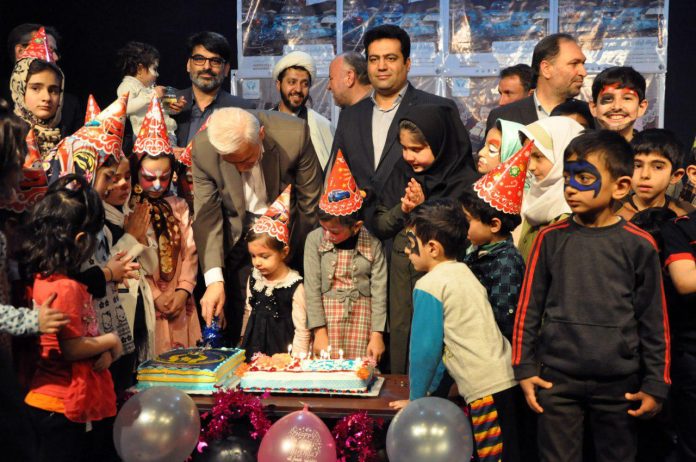
The charity campaign comes before the arrival of spring and has become a symbol of sharing joy as people prepare to mark the new year.

Covid-19 fatalities in Iran going down

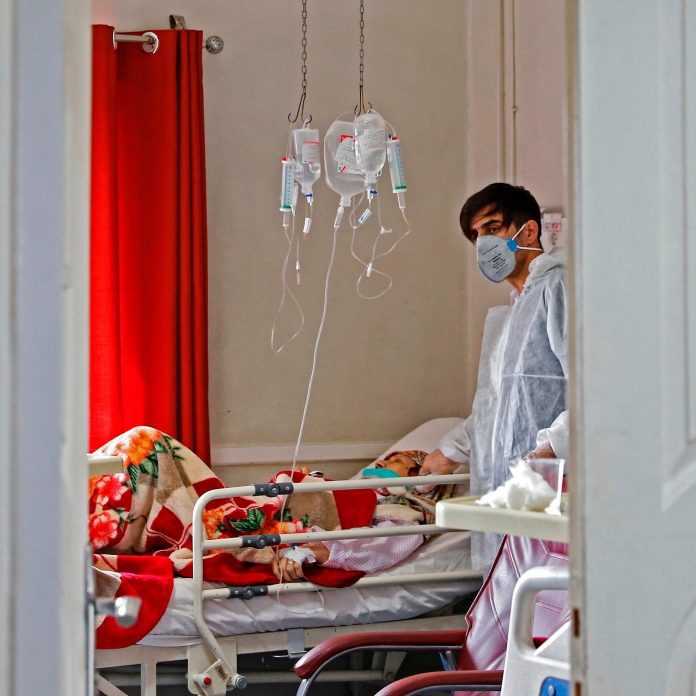
On Thursday, Iran’s Health Ministry reported 172 new fatalities and more than 6,770 new infection cases over the past 24 hours. The county had registered 203 coronavirus deaths on Wednesday.

A highly transmissible strain of the coronavirus known as Omicron pushed up the number of fatalities and infections in recent weeks despite Iran having administered over 142 million doses of vaccine with more than 55,580,000 people fully vaccinated.

More than 23,450,000 people have received their booster shots, with authorities still urging people to get their third jabs as soon as possible.

Iran says ready to quick supply of crude in global markets

Iran Oil

Owji was referring to the obstacles to Iran’s oil exports created by the US sanctions.
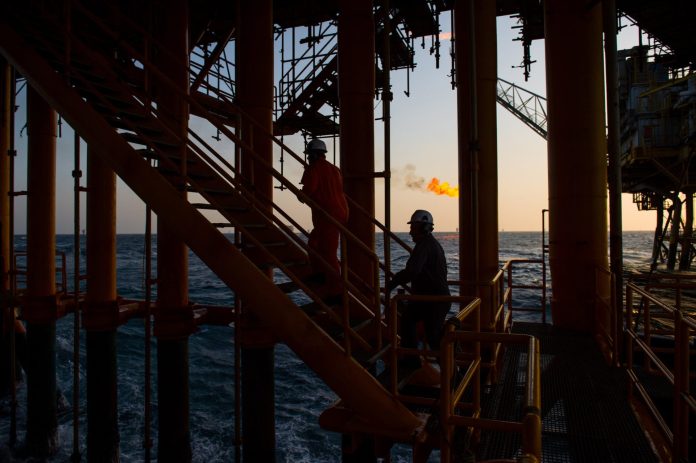
The minister said Iran is one of the largest holders of oil and natural gas reserves in the world and has been planning for rapid supply of oil to clients.

Owji also talked about the recent ministerial meeting of the Organization of Petroleum Exporting Countries and non-member major oil producers, known as OPEC Plus.

He said OPEC Plus is not concerned about short-term supply and demand in the oil market.

The existing concerns, he stressed, are directed toward low supply capacity in the mid-term due to delay in investments in the up-stream industries, which should be given special attention.

The official said the body agreed in its 26th meeting to stick to its increased daily output by 400 barrels of oil for April, though there was also consensus on the need for inspection of the market to ensure its stability and protection of achievements of the meeting.

He said markets are thriving thanks to increase demand by major consumers as the coronavirus pandemic subsides. But he noted that security tensions in certain areas of the world have resulted in the current fluctuations in oil prices.

Crude prices hit 117 dollars a barrel this week amid the conflict in Ukraine.

Owji, however, said the high prices are mainly due to political decision that have resulted in sanctions on major producers, on the one hand, and wars in some areas of the world, on the other.

Saudi-led coalition seizes another Yemeni fuel ship

Yemen Oil Tanker

The company’s spokesman Asam al-Motavakkel said the seizure of the shipment of fuel comes amid severe fuel shortage in Yemen due to the seven-year Saudi-led blockade on the country.

He said up to 3-kilometers lines are now seen outside fuel stations in different parts of Yemen.

The official said the oil company’s proposed initiative for tackling the fuel crisis remains on the table, provided that tankers are allowed to enter Hudaydah.

He said the Saudi-led coalition has imposed certain measures on all shipments of fuel to Yemen, including the requirement to buy fuel exclusively from the UAE and that consignments should be inspected by a French company and sealed before being allowed to enter Yemen.

Motavakkel, however, said even this has not prevented “piracy” by the Saudi-led coalition, which seizes shipments of oil, that have clearance from the United Nations, and transfers them to Jizan port city in Saudi Arabia.

Saudi Arabia and its allied have been pushing a deadly campaign of bombing and ground attacks on Yemen since March 2015, killing tens of thousands of Yemenis.

The coalition has also imposed an all-out blockade on Yemen, barring its access even to basic equipment such as drugs and foodstuff, along with fuel.

This has led to a surge in the deaths of children and mothers and has filled hospital wards, which are struggling to survive amid lack of fuel-generated power.

Iran official: Trump’s ‘maximum pressure’ policy a failure

In a tweet, Secretary of the Supreme National Security Council Ali Shamkhani said the current US administration has confessed that Trump’s policy has been a nonstarter.

“Strategy of active resistance defeated Trump’s policy of maximum pressure confessing by current US administration,” he tweeted

The top official underlined if the ongoing talks underway in Vienna do not result in a good deal, it will be a failure for the present US government as it has not seized the diplomatic chance given to them.

“If the ViennaTalks do not lead to a good deal, current US administration will feel defeated in near future due to lack of timely use of diplomatic opportunities,” he noted.

This comes as the Iranian negotiating team in Vienna is adhering to its stance that no agreement will be achieved unless all of its proposed conditions are met.

Under a possible agreement, all sanctions that run counter to the 2015 deal between Iran and world powers must be removed.

This process will take months for Iran to verify. And before Iran completes the verification process, the U-S will not be able to rejoin the deal.