Friday, December 26, 2025
Home Blog Page 2037

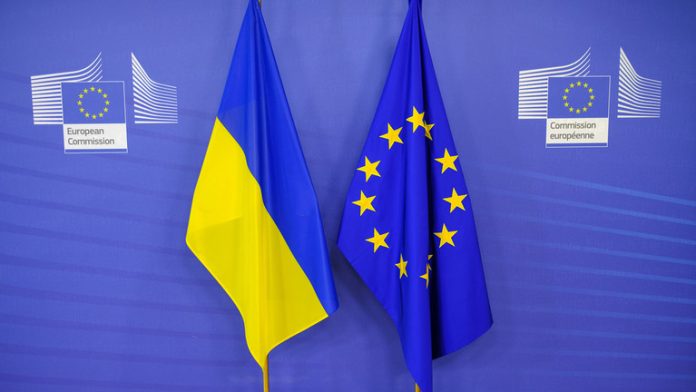
EU imposes sanctions against Russian individuals and entities

All members of Russia’s Duma, parliament’s lower house, will be hit with EU sanctions, which typically involve travel bans and asset freezes.

“This package of sanctions that has been approved by unanimity by the member states will hurt Russia, and it will hurt a lot,” EU foreign policy chief Josep Borrell told a news conference alongside France’s Foreign Minister Jean-Yves Le Drian at a meeting in Paris.

“We will raise the level of sanctions in proportion to Russian behavior,” Borrell noted.

He added that the sanctions package would also affect the Russian finances, limiting Moscow’s ability to access EU’s financial markets, but did not provide any further details on that.

The official has warned that the sanctions may even get worse depending on Russia’s actions in relation to Ukraine.

British Prime Minister Boris Johnson and French President Emmanuel Macron agreed to continue to work together to target those who supported Russian President Vladimir Putin’s “aggressive approach”, Johnson’s office has announced.

“The leaders agreed they needed to continue to work in lockstep to target Russian individuals and entities bankrolling President Putin’s aggressive approach,” a spokesperson for Johnson stated after the British and French leaders spoke by phone.

“Russia’s actions don’t just threaten Ukraine’s sovereignty, but are a blatant attack on freedom and democracy, the leaders agreed,” the spokesperson added.

NATO Secretary General Jens Stoltenberg on Tuesday said Russia has now moved “from covert attempts to destabilize Ukraine to overt military action.”

“Moscow has now moved from covert attempts to destabilize Ukraine to overt military action. This is a serious escalation by Russia, and a flagrant violation of international law,” Stoltenberg stated at a news conference in Brussels following a meeting of the NATO-Ukraine Commission.

He called the Russia-Ukraine crisis “the most dangerous moment in European security for a generation.”

“NATO is resolute and united in its determination to protect and defend all allies. In the last weeks, allies have deployed 1000s more troops to eastern part of the alliance and placed more on standby. We have over 100 jets at high alert and there are more than 120 allies’ ships at the sea from the high north to the Mediterranean,” he added.

“We will continue to do whatever is necessary to shield the alliance from aggression,” he continued.

The United States has said Russia’s deployment of troops into two Moscow-backed, self-proclaimed republics in eastern Ukraine amounts to the “beginning of an invasion”.

Deputy NSA Jonathan Finer told CNN on Tuesday that Washington’s response would be “swift and severe”, with the White House understood to be preparing sanctions.

Earlier, the United Kingdom slapped sanctions on Russian banks and high net worth individuals while Germany, another of Kyiv’s Western allies, halted the approval process for the Nord Stream 2 gas pipeline project.

Moscow has brushed aside the threat of retaliatory measures from the West, with Foreign Minister Sergey Lavrov saying Russia was accustomed to sanctions.
Raisi says Iran ready to share oil and gas experience with Trinidad and Tobago

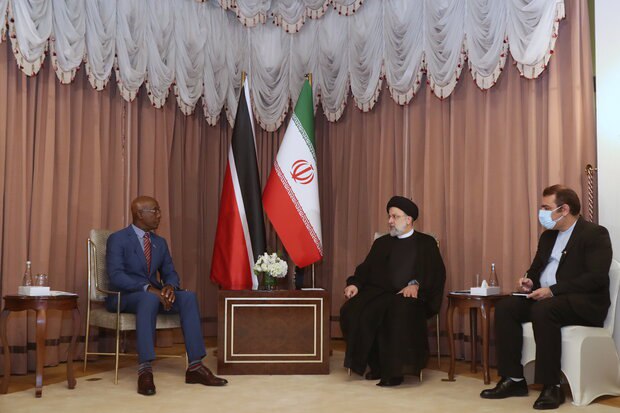
Those are the words of Iranian President Ebrahim Raisi during a meeting with Trinidad and Tobago’s Prime Minister Keith Rowley in Qatar.

Raisi also praised the spirit of seeking independence and freedom among nations in Latin America, saying Iran has always supported demands for freedom and independence by all world nations against the oppression of arrogant powers.

While expressing interest in expanding relations with Trinidad and Tobago, the president said at a time when the enemy wanted to shut down Iran’s oil industry by imposing sanctions, the Islamic Republic managed to achieve a high level of technical know-how, which developed its oil and gas industry.

Raisi further referred to the remarks by the prime minister of Trinidad and Tobago about the impact of US sanctions on his country’s interactions with other Latin American countries.

He said this is further proof of US oppression and arrogance.

Keith Rowley also noted that his country is rich in hydrocarbon resources and said Trinidad and Tobago, like Venezuela and Cuba, seeks to expand its relations with Iran.

Rowley said Trinidad and Tobago has tried to diversify economic partners and is interested in benefiting from Iran’s experience and capabilities in the field of oil and gas.


Raisi: Iran ready to share technical knowledge with Africa

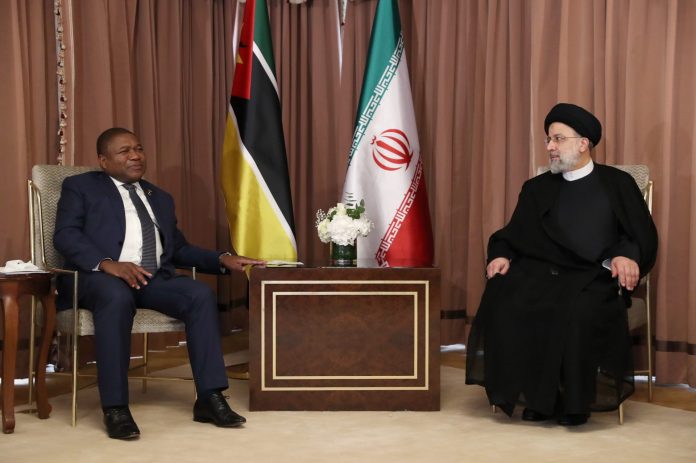
“The Islamic Republic has always believed that African countries have hard-working people and substantial reserves and talents for growth and development and in line with this vision, Iran is ready to expand trade and economic cooperation with African countries, especially Mozambique, and to transfer experience and technical knowledge to these countries,” Raisi said in a meeting with Mozambican President Filipe Nyusi on the sidelines of the meeting of the Gas Exporting Countries Forum in Doha.

Raisi also said from Iran’s point of view African countries are resource rich lands full of talents that have always been plundered by Western countries over the past centuries.

The president said that the Westerners and the Americans were only pursuing their own interests wherever they went and did not take any steps to develop those countries, adding that the rise of insecurity and the activities of terrorist groups in some African countries in recent years are also rooted in Western and American interference.

Raisi also said he will task Iran’s Foreign Ministry to pave the way to set up a joint economic commission with Mozambique to speed up the expansion of bilateral ties.

The Mozambican president expressed his country’s interest in expanding relations with Iran.

“We have a great deal of natural resources. And by utilizing the technical capabilities of Iranian experts we can exploit these resources for the benefit of the Mozambican people and to develop interactions between the two countries,” Nyusi stated.

The Mozambican President also stated that one of the serious problems in the development of his country is the spread of insecurity and terrorism, which he said is mainly directed and controlled from outside the borders of Mozambique.

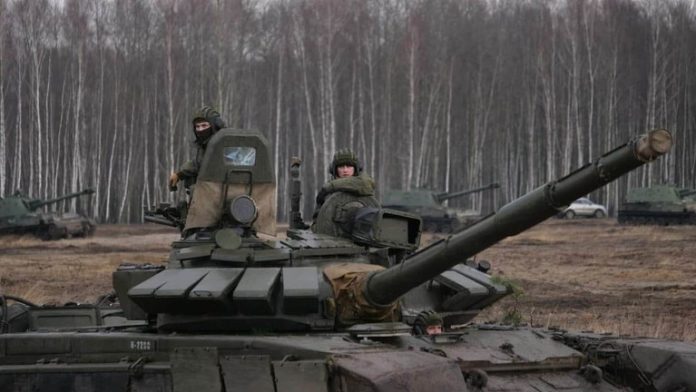
Russia’s Duma grants Putin right to use military abroad

The authorization grants Putin the right to use Russian forces abroad “in accordance with the principles and norms of international law,” the Senate’s resolution, which was released to the media, shows.

The document does not impose any specific limits on the use of the military, with the number of troops, as well as “the areas of their activity, their goals, and length of stay outside Russia” to be decided by the president “in accordance with the Constitution.”

The decision was taken after Russia recognized the breakaway Donetsk (DPR) and Lugansk (LPR) People’s Republics in eastern Ukraine.

Ahead of the vote, representatives of the committees noted they supported the authorization, suggesting that the troops could be sent to Donbass as peacekeepers.

Valentina Matvienko, the Speaker of the Russian Federation Council, stated the troops would “create normal conditions for people’s lives and ensure security” there.

Immediately after announcing the recognition of the DPR and the LPR on Monday, Putin signed bilateral friendship and cooperation treaties with each republic.

The treaties were ratified on Tuesday by both chambers of the Russian parliament, as well as by the legislatures in the DPR and the LPR.

Putin explained his decision in a televised address later in the day, pinning the blame on Kiev and claiming the Ukrainian authorities were seeking to end the years-long conflict by force rather than through negotiations.

“They are not interested in peaceful solutions – they want to start a Blitzkreig,” Putin said, adding, “Every day they are amassing troops in the Donbass.”

Putin’s decision was widely condemned by Western leaders, with NATO Secretary General Jens Stoltenberg writing on Monday that it “undermines Ukraine’s sovereignty and territorial integrity” and could be an attempt to “stage a pretext to invade Ukraine once again.”

The EU’s high representative for foreign affairs and security policy, Josep Borrell, has warned “Russian troops are on Ukrainian soil.”

Ukrainian President Volodymyr Zelensky also announced on Tuesday that he was considering shuttering diplomatic relations with Moscow as a result of the decision. However, despite fears that Russia’s actions could lead to a full-blown attack on his country, he stated, “we believe there will be no war against Ukraine, and there will be no broad escalation on the part of the Russian Federation.”

On Tuesday, German media reported the EU is planning to bring sanctions against the more than 350 Russian MPs who voted to recognize the two breakaway Donbass republics.

Der Spiegel cited anonymous European officials who said that they were preparing measures that would hit every single lawmaker who voted to recognize the territories’ independence. The sanctions would also go after banks located in Donetsk and Lugansk People’s Republics (DPR and LPR) and make it so that free trade agreements between Kiev and Brussels will not operate in the DPR and LPR, which the EU still considers Ukrainian territory.

The sources added that the sanctions project could impose restrictions on the trade of Russian government bonds, and that the EU Council of Ministers would make a decision in the near future.

Russian Foreign Minister Sergei Lavrov brushed off the threat of sanctions on Tuesday, saying the West would impose them regardless of events and describing the response to Russia’s recognition of two breakaway Ukrainian regions as predictable.

Russian Foreign Ministry spokeswoma Maria Zakharova has also stated suggestions that there would have been no sanctions and condemnation from the West against Moscow if it had not recognized the sovereignty of the Donetsk and Lugansk People’s Republics are an illusion.

Putin has condemned Ukrainian authorities for effectively killing the Minsk agreements and stated that they had stopped existing long before Russia decided to recognise the Donetsk and Lugansk People’s Republics.

Putin went on to add that his decision to recognise the Donbass republics was dictated by Kiev’s open admission that it was not going to honour the Minsk agreements. He noted that there was nothing to wait for except the “genocide” of the people in Donbass.

“Yes, of course, now the Minsk agreements do not exist. So why should we implement them if we have recognised the independence of [the DPR and LPR],” Putin continued.

Foreign investors seeking cooperation with Iran’s knowledge-based firms

Knowledge-Based Companies

“Today, these 100 investors are negotiating with Iranian knowledge-based companies in the form of an exhibition and we hope that these negotiations will help the internationalization and development of our companies’ exports and foreign markets,” Siavash Maleki, the deputy head of Iran’s Innovation and Prosperity Fund said on the sidelines of the two-day event in Tehran.

“Iranian companies are ready to export goods and services, to grant representation to buyers, and to jointly invest and produce in other countries,” he added.

The 4th Technology Investment Meeting of the D-8 kicked off in Tehran Pardis Technology Park on Monday.

D-8 comprises major Muslim developing countries Bangladesh, Egypt, Indonesia, Iran, Malaysia, Nigeria, Pakistan, and Turkey.

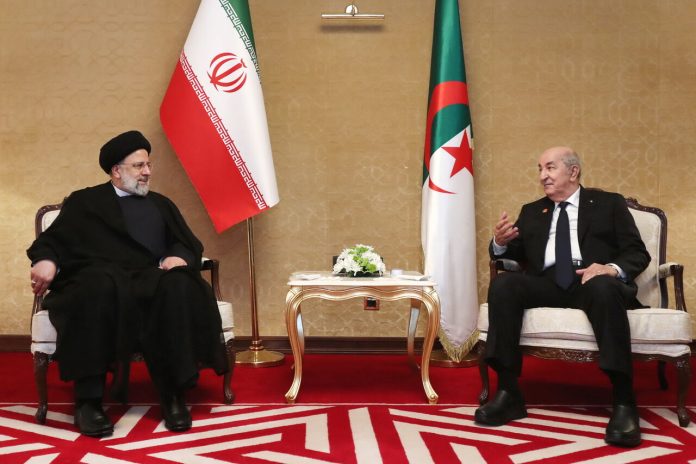
Iranian president: US root-cause of insecurity in West Asia

Raeisi said this in a meeting with Algerian President Abdelmadjid Tebboune on the sidelines of the sixth summit of the Gas Exporting Countries Forum, GECF, in Qatar. Raisi also hailed Algeria’s support for the Palestinian cause against the Israeli regime’s occupation.

He said Algeria’s opposition to the continuation of the Zionist regime’s membership in the African Union as a supervisory member was a valuable move.

Raisi also praised the Algerian people’s resistance against excessive demands of arrogant powers.
The Algerian president, for his part, said his country is willing to expand ties with Iran in various fields and called for making use of all possibilities as soon as possible to increase cooperation.

Tebboune reaffirmed Algeria’s stance to support the Palestinian people and to oppose Israel’s observer status at the African Union.

He said Algiers will strongly continue down this path in spite of the heavy price it has paid for its endeavors to seek justice.

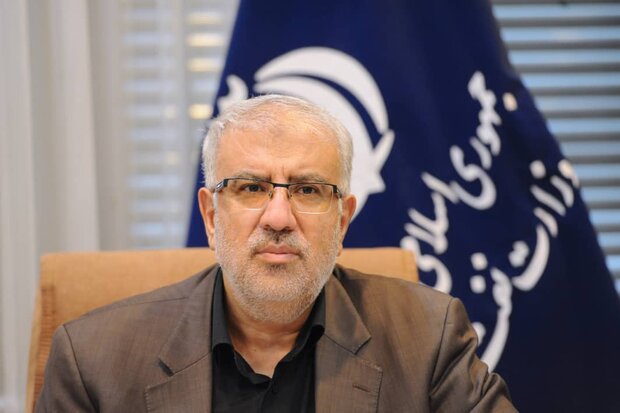
Iran, Venezuela ink MOU for refinery overhaul

Iranian Oil Monister Javad Owji said on the sidelines of the meeting of the Gas Exporting Countries Forum in Doha on Tuesday that Iran has signed some agreements with a number of GECF member states including Venezuela.

He also said that Iran has agreed to help develop Venezuela’s gas and oil fields.

Venezuela is one of the largest exporters of crude oil and has the world’s largest proven oil reserves largely untapped. It also has about 3% of the world’s total natural gas reserves.

The Latin American country has long been subjected to U.S. sanctions making it difficult to attract investment. Venezuela say the United States is trying to control its resources.

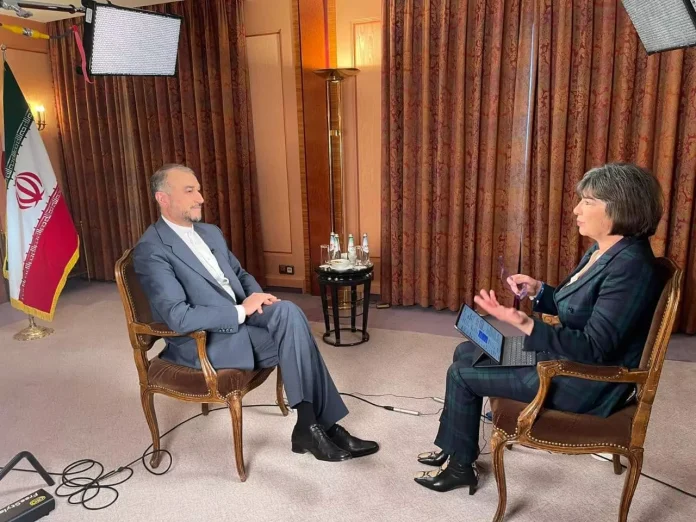
Iranian FM: We have never been this close to reaching a deal to revive JCPOA

In an exclusive interview with CNN’s Chritian Amanpour in Munich earlier this week,
Amir Abdollahian said Iran is optimistic about reaching an agreement in Vienna because the administration of President Ebrahim Raisi has a strong will to achieve a good deal.

Amir Abdollahain said in order to get close to a good agreement, the Iranian team showed good initiatives and flexibility, but now it’s the Western side including the US and the European troika that should show flexibility and initiatives.

The top diplomat added that if the US and the three European countries show flexibility and initiatives, then the negotiations will come to a conclusion in a matter of a few hours or days. Amir Abdollahian added that on the one hand, Iran is receiving messages from US president Joe Biden that he has good will and on the other hand, the US envoy to the Vienna talks Robert Malley refuses to show any flexibility at the negotiating table.

He noted that the US is responsible for the failure of the JCPOA in the first place and now it should accept the responsibility for this and show the required flexibility for the negotiations to come to a definite conclusion.

Iran’s red lines in Vienna talks

Elsewhere in the interview, Amir Abdollahain said there are some remaining issues that constitute Iran’s red lines.

He criticized the Western parties for failing to give a practical and reliable initiative regarding the issue of guarantees, adding Iran insists that the nuclear issue and the removal of sanctions should be resolved in the form of a package. Amir Abdollahian also said Iran will not at the same time accept a strict supervision system by the IAEA but while some of its issues remain on the agenda of the agency’s Board of Governors. The top diplomat noted that in 2015 also, the issue of safeguards was resolved in a political agreement and that the two sides can repeat that model.

He warned that if the US and the Western sides do not act realistically at this sensitive moment, they will be definitely responsible for the possible failure of the talks.

“Tall wall of mistrust between Iran and the US”

In other remarks, the Iranian foreign minister cited the wrong policies of the US vis-à-vis Iran as the reason for Tehran’s refusal to talk directly with the US.

He further said this policy has created a “a tall wall of mistrust” between Iran and the US.

Amir Abdollahian said he has said in response to requests for direct negotiations that the Americans should change their behavior.

“Mr. Biden cannot talk of good will on the one hand and on the other hand, in the past few months, he has imposed sanctions against real and legal persons three times”, Amir Abdollahian told Amanpour.

He noted that this means Biden is following in the footsteps of Trump and that Iran cannot understand this paradoxical behavior.

The top diplomat noted that if the US president has good will, he should show a practical initiative as a gesture of good will, for example, by unfreezing some of the Iranian assets.

“US foiled prisoner swap”

Asked about the release of Western nationals jailed in Iran on espionage charges, Amir Abdollahian said for Iran, the issue of swapping prisoners is completely a humanitarian one.

He said last year, Iran and the Western parties came close to exchanging prisoners including Nazanin Ratclif regardless of the Vienna talks but in the last minute, the US announced that all this should be included in a complete package and the prisoner exchange did not take place. Maybe the US wants to cover the issue of prisoners as part of the Vienna talks.

He reiterated that Iran believes this is a humanitarian issue and can be considered as an urgent measure outside the Vienna negotiations.

UK slaps sanctions against Russian banks, individuals over Ukraine

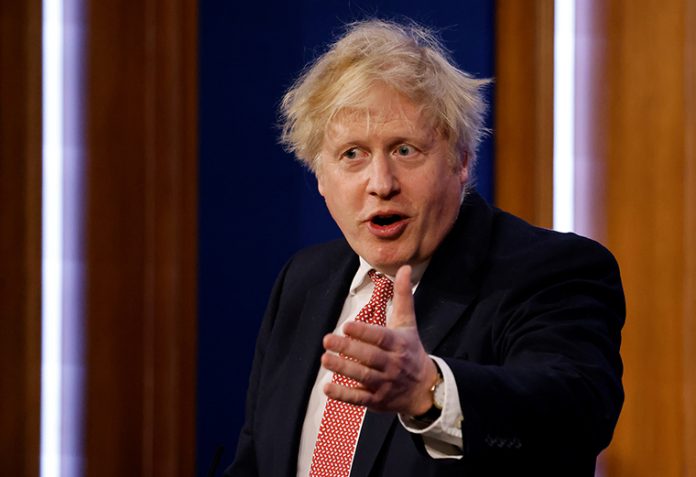
LONDON, ENGLAND - FEBRUARY 21: Prime Minister, Boris Johnson addresses the nation during a press conference on plan for "Living With Covid'" at Downing Street Briefing Room on February 21, 2022 in London, England. (Photo by Tolga Akmen - WPA Pool/Getty Images)

“This is the first tranche, the first barrage of what we are prepared to do,” Prime Minister Boris Johnson told parliament.

“Any assets they hold in the UK will be frozen and the individuals concerned will be banned from travelling here,” Johnson said of the individuals being sanctioned.

He took the steps after the Russian president said Moscow was going to recognise the independence of two breakaway areas in eastern Ukraine.

The sanctioned banks are Rossiya, IS Bank, General Bank, Promsvyazbank and the Black Sea Bank, Johnson added. The three individuals are Gennady Timchenko, Igor Rotenberg and Boris Rotenberg.

He did not impose the complete package of sanctions the UK has prepared because Russia has not yet invaded new sovereign Ukrainian territory, but instead recognised self-proclaimed republics that have been under Russian-backed control.

The EU is expected to announce its own tough package on Tuesday afternoon.

The larger package, being coordinated with Washington and the EU, will be implemented if a full-scale invasion takes place.

No major oligarchs based in the UK have been affected by Monday’s announcements, and Labour urged Johnson to go further, saying a threshold had been breached, demanding a full package now so Putin does not believe the benefits outweigh the costs.

Johnson accused Putin of calmly and deliberately plotting the destruction of a nation of 44 million people, deploying absurd and mystical reasons.

He stated, “In a single inflammatory speech, he denied that Ukraine had any tradition of genuine statehood, claimed that it posed a direct threat to the security of Russia and hurled numerous other false accusations and aspersions.”

He noted Russian tanks and armed personnel carriers have “since been spotted” in the breakaway regions, adding, “The house should be in no doubt that the deployment of these forces in sovereign Ukrainian territory amounts to a renewed invasion of that country.”

“And by denying Ukraine’s legitimacy as a state and presenting its very existence as a mortal threat to Russia, Putin is establishing the pretext for a full-scale offensive,” he continued.

Earlier Johnson announced if an invasion went ahead Russian companies would be prevented from raising money on the London capital markets in Sterling or dollars and he also promised to unmask the Russian beneficial owners hiding behind a facade of shell companies and properties.

In total, 31 Russian companies are listed on the LSE, with a combined market value of £468bn, according to the data company S&P Global.

London-listed Russian oil, gas and mining companies paid their government £39bn in taxes in 2020. Revenue from such businesses is hugely important to the Putin regime: Russia spent £41.7bn on its military in 2019, 11.4% of government spending, according to the World Bank’s latest figures.

Iran FM: President Raisi’s visit to Qatar to give momentum to bilateral ties

Amir Abdollahian, who is in Qatar along with President Ebrahim Raisi, made the comment on Tuesday afternoon in a meeting with Mohammad bin Abdul Rahman Al Thani, Qatar’s Deputy Prime Minister and Minister of Foreign Affairs.

The two top diplomats were discussing the latest developments in relations between the two countries and other issues.

The Iranian foreign minister thanked the Qatari government for its good hosting of President Ebrahim Raisi and his entourage, and also for successfully holding the summit of the Gas Exporting Countries Forum.

Amir Abdollahian then pointed to the existing potentials for economic and trade cooperation between the two countries.

Mohammad bin Abdul Rahman Al Thani, for his turn, stressed the importance of exchanging views between President Raisi and the Qatari emir and stressed the need to implement the decisions of the high-ranking officials of the two countries.

The two foreign ministers also held talks over important developments in the Vienna talks, as well as regional issues, including Afghanistan and Yemen.