Friday, December 26, 2025
Home Blog Page 197

Iran wins Greco-Roman wrestling title at Serbia tournament with 8 medals

Wrestlers from several countries including Serbia, Bulgaria, Hungary, Kyrgyzstan, Sweden, Romania, Croatia, and Belarus took part in the event.

Iran topped the team standings following a string of impressive performances.

Mohammad Pouya Asadi won gold in the 55 kg category after defeating opponents from Serbia and Bulgaria with decisive scores.

Reza Gheytasi dominated the 63 kg division, securing the title with a 10-0 victory over Serbia’s Aleksić in the final.

In the 87 kg class, Mohammad Hossein Ostadmohammad Memar earned another gold, while teammate Yasin Yazdi claimed bronze.

In the 72 kg weight category, Iman Mohammadi reached the final but lost narrowly to a Belarusian wrestler, taking silver. Amir Mehdi Saeedi Nava (77 kg), Alireza Mohammadhosseini (82 kg), and Ayyub Hosseinvand (130 kg) each earned bronze medals.

The results ensured Iran’s team finish first overall, continuing the country’s strong record in Greco-Roman wrestling on the international stage.

Iran says foreign intervention in the Caucasus its red line

Esmail Baghaei

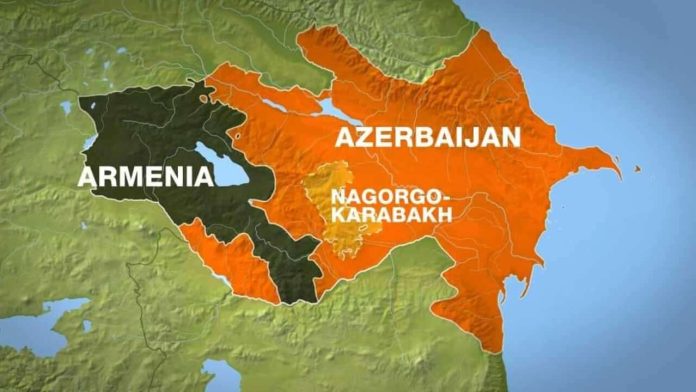
Esmail Baqaei said: “The Islamic Republic of Iran believes that the presence of foreign forces in the South Caucasus makes the situation more complex.”

The Foreign Ministry spokesman also referred to Article 12 of the recent peace agreement between Armenia and Azerbaijan, noting that under this article, no foreign military forces will be stationed along the Armenia–Azerbaijan border.

He added: “We are highly sensitive to this issue, and Armenia itself is aware of the consequences of allowing foreign forces into the region.”

He further stressed: “The matter of foreign intervention is Iran’s red line.”

Referring to the Islamic Republic’s sensitivity toward developments in the Caucasus, he added: “We are closely monitoring the developments with open eyes, and we neither oversimplify nor underestimate any issue.”

Baqaei stated that the South Caucasus holds political, economic, and geopolitical importance for Iran and the regional countries, particularly Russia.

He underlined the need to avoid misinterpretations and the spread of false information, noting that some interpretations are based on incorrect data and may be aimed at disrupting the Islamic Republic’s relations with the countries of the South Caucasus.

The Foreign Ministry spokesman added: “We enjoy good relations with the countries of the South Caucasus and believe that the stability and security of this region are of great importance to us.”

Iran’s Ettelaat daily criticizes internet filtering, warns of greater risks

Iran Mobile Internet

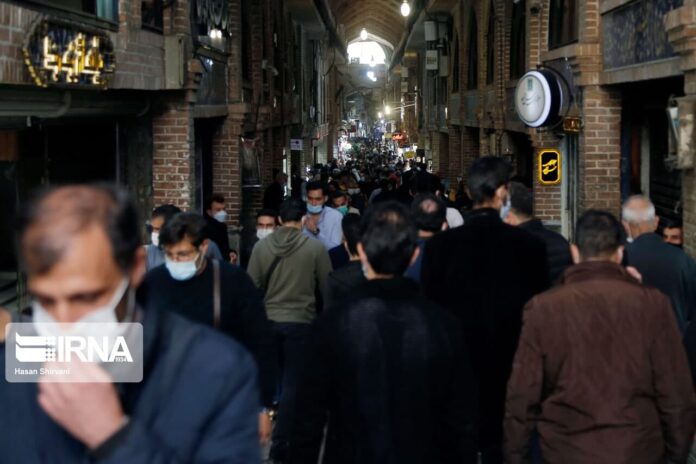
In an editorial on Sunday, the country’s oldest-running newspaper argued that blocking access to popular online platforms pushes users toward illegal tools such as VPNs and proxy servers, which often serve as gateways to unsafe corners of the internet.

The paper cautioned that such environments expose citizens, particularly young people, to fraudsters, traffickers, spies, cybercriminals, and other illicit actors.

“Instead of ensuring safety, filtering has opened the doors to fake news, online scams, and the ‘dark web,’ where criminal networks prey on the vulnerable,” the editorial said.
It described this as a “hell without end” fueled by censorship.

The newspaper stressed that freedom requires patience, investment, and education, but argued its long-term benefits are “fruitful and bright.”

It urged authorities to embrace professional training and allow citizens to experience an open digital space, which it said would strengthen Iran’s cyber capabilities rather than weaken them.

The editorial concluded that the internet is now an integral part of social and economic life worldwide, and that attempts to suppress it only harm innovation, business, and cultural progress.

Trump told Europeans that Putin wants all of Donbas in exchange for end of Ukraine war

Russia Ukraine War

Putin said in exchange, he would be willing to freeze the current front lines in the rest of Ukraine — in the regions of Kherson and Zaporizhzhia — and agree to a promise not to attack Ukraine or other European nations again.

But he didn’t back away from a demand to eliminate what Russia calls the “root causes” of the war in Ukraine — code for reducing the size of Kyiv’s military, abandoning its aspirations to join NATO and becoming a neutral state.

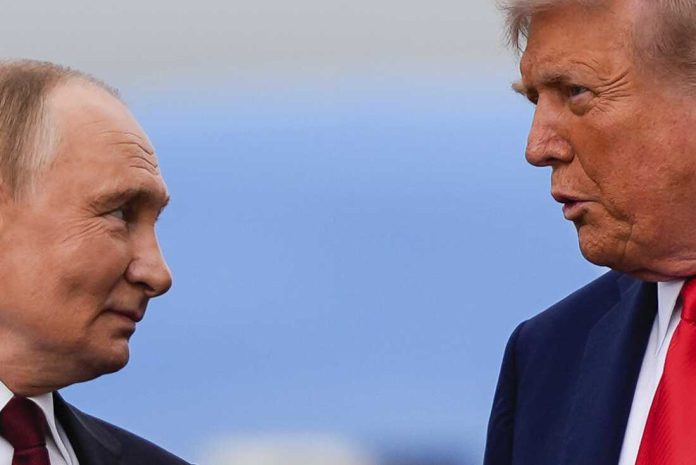
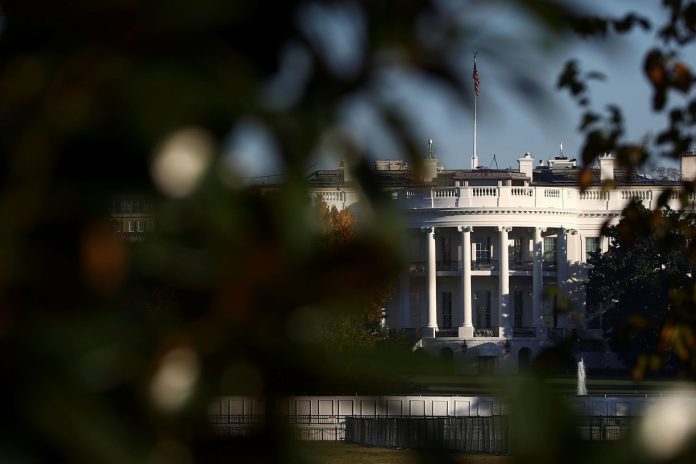
The details of Putin’s conditions emerged when Trump briefed European leaders on the talks as he was arriving back in Washington early this morning. Trump announced he believed an agreement could be reached quickly if Putin’s conditions were met, and that he would discuss the matter with Ukrainian President Volodymyr Zelensky at the White House on Monday, the officials noted.

European leaders also stated Trump voiced openness to providing US security guarantees for Ukraine once the war ends, though the specifics of what he’s willing to provide remained unclear.

Taken together, Trump’s recounting of the meeting provided little optimism among European officials, though leaders’ public responses to the summit were calibrated to avoid contradicting Trump.

Western European leaders have issued a statement backing Trump’s diplomatic push to end the Ukraine conflict – while also reaffirming their intention to further arm Kyiv and seek to bring it into NATO, the very issues Russia has cited as among the root causes of the conflict.

The leaders of France, Germany, Italy, the UK, Poland, Finland, as well as the presidents of the EU Council and European Commission, praised the peace efforts in a statement published on Saturday, but vowed to continue providing military aid to Ukraine.

“Our support to Ukraine will continue. We are determined to do more to keep Ukraine strong in order to achieve an end to the fighting,” they emphasized.

The statement dismisses any notion of a territorial compromise, stressing that it was “up to Ukraine to make decisions on its territory”.

The European leaders added that they were ready to provide Kyiv security guarantees via a so-called “coalition of the willing” – a France- and UK-led attempt to deploy a NATO “reassurance force” in Ukraine, an initiative that Moscow has staunchly opposed.

“No limitations should be placed on Ukraine’s armed forces or on its cooperation with third countries. Russia cannot have a veto against Ukraine’s pathway to EU and NATO,” the statement read.

Meeting with Trump ‘brings us closer’ to Ukraine resolution: Putin

The talks in Anchorage, which lasted nearly three hours, marked the first face-to-face meeting between Russian and American leaders since the escalation of the Ukraine conflict in February 2022.

Speaking on Saturday, Putin said that his “visit was timely and quite useful.”

“The conversation was very frank, substantive and, in my opinion, it brings us closer to the necessary solutions,” he added.

“We talked about practically all areas of our interaction – first of all, of course, we discussed a possible resolution of the Ukraine crisis on a fair basis,” Putin detailed.

The Russian delegation “had the opportunity to convey our position once again, calmly and in detail,” as well as to discuss the “genesis, the causes of [the Ukraine] crisis.”

“Precisely the elimination of these root causes should underlie the [conflict] resolution,” Putin emphasized, adding that Moscow shares the Donald Trump administration’s desire to put an end to the hostilities as soon as possible, and ideally “by peaceful means.”

In an interview to Fox News following the Alaska summit, President Trump similarly described his talks with the Russian leader as “warm,” and that the two of them “agreed on a lot.”

According to Trump, Washington and Moscow have come “pretty close to the end” of the Ukraine conflict, though “Ukraine has to agree” to any potential peace deal. The US president acknowledged that there remained “one or two pretty significant items” to work out, but expressed optimism that they would be resolved soon enough.

In the wake of his negotiations with Putin, Trump seems to have sided with Moscow in holding the view that the conflict should be ended through a permanent agreement rather than a mere ceasefire.

Ukraine and its European backers have for months insisted on a temporary cessation of hostilities as a precondition for peace talks.

While Russia never ruled out the idea completely, it has pointed to serious obstacles to the plan, arguing that it would allow Kiev to receive more Western weapons and recoup its battered units.

The Kremlin has insisted that Ukraine must commit to staying out of NATO, as well as recognize the new territorial reality on the ground. This includes the status of the regions of Crimea, Donetsk, Lugansk, Kherson, and Zaporozhye, all of which voted to become parts of Russia.

European leaders invited to White House for Trump-Zelensky meeting

Earlier, Zelensky said he will meet Trump in DC on Monday, after having a “long and substantive conversation” with the American leader and later with European leaders to debrief the Alaska summit.

“Ukraine reaffirms its readiness to work with maximum effort to achieve peace. President Trump informed about his meeting with the Russian leader and the main points of their discussion. It is important that America’s strength has an impact on the development of the situation,” Zelensky announced in a statement Saturday – his first since the meeting in Alaska which he was excluded from.

“On Monday, I will meet with President Trump in Washington, D.C., to discuss all of the details regarding ending the killing and the war. I am grateful for the invitation,” he added.

The leaders of France, Germany, Italy, the UK, Poland, Finland, as well as the presidents of the EU Council and European Commission, praised the peace efforts in a statement published on Saturday, but vowed to continue providing military aid to Kiev.

“Our support to Ukraine will continue. We are determined to do more to keep Ukraine strong in order to achieve an end to the fighting,” they said.

The statement rejects any notion of a territorial compromise, stressing that it was “up to Ukraine to make decisions on its territory.”

The European leaders added that they were ready to provide Kiev security guarantees via a so-called “coalition of the willing” – a France- and UK-led effort to deploy a NATO “reassurance force” in Ukraine, an initiative that Moscow has staunchly opposed.

“No limitations should be placed on Ukraine’s armed forces or on its cooperation with third countries. Russia cannot have a veto against Ukraine’s pathway to EU and NATO,” the statement read.

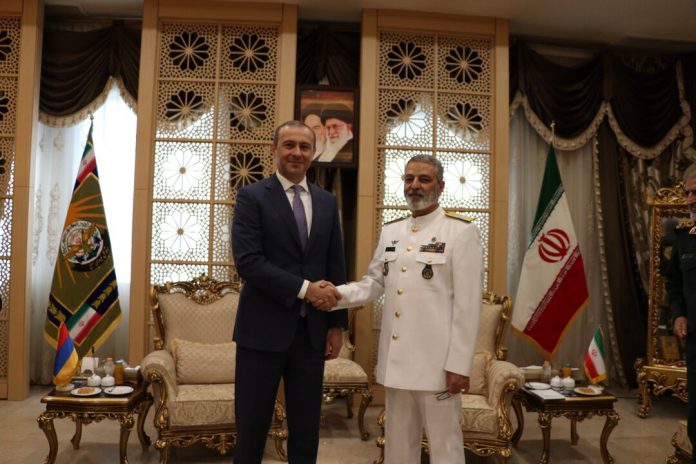
Iran’s FM expresses confidence in bright future for Iran-Armenia ties

Abbas Araghchi

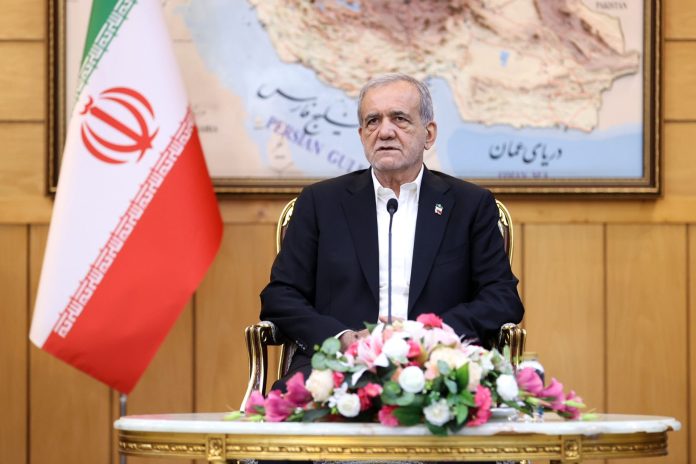
His remarks came in a statement ahead of President Masoud Pezeshkian’s upcoming visit to Yerevan.

Araghchi further spoke about the deep historical and cultural bonds between Iran and Armenia, noting that centuries of cultural exchange and shared traditions have strengthened bilateral ties.

Touching on economic ties, the foreign minister underlined that Tehran remains one of Yerevan’s key trade partners and that Iran views its border with Armenia as a “bridge” for energy, transport, and security cooperation.

Elsewhere, Araghchi reiterated Tehran’s commitment to peace and stability in the South Caucasus.

“The road ahead is clear,” he noted. “Iran and Armenia are ready to write a new chapter of friendship that will bring greater prosperity to both nations and the broader region.”

Russia’s refusal to declare ceasefire casts doubt on peace process: Ukraine

Russia Ukraine War
Red Cross volunteers help local residents to evacuate from the city of Kupiansk-Vuzlovyi in Kharkiv region, Ukraine.

The Trump-Putin summit in Alaska concluded without a peace deal and saw Trump abruptly abandon his previous demands for a ceasefire and threats of “severe consequences” if Russia refused. Trump is now championing a rapid peace deal as the best way forward and will discuss the details with Zelensky and European officials at the White House on Aug. 18.

Russia’s rejection of all ceasefire proposals “complicates the situation,” Zelensky said on Telegram on Sunday.

“If they do not have the will to implement a simple order to stop the attacks, it may take a great deal of effort to get Russia to implement something much more significant, namely peaceful coexistence with its neighbors for decades to come,” he wrote.

Zelensky added that he and his team were continuing to hold talks with Ukraine’s international partners throughout the day and weekend in preparation for the meeting with Trump on Monday.

“I am grateful for the invitation.”

“It is important that everyone agrees that a conversation at the leadership level is needed to clarify all the details and determine what steps are necessary and will work,” he stated.

Trump has said that following the meeting with Ukrainian and European leaders at the White House, the next step will be to host trilateral talks among himself, Zelensky, and Putin. Trump reportedly wants to hold the trilateral meeting as early as Aug. 22, according to Axios.

Putin has not publicly agreed to participate in a meeting with Zelensky.

Ukrainian and European officials have consistently called for a complete cessation of hositilities as a precondition for good-faith peace negotiations between Kyiv and Moscow. The Kremlin has rejected these demands at every turn, insisting that Ukraine first make extreme concessions — such as the dissolution of its army and the refusal to accept foreign military aid.

The results of the Alaska Summit showed no indication that Putin had abandoned his maximalist objectives in Ukraine.

Iran’s armed forces warn the US and Israel against schemes and hostility

Iran Armed Forces

In a statement, the General Staff  said any miscalculation or hostile act against “powerful and invincible” Iran will not be tolerated.

The statement called on Washington and Tel Aviv to abandon their plots and malice against Iran.

It referred to the proud history of the Islamic Revolution, saying the Iranian people, guided by their wise and courageous leader, have consistently proven they will not give in to threats or coercion.

The statement underlined that the global arrogance has learned little from its failures over the past 46 years and that in coordination with the “fake, and child-killing” Zionist regime, it attempted yet another act of aggression against Iran.

The General Staff of Iran’s Armed Forces however said experts and politicians alike admit that this plot ended in humiliation, failure, and disgrace for its perpetrators.

Unlike the restraint shown during the 12-day imposed war, any repeated provocation will be met with far stronger, unprecedented, and crushing responses, the General Staff of Iran’s Armed Forces cautioned.

It added that Iran’s message is clear: threats will be met with decisive action, and those who dare challenge the nation’s sovereignty will face the full might of Iran’s defense forces.

Envoy: Tehran-Riyadh committed to end regional polarization

Iran and Saudi Arabia Flags

Enayati said continuous contacts are taking place between the chief of staff of Iran’s armed forces and the Saudi defense minister, which shows a strategic perspective in Riyadh toward relations with Tehran.

He stressed that a Middle East free of weapons of mass destruction presents a promising avenue for cooperation with Saudi Arabia.

“The region is moving away from geopolitically-centered security toward development-focused security”, said Enayati.

He added that decades of polarization can now give way to collective, long-term, and regional cooperation, provided that both sides have the required political will.

According to the Iranian ambassador to Riyadh, the resumption of commercial and scheduled flights between Iran and Saudi Arabia marks a significant milestone in bilateral relations, although trade volumes remain limited at this stage and that the Saudi side has opened scholarship opportunities for Iranian students.