Friday, April 24, 2026
Home Blog Page 196

EU, US divided on enforcing sanctions on Russia over Ukraine war: Report

US EU

According to the document the EU’s sanctions envoy David O’Sullivan lamented the lack unity between Brussels and Washington towards anti-Russia restrictions, during an EU Foreign Affairs Council meeting last week.

Since the Ukraine conflict escalated in 2022, the US and EU have imposed sweeping sanctions to isolate Russia, including bans on seaborne oil, asset freezes, and restrictions targeting the country’s economy, trade, and defense sectors.

Recent efforts have focused on alleged sanctions evasion, citing purported attempts by Russia to acquire weapons components through third parties using a so-called “shadow fleet”, a Western term for tankers operating outside recognised insurance systems. The EU has been pushing for additional measures to prevent vessels from operating, including by sanctioning Russia’s trade partners, such as China.

According to the report, however, the US does not support Brussels’ moves: O’Sullivan at the meeting reportedly acknowledged a total breakdown in coordination with Washington on measures targeting Russia.

“There is no more joint outreach,” he reportedly admitted, adding that G7 cooperation has also “lost momentum.”

US President Donald Trump has threatened tougher sanctions on Russia if negotiations to end the Ukraine conflict fail, without naming any concrete proposals. He has repeatedly noted that he looks forward to boosting trade and economic cooperation with Russia once the conflict is over.

Officials cited in the report believe he is looking to restore business ties sooner rather than later. A recent Bloomberg report citing EU sources also claimed the US has become “unresponsive” in working groups focused on sanctions enforcement.

The next EU sanctions package is expected to target Russia’s energy and banking sectors, the report notes, but its approval is now uncertain. Hungary, which has repeatedly opposed sanctions, is reportedly blocking key elements of the proposal. Washington’s fading support has further cast doubt on its passage.

German MEP Sergey Lagodinsky told Süddeutsche Zeitung that a full US withdrawal from the sanctions regime would likely bring the entire system to a halt.

“The problem is that the US has been the de facto driving force behind the sanctions,” he stated.

Moscow has repeatedly denounced Western sanctions as illegal and ineffective, arguing they have failed to destabilize the Russian economy and have instead backfired on the countries that imposed them.

Iranian police officer killed in line of duty during anti-drug operation

Iran Police

Lieutenant Ali Saeedi, an officer from Falard’s Police Station, was fatally struck by a drug trafficker’s vehicle while attempting to intercept the suspect, said Brigadier General Hossein Amjedian, the provincial police chief.

The suspect was immediately apprehended at the scene, and 59 kilograms of various illicit drugs were discovered in the vehicle, which was being used as a high-speed “shootee” car – a term used in Iran for vehicles modified for smuggling.

Lieutenant Saeedi, originally from Falard County, is survived by his wife and two daughters.

Iran faces worst water crisis in decades amid 40% drop in rainfall

Water Crisis

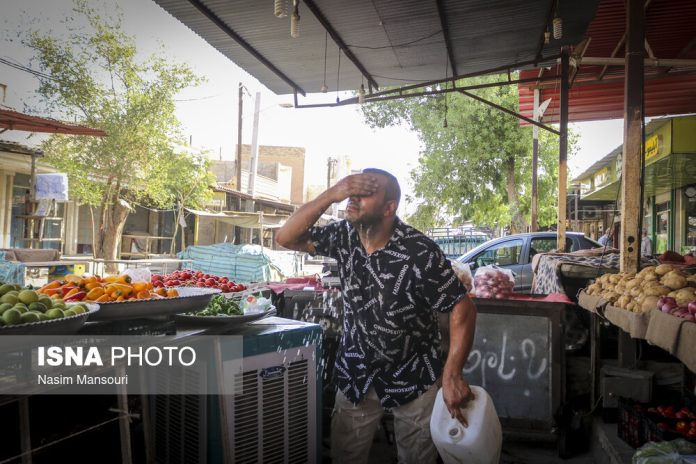
Firooz Ghasemzadeh, Director General of Iran’s Office of Water Information and Data, said total rainfall since the beginning of the water year (late September) has reached just 141.7 mm, far below the long-term average of 230.6 mm. This marks a 39% decline compared to the historical norm and a 40% drop from the same period last year.

Provinces in southern and central Iran, including Tehran, Sistan and Baluchestan, Hormozgan, Bushehr, Khuzestan, Yazd, and Kohgiluyeh and Boyer-Ahmad, have experienced rainfall deficits of up to 70%, placing their water reserves in an extremely critical state.

Water inflow to the nation’s dams since the beginning of the water year totals 20.23 billion cubic meters, down 42% from the previous year. Current dam storage stands at 26.9 billion cubic meters, a 23% year-on-year decline.

Ghasemzadeh urged immediate action to reform agricultural water usage and shift to more water-efficient crops. He also called for public cooperation, emphasizing that “every saved liter of water could prove vital” as the country braces for a dry summer.

Iran’s Hajj authority urges pilgrims to avoid divisive acts following controversial remarks

Hajj

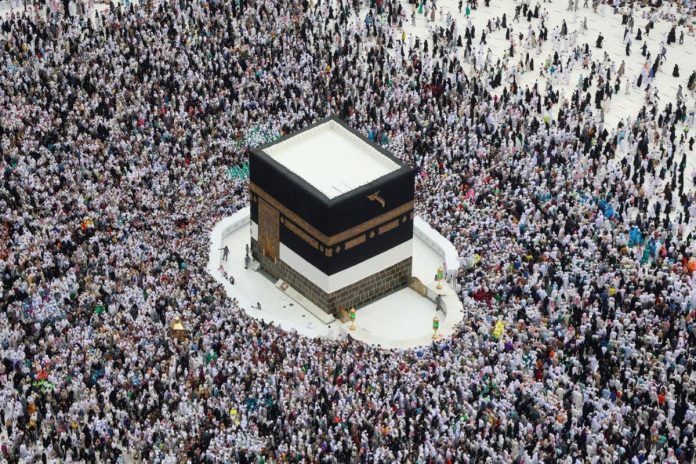
Speaking at a gathering of volunteer Hajj aides on Monday night, Alireza Bayat, head of the organization, emphasized the importance of unity among Muslims and urged Iranian pilgrims to steer clear of divisive behavior.

“We must all refrain from actions that could lead to division and fragmentation,” he said, stressing the need for full compliance with the host country’s regulations.

Bayat also expressed appreciation for Saudi Arabia’s cooperation in facilitating this year’s pilgrimage.

According to official data, over 68,000 Iranian pilgrims have so far arrived in Saudi Arabia with minimal delays, contributing to a smooth operation.

The statement comes in the wake of remarks by Ghasemian, who accused Saudi Arabia of turning Mecca and Medina into “centers of immorality.”

Iranian officials have not formally addressed Ghasemian’s claims but have reiterated the importance of religious unity and diplomatic decorum during Hajj.

Iran steps up expulsion of undocumented Afghan migrants, ends access to key services

Afghan Refugee in Iran

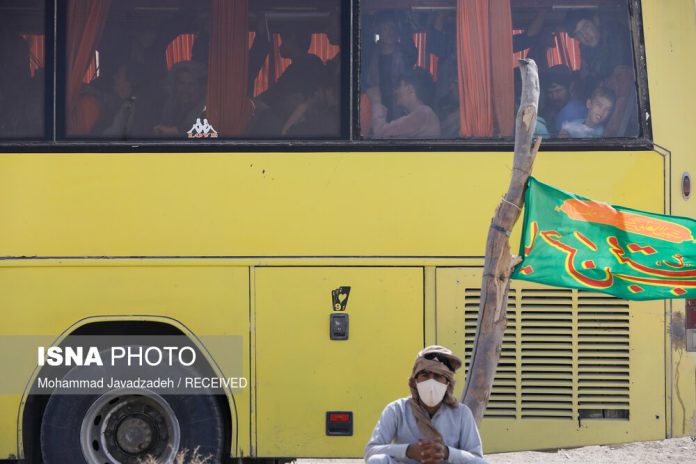
Nader Yarahmadi, head of the Foreign Nationals and Immigrants Affairs Office, stated in a radio interview that the government had refrained from mass deportations so far “due to humanitarian concerns and the specific needs of migrant families.”

However, he emphasized that the voluntary departure of undocumented migrants is now being strongly encouraged.

The government has now annulled census cards issued to undocumented migrants and begun cutting off their access to public education and health systems.

“Those who remain without legal documentation will gradually be denied basic services,” Yarahmadi said, adding that only children with valid legal documents will be allowed to continue their schooling.

While acknowledging Iran’s historical hospitality towards displaced individuals, particularly due to regional conflicts, Yarahmadi said the prolonged presence of undocumented migrants has placed growing pressure on national infrastructure.

Migrants who voluntarily exit the country may be eligible for certain visa facilitation measures to re-enter legally, while those who are apprehended will lose these privileges, he said.

Iranian judge assassinated in Shiraz; assailants flee the scene

Crime Scene

According to the Chief Justice of Fars Province, two unidentified individuals attacked Judge Bagheri with a bladed weapon while he was on his way to work. Despite efforts to save him, he succumbed to his injuries at the scene.

Security and intelligence officials, along with a special homicide prosecutor, immediately launched an investigation at the crime scene. The suspects fled and remain at large.

Judge Bagheri, 38, had more than 12 years of judicial experience.

Trump wants Netanyahu to be on same page on Iran: American official

Trump Netanyahu

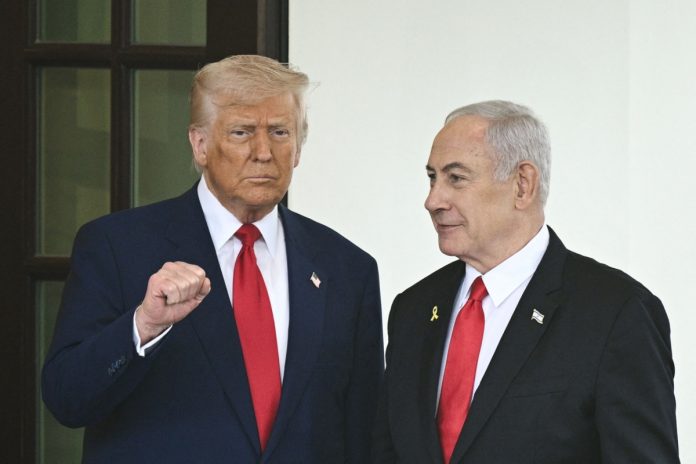
Noem, who concluded a visit to Israel on Monday, told Fox News that her talks with Netanyahu were “candid and direct”. Her comments come days after US and Iranian officials held their fifth round of nuclear talks in Rome.

“President Trump specifically sent me here to have a conversation with the prime minister about how those negotiations are going and how important it is that we stay united and let this process play out,” she said.

On Sunday, Trump suggested that the talks were progressing well.

“We’ve had some very, very good talks with Iran,” the US president told reporters.

“And I don’t know if I’ll be telling you anything good or bad over the next two days, but I have a feeling I might be telling you something good,” he added.

Last week, CNN reported, citing unidentified US officials, that Israel was preparing for strikes against Iran’s nuclear facilities, despite the US-led talks.

Iran has promised to respond forcefully to any Israeli attack, and accused Netanyahu of working to undermine US diplomacy.

Iranian Minister of Foreign Affairs Seyed Abbas Araghchi stated last week that the Israeli prime minister is “desperate to dictate what the US can and cannot do”.

Israel has been sceptical about the nuclear negotiations, and Netanyahu has been claiming for years that Iran is on the cusp of acquiring a nuclear bomb. Israeli officials portray Iran – which backs regional groups engaged in armed struggle against Israel – as a major threat.

On Monday, Noem said that the US understands that Netanyahu does not trust Iran.

“The message to the American people is: We have a president that wants peace, but also a president that will not tolerate nuclear Iran capability in the future. They will not be able to get a nuclear weapon, and this president will not allow it,” she added.

“But he also wants this prime minister, Benjamin Netanyahu, to be on the same page with him.”

A major sticking point in the talks has been whether Iran would be allowed to enrich its own uranium.

US officials have said they want Iran not just to scale back its nuclear programme, but also to completely stop enriching uranium – a position that Tehran has said is a nonstarter.

Enrichment is the process of altering the uranium atom to create nuclear fuel.

Iranian officials say enrichment for civilian purposes is a sovereign right that is not prohibited by the Nuclear Non-Proliferation Treaty (NPT).

Tehran denies seeking a nuclear weapon, while Israel is widely believed to have an undeclared nuclear arsenal.

During his first term, in 2018, Trump nixed the Joint Comprehensive Plan of Action (JCPOA), which had seen Iran scale back its nuclear programme in exchange for the lifting of international sanctions against its economy.

Since then, the US has been piling sanctions on Iran. Tehran has responded by escalating its nuclear programme.

On Monday, Iran ruled out temporarily suspending uranium enrichment to secure an interim deal with the US.

Iranian Foreign Ministry spokesperson Esmaeil Baqaei stressed that Iran is not buying time with the talks.

“We have entered the course of talks seriously and purposefully with the intention of reaching a fair agreement. We have proved our seriousness,” Baqaei was quoted as saying by the Tasnim news agency.

Qalibaf re-elected as Iranian parliament speaker for sixth consecutive year

Mohammad Bagher Ghalibaf

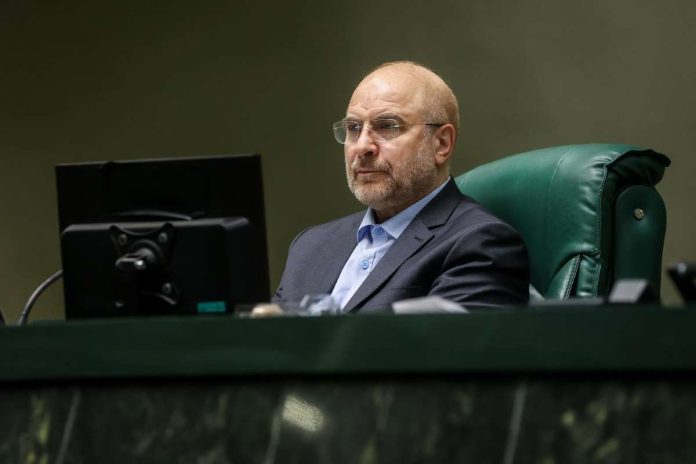
In a Tuesday morning vote, he secured 219 out of 276 votes cast by the lawmakers.

Qalibaf’s only remaining challenger, Ahmad Rastineh, received 53 votes, while four ballots were declared void.

The election took place in accordance with the internal regulations of the parliament, which stipulate that the leadership board, including the Speaker, is elected annually. There is no legal restriction on re-election for consecutive terms.

The final lineup for the speakership included only Qalibaf and Rastineh after Hadi Ghavami withdrew his candidacy moments before the vote, prompting a strong objection from Rastineh.

Earlier in the day, candidates Ahmad Aryaeinejad and Ahmad Beigdeli had also stepped aside in favor of Qalibaf.

According to parliamentary procedures, the presidium consists of the speaker, two deputy speakers, six secretaries, and three observers.

While the speaker must be elected by an absolute majority, other members of the board are chosen by relative majority.

Azerbaijan proposes strategic upgrade in ties with Iran

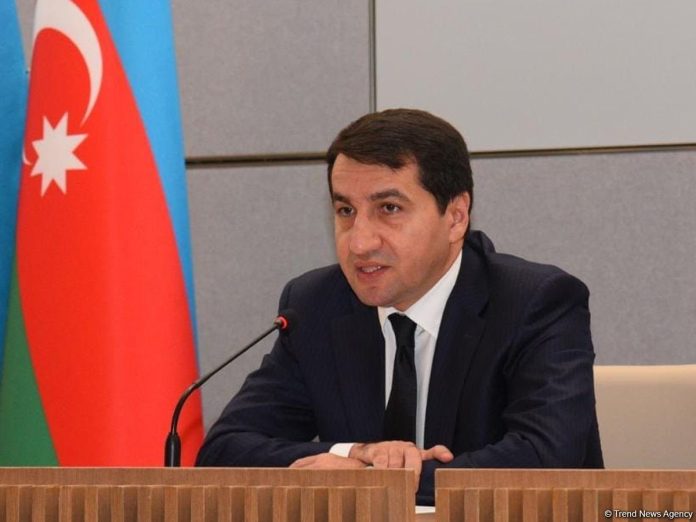
Speaking about the future of Iran-Azerbaijan ties, Hikmet Hajiyev emphasized that these relations are grounded in shared history, culture, and traditions.

“As our presidents have stated, the peoples of Iran and Azerbaijan are like relatives. We believe we are on the right path in developing our bilateral ties,” he said.

Hajiyev underscored that maintaining strong relations with neighboring countries remains a top priority for Azerbaijan.

“Over the past 30 years, Azerbaijan has pursued partnerships based on mutual respect and cooperation, creating win-win conditions for all parties involved,” he added.

Referencing the recent visit of Iranian President Massoud Pezeshkian to Baku, Hajiyev revealed that Azerbaijani President Ilham Aliyev proposed elevating Tehran-Baku relations to a new level of strategic partnership.

He noted Azerbaijan’s successful alliances with Turkey and Russia, as well as a strategic partnership with Georgia, as examples of its broader regional engagement.

Hajiyev expressed optimism about deepening ties with Iran under this evolving framework.

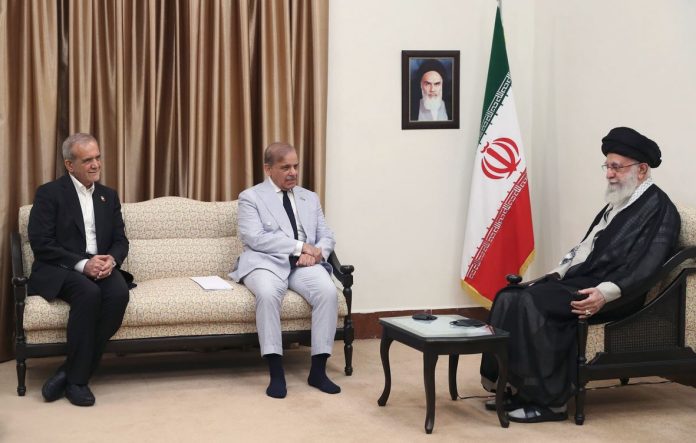
Ayatollah Khamenei calls for joint Iran–Pakistan efforts to halt Israeli crimes in Gaza

Ayatollah Khamenei referred to Pakistan’s significant role in the Muslim world and praised the country’s consistent stance on the Palestinian issue.

He noted that despite growing temptations among some Muslim nations in recent years to normalize relations with the Zionist regime, Pakistan has remained firmly resistant.
The leader underlined the great potential of the Islamic ummah to assert more influence globally. “In a world where war-mongers seek to sow discord, the only safeguard for the Islamic world is unity among Muslim nations and the strengthening of mutual ties,” said Ayatollah Khamenei.

He described Palestine as the foremost issue for the Muslim world while pointed to the dire humanitarian situation in Gaza. Ayatollah Khamenei underscored that even ordinary citizens in the West have begun protesting their governments’ inaction regarding the catastrophic situation in Gaza.
“It is unfortunate that, while people in Europe and the US take to the streets in protest, some Muslim governments continue to align themselves with the Zionist regime,” he added.

The leader stressed that Iran and Pakistan, through close cooperation, could play a significant role in steering the Muslim world away from misguided paths concerning the Palestinian issue
Ayatollah Khamenei also described Iran–Pakistan relations as historically warm and brotherly,

He noted, however, that current cooperation between the two countries falls short of expectations.

Ayatollah Khamenei further stressed the need for greater collaboration between the two nations to revitalize the Economic Cooperation Organization (ECO).

Pakistan’s prime minister, for his part, wholeheartedly thanked the Islamic Republic for its role in defusing tensions between Pakistan and India.

He criticized the international community’s failure to take effective action to stop the humanitarian catastrophe in Gaza.