Saturday, December 27, 2025
Home Blog Page 193

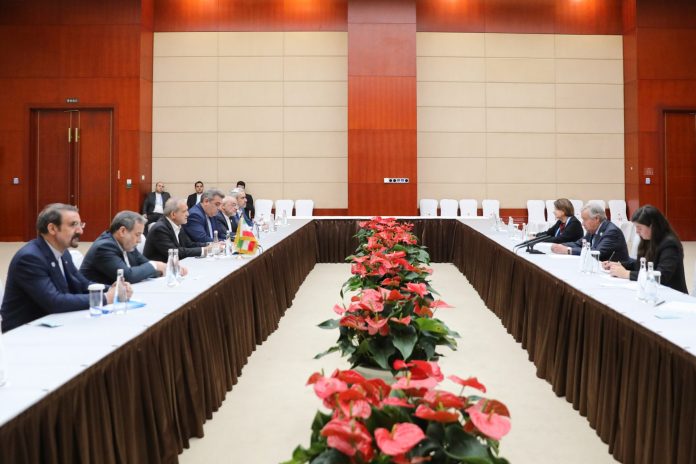
Iran, Armenia agree on new transport projects, including Nordooz Bridge, Persian Gulf-Black Sea link

Speaking on Tuesday, Sadegh said the two sides agreed to expand the existing Nordooz crossing and build an additional bridge to ease freight traffic between the two countries.

She noted that Iran and Armenia also plan to reorganize border terminals and finalize a broader transit package within the next two months to reduce costs for Iranian truck drivers.

The minister highlighted ongoing efforts to establish a strategic railway corridor linking the Persian Gulf to the Black Sea.

“The rail line currently extends to Jolfa, and its continuation through Nakhchivan to Yerevan has been agreed in principle. With further trilateral cooperation among Iran, Armenia, and the Republic of Azerbaijan, this route could become a key link to Europe,” she said.

Sadegh also pointed to new initiatives in air transport, logistics, and technical-engineering services, stressing the strong track record of Iranian contractors working on construction and infrastructure projects in Armenia.

30 countries working on security guarantees for Ukraine: NATO chief

NATO

Speaking to FOX News after talks at the White House with US President Donald Trump, Ukrainian President Volodymyr Zelenskyy and several European leaders, Rutte described the discussions as “very successful” and said the countries are focused on security guarantees that could take effect after a ceasefire or, preferably, a full peace deal between Russia and Ukraine.

“So over the last couple of months, under the leadership of Keir Starmer, the British prime minister, and Emmanuel Macron, the French president, a group of now 30 countries, including Japan and Australia, are working on this concept of security guarantees,” he said.

“What the US has now said is that the United States wants to get involved in this. Exactly what is meant by US involvement will be discussed over the coming days.”

According to Rutte, Trump held a phone call with Russian President Vladimir Putin on Monday which resulted in an agreement to hold a meeting between Putin and Zelenskyy ahead of a trilateral summit.

“He was able, in a conversation with President Putin, to have Putin agree to first a meeting between Putin and Zelenskyy. So they will now discuss where that would be,” he added.

Asked whether territorial concessions by Ukraine were addressed, Rutte said the issue was not discussed in Washington.

He also stressed that NATO membership for Ukraine was not part of the current talks.

“The official NATO position since the summit of 2024 is that there is an irreversible path for Ukraine into NATO,” he said, adding, “But what we are discussing here is not NATO membership. What we are discussing here is Article 5-type security guarantees for Ukraine.”

Rutte’s remarks came after Trump hosted him, Zelenskyy and several European leaders at the White House to discuss the next steps in diplomatic efforts to end the conflict.

Leaders attending Monday’s talks included UK Prime Minister Keir Starmer, French President Emmanuel Macron, German Chancellor Friedrich Merz, European Commission President Ursula von der Leyen, Italian Prime Minister Giorgia Meloni and Finnish President Alexander Stubb.

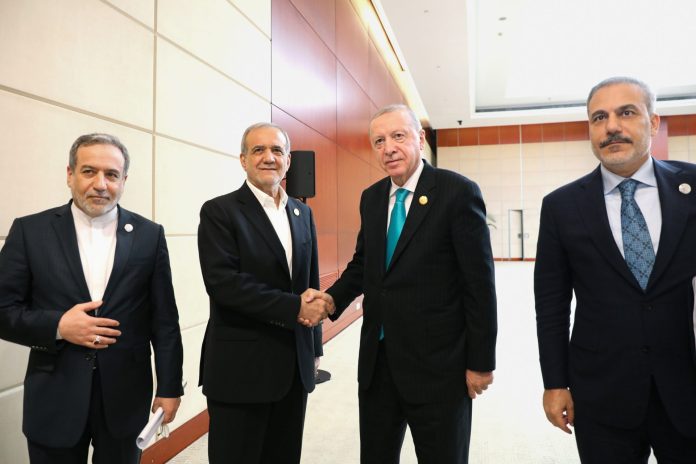
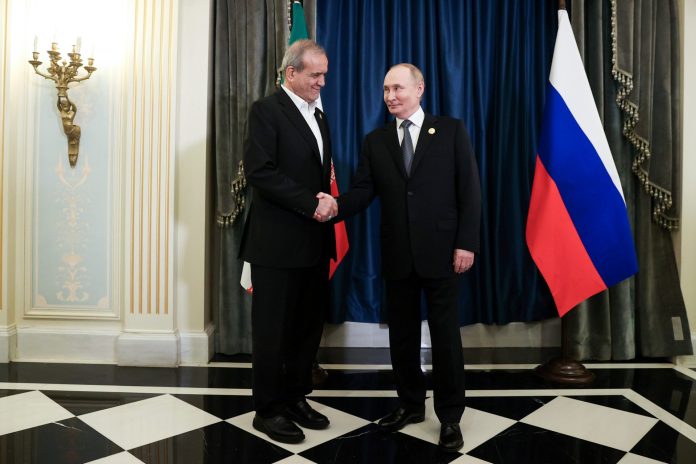
Iranian president holds private talks with Armenian PM in Yerevan

The meeting took place shortly after an official reception ceremony at the Presidential Palace in Yerevan.

Pezeshkian arrived in the Armenian capital on Monday, at the invitation of Pashinyan for a two-day official visit.
He was welcomed at Zvartnots Airport by Deputy Prime Ministers and the Armenian Foreign Minister before the start of high-level talks.

The visit comes amid Tehran’s stern opposition to a new US-mediated deal between the Republic of Azerbaijan and Armenia over the strategic Zangezur corridor that cuts off Iran’s access to Armenia.

The Iranian president is accompanied by senior cabinet officials, including Foreign Minister Abbas Araghchi, Roads and Urban Development Minister Farzaneh Sadegh, Culture and Tourism Minister Seyyed Reza Salehi Amiri, Industry and Trade Minister Seyyed Mohammad Atabak, and Vice President for Planning and Budget Seyyed Hamid Pourmohammadi.

As part of his program, Pezeshkian also met with Iranologists, members of the local Iranian community, and attended a joint business forum aimed at expanding economic cooperation.

Before his departure from Tehran, he underlined that strengthening ties with neighboring countries is a central priority of his administration’s foreign policy.

Iranian newspaper warns of Taliban’s water policies impacting Mashhad supply

Taliban

According to Jomhouri-e Eslami newspaper, the recently completed Pashdan Dam in Afghanistan’s Herat province has diverted the flow of the Harirud River, leaving Iran’s Doosti Dam, located near the border with Turkmenistan, at critically low levels. The dam is considered Mashhad’s most important source of drinking water.

The report stated that Doosti Dam now contains only half the volume of last year and has reached its “dead storage level,” largely due to Pashdan’s water intake.

This marks the second major dispute over transboundary rivers between Tehran and Kabul, following the Taliban’s refusal to release Iran’s allocated share of the Helmand River under a 1973 treaty.

The newspaper accused the Taliban of acting with “deliberate hostility” and criticized Iranian officials for a weak response, urging stronger political and economic measures.

It also linked the dispute to broader tensions over the mass expulsion of illegal Afghan migrants in Iran, describing the situation as a security challenge.

UN Security Council starts negotiations on fate of peacekeeping force in Lebanon

UNIFIL

The U.N. Interim Force in Lebanon (UNIFIL), established in 1978, patrols Lebanon’s southern border with Israel. The mandate for the operation is renewed annually, and its current authorization expires on August 31.

The French draft text, seen by Reuters, would see the council indicate “its intention to work on a withdrawal of UNIFIL with the aim of making the Lebanese Government the sole provider of security in southern Lebanon, provided that the Government of Lebanon fully controls all Lebanese territory … and that the parties agree on a comprehensive political arrangement.”

The United States – a veto-wielding council member – told a closed-door council meeting on Monday that the mission should only be extended for one final year, said diplomats, speaking on condition of anonymity.

When asked for comment on whether the U.S. wanted to wind down UNIFIL, a State Department spokesperson stated: “We don’t comment on ongoing U.N. Security Council negotiations.”

UNIFIL’s mandate was expanded in 2006, following a month-long war between Israel and Hezbollah, to allow peacekeepers to help the Lebanese army keep parts of the south free of weapons or armed personnel other than those of the Lebanese state.

That has sparked friction with Hezbollah, which effectively controls southern Lebanon despite the presence of the Lebanese army. Hezbollah is a heavily armed party that is Lebanon’s most powerful political force.

The draft Security Council text “urges the international community to intensify its support, including equipment, material and financial” to the Lebanese army.

US revoked over 6,000 student visas in 2025: Report

The approximately 6,000 canceled visas in 2025 so far resulted primarily from visa overstays or legal encounters involving assault, driving under the influence (DUI) of alcohol or drugs, burglary, or supporting terrorism, the State Department told the US news outlet.

A senior official argued that every student visa revoked under the Trump administration occurred because individuals either broke the law or expressed support for terrorism.

In several high-profile cases, the US has cited supposed support for terrorism to try to deport students who say that in fact they were instead peacefully voicing support for the rights of Palestinians.

Nearly 4,000 visas were revoked because visitors broke laws while in the country, including assault and DUI records. 800 students had visas yanked for assault-related incidents, facing either arrest or charges, the official said.

Some 200-300 people lost visas for “supporting terrorism,” the source added.

The official stated that the State Department reported revoking approximately 40,000 total visas in 2025, compared to 16,000 (less than a third) during the same time period under Joe Biden, the previous president.

This crackdown forms part of Trump’s broader “America First” immigration agenda, featuring increased vetting requirements including social media disclosure and enhanced monitoring for activities deemed contrary to US national security interests.

Many students, lawyers, and right activists say the “supporting terrorism” and “contrary to national security interests” justifications are often used as a pretext to target students who support Palestinian rights and other causes not favored by the Trump administration.

Ukraine needs “everything” related to security guarantees: Zelensky

Zelensky said on Monday he supports holding a trilateral meeting with US President Donald Trump and Russian President Vladimir Putin.

Speaking alongside Trump in the Oval Office ahead of a round of meetings, Zelensky told reporters the proposal was “a good idea.”

Trump stated that “we will give them [Ukraine] very good protection, very good security”, after pointing out that a ceasefire may not be necessary for peace. Zelensky and his Western European backers had previously stressed that there could be no peace without a ceasefire first.

Zelensky and several West European leaders met with Trump and his team at the White House to discuss a possible resolution to the Ukraine conflict.

Trump met with Putin in Alaska on Friday in a historic summit which both sides described as “warm” and “constructive.”

Zelensky’s last visit to the White House ended in disgrace, after he was accused of being disrespectful and told by the Trump that “he does not hold the cards.” This time he is wearing a dark suit but no tie.

Ukraine wants Europe to pay $100bn for arms agreement with US: FT

Russia Ukraine War

Ukrainian leader Vladimir Zelensky and the heads of multiple Western European states held talks with US President Donald Trump in Washington on Monday. Trump, who has repeatedly questioned the previous administration’s unconditional aid to Kiev, announced last month that NATO members would effectively pay for the US-made weapons sent to Ukraine.

In addition to the weapons procurement draft, Ukraine plans a $50 billion deal to produce drones with Ukrainian companies, FT reported, citing four people familiar with the matter and a document Kiev reportedly shared with the US. Although the document contains limited details, FT said Ukraine intends to purchase at least 10 Patriot air defense missile systems.

Ukraine’s European supporters have struggled to ramp up production to meet Kiev’s needs, as Ukrainian forces have steadily been losing ground to the Russian army.

After a one-on-one meeting in Alaska on Friday, Trump claimed that Russian President Vladimir Putin was ready to agree to security guarantees for Ukraine, though he did not provide specifics.

Ukraine has previously urged the West to provide guarantees equivalent to NATO’s collective defense, while several European states offered to deploy peacekeepers. Russia, however, has stressed that it will not tolerate any Western troops in Ukraine.

Major airlines resume flights to Iran after two-month suspension

Imam Khomeini Airport

Industry experts say the move could revitalize the country’s tourism and aviation sectors.

According to travel industry outlet Travel and Tour, several major carriers, including Qatar Airways, Lufthansa Group, and Air India, have restarted services to Tehran and other cities as the regional security situation has stabilized.

Qatar Airways was the first to return, operating flight QTR498 to Tehran’s Imam Khomeini International Airport on Saturday, marking its first service since June 11, when operations were halted due to the outbreak of conflict.

Lufthansa resumed flights in early August, while Air India and FlyDubai restarted operations in July. Afghanistan’s Kam Air was among the few airlines that continued service throughout the suspension.

Analysts believe the reopening of routes will significantly benefit Iran’s economy.
Tourism, which suffered during the suspension, is expected to recover as international travelers regain access to cultural landmarks such as Persepolis and Isfahan’s Naqsh-e Jahan Square. Business travel and regional trade are also set to improve with the restored air links.

Trump doesn’t rule out sending US forces to Ukraine as part of security guarantees

“We’ll let you know that, maybe later today,” Trump said during a meeting with his Ukrainian counterpart Volodymyr Zelensky in the White House.

His openness to allowing American troops onto the ground in Ukraine could make for a major shift, as Ukraine considers security guarantees to be critical for any eventual peace deal with Russia.

Trump stated repeatedly that Europe would take the lead in securing the peace but that the US would be involved.

“They are first line of defense, because they’re there, Europe. But we’re going to help them out. Also, we’ll be involved,” he noted.

“We have people waiting in another room, right now, they’re all here from Europe. Biggest people in Europe. And they want to give protection. They feel very strongly about it and we’ll help them out with that,” Trump added a bit later. “I think it’s very important to get the deal done.”

Trump stressed if there were a peace deal, it would hold.

“I think if we can get to peace, it’s going to work. I have no doubt about it,” he continued.

Trump said that regardless of how the meetings with Zelensky and European leaders turns out, American support for Ukraine will remain.

Trump was asked by a reporter: “Is this the end of the road for American support for Ukraine. Is today’s meeting deal or no deal?”

He responded, “I can never say that. It’s never the end of the road. People are being killed and we want to stop that. So, I would not say it’s the end of the road.”

Trump said he likes “the concept” of a ceasefire but he downplayed his earlier call for one, advocating instead for a broader peace deal.

“I like the concept of a ceasefire for one reason: because you’d stop killing people immediately, as opposed to in two weeks, or one week, or whatever it takes,” Trump told reporters in the Oval Office while meeting with Zelensky.

“We’re working on a peace deal while they’re fighting, they have to fight. I wish they could stop. I’d like them to stop, but strategically, that could be a disadvantage for one side or the other,” Trump added.

“I can also understand strategically, why, well, you know, one country or the other wouldn’t want it. You have a ceasefire, and they rebuild and rebuild and rebuild. And you know, maybe they don’t want that.”

Trump also stated he “didn’t do any ceasefires” in other conflicts that he’s claimed to resolve. Yet he touted his efforts in brokering a ceasefire between India and Pakistan in May.

Trump also stressed that Ukraine will not join the NATO military bloc but will receive protection from Washington.

“No NATO but we’ll protect them.”