Tuesday, April 7, 2026
Home Blog Page 19

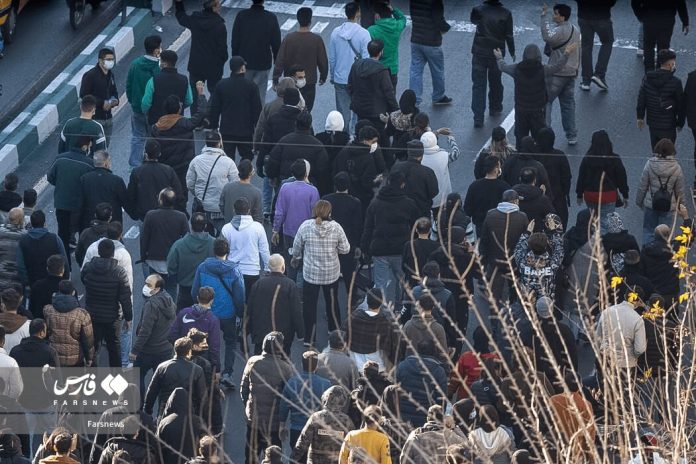
Tehran Bazaar businessmen hold protests over economic conditions, soaring currency rates

According to IRNA in areas such as Sabzeh Meydan and Istanbul Crossroads, the businessmen shouted chants to criticize some government officials.
In some sections, business activity dropped to a minimum, with many shops refraining from transactions to avoid potential losses.

These protests come amid widespread criticism of Iran’s Central Bank’s Governor Mohammad Reza Farzin, whom many hold responsible for the currency surge.

The deputy of the President Masoud Pezeshkian’s office has said that Farzin has tendered his resignation, which the president is likely to accept.

China conducts war games around Taiwan as island vows to defend democracy

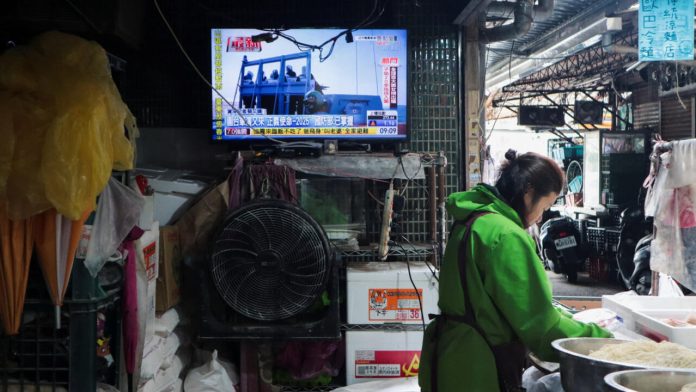
The Eastern Theatre Command said it had concentrated forces to the north and southwest of the Taiwan Strait and carried out live firing and simulated strikes on land and maritime targets. The drills would continue on Tuesday and include exercises to blockade the island’s main ports and encircle it.

A senior Taiwan security official told Reuters dozens of Chinese military boats and aircraft were operating around the island, some of which were “deliberately closing in” on Taiwan’s contiguous zone, defined as 24 nautical miles from its coast.

This marks China’s sixth major round of war games since 2022 after then-U.S. House Speaker Nancy Pelosi visited the democratically governed island, and follows a rise in Chinese rhetoric over Beijing’s territorial claims after Japanese Prime Minister Sanae Takaichi suggested a hypothetical Chinese attack on Taiwan could trigger a military response from Tokyo.

The exercises began 11 days after the U.S. announced $11.1 billion in arms sales to Taiwan, the largest ever weapons package for the island, drawing a protest from China’s defence ministry and warnings the military would “take forceful measures” in response.

Analysts say Beijing’s drills increasingly blur the line between routine military training exercises and what could be stage-setting for an attack, a strategy intended to give the U.S. and its allies minimal warning of an assault.

“This (the drills) serves as a serious warning to ‘Taiwan Independence’ separatist forces and external interference forces,” said Shi Yi, a spokesperson for the Eastern Theatre Command.

Taiwan’s government condemned the drills, while its defence ministry posted a video on Facebook showcasing various weapons, including U.S.-made HIMARS rocket systems, a highly mobile artillery system with a range of about 300 km (186 miles) that could hit coastal targets in China’s southern province of Fujian, on the other side of the Taiwan Strait, in the event of a conflict.

Taiwan’s coast guard added that it had dispatched large ships in reaction to Chinese coast guard activity near its waters and that it was working with the island’s military to minimise the drills’ impact on maritime routes and fishing areas.

The island’s aviation authority said China had designated a “temporary danger zone” in Taipei’s airspace for 10-hours of live-fire drills scheduled for Tuesday and that it was working to identify alternative flight routes.

Taiwan’s defence ministry announced that two Chinese military aircraft and 11 ships had been operating around the island over the past 24 hours, and that Taiwan’s military was on high alert and poised to carry out “rapid response exercises.”

That particular drill is designed to move troops swiftly in case China suddenly turns one of its drills around the island into an attack.

“All members of our armed forces will remain highly vigilant and fully on guard, taking concrete action to defend the values of democracy and freedom,” the defence ministry added.

Taiwan stock markets were unaffected by the drills, up 0.8% to a record high in morning trading.

“I think these drills are just meant to scare us,” stated Lin Wei-ming, a 31-year-old teacher based in the capital, Taipei.

“Similar drills have happened before … the political side of things can only be handled by Taiwan’s current government and how they choose to respond.”

Taiwan rejects China’s claimed sovereignty, maintaining that only its people can decide the island’s future.

The Chinese military released two posters titled “Shields of Justice: Smashing Illusions,” and “Arrows of Justice: Control and Denial”, along with a third graphic depicting four locations across the island with targets locking on, following the drill announcement.

China’s state broadcaster said the exercises would focus on sealing off Taiwan’s vital deep-water Port of Keelung to the island’s north and Kaohsiung to Taiwan’s south, the island’s largest port city.

While the PLA practiced port blockades around Taiwan during war games last year, this marks the first time it has publicly stated that drills around the island are aimed at “deterrence” of outside military intervention.

The Japanese prime minister’s remarks triggered a surge in Chinese messaging stressing its sovereignty claims. Chinese leader Xi Jinping told U.S. President Donald Trump in November that Taiwan’s “return to China” after World War Two was central to Beijing’s vision of the global order.

The first poster appeared to show the armada of civilian ships China is mobilising to help in an attack on Taiwan, vessels with ramps and open decks that could be used to carry out an amphibious assault.

“Any foreign interference that touches the shield (of justice) shall perish!” the poster read.

“Any separatist scoundrels who encounter the shield shall be destroyed!”

“I think their (China’s) goal is, as they said, ‘keep the island, not the people,'” stated Stephanie Huang, a 56-year-old interior designer.

“They just want to save face by claiming Taiwan as part of their own country, but Taiwanese people don’t see it that way. We are who we are; they are who they are.”


Israeli tech sector saw rise in staff seeking relocation abroad due to war: Reuters

The Israel Advanced Technology Industries Association (IATI) found that 53 percent of companies reported an increase in relocation requests from Israeli employees, noting this was “a trend that may, over time, harm the local innovation engine and Israel’s technological leadership.”

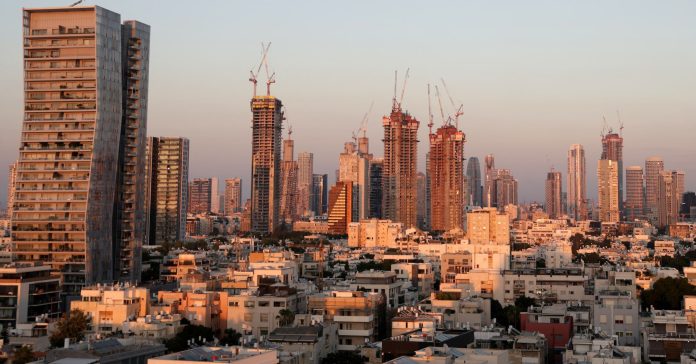
The tech sector accounts for about 20 percent of Israel’s GDP, 15 percent of its jobs and more than half of its exports. The hundreds of multinationals in Israel include Microsoft, Intel, Nvidia, Amazon, Meta and Apple.

In its annual report, IATI also said some multinational companies are examining the transfer of investments and activities to other countries.

“In some cases, companies that faced disruptions in supply chains found alternatives outside Israel during the war, and when these proved efficient, there is a risk that activity will not fully return,” added the report.

At the same time, it added, there has been an increase in demand for relocation among senior executives and families, with more employees applying for positions outside Israel.

Still, the report noted that multinationals view the Israeli tech ecosystem through a long-term lens and many firms have thrived during the war.


Iran says Araghchi–Witkoff communication remains open, sets conditions for talks

Araghchi Witkoff

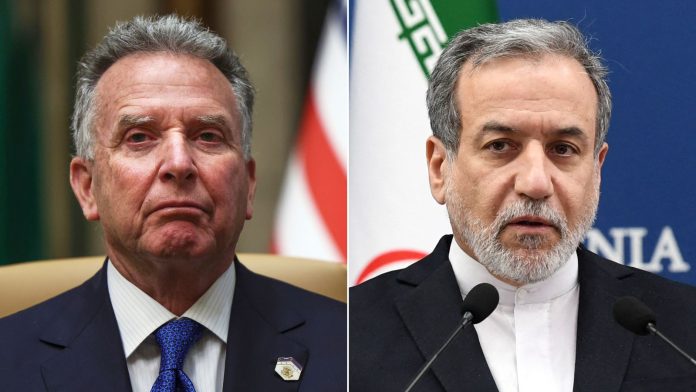
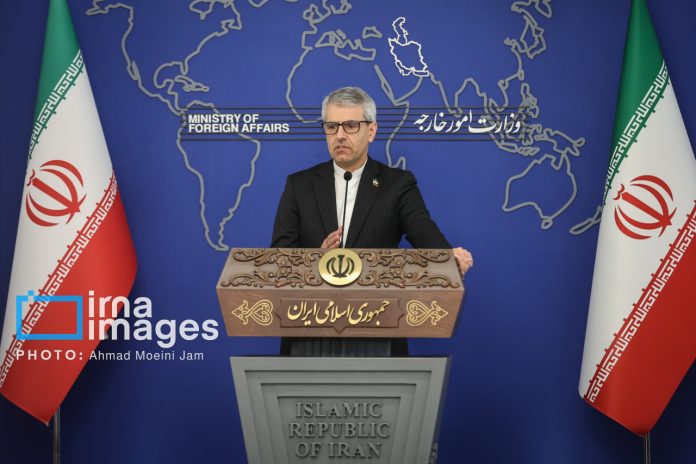
Speaking to reporters on Monday, Esmail Baqaei said Araghchi never suggested that Iran–US contacts had ended, noting that the official communication channel via the Swiss Embassy is still in place.

He added that while contact with Witkoff exists, there is currently no reason to activate it.
Baqaei also slammed recent remarks by the US representative at the UN Security Council as hypocritical, stressing that no party can dictate the outcome of negotiations before entering the talks.

He underlined that adherence to negotiation principles is a prerequisite for any diplomatic process, including talks between Iran and the United States, warning that without such commitment, negotiations cannot realistically begin. The spokesman said Iran has consistently upheld diplomacy and supported regional collective efforts.

Baqaei also reaffirmed that Iran–US discussions have remained strictly limited to the nuclear issue, making clear that Tehran will not engage in talks on other subjects due to the absence of any logical justification.

Seven Turkish police officers wounded in clash with Daesh terrorists: Report

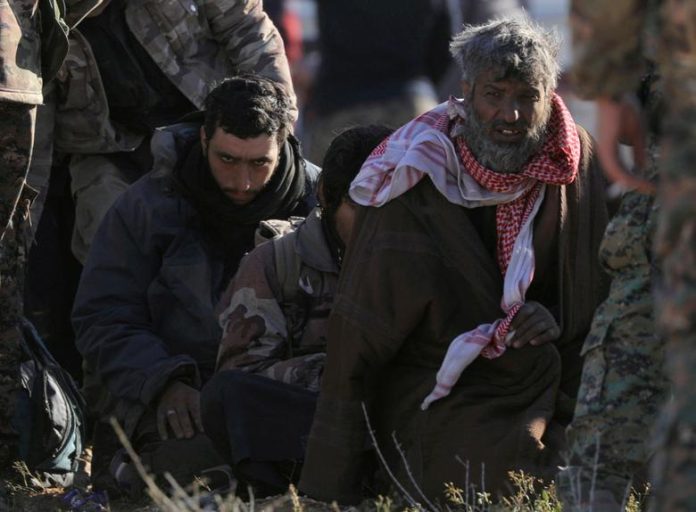
Daesh

Broadcaster TRT Haber reported that police carried out a raid at a home in Yalova province’s Elmalik village, located south of Istanbul, when fire was exchanged on Sunday.

The officers were not seriously injured, the broadcaster reported. It was not immediately clear whether any suspects were wounded or arrested.

Special forces from nearby Bursa province joined the operation to provide support, including enacting ongoing security measures in the area.

Locals and vehicles were not allowed into the area surrounding the targeted home, the broadcaster said, while the Yalova governorate also suspended classes at five nearby schools.

On Thursday, Turkish authorities announced that they had conducted raids on 124 locations and apprehended 115 ISIL suspects.

Police had received intelligence that operatives were “planning attacks in Turkiye against non-Muslims in particular” during the holiday period, the Istanbul chief prosecutor’s office said.

The United States military also carried out extensive strikes against ISIL in neighbouring central and northeastern Syria earlier this month, hitting more than 70 targets. The strikes came a week after two US soldiers and an interpreter were killed in an attack in the Syrian city of Palmyra.

Turkiye, which shares a border with Syria, has expanded its efforts against ISIL in recent years. Turkish authorities say some ISIL operatives relocated to the country in 2019 after the group was vanquished in the parts of Iraq and Syria it then controlled.

Previous raids in March had led to the capture of nearly 300 suspected ISIL members across 47 provinces over two weeks.

Between 2013 and 2023, authorities arrested more than 19,000 people for suspected affiliations with the group, according to the Turkish presidency.

Iran rejects Israeli recognition of Somaliland as “baseless, destabilizing”

Responding to questions about regional and international reactions, including statements by the EU in support of Somalia’s territorial integrity, Baqaei said no country has endorsed such a recognition and that it lacks any foundation in international law or within the UN system.

He stated, “Recognition of a part of an independent country by an illegitimate regime is aimed at fragmenting Islamic countries, weakening the region, and making it more vulnerable to Israeli ambitions and aggression.”

According to Baqaei, regional states have unanimously opposed the move, citing clear rejections by the Organization of Islamic Cooperation (OIC), the Arab League and the African Union.

The spokesperson noted that Somalia itself has taken a firm stance and that public protests have already taken place in the country.

He warned that the issue goes beyond Somalia alone and should be viewed as part of a wider plan to create insecurity across West Asia, the Horn of Africa and the Red Sea.

He added that Iran has discussed the matter in recent phone calls with regional foreign ministers and that further consultations, particularly within the OIC framework, will continue.

Somaliland declared independence from Somalia in 1991 following a brutal civil war, without gaining any recognition.

FM Araghchi: Resistance-oriented diplomacy foundation of Iran’s foreign policy

Abbas Araghchi

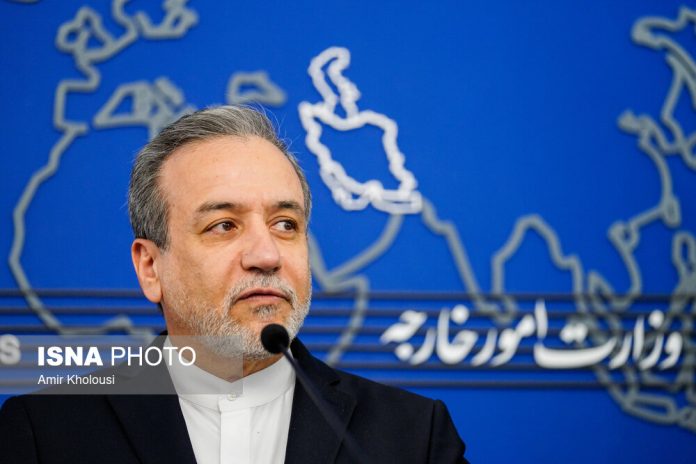
Speaking on Monday at the opening ceremony of the international conference “Lieutenant General Qassem Soleimani: Diplomacy and Resistance”, Araghchi described the martyred General Soleimani as the architect of the “Axis of Resistance,” whose legacy goes far beyond day-to-day foreign policy approaches.

He added that effective diplomacy is a combination of courage and prudence, but without power it cannot achieve strategic goals.

The foreign minister emphasized that Iran’s foreign policy is rooted in “resistance-oriented diplomacy,” with the Axis of Resistance representing one of its key dimensions.

He underlined that Iran will continue to support the discourse of resistance morally, politically and legally.

Referring to current global conditions, Araghchi said the international system is increasingly shifting from a law-based order to a force-based one. In this context, he argued, resistance and resilience are essential not only in military terms but also in economic, cultural, scientific and diplomatic spheres.

He concluded Iran’s former IRGC Quds Force commander, General Soleimani, who was martyred in a US-strike in Iraq on January 3, 2020, remains Iran’s guiding roadmap in foreign policy.

Iran says plans further satellite launches in February

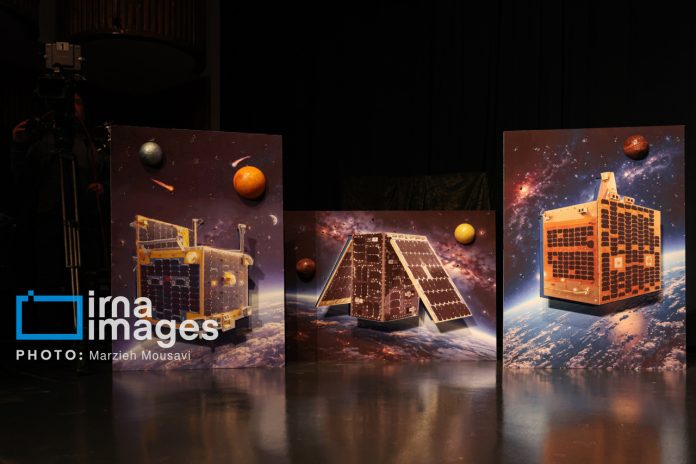
Head of the Iranian Space Agency, Hassan Salarieh, said on Sunday that the exact timing of the launches planned for next month will be announced soon, adding that domestically built launch vehicles will be used for the missions.

Salarieh made the remarks just after Iran launched three key satellites, including its heaviest satellites to date, from Russia’s Vostochny Cosmodrome.

The launches have been hailed as a sign of progress in Iran’s space industry despite heavy sanctions targeting the sector’s technological development.

Salarieh stated that Iran is focused on completing construction of a major space center in the southeastern port city of Chabahar, located on the Indian Ocean coast.

“We are currently planning to conduct the first satellite launch from this base. Perhaps the most important mission we will undertake in the near future in the launcher domain is precisely this,” he added.

The official also said that Iran would soon open a new space center near the city of Salmas in the northwest of the country, close to the Turkish border.

He added Iran’s policy is to carry out five to six launches per year using its home-made rockets, along with several launches from foreign space centers, adding, however, that the total number is expected to increase in the next calendar year, which begins in late March.

“The process must continue so that we can soon reach a stage where the space industry becomes economically viable,” the Iranian space chief continued.

Commenting on Iran’s plans to launch a one-ton biological capsule into space, Salarieh announced that the design phase of the capsule has been completed and many of its systems are undergoing testing, adding that it is expected to be ready for launch by September next year.

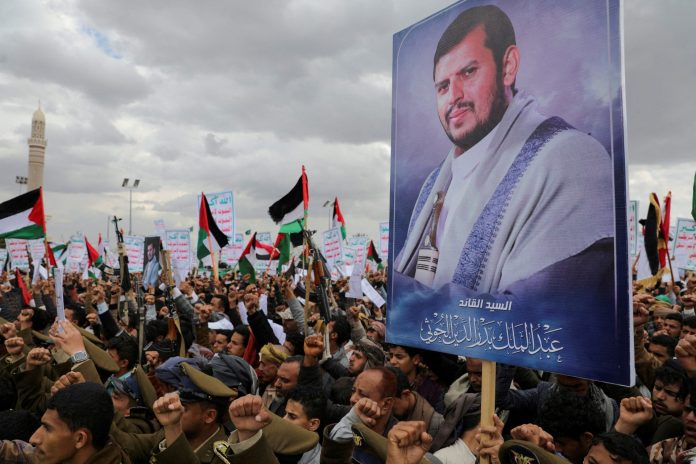
Any Israeli presence in Somaliland will be a ‘target’: Yemen’s Houthi

Yemen Houthi

“We consider any Israeli presence in Somaliland a military target for our armed forces, as it constitutes aggression against Somalia and Yemen, and a threat to the security of the region,” said the group’s chief, Abdel-Malik al-Houthi, according to a statement published by rebel media online.

Israel announced on Friday that it is officially recognising Somaliland, a first for the self-proclaimed republic that in 1991 declared it unilaterally separated from Somalia.

The Houthi chief warned that the move carried grave consequences, saying that recognition is “a hostile stance targeting Somalia and its African surroundings, as well as Yemen, the Red Sea, and the countries along both shores of the Red Sea”.

Somaliland, which has for decades pushed for international recognition, enjoys a strategic position on the Gulf of Aden and has its own money, passport and army.

Regional analysts say a rapprochement with Somaliland would provide Israel with better access to the Red Sea, enabling it to hit Houthi rebels in Yemen.

After launching its genocidal war on Gaza in October 2023, Israel repeatedly struck targets in Yemen in response to Houthi attacks on Israel, which the Yemeni rebels said were in solidarity with Palestinians in Gaza.

The Houthis have halted their attacks since a fragile truce began in Gaza in October.

Somaliland has been diplomatically isolated since its unilateral declaration of independence, even if it has generally experienced greater stability than Somalia, where al-Shabab fighters periodically mount attacks in the capital, Mogadishu.

Israel’s recognition of Somaliland was criticised by the African Union, Egypt, Turkiye, the six-nation Gulf Cooperation Council, and the Saudi-based Organisation of Islamic Cooperation.

The European Union insisted that Somalia’s sovereignty should be respected.


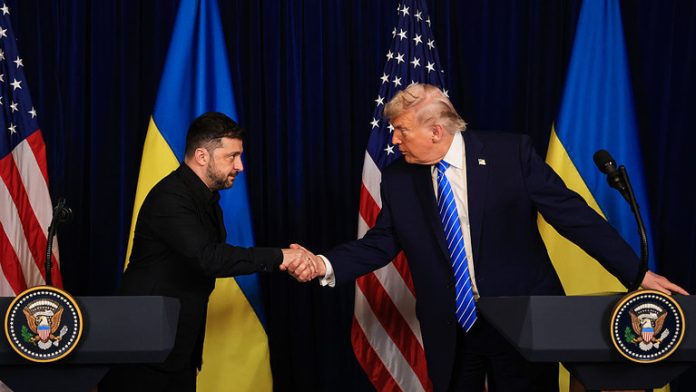
Ukraine peace accord ‘closer than ever’: Trump says after meeting with Zelensky

Trump stated that a draft agreement to end the war was nearly “95% done”.

“I really think we are closer than ever with both sides,” he said, adding that the Russian president, Vladimir Putin, also wants to “see it happen”.

The US president acknowledged there were “one or two tough” outstanding issues, over territory and how the war might end and expressed sympathy with Russia not wanting a ceasefire.

“You have to understand the other side,” he continued.

He also offered to travel to Kyiv to address Ukraine’s parliament ahead of a possible vote on a peace plan, saying he thought this would probably not be necessary.

“You are welcome always,” Zelensky interjected.

Zelensky repeatedly thanked Trump and paid tribute to his US team, including the president’s envoy Steve Witkoff and son-in-law Jared Kushner.

Despite the positive optics, there were few signs that a genuine agreement was imminent. When asked about the status of the Zaporizhzhia nuclear power station – occupied since the start of Russia’s 2022 full-scale invasion – Trump gave a confused answer and said Putin was no longer bombing it.

The meeting took place just hours after Trump held a lengthy phone call with Russia’s president.

“The two leaders want it to end,” Trump said, adding: “I think we can move pretty rapidly. Otherwise it’s going to go on for a very long time.” Trump praised Zelensky, saying: “This gentleman has worked very hard, and is very brave, and his people are very brave.”

He noted: “I do think we have the makings of a deal. We have two willing countries. We are in the final stages of talking.”

Speaking to reporters, the two leaders discussed the latest iteration of a 20-point peace plan and the unresolved question of the future of Ukraine’s eastern Donbas region. Standing next to Trump, Zelensky said US and Ukrainian negotiators had made good progress in recent weeks with “90%” of the draft agreed.

Writing on Truth Social before the meeting, Trump described his one-hour-15-minute call with Putin as “good and very productive”. Asked if Putin was serious about peace, Trump replied: “I think he is.”

There were no signs, however, that Russia was willing to drop any of its maximalist demands. According to Kremlin adviser Yuri Ushakov, Trump “listened carefully” on Sunday to Russia’s assessment of the conflict. Both sides agreed that a ceasefire proposed by Ukraine and Europe would only prolong the fighting “and is fraught with renewed hostilities”, Ushakov added.

Trump greeted Zelensky on the steps of his residence and offered him a businesslike handshake. There was no hug. US officials did not meet Zelensky when he arrived at Palm Beach international airport, in contrast to the red carpet reception given to Putin by an applauding Trump at their summit in August in Alaska.

One former Ukrainian diplomat, Maria Drutska, stated that Putin was trying to “sabotage things” by ringing Trump before he saw Zelensky. During their previous meeting in October in the White House, Trump rowed back on the delivery of long-range Tomahawk missiles to Ukraine after a similar call to Moscow.

Putin wants Ukraine to hand over territory in the north of Donetsk oblast that his forces have been unable to capture. Zelensky’s counter-proposal envisages a demilitarised zone, with both sides withdrawing from the line of contact. The plan could be put to a referendum, providing Moscow first agrees to a ceasefire lasting from 60 to 90 days.

But fundamental problems remain, including the issue of security guarantees to prevent Russia from attacking again. Trump has made no military commitment to defend Ukraine. The original 28-point US plan was presented in November after talks with Russia and in effect demanded Ukraine’s capitulation.

Speaking alongside Canada’s prime minister, Mark Carney, on Saturday in the wake of another large-scale air attack on Kyiv by Russia, Zelensky described the onslaught as “Russia’s answer to our peace efforts”.

The Ukrainian president said to Carney: “We need two things, pressure on Russia and sufficient strong support for Ukraine.”

Ukraine’s capital was hit by more than 500 drones and ballistic missiles across Friday night and Saturday. The 12-hour attack killed four people and left half a million without power. Carney called the bombardment “barbaric”. A “willing Russia” was necessary to create conditions for a just and lasting peace, he added.

Trump declined to condemn the latest strikes on Kyiv and did not acknowledge that Russia – unlike, in his view, Ukraine – had deliberately targeted civilians.

“I believe Ukraine has made some very strong attacks also. I don’t say that negatively. You probably have to,” he stated, speaking outside his estate.

Sunday’s Mar-a-Lago talks were a moment of high risk for Zelensky. In a recent interview with the Guardian, Ukraine’s leader said he “wasn’t afraid” of the mercurial US president because both of them had a democratic mandate.

In February, Trump and the US vice-president, JD Vance, berated Zelensky in a bruising session at the White House. Subsequent meetings have gone better, including at the Vatican in April, and at the White House in October, when Zelensky was flanked by European leaders including Keir Starmer.

Ukrainian officials have worked hard to repair relations with a Russia-leaning White House, while coordinating closely with European allies.

Zelensky added he called Starmer on Sunday, informing him about the frontline situation and the consequences of Russian strikes. Trump said European leaders would join Sunday’s talks through a video conference link from Mar-a-Lago.

The Ukrainian delegation included Rustem Umerov, the head of Ukraine’s national security and defence council, the first deputy foreign minister, Sergiy Kyslytsya, and Ukraine’s new ambassador to Washington, Olha Stefanishyna. Witkoff and Kushner joined from the US side, as well as the US secretary of state, Marco Rubio, defence secretary, Pete Hegseth, Susie Wiles, the president’s chief of staff, and Gen Dan Caine, the chair of the joint chiefs of staff.

Zelensky described the meeting with Trump as a bilateral mostly focused on US-Ukraine issues. Key topics include security guarantees from the US and Europe, the military situation and the sequence for implementing agreements.