Monday, December 22, 2025
Home Blog Page 19

‘Record high’ number of Palestinians died in Israeli prisons: Report

Israel Prison

In comparison, between 1967 and 2007, approximately 187 Palestinian detainees died in Israeli-run prisons, or less than five a year, Walla said, citing the Palestinian Commission of Detainees and Ex-Detainees Affairs. It is now around one death each week.

“This is an extremely high number; it’s a record high compared to known data from previous decades,” it added.

“No official data has been published on the number of security prisoners who died in the years prior to Ben Gvir taking over the Ministry of National Security [in December 2022],” Walla added, saying that rights organisations have put estimates in the dozens.

Ben Gvir’s restrictive policies and rules include increasingly smaller food rations, depriving prisoners of sunlight, limiting warm clothing, access to showers and hygienic products, as well as regular violent beatings and raids on detainees’ cells.

Walla reported that data it gathered between 23 January 2023 and 25 June of this year show that most of the Palestinian detainees “died in hospitals while receiving treatment, not inside detention centres”.

While the mistreatment of Palestinian detainees in Israeli prisons has long been documented by human rights organisations, the abuses have sharply escalated since the onset of Israel’s genocidal war on Gaza on 7 October 2023.

Reports of systemic abuse and torture in Israeli custody have surged to record levels since the war began and at least 100 prisoner deaths under these conditions have been documented.

Both international and Israeli human rights groups have condemned the abuses, with B’Tselem referring to Israeli prisons as “torture camps”.

Israel’s Public Defender’s Office reported last week on the worsening conditions since October 2023, noting that Palestinians endure extreme hunger, overcrowding and systematic violence by prison staff.

Meanwhile, a report by the UN Committee Against Torture published last month showed that the use of torture by the Israeli state was “organised and widespread” and had greatly increased since the beginning of the Gaza war.

“The committee was deeply concerned about reports indicating a de facto state policy of organised and widespread torture and ill-treatment during the reporting period, which had gravely intensified since 7 October 2023,” the report said.

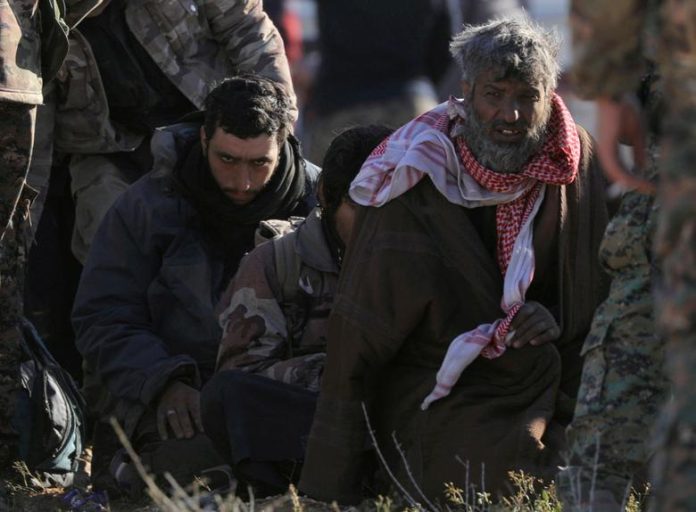
At least 9,250 Palestinians are currently reported to be held in Israeli prisons, though the real figure is likely higher as Israel withholds information on hundreds of people its army seized in Gaza.

Walla estimates that at least 10,000 Palestinians remain in Israeli detention centres despite the recent prisoner exchange deal, which saw the release of hundreds of Palestinians for the remaining Israel captives in Gaza.

Nearly half of all Palestinian detainees are held without charge or trial, under indefinitely renewable administrative detention orders.

The latest death toll reported by the Israeli media outlet comes amid deliberations on a new bill allowing the death penalty for Palestinian prisoners.

Ben Gvir was pictured in parliament on Monday wearing a noose pendant on his lapel, as he continues to push for the legislation, exclaiming that “the time has come for the death penalty for terrorists!”

Posting on X, Ben Gvir boasted about wearing the pin, along with other members of his Otzma Yehudit party.

“I and the members of my Otzma Yehudit faction arrived today at the National Security Committee discussions to continue advancing the death penalty for terrorists, while wearing a pin in the shape of a hangman’s noose – as a symbol of our commitment to passing the law and as a clear message that terrorists are sons of death,” he wrote.

The bill was approved by a majority of 39 out of 120 Knesset members, with 16 voting against in Israel’s parliament.

It would allow judges to impose the death penalty on Palestinians convicted of killing Israelis on so-called “nationalistic” grounds.

The legislation would not apply to Israelis who kill Palestinians under similar circumstances.

The bill now requires two more readings in the Knesset before it can become an official law.


Israel confirms 22,000 wounded soldiers since Gaza war

Israeli Army

About 22,000 injured soldiers were added to the Rehabilitation Department’s treatment program, with nearly 58% of them suffering from mental health conditions, the ministry said in a statement.

The ministry noted that nearly 1,500 new treatment requests are submitted by wounded soldiers each month.

According to the ministry, the Rehabilitation Department currently provides care for 82,400 wounded veterans, including those injured in previous wars.

It further stated that 26% of all patients in the department were wounded in the past two years.

According to Israeli military data published in October, the army recorded 279 suicide attempts among personnel over 18 months, including 36 deaths.

Israel has killed more than 70,000 people, mostly women and children, and injured over 171,000 others in Gaza since October 2023.

During the same period, Israel launched air assaults against Lebanon, Yemen, Iran and Syria.

EU looking at options for enhancing Lebanon’s internal security forces: Document

A 2024 truce between Lebanon and Israel remains fragile, with Tel Aviv carrying out regular strikes on Lebanese territory that it says are targeting Hezbollah’s efforts to rearm.

The document, produced by the EU’s diplomatic arm and circulated to the 27 member states, said it would pursue consultations with Lebanese authorities and that a scoping mission would take place in early 2026 on possible new assistance for the country’s Internal Security Forces.

EU efforts could “focus on advice, training and capacity-building,” the paper said, adding that the bloc would not take over the tasks of the U.N. Interim Force in Lebanon (UNIFIL), whose mandate is set to expire at the end of 2026, when it is expected to begin a year-long drawdown and withdrawal.

Instead, the EU “could contribute to the gradual transfer of internal security tasks” from the Lebanese Armed Forces to the Internal Security Forces, allowing the army to focus on its core defence tasks, the document said.

The U.N. secretary general is expected to produce a transition plan in June 2026 that will address risks stemming from UNIFIL’s departure.

The paper from the European External Action Service comes ahead of a planned meeting between senior EU and Lebanese officials in Brussels on December 15.

“Through a combination of advice, training and possibly the provision of certain equipment, the overall objective would be to enable the Police and the Gendarmerie to fulfil their mandates in cities and rural areas across the country,” it noted, adding the EU could also help Lebanon to better secure its land border with Syria.

French President Emmanuel Macron’s special envoy on Lebanon, Jean-Yves Le Drian, was in Beirut on Monday to propose a roadmap that aims to assess independently Hezbollah’s disarmament, diplomatic sources said.

Lebanese Prime Minister Nawaf Salam stated last week that Lebanon wanted to see a ceasefire monitoring mechanism play a more robust role in verifying Israel’s claims that Hezbollah is rearming as well as the work of the Lebanese army in dismantling the armed group’s infrastructure.

Asked whether that meant Lebanon would accept U.S. and French troops on the ground as part of a verification mechanism, Salam stressed, “of course”.

Iran says determined to enhance Azerbaijan ties, warns against undermining relations

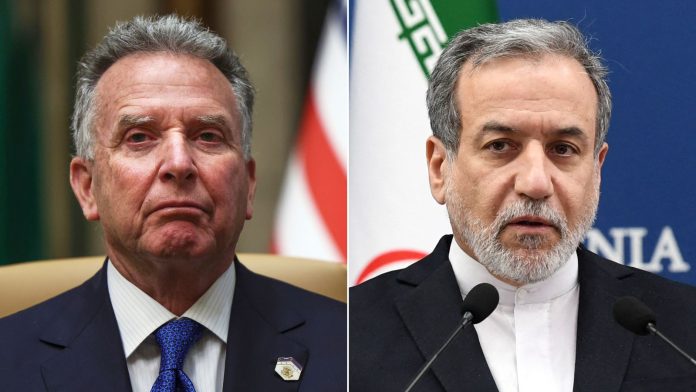
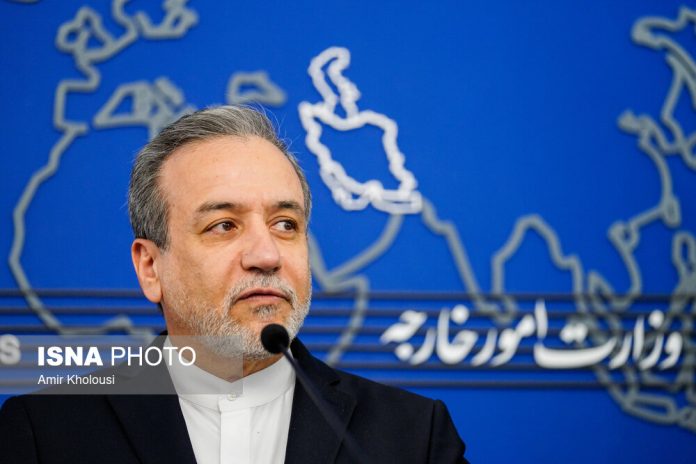
Speaking at a joint press conference with his Azerbaijani counterpart, Jeyhun Bayramov, in Baku on Monday, Seyed Abbas Araqchi said Iran and Azerbaijan share many commonalities and mutual interests, although there are also differences that need to be addressed through dialogue.

Araqchi stressed that he held good and constructive discussions with his Azerbaijani counterpart.

The foreign minister noted that Tehran and Baku are fully serious about regional security, and that the 3+3 mechanism—comprising Iran, Russia, Turkey, Azerbaijan, Armenia, and Georgia—was established precisely for this purpose.

Araqchi underlined that regional security must be ensured by the countries of the region themselves, and that any foreign intervention from any side is destructive.

Referring to two visits made last year by Iranian President Masoud Pezeshkian to Azerbaijan, he said Iran looks forward to hosting Azerbaijani President Ilham Aliyev, as well as the country’s foreign minister, in Tehran.

He also expressed satisfaction that relations between Azerbaijan and Armenia are moving in a positive direction.

Araqchi added that, in his meeting with his Azerbaijani counterpart, they also discussed the aggressions committed by the Zionist regime against countries of the region.

He said Iran welcomes any initiative that leads to halting the crimes and killings of Palestinians in Gaza, providing humanitarian assistance to the people of Gaza, and ending the occupation of Palestine, stressing that no plan should undermine the Palestinian people’s inherent right to self-determination.


Official says dozens of Iranian nationals jailed in US heading home

Mehrabadi told IRNA that the Iranians who were held in Arizona State Prison-Florence West had departed for Tehran through Mesa Airport on Saturday.

He said they were flown to Kuwait to be repatriated home.

Before their release, Mehrabadi held a cordial conversation with the Iranian nationals at Florence prison.

It was initially planned that 54 Iranians would return on this flight, but due to some incomplete legal procedures, their repatriation may be delayed, IRNA reported.

American and Iranian officials announced in September that about 400 Iranians were expected to be returning from the US. The first flight, carrying 120 people, arrived in Qatar in late September before they were transferred to a Tehran-bound flight.


Azerbaijan’s president voices commitment to promotion of ties with Iran

Aliyev made the remarks during a meeting with visiting Iranian Foreign Minister Abbas Araghchi in Baku on Monday.

The talks focused on key bilateral issues, including political cooperation, neighborly relations, and mechanisms for managing ties between the two countries.

Araghchi conveyed greetings from Iranian President Masoud Pezeshkian and highlighted the Islamic Republic’s determination to deepen cooperation across all areas of mutual interest.

Emphasizing the importance of continuous diplomatic engagement, the top diplomat stressed that sustained consultations help resolve misunderstandings and manage bilateral issues effectively.

Aliyev described the visit as historic and pivotal for enhancing mutual understanding, while expressing satisfaction with the steady growth of the Tehran-Baku relations.

During his visit, Araghchi also discussed Tehran’s perspective on regional developments with senior Azerbaijani officials, including his Azeri counterpart.

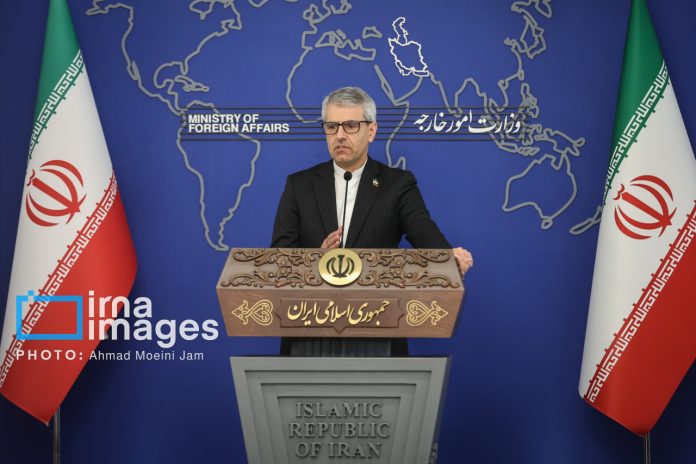
Commenting on the pending meeting, Iranian Foreign Ministry spokesperson Esmaeil Baghaei on Saturday had highlighted the significance of the bilateral relationship, noting shared culture, religion, and historical ties. He had emphasized that diplomatic visits like the one set to be paid by Araghchi aimed to reinforce cooperation and contribute to peace and stability in the Caucasus region.

The Iranian foreign minister’s visit took place around three months after the conclusion of a United States-mediated agreement between Azerbaijan and Armenia, which triggered warnings about Washington’s interventionist intentions concerning the region.

In reaction to the agreement, the Islamic Republic has welcomed regional peace, but invariably warned about the repercussions of foreign intervention, stressing that it constantly observes ongoing regional developments as a means of guarding against uncalled-for interference.


Official: 1.8 million Afghans exit Iran via Dogharoon; northeast border 50% secured

Amrollah Shamaghdari told Tasnim News Agency that the outflow, which surged during Iran’s war with Israel in June, has now stabilized and slowed significantly.

Shamaghdari noted that the departures involve Afghans residing in Khorasan Razavi as well as 11 other provinces, marking one of the largest waves of migration in recent years.

Despite concerns that such a mass exodus could disrupt the labor market or local services, official data indicate that impacts on employment, urban services, and security have been limited to around 10 percent.

The official highlighted a new approach to Afghan investment in Iran, emphasizing formal employment and registration of economic activities through a private-sector database, which he said would help regulate migration and prevent illegal entry.

Also regarding border security, Shamaghdari reported that nearly 50 percent of the northeastern border has been secured with walls, towers, thermal cameras, and night-vision equipment.

A joint Afghan delegation is expected to visit the region to coordinate final border construction. Completion of the Iran-Afghanistan border wall is projected over three years, contingent on bilateral cooperation.

Iran resumes flights to Sharjah from five cities months after conflict with Israel

Iran Airport

The flight left Imam Khomeini International Airport at 10:30 a.m. local time.

Speaking to reporters at the airport, Hormatollah Rafiei, head of Iran’s Association of Air Travel and Tourism Agencies, said the resumption marks an important step toward normalizing regional travel following a period that had “deeply affected public sentiment and the country’s economic conditions.”

He noted that one Iranian carrier had taken the lead in reopening the route.

Rafiei said flights to Sharjah, one of the busiest and most in-demand regional destinations, have now restarted from five Iranian cities: Tehran, Lar, Bandar Abbas, Qeshm and Ahvaz.

He added that the schedule includes 14 weekly flights, expressing hope that the restored route will support a broader recovery in Iran’s tourism and aviation sector.

“We expect these flights to continue steadily and pave the way for expanding international operations,” he said.

At least 80k Israeli soldiers treated for psychological disorders since Gaza war: Report

Israeli Army

Tamar Shimoni, deputy head of the ministry’s Rehabilitation Department, told Army Radio that the ministry treated about 62,000 psychological cases on the evening of Oct. 7, 2023, and the figure has climbed to roughly 85,000—an increase she described as “unprecedented.”

She said one-third of Israeli soldiers face psychological problems linked to the events of Oct. 7.

Shamoni added a single therapist now handles up to 750 patients, and in some areas even more, making it difficult to reach everyone who needs care quickly.

In November, the newspaper Yedioth Ahronoth warned of a “widespread psychological crisis” in Israel, citing rising drug addiction and nearly two million people in need of mental health support, including large numbers of soldiers.

Israeli media has also reported a rise in suicides within the military. The daily Maariv reported Saturday that a soldier died by suicide after suffering from post-traumatic stress following combat.

It added that a reserve officer from the Givati Brigade also died by suicide last week after a psychological struggle.

According to Israeli military data published in October, the army recorded 279 suicide attempts over 18 months, including 36 deaths.

Israel has killed more than 70,000 people, mostly women and children, and injured over 171,000 others in Gaza since October 2023.


Europe may need to shoot down Russian aircraft, drones violating NATO airspace: Czech president

NATO

“I believe there will be a moment, if these violations continue, where we will have to use stronger measures, including potentially shooting down a Russian airplane or drones,” Pavel told the Times.

“Russia wouldn’t allow repeated violations of their airspace. And we have to do the same.”

Pavel added that Russian aircraft and drones entering NATO airspace are “deliberate, well-planned and focused on several objectives,” including demonstrating that Russia “can do it,” testing Western air defense systems, and “testing our resolve to act in self-defense.”

Pavel has issued similar warnings before. In a Sept. 20 interview with public broadcaster Czech Television, he said NATO must remain united and “act firmly” in response to Russian provocations, including militarily if airspace violations continue, warning that “giving in to evil is simply impossible.”

Beyond Russia’s war in Ukraine, Pavel stated Europe will eventually need a new continent-wide security arrangement with Moscow, once a peace deal is reached on terms that uphold Ukraine’s sovereignty.

He added the “modern version” of such a framework would be a pan-European pact in which Russia recognizes the territorial sovereignty of all signatories and accepts “enforceable constraints on its behavior,” in a way that would echo the 1975 Helsinki Accords.

“Such a negotiation will have to be led with two equal sides,” Pavel said, adding, “Not Russia imposing on us, but rather coming to an agreement that will recreate, somehow, the situation which we had in the late Seventies.”

Pavel also argued that Europe should be able to fight and win a war on its own without substantial help from the United States. He warned that if the U.S. were “busy elsewhere, Asia-Pacific, for example,” and unable to provide key capabilities such as intelligence, transport, communications, and logistics, “We in Europe should be able to do it on our own.”

Russian missiles and drones have repeatedly violated NATO airspace during mass attacks on Ukraine, with Poland and Romania reporting incursions and debris falling on their territory since late 2023. Romania has authorized its military to shoot down drones that breach its airspace and has urged a more “robust” NATO response to such incidents.

Czechia has been one of Ukraine’s most active supporters, spearheading a Czech-led ammunition initiative that supplied 1.5 million shells in 2024 and aims to deliver up to 1.8 million more by the end of 2025. Prague has also provided extensive military aid, hosted large numbers of Ukrainian refugees, and backed closer security ties during President Volodymyr Zelensky’s visits to the country.