Monday, December 29, 2025
Home Blog Page 1866

US says to help integrate Israel, Arab states’ air defenses

Pentagon

The “Deterring Enemy Forces and Enabling National Defenses Act of 2022″ – or the “DEFEND Act of 2022,” introduced by Republican and Democratic members of the House and Senate Abraham Accords Caucuses, states that the Pentagon would be required to submit a strategy for an integrated air and missile defense system within 180 days.

The defenses would be aimed at protecting the relevant countries from “cruise and ballistic missiles, manned and unmanned aerial systems, and rocket attacks from Iran, and for other purposes.”

The countries named in the bill include Israel, Jordan, Egypt and Iraq, as well as the six members of the Persian Gulf Cooperation Council – Saudi Arabia, the United Arab Emirates, Qatar, Bahrain, Kuwait and Oman. The bill is the most prominent piece of legislation to date aimed at building upon the normalization pacts between Israel and Arab nations.

Of the nine Arab countries mentioned in the bill, two have decades-long peace treaties with Israel, while two others were among the countries to normalize ties.

Israel and Bahrain signed a historic formalization of security ties in February, while Prime Minister Naftali Bennett visited the United Arab Emirates on Thursday to conduct his second meeting with President Sheikh Mohammed bin Zayed Al Nahyan, days after Israel signed a free trade deal with the UAE – its first such agreement with an Arab country.

Talks between Saudi Arabia and Israel, meanwhile, have intensified over recent weeks ahead of US President Joe Biden’s anticipated visit.

The United States has been discussing the establishment of a regional security architecture focusing on improving defenses against Iran, primarily between Israel, the Saudis and the UAE.

Furthermore, the IDF will soon assign a permanent liaison officer from the Israel Navy to the US Navy’s Mideast-based 5th Fleet located in Bahrain.

Iran has stressed the open and secret support of the United States for Israel has played a key role in making the regime more insolent in its acts of aggression, calling on the Arab world to take meaningful political action against Israel.

Tehran says Israel is well aware of Iran’s capabilities and capacities and its own limited capabilities as well as the fact that the Islamic Republic does not compromise or joke about its national security.

Iranian officials have repeatedly warned that any mistake by Israel and the US will be met with Tehran’s crushing response.
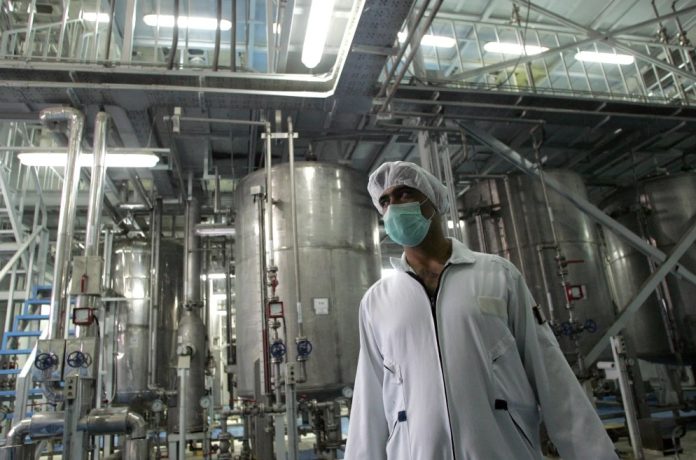
Report: Iran starts injecting gas into advanced centrifuges

Iran nuclear program

According to Mehr News Agency, Iran has also accelerated the production of all types of machinery, centrifuges and parts needed for the nuclear industry.

Mehr added Tehran has notified the International Atomic Energy Agency of these measures in several letters.

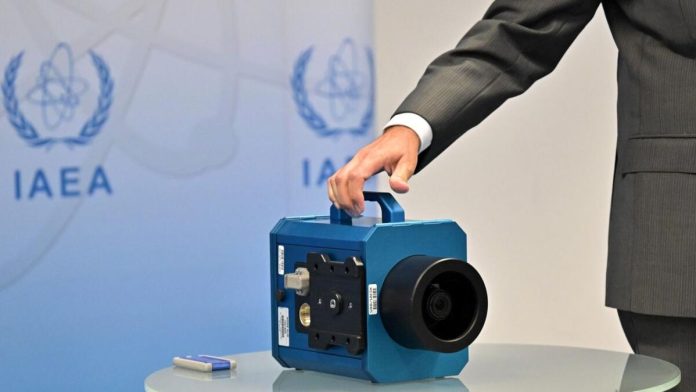
Iran had earlier removed some of the IAEA’s surveillance cameras, set up as a goodwill measure, as well as the Online Enrichment Monitor (OLEM) and the flow meter from its nuclear facilities as part of the Islamic republic’s retaliatory measures against the resolution passed by the agency’s Board of Governors.

Also, the IAEA chief says Iran has told the agency it wants to disconnect 27 cameras of the oversight body from its nuclear sites. Rafael Grossi said Iran plans to remove all extra surveillance cameras installed under the 2015 nuclear deal, JCPOA.

He acknowledged that these cameras are beyond a comprehensive safeguards agreement between the two sides.

But Grossi noted that nearly 40 cameras, which were installed under the safeguards agreement, will remain in place at Iran’s nuclear sites.

Meanwhile, the Islamic Republic’s Permanent Representative to the United Nations Mohammadreza Ghaebi strongly condemned the IAEA resolution drafted by the US, Britain, France and Germany as politically-motivated and spiteful.

In a statement, Ghaebi said the IAEA’s move comes as the agency has conducted its most intensive inspections at Iranian nuclear facilities.

He added that in 2021 alone, 22 percent of the UN atomic body’s inspections were conducted in Iran while the Islamic Republic’s nuclear facilities account only for 3 percent of those under the supervision of the IAEA in the whole world

IAEA chief: Iran plans to disconnect 27 cameras from nuclear sites

IAEA Camera

The director-general of the International Atomic Energy Agency made the comments at a suddenly called news conference in Vienna, standing next to an example of the cameras installed across Iran.

Grossi stated the move poses a “serious challenge” to its efforts, warning that in three to four weeks, it would be unable to maintain a “continuity of knowledge” about Iran’s program.

“This would be a fatal blow” to negotiations over Iran’s tattered nuclear deal with world powers, Grossi continued.

”When we lose this, then it’s anybody’s guess,” he added.

Grossi said that would leave “40-something” cameras still in Iran.

The sites that would see cameras removed include its underground Natanz nuclear enrichment facility, as well as its facility in Isfahan, Grossi added.

“We are in a very tense situation with the negotiations over the (nuclear deal) at a low ebb,” Grossi stated, noting, “Now we are adding this to the picture; as you can see it’s not a very nice one.”

The IAEA earlier Thursday announced Grossi told members that Iran informed the agency that it planned to install two new cascades of the IR-6 at Natanz.

A cascade is a series of centrifuges hooked together to rapidly spin uranium gas to enrich it.

On Wednesday, the Atomic Energy Organization of Iran announced the Islamic republic has removed surveillance cameras of the IAEA which it said were beyond Tehran’s commitments under the safeguards agreement.

Tehran is angry at the IAEA over its chief’s recent visit to occupied Palestine and his accusations that Iran has not cooperated with the UN atomic agency.

Iran has stressed Grossi’s meeting with the Israeli regime officials shows that he has reduced the body to a political organization while the IAEA must only focus on its technical tasks.

Also on Wednesday, the United Nations nuclear watchdog’s 35-nation Board of Governors overwhelmingly passed a resolution criticising Iran for what it called “failing to explain uranium traces found at three undeclared sites”.

On Tuesday, the US and the three European signatories to the nuclear deal – Britain, France, and Germany – submitted a draft resolution to the IAEA’s Board of Governors, accusing Iran of failing to offer transparent responses to the UN agency’s questions over nuclear activities at three sites.

The director of the Atomic Energy Organization of Iran has stressed the country has no secret nuclear activities and undeclared atomic sites.

Mohammad Eslami told reporters on Wednesday that the alleged pieces of evidence raised in the report of the secretary general of the International Atomic Energy Agency, are part of a political move aimed at maintaining the so-called maximum pressure campaign against Tehran.

Eslami noted the Zionist regime is the mastermind behind the resolution.

Iranian officials have warned the IAEA against succumbing to political pressure, stressing Tehran has fully cooperated with the agency in resolving outstanding issues.

Foreign ministry spokesman Saeed Khatibzadeh stated on Monday that Iran would respond based on what happens at the board meeting.

Khatibzadeh added the IAEA’s reports, which stemmed from information in two quarterly reports on Iran’s nuclear activities, were “hasty” and “not accurate” and “overlook all the measures and responses that the country has provided with precision and in a technical way.”

Talks between Iran and the world powers in Vienna to salvage the 2015 nuclear deal have been stalled amid Washington’s refusal to respond to Iran’s proposals.

Iran security chief: Responding in kind only way to defend nation’s rights

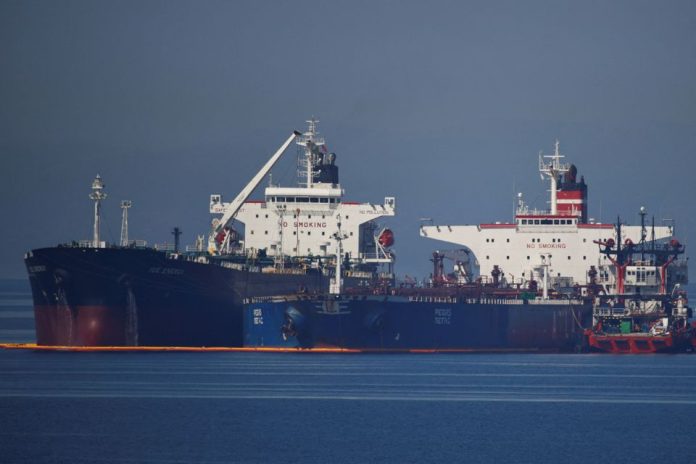
Iran Oil Tanker

The Greek court has in its ruling reversed an earlier judicial order to confiscate Iranian oil on board a ship seized by Greek authorities a few weeks ago.

Ali Shamkhani Secretary of Iran’s Supreme National Security Council said in a tweet Greece decided to change its behavior following Tehran’s decisive and proportionate response.

He added that the same rule holds true when it comes to other issues such as the Iran nuclear deal, the IAEA, etc.

The Greek court’s ruling came days after Iran seized two ships belonging to Greece in the Persian Gulf for violations of rules and regulations.
Iran had described the seizure of its oil tanker as piracy, done under pressure of the US.

President Raisi says Iran won’t retreat despite IAEA resolution 

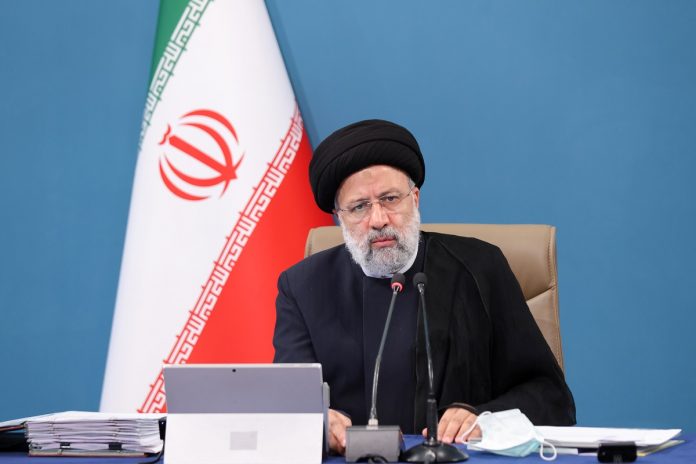
Iran President Ebrahim Raisi

President Raisi said the US and its Western allies have got international bodies to issue many resolutions against Tehran by using their political influence at those bodies, but “none of those resolutions got anywhere.”

The president urged the US and its allies to no longer test the will of the Iranian people, suggesting that the West must learn a lesson from the Greek government’s decision to release Iranian oil it seized a couple of weeks ago.

The International Atomic Energy Agency’s board of governors on Wednesdsy approved a US and EU troika-drafted resolution against Iran, claiming Tehran is not fully cooperating with the agency.

Iran denied the claim saying it will expedite production and installation of IR-6, IR-4 and IR-2m centrifuge machines.

Iran had also earlier announced it was disconnecting two monitoring devices installed by the International Atomic Energy Agency (IAEA) that are beyond its safeguard commitments.

Meanwhile Iranian parliamentary sources say the country will take more measures to further restrict cooperation with the IAEA.

Tehran says Iran-Nigeria trade up by 300%

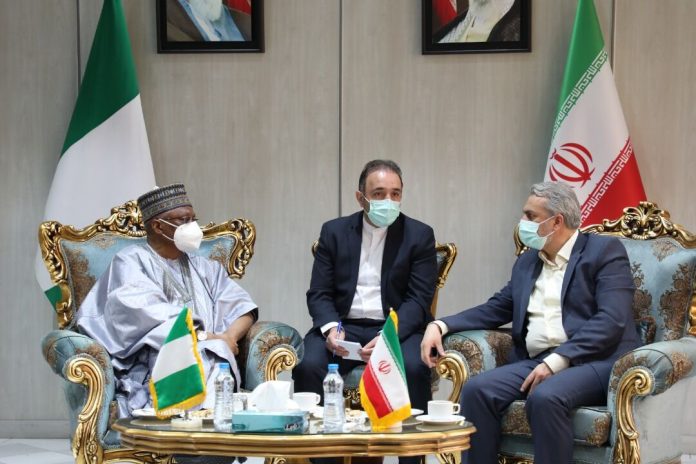
Seyyed Reza Fatemi Amin & Ambassador Zubairu Dada

“The value of trade between Iran and Nigeria reached about 125 million dollars, witnessing a 300% growth in the last 9 months of the year 1400,” Seyyed Reza Fatemi Amin said during a meeting with a high-level delegation from Nigeria, headed by Minister of State for Foreign Affairs Ambassador Zubairu Dada.

Fatemi Amin added despite the good history of cultural cooperation between the two countries, unfortunately, the level of bilateral trade is not favorable and needs to be improved.

“The two countries are members of international organizations, including the Organization of Islamic Cooperation, the Islamic Development Bank, D8 Group… which provide the necessary opportunities for further development of trade cooperation between Iran and Nigeria…” he noted.

The Iranian trade minister also pointed to the economic capacities of Iran and Nigeria and said their economies can complete each other.

Fatemi Amin also called for drafting a roadmap envisaging economic cooperation between Iran and Nigeria.

“As the first step to develop trade ties between Iran and Nigeria, It is necessary to facilitate the visits by Iranian and Nigerian businessmen via the establishment of direct flights between Iran and Nigeria…” the Iranian trade minister concluded.

Meanwhile, Nigerian Minister of State for Foreign Affairs described the bilateral ties between Iran and Nigeria as “long-term and cordial”, saying that his country attaches significance to the expansion of ties with Iran.

“Iran and Nigeria have already had good cooperation at the bilateral and international levels… Nigeria attaches great importance to its relations with the Islamic Republic of Iran because there are good potentials and capacities that if used, can serve the interests of both countries…” Dada added.

He described the participation of the Nigerian delegation in the 6th Iran- Nigeria Joint Commission in Tehran as his country’s “commitment to the implementation of agreements and contracts” with Iran.

“Despite the cordial relations between the two countries, the bilateral economic relations are not satisfactory, Dada noted.

“During Iran-Nigeria Trade Summit, 9 cooperation documents were signed between the two countries in various fields of culture, tourism, oil, agriculture, sports, and trade,” the Nigerian official stated, expressing hope that the Sixth Iran- Nigeria Joint Commission can pave the way for boosting bilateral trade between Iran and Nigeria.

The high-ranking Nigerian delegation headed by Dada also had separate meetings with top Iranian officials including the first Vice President Mohammad Mokhber.

The delegation arrived in Tehran earlier this week to participate in the Sixth Iran- Nigeria Joint Commission. The joint commission which is held after a 7-year interval is aimed at further improving bilateral ties and paving the way for boosting trade between Iran and Nigeria.

“Efforts underway to arrange meeting between Iranian, Saudi FMs”

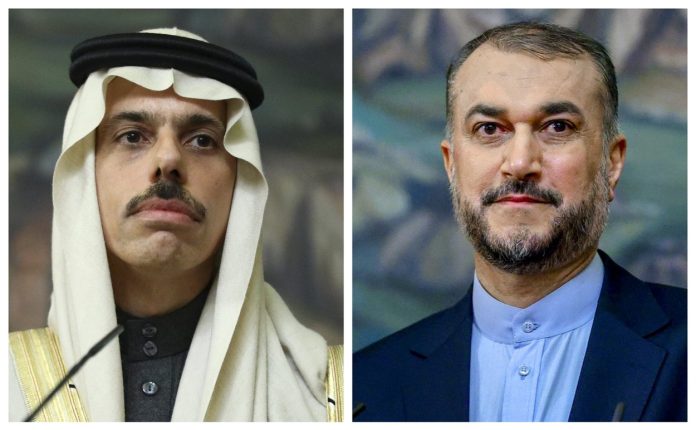
Iran and Saudi FMs Hossein Amir Abdolalhian and Faisal bin Farhan

Kuwait’s Al Jaridah newspaper quoted an Iranian Foreign Ministry official as saying that the meeting between Iranian Foreign Minister Hossein Amirabdollahian and his Saudi counterpart Faisal bin Farhan was expected to happen three weeks ago but Riyadh postponed it due to what it called “technical issues”.

The official added that Iraq, which mediates the talks, has told Iran that the Saudis are ready for the meeting.

He said the meeting between the experts of the two countries did not stop after the fifth round of talks in Baghdad and that it is likely to resolve differences such as Iran’s cooperation with Saudi Arabia to extend the ceasefire in Yemen.

Saudi Arabia has agreed to issue visas for six Iranian diplomats to travel to Riyadh to make arrangements for the presence of Iranian pilgrims in this year’s Hajj rituals.

Saudi Arabia cut diplomatic ties with Iran in 2016 following angry protests outside the kingdom’s embassy in Iran.

Iranian MP: More restrictions on cooperation with IAEA to come

IAEA

Fadahossein Maleki told Fars News Agency that Iran is considering introducing new restrictions on the agency’s activities in the country because of the body’s political moves against the Islamic Republic.

Maleki noted that the removal of two surveillance cameras which was announced on Wednesday is only part of the restrictions and more will come.

The MP said these restrictions are based on national interests of Iran and a law passed by parliament, to make the International Atomic Energy Agency know which country is genuinely cooperating with the body.

He added that the IAEA resolution against Iran lacks any technical and legal basis and is not binding for the Islamic Republic.

Maleki stressed that the resolution was approved under pressure from pro-Zionist lobby groups and also from the US.

Maleki described the resolution as totally political, noting that such resolutions won’t be able to stop Iran’s progress.

Russia healthcare sector calls for expansion of ties with Iran

Iran and Russia Flags

Russian health officials raised the issues in a meeting with Abdolnaser Azadbakht, the Director General of the Medical and Laboratory Equipment Industries of Iran’s Trade Ministry in Tehran.

The meeting was held in line with efforts to boost effective trade communication between the two countries. Joint investment, technology transfer and facilitating product registration were among the issues discussed in the meeting.

Both sides also put emphasis on accelerating bilateral export exchanges by facilitating product registration requirements.

The Iranian official briefed the Russian delegation on Iran’s capabilities and capacities in producing diverse medical supplies. Azadbakht called for establishing a joint Iran-Russia trade office and a consultation center for product registration in Tehran.

It was decided that the Russian side will provide the Iranian Trade Ministry officials with a list of required medical items along with their respective technical specifications. Officials from the Medical and Laboratory Equipment Industries of Iran’s Trade Ministry will discuss the issues during expert-level workgroups and prepare the grounds for inking trade MoUs and agreements with Russia via the participation of the private sector.

According to Iranian media reports, Iran holds a share of one percent (about $5 billion) in the global market for medical equipment of approximately $500 billion, but the country has the potential to increase the share, according to the statistics of the Ministry of Health.

In 2018, the National Medical Device Directorate reported that the Iranian medical equipment market was worth $2.5 billion, 30 percent of which belonged to over 1,000 domestic firms.

A total of 227 knowledge-based firms are supplying medical equipment for health centers across the country, according to the Vice Presidency for Science and Technology, Tehran Times reported last month.

According to the report, Iranian companies producing medical equipment export their products to 54 countries around the globe.

Iranian minister says cause of train accident yet to be established

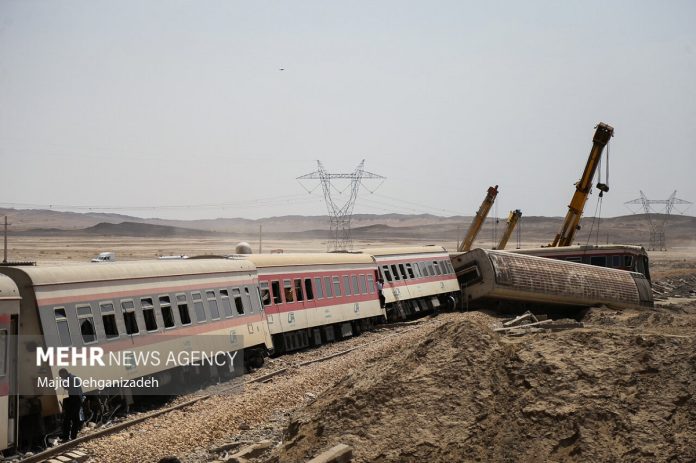
Iran train derailment

The train derailment that happened near the city of Tabas in South Khorasan Province left 21 people dead and scores of more injured. Several cars of the train that was travelling from Mashhad to Yazd were derailed after hitting an excavator that was on the railroad.

Ahmad Vahidi said all these possibilities will be examined to establish the cause of the heart-wrenching incident.

The statements of all witnesses, the driver of the excavator and the locomotive, and the passengers should be carefully examined and technical issues should be evaluated for this purpose, he said.

Vahidi further spoke about the Metropol Building in the southern Iranian city of Abadan that collapsed a couple of weeks ago.

He noted that most people who had been trapped under the rubble have been retrieved, but search will continue if anyone requests.

Metropol tumbled down due to what’s been described as poor construction standards.

The main culprit blamed for the incident, namely the owner of the building, has been pronounced dead though.

Officials say Hossein Abdolbaghi died after he got trapped under rubble following the building collapse and his body was found.