Sunday, December 28, 2025
Home Blog Page 183

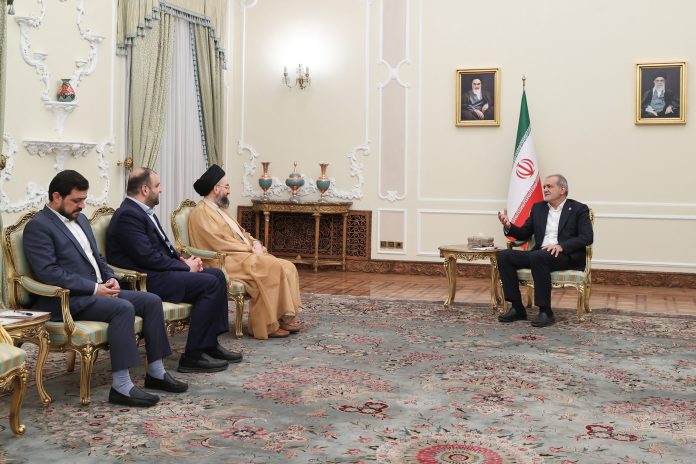
Azerbaijani president dismisses claims of threat to Iran from Zangazur corridor

President Ilham Aliyev

Aliyev dismissed as “unfounded” reports suggesting that Azerbaijan intends to occupy Zangazur or sever the land connection between Iran and Armenia.

He called these claims “pure slander”, underlining that Azerbaijan has no such intentions.

Aliyev claimed if Azerbaijan had wanted to, it could have easily taken control of Zangezur in November 2020 or at any time in the past five years but it did not do so because Baku is not an “aggressor”.
He added, “Therefore, allegations that we intend to cut the border between Iran and Armenia are unfounded”.

Iran has always said it cannot accept any geopolitical change in the region.
Meantime, the US participation in the Zangezur project has raised security concerns in Tehran.

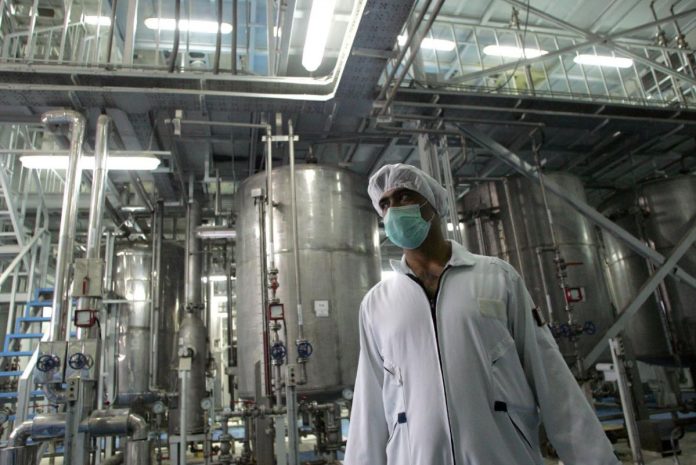
Iran confirms IAEA inspectors’ visit under Supreme National Security Council decision

IAEA

Araghchi underlined that the Iranian parliament has mandated that any cooperation with the IAEA must first be approved by the Supreme National Security Council.

Araghchi further noted that the inspectors’ visit is about monitoring the fuel replacement at the Bushehr nuclear power plant.

“Decisions regarding this process have already been made, and any cooperation will be within the legal framework approved by parliament to protect Iran’s national interests”, said the foreign minister.

Regarding reports of a finalized agreement on a new cooperation framework with the IAEA, Araghchi said, “Some ideas have been exchanged between the two sides, but no final agreement has been reached yet”.

The top diplomat reiterated that all steps regarding Iran-IAEA cooperation remain subject to parliamentary law and the Supreme National Security Council’s decision-making process.

US to Support NATO members’ troops in Ukraine: FT

Senior US officials reportedly told their European counterparts in multiple discussions that Washington would be prepared to contribute “strategic enablers” to back up a potential EU-led deployment on the ground, four sources briefed on the talks told the newspaper.

The potential assistance could include “US aircraft, logistics, and ground-based radar supporting and enabling a European-enforced no-fly zone and air shield for the country.”

France and the UK have brought together a group of primarily European NATO members in a “coalition of the willing” to support Ukraine amid waning US interest, which has repeatedly signaled its readiness to send a “reassurance force” there after the end of the hostilities between Kiev and Moscow.

In private conversations, however, EU officials have admitted that such a deployment would only materialize if the US provides support “to enable, oversee, and protect European troops,” the newspaper noted.

Asked for comment by the FT, the Pentagon announced the reported measures “are pre-decisional, and the Defense Department will not comment on pre-decisional topics,” referring further inquiries to the White House and the remarks made by US President Donald Trump on Monday.

Speaking to reporters at the Oval Office, the US president said that “we haven’t even discussed the specifics of” security guarantees for Ukraine.

“We’ll be involved from the standpoint of backup. We’re going to help them,” Trump stated, adding that the EU must take the lead instead.

“Europe is going to give them significant security guarantees – and they should, because they’re right there,” he stressed.

Moscow has repeatedly rejected the idea of troops from NATO countries being deployed in any capacity to Ukraine, warning that the move would only lead to a broader conflict. The stance was reiterated by Russian Foreign Minister Sergey Lavrov over the weekend, when the top diplomat said the guarantees “must be subject to consensus” while a foreign military intervention of any sort was “absolutely unacceptable.”

US sets new timeframe for ending Ukraine war

Russia Ukraine War

Speaking at a cabinet meeting with President Donald Trump on Tuesday, Witkoff said he will be “having meetings all this week” on Ukraine and other global conflicts, “and we hope to settle them before the end of this year.”

In a follow-up interview with Fox News, Witkoff stated that although Trump had expressed frustration with both Moscow and Kiev, the Russian side has at least “put a peace proposal on the table.” He acknowledged that territorial concessions “may not be something that the Ukrainians can take,” but argued that the Trump administration had brought the sides closer to agreement than ever before.

“There’s a peace proposal on the table,” Witkoff reiterated.

“We’re at this place where we think the end is in sight… we have technical teams working on it and we’re hopeful that by the end of this year, and maybe quite a bit sooner, we actually can find the ingredients to get to that peace deal,” he added.

According to Witkoff, Russian President Vladimir Putin expressed a clear desire to end the conflict and discussed Moscow’s position in depth with Trump during their historic Alaska summit earlier this month. While no details of any potential deal were made public, Moscow has long insisted that a sustainable settlement can only be achieved if Kiev agrees never to join NATO, undergoes demilitarization and denazification, and recognizes the new reality on the ground. This includes the status of Crimea, Donetsk, Lugansk, Kherson, and Zaporozhye as part of Russia – territories that voted to join the country in referendums in 2014 and 2022.

Witkoff emphasized that any decision on territorial concessions would be for Ukraine to make, and suggested the issue would be tied to long-term security guarantees. He noted that he would meet Ukrainian officials in New York this week and stressed that Washington maintains daily communication with Moscow. Recent reports have indicated that ongoing discussions include Kiev potentially ceding its remaining positions in Donbass in exchange for yet-to-be-defined Western commitments.

Witkoff further claimed “we may end up seeing a bilateral meeting” between Russian President Vladimir Putin and Ukraine’s President Volodymyr Zelensky, adding that Trump might be “needed at the table to finish a deal.”

Putin has not ruled out meeting Zelensky, but insisted a meeting could only follow tangible progress in negotiations. Moscow has also questioned Zelensky’s legitimacy, citing his expired presidential term and warning that any deals he signs could be overturned by his successor.

Turkey begins building bomb shelters across the country

According to the source, President Recep Tayyip Erdogan approved the project during a cabinet meeting in June.

At the time Iran and Israel were at war, with Israel hitting Iran with air strikes and Tehran responding with ballistic missiles.

The Turkish Housing Development Administration (TOKI) has been tasked with carrying out the construction.

Last month a report prepared by the Turkish National Intelligence Academy on Israel’s 12-day war with Iran recommended that the government establish early warning systems and build well-equipped shelters.

The report suggested making use of underground metro stations in major cities and implementing measures to minimise civilian casualties in the event of a regional conflict.

Turkish officials were particularly struck by Israel’s extensive network of bomb shelters in major cities, which allowed civilians to take refuge during bombardments.

On Tuesday, Turkish broadcaster NTV reported that the goal of the initiative is “to create safe areas where civilians can be protected in case of possible wars or disasters”, including nuclear threats.

The channel noted that Turkey currently lacks adequate shelter infrastructure and that existing facilities fail to meet basic requirements.

The Ministry of Urbanisation has also studied international examples such as Japan and Switzerland, NTV reported, adding that construction has already begun in certain cities, including the capital, Ankara.

Turkey’s Shelter Regulation, enacted in 1987, requires shelters in buildings above a certain size. In practice, however, the regulation has often been ignored, with many designated shelter areas being used instead as parking lots or storage spaces.

Six Syrian soldiers killed in Israeli aerial attack near Damascus

Israeli drones targeted Syrian army positions in the Damascus countryside near the city of al-Kiswah, the broadcaster reported early on Wednesday.

Following the fall of the Bashar al-Assad government last December, Israel has launched hundreds of strikes targeting military sites and assets across Syria.

Israel also expanded its occupation of the Syrian Golan Heights by seizing the demilitarised buffer zone, a move that violated a 1974 disengagement agreement with Syria.

Syria’s Ministry of Foreign Affairs said on Monday that Israel had sent 60 soldiers to take control of an area inside the Syrian border around Mount Hermon, near a strategic hilltop that overlooks Beit Jinn, close to the border with Lebanon in southern Syria. Israel did not immediately comment on the accusation.

Syrian Minister of Foreign Affairs Asaad al-Shaibani accused Israel of establishing intelligence facilities and military posts in demilitarised areas to advance its “expansionist and partition plans”.

Earlier this month, Israeli Prime Minister Benjamin Netanyahu shared his vision for a “Greater Israel“, a concept supported by ultranationalist Israelis that lays claim to the occupied West Bank, Gaza, and parts of Lebanon, Syria, Egypt and Jordan.

A coalition of 31 Arab and Islamic countries and the Arab League said the stance was a “blatant and dangerous violation of the rules of international law and the foundations of stable international relations”.

The latest Israeli military action in Syria follows deadly clashes in the Druze-majority Syrian province of Suwayda, where a week of sectarian violence in July killed 1,400 people, before a ceasefire put an end to the bloodshed. Israel had carried out strikes on Syrian troops and bombed the heart of the capital, Damascus, under the pretext of protecting the Druze people.

IRGC says neutralized terrorists in Southeastern Iran

IRGC

The IRGC Ground Force’s Quds Base announced its servicemen have conducted the anti-terror operations in cooperation with the Intelligence Ministry forces.

A total of 13 terrorists have been killed and several others arrested in the joint operations carried out in the early hours of Wednesday in Iranshahr, Khash and Saravan.

Meanwhile, the spokesperson for the Law Enforcement Command of the Islamic Republic of Iran (FARAJA) stated that the perpetrators of a recent fatal attack on a Police base in Iranshahr city in the southeastern province have been eliminated.

General Saeed Montazeralmahdi noted his colleagues have carried out a successful operation in cooperation with the security and intelligence organizations early Wednesday, killing 8 terrorists involved in a recent raid that resulted in the martyrdom of Police personnel at the ‘Daman’ Police station in Iranshahr.

The spokesperson added that a significant cache of weapons and ammunition was confiscated from the terrorists, including items stolen from the police station.

On August 22, armed assailants ambushed two police patrol units along the Khash-Iranshahr road in Sistan and Balouchestan province. The attack resulted in the martyrdom of five police officers. The terrorists fled the scene following the attack.

The so-called Jaish al-Adl terrorist group claimed responsibility for the assault that occurred in the Daman district of Iranshahr.

Spox: Iran, Europe contacts to continue in coming days

Baqaei stated that at the Geneva meeting, the responsibilities of the European parties were clearly conveyed, and Iran’s demands regarding the lifting of sanctions and its nuclear rights were explicitly outlined.

The seventh round of talks between Iran and the three European countries—Germany, France, and the United Kingdom—was held on Tuesday, August 26, in Geneva, with the participation of the Deputy EU Foreign Policy Chief.

The talks, at the level of deputy ministers and political directors, focused on sanctions relief, Iran’s nuclear program, and UN Security Council Resolution 2231.

Majid Takht-Ravanchi, Deputy Foreign Minister for Political Affairs, and Kazem Gharibabadi, Deputy for Legal and International Affairs, headed the Iranian delegation.

In a televised interview, Baqaei said that this negotiation process is part of the Islamic Republic of Iran’s policy to use all diplomatic capacities to safeguard the country’s national interests.

Referring to threats by the European parties to resort to the UN Security Council’s sanctions snapback mechanism, he stressed: “We presented our principled position that, for clear legal and juridical reasons, none of the three countries holds such a right. Moreover, if such a move is taken, its consequences and impacts will also affect those countries themselves.”

Kazem Gharibabadi also wrote last night on X: “Both sides set out their views on Resolution 2231. Iran remains committed to diplomacy and to a mutually beneficial diplomatic solution. It is time for the three European countries and the UN Security Council to make the right choice and give diplomacy time and space.”

Australia responsible for ‘consequences’ of expelling Iran’s envoy: Tehran

Iranian Foreign Ministry

Iran’s Foreign Ministry made the remarks in a statement on Tuesday, after Canberra decided to expel Tehran’s ambassador over allegations of attacks on Jewish sites.

“The Ministry of Foreign Affairs of the Islamic Republic of Iran regrettably considers the Australian government’s request for the ambassador and several Iranian diplomats to leave the country unjustified and contrary to the tradition of diplomatic relations between the two countries,” it said.

The ministry further rejected allegations that the Islamic Republic was behind two anti-Semitic attacks in Australia, vowing to take appropriate reciprocal action.

Additionally, the ministry highlighted the historical and documented fact that anti-Semitism is primarily a Western-European phenomenon that has been manifested in various forms at different times, suggesting that the recent misuse of this concept is aimed at suppressing protests against the occupation, apartheid, and genocide against the Palestinians.

While denouncing the ongoing crimes and genocide in Gaza, the ministry announced that Iran emphasizes the accountability of all supporters and those justifying these actions, and criticizes the Australian government’s accusations against the Islamic Republic as in alignment with the Israeli regime’s strategy of diverting attention from the humanitarian crisis in Palestine and escalating tensions in the region.

The ministry further added that Iran, while reserving the right to take reciprocal action, urges the Australian government to reconsider its decision and holds Canberra responsible for the consequences and repercussions of the decision, including the challenges it may pose for the Iranian community residing in the country.

On Tuesday, Australian Prime Minister Anthony Albanese accused Iran of orchestrating two attacks on Jewish sites in October and December, allegations made without presenting evidence.

Iran’s Foreign Minister Abbas Araghchi refuted Canberra’s allegation, describing it as an act of appeasement toward a “regime led by war criminals.”

Iran’s ambassador – now persona non grata – and other diplomats have been given seven days to leave Australia.

Trump threatens Russia, Ukraine with sanctions and tariffs

Donald Trump

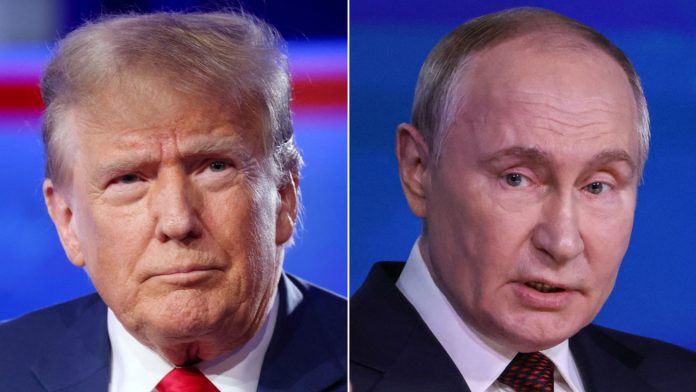
Speaking to reporters at the White House on Tuesday, Trump said that it “takes two to tango,” and suggested that Ukraine’s Vladimir Zelensky “was not exactly innocent.”

“Thousands of young people, mostly young people, are dying every single week. If I can save that, by doing sanctions or by just being me, or by using a very strong tariff system that’s very costly to Russia or Ukraine or whoever we have,” Trump stated.

He also reiterated his readiness to slap new restrictions on Moscow. “We want to have an end. We have economic sanctions. I’m talking about economic because we’re not going to get into a world war,” he said.

Trump criticized his predecessor, Joe Biden, calling him “grossly incompetent” for allowing the Russia-Ukraine conflict to happen in the first place.

“Nobody goes into a war thinking they’re going to lose. They go in – I’m sure that Ukraine thought they were going to win. It’s going to be, you know, we’re going to win. You’re going to beat somebody that’s 15 times your size. Biden shouldn’t have let that happen,” Trump stated.

The US president also appeared to dismiss Moscow’s concerns about the Zelensky’s legitimacy.

“Doesn’t matter what they say. Everybody’s posturing. It’s all bullsh*t, ok? Everybody’s posturing,” Trump told reporters.

Russian Foreign Minister Sergey Lavrov reiterated Moscow’s stance in an interview with NBC aired on Sunday, calling Zelensky the “de facto head of the regime,” and stressed the person signing any peace deal must have legal authority to do so.